
Journalist

Jang Sun-a
sunrise@ajunews.com
-
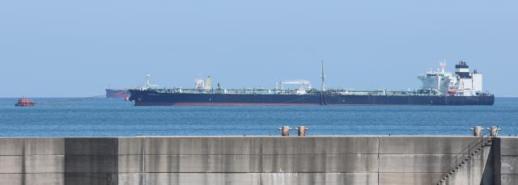 Iran Claims MOU with U.S. Could Restore Hormuz Strait Traffic to Pre-War Levels As discussions about a potential Memorandum of Understanding (MOU) between the United States and Iran gain traction, Iran has stated that while traffic through the Hormuz Strait will normalize, it will maintain control over the waterway. According to Yonhap News and other sources, Iranian news outlet Tasnim reported on May 24 that it had obtained a draft of a tentative agreement between the U.S. and Iran. The report indicated that an announcement of the MOU is expected if both sides agree on its terms. Tasnim specifically addressed Western media reports suggesting that traffic through the Hormuz Strait would return to pre-war levels within 30 days, clarifying that this does not mean a complete restoration of the situation prior to the conflict. Instead, it implies that the number of vessels passing through the strait will return to pre-war figures within that timeframe. The report emphasized that Iran intends to assert its sovereignty over the strait through various means, with specific details to be announced later. Notably, it did not mention the tolls Iran had previously claimed it would impose on vessels transiting the strait. Furthermore, Tasnim stated that any U.S. maritime blockade must also be fully lifted within 30 days; otherwise, there will be no change in the situation in the Hormuz Strait. It added that any modifications related to navigation in the strait depend on the U.S. fulfilling its other obligations outlined in the MOU. This suggests that if the U.S. fails to meet the conditions of the MOU, it could lead to a renewed blockade of the Hormuz Strait. Earlier, Axios reported, citing U.S. government officials, that the draft MOU includes provisions for a 60-day ceasefire during which Iran would open the Hormuz Strait to all vessels without tolls and remove mines placed in the strait to ensure freedom of navigation. 2026-05-24 16:54:40
 -
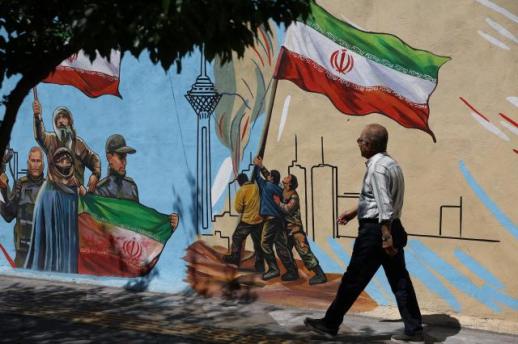 U.S. and Iran Near 60-Day Ceasefire Agreement, But Nuclear Deal Challenges Remain Speculation is growing that the United States and Iran are nearing a memorandum of understanding (MOU) that would extend a 60-day ceasefire and resume nuclear negotiations. However, experts warn that reaching a final nuclear agreement could take considerable time due to significant differences over key issues such as halting uranium enrichment, handling highly enriched uranium, and lifting sanctions against Iran. According to reports from Yonhap News and Axios, a U.S. political news outlet, discussions are underway regarding a draft MOU that includes extending the ceasefire and resuming nuclear talks. The draft reportedly states that Iran will negotiate on halting its pursuit of nuclear weapons, discontinuing its uranium enrichment program, and eliminating its stockpile of highly enriched uranium. However, many analysts believe the negotiation process will not be straightforward. The New York Times reported that while U.S. officials claim Iran has promised to forfeit its stockpile of highly enriched uranium, Iranian government representatives argue that the draft lacks specific details on handling the nuclear program and only includes a general agreement to discuss nuclear issues over the next 30 to 60 days. Moreover, the verification and inspection of nuclear materials are complex technical procedures that can take several months, making it unlikely that a final agreement can be reached within the 60-day timeframe. For context, the initial stages of the Iran nuclear negotiations, known as the Joint Plan of Action (JPOA), took six months to produce an agreement, followed by an extended verification period. The final agreement, known as the Joint Comprehensive Plan of Action (JCPOA), required an additional 20 months of negotiations. Currently, the negotiating environment is considered more challenging than it was during those earlier talks. Following the Trump administration's unilateral withdrawal from the JCPOA in 2018, distrust regarding the U.S. commitment to any agreement has deepened within Iran. A critical variable in the negotiations is the handling of highly enriched uranium. Reports indicate that Iran currently possesses approximately 440 kilograms of uranium enriched to 60%. However, Supreme Leader Ayatollah Mostafa Khamenei has stated that this material cannot be exported. Additionally, some nuclear materials are reportedly located within Iran's underground facilities in Isfahan, which have recently been targeted by U.S. airstrikes, complicating the verification process. As a result, market analysts suggest that even if the MOU is finalized, it is more likely to lead to a prolonged interim agreement characterized by repeated extensions of the ceasefire and negotiations, rather than a swift final nuclear deal.* This article has been translated by AI. 2026-05-24 16:30:57
 -
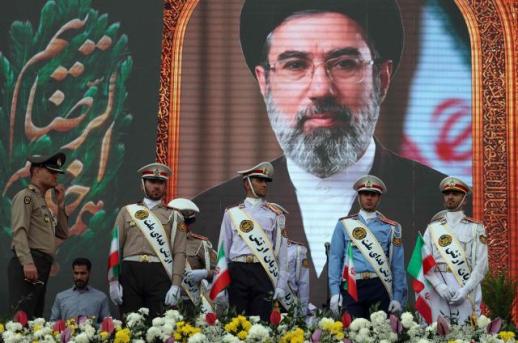 U.S. and Iran Near Agreement to End Hostilities As the U.S. and Iran appear to be nearing an agreement to end hostilities, Iranian state media reported that discussions have taken place regarding mutual restraint from attacks. Preliminary outlines of a potential agreement include a ceasefire extension and the opening of the Strait of Hormuz. On May 24, local time, Reuters and Yonhap reported that Iran's FARS news agency stated that a draft memorandum of understanding (MOU) between the U.S. and Iran includes a commitment from the U.S. and its allies not to attack Iran and its allied forces. FARS also reported that Iran has promised not to launch any preemptive military attacks against the U.S. and its allies. Previously, the online media outlet Axios reported that the U.S. and Iran are close to signing an MOU that would extend a ceasefire for 60 days, open the Strait of Hormuz, and resume nuclear negotiations. According to reports, both countries are discussing further negotiations regarding the opening of the Strait of Hormuz, lifting sanctions against Iran, halting uranium enrichment, disposing of highly enriched uranium, and easing sanctions. However, neither the U.S. nor Iran has officially announced the details of any related agreements as of yet.* This article has been translated by AI. 2026-05-24 15:45:45
 -
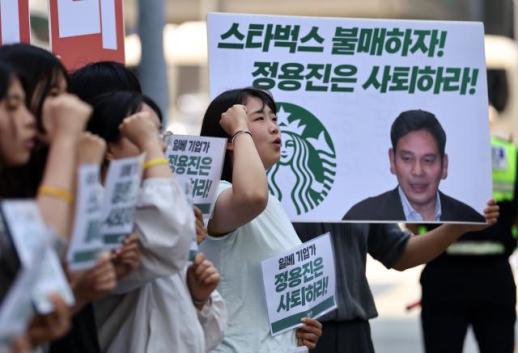 Political Tensions Rise Over Starbucks Controversy Linked to President Lee Jae-myung The political landscape has become increasingly contentious following President Lee Jae-myung's criticism of Starbucks over its marketing related to the May 18 Democratic Movement and the release of a 'Siren Mug' to commemorate the 10th anniversary of the Sewol ferry disaster. The opposition, particularly the People Power Party, has accused the president of excessive incitement, while the ruling Democratic Party argues he is voicing the public's justified anger. According to reports from Yonhap News and others on May 24, Jang Dong-hyuk, a senior member of the People Power Party, expressed on Facebook, "Lee Jae-myung has lost his reason. He speaks without understanding the facts." He added, "There was no event; it was merely a standard product announcement for the new 'Siren Classic.' 'Siren' is a symbol of Starbucks and is a common name for all products bearing the Starbucks logo." He further stated, "If that's the case, then we shouldn't have a 'Siren Order' on April 16 either," suggesting that the president was inciting public outrage to shift the narrative. Oh Se-hoon, the People Power Party's candidate for mayor of Seoul, remarked, "I heard that candidate Jeong Won-oh has also imposed a ban on Starbucks in his campaign. This is a very quick and precise alignment with the president's stance." Kim Ki-hyun, a member of the People Power Party, claimed, "At this point, it wouldn't be an exaggeration to say that the president's social media presence is becoming a form of state violence," likening it to a public trial under a North Korean dictatorship. Lee Jun-seok, the head of the Reform Party's campaign committee, criticized, "The president should be reflecting on himself, not targeting Starbucks, Netanyahu, or Ilbe." In contrast, the Democratic Party countered that the People Power Party is obscuring the essence of the controversy surrounding the May 18 distortion. Kang Jun-hyun, the party's chief spokesperson, stated, "The People Power Party suddenly attacked the Lee Jae-myung government and the ruling party regarding the Starbucks May 18 insult incident that has been controversial all week." He emphasized, "The government and the ruling party have not forced any anger or boycotts. It is the People Power Party that is misusing the call for correcting a distorted historical view as a tool for political strife and electioneering." Kang also noted, "While the president may be outraged over the May 18 and Sewol ferry disaster, so too are the people. It was appropriate for the president to convey a message representing the public's sentiments." Democratic Party spokesperson Park Ji-hye criticized the opposition's response, stating, "To label legitimate criticism of Starbucks' marketing that belittles the democratic movement as 'state violence led by the president' is an extreme distortion and incitement."* This article has been translated by AI. 2026-05-24 15:40:09
 -
 Exchange Rate Near 1520 Won Amid Middle East Tensions; Authorities Warn of Action Exchange rate rises to near 1520 won; authorities ready to intervene if needed The won-dollar exchange rate has climbed close to the 1520 won mark, prompting foreign exchange authorities to issue verbal interventions to stabilize the rate. This marks the highest level for the exchange rate since early last month. On May 22, the Bank of Korea and the Ministry of Economy and Finance issued a joint statement just before the close of trading in the Seoul foreign exchange market, stating, "The foreign exchange authorities are monitoring the won-dollar exchange rate closely, as it appears to be excessive compared to fundamentals." They added, "We will take decisive action if necessary." On that day, the exchange rate closed at 1517.2 won per dollar, an increase of 11.1 won from the previous session, marking the highest closing figure since May 2 (1519.7 won). The exchange rate opened at 1504.7 won but quickly turned upward, increasing further in the afternoon. At one point, it reached 1519.4 won, nearing the 1520 won threshold. The intraday high was also the highest since May 2 (1524.1 won). National Growth Fund sells out on first day amid high investor interest The National Participation Growth Fund has generated explosive interest, selling out its online allocation on the first day of its launch. The fund, which invests in advanced strategic industries while offering tax benefits and loss buffers, has attracted many investors. According to financial sources on May 22, all allocated amounts of the National Participation Growth Fund at the five major banks (KB Kookmin, Shinhan, Hana, Woori, and NH Nonghyup) have been exhausted. The total allocation for these banks was 220 billion won, with KB Kookmin receiving 65 billion won, Shinhan, Hana, and Woori each receiving 45 billion won, and NH Nonghyup receiving 20 billion won. Customers flocked to bank branches to sign up, with reports of 'open runs' at some locations where customers waited before opening hours due to concerns about stock depletion. Major securities firms, including Mirae Asset Securities, KB Securities, and Daishin Securities, also sold out their online allocations of the National Participation Growth Fund. Seoul mayoral race tightens as Oh Se-hoon leads Jung Won-o by 2.8 points With just 12 days until the June 3 local elections, the race for Seoul mayor has become extremely close. Recent polling shows Oh Se-hoon of the People Power Party leading Jung Won-o of the Democratic Party by a narrow margin. According to a poll released on May 22, Oh Se-hoon garnered 44.8% support, while Jung Won-o received 42.0%. The gap between the two candidates is 2.8 percentage points, within the margin of error (±3.1 percentage points). The survey, conducted by Research Well on behalf of New Daily from May 20 to 21, included 977 residents of Seoul aged 18 and older. In this poll, Kim Seong-cheol of the Reform Party received 2.1%, while other candidates accounted for 2.6%. Additionally, 6.1% of respondents indicated they did not support any candidate, and 2.4% were unsure. By gender, Oh Se-hoon showed strength among male voters, while Jung Won-o received relatively higher support from female voters. Among men, Oh Se-hoon led with 50.5% compared to Jung Won-o's 38.7%. Conversely, Jung Won-o had 45.0% support among women, while Oh Se-hoon received 39.6%. Age demographics also revealed clear trends. Jung Won-o was favored among voters in their 40s and 50s, while Oh Se-hoon was strong among those in their 20s, 30s, and seniors over 70. Notably, Oh Se-hoon received 57.1% support among voters in their 30s and 51.2% among those over 70, while Jung Won-o had higher support in the 40s (58.5%) and 50s (57.7%). Samsung Electronics union votes exceed 66% on first day amid bonus disputes As voting begins on the tentative wage agreement for 2026 between Samsung Electronics management and labor, the union reported a turnout exceeding 66% on the first day, indicating strong engagement among members. As of 8:25 PM on May 22, the voting rate for the Samsung Electronics union was recorded at 66.16%. The nationwide Samsung Electronics labor union's voting rate also reached 69.15%. This vote is to determine approval of the 'tentative wage agreement for 2026' reached between management and labor on May 20. Voting will continue until the morning of May 27, and if a majority of members participate and approve, the agreement will be finalized. The tentative agreement includes an average wage increase of 6.2%, the establishment of a special performance bonus for the semiconductor sector, and the introduction of a housing loan program of up to 500 million won. Notably, the semiconductor division plans to allocate 10.5% of its operating profit for the special performance bonus, allowing employees in the memory division to potentially receive bonuses up to 600 million won when combined with existing excess profit bonuses. However, there is growing discontent among employees in the non-memory sectors, such as system LSI and foundry, who may receive bonuses around 210 million won, while the DX (Device Experience) division is expected to receive only 6 million won in company stock. Starbucks apologizes again over controversial May 18 promotion; urges restraint towards staff Starbucks Korea has issued another apology following backlash over promotional language used during the May 18 Democratic Movement anniversary. On May 22, Starbucks Korea released a statement in all stores, saying, "We sincerely apologize for the significant hurt caused to the spirits of the May 18 Democratic Movement and to the victims' families and the public." Starbucks Korea clarified that the controversy was "entirely due to a mistake made during the operation of our online business" and distanced itself from store partners. They urged the public to refrain from criticizing the partners who strive to do their best every day. Additionally, they expressed gratitude for any warm consideration shown to partners to ensure they can work in a safe environment. The controversy arose when Starbucks Korea used phrases like 'Tank Day' and 'Bang! on the desk' during a tumbler promotion on May 18, leading to complaints directed at employees in stores. The additional apology appears to be an effort to protect staff from ongoing backlash.* This article has been translated by AI. 2026-05-23 20:06:00
 -
 Samsung Electronics Union Vote Exceeds 66% on First Day Amid Bonus Dispute As voting begins on the tentative wage agreement for 2026 at Samsung Electronics, union participation surpassed 66% on the first day, indicating strong member engagement. According to the Samsung Electronics branch of the Korea Metal Workers' Union, the turnout reached 66.16% by 8:25 p.m. on May 22. The nationwide Samsung Electronics union reported a turnout of 69.15%. This vote is to determine approval or rejection of the '2026 wage negotiation tentative agreement' reached on May 20. Voting will continue until the morning of May 27, and the agreement will be approved if a majority of union members participate and vote in favor. The tentative agreement includes an average wage increase of 6.2%, the establishment of a special performance bonus for the semiconductor division, and the introduction of a housing loan program with a maximum of 500 million won. Notably, the semiconductor sector plans to allocate 10.5% of its operating profit for special bonuses, allowing employees in the memory division to potentially receive bonuses up to 600 million won, including the existing OPI (excess profit bonus). In contrast, employees in the non-memory sectors, such as system LSI and foundry, are expected to receive bonuses around 210 million won, while the DX (Device Experience) division is projected to receive only 6 million won in stock options, leading to increased internal dissent. The union representing the DX division, along with the Suwon branch of the Korea Metal Workers' Union, held a press conference outside the Samsung Electronics Suwon campus, stating, "DX employees have initiated a campaign to reject this tentative agreement," and pledged to collaborate with other divisions to ensure its defeat. Tensions between unions have also escalated. The largest union, the Korea Metal Workers' Union, stated that members of the Donghaeng Union, which did not participate in the joint negotiation team, are not eligible to vote. In response, the Donghaeng Union accused them of changing their stance as opposition votes began to rise. However, given the overwhelming membership of the Korea Metal Workers' Union and the Suwon branch, market sentiment leans towards a high likelihood of approval. If the agreement is ultimately rejected, both parties will need to re-enter negotiations, raising the possibility of a renewed strike at Samsung Electronics.* This article has been translated by AI. 2026-05-23 19:58:13
 -
 Police Investigate AI-Generated Fake Articles Distorting May 18 Democratic Movement Police are investigating the authors of fake newspaper articles that distort and mock the May 18 Democratic Movement using artificial intelligence (AI). On May 22, the National Police Agency stated, "We recognize the seriousness of recent violations of the May 18 Democratic Movement Act spreading online," adding that they are also investigating numerous posts claiming that "May 18 was a riot." Recently, images of fake newspaper articles, believed to be created using AI, have been circulating on social media, misappropriating the names of local Gwangju media outlets. These images feature the name of the local daily Gwangju Ilbo and are dated May 20, 1980. They contain false claims such as, "May 18, spies receiving orders from the North seized an arsenal, and the martial law troops launched indiscriminate attacks." A subtitle stating, "Remnants of spies joined forces with rioters to stain peaceful Gwangju with blood," has raised concerns about the distortion of the May 18 Democratic Movement. The police emphasized, "We will actively investigate the dissemination of false information related to May 18 on social media under a zero-tolerance policy," and stated that they are also requesting the deletion and blocking of such content. They added, "We will respond sternly to the dissemination of false information to ensure the significance of the May 18 Democratic Movement is not undermined."* This article has been translated by AI. 2026-05-23 19:55:08
 -
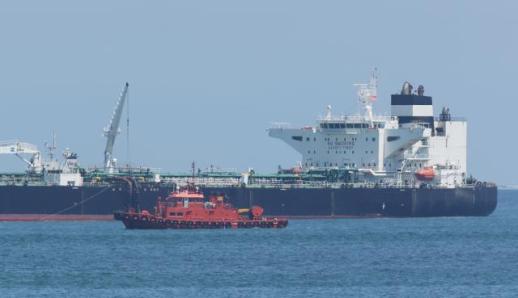 Iran's Revolutionary Guard Claims Control Over Hormuz Strait Shipping Iran has intensified its control over shipping in the Hormuz Strait by effectively requiring prior approval for vessels passing through the strategic waterway. On May 22, the Islamic Revolutionary Guard Corps (IRGC) Navy announced that "35 vessels, including oil tankers and container ships, have passed through the Hormuz Strait in the past 24 hours." The IRGC claimed that all these ships navigated approved routes with Iranian authorization, stating, "While U.S. military actions have destabilized the Hormuz Strait, the IRGC Navy has established safe routes to ensure the continuity of international trade." Iran has recently emphasized that vessels must obtain approval from its military and relevant authorities to transit the Hormuz Strait. On the same day, Iran's state-run Press TV released a video outlining the "guidelines for passing through the Hormuz Strait," detailing specific transit procedures. According to the video, vessels must submit their information via email to the newly established Persian Gulf Shipping Authority (PGSA) to receive prior approval, and may need to pay a toll if required. The video also included a warning that unauthorized navigation or deviation from designated routes would result in a firm response.* This article has been translated by AI. 2026-05-23 19:54:00
 -
 Starbucks Apologizes Again Over Controversial 5·18 Slogan, Urges Restraint on Staff Criticism Starbucks Korea has issued another apology following backlash over promotional slogans related to the May 18 Democratic Movement. On May 22, the company released a statement to all its stores nationwide, expressing, "We deeply apologize for the significant hurt caused to the spirits of the May 18 Democratic Movement, the bereaved families, and the public." Starbucks Korea clarified that the controversy stemmed from a mistake made during the operation of its online business and emphasized that it was unrelated to store partners. The company urged the public to refrain from criticizing its employees, stating, "We sincerely ask for your restraint in directing blame toward our partners, who strive to do their best every moment." Additionally, they expressed gratitude for any warm consideration shown to employees, allowing them to work in a safe environment. The controversy arose on May 18, the anniversary of the May 18 Democratic Movement, when Starbucks Korea used slogans such as 'Tank Day' and 'Bang on the Desk!' during a tumbler promotion. Following complaints and criticism directed at store employees, the company issued a further apology aimed at protecting its staff. Internal measures are also underway. On May 20, Starbucks Korea held a town hall meeting at its headquarters in Gangnam, Seoul, to discuss the controversy and response strategies with employees. Reports indicate that about 150 out of 600 employees attended the meeting. During the meeting, executives addressed the disarray within the organization caused by the recent controversy and the dismissal of the CEO, urging employees to continue their work without distraction.* This article has been translated by AI. 2026-05-23 19:48:45
 -
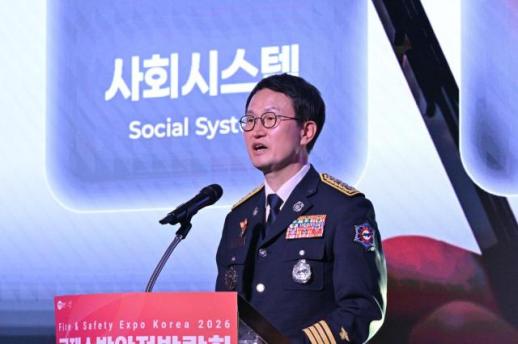 Presidential Office Launches Investigation into Fire Chief Kim Seung-ryong The Presidential Office initiated an investigation into Fire Chief Kim Seung-ryong on May 22. Chief Spokesperson Kang Yu-jeong announced to reporters that President Lee Jae-myung has ordered an immediate inquiry into the fire chief. The investigation is reportedly related to personal misconduct, although the Presidential Office has not disclosed specific details. Kim has been acting in the role since last September, following the dismissal of former Fire Chief Heo Seok-gon over allegations of involvement in a state of emergency. He was promoted to Fire Chief in March.* This article has been translated by AI. 2026-05-23 19:46:18