
Journalist

Jang Sun-a
sunrise@ajunews.com
-
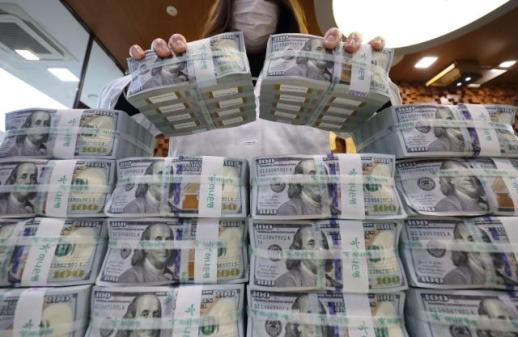 Middle East Risks Cause Volatile Exchange Rates Ahead of Ceasefire Agreement The won-dollar exchange rate has been experiencing significant fluctuations as negotiations for a ceasefire between the U.S. and Iran continue to stall and resume. Analysts predict that volatility will persist until a final agreement is reached. On May 11, the exchange rate in the Seoul foreign exchange market closed at 1,472.4 won per dollar, up 0.7 won from the previous trading day. The rate opened at 1,466.0 won, down 5.7 won from the prior day, but surged to over 1,476 won at one point during the day. Recently, the foreign exchange market has been reacting sharply to news related to U.S.-Iran negotiations. Until early last month, the exchange rate was threatening the 1,500 won mark, but it quickly declined as negotiations began. However, every time the possibility of a breakdown in talks and renewed geopolitical tensions arises, the rate has spiked again, indicating high volatility. On May 6, the won-dollar exchange rate dipped below 1,440 won during the day due to significant foreign buying of domestic stocks and optimism surrounding U.S.-Iran ceasefire expectations. Conversely, on May 8, as geopolitical tensions escalated, the rate rebounded nearly 20 won in a single day, reflecting market anxiety. The potential for an all-out war in the Middle East remains limited. The U.S. and Iran are maintaining negotiation channels, and with a U.S.-China summit scheduled for May 14, analysts believe the U.S. will seek to avoid escalating Middle East risks. A prolonged conflict could weaken U.S. negotiating power with China, as China may leverage the Iran issue in negotiations. Additionally, the recent strengthening of the yen is seen as a factor that alleviates some downward pressure on the won. The yen has been gaining strength amid concerns over potential market interventions by the Japanese government and expectations of changes in monetary policy. Market observers note that the yen's strength is encouraging a broader appreciation of Asian currencies, positively impacting the won. External supply conditions are also favorable for the won. According to the Bank of Korea, the current account surplus reached a record $37.33 billion in March, marking the largest surplus ever recorded for two consecutive months, following February's $23.19 billion. The expansion of the current account surplus increases domestic dollar supply, helping to buffer upward pressure on the exchange rate. However, the market does not rule out the possibility that the exchange rate could threaten the 1,500 won mark again if Middle East risks escalate. Given the history of repeated negotiations and ceasefire discussions, high volatility is expected to continue until a final agreement is reached. Analysts also warn that a sharp rise in international oil prices could lead to increased import costs and heightened risk-averse sentiment, further exerting downward pressure on the won. Park Sang-hyun, a researcher at iM Securities, stated, "It is essential to monitor the potential for further appreciation of the yuan and yen around the U.S.-China summit. The high oil prices and volatility stemming from the stalled ceasefire negotiations between the U.S. and Iran are the most significant variables in the global foreign exchange market, but if the situation does not change rapidly, the impact of the dollar may be limited." * This article has been translated by AI. 2026-05-11 16:35:44
 -
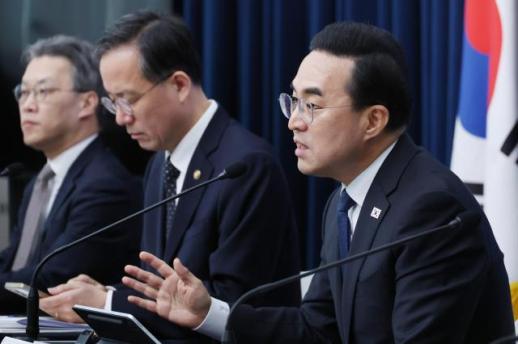 Minister Park Hong-keun: National Strategy Must Align with Fiscal Policy as Budget Office Opens On May 11, Minister Park Hong-keun of the Budget Office stated that a long-term national strategy must be established to address structural challenges such as demographic changes, industrial transformation, regional disparities, and climate crises. He emphasized the need to integrate fiscal policy with these strategies to make them a reality. Minister Park made these remarks during the opening ceremony of the Budget Office and a public pledge event held at the Government Sejong Complex. At the event, Minister Park and key officials placed their handprints on a plaque inscribed with the phrase "A New Future, Strong Finances, Happy Citizens," reaffirming their commitment to establishing a solid foundation for national finances and prioritizing the well-being of the public. In his opening remarks, Park highlighted that the Budget Office will be evaluated based on its achievements and outcomes, underscoring its primary responsibility as "designing the future of South Korea." He also stressed the importance of reflecting the voices of citizens throughout the entire budget process, ensuring that the budget leads to tangible improvements in people's lives. Furthermore, he noted that the Budget Office should be an organization capable of designing the future while also being effective, creating real changes that citizens can feel, and responding quickly and flexibly to challenges. Immediately following the opening ceremony, Minister Park chaired the fifth expanded executive meeting in the fourth-floor conference room of the Government Sejong Complex. He remarked that the relocation to the new office represents a true starting point for the organization, urging everyone to dedicate themselves to fulfilling the mission of the Budget Office. He particularly emphasized the need to faithfully incorporate the results of integrated financial project evaluations, which are central to performance-based financial management, into the budget formulation and expenditure restructuring processes. He called for efforts to ensure the principles of autonomy and accountability in financial management are realized. Minister Park also mentioned that the process of preparing the 2027 budget will begin with the submission of budget requests from various ministries at the end of this month. He urged preparations for the "Youth LiveTalk" event aimed at enhancing communication with future generations. Additionally, he encouraged the newly established organization not to fear failure and to position itself as a leader in creating a smart, AI-based work environment through diverse initiatives.* This article has been translated by AI. 2026-05-11 11:14:00
 -
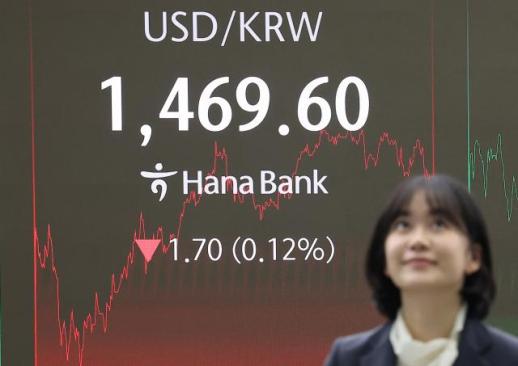 US-Iran Negotiation Uncertainty Leads to Drop in Won-Dollar Exchange Rate Despite growing uncertainty surrounding negotiations between the United States and Iran, the won-dollar exchange rate opened lower. On May 11, in the Seoul foreign exchange market, the exchange rate for the Korean won against the US dollar was trading at 1,467.9 won as of 9:15 a.m. The rate opened at 1,466.0 won, down 5.7 won, and has shown a steady trend since. On May 11 (local time), Iran delivered a proposal to the US through Pakistan, the mediator, which included an immediate ceasefire on all fronts, a halt to US maritime blockades, and guarantees against further attacks. However, President Donald Trump publicly rejected the proposal, stating on his social media platform Truth Social, "I read the response from the so-called representatives of Iran, and I am not pleased at all." Previously, the US had proposed a peace plan stating that if Iran allowed passage through the Strait of Hormuz, the US would lift the blockade on Iranian ports within a month. Despite concerns over the failure of negotiations between the US and Iran, the exchange rate is expected to decline, buoyed by the spillover effects of the stock market's AI rally. Min Kyung-won, an economist at Woori Bank, explained, "The dollar is showing strength in the Sydney market, and in the early Asian market, speculative long positions on the dollar and adjustments in morning stock prices are likely to lead to a weakening of the won, yuan, and Singapore dollar." He added, "As the day progresses, risk appetite is expected to recover, and the won may widen its intraday losses in line with a rebound in stock prices. Given that the stock market continued its AI-driven rally despite last week's military clashes between US forces and Iran in the Strait of Hormuz, the domestic market is likely to maintain an upward trend centered around semiconductors."* This article has been translated by AI. 2026-05-11 09:27:34
 -
 Rising Import Prices Raise Concerns Over Consumer Inflation in South Korea As rising exchange rates and surging import prices exert cumulative cost pressures, concerns are growing about consumer inflation in the second half of the year. While the government has implemented measures such as reducing fuel taxes to stabilize prices in the short term, analysts warn that the accumulated burden of import costs is likely to be passed on to consumer prices starting later this year. According to relevant government departments, consumer prices rose 2.6% in April compared to the same month last year, marking the highest increase since July 2024. The government noted that excluding petroleum products, the inflation rate remains stable at around 1.8%. Market observers believe that the reduction in fuel taxes and policies aimed at stabilizing oil prices are acting as a temporary barrier against inflationary pressures. The government is working with the refining industry to absorb some of the price increases, effectively blocking the immediate impact of rising international oil prices on consumer prices. However, the key issue is that the cost pressures accumulated at the import stage are likely to be transferred to consumer prices with a time lag. Import prices are calculated based on contract dates and typically reflect in producer and consumer prices one to three months later. The Bank of Korea reported that the import price index surged 16.1% in March compared to the previous month, reaching 169.38, the largest increase in 28 years since January 1998 (17.8%). This spike is attributed to rising exchange rates and soaring prices of crude oil, gas, grains, and industrial raw materials. Specifically, naphtha prices rose by 46.1%, jet fuel by 67.1%, and butadiene by 70.6% within a month. Notably, companies are still absorbing the rising costs of raw materials internally. Manufacturers are refraining from raising product prices due to concerns about economic slowdown, but prolonged deterioration in profitability could ultimately lead to higher consumer prices. Exchange rate instability also poses a burden. Although the won-dollar exchange rate, which hovered around 1,500 won earlier last month, has recently dropped to the mid-1,400s, the monthly average exchange rate slightly increased from 1,486.64 won in March to 1,487.39 won in April. According to the Hyundai Economic Research Institute, a 10% increase in the won-dollar exchange rate would raise consumer price inflation by approximately 0.3 percentage points in the short term and up to 0.5 percentage points after six months. The structure of the economy means that exchange rate shocks initially lead to rising import prices, which then affect consumer prices through production and distribution stages. The institute warns that the current simultaneous rise in international oil prices and exchange rates could accelerate the transfer of price shocks at the import stage, increasing upward pressure on consumer prices more than usual. Lee Taek-geun, a researcher at the Hyundai Economic Research Institute, stated, "With rising import prices and inflation expectations, there is a significant likelihood that upward pressure on domestic prices will persist. The increase in exchange rates will sequentially elevate import prices, producer prices, and consumer prices, acting as a burden on overall domestic prices." Choi Ji-wook, a researcher at Korea Investment & Securities, also noted, "Consumer price inflation is expected to reach around 3% as early as May or as late as June. Although core commodity prices temporarily fell in April, the rising producer prices of chemical and textile products will likely continue to be reflected, leading to sustained increases through the end of the year." Concerns are growing that prolonged risks in the Middle East, supply chain instability, and high exchange rates may limit the effectiveness of the government's price stabilization policies. While measures such as fuel tax reductions have mitigated short-term shocks, sustained increases in international oil prices and exchange rates could escalate fiscal burdens. Market analysts believe that trends in import prices will emerge as a key variable in the Bank of Korea's monetary policy direction and the government's overall measures for stabilizing livelihoods. They caution that if upward pressure on prices increases in the second half of the year amid concerns about economic slowdown, the government's ability to respond may be constrained. The researcher added, "Rising consumer prices will reduce households' real purchasing power, limiting private consumption capacity, which could hinder the recovery of the domestic economy. Expanding inflationary pressures may not only narrow the scope for monetary policy aimed at supporting economic recovery but could also constrain fiscal policy options." * This article has been translated by AI. 2026-05-11 05:07:33
 -
 Government Expands Support for Oil Import Companies Amid Ongoing Middle East Conflict As the conflict in the Middle East continues, increasing uncertainty in international oil prices and crude oil procurement has prompted the South Korean government to expand financial support for oil import companies and assist in diversifying import sources. This initiative aims to strengthen responses to the growing financial burdens and supply chain risks faced by the industry. The Ministry of Finance and Economy announced on May 10 that it held the "Second Financial Support Review Meeting for Oil Import Companies" on May 8, in collaboration with the Korea Export-Import Bank, the Korea National Oil Corporation, and domestic oil import firms. The meeting was convened to share the outcomes of industry recommendations raised during the first meeting held on April 8, and to review the current crude oil supply situation, financial support status, and any additional challenges. Participating companies proposed measures including: improving financing conditions, supporting diversification of import sources, deferring tax payments and providing tax incentives, and increasing government stockpiling of oil. Recently, fluctuations in international oil prices and shipping costs have heightened the financial pressures on domestic oil import companies. Analysts note that the reliance on Middle Eastern oil has led to increased payment costs and concerns over supply disruptions. Moon Ji-sung, the Director of International Economic Management at the Ministry of Finance, stated, "Given the significant volatility of the situation in the Middle East, it is essential to closely monitor developments. The risks of potential disruptions in oil exports from Middle Eastern countries and uncertainties within the Organization of the Petroleum Exporting Countries remain." He added, "We are swiftly addressing the recommendations made during the first meeting to alleviate the operational difficulties faced by oil import companies, and we will thoroughly review the government's role in restructuring supply chains for energy security with relevant agencies." During the first meeting, companies had requested stable provision of policy funds for affected businesses until international oil prices stabilize, expanded financial support for crude oil and naphtha purchases, and assistance in identifying alternative supply sources for diversification. The government plans to continue engaging with the industry to assess on-the-ground challenges and enhance related support measures.* This article has been translated by AI. 2026-05-10 12:04:49
 -
 South Korea launches task force to normalize fiscal management, boost transparency The government has launched a task force to correct what it called irrational systems and practices in fiscal management, aiming to strengthen transparency and efficiency. The effort will focus on tightening oversight of fraudulent receipt of national treasury subsidies and normalizing research and development investment, among other reforms. The Planning and Budget Office said it held the first meeting of the “Fiscal Management Normalization Task Force” on Thursday afternoon at the Fiscal Information Service, chaired by Vice Minister Lim Ki-geun. The task force was formed as part of the Lee Jae-myung administration’s “national normalization project,” which seeks to build what it describes as a country grounded in fundamentals. It will review and improve inefficiencies and unreasonable practices that remain in fiscal operations. Lim will lead the group, which includes three director-level officials from the office and six private-sector experts in public finance. Last month, President Lee Jae-myung called for fair, transparent and rational reforms across society, saying the country must end an era in which breaking rules brings benefits while following them brings losses. He instructed ministries to identify and pursue tasks to “normalize the abnormal.” At Thursday’s meeting, participants discussed priority tasks based on ideas developed by the office’s working-level staff and proposals from outside experts. They agreed to focus on steps to improve fiscal transparency and effectiveness, including stronger controls against improper subsidy claims; normalizing R&D investment and restoring trust; and creating a public-interest reporting incentive fund to encourage reporting of wrongdoing such as stock manipulation and collusion. “Planning Office is an institution that oversees public finances beyond individual fiscal projects,” Lim said. “We will continuously review and improve fiscal management until the public is satisfied, and ensure people can feel changes on the ground.” The office said it will finalize the list of tasks after consultations with related agencies, including the Office for Government Policy Coordination. At a second meeting scheduled for early June, it plans to review progress by task and disclose related results to the public.* This article has been translated by AI. 2026-05-07 14:48:47
 -
 Bank of Korea: Stock Wealth Effect Lags Advanced Economies, Could Grow as KOSPI Hits 7,000 South Korea’s stock market generates a much smaller “wealth effect” on household spending than major advanced economies, the Bank of Korea said, though the impact could grow as the KOSPI enters the 7,000 era and stock ownership broadens. In a report released Wednesday titled “BOK Issue Note: An Assessment of Korea’s Stock Wealth Effect,” the central bank estimated that when rising share prices increase household wealth, consumption rises by about 1.3% of capital gains. That implies that a 10,000-won increase in stock prices translates into roughly 130 won available for consumption. In the United States and Europe, about 3% to 4% of capital gains typically feeds into consumption, the report said. The BOK attributed the gap largely to structural factors, including a relatively narrow investor base. As of 2024, stock assets equaled 77% of disposable income, far below the U.S. level of 256% and 184% in major European countries. Stock holdings are also concentrated among high-income, high-asset households, which tend to have a lower propensity to consume, limiting spillover to spending. Market performance has also weighed on the effect. From 2011 to 2024, the S&P 500’s average expected monthly return was 0.53%, compared with 0.09% for the KOSPI, while volatility was 3.43% for the S&P 500 versus 3.77% for the KOSPI, about 10% higher. The probability that gains persist was 67% in the U.S. and 56% in South Korea, and the average duration of gains was 3.1 months in the U.S. versus 2.3 months in South Korea. Investment behavior also constrains consumption, the report said, as stock profits tend to flow first into real estate rather than spending. For households without a home, about 70% of stock capital gains are estimated to move into property. Kim Min-su, deputy head of the BOK’s macro analysis team, said capital gains have tended to shift into real estate because in the past the property market had lower volatility and higher returns, raising the opportunity cost of consumption. Still, the BOK said the wealth effect could strengthen as share prices rise rapidly on factors including expanding global demand for artificial intelligence, increasing household stock holdings and drawing more young and middle- and lower-income investors into the market. Household stock capital gains totaled 429 trillion won last year, about 22 times the average for 2011-2024, the report said. Because new investors tend to show a relatively larger wealth effect, the BOK said the gains could translate into stronger consumption. The central bank also warned that a sharp market correction could produce a larger negative wealth effect. With leveraged investing such as margin loans increasing, a drop in asset prices alongside heavier debt burdens could add to downside pressure on the economy, it said. Kim said it is important over the medium to long term to create a stable investment environment so the stock market can serve as a foundation for household wealth formation. He said policy efforts should curb the concentration of stock gains into real estate and strengthen incentives for long-term stock holding so that companies’ economic performance can translate into household asset accumulation and greater capacity to spend.* This article has been translated by AI. 2026-05-07 12:03:17
 -
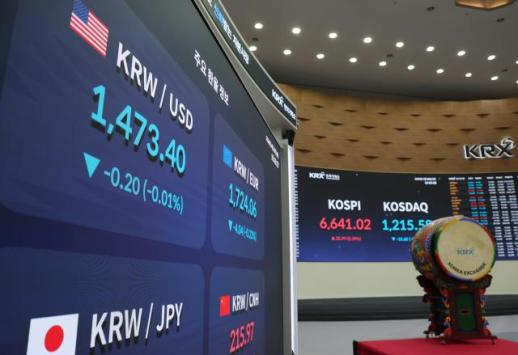 South Korean Won Strengthens to 1,440s on Easing Middle East Tensions The South Korean won strengthened into the 1,440s against the U.S. dollar for the first time in about 2 1/2 months as expectations of easing Middle East tensions revived risk appetite. In Seoul trading, the won was quoted at 1,447.9 per dollar as of 9:20 a.m. Thursday. The exchange rate opened at 1,448.6, down 6.5 won from the previous session, and fell into the 1,440s during intraday trading. It was the first time the rate returned to the 1,440s since Feb. 27, just before the outbreak of the Middle East war. Sentiment improved after renewed expectations for a final agreement between the United States and Iran, lifting risk-on moves across global markets. Overnight, U.S. President Donald Trump said in a media interview that he had “very good talks” with Iran over the past 24 hours and that “there is a very big chance” of reaching a deal. U.S. stocks rose broadly on optimism over negotiations to end the war. The Dow Jones Industrial Average gained 1.24%, the S&P 500 rose 1.46% and the Nasdaq composite climbed 2.02%. The dollar index, which measures the greenback against six major currencies, was up 0.021 at 98.029. Min Kyeong-won, an economist at Woori Bank, said markets are “betting on the possibility of a deal,” adding that continued foreign inflows into South Korean stocks could spur offshore selling and increase downward pressure on the exchange rate. She said demand for dollars from importers’ payments and residents’ currency conversions for overseas stock investment is supporting the downside. With Wall Street hitting fresh highs, she added, demand could return as residents seek to buy more U.S. stocks.* This article has been translated by AI. 2026-05-07 09:30:18
 -
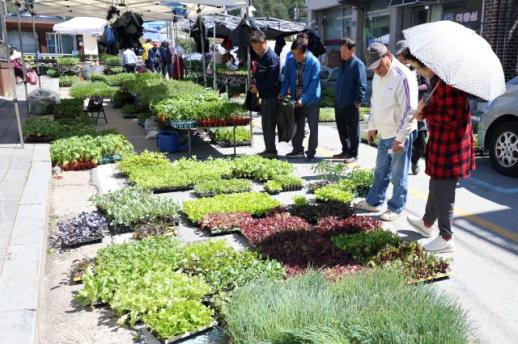 South Korea to tighten tariff-quota oversight, speed bonded-warehouse releases The government said it will tighten customs and distribution oversight of tariff quotas to prevent delays and misconduct, including by speeding releases from bonded areas and strengthening penalty rules. Officials said they reviewed follow-up steps to improve tariff-quota operations at a meeting of the interministerial task force on special management of consumer prices held on May 7. The government has used tariff quotas to help stabilize prices, but it said it identified improper cases in which some agricultural and fishery products were not promptly released from bonded areas after import declarations. In response, it plans to newly designate items for intensive management, revise customs rules to encourage faster release, and strengthen domestic distribution oversight and sanctions. The government previously inspected the full chain of importing, storage and sales for emergency tariff-quota items from March 9 to April 16. It said the review found price declines for bananas (-4%), mangoes (-20%), pineapples (-11%) and frozen mackerel (-3%). In distribution, the government said consumers saw larger price cuts when importers supplied large discount stores directly than when products moved through wholesale and retail channels. It also said imported fruit has a limited shelf life and frozen mackerel is already managed, and it found no problems with delayed market distribution timing. To support the changes, the government is also pursuing amendments to the Customs Act, including a new legal basis for designating intensively managed items. The related bill was submitted to a Cabinet meeting on March 31, then received emergency approval on April 3 and was promulgated and took effect. Since March, authorities have also operated a joint interagency task force on tariff-quota management for agricultural and livestock products to strengthen item-by-item customs and distribution inspections. The government said it will reflect additional measures — including tougher penalty standards and a new release order — in the regular tax law revision package in July, aiming to complete revisions within the year. Under current rules, an additional tax is imposed only after 30 days from the date goods enter a bonded area; the revision would tighten that to 20 days. To speed sugar distribution, the government will shorten the mandatory release period from six months to four months. Starting in August, it will also add five items — including frozen mackerel — to the list of imported seafood subject to distribution traceability management. By year’s end, the government said it will build an integrated system, centered on a dedicated body, to continuously monitor the entire process of importing, distribution and sales for tariff-quota items in agriculture and livestock.* This article has been translated by AI. 2026-05-07 09:05:34
 -
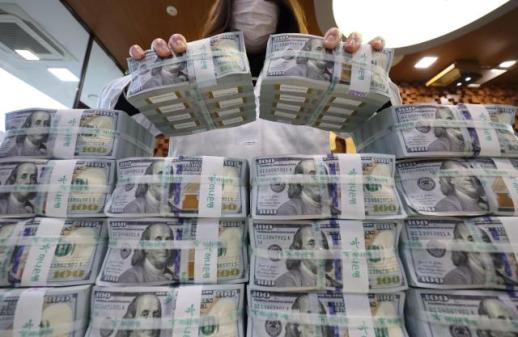 South Korea’s Foreign Reserves Rise $4.22 Billion in April on Weaker Dollar South Korea’s foreign exchange reserves rose by more than $4 billion in April, helped by a weaker U.S. dollar, the Bank of Korea said Wednesday. In its report on foreign reserves as of end-April 2026, the central bank said reserves stood at $427.88 billion at the end of last month, up $4.22 billion from the end of March. By asset type, securities totaled $384.07 billion, an increase of $6.37 billion from a month earlier. Special drawing rights rose by $240 million. Deposits fell by $2.29 billion, and the International Monetary Fund position declined by $90 million. The U.S. dollar depreciated 1.5% in April, based on the U.S. Dollar Index, lifting the dollar value of foreign-currency assets held in other currencies. The Bank of Korea said the increase reflected higher dollar-converted values of non-dollar assets and investment returns, despite market-stabilization measures including foreign exchange swaps with the National Pension Service. South Korea’s reserves ranked 12th in the world as of the end of March, when they stood at $423.7 billion. China ranked first with $3,342.1 billion, followed by Japan ($1,374.7 billion), Switzerland ($1,069.8 billion), Russia ($749.0 billion), India ($691.1 billion), Taiwan ($596.9 billion), Germany ($594.1 billion), Saudi Arabia ($496.3 billion), Italy ($452.5 billion), France ($445.0 billion) and Hong Kong ($430.8 billion).* This article has been translated by AI. 2026-05-07 06:03:14