
Journalist

Choe Chong-dae
swatchsjp@ajunews.com
-
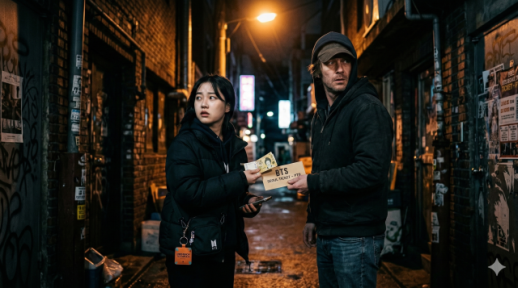 BTS Comeback D-16: South Korea to launch anti-scalping system ahead of BTS comeback concert SEOUL, March 05 (AJP) - South Korean authorities are rolling out a dedicated counter-scalping system to protect fans ahead of the upcoming BTS comeback concert at Gwanghwamun Square on March 21. The Ministry of Culture, Sports and Tourism confirmed the plan following a surge in illegal ticket trading for the high-profile event. Choi Hwi-young, the Minister of Culture, Sports and Tourism, called ticket scalping a "chronic disease" during a press briefing on February 12. The minister said that the government is monitoring the situation with extra care because free events, like the "BTS The Comeback Live: ARIRANG" show, often see even more aggressive resale activity than paid concerts. The ministry is coordinating its response through a specialized subcommittee of the Popular Culture Exchange Committee. This group includes officials from the ministry and HYBE, the management agency for BTS. The culture minister noted that while the government has developed specific countermeasures, it will not reveal the technical details to prevent scalpers from finding ways to bypass the new safeguards. The concert is expected to draw a crowd of about 15,000 to the landmark civic square in Seoul. Although the tickets are free, concerns are high that prices on the black market could skyrocket. During the group’s 2022 concert held in the southern port city of Busan, tickets for the free show reportedly reached prices as high as 4 million won ($2,731). According to data from the Korea Creative Content Agency, suspected online scalping cases have skyrocketed from 6,237 in 2020 to more than 259,000 as of August 2025. Approximately 75 percent of the cases reported in 2024 involved music performances, with many scalpers using automated "macro" software to snatch up tickets the moment they are released. To combat this, the South Korean government passed amendments to the Public Performance Act on January 29. The new rules ban the use of macro programs for ticket purchases and allow the state to confiscate profits from illegal sales. Violators could face fines up to 50 times the amount of the original resale price, though the law will not be fully enforced until later this year. The crackdown also involves tax authorities, who recently identified 17 high-volume professional scalpers. These individuals, who included public-sector employees and business owners, allegedly moved more than 20 billion won worth of tickets through illegal channels. Minister Choi said the government will lead a public campaign to discourage ticket hoarding and illegal sales before the new legal penalties take full effect. He stated that the goal is to see a significant reduction in scalping during the busy autumn performance season. 2026-03-05 16:59:00
 -
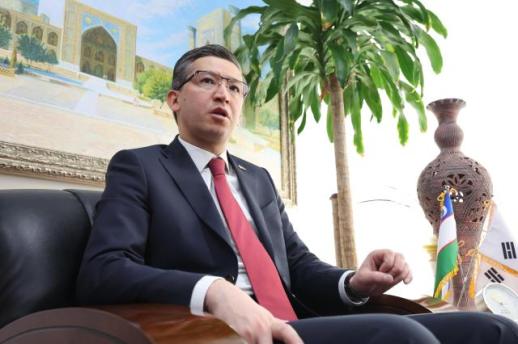 Uzbekistan targets Central Asian hub status through South Korea partnership: envoy SEOUL, March 05 (AJP) - Uzbekistan is positioning itself as a central transport and logistics hub in Central Asia by leveraging its geographic location and expanding infrastructure partnerships with South Korea, a top envoy said. "True diplomacy is when political dialogue turns into production chains, investments and jobs," Uzbekistan Ambassador Alisher Abdusalomov told AJP in an exclusive interview Wednesday. Without direct access to the sea, the country relies heavily on railway networks for Eurasian freight and passenger transport. That strategy has recently advanced with the arrival of a high-speed train manufactured by South Korean defense and rolling stock producer Hyundai Rotem. The train, named Jaloliddin Manguberdi, is currently undergoing test runs for the Tashkent–Khiva line. "High-speed rail is not only the speed of movement. It is the speed of economic transformation," Abdusalomov said, adding that the government is looking beyond simple procurement toward establishing comprehensive service centers capable of technical maintenance, major repairs and localized assembly of train components. "Purchasing equipment is the first step. Forming industrial competence is the strategic goal," the envoy said. "Whoever maintains the infrastructure becomes its strategic center. We are not just looking to operate modern trains but to become part of the global railway industry." This infrastructure overhaul anchors the Uzbekistan-2030 strategy, a national development plan aimed at elevating the country into the world's top 50 economies. Achieving its economic and social welfare targets requires extensive digital transformation, prompting the government to propose expanding South Korea's e-government, intelligent logistics and big data solutions across Central Asia. The collaboration also extends to physical infrastructure through public-private partnerships, highlighted by the ongoing modernization of Urgench International Airport with Incheon International Airport Corporation. Abdusalomov said the project will serve as a regulatory model for the planned New Tashkent International Airport and future smart city systems. "Modern infrastructure starts not with concrete, but with management philosophy," he said. As global economies transition toward digital and green technologies, demand for critical minerals such as copper and lithium has surged. South Korea currently chairs the Minerals Security Partnership Forum, or FORGE initiative, aimed at strengthening global supply chains. Uzbekistan possesses vast reserves of these minerals but is rejecting the traditional raw-material export model in favor of building full-cycle industrial clusters. The foundation for this effort was laid in 2019 with the establishment of a joint rare metals research center in Uzbekistan, developed in cooperation with the Korea Institute for Rare Metals. "The technological future begins with sustainable access to resources," Abdusalomov said. "We are not discussing abstract prospects — we are already building a joint scientific and production infrastructure." Resource integration is expected to be a key agenda item at the inaugural Korea–Central Asia Summit, which aligns with South Korea's initiative aimed at connecting the regions through technological and industrial networks. South Korea ranked among the top four foreign direct investors in Uzbekistan around 2017 but has since slipped to around 10th place following a surge of capital inflows from China, Russia, Turkey and European Union countries. Restoring South Korea to a top-three position is now a key objective for the Uzbek embassy. To attract investment, Abdusalomov outlined a range of institutional incentives for foreign businesses, including broad tax exemptions, reduced customs fees and state support for infrastructure development. He also highlighted Uzbekistan's macroeconomic stability, predictable exchange rates and its status as the most populous country in Central Asia. He added that political agreements expected at the upcoming summit require long-term vision. "Strong states are recognized not by the loudness of their declarations, but by their ability to think decades ahead and consistently implement the decisions they make," he said. Officials from both countries are currently drafting the financial and institutional mechanisms required to implement the proposed industrial, digital and transport projects ahead of the inaugural summit, scheduled for the second half of this year. 2026-03-05 14:02:45
 -
 WAIFF D-1: Live human-machine symphony to open Seoul artificial intelligence film festival SEOUL, March 05 (AJP) - The World AI Film Festival Seoul 2026 will open Friday with a live performance blending human artists and machine generation, signaling a shift in how the entertainment industry approaches artificial intelligence. Kicking off on March 6 at Lotte Concert Hall in southern Seoul, the two-day event begins with a special performance titled "The Symphony of AI & Human." Organizers programmed the opening ceremony to move away from traditional film festival screenings, opting instead to showcase real-time artistic collaboration between generative systems and live performers. The central competition operates under strict technological mandates that function as a creative hurdle. To qualify, creators of the 25 competing films were required to integrate at least three distinct artificial intelligence tools, including one mandatory image-generative system, into their production pipelines. The submissions span six categories, ranging from traditional short films to micro-series designed for vertical mobile screens and commercials for fictional products. Competitors are vying for a share of a 27 million won prize pool and an official invitation to screen their work at the festival's grand finale in France this April. Son Seung-hyun, chief executive officer at visual effects studio Westworld, leads an 11-member jury evaluating the entries. The Seoul event aims to demonstrate that artificial intelligence has evolved past post-production experimentation and is now shaping the core narrative and visual structures of modern media. The festival's opening ceremony on March 6 is free to the public, while the subsequent Creative Intelligence Forum on March 7 at Lotte Cinema World Tower requires a paid ticket. The global circuit will continue with upcoming stops in Japan and China following the South Korea edition. 2026-03-05 11:14:46
 -
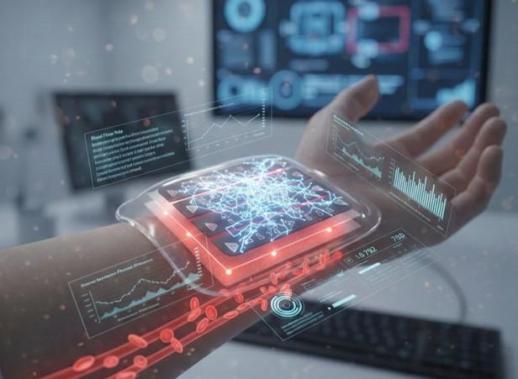 South Korean researchers develop wireless electronic patch for real-time blood flow monitoring SEOUL, March 05 (AJP) - Researchers at South Korea's Advanced Institute of Science and Technology have developed a wireless wearable electronic patch capable of measuring blood flow in real time. The device uses deep learning and multilayer thermal sensing to monitor cardiovascular health without invasive procedures. This technology provides a potential tool for the early detection of cardiovascular diseases and continuous monitoring of patients in clinical settings. Blood flow serves as a critical indicator of cardiovascular health, with fluctuations often signaling conditions such as hypertension, arteriosclerosis, or even physical shock. While Doppler ultrasound is currently the clinical standard for measuring blood flow, its reliance on bulky equipment and trained medical professionals limits its use for continuous daily monitoring. Existing wearable thermal sensors have struggled with accuracy because the depth of blood vessels varies between individuals, distorting the thermal signals used to calculate flow speed. The research team, led by Professor Kwon Kyung-ha of the School of Electrical Engineering at the Korea Advanced Institute of Science and Technology (KAIST), addressed this limitation by creating a multilayer thermal gradient sensing structure. The device features temperature sensors placed at different depths to analyze the three-dimensional movement of heat generated by flowing blood. By integrating a deep learning algorithm, the system can distinguish between the depth of the blood vessel and the actual speed of the blood flow simultaneously. Experimental results showed that the patch can measure blood flow speeds between 1 and 10 millimeters per second with an error margin of less than 0.12 millimeters per second. It also determined blood vessel depths between 1 and 2 millimeters with an accuracy within 0.07 millimeters. When integrated with photoplethysmography (PPG) sensors commonly found in smartwatches, the system reduced blood pressure estimation errors by up to 72.6 percent compared to using PPG sensors alone. This improvement was particularly evident during the Valsalva maneuver, a breathing technique that causes rapid changes in blood pressure. The platform was tested on human subjects through various physiological interventions, including breath-holding, external vascular compression, and cycling. In all scenarios, the blood flow measurements remained consistent with clinical perfusion index standards. The entire system is implemented as a wearable patch with Bluetooth Low Energy (BLE) capabilities, allowing for wireless transmission of biometric data to external devices for real-time analysis. "This technology provides a fundamental platform for more accurate measurement of blood flow and blood pressure," said Professor Kwon Kyung-ha. "By combining this with smartwatches, we can significantly improve the quality of daily health monitoring." The study, led by first author Sim Young-min, a student in the integrated master's and doctoral program, was supported by institutional funding and published in the journal Science Advances on February 6. (Paper information) Journal: Science Advances Title: Deep learning–integrated multilayer thermal gradient sensing platform for real-time blood flow monitoring DOI: https://doi.org/10.1126/sciadv.aea8902 2026-03-05 09:53:12
 -
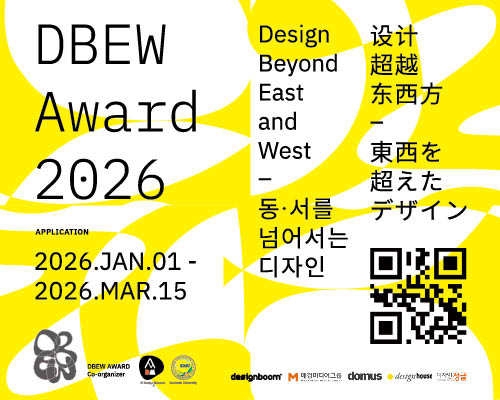 Kookmin University to host international design award in Milan SEOUL, March 03 (AJP) - Kookmin University and the Association for Industrial Design (ADI) will co-host the Design Beyond East and West (DBEW) Award 2026, an international competition aimed at redefining the universal values of contemporary design. The university appointed Paola Antonelli, the senior curator of architecture and design at the Museum of Modern Art (MoMA), to serve as the jury chair for the event. The award seeks to move beyond geographical and cultural divisions to explore how design can integrate human interaction with technology in daily life. The competition marks a significant collaboration between South Korean academia and the Italian design industry to lead global discourse on design education. It is specifically structured to recognize the symbiotic relationship between educators and students, shifting the focus from final products to the creative pedagogical process itself. By honoring both the student's work and the instructor's guidance, the organizers intend to set a new direction for international design leadership and sustainable social impact. The award accepts entries across three main categories: space and architecture; product and fashion; and visual, communication, and service design, which includes artificial intelligence and digital media. To participate, undergraduate or graduate students, or recent graduates within two years of completion, must submit works created within the last two years alongside a faculty mentor. The judging panel includes international experts such as sustainable design theorist John Thackara, industrial designer Stefano Giovannoni, architect Cho Byoung-soo, and Lou Yongqi, president of Shanghai Tech University. "The structure in which professors and students collaborate and submit entries together is a differentiated and meaningful attempt not seen in existing awards," Paola Antonelli said. She noted that the mutual process of teaching and learning between teachers and students maximizes educational achievement. Antonelli further described design as an "act of building bridges," rooted in specific cultural contexts yet connected through abstract principles. Jeong Seung-ryul, president of Kookmin University, stated that the DBEW Award emphasizes the importance of human thinking and collaboration in the era of artificial intelligence. He noted that universities should function as spaces for questioning and debating the creative process rather than just teaching technical skills. President Jeong expressed his hope that the event would serve as a platform for educators and students worldwide to share common problem-solving approaches, reflecting the university's philosophy of building an educational ecosystem without boundaries. The competition has already received hundreds of entries from more than 30 countries since January. Submissions remain open until March 15, 2026, with the final winners to be announced on March 25, 2026. A total prize pool of 25,000 dollars will be awarded during a ceremony and forum scheduled for April 21, 2026, at the ADI Design Museum during Milan Design Week. 2026-03-03 17:14:19
 -
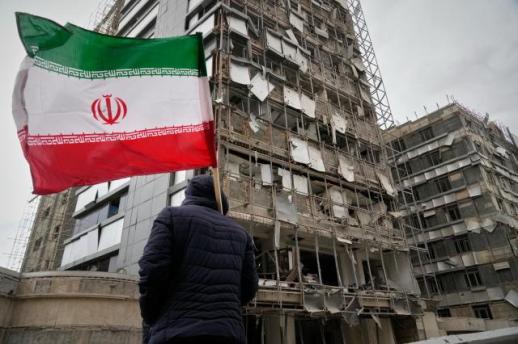 Iranian embassy in South Korea condemns military strikes by US and Israel SEOUL, March 03 (AJP) - The Embassy of Iran in South Korea issued a formal statement on Tuesday strongly denouncing recent military operations by the United States and Israel against Iranian territory. The embassy characterized the air strikes as a criminal act of aggression and a violation of national sovereignty, asserting that Tehran had pursued every available diplomatic avenue to prevent the outbreak of hostilities. The statement follows a large-scale military campaign launched on February 28 by the US and Israel, which targeted various cities across Iran. While the coalition stated the strikes were aimed at military and nuclear infrastructure, the Iranian embassy reported that civilian areas were also hit. According to the embassy, an attack in the city of Minab resulted in the deaths of more than 165 female students. Reports from the Iranian Red Crescent Society and news agencies such as Reuters and The Guardian have corroborated that a girls' elementary school in Minab was struck during the opening salvo of the operation. The embassy emphasized that the military campaign occurred while diplomatic processes between Iran and the US were still underway. The statement noted that Tehran had engaged in negotiations mediated by international partners in early February to fulfill its moral and legal responsibilities and to ensure that no pretext could be used to justify military intervention. In its communication to the South Korean public and media, the embassy stated that the Iranian people have made every possible effort to prevent war. The embassy further noted that because these diplomatic efforts were met with military force, Iran now maintains a firm defensive posture to protect its territorial integrity. The Iranian military is currently invoking Article 51 of the United Nations Charter, which provides for the inherent right of individual or collective self-defense if an armed attack occurs. The embassy stated that Iranian forces are mobilizing all available resources to repel threats and will hold those responsible for the strikes accountable for what it described as war crimes. This stance comes amid reports from the International Institute for Strategic Studies that the initial strikes killed several high-ranking Iranian officials, including Supreme Leader Ali Khamenei. The embassy called on the international community and the South Korean government to condemn the military actions and take effective measures against the participating powers. The statement urged global leaders to uphold the United Nations Charter and ensure that the violation of Iranian sovereignty does not go unpunished. 2026-03-03 16:13:17
 -
 South Korean researchers develop world's most efficient stretchable OLED SEOUL, March 03 (AJP) - A joint research team has developed a new stretchable organic light-emitting diode (OLED) that maintains its brightness even when stretched, overcoming a major technical barrier in the development of flexible electronics. The technology achieved world-record performance levels for brightness and efficiency, significantly improving the prospects for commercializing wearable displays and electronic skin. The Korea Advanced Institute of Science and Technology (KAIST) announced on March 3 that a team led by Professor Cho Him-chan, in collaboration with the University of Chicago and Soochow University, created a hybrid liquid metal cathode. This component allows the display to remain conductive and bright while being pulled or deformed, a task that has historically caused stretchable screens to dim or fail. In conventional stretchable OLEDs, the electrodes often suffer from mechanical instability. When the material is stretched, the electrical connection weakens, leading to a sharp drop in performance. To solve this, the researchers used liquid metal particles thinner than a human hair. By densely packing these particles and rupturing only the top layer, they created a smooth, continuous metal surface that conducts electricity efficiently. The intact particles underneath serve as a cushion, absorbing physical shock and allowing the electrode to stretch like rubber. The resulting display reached a maximum brightness of 17,670 candelas per square meter at 9.5 volts, which is brighter than most high-end smartphone screens. It also recorded a current efficiency of 10.35 candelas per ampere, the highest level reported to date for this type of technology. Even when pulled to its limits, the device showed almost no loss in brightness, addressing the most significant weakness of previous stretchable display prototypes. Testing showed that the OLED remains stable even after being stretched and released multiple times. This durability is essential for practical applications, such as clothing-integrated displays or medical devices that must adhere to the moving surface of human skin or internal organs. The technology is expected to be used in various fields, including soft robotics and bio-interfaced optoelectronics. "We have solved the fundamental material problem that has limited the performance of stretchable displays," Professor Cho Him-chan said. "This hybrid liquid metal cathode technology will be a key foundation for next-generation flexible electronic devices." The study, with Lee Won-bum as the first author, was published in the journal Advanced Materials on December 28, 2025. It was selected as the inside back cover for that issue. (Paper information) Journal: Advanced Materials Title: Hybrid Liquid Metal Cathode Enables High-Performance Intrinsically Stretchable OLEDs DOI: https://doi.org/10.1002/adma.202518254 2026-03-03 15:18:27
 -
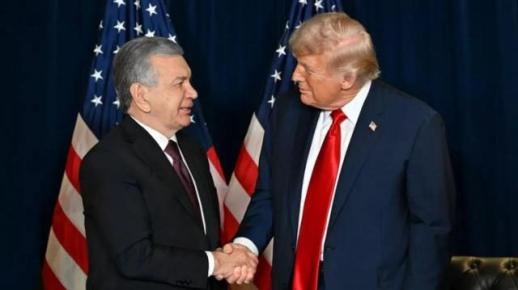 Uzbekistan joins international peace council for Gaza during Washington visit SEOUL, March 03 (AJP) - President Shavkat Mirziyoyev visited Washington from February 17 to February 19 at the invitation of United States President Donald Trump to participate in the inaugural meeting of the Peace Council. The working visit combined high-level political discussions with an extensive economic program, resulting in several agreements designed to strengthen the strategic partnership between Uzbekistan and the United States. The Peace Council is an intergovernmental initiative introduced by President Trump following a Gaza peace plan endorsed by the United Nations Security Council in November 2025. This platform serves as a mechanism to coordinate humanitarian assistance and establish institutional frameworks for the long-term reconstruction and socio-economic recovery of the Gaza Strip. The founding charter was signed in Davos on January 22, 2026, by a group of nations including Jordan, Türkiye, Saudi Arabia, and the United Arab Emirates. Uzbekistan joined the founding members to reaffirm its commitment to peaceful diplomacy and international law. The country has recognized Palestine since 1994 and has provided practical humanitarian support, including 1.5 million dollars through UNRWA in 2023 and the evacuation of 100 wounded Palestinian women and children for medical rehabilitation in late 2023. In 2025, Uzbekistan established a dedicated state fund to provide asylum, healthcare, and education for Palestinian citizens received in the country. At the February 19 meeting in Washington, which included representatives from more than 40 countries, President Trump announced that nine nations—Uzbekistan, Kazakhstan, Azerbaijan, the United Arab Emirates, Morocco, Bahrain, Qatar, Saudi Arabia, and Kuwait—had jointly pledged 7 billion dollars in assistance to Gaza. The United States committed an additional 10 billion dollars to support the council’s operations. During the session, President Mirziyoyev emphasized that any external governance framework for Gaza must rely on internal public support to ensure legitimacy and stability. He confirmed that Uzbekistan is ready to contribute to the construction of residential housing, schools, and healthcare facilities in Gaza to support both humanitarian and development goals. The economic dimension of the visit focused on a portfolio of contracts and projects exceeding 100 billion dollars, originally discussed during the 80th United Nations General Assembly in September 2025. These agreements cover aviation, mining, chemicals, energy, and innovation. Specific projects include cooperation with Denali Exploration Group and Re Element Technologies on rare earth elements, as well as partnerships with Palo Alto Networks regarding artificial intelligence. President Mirziyoyev held meetings with U.S. Secretary of Commerce Howard Lutnick, Eximbank President John Jovanovic, and U.S. Trade Representative Jamieson Greer. A formal agreement establishing a bilateral Investment Platform was signed to facilitate financing for industrial and infrastructure projects. Discussions also addressed Uzbekistan's accession to the World Trade Organization and the development of poultry clusters and agro-industrial cooperation. Trade turnover between the two countries increased 4.7-fold between 2017 and 2025, reaching 1 billion dollars. Exports from Uzbekistan are currently dominated by services, which account for 81 percent of the total, including programming and financial services. Imports from the United States primarily consist of machinery and equipment, representing 59 percent of the trade volume. As of February 2026, 346 enterprises with American capital operate in Uzbekistan. The current economic strategy aims to move beyond trade toward long-term technological partnerships in sectors such as electronics, microelectronics, and pharmaceuticals. This includes potential joint production with companies such as NVIDIA, Intel, and Qualcomm. The visit concluded with the signing of bilateral documents regarding the extraction of critical minerals, financial market reforms, and investment climate improvements. This information was released by the Embassy of Uzbekistan in South Korea on March 3. 2026-03-03 14:56:47
 -
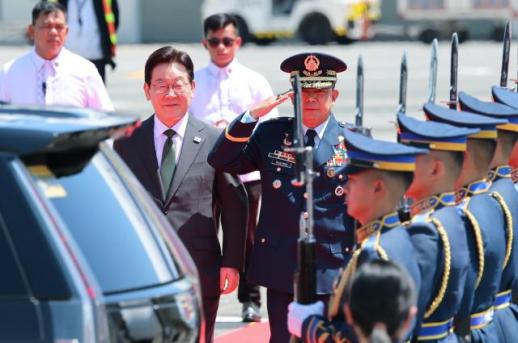 South Korean President Lee arrives in Manila for summit with President Marcos SEOUL, March 03 (AJP) - South Korean President Lee Jae Myung arrived in Manila on Tuesday afternoon for a state visit to the Philippines. The trip coincides with the 77th anniversary of the establishment of diplomatic relations between the two countries. President Lee is scheduled to hold a summit with President Ferdinand Romualdez Marcos Jr., followed by a joint press announcement and a state dinner. This is the second meeting between the two leaders since they met approximately four months ago during the Asia-Pacific Economic Cooperation (APEC) summit in Gyeongju last October. The two presidents are expected to discuss ways to expand future-oriented economic cooperation. Presidential officials said they anticipate new partnerships in sectors such as nuclear power, shipbuilding, and critical minerals. The visit also includes events focused on the shared history of the two nations. The Philippines deployed more troops to the Korean War than any other Asian country, and several stops on the itinerary are dedicated to honoring that service. Before the summit, President Lee visited the monument of Jose Rizal, the Filipino independence activist, to lay a wreath. On March 4, the second day of the visit, he will visit the Libingan ng mga Bayani, or the Cemetery of Heroes, to lay a wreath at the Korean War Memorial and meet with surviving veterans and their families. President Lee will end his visit by attending a business forum with South Korean and Filipino executives. He is also scheduled to hold a luncheon with members of the South Korean community before concluding his four-day Southeast Asian tour. 2026-03-03 14:37:05
 -
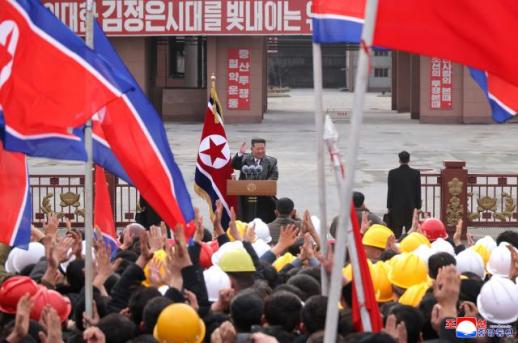 Middle East Crisis – NK condemns attack and likely recalibrate to wage own game SEOUL, March 03 (AJP) - If the U.S.-Israeli strikes that killed Ali Khamenei and the capture of Nicolás Maduro were meant to signal American reach, the leader most coldly calculating their implications would be Kim Jong-un. Pyongyang's Foreign Ministry on Tuesday condemned what it called "illegal aggression" and "hegemonic and gangster-like" behavior by Washington, according to the Korean Central News Agency. The rhetoric was familiar. The strategic takeaway is less so. Unlike Iran or Venezuela, North Korea sits in a different deterrence category. It possesses an operational nuclear arsenal and intercontinental ballistic missiles capable of reaching the U.S. mainland. That reality alone, analysts say, sharply reduces the likelihood that Washington would contemplate a leadership-targeted military option on the peninsula. "North Korea is not like Iran," said Lee Sung-yoon, principal fellow at the Sejong Institute. "North Korea has nuclear weapons and ICBMs, and information about North Korea is so insufficient that it is in a much safer position than Maduro or Khamenei." To Pyongyang, the removal of a non-nuclear state's top leadership through external force assures the United States is willing to use decapitation options if it deems them necessary and Regimes without nuclear deterrence remain vulnerable. The second message is the more powerful one in Pyongyang. Kim has repeatedly declared North Korea's nuclear status "permanent" and "completely and absolutely irreversible," pledging expansion of sea-launched and long-range ballistic systems, AI-enabled unmanned platforms and tactical rocket forces aimed at South Korea. According to the Stockholm International Peace Research Institute, the North is estimated to possess roughly 50 warheads, with fissile material for dozens more. Rather than reopening diplomatic space, the latest strikes could harden Pyongyang's conviction that nuclear capability is the ultimate insurance policy. Yet volatility could broaden the diplomatic theater. Lee argues that the shockwaves from Tehran and Caracas — far from foreclosing talks — could embolden President Donald Trump to pursue a dramatic "grand deal." Trump has previously referred to North Korea as a "nuclear power" during APEC remarks in late 2025 and publicly signaled openness to another meeting. A potential inflection point looms in April, when Trump is scheduled to visit Beijing — a trip that could create space for quiet triangular signaling involving Pyongyang. Kim's recent engagements with Vladimir Putin and Xi Jinping have elevated his diplomatic posture, reinforcing his self-image as a peer rather than a supplicant. "Kim's status has been greatly elevated," Lee said. "By meeting with Trump, he may aim for partial troop withdrawal, arms-control style talks instead of denuclearization, and de facto recognition as a nuclear-armed state." Kim's January address framed the choice starkly: "peaceful coexistence or eternal confrontation." He insisted the future of relations depends "entirely on the attitude of the U.S. side," while leaving open the possibility of talks if Washington ends what Pyongyang calls hostile policies — namely joint U.S.-South Korea military drills and sanctions. 2026-03-03 11:13:37