
Journalist

Lu Rui
swatchsjp@ajunews.com
-
 KAIST and Korea University develop new AI knowledge transfer technique for different models SEOUL, January 27 (AJP) - Researchers from the Korea Advanced Institute of Science and Technology (KAIST) and Korea University announced on January 27 that they have developed a new technology called TransMiter, which allows for the efficient transfer of learned knowledge between different artificial intelligence models. This innovation addresses the significant inefficiency of having to retrain high-performance AI models from scratch whenever a new version is released. Currently, Vision-Language Models (VLM) like ChatGPT are rapidly advancing, allowing AI to understand both text and images. These models are pre-trained on massive datasets and can adapt to specific tasks using small amounts of additional data. However, if a user switches to a newer or different model, this adaptation process must be repeated, consuming vast amounts of computational power, time, and money. Existing techniques often fail if the model architecture changes even slightly, or they require running multiple models simultaneously, which increases memory costs. The research team, led by Professor Kim Hyun-woo, developed TransMiter as a transferable adaptation technique that works regardless of a model's structure or size. The core of the technology is moving the adaptation experience gained by one AI directly to another. Instead of modifying the complex internal architecture of the AI, the system looks at the output and transfers the learned know-how to a new model. By aligning the answers two different AI models provide for the same question, the researchers proved that the expertise of one model can be utilized by another immediately. This method eliminates the need for expensive backpropagation—the standard, repetitive process used to train AI parameters—and instead uses a simple linear alignment. This allows for nearly zero loss in inference speed and significantly lower training costs. The significance of this study lies in being the first to prove that adaptation knowledge can be precisely transplanted across different types of AI. The researchers believe this could lead to a new era of knowledge patches for large language models, where specific expert knowledge can be added or updated in real time without full retraining. Professor Kim Hyun-woo explained that this research could drastically reduce the cost of post-training required every time a new large-scale model is introduced. He noted that the technology enables a model patch system that easily integrates professional knowledge into existing systems. The study included co-authors Song Tae-hun, a master's student at KAIST, Lee Sang-hyuk, a postdoctoral researcher at KAIST, and Park Ji-hwan, a doctoral student at Korea University. The findings were presented on January 25 at the Association for the Advancement of Artificial Intelligence (AAAI) 2026, a top-tier international conference in the field of AI, where it was selected for oral presentation with a highly competitive 4.6 percent acceptance rate. (Paper information) Journal: Association for the Advancement of Artificial Intelligence (AAAI) 2026 Title: Transferable Model-agnostic Vision-Language Model Adaptation for Efficient Weak-to-Strong Generalization DOI: https://doi.org/10.48550/arXiv.2508.08604 2026-01-27 15:03:05
 -
 Indian envoy pledges to deepen strategic partnership with S. Korea at Republic Day celebration SEOUL, January 27 (AJP) - The Indian Embassy in South Korea held a reception on January 26 to celebrate India's 77th Republic Day, marking a period of rapid expansion in economic and defense ties between the two nations. The event, held at Sevit Island on the Han River, drew approximately 400 guests, including diplomats, government officials, business leaders, and academics. The gathering commemorated the anniversary of the adoption of India's constitution in 1950, a milestone that Indian Ambassador Gourangalal Das described as a "pledge to democracy" that continues to shape the country's trajectory. In his keynote address, Ambassador Das detailed India's recent structural reforms and technological progress, arguing that the nation's shift toward high-tech manufacturing offers significant opportunities for South Korean partners. "The enterprises transformed seamlessly from digital to the AI, from three nanometer chips designed in Bangalore to the world's heaviest rocket ever launched," Das said. He noted that the "special strategic partnership" between the two countries has intensified over the past year, supported by two summit-level meetings and frequent interactions between foreign ministers. The ambassador highlighted the recent success of major South Korean corporations in India as evidence of this momentum. He specifically mentioned the successful Indian market activities of LG Electronics, Daewoo Securities' expansion, and Mirae Asset's milestone as the only wholly-owned foreign asset management firm among India's top ten. "Hyundai Motor's newly planned investments and Posco's new ambitions in India—they all made headlines in both countries," Das said. He also noted that the Indian government is providing specific incentives for South Korean companies to collaborate in the semiconductor and shipbuilding sectors. The event also underscored the strengthening of security ties. Lim Sang-woo, the Ambassador for Public Diplomacy at the South Korean Ministry of Foreign Affairs, delivered a congratulatory speech reflecting on the growing trust between the two countries. Ambassador Lim, who recently returned to Seoul after a three-year posting in India, said the defense partnership has evolved beyond traditional sales into deep technological collaboration. "The agreement on a second batch of K9 Vajra self-propelled howitzers speaks to the depth of our defense collaboration," Lim said. He added that the South Korean Defense Ministry is "ready to deliver world-class systems" to India on schedule. Both speakers pointed to the first-ever bilateral joint naval exercises, held last October, as a critical foundation for stability in the Indo-Pacific region. Engagement between the two capitals is set to increase in 2026. Ambassador Lim confirmed that President Lee Jae Myung is planning a visit to India later this year to advance the partnership into its second decade. Ambassador Das noted that the human element of the relationship remains a priority, citing the recent opening of the Korea Education Center in India as a "living embodiment" of the cultural ties between the two societies. 2026-01-27 14:21:29
 -
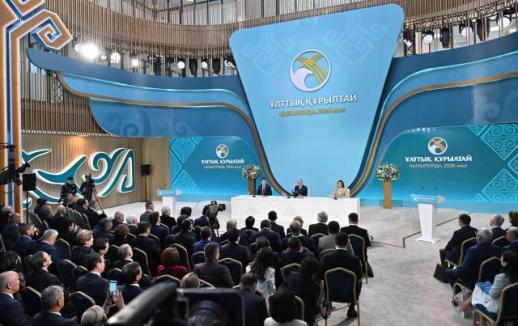 Kazakhstan president proposes vice presidency and unicameral parliament in major reform push SEOUL, January 26 (AJP) - President Kassym-Jomart Tokayev announced a major overhaul of the national government on January 20, proposing the creation of a vice presidency and a transition to a single-chamber legislature. Speaking at the National Kurultai in Kyzylorda, the president outlined a series of constitutional amendments intended to modernize the state system. The proposal includes the establishment of a Vice President who would represent South Korea's neighbor on the international stage and handle coordination with the parliament. President Kassym-Jomart Tokayev stated that while the reform introduces new leadership roles, the country will remain a presidential republic. The plan calls for the current two-house system to be replaced by a unicameral parliament known as the Kurultai. Under this model, the legislature would consist of 145 deputies elected for five-year terms through a proportional representation system. The reform would also grant the parliament the authority to approve judges for the Supreme Court and members of the Central Election Commission. Regarding political stability, the president proposed strict rules for succession. If a president leaves office early, a national election must be held within two months to ensure the next head of state is chosen through a public vote. On foreign policy, President Kassym-Jomart Tokayev advocated for a pragmatic approach focused on national interests. He noted that diplomacy should serve as a tool for compromise rather than confrontation. He also announced the creation of the Khalyk Kenesi, or People's Council, an advisory body that will have the right to suggest new laws. Economic priorities mentioned in the address included the expansion of artificial intelligence and the development of high-capacity data centers. The president also discussed Kazakhstan's goal of becoming a primary transport hub for the Middle Corridor, which links trade routes between the East and the West. According to a report from the Astana Times on January 24, 2026, a Constitutional Commission has already been formed to draft these amendments for a planned national referendum. 2026-01-26 16:54:34
 -
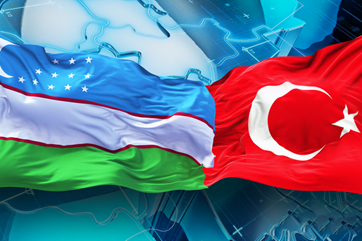 Uzbekistan president to visit Türkiye for strategic council meeting and earthquake housing ceremony SEOUL, January 26 (AJP) - Uzbek President Shavkat Mirziyoyev will travel to Türkiye on January 29 for an official visit centered on deepening bilateral strategic ties and inaugurating housing projects for earthquake survivors, the Embassy of Uzbekistan in the Republic of Korea said Monday. The visit includes the fourth meeting of the Supreme Council for Strategic Cooperation, an institutional platform designed to coordinate high-level policy between the two nations. During his stay, President Shavkat Mirziyoyev is scheduled to participate in an online ceremony to open residential complexes in the Arsuz district of Hatay Province. These facilities were constructed by Uzbekistan to support communities displaced by the powerful earthquakes that struck southeastern Türkiye in February 2023. The Arsuz and Gaziantep regions were among the most severely impacted areas, suffering widespread destruction of social and industrial infrastructure. The residential project in Arsuz was funded by the Uzbek government and provided to Turkish citizens free of charge. This follows immediate relief efforts in 2023, during which specialized units from the Ministry of Emergency Situations of Uzbekistan and medical brigades were deployed to assist in search-and-rescue operations. Political and economic relations between the two countries have expanded since the establishment of a strategic partnership in 2017. The Supreme Council for Strategic Cooperation, established in 2018 and co-chaired by the presidents of both nations, serves as the primary mechanism for bilateral dialogue. Previous sessions were held in Ankara in 2020 and 2024, and in Tashkent in 2022. Economic data indicates steady growth in trade, which reached approximately 3 billion USD by the end of 2025. This growth has been supported by a Preferential Trade Agreement signed in 2023. Beyond trade, the two nations maintain significant connectivity, with nearly 100 flights operating between them each week. The partnership also extends to cultural and multilateral cooperation through the Organization of Turkic States. Recent cultural initiatives include the installation of a monument to Alisher Navoi in Ankara and academic conferences honoring historical figures such as Abu Rayhan Beruni. The upcoming summit in Ankara is expected to focus on further integrating trade, energy, and transport corridors, including the development of regional connectivity between Central Asia and international markets through Türkiye. 2026-01-26 15:54:53
 -
 S. Korea's KAIST researchers develop AI that fixes messy lab data to build better batteries SEOUL, January 26 (AJP) - South Korean researchers have built an AI system that predicts how to make better batteries, even when the data from previous lab tests is messy or incomplete. This new tool helps scientists skip the long, expensive process of trial and error by figuring out the best recipe for battery materials before they ever step into the lab. The Korea Advanced Institute of Science and Technology (KAIST) announced on January 26 that a team led by Professor Hong Seung-bum and Professor Jo Eun-ae developed this machine learning framework. It focuses on the cathode, the part of the battery that acts like a tank for storing energy. In most electric vehicles today, this tank is made of a mix of nickel, cobalt, and manganese, commonly called NCM. The secret to a long-lasting battery often lies in the size of the tiny particles that make up the cathode. If these particles are too big, the battery struggles to charge and discharge efficiently. If they are too small, the battery can become unstable. Finding the right size is essential for making electric cars go further and smartphones last longer. Until now, scientists had to spend months baking materials at different temperatures and for different amounts of time to see what size particles they would get. To make matters worse, lab records are rarely perfect. Sometimes a researcher forgets to record a temperature, or a measurement is missed, leaving gaps in the data that make it hard for traditional computers to learn the pattern. The South Korean team solved this by creating a two-part AI system. The first part, called MatImpute, acts like a smart autofill. It uses the laws of chemistry to guess what the missing lab data should have been. The second part, a model called NGBoost, then predicts the final particle size. What makes this AI different is that it does not just give a single answer; it also tells researchers how sure it is. For example, it might say, "I am 95 percent certain the particles will be this size." This helps scientists decide which experiments are actually worth their time. When the researchers tested the AI, it was right about 86.6 percent of the time. They even tried it on four brand-new recipes that the AI had never seen before. The AI predicted the particle sizes with an error of less than 0.13 micrometers, a distance much thinner than a human hair. The study showed that the way a material is cooked, including the temperature and time, actually matters more than the specific chemical ingredients when it comes to particle size. This insight will allow researchers to develop next-generation batteries, like all-solid-state versions, much faster than before. The research was led by Benediktus Madika, a doctoral student at the Korea Advanced Institute of Science and Technology, and was published in the journal Advanced Science on October 8, 2025. The project was supported by the Ministry of Science and ICT. (Paper information) Journal: Advanced Science Title: Uncertainty-Quantified Primary Particle Size Prediction in Li-Rich NCM Materials via Machine Learning and Chemistry-Aware Imputation DOI: https://doi.org/10.1002/advs.202515694 2026-01-26 15:46:57
 -
 Krafton executives meet Indian ambassador to discuss tech investment SEOUL, January 26 (AJP) - Krafton announced on January 23 that it held talks with Indian Ambassador to South Korea Gourangalal Das at its Seoul headquarters to outline plans for expanded technology cooperation and investment in India. Ambassador Das met with senior Krafton executives, including Board Chairman Chang Byung-gyu and Kim Nak-hyung, the head of the company's India and emerging markets division. Deputy Chief of Mission Nishi Kant Singh also attended. The group exchanged views on the current state of India's technology ecosystem, covering artificial intelligence, digital content, and entertainment. They also discussed how private sector investment from South Korea could support broader industrial growth in India. The talks centered on the "KRAFTON-NAVER-MIRAEASSET Unicorn Growth Investment Fund." This investment vehicle is being established by Krafton in partnership with Naver and Mirae Asset Group. The fund, which targets a total size of up to 1 trillion won, aims to pool resources from leading South Korean corporations to support startups. Krafton intends to use this initiative to increase its mid-to-long-term investments in promising Indian technology firms. "India is rapidly growing as a core hub for global technology innovation, and it is significant that South Korean companies are expanding long-term cooperation and investment centered on the Indian market," Ambassador Das said. "We expect that private sector-led investment, including that of Krafton, will play an important role in helping Indian technology companies and startups grow and leap into the global market." Chairman Chang noted that Krafton views the region as more than just a consumer base. "For Krafton, India is not merely a market for overseas sales but a strategic partner country where we have built trust and standing through 'Battlegrounds Mobile India'," Chang said. "Based on this experience, the Unicorn Growth Investment Fund will serve as a starting point to expand cooperation with promising Indian enterprises beyond gaming into various industrial sectors." Krafton stated it plans to continue identifying investment targets through the fund and will look for further opportunities to link the South Korean and Indian technology sectors. 2026-01-26 10:14:29
 -
 German embassies in Seoul and Tokyo to host amateur League of Legends tournament SEOUL, January 23 (AJP) - The Embassy of Germany in Seoul and the Embassy of Germany in Tokyo have announced a joint esports tournament, ".DE (Diplomacy Meets Esports)," scheduled to culminate in Tokyo this March. The event will gather amateur League of Legends teams from South Korea, Japan, and Germany to compete in a tri-nation format intended to blend competitive gaming with cultural diplomacy. The initiative follows recent major esports events in the host nations, with South Korea hosting the League of Legends World Championship in 2023 and Germany hosting the event in 2024. While South Korea is established as a global powerhouse in the title, producing prominent professional players such as Faker and Showmaker, the tournament organizers noted that gaming infrastructure and player bases in Germany and Japan have seen significant professionalization and growth in recent years. The competition is open to selected amateur gamers. Online regional qualifiers are scheduled for February 7 in South Korea and February 11 in Japan. Registration for these qualifiers runs from January 15 to January 30, with the official rulebook set for release on January 21. An official Discord server will function as the central hub for tournament updates and coordination. The winning teams from the South Korean and Japanese qualifiers will advance to the offline final in Tokyo on March 1. They will be joined by a specially invited team from Germany. The Embassies stated that the project aims to recognize esports as a central component of modern youth culture and to facilitate exchange between digitally native audiences in the three countries. Winners of the regional qualifiers will receive support for travel and accommodation to attend the final in Tokyo. Participation requires parental consent for minors, defined as individuals under 19 in South Korea as of January 30, and under 18 in Japan. The offline final on March 1 will be broadcast live via YouTube and Twitch. 2026-01-23 15:12:57
 -
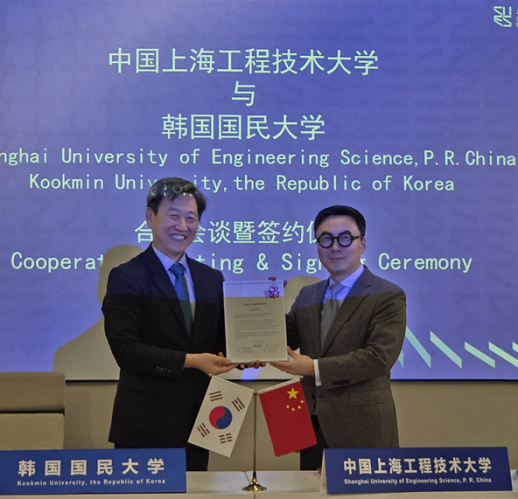 Kookmin University launches international design award emphasizing educator-student collaboration SEOUL, January 23 (AJP) - Kookmin University announced the launch of the "DBEW AWARD 2026," an international design competition organized in partnership with the Association for Industrial Design (ADI). The award aims to highlight the educational process and collaboration between students and instructors rather than focusing solely on finished design products. The award distinguishes itself from traditional design competitions by evaluating the mentorship and cooperative efforts that lead to creative outcomes. It is the first global design award to explicitly assess and recognize the leadership and mentoring capabilities of educators alongside student work. The initiative seeks to establish a new standard in design education by fostering convergence across technology, humanities, and design. "In the era of artificial intelligence, the role of education in fostering human thinking and collaboration becomes increasingly important," said Jeong Seung-ryul, president of Kookmin University. "We hope the DBEW AWARD will establish itself as a global platform where design educators and students from around the world can design the future together." The competition is open to undergraduate and graduate students, as well as new designers who have graduated within the last two years. Participants must form a team consisting of a student (or students) and an educator acting as a mentor. Submitted works must have been created within the past two years. Categories include Space and Architectural Design, Product and Fashion Design, and Visual, Communication, and Service Design, which encompasses AI, digital media, and branding. A multidisciplinary panel of jurors from the fields of design, architecture, and curation will evaluate entries. The jury includes Paola Antonelli, senior curator at the Museum of Modern Art (MoMA); John Thackara, a leading voice in sustainability; industrial designer Stefano Giovannoni; architect Daniel Libeskind; Korean architect Cho Byoung-soo; and Lou Yongqi, president of Shanghai University of Engineering Science. "The core of the DBEW AWARD is the attitude of embracing fresh ideas through a cooperation model between students and professors," said juror Cho Byoung-soo. "The point of contemplating how to interact and present new visions, rather than dividing East and West dichotomously, differentiates this from other awards." Evaluation criteria cover six areas: originality, innovation, thematic relevance, aesthetic completeness, sustainability and social responsibility, and expressiveness. "While many design awards exist, prizes focusing on the joint creation of educators and students are very rare," said Lou Yongqi. "By bringing the value of human collaboration and education to the forefront in the age of artificial intelligence, the DBEW AWARD will present a new direction." Choi Kyung-ran, a professor at Kookmin University and the chairperson of the DBEW Award steering committee, explained that the award evaluates the entire sequence where the creative process of education leads to an outcome. She noted that global opinion leaders joined the jury because they aligned with the importance of the award's theme, which seeks sustainable design transcending East and West. The submission deadline is March 15, 2026, with final results scheduled for announcement on March 25. The total prize pool is 25,000 US dollars. An awards ceremony and forum will take place on April 21, 2026, at the ADI Design Museum in Milan during Milan Design Week. A subsequent exhibition is planned for October 2026 at the Dongdaemun Design Plaza (DDP) during Seoul Design Week. 2026-01-23 11:09:28
 -
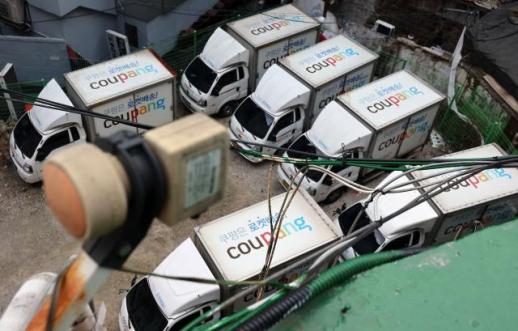 Dispute deepens as US investors seek probe into 'discriminatory' actions against Coupang SEOUL, January 23 (AJP) - The dispute between Coupang and South Korean regulators appears to have turned into a potential diplomatic issue after the e-commerce giant's U.S. investors urged the Trump administration to investigate Seoul over alleged unfair trade practices. Greenoaks Capital and Altimeter Capital, the two largest shareholders of the New York-listed company, filed a petition on Thursday, requesting the Office of the U.S. Trade Representative (USTR) launch an investigation under Section 301 of the Trade Act of 1974. Simultaneously, the two submitted a Notice of Intent to initiate arbitration against the South Korean government under the investor-state dispute settlement (ISDS) provisions of the Korea-United States Free Trade Agreement (KORUS FTA). The dual filings are seen as a bold move in the investors' strategy. By citing Section 301, a powerful trade tool that allows a U.S. president to impose retaliatory tariffs, the shareholders are seeking to leverage U.S. President Donald Trump's "America First" mantra to pressure Seoul. The USTR must decide within 45 days whether to launch a formal investigation. In a joint petition, the investors alleged that the South Korean government is engaging in "discriminatory and expropriatory" actions against Coupang following a data breach detected in November last year. Greenoaks and Altimeter argued that the aggressive regulatory probes, which include threats to suspend the company's business license, are politically motivated attacks intended to dismantle a successful American firm. "A multi-year pattern of selective government enforcement and escalating regulatory pressure singling out Coupang, marked by extraordinary investigations, audits, and on-site inspections that appear to far exceed the regulatory scrutiny imposed on domestic Korean and Chinese competitors," the joint petition stated. Greenoaks and Altimeter added that the South Korean government's actions against Coupang appear intended to "target, disable, and destroy an innovative American competitor," urging the USTR to consider retaliatory duties on South Korean exports if the alleged harassment continues. The investors also claim that by targeting Coupang, the South Korean government is inadvertently aiding Chinese e-commerce platforms compete for market share in the country, citing remarks by South Korean President Lee Jae-myung and Fair Trade Commission Chairman Joo Byung-ki as evidence of hostility toward the U.S.-backed company. South Korean officials have moved quickly to reject these claims, insisting the investigation is a legitimate response to a security breach that exposed the personal data of nearly 34 million citizens. Prime Minister Kim Min-seok, currently visiting the United States, personally addressed the controversy during a lunch with U.S. lawmakers in Washington, D.C., on Friday. "There is absolutely no discrimination against Coupang," Kim told the legislators. "The trust between South Korea and the U.S. is deep enough that there is no need to worry about discriminatory treatment." Kim drew a parallel to the "Georgia incident" involving Korean workers in the U.S., noting that Seoul did not view that event as national discrimination. He explained that the government is not taking measures against Coupang simply because it is an American company, seeking to draw a line under suspicions raised by the U.S. tech sector. This follows earlier diplomatic efforts by Trade Minister Yeo Han-koo, who reportedly met with U.S. Trade Representative Jamieson Greer in Washington last week to clarify Seoul's position. The diplomatic maneuvering comes amid intense domestic scrutiny of Coupang. Public sentiment has plunged following a series of parliamentary hearings in which interim CEO Harold Rogers was criticized for his "audacious" behavior. Rogers, who reportedly refused to use official interpretation services or provide contact information during questioning, fled the country on January 13 just before a travel ban could be imposed. Fueling public anger is further controversy over the company's compensation plan for the data breach. Distributed starting January 15, the package offers 50,000 won ($35) in purchase vouchers, but consumers have criticized the offer as a "marketing tactic." Users note that the vouchers are largely limited to Coupang's luxury and travel subsidiaries rather than its core delivery service. The South Korean government has formed a joint task force involving the Ministry of Justice and the Ministry of Trade, Industry and Energy to prepare for the potential arbitration and the USTR's decision on the petition. 2026-01-23 10:32:41
 -
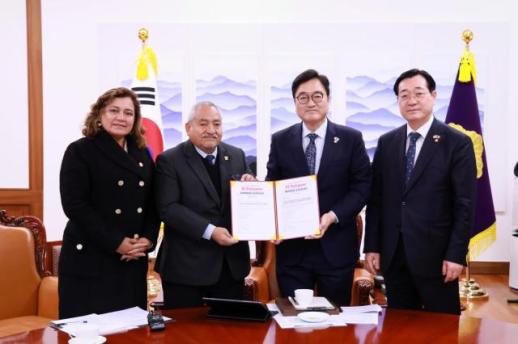 Peru designates April 1 as 'Korea Friendship Day' during parliamentary visit to Seoul SEOUL, January 22 (AJP) - A delegation of Peruvian lawmakers visited Seoul last week to strengthen diplomatic ties, presenting a newly approved law that designates April 1 as "Korea Friendship Day" to recognize the contributions of the South Korean community to Peru. Congressman Víctor Seferino Flores Ruiz, president of the Peru–Korea Parliamentary Friendship League, and Congresswoman Silvia María Monteza Facho led the official visit from January 11 to 17. The trip focused on enhancing the parliamentary relationship between Peru and South Korea. During a meeting with South Korean National Assembly Speaker Woo Won-shik, Flores presented a physical copy of Law No. 32519, which was recently passed by the Peruvian Congress. The law establishes the commemorative day to acknowledge the role South Koreans have played in Peru's sustainable development. Flores also submitted a draft Joint Declaration proposing regular meetings between the parliamentary friendship groups of both nations to institutionalize their cooperation. Speaker Woo expressed appreciation for the designation of the friendship day and noted the South Korean legislature's own efforts to promote the inclusion of migrant populations. The Peruvian delegation also held talks with National Assembly member Min Hong-chul, president of the Korea–Peru Parliamentary Friendship League. The discussions covered legislative cooperation and the broader bilateral relationship, which was elevated to a Comprehensive Strategic Partnership in 2012. Min highlighted the strong cooperation between the two nations, particularly in the defense sector, and recalled his own official visit to Peru in 2025 where the friendship leagues held a joint working meeting. As part of the itinerary, the visiting lawmakers paid tribute at the War Memorial of Korea and visited the United Nations Hall. Peru is recognized there as one of the 39 nations that provided material support to South Korea during the Korean War, demonstrating solidarity before the formal establishment of diplomatic relations in 1963. The visit underscored the commitment of both nations to deepen political dialogue and celebrate more than six decades of diplomatic engagement. 2026-01-22 16:31:22