
Journalist

Mashrab Mamirov
swatchsjp@ajunews.com
-
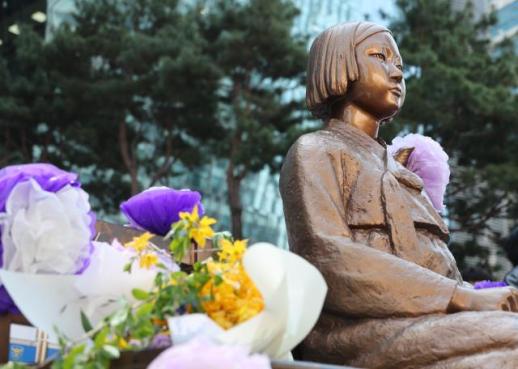 Police 'liberate 'iconic Statue of Peace for first time in six years SEOUL, May 06 (AJP) - The barricades surrounding the Statue of Peace were dismantled by police on Wednesday after six years of isolation and confinement. The bronze monument, which symbolizes victims of Japanese wartime sexual slavery, is now publicly accessible and free from the immediate threat of vandalism. The Statue of Peace depicts a teenage girl sitting on a chair, staring toward the former site of the Japanese embassy in central Seoul. Since its first installation in 2011, approximately 200 similar statues have been placed worldwide in cities such as Washington DC, Sydney, Toronto, and Shanghai. The barriers had been in place since June 2020 to shield the site from aggressive pro-Japan activists and historical revisionists. During a celebratory event on Wednesday, supporters described the removal as the liberation of the statue. The action coincided with the 1,751st weekly demonstration held near the former Japanese Embassy in central Seoul. Activists from the Justice Memory Solidarity prepared for the opening by cleaning the statue with wet wipes and placing a purple floral wreath on its head. Han Kyung-hee, the chairperson of the Justice Memory Solidarity, told the crowd that the statue has finally returned to the arms of the citizens after five years and 11 months. She said that while the public had been unable to sit in the empty chair beside the girl for years, they never stopped fighting for its protection. The barricades were originally requested by the activist group itself as a desperate measure to prevent the statue from being defaced by far-right protesters. Tensions at the site had escalated in 2019 as groups began demanding the removal of the monument while shouting historical denials. The legal path for the removal opened after Kim Byeong-heon, the leader of a prominent revisionist group, was arrested in March. He faces charges of defaming the deceased victims by publicly denying the forced nature of their ordeal. Investigations by South Korean prosecutors revealed that Kim's activities were supported by approximately 76 million won ($5,222) in funding from Japanese donors. The prosecution stated that this money was used as the primary engine for his long-term campaign to erase the history of the victims. According to historical records from the National Institute of Korean History, the Imperial Japanese Army systematically forced an estimated 200,000 women into sexual slavery during the Pacific War. These victims, many of whom were young South Korean girls, were transported to frontline brothels across the Pacific front where they were subjected to repeated forced sexual violence. The Statue of Peace incorporates specific details to reflect this history, including short, uneven hair that represents the girl being forcibly torn from her family. Her bare feet and lifted heels symbolize the restless spirits of victims who were unable to find peace or a sense of home after the war ended. The monument is officially registered as the first public artwork of the Jongno District and is managed by the local government. Police officials confirmed they will continue to deploy personnel to the area to ensure the safety of the site following the removal of the physical barriers. 2026-05-06 14:35:56
 -
 KAIST researchers develop silicon-based hardware for complex optimization problems SEOUL, May 06 (AJP) - Researchers at the Korea Advanced Institute of Science and Technology have developed a silicon-based hardware platform designed to solve complex combinatorial optimization problems, the institute said Wednesday. A joint research team led by the Korea Advanced Institute of Science and Technology (KAIST) Professors Choi Yang-kyu and Kim Sang-hyun from the School of Electrical Engineering succeeded in implementing an oscillatory Ising machine using standard silicon semiconductor processes. The system uses multiple vibrating elements, or oscillators, that interact with each other to naturally reach an energy-stable state representing the optimal solution. Combinatorial optimization involves finding the most efficient answer among a vast number of possibilities. These problems are central to logistics, financial portfolio management, and semiconductor circuit design, but they often overwhelm traditional computing architectures as the scale of data increases. The researchers addressed technical hurdles in previous Ising machines, such as frequency deviations between oscillators and limited connectivity. They introduced a new approach where both the oscillators and the couplers, which control interaction strength, are implemented using single silicon transistors. By using the floating body characteristics of transistors, the team created oscillators that can have their frequencies precisely adjusted via gate voltage. This method reduces synchronization errors and allows for multi-bit coupling, which enables the system to reflect the specific weights and importance of various conditions in a complex problem. The hardware was successfully tested on the Max-Cut problem, a representative optimization task used to maximize connections when dividing a network into two groups. Because the technology uses standard complementary metal-oxide-semiconductor (CMOS) processes, it can be mass-produced using existing South Korean semiconductor production lines without additional equipment investment. "This research is Ising machine hardware that has secured both scalability and precision by implementing both oscillators and couplers with silicon devices," Professor Choi Yang-kyu said. "It is expected to be applied to various industrial fields requiring large-scale combinatorial optimization, such as semiconductor design automation, communication network optimization, and resource distribution." The study, co-authored by doctoral student Yoon Seong-yun and Dr. Kim Joon-pyo, was published in the journal Science Advances on March 27, 2026. (Reference Information) Journal/Source: Science Advances Title: Scalable Ising machine composed entirely of Si transistors Link/DOI: 10.1126/sciadv.adz2384 2026-05-06 09:18:30
 -
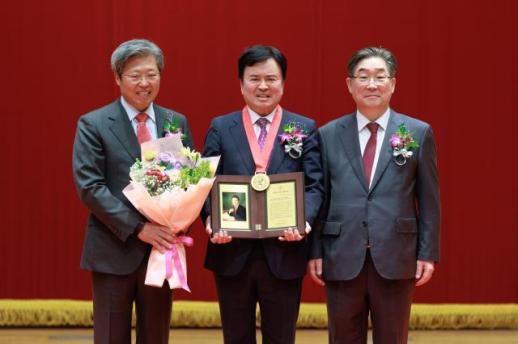 Aju News Corporation Chairman Kwak Young-kil receives Korea University Alumni Award SEOUL, May 05 (AJP) - Aju News Corporation Chairman Kwak Young-kil received the Proud Korea University Alumni Award on Tuesday, using the platform to advocate for a transition to spirit-centered artificial intelligence to ensure human control over technology. The award recognizes the contributions Kwak has made to South Korean media and his philosophical approach to the intersection of humanities and technology. His speech at the ceremony defined a new vision for artificial intelligence governance, emphasizing that spiritual values must guide technological advancement. Korea University President Kim Dong-won presented the award during a ceremony marking the 121st anniversary of the institution at the Inchon Memorial Hall in Seoul. Samyang International Chairman Huh Kwang-soo and Ace Bed Chief Executive Officer Ahn Sung-ho were also honored with the alumni award for their contributions to society and the university. University officials cited the career-long dedication of Kwak to reporting truth and his pioneering spirit. They noted his affection for his alma mater and his commitment to nurturing future scholars as key reasons for his selection. Kwak, who graduated from the Department of English Language and Literature in 1974, said the most important lesson he learned was a humanities mindset rather than just language. He described his academic background as a door to spirituality that transcends linguistic boundaries. The chairman emphasized that the core driving force of the current era must be spirituality. He noted that while he focused on human-centered artificial intelligence a decade ago, the rapid evolution of technology now necessitates a shift toward spirit-centered systems. If spirituality cannot govern artificial intelligence, humans will inevitably be dominated by technology, Kwak told the audience. He added that the essence of this spirituality aligns with the university's core values of liberty, justice, and truth. As a media executive, Kwak highlighted his efforts to promote South Korean industries, including the defense sector, through multilingual news systems. He expressed a desire for Korea University to serve as a lamp for humanity in the age of artificial intelligence. During the ceremony, KNet Investment Partners Chief Executive Officer Kim Dae-young and Eugene Investment and Securities Chief Executive Officer Yoo Chang-su also received the Social Service and Development Contribution Award. 2026-05-05 17:46:37
 -
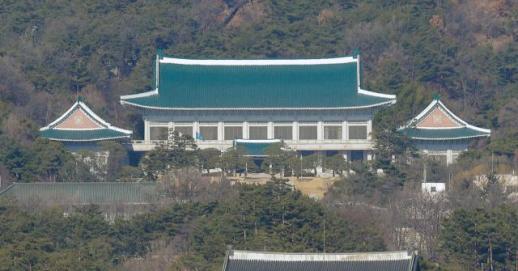 South Korea reviews Hormuz mission after Trump demands military support SEOUL, May 05 (AJP) - The South Korean presidential office Blue House announced Tuesday it is reviewing military participation in a United States-led maritime operation following an explosion on a South Korean cargo ship. The move indicates a shift in Seoul's policy as it evaluates international maritime security against its own domestic legal requirements and peninsula defense needs. The HMM NAMU, a vessel operated by the flagship carrier HMM, suffered an explosion and fire at 8:40 p.m. (1140 GMT) on Monday near the United Arab Emirates. All 24 crew members, including six South Korean nationals, are confirmed safe, but the ship remains inoperable and requires towing to a nearby port for a forensic inspection. The Blue House said that the government is considering the military proposal while accounting for the defense posture of the Korean Peninsula and domestic legal procedures. Officials emphasized that the safety of international shipping lanes and the freedom of navigation are core principles that must be protected under international law. Seoul is currently "noting" the recent public comments made by Donald Trump, who claimed on Truth Social that Iran was responsible for the blast and urged South Korea to join a mission called Project Freedom. The presidential office confirmed that it is maintaining close communication with Washington regarding the stable use of major sea lanes in the region. The government is also coordinating with relevant nations to conduct a thorough investigation into the cause of the explosion and fire. Officials stated that the safety of South Korean citizens and vessels remains the primary focus while the technical origins of the incident are determined. The Blue House stated it will implement corresponding follow-up measures as soon as the results of the investigation are confirmed. 2026-05-05 17:30:03
 -
 South Korea's annual labor hours drop to 1,739 by 2030: data SEOUL, May 05 (AJP) - South Korea is projected to reduce its annual labor hours to 1,739 by 2030, a shift that signals the nation's gradual departure from a culture of long-duration work toward global standards, data released by the Ministry of Employment and Labor showed Tuesday. The trajectory, identified in a report by the Korean Association of Industrial Relations, meets the objective of the lbor ministry to align with the average of the Organisation for Economic Co-operation and Development. It marks a significant move for a country that has historically maintained one of the most grueling work schedules in the developed world. Progress has already been substantial, according to recent data. Annual work hours dropped from 1,996 in 2017 to 1,859 in 2024, representing a reduction of 137 hours over a seven-year period. This decline stems primarily from legal reforms, including the implementation of the 52-hour maximum work week and the wider adoption of the five-day system. These measures successfully targeted long-duration labor by reducing the number of employees working far beyond the standard 40-hour limit. Despite the improvement, the report warns that the current pace may be difficult to maintain. South Korea still ranks sixth for the longest working hours among 37 OECD member states, trailing only nations such as Mexico, Colombia, and Costa Rica. A primary obstacle remains the structural rigidity of the South Korean labor market. Over 53 percent of the workforce is concentrated in a strict 40-hour weekly schedule, a lack of diversity that researchers say prevents further natural reductions. In contrast, only 12.5 percent of French workers and 30.9 percent of German workers follow such a uniform pattern. Within the European Union, only Luxembourg and Portugal show a similar concentration of 40-hour work weeks, at 55.4 percent and 57.3 percent, respectively. Cultural norms regarding leisure further complicate the transition. While nearly 50 percent of the workforce in major European nations takes leave during the summer, only 3 percent of South Korean workers do the same. The disparity is often attributed to office environments where employees feel pressured to avoid taking consecutive days off. To address this, the report suggests the government must expand the range of available work arrangements and foster a culture where workers can fully utilize their annual leave. Researchers also emphasized the need to protect industrial output during this shift. The report argued that a simple cap on hours is insufficient and that the government must ensure shorter hours are paired with increased efficiency to prevent a drop in national productivity. The Ministry of Employment and Labor established a dedicated task force for reducing actual working hours in September last year. It followed this with a joint declaration and a specific policy roadmap in December. 2026-05-05 15:05:17
 -
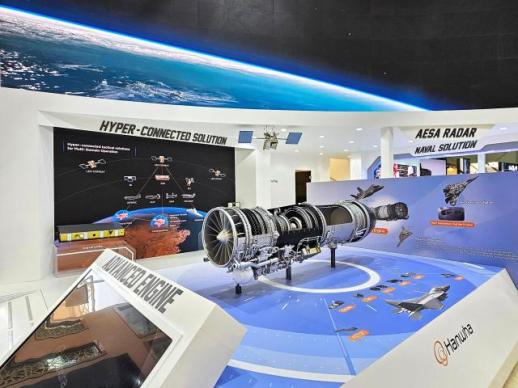 Hanwha Aerospace increases Korea Aerospace Industries stake to pursue management role SEOUL, May 05 (AJP) - South Korea's defense powerhouse Hanwha Aerospace has increased its stake in Korea Aerospace Industries to 5.09 percent and changed its investment status to management participation, signaling a drive to consolidate South Korea's defense and space sectors. The company plans to invest a total of 500 billion won to reach an 8.03 percent stake by the end of the year. This shift positions Hanwha to influence the decision-making processes of South Korea's sole indigenous aircraft manufacturer as it seeks to build a vertically integrated aerospace powerhouse. Hanwha Aerospace disclosed on the fourth of the month that it acquired an additional 100,000 shares, representing 0.1 percent of the company. The purchase brought the combined holdings of Hanwha Aerospace and its affiliates past the five percent threshold. The firm officially reclassified its holding from a simple investment to management participation in a recent regulatory filing. While specific methods of involvement are still under review, the company stated it would participate in decision-making through legal procedures to meet management objectives. Hanwha Aerospace noted it would consider the interests of shareholders and stakeholders during this process. The company currently maintains domestic competitiveness in aircraft engines, avionics, radar, and space launch vehicles. The expansion is interpreted as the final piece of Hanwha Group's defense strategy to create a South Korean version of SpaceX. By combining its engine expertise with the airframe and satellite capabilities of Korea Aerospace Industries (KAI), the group aims to secure an end-to-end aerospace value chain. Market analysts suggest the increased stake and change in investment purpose serve as a foundation for an eventual takeover of the aircraft manufacturer. KAI remains the only domestic firm capable of developing and producing complete aircraft and advanced aerial combat systems. 2026-05-05 14:52:54
 -
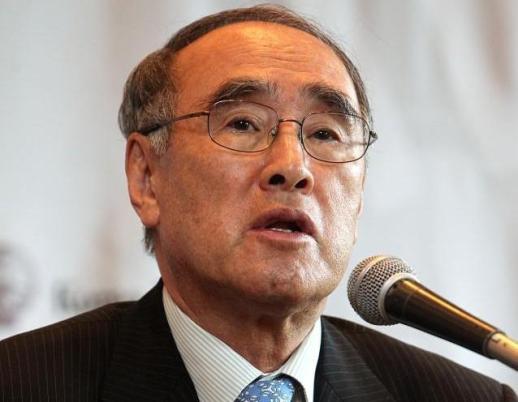 Former South Korean prime minister Lee Hong-koo dies at 92 SEOUL, May 05 (AJP) - Former South Korean Prime Minister Lee Hong-koo, a prominent scholar-statesman who led the government during the mid-1990s and managed critical diplomatic ties with the United States, died on May 5. He was 92. Lee served as a rare bridge between academia and high-level politics, holding senior positions under both conservative and liberal administrations. His career spanned several pivotal moments in modern South Korean history, including the 1997~1998 Asian financial crisis. Born in 1934, Lee graduated from the Seoul National University College of Law before pursuing further studies in the United States. He earned a doctorate in political science from Yale University and returned to South Korea in 1968 to serve as a professor at his alma mater. His transition to public service began in 1988 when he was appointed as the Minister of National Unification. He later served as a special advisor to the president and as the ambassador to the United Kingdom before being named the 28th prime minister in 1994 under President Kim Young-sam. In 1998, under the liberal Kim Dae-jung administration, Lee took the post of ambassador to the United States. He is credited with stabilizing the bilateral relationship during the height of the economic turmoil commonly referred to in South Korea as the IMF crisis. After returning from Washington in 2000, Lee joined the JoongAng Ilbo as an advisor. He remained an active public voice through a regular column where he provided insights on inter-Korean relations and domestic political affairs. Lee is survived by his wife, Park Han-ok, his son Lee Hyun-woo, and his daughters Lee So-young and Lee Min-young. The family includes daughter-in-law Hwang Ji-young and son-in-law Lee Kang-ho. A funeral service will be held at the Seoul Asan Hospital until May 8, followed by burial at the Cheonan Memorial Park. 2026-05-05 11:39:37
 -
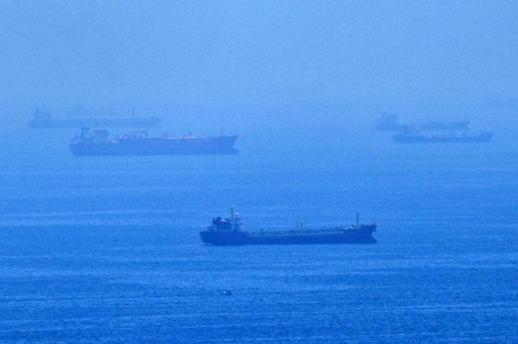 South Korea confirms HMM NAMU crew safety after Hormuz blast SEOUL, May 05 (AJP) - South Korea has confirmed Tuesday that all 24 crew members of the HMM NAMU are safe and the onboard fire has been extinguished following an explosion in the Strait of Hormuz. The confirmation allows the government to transition from an emergency rescue operation to a technical investigation into the cause of the damage. The HMM NAMU, a vessel operated by the flagship carrier HMM, suffered the explosion at 8:40 pm (1140 GMT) on Monday near the United Arab Emirates. The ship is currently stationary and inoperable, requiring a tugboat for transport to a nearby port for a full damage assessment. The Ministry of Foreign Affairs reported at 9:49 am on Tuesday that the crew consists of six South Korean nationals and 18 foreign sailors. While the fire has been suppressed, the ministry noted that the ship cannot navigate under its own power and the exact cause of the blast remains unknown. Government authorities are currently seeking available tugboats to move the vessel to a secure location. A specific towing schedule has not yet been determined as officials evaluate the logistics of the recovery and the current conditions of the regional waterway. Following the blast, Donald Trump claimed on the Truth Social platform that Iran was responsible and urged South Korea to join a military mission called Project Freedom. South Korean officials have maintained a cautious stance, stating that a formal determination will follow a physical inspection at a dock. The Ministry of Foreign Affairs and the Ministry of Oceans and Fisheries remain in constant communication with regional missions in the United Arab Emirates and Dubai. 2026-05-05 10:12:09
 -
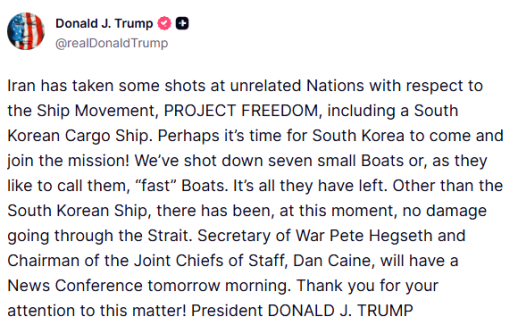 Trump pressures South Korea to join Project Freedom after ship explosion in Hormuz Strait SEOUL, May 05 (AJP) - Following a mysterious explosion on a South Korean cargo vessel in the Strait of Hormuz on Monday, the United States' President Donald Trump has publicly pressured South Korea to deploy military forces to a U.S.-led maritime mission "Project Freedom" in the Hormuz Strait. Trump directly linked the safety of commercial shipping to participation in the naval mission, while explicitly attributing the explosion to an Iranian attack. The incident marks the first time a South Korean vessel has sustained physical damage since the U.S. and Israel attacked Iran on February 28, forcing Seoul into a difficult diplomatic position between its primary ally and its energy security interests. While the South Korean government remains cautious in its assessment, Trump's immediate assignment of blame narrows the window for the investigative deliberation typically preferred by South Korean officials. The HMM NAMU, a cargo ship operated by HMM, suffered an explosion and subsequent fire at approximately 8:40 p.m. (1140 GMT) on May 4, while navigating waters near the United Arab Emirates (UAE). HMM, formerly known as Hyundai Merchant Marine, is the flagship carrier of South Korea and serves as a critical link in the country's export-driven economy. No casualties were reported among the crew members, and South Korean diplomats in the UAE and Dubai have contacted the shipping company to ensure the safety of the sailors. The vessel was operating in the strategic Strait of Hormuz when the blast occurred, an area that serves as a transit point for a significant portion of South Korea's oil imports. In a post on the Truth Social platform, Trump stated that Iran has taken shots at unrelated nations, including the South Korean cargo ship. He suggested it is time for South Korea to join the mission, noting that United States forces had already engaged and destroyed seven Iranian fast boats that were obstructing movement in the strait. The South Korean government held an emergency meeting at midnight on Tuesday to discuss the protection of its citizens. Kim Jin-ah, the second vice foreign minister, expressed deep concern over the incident but emphasized that the government is still investigating the exact cause and the possibility of a targeted strike. The call for military involvement comes amid a pattern of Trump targeting allies who decline to support U.S.-led security initiatives. He recently imposed tariff increases and proposed troop reductions for Germany after its government refused to join similar naval operations, a precedent that weighs heavily on the current deliberations in Seoul. The U.S. Secretary of War Pete Hegseth and Chairman of the Joint Chiefs of Staff Dan Caine are scheduled to hold a news conference on Monday morning to discuss the engagement. 2026-05-05 08:25:52
 -
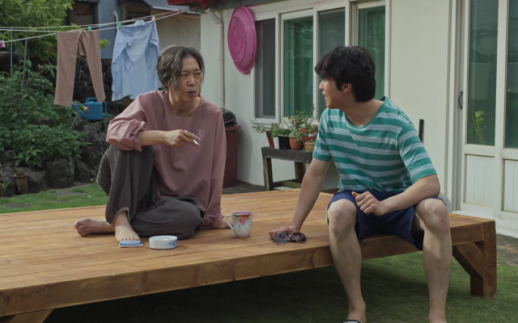 South Korean film 'My Name' wins Audience Award at Italian festival SEOUL, May 04 (AJP) - South Korean film "My Name," directed by Chung Ji-young and centering on the 1948 Jeju 4.3 massacre, won the Audience Award at the Udine Far East Film Festival in Italy on Monday, the film's distributor Let's Films said. The victory at Europe's largest festival dedicated to Asian cinema suggests that South Korean historical narratives are gaining universal resonance through popular vote. The Audience Award is determined by direct ballots from attendees at the Nuovo Giovanni Theater. This marks a significant moment for a film dealing with specific domestic trauma to receive direct validation from an international audience. Production company Let's Films said the movie tells the story of 18-year-old Shin Woo-bin and his mother, Yeom Hye-ran, as they navigate the legacy of the incident. Since its April 15 release, the film has attracted 191,000 viewers in South Korea while maintaining grassroots momentum through organized relay screenings. The Jeju 4.3 Incident refers to a series of uprisings and subsequent brutal suppressions on Jeju Island, currently one of South Korea's favorite getaway destinations, between 1948 and 1954. According to the Jeju 4.3 Peace Foundation, the military and police campaign resulted in the death of an estimated 30,000 people, representing roughly 10 percent of the island's population at the time. Historical records from the National Institute of Korean History show that the Northwest Youth League, a right-wing paramilitary group, carried out many of the most severe atrocities against civilians. The group was primarily composed of Christian refugees who had fled the northern region of the peninsula to escape communist persecution. Driven by extreme anti-communist sentiment and a sense of displacement, members of the Northwest Youth League engaged in widespread extrajudicial killings, rape, and torture. Their presence on the island was often characterized by a lack of oversight, leading to indiscriminate violence against those suspected of leftist sympathies. Let's Films stated that the international recognition in Udine highlights the potential for South Korean cinema to facilitate global understanding of human rights issues. The film continues to play in South Korean theaters as civic groups host additional screenings to maintain public awareness. 2026-05-04 17:06:20