
Journalist

Mashrab Mamirov
swatchsjp@ajunews.com
-
 South Korea online shopping hits record as travel demand defies fuel surcharges SEOUL, May 04 (AJP) - South Korea's online shopping transactions hit an all-time monthly high in March as travelers booked spring holidays despite soaring fuel costs driven by the Middle East conflict. Data from Statistics Korea showed monthly transactions reached 25.6 trillion won, marking the first time the figure has surpassed 25 trillion won since tracking began in 2017. Total volume grew 13.3 percent compared to the same period last year. Travel and transport services served as the primary engine for growth, surging 21.7 percent to 3.3 trillion won. Surge comes as South Koreans prepare for the peak travel window in May, which includes major public holidays for Children's Day and Buddha's Birthday. Demand for air travel has remained price-inelastic despite a sharp rise in jet fuel surcharges. Costs spiked following geopolitical volatility involving Iran, which heightened concerns over oil supply stability in the Persian Gulf. South Korean carriers adjust international fuel surcharges monthly based on the Mean of Platts Singapore (MOPS) benchmark. Recent regional instability pushed these surcharges higher, but travelers have opted to secure tickets early to hedge against further price increases. Total online transactions for the first quarter of the year reached 72.2 trillion won, up 9.2 percent from 2023. Beyond travel, the sector saw significant gains in automotive supplies and telecommunications equipment. Overseas direct sales also expanded 24.4 percent to 1.1 trillion won in the first quarter. Cosmetics and K-pop-related merchandise, including albums and video content, drove the bulk of international demand. China remained the largest partner for cross-border e-commerce. Online purchases by South Koreans from Chinese platforms totaled 1.2 trillion won during first three months of year. 2026-05-04 16:39:09
 -
 South Korea legalizes credit card issuance for minors SEOUL, May 04 (AJP) - South Korea officially authorized the issuance of credit cards to minors aged 12 and older on Monday, institutionalizing a digital payment system that reflects the country’s rapid transition toward a cashless economy. The measure, which took effect May 4, replaces a temporary pilot program with a permanent legal framework under the Specialized Credit Financial Business Act. The regulatory shift aims to eliminate the widespread but technically prohibited practice of children using their parents’ credit cards, so-called "Um-ka (mother's card)" for daily purchases. Financial authorities expect the formalization of youth spending to improve transaction safety, simplify loss-reporting procedures, and foster early financial literacy under parental oversight. Financial Services Commission (FSC) Chairman Lee Eok-weon oversaw the implementation of amendments designed to increase the predictability of financial administration. The commission stated that the change provides a legal basis for "family cards" while expanding the business scope for credit finance companies. Under the new rules, monthly credit limits for minors are set at a default of 100,000 won ($68). Parents may increase this threshold to 500,000 won if they provide explicit consent during the application process. Usage is restricted to essential sectors including convenience stores, stationery shops, cram schools, and hospitals. The cards are strictly blocked at nightlife venues and gambling establishments to ensure funds are used for daily necessities and educational purposes. The update also lowered the age floor for debit card issuance to 7 years old, down from 12. While debit cards were not previously restricted by law, South Korean banks had synchronized issuance with the minimum age for deferred-payment transportation features. To address rising public transit costs, the monthly limit for these deferred transportation payments was doubled to 100,000 won. This allows elementary school students to pay for commutes digitally as cash usage continues to decline across South Korea. "Institutionalizing these services provides higher predictability for administrative actions and expands the business scope for credit finance companies," The FSC head said. The commission also modernized merchant registration by allowing non-face-to-face verification through mobile applications. This replaces the previous requirement for recruiters to visit business sites in person to confirm that a merchant is actively operating. South Korea’s move mirrors international trends such as the "Credit Piggybank" concept in the United States, where some banks allow minors to use cards to build independent credit histories. Unlike the American model, which focuses on building individual scores, the South Korean system bills expenditures directly to the parents’ account and credit records. The FSC intends to continue identifying regulatory tasks that reflect on-site demand to improve convenience for both small business owners and financial consumers. 2026-05-04 15:46:28
 -
 K-pop girl band aespa prepares for second full-length album with pre-release single 'WDA' SEOUL, May 04 (AJP) - South Korean girl group aespa will release a pre-release single titled Whole Different Animal on May 11. The track serves as the initial signal for the rollout of the group's second full-length album. The release strategy replicates a successful formula used during the campaign for their first studio album. The group's previous pre-release track Supernova recorded top positions on major music charts in South Korea and established strong momentum for the subsequent album launch. Whole Different Animal will be available on major music streaming platforms at 6 PM (0900 GMT) on May 11. A music video for the single will premiere simultaneously on the SMTOWN YouTube channel. Promotional teaser images released Monday depict a narrative shift within the group's fictional worldview. The visuals titled The Creature show a new entity born from chaos and the group members in a state of tension. The upcoming second full-length album, titled LEMONADE, features ten tracks spanning various musical genres. According to the group's social media channels, this project marks the beginning of a new chapter for their overarching storytelling narrative. The full version of the album LEMONADE is scheduled for release at 1 PM on May 29. 2026-05-04 15:06:36
 -
 Agency apologizes for G-Dragon racial slur attire SEOUL, May 04 (AJP) - K-pop star G-Dragon's agency has issued an official apology Monday after the Big Bang member performed in a stage outfit containing a Dutch racial slur. The incident in Macau has renewed concerns regarding the South Korean entertainment industry's frequent lack of cultural and linguistic verification in fashion. Styling choices in K-pop often derive from a focus on visual aesthetics that ignores the social or historical weight of foreign fashion graphics. This recurring phenomenon highlights a gap between the global reach of South Korean artists and the localized expertise of their management teams. Controversy erupted following the "Macau K-SPARK" event on Saturday, where the 37-year-old appeared wearing a t-shirt featuring the phrase "RONNY, EEN GEILE NEGER JONGEN." The Dutch text includes sexual terminology and "neger," a derogatory term for Black people. Global fans launched immediate criticism on social media platforms after images of the performance circulated. Critics argued that such a high-profile artist, who serves as a global fashion icon, should be subject to more rigorous styling reviews. "We sincerely apologize for the fact that the artist's performance costume included phrases that were inappropriate in a social and cultural context," Galaxy Corporation said in a statement released May 4. The agency acknowledged the importance of "meticulous cultural sensitivity and responsible review" in the aftermath of the backlash. It pledged to overhaul internal verification procedures for all styling and artist activities to prevent future oversights. Similar incidents have taken place previously, as South Korean labels frequently prioritize the visual appeal of Western-style graphics without confirming their meanings. This fashion-related ignorance remains a significant risk for artists acting as international cultural representatives. Galaxy Corporation stated it will implement more cautious standards to ensure the diverse cultural backgrounds and values of global fans are respected. The firm expressed regret for the "disappointment and concern" caused to the international audience. 2026-05-04 14:59:58
 -
 KFA confirms North Korean female soccer club visit for AFC finals in Suwon SEOUL, May 04 (AJP) - The Korea Football Association confirmed Monday that North Korean women's soccer club Naegohyang (meaning "my hometown" in Korean) will visit Suwon, south of Seoul, for the Asian Football Confederation Women's Champions League finals. The visit marks the first time a North Korean athletic delegation has entered South Korea in eight years. According to South Korea's football governing body, the Asian Football Confederation (AFC) informed South Korean officials of the North Korean team's participation on May 1. The move ends a long hiatus in cross-border sports exchange following a period of active cooperation in 2018 that included unified teams and joint athletic entries. Naegohyang qualified for the tournament finals after winning the 2023~2024 North Korean top-flight league title. The team will face Suwon FC Women in a semi-final match scheduled for May 20 at Suwon Sports Complex. The visiting delegation includes 39 individuals, consisting of 27 players and 12 staff members, according to the Ministry of Unification. Naegohyang is a corporate-style club founded in Pyongyang in 2012 and receives sponsorship from a consumer goods company. The squad is led by Ri Yu-il, who previously served as head coach for the North Korean national women's team. The team demonstrated a dominant performance in the qualifying rounds, scoring 23 goals without conceding. Naegohyang advanced through the group stage with two wins and one loss, including a 3-0 victory over Suwon FC. They secured a place in the final four by defeating Ho Chi Minh 3-0 in the quarter-final round. The Korea Football Association won the bid to host the tournament finals in January after Suwon FC successfully advanced to the knockout stages. The winner of the semi-final match will face either Melbourne City or Tokyo Verdy in the championship match on May 23. 2026-05-04 14:12:08
 -
 BTS album Arirang maintains top five presence on Billboard 200 for sixth week SEOUL, May 04 (AJP) - K-pop band BTS extended its run on the United States music charts as its fifth studio album, Arirang, remained in the top five of Billboard 200 for its sixth consecutive week. The release continues to draw engagement from physical sales and digital streaming. Most high-profile albums typically see sharp consumption declines after initial debut weeks. The album moved 56,000 equivalent album units for the week ending May 3, according to Billboard. Data represents a one-spot decline from the previous week, and places a record at number 5. Billboard 200 measures overall consumption by combining traditional retail sales with units generated from digital track downloads and audio streaming. Arirang has set several benchmarks for South Korean music since its March release. It became the first K-pop album to spend three consecutive weeks at number 1. Full chart rankings are scheduled for update on the official Billboard website on Tuesday. 2026-05-04 09:59:04
 -
 S. Korean researchers develop hologram technology using light properties as security keys SEOUL, May 04 (AJP) - Researchers at the Korea Advanced Institute of Science and Technology have developed a holographic technology that uses the physical properties of light as an encryption key to reveal hidden information, the university said Monday. The system manipulates how light vibrates and twists to ensure that images are only visible when viewed under specific conditions. The research team, led by ,Shin Jong-hwa, a professor at the Korea Advanced Institute of Science and Technology's (KAIST) Department of Materials Science and Engineering, succeeded in controlling two distinct characteristics of light simultaneously: its polarization and its orbital angular momentum. Polarization refers to the direction in which light vibrates, while orbital angular momentum describes how light twists in a spiral as it travels. While these properties have been used individually in the past, combining them to act as independent security keys within a single device has been a significant technical challenge. To overcome this, the researchers created a bi-layer metasurface using two levels of nanoscale structures thinner than a human hair. These structures are designed to react only when they encounter a specific "total angular momentum," which is the combination of light's vibration and twist. If the incoming light does not match the exact required key, the encoded holographic information remains hidden, providing a high level of security against counterfeiting. The technology also allows for the creation of vectorial holograms, which control both the intensity and the direction of light at every point in an image. Because the twisting of light can theoretically take an infinite number of values, this method could also be used to increase the amount of data transmitted through optical fibers for high-speed telecommunications. "This study demonstrates that the polarization and twisting of light can be combined as independent information keys," Professor Shin Jong-hwa said. "It will serve as a core platform for security systems that are difficult to replicate and for high-speed, high-capacity optical communication technologies." The study, which included Jung Jun-gyo as the first author, was published online in the journal Advanced Materials on March 12, 2026. (Reference Information) Journal/Source: Advanced Materials Title: Arbitrary Total Angular Momentum Vectorial Holography Using Bi-Layer Metasurfaces Link/DOI: 10.1002/adma.202519106 2026-05-04 09:18:02
 -
 S. Korea sees record inbound tourism driven by resurgent Chinese and Japanese markets SEOUL, April 30 (AJP) - South Korea welcomed a record-breaking number of inbound visitors this month, with the majority of travelers arriving from China and Japan, alongside significant contributions from Taiwan and the United States, data released by the state tourism agency showed Thursday. This surge marks a pivotal moment for the nation's tourism sector, signaling a transition from post-pandemic recovery into a period of historic expansion. According to the latest report from the Korea Tourism Organization, total international arrivals for March reached their highest point in the current cycle, comfortably eclipsing benchmarks established in 2019. Total inbound traffic for the month climbed to 2,045,992 visitors, representing a 26.7 percent increase compared to the same period last year. More significantly, this volume represents 133.2 percent of the arrivals recorded in March 2019, suggesting that the industry has established a new, higher baseline for growth. Cumulative figures for the first quarter of 2026 now stand at 4,743,122 visitors, reflecting a broad and sustained upward trend. Mainland China and Japan continue to serve as the primary anchors of this growth. Chinese visitors totaled 501,060 (24.5 percent), while Japanese arrivals followed closely at 481,789 (23.5 percent). Both markets have now fully surpassed their pre-pandemic levels, with China reaching 102.8 percent and Japan reaching 128.4 percent of their respective 2019 volumes. While these regional mainstays provide the bulk of the volume, the current momentum is increasingly reinforced by a successful diversification of source markets. Beyond these traditional hubs, the data highlights a significant structural shift toward broader global appeal. Taiwan and the U.S. have emerged as standout performers. Taiwanese arrivals reached 192,138, a figure that nearly doubles its 2019 performance at 195.0 percent, while the American market contributed 152,416 travelers, standing at 180.9 percent of its pre-pandemic baseline. Southeast Asian demand remains equally robust, led by Viet Nam at 159.3 percent of its 2019 levels and the Philippines at 153,393 cumulative visitors for the quarter. Overall, the broader categories of the Americas and Europe saw their numbers swell to 169.2 percent of historical benchmarks, indicating a surge in long-haul interest. On the outbound side, the appetite for international travel among South Korean citizens has almost fully returned to its previous level. March saw 2,293,716 citizens travel abroad, representing 98.3 percent of the volume seen in March 2019. This stabilization of outbound patterns, coupled with the record-setting inbound performance, underscores the definitive normalization and subsequent expansion of South Korea's standing in the global travel market. 2026-04-30 11:20:39
 -
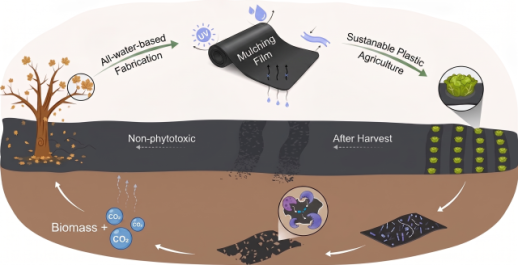 KAIST researchers develop biodegradable farming film from fallen leaves SEOUL, April 30 (AJP) - Researchers at the Korea Advanced Institute of Science and Technology have developed a biodegradable agricultural mulching film using fallen leaves collected from campus grounds and nearby riverbanks. The development offers a potential solution to soil pollution caused by conventional plastic films, the institute said Thursday. Agricultural mulching films are used to suppress weeds and maintain soil moisture. However, most commercial films are made of polyethylene (PE), a petroleum-based plastic that is difficult to recover after use. These films often break down into microplastics that remain in the soil, posing long-term environmental risks. The research team, led by Professor Myung Jae-wook at KAIST's Department of Civil and Environmental Engineering, extracted nanocellulose from fallen leaves using a green solvent composed of citric acid and choline chloride. This plant-derived fiber was combined with polyvinyl alcohol (PVA), a biodegradable polymer, to create a composite film. The entire manufacturing process utilized water as a medium instead of toxic organic solvents. In performance tests, the leaf-based film effectively blocked ultraviolet radiation and maintained soil moisture, with only a 5 percent loss of water over 14 days. Ryegrass grown using the film showed better development compared to crops grown without any covering. Biodegradability tests conducted in soil conditions showed that the film decomposed by 34.4 percent within 115 days, a rate faster than existing biodegradable alternatives. The researchers also confirmed that the decomposition process produced no plant toxicity, ensuring no negative impact on the germination or early growth of crops like ryegrass and bok choy. "This research is significant because it transforms fallen leaves into a functional material that protects the agricultural environment," Professor Myung Jae-wook said. "Because it uses non-edible biomass that does not compete with food resources and employs a water-based process, it can serve as a sustainable replacement for agricultural plastics." The study, with doctoral student Pham Thanh-trung-ninh as the first author, was published in the journal Green Chemistry on February 6, 2026. (Reference Information) Journal/Source: Green Chemistry Title: All-water-based fabrication of biodegradable mulch films from dead leaves via complex hydrogen-bonded networks Link/DOI: https://pubs.rsc.org/en/content/articlelanding/2026/gc/d5gc06616f 2026-04-30 09:00:12
 -
 Ador seeks property seizure as Danielle and Min Hee-jin face deepening legal rift SEOUL, April 29 (AJP) - Ador has secured a provisional attachment on the real estate assets of former NewJeans member Danielle, her mother, and former chief executive Min Hee-jin as the legal fallout from the K-pop industry’s most high-profile corporate schism intensifies. According to Legal sources, the court filing was confirmed on Wednesday, ahead of a full-scale trial scheduled for May, and would represent a tactical shift by the Hybe-owned label to freeze the financial resources of its former star artist and executive leadership. The move underscores the volatile transition of NewJeans from a unified global chart-topper to a fractured group caught in a precedent-setting battle over corporate control and creative independence. At its core, the dispute tests the durability of the multi-label model pioneered by Hybe, demonstrating how the intense loyalty between artists and their creative directors can destabilize the financial foundations of billion-dollar entertainment conglomerates. The conflict traces back to April 2024, when Hybe launched an unexpected audit of Ador, its subsidiary label founded by Min. Hybe accused the former executive of orchestrating a plan to seize independent control of the label and its primary asset, NewJeans, by seeking outside investment and leaking confidential business data. Min denied the allegations, characterizing the audit as a retaliatory strike after she raised concerns that another Hybe-managed group had plagiarized the artistic concept of NewJeans. The ensuing months were marked by a series of public press conferences and court injunctions that divided the K-pop industry and its global fanbase. While a Seoul court initially blocked Hybe’s attempt to fire Min as chief executive, citing a lack of evidence for actual implementation of a takeover, the corporate relationship remained untenable. By late 2024, Min was replaced as chief executive, leading to a direct confrontation between the members of NewJeans and the new Ador management. The members of the group, known for their distinct Y2K-inspired aesthetic and massive streaming success, took the unprecedented step of airing their grievances in a live broadcast, demanding the reinstatement of their former Ador chief. This internal friction eventually led to the departure of Danielle, also known as Mo Ji-hye, who has since aligned herself with Min’s newly established venture, OK Records. The upcoming May proceedings are expected to address the broader financial claims leveled by Ador, which has sought damages for what it describes as catastrophic disruption to the group’s activities. The real estate attachment serves as a legal guarantee to ensure that any potential financial penalties can be collected if the court rules in favor of the label. Lawyers representing Min and Danielle have not issued a formal statement regarding the specific property filings. The Seoul Central District Court is expected to begin hearing oral arguments on the merit of the underlying damages claim within the next month. 2026-04-29 16:33:49