
Journalist

Park Sae-jin, Han Jun-gu
swatchsjp@ajunews.com
-
 South Korean researchers use natural sounds to boost brain health SEOUL, February 26 (AJP) - A research team at Kookmin University has developed a new method to deliver cognitive health benefits through everyday sounds by blending therapeutic frequencies with natural environmental recordings. The study focuses on making 40Hz auditory stimulation, which is known to help prevent Alzheimer's disease, more comfortable for long-term listening by integrating it into local South Korean soundscapes. Professor Namkung Ki-chan and his team at the Kookmin University Techno Design Research Institute published two papers on this cognitive wellness research in the international journals Healthcare and Applied Sciences. Both publications are ranked within the top 40 percent of their respective fields, covering health systems and applied sciences. While 40Hz gamma-band sound stimulation has gained attention for its potential to improve brain health, listening to the raw, repetitive tones often causes ear fatigue and discomfort. To solve this, the researchers recorded natural sounds from locations such as Chuncheon and Uljin in South Korea. They then built a protocol to naturally embed the 40Hz frequency into these environmental soundscapes, ensuring the therapeutic effect remains while the listener hears only the calming sounds of nature. The research combined user experience design with brainwave measurements to ensure the system is practical for daily life. By testing various mixing levels and playback structures, the team identified the best way to keep the 40Hz signal effective without it becoming a distraction. The two studies examined how participants accepted these sounds and used electroencephalogram (EEG) tests to confirm that the brain still recognized the 40Hz stimulation even when hidden within a natural soundscape. The results showed that the redesigned sounds were significantly easier to listen to over long periods while successfully triggering the intended brainwave responses. The project originated from a Soundscape Design course at the Kookmin University Graduate School of Techno Design. Graduate students from the Interaction Design Lab participated as co-authors, handling everything from field recording and sound production to conducting the experiments and drafting the research papers. Professor Namkung Ki-chan stated that the core of the research was taking a frequency that is effective for cognitive health but usually unpleasant to hear and turning it into a sustainable auditory experience using local South Korean soundscapes. He noted that the project is a meaningful example of an academic course leading directly to international research achievements. (Paper information) Journal: Healthcare (JCR Q2) Title: User Experience Design and Implementation of 40Hz Auditory Stimulation for Cognitive Wellness DOI: https://doi.org/10.3390/healthcare13010045 Journal: Applied Sciences (JCR Q2) Title: EEG-based Verification of Soundscape-mediated 40Hz Gamma-band Stimulation DOI: https://doi.org/10.3390/app15010123 2026-02-26 10:23:50
 -
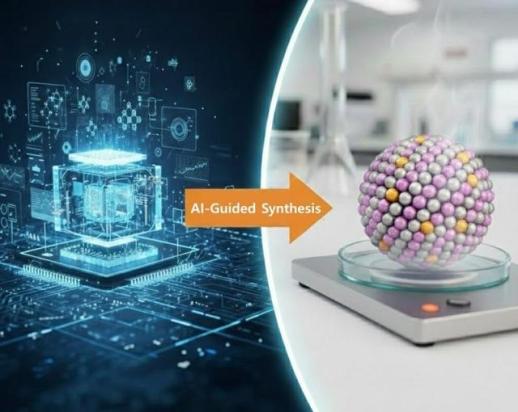 South Korean researchers use AI to design high-efficiency catalysts for hydrogen vehicles SEOUL, February 26 (AJP) - A research team from the Korea Advanced Institute of Science and Technology and Seoul National University has developed a technology that uses artificial intelligence to precisely predict the arrangement of atoms in catalysts. By calculating atomic tendencies before conducting experiments, the researchers identified a way to improve both the performance and durability of the fuel cells that power hydrogen vehicles. Hydrogen fuel cells are often described as the heart of eco-friendly mobility, but they remain expensive and have limited lifespans. Much of this is due to the platinum catalyst, a critical material that generates electricity. Platinum reacts slowly, its performance drops over time, and its high cost drives up the price of hydrogen cars. The South Korean team addressed these issues by using AI to design a more efficient atomic structure for the catalyst. The research focused on platinum-cobalt alloy catalysts. While these alloys are powerful, creating a stable, ordered structure known as an intermetallic compound typically requires extremely high heat. This heating process often causes the tiny particles to clump together or become unstable, which limits their use in real-world fuel cells. To solve this, the team used machine learning simulations to analyze how atoms move and arrange themselves at the atomic level. The AI discovered that introducing a small amount of zinc acts as a mediator. This zinc allows the atoms to settle into their proper positions more easily, creating a more precise and stable structure. In simple terms, the AI found a more efficient path for the atoms to follow, acting like a digital blueprint that was then tested in a laboratory. When the researchers synthesized the zinc-platinum-cobalt catalyst based on these AI predictions, it showed higher activity and better long-term durability than traditional platinum catalysts. This suggests that the AI-guided design can successfully translate from a virtual simulation into a high-performance physical material. The technology is expected to help reduce manufacturing costs and extend the life of fuel cells in various sectors, including passenger cars, long-haul trucks, ships, and energy storage systems. KAIST's Department of Materials Science and Engineering Professor Cho Eun-ae stated that the study used machine learning to predict atomic ordering before realizing it through actual synthesis. She noted that AI-based material design will provide a new paradigm for developing next-generation catalysts. Jang Hyun-woo, a doctoral student at KAIST, and Ryu Jae-hyun, a researcher at Seoul National University (SNU), served as joint first authors for the study. The findings were published in the energy materials journal Advanced Energy Materials on January 15. (Paper information) Journal: Advanced Energy Materials Title: Machine Learning-Guided Design of L1₀-PtCo Intermetallic Catalysts: Zn-Mediated Atomic Ordering DOI: https://doi.org/10.1002/aenm.202505211 2026-02-26 10:07:06
 -
 Pyongyang sidelines Seoul while signaling potential for Washington ties SEOUL, February 26 (AJP) - North Korean leader Kim Jong-un stated that there is "no reason not to get along" with the United States if Washington abandons its hostile policy, even as he intensified his rhetoric against South Korea by vowing to permanently exclude the country from the category of "compatriots." North Korea's state media Korean Central News Agency (KCNA) reported Thursday that Kim delivered a summary report during the 9th Congress of the Workers' Party of Korea, which concluded the previous day. Kim noted that the future of relations with the U.S. depends entirely on Washington's willingness to respect North Korea's status as a nuclear-armed state. He stated that Pyongyang is prepared for both "peaceful coexistence or eternal confrontation," placing the responsibility for the next move on the U.S. While maintaining a measure of strategic flexibility toward Washington, Kim took an exceptionally aggressive stance toward South Korea, effectively sidelining Seoul from any future diplomatic roadmap. He characterized the conciliatory approach of the Lee Jae Myung government as a "deception" and repeatedly dismissed the possibility of dialogue. Kim further solidified his "hostile two-state" policy, declaring that South Korea would be "permanently excluded from the category of our fellow countrymen." The North Korean leader warned that any actions by South Korea perceived as a threat to the security environment could trigger the use of physical force, including "preemptive strikes." He claimed that such actions could lead to the "complete collapse" of South Korea, emphasizing that the North has the technical and theoretical means to execute such a response. The timing of these declarations is significant as the Congress of the Workers' Party serves as the highest decision-making body in North Korea. These rare gatherings are used to define the nation's strategic direction and consolidate the leader's authority. By delivering these remarks during the 9th Congress, Kim has effectively codified the "hostile two-state" doctrine into the country's formal political roadmap. The current hostility represents a sharp departure from the inter-Korean relations seen under former President Moon Jae-in. Between 2017 and 2022, the two nations engaged in significant diplomacy, leading to the 2018 Panmunjom Declaration and multiple high-level summits. This period of engagement eventually paved the way for the first-ever meeting between a sitting U.S. president and a North Korean leader. Tensions began to resurface and eventually sour during the administration of President Yoon Suk Yeol, who prioritized military deterrence and strengthened trilateral cooperation with the U.S. and Japan. Under the Yoon government, the 2018 Comprehensive Military Agreement was effectively scrapped, and North Korea officially designated South Korea as its "primary foe" in early 2024. Despite the 2025 election of the Lee Jae-myung administration, which has signaled a preference for de-escalation, Pyongyang indicated that it has no intention of returning to a partnership for unification. Kim described the habit of treating South Korea as a fellow ethnic group as an "erroneous practice" that should no longer be tolerated. Kim concluded the report by signaling a policy of strategic ambiguity. He noted that North Korea's future military and diplomatic maneuvers would remain hidden, suggesting that keeping rivals unable to calculate Pyongyang's next moves would serve as a psychological deterrent. 2026-02-26 09:19:04
 -
 NewJeans' creator proposes settlement to HYBE to resolve NewJeans legal disputes SEOUL, February 25 (AJP) - Min Hee-jin, the CEO of OOAK Records and former head of ADOR, has offered to waive a 25.6 billion won ($18.9 million) legal payout from HYBE in exchange for the termination of all ongoing litigation involving herself and the girl group NewJeans. During a press conference held in Seoul on Wednesday, Min announced her willingness to give up the funds recently awarded to her by a court regarding a put option on her former ADOR shares. Her proposal requires HYBE and its subsidiary, ADOR, to drop all civil and criminal lawsuits against her, the five members of NewJeans, their families, and former staff. The offer arrives as the group attempts to recover from a year of internal conflict that nearly led to its dissolution. In late 2024, the members declared the unilateral termination of their contracts following Min's removal as CEO, resulting in a total suspension of activities and a freeze on brand deals. While the Seoul Central District Court eventually ruled the contracts valid through 2029, the original lineup was fractured when ADOR officially terminated the contract of member Danielle Marsh on December 29, 2025. ADOR cited an "unrecoverable breach of trust" for the expulsion of Danielle, alleging she played a primary role in the group's attempt to break away from the label. The agency claimed the singer engaged in unauthorized activities, including filming a commercial in Southeast Asia and signing luxury brand deals that conflicted with her exclusivity clauses. Consequently, ADOR filed a 43.1 billion won damages lawsuit against Danielle, her family, and Min. Min's proposal also follows a February 23 exclusive report by the entertainment media outlet Dispatch. The report alleged that Min orchestrated the group's departure by meeting with a Japanese investor to secure funding and that she personally drafted the script for the group's November 2024 press conference. Min has dismissed these claims as "fiction." "I am proposing that we immediately stop all ongoing civil and criminal litigation and end all disputes in exchange for me letting go of the 25.6 billion won," Min said during the conference. She emphasized that her decision was motivated by the welfare of the members, stating she could no longer watch the group divided between the stage and the courtroom. While four members, Kim Min-ji, Hanni Pham, Kang Hae-rin, and Lee Hye-in, have already returned to ADOR, Min urged HYBE Chairman Bang Si-hyuk to allow the group to reunite as a quintet. She called on the agency to fulfill its previous promise to support the members and requested that the industry return to a focus on creative output rather than legal battles. Min confirmed her transition to her new label, OOAK Records, noting that the February 25 briefing would be her final public statement regarding the management dispute. HYBE has not yet issued a formal response to the settlement offer. 2026-02-25 15:45:48
 -
 South Korea to allow pets in restaurants as ownership rates surge SEOUL, February 25 (AJP) - South Korea will lift its long-standing ban on pets in dining establishments starting March 1, a regulatory overhaul aimed at accommodating the nearly 30 percent of households that now own companion animals. The Ministry of Food and Drug Safety announced the policy shift following a successful pilot program, though the transition has met with mixed reactions from small business owners concerned about the administrative and financial costs of compliance. The country’s pet population has grown steadily in recent years, with approximately 15.46 million people in the nation of 52 million now living with dogs or cats. This surge was largely driven by the COVID-19 pandemic, as prolonged social isolation and a rise in single-person households accelerated the trend of "pet humanization," where animals are treated as family members. The new rules under the Food Sanitation Act effectively move pet-friendly dining from a limited "regulatory sandbox" experiment into a formal legal framework. Under the updated guidelines, restaurants and cafes must meet rigorous hygiene standards to permit pets indoors. Entry is restricted to dogs and cats that have completed mandatory vaccinations, and staff are expected to verify these records via certificates or mobile applications. Establishments are required to install physical barriers, such as fences or partitions, to prevent animals from entering kitchens or ingredient storage areas. Plus, operators must provide specialized equipment, including pet-only chairs, cages, or fixed leash hooks, to ensure animals do not roam freely among other diners. The regulations also include specific sanitation protocols, such as requiring food and beverages to be served with covers to prevent contamination from fur. Businesses must maintain sufficient distance between tables and provide dedicated waste bins for pet disposal. Operators who fail to meet these facility standards or allow pets into food preparation zones face administrative penalties, including business suspensions ranging from five to 20 days. The reaction from the service industry is divided. Major franchises such as Starbucks Korea and the Italian restaurant chain Mad for Garlic have already begun integrating pet-friendly zones at select branches. However, independent operators on an online community platform operated by South Korea's web service giant Naver, which has 1.9 million members, voiced concerns over the cost of required renovations. Many owners expressed worry that the burden of policing vaccination records and managing pet noise would be unmanageable for small-scale shops with limited staff. The new regulatory landscape brings South Korea closer to the standards of other major economies. In Britain, dogs are frequently welcomed inside pubs and cafes as a matter of cultural tradition. In the United States, pets are generally restricted to outdoor patios and sidewalk seating, with indoor access largely reserved for service animals. Japan maintains a high degree of pet accessibility in urban centers like Tokyo, provided owners adhere to strict leashing and etiquette protocols enforced by private businesses. Ministry officials stated the framework is intended to bring thousands of businesses that previously allowed pets unofficially into legal compliance. By standardizing hygiene requirements, the government aims to ensure a consistent level of public health and safety for both pet owners and the general public. 2026-02-25 13:53:41
 -
 Coupang confirms data breach affected 200,000 accounts in Taiwan SEOUL, February 25 (AJP) - Coupang Inc., the American operator of the biggest ecommerce platform in South Korea, disclosed on Wednesday that a massive data breach involving 33.7 million accounts included approximately 200,000 users located in Taiwan. The e-commerce giant cited a forensic analysis by cybersecurity firm Mandiant, which linked the Taiwanese breach to the same former employee responsible for the unauthorized access of South Korean user data in November 2025. While the perpetrator accessed 200,000 accounts in Taiwan, investigators found that data from only one of those accounts was actually saved by the individual. The update follows a series of forensic audits aimed at determining the full scope of the security failure. Mandiant and other third-party experts confirmed that "highly sensitive information" was not leaked in any region, including Taiwan. The compromised data was reportedly limited to basic contact information and order histories rather than passwords, financial records, or government-issued identification numbers. The breach originally came to light on November 29, 2025, after a former software developer, identified as a Chinese national, allegedly used an internal signing key to bypass security protocols. South Korean authorities previously noted that the incident stemmed from a failure to revoke authentication credentials after the employee left the company. Coupang Inc. had initially stated in December 2025 that there was no evidence of Taiwanese customers being affected. The company has since clarified that the former employee saved data from a total of approximately 3,000 accounts globally, including the single account in Taiwan. The disclosure arrives as Coupang Inc. aggressively expands its logistics footprint in Taiwan. The company stated it has been coordinating with the Ministry of Digital Affairs in Taiwan and South Korean regulators throughout the investigation. No instances of secondary harm or identity theft related to the breach have been detected. 2026-02-25 10:43:56
 -
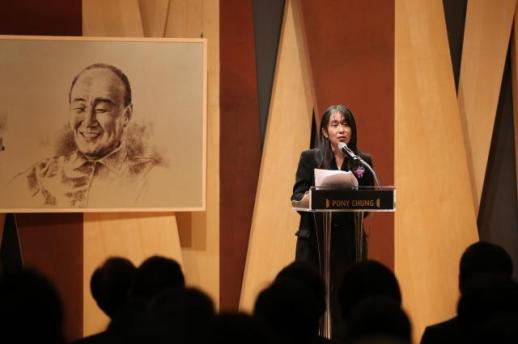 K-literature takes center stage in Africa after Han Kang's Nobel win SEOUL, February 25 (AJP) - Korean literature has officially overtaken K-pop music and K-drama as the most documented aspect of South Korean culture in Africa, a report released by the Ministry of Culture, Sports and Tourism showed Wednesday. The 2025 Global Hallyu Trend Analysis Report, released by the culture ministry and the Korea Culture Information Service Agency (KCISA), indicates that Korean literature now accounts for 32.8 percent of all media coverage related to Hallyu (the Korean cultural wave) in Africa. This surge in interest was primarily sparked by Han Kang, who became the first South Korean and the first Asian woman to win the Nobel Prize in Literature in October 2024. Born in 1970 in Gwangju, South Korea, Han is a celebrated novelist and poet whose works, such as "The Vegetarian" and "Human Acts," frequently explore historical trauma and the fragility of human existence. The Swedish Academy recognized her "intense poetic prose" that confronts these universal struggles, triggering a global re-evaluation of South Korean written works. While K-pop remains the dominant cultural export in Asia, Europe, and the Americas, Africa has emerged as a unique market where literary news and events outpace other entertainment categories. Following the prize announcement, global media coverage of Korean literature spiked to 32.4 percent of all foreign news reports during the final quarter of 2024, a dramatic jump from just 1.2 percent in the preceding quarter. The popularity of South Korean novels in Africa is particularly evident in Nigeria, which ranked second globally, surpassing both the United States and Sweden, in digital documentation and media mentions regarding Han Kang's achievement. Official sources from the Korean Cultural Centre Nigeria (KCCN) noted that dedicated literary gatherings were held in Abuja to celebrate the win and introduce works such as The Vegetarian and Human Acts to local audiences. The KCCN highlighted that the resonance of South Korean literature in Africa stems from "cultural compatibility." Readers in the region find that K-novels frequently address universal themes of patriarchy, generational trauma, and social justice, which mirror contemporary issues in many African countries. Notably, these readers engage with South Korean works despite a challenging local reading environment; official statistics indicate that the average Nigerian reads less than one book per year, though literary interest remains concentrated among highly engaged academic and cultural communities. Japan and the West see parallel literary interest The report also identifies Japan as a major hub for Korean literature. Japan recorded the highest volume of documentation for the category at 37.5 percent of its total Hallyu coverage, marking the only Asian country where literature is the primary point of interest over K-pop or K-drama. Japanese media emphasized the significance of the "first Asian woman" to win the prize and highlighted her works' delicate worldviews. This interest persists even as Japan sees a shift in reading habits. Data suggests that while 62.6 percent of Japanese adults do not read a book monthly, those who do engage with high-profile literary awards and translated works read an average of 6.2 books per year. Western nations have also shown significant engagement following the Nobel Prize announcement. In the U.S. and Germany, South Korean novels have moved beyond niche academic interests to mainstream media, with The Vegetarian remaining the most discussed work. In the U.S. where the average citizen reads approximately 8 books per year, Korean literature has benefited from a robust infrastructure of translation and literary discussion. Similarly, in Germany, readers average roughly 6.25 books per year, providing a fertile market for the philosophical and social depth associated with modern South Korean novels. The growth of Korean literature is supported by increased institutional translation efforts and the "Netflix effect," where series like "When Life Gives You Tangerines" and the animated film "K-Pop Demon Hunters" have sparked secondary interest in original stories and broader South Korean heritage. In South Korea, where this cultural wave originates, adults read an average of 5.4 books per year, though this figure rises significantly when digital formats such as web novels are included. 2026-02-25 10:06:08
 -
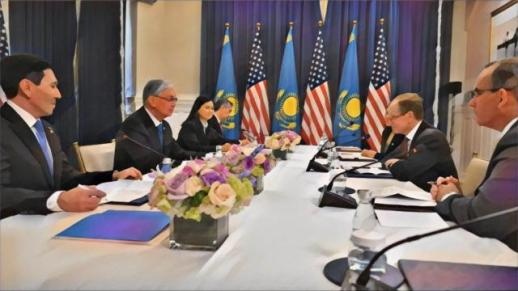 President Tokayev visits US to secure investment and aviation deals SEOUL, February 24 (AJP) - Kazakhstan's President Kassym-Jomart Tokayev recently wrapped up a trip to the United States, focusing on high-level negotiations with global corporations and financial institutions, the Embassy of Kazakhstan in the Republic of Korea said Tuesday. The visit was designed to bring in long-term investment and move Kazakhstan further into international production chains. A major result of the trip was a 180 million dollar investment deal signed between Kazakhstan's Ministry of Agriculture and Mars, Incorporated. The company intends to build a pet food manufacturing plant in Alatau. Mars CEO Poul Weihrauch noted that the new facility will serve as a hub for the company's growth across Central Asia and nearby regions. In the healthcare sector, the President held talks with Ashmore Group regarding a plan to build an international clinic. This project is a joint effort between Ashmore Healthcare International and Samruk-Kazyna Invest, with the U.S.-based Mount Sinai Health System expected to manage the facility. This move is part of a larger plan to boost Kazakhstan's medical infrastructure and attract medical tourism. Aviation also took center stage during the visit. President Tokayev met with Boeing executives to discuss expanding the fleets of Air Astana, SCAT Airlines, and VietJet Qazaqstan. Air Astana is on track to receive Boeing 787 Dreamliner aircraft in the second half of 2026, which would make direct flights between Kazakhstan and the U.S. possible. Meanwhile, SCAT is looking into opening a maintenance and repair center at Shymkent Airport with help from an American partner. The President also met with Ben Black, CEO of the U.S. International Development Finance Corporation (DFC), who described Kazakhstan as a critical partner in Eurasia. Their talks focused on mining projects and improving the transit infrastructure used for regional trade. According to the World Investment Report 2025 by UNCTAD, Kazakhstan currently leads Central Asia in attracting foreign direct investment. In 2024, the country's total inward investment reached 151 billion dollars, far ahead of neighbors like Turkmenistan at 45 billion dollars and Uzbekistan at 17 billion dollars. President Tokayev also attended the first meeting of the Board of Peace in Washington. During the event, he indicated that Kazakhstan is ready to assist with reconstruction and stabilization in Gaza, potentially through financial support or participation in peacekeeping missions. 2026-02-24 15:54:52
 -
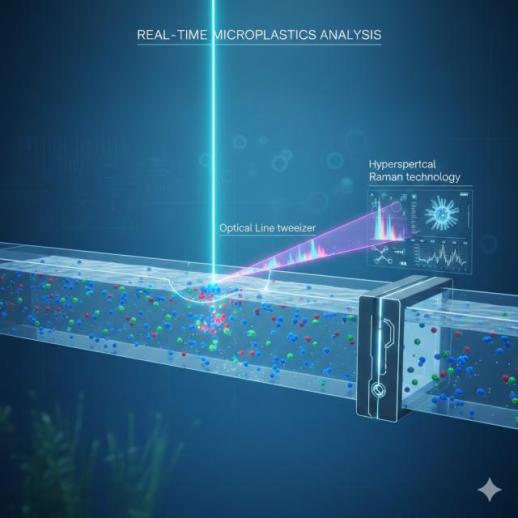 Kookmin University researchers develop real-time capture and analysis technique for aquatic microplastics SEOUL, February 24 (AJP) - A research team led by Professor Kim Hyung-min at Kookmin University has developed an innovative technology capable of capturing and analyzing micro- and nano-sized plastics in water in real time. The breakthrough addresses a major technical challenge in environmental science by allowing for the continuous monitoring of tiny plastic particles that are otherwise difficult to isolate from their surroundings. Microplastics, defined as particles smaller than 5 millimeters, originate from industrial processes and daily consumer activities. These particles eventually accumulate in marine ecosystems, where they pose significant risks to both the environment and human health. Despite these dangers, accurately mapping the distribution and weathering process of these particles in vast water bodies has remained difficult for the scientific community. To overcome these limitations, the researchers created a specialized inspection device that combines optical line tweezer technology with hyperspectral Raman spectroscopy. The system uses a laser to trap flowing microplastic particles along a linear path. By doing so, the device can effectively filter out interference signals from the surrounding water to precisely identify the size, shape, and specific type of each plastic particle. The equipment is sensitive enough to measure ultrafast, nano-sized particles continuously. This capability significantly improves the accuracy of underwater plastic analysis compared to existing methods, which often struggle to distinguish between organic matter and synthetic pollutants in moving water. Professor Kim Hyung-min stated that the significance of this technology lies in providing a foundation for the full-scale analysis and real-time monitoring of various chemical and biological substances beyond just aquatic microplastics. The study was conducted as a joint project with a research team led by Dr. Kim Jae-hun from the Nanophotonics Research Center at the Korea Institute of Science and Technology (KIST). The project received support from the National Research Foundation of Korea through its Nano and Materials Technology Development Program and Mid-career Researcher Support Program. The findings were published as a cover article in ACS Sensors, a leading journal in the field of analytical science, which ranks in the top 3.6 percent of the Journal Citation Reports (JCR). Lee Ji-yeon, currently a researcher at Dongwoo Fine-Chem, and Dr. Park Su-bin, a postdoctoral researcher at KIST, served as the lead authors. 2026-02-24 15:28:32
 -
 S. Korean researchers develop protective layer to enable fast charging for lithium batteries SEOUL, February 24 (AJP) - A joint research team from the Korea Advanced Institute of Science and Technology and Korea University has developed a technology to overcome stability issues that have hindered the commercialization of lithium metal batteries. The team created an intelligent protective layer that allows for rapid charging within 12 minutes while preventing the internal damage that typically shortens battery life. Lithium metal batteries are considered the next generation of energy storage because they can hold much more energy than current lithium-ion batteries. This could allow electric vehicles to travel much further on a single charge. However, during charging, lithium often forms needle-like structures called dendrites. These structures can pierce internal components, causing the battery to fail or catch fire. To solve this, the researchers added a substance called thiophene to the battery electrolyte. This additive creates a smart protective film on the electrode surface that acts like a flexible traffic management system for ions. Using a chemical structure known as a pi-conjugated system, the film rearranges its internal electrical charge in real time to create the easiest path for lithium ions to move through. By guiding the ions smoothly, the technology ensures that lithium builds up evenly on the surface rather than forming dangerous needles. The researchers confirmed this process at the molecular level using specialized microscopes that allowed them to watch the battery charging in real time. The study demonstrated that the battery could operate at high currents exceeding 8 milliamperes per square centimeter, which is double the level usually considered high in battery research. This performance level is close to what is required for the rapid acceleration and fast charging of real-world electric vehicles in South Korea and abroad. Professor Choi Nam-soon of the Korea Advanced Institute of Science and Technology (KAIST) Department of Chemical and Biomolecular Engineering stated that the research solves fundamental battery problems by designing the electronic structure of the materials. He noted that the technology could become a core foundation for next-generation electric vehicle batteries that require both fast charging and long lifespans. The technology is compatible with various existing battery materials, including lithium iron phosphate and nickel-cobalt-manganese oxides. This versatility suggests it could be applied to a wide range of future industries, including long-range electric vehicles and urban air mobility such as flying taxis. The research involved Professor Choi Nam-soon and Professor Hong Seung-bum from KAIST, alongside Professor Kwak Sang-kyu from Korea University. The findings were published in the academic journal InfoMat on February 2. (Paper information) Journal: InfoMat Title: Conjugation-mediated and polarity-switchable interfacial layers for fast cycling of lithium-metal batteries DOI: http://doi.org/10.1002/inf2.70126 2026-02-24 15:22:55