
Journalist

Park Sae-jin, Han Jun-gu
swatchsjp@ajunews.com
-
 SURVEY: 78% of S. Korean workers fear AI will worsen inequality SEOUL, January 18 (AJP) - An overwhelming majority of South Korean office workers are worried that the spread of artificial intelligence will deepen inequality and widen the wealth gap. Gapjil 119, a civic group campaigning against workplace abuse, released the results Sunday of a survey conducted on 1,000 office workers nationwide. The poll, carried out by Global Research last October, highlights a stark level of anxiety regarding the impact of AI on the labor market. According to the findings, 77.9 percent of respondents said they were concerned that AI adoption would lead to greater inequality in the labor market and a polarization of wealth. Nearly half of the workers surveyed, 48.2 percent, believe AI will eventually replace their own jobs. This anxiety was most acute among younger generations. Workers in their 20s were the most pessimistic, with 58.1 percent predicting their roles would be taken over by technology. This figure dropped slightly with age, with 49.1 percent of those in their 30s, 47.3 percent in their 40s, and 43.2 percent in their 50s expressing similar fears. When asked about the timing of this shift, 41.1 percent of respondents predicted it would happen in "more than five years," while 36.3 percent expected the change to come within "three to five years." These concerns appear grounded in reality, as South Korea has recently recorded the world's fastest growth in AI adoption. According to the "Global AI Adoption Report" released by Microsoft earlier this month, the percentage of the South Korean working-age population using generative AI tools jumped to 30.7 percent in late 2025, up from 25.9 percent just six months prior. This 4.8 percentage point increase was the largest recorded among all nations surveyed, propelling South Korea seven spots up the global rankings to 18th place. The report noted that the country has become the second-largest market for paid ChatGPT subscriptions globally, driven by improved Korean language capabilities in newer models and aggressive government-led digital initiatives. Faced with this rapid shift, the survey pointed to a strong demand for government intervention. A significant 83.3 percent of respondents said social safety nets must be strengthened to prepare for the potential fallout. Additionally, 70 percent supported the idea that companies profiting from AI should be taxed to support the public. "It is urgent to predict the negative impact AI and automation technology will have on jobs and to prepare practical protection mechanisms in advance," said Lee Jin-ah, a labor attorney at Gapjil 119. "Discussions on protecting social members must proceed at the same speed and weight as the development of the technology itself." 2026-01-18 13:02:51
 -
 KAIST proposes global 'bridge' alliance to break US-China grip on AI SEOUL, January 18 (AJP) - A consortium of international researchers has called for a new alliance of mid-sized nations to challenge the overwhelming dominance of the United States and China in artificial intelligence. The Korea Advanced Institute of Science and Technology (KAIST) released a policy report Sunday titled "A Blueprint for Multinational Advanced AI Development." The document, co-authored with scholars from the University of Oxford, Canada's Mila institute, and Germany's RWTH Aachen University, argues that countries like South Korea, the United Kingdom, and Canada must pool their resources to secure technological independence. The report paints a stark picture of the current landscape, noting that approximately 90 percent of the world's AI computing capacity is concentrated in the United States and China. The authors warn that this imbalance effectively blocks other nations from developing "frontier" AI models on their own, forcing them into a state of technological dependency on a handful of superpowers and Big Tech firms. To counter this, the researchers propose a "Bridge Power" coalition. The strategy targets nations that have advanced digital infrastructure and research talent but lack the massive capital and energy resources of the two global hegemons. The report specifically identifies South Korea, Canada, the United Kingdom, Germany, and Singapore as key candidates for this bloc. "In an environment where geopolitical competition is intensifying, solidarity among 'AI Bridge Power' nations is essential to maintain competitiveness and responsible AI development," said Yoshua Bengio, a Turing Award laureate and co-author of the report. The blueprint suggests modeling this cooperation after CERN, the European Organization for Nuclear Research. Instead of particle physics, the proposed body would focus on sharing the heavy burden of AI infrastructure. Member nations would pool computing resources, establish protocols for cross-border data training, and create a shared system for research talent to move freely between countries. According to the report, this approach would allow member nations to build high-level AI models that reflect their own languages and cultural values, rather than relying on systems imported from Silicon Valley or Beijing. Park Kyung-ryul, a KAIST professor who led the initiative, said the proposal offers a "realistic alternative path" for nations caught in the crossfire of the current tech war. He noted that such an alliance could help these countries assert leadership in ethical AI governance by presenting a united front on global challenges. The findings were the result of a collaboration between computer scientists, economists, and legal experts from institutions including the Future Society and the Paris Peace Forum. 2026-01-18 12:00:00
 -
 Luxury hotels and retailers target 'rite rush' as S, Koreans outsource ancestral duties SEOUL, January 18 (AJP) - As the Lunar New Year holiday approaches next month, luxury hotels and major retailers in South Korea are aggressively targeting a niche but rapidly growing market: the "to-go" ancestral rite table. The hospitality industry is capitalizing on a significant cultural shift where families are increasingly willing to pay a premium to outsource the labor-intensive cooking required for the holiday, turning a domestic duty into an affordable service. The ritual, known as "Charye," is a traditional Confucian memorial service held on the morning of the Lunar New Year. Families gather to set a table laden with specific offerings—including meats, fruits, vegetables, and rice cakes—to honor deceased ancestors and seek their blessing for the household's health and prosperity. While deeply rooted in Korean culture, the practice requires days of meticulous cooking and preparation, a responsibility that has traditionally fallen heavily on the women of the household. Recognizing the growing fatigue with these demands, major establishments, including JW Marriott Dongdaemun Square, Fairmont Ambassador Seoul, and The Plaza, have rolled out "Charye To-Go" packages for the upcoming holiday. According to industry reports released Sunday, these sets range in price from approximately 200,000 won ($135) to 600,000 won and offer complete rite tables featuring dozens of required dishes such as "jeon" (pan-fried delicacies), "galbijjim" (braised short ribs), and dried fish, all prepared by professional chefs. The trend has evolved beyond simple convenience to include "star power" marketing. This year, the influence of the hit Netflix cooking competition "Culinary Class Wars" has reached the ritual table, with Mayfield Hotel Seoul launching a premium "Sechan" set overseen by head chef Lee Keum-hee, a contestant from the show's second season. Retailers noted that while sales of these packages dipped slightly after the height of the COVID-19 pandemic, demand has stabilized and is now driven by a loyal customer base seeking to balance tradition with modern lifestyles. This commercialization of the rite is a direct response to the growing economic and social burden of the tradition. Data from the Korea Agro-Fisheries & Food Trade Corporation indicates that South Korean families must spend an average of 380,000 won at supermarkets to prepare a single Charye table, a cost that continues to rise annually due to inflation. This combination of labor intensity and rising food prices has soured public sentiment toward the ritual, leading many to seek alternatives or abandon the practice altogether. A survey conducted by Sungkyunkwan, the country's oldest Confucian institute, revealed that approximately 56 percent of South Koreans plan to stop holding memorial rites entirely. Respondents cited the "burden of food preparation" and the belief that the practice is "outdated" as primary reasons for opting out. For those unwilling to completely abandon their heritage, the hotel-made rite table has emerged as a compromise, allowing families to maintain the ceremonial form without the kitchen stress. 2026-01-18 10:38:48
 -
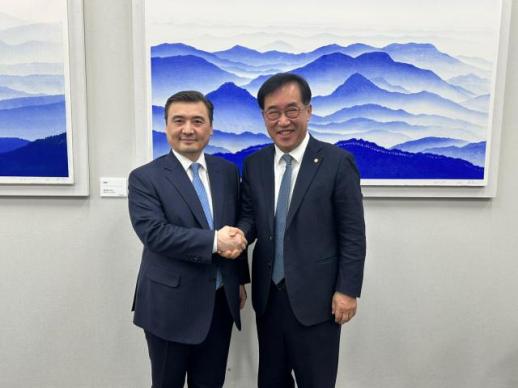 Kazakhstan pushes Alatau Smart City and logistics in Seoul talks SEOUL, January 16 (AJP) - The Kazakh ambassador to South Korea has met with a leading lawmaker to discuss cooperation on logistics and the Alatau Smart City project. The Embassy of Kazakhstan said Thursday that Ambassador Nurgali Arystanov met with Maeng Sung-Kyu, the chair of the National Assembly's Land, Infrastructure and Transport Committee, in Seoul on January 14. The talks focused on transport and logistics, which Kazakh President Kassym-Jomart Tokayev has identified as a national strategic priority. A key subject was the Alatau Smart City development. Both officials noted the importance of a memorandum of understanding signed in December 2025 between Kazakhstan's Ministry of Industry and Construction, the Alatau City Authority, and the Korea Overseas Infrastructure & Urban Development Corporation (KIND). Ambassador Arystanov invited Meng to an upcoming international event in Astana. The two sides also reviewed the growth in tourism and travel between the nations, credited to increased direct flights from Air Astana, SCAT Airlines, Asiana Airlines, and Eastar Jet. 2026-01-16 16:48:38
 -
 Kookmin University researchers turn cancer's hunger against itself to treat drug-resistant tumors SEOUL, January 16 (AJP) - Researchers at Kookmin University have developed a drug delivery platform that bypasses the defenses of hard-to-treat colorectal cancer by exploiting the tumor's own aggressive metabolism. Kookmin University announced on January 15 that the team, led by Professor Kim Ha-rin of the Department of Biopharmaceutical Science, successfully treated KRAS-mutant colorectal cancer in animal models using the new system. The findings were published in the January 2026 issue of the Journal of Controlled Release. KRAS-mutant colorectal cancer is notorious for being difficult to treat. It responds poorly to targeted therapies and immune checkpoint inhibitors because the tumors create an immunosuppressive environment that blocks immune cells from attacking. To break through these defenses, Professor Kim's team engineered a delivery platform that effectively acts as a "Trojan horse." The system takes advantage of the fact that cancer cells consume nutrients much more aggressively than healthy cells. The drug is designed to be absorbed by the hungry tumor cells and accumulates selectively within the cancer tissue. Crucially, the drug remains dormant until the cancer cell begins to die, at which point it activates. When combined with immunotherapy, this selective activation did more than just kill the cancer cells; it remodeled the tumor environment, allowing the immune system to recognize and destroy the tumor. In tests using animal models, the treatment led to a significant increase in the rate of complete tumor disappearance. The researchers also observed a strong "immune memory" effect. When cancer cells were reintroduced to the cured subjects, the immune system immediately recognized and eliminated them, preventing recurrence. "This study proves that we can restore sensitivity to immunotherapy by precisely controlling the timing and location of drug activation within the tumor, rather than simply increasing the dosage," Professor Kim Ha-rin said. "We have presented a strategy to convert refractory cancers into a treatable state using clinically applicable drug combinations." The team expects this design principle to be applicable to other solid tumors that have previously shown low response rates to immunotherapy. 2026-01-16 08:35:33
 -
 Researchers use laser light to sharpen radio telescope images of black holes SEOUL, January 16 (AJP) - A joint research team led by the Korea Advanced Institute of Science and Technology (KAIST) has developed a technology to significantly improve the resolution of radio telescopes using laser optics. By applying an "optical frequency comb" directly to telescope receivers, the researchers aim to capture sharper images of black holes and enhance precision in deep space exploration. KAIST announced on January 15 that the team, led by Professor Kim Jung-won of the Department of Mechanical Engineering, successfully implemented the technology in collaboration with the Korea Astronomy and Space Science Institute (KASI), the Korea Research Institute of Standards and Science (KRISS), and the Max Planck Institute for Radio Astronomy (MPIfR) in Germany. Radio telescopes are designed to capture faint radio signals from space and convert them into images of celestial bodies. To observe distant objects like black holes with high clarity, astronomers use a technique called Very Long Baseline Interferometry (VLBI). This method connects multiple radio telescopes located far apart so they function as a single, massive telescope. For VLBI to work effectively, the signals captured by each telescope must be synchronized with extreme precision. The telescopes must align the "phase" of the received waves as if they were measured against a single, precise ruler. However, conventional electronic reference signals used for this synchronization face limitations. As observation frequencies increase, the electronic reference signals become unstable, introducing noise or "jitter" that makes precise phase calibration difficult. The research team solved this problem by introducing an optical frequency comb—a laser source that acts as a "ruler made of light." Unlike a standard laser that emits a single color (frequency), an optical frequency comb emits hundreds of thousands of precise frequency modes spaced at exact intervals, resembling the teeth of a comb. The team developed a method to transmit this laser light directly into the radio telescope's receiver. This creates a reference signal that is far more stable than traditional electronic methods. "If the existing method was like using a ruler with trembling markings, this new technology is comparable to establishing a standard using a ruler of light that is extremely stable," the researchers explained. This allows distant telescopes to be linked with much higher precision. The technology was validated through test observations at the Korean VLBI Network (KVN) Yonsei Radio Telescope. The team successfully detected stable interference patterns, known as fringes, between telescope signals, proving that precise phase calibration is possible using the optical system. The system has also been installed at the KVN Seoul National University Pyeongchang Radio Telescope for expanded experiments involving multiple observatories. Professor Kim Jung-won said, "This study overcomes the limitations of existing electronic signal generation technology by directly applying the optical frequency comb laser to radio telescopes. It will contribute to increasing the precision of next-generation black hole observations and advancing the fields of frequency metrology and time standards." Beyond astronomy, the researchers anticipate the technology will be applied to other fields requiring precise time and space measurements, such as intercontinental atomic clock comparisons, space geodesy, and the tracking of deep space probes. The research was supported by the National Research Council of Science and Technology (NST), the National Research Foundation of Korea (NRF), and the Institute for Information and Communications Technology Planning and Evaluation (IITP). (Paper information) Journal: Light: Science & Applications (Impact Factor 23.4) Title: Optical frequency comb integration in radio telescopes: advancing signal generation and phase calibration DOI: http://bit.ly/4qYCFi5 2026-01-16 08:22:58
 -
 Korean founders told to prioritize profit over growth at Silicon Valley summit SEOUL, January 15 (AJP) - South Korean startup founders hoping to break into the United States market were advised to abandon aggressive growth strategies in favor of proving their "unit economics," as investors at a major industry gathering here warned of a tightened global capital environment. The advice was delivered at the UKF 82 Startup Summit 2026, held from January 9 to 12 at the Fox Theatre in Redwood City. The event drew approximately 4,000 participants, making it the largest gathering of South Korean entrepreneurs and venture capitalists ever held in North America. Speakers at the four-day summit described a distinct shift in investor sentiment compared to the boom years of 2021. Eric Kim, managing partner at Goodwater Capital, noted that the venture capital market in 2026 has moved away from rewarding sheer scale. "Unlike in 2021, the market is now strictly dominated by performance and numbers," Kim said. "The IPO market shrinking to 70 to 80 percent of its peak is evidence of this." Kim urged founders to focus on "unit economics"—the direct revenues and costs associated with a business model—rather than user acquisition at all costs. Despite the stricter financial climate, Silicon Valley investors pointed to South Korea as a critical market for identifying future tech trends. Kim described the country as a "leading indicator" for the global industry, citing high population density and advanced digital infrastructure. He mentioned rapid-growth companies such as Coupang and Viva Republica, the operator of Toss, as examples of South Korean firms that successfully scaled in a competitive environment. "Goodwater Capital currently allocates about 10 to 15 percent of its investments to South Korea," Kim said. "We see it not just as a content creator, but as an investment opportunity where trends often emerge before they hit the global stage." The summit was organized by the United Korean Founders (UKF), a non-profit group that has expanded significantly since its inception. Jeong Sae-ju, co-chair of UKF and executive chairman of Noom, described the organization's origins as a casual social gathering in 2018, where founders met in a living room to share "oden" (fish cake) soup and discuss their struggles in the U.S. market. To acknowledge these roots, organizers set up a networking area at the venue styled after a "pocha," or Korean street food tent, serving fish cakes and spicy rice cakes to attendees. "It started with founders eating oden soup and sharing their struggles," Jeong said. "It has now evolved into an ecosystem where global tech leaders, the government, and VCs collaborate." The South Korean government also used the summit to announce expanded support for startups in the Bay Area. Noh Yong-seok, the 1st Vice Minister of SMEs and Startups, attended the event to inaugurate the new Startup Venture Campus (SVC). The facility is designed to provide office space, housing assistance, and administrative support for early-stage South Korean companies entering the U.S. Noh stated that the government is shifting its focus from indirect support to direct, on-the-ground assistance to help founders connect with local networks. 2026-01-15 09:30:53
 -
 OPINION: Focus on Kazakhstan's agriculture and development of remote areas SEOUL, January 10 (AJP) - President Tokayev Meets with Mayors of Local Governments Last year, President Kassym-Jomart Tokayev addressed a dialogue platform for rural akims (mayors), outlining his vision for the long-term development of remote areas. Kazakhstan’s Political Reforms: Evolution Instead of Shock Change President Kassym-Jomart Tokayev is implementing a large-scale transformation of Kazakhstan’s political system by pursuing an evolutionary path of development based on institutional reform and a carefully calibrated sequence of actions. Since 2019, Kazakhstan has adopted around twenty laws aimed at modernizing its political system. Following a nationwide referendum, constitutional amendments were introduced that redistributed powers among the branches of government. The role of Parliament was strengthened, the accountability of the executive branch was enhanced, and new judicial institutions were established, including the Constitutional Court and cassation courts. A defining feature of these reforms has been their focus on practical outcomes. Democratic mechanisms are viewed not as formal procedures, but as tools for improving the quality and effectiveness of public governance. This approach reflects a clear understanding that political stability and legal predictability are critical to sustainable development. Kazakhstan’s experience demonstrates that profound political transformation is possible without abrupt disruptions, offering an alternative model of reform in an era of global uncertainty. The introduction of direct elections of rural akims has become one of the most significant reforms in Kazakhstan’s system of public administration. This process was implemented gradually over five years, allowing the country to avoid governance disruptions and to adapt institutions to new conditions. More than 2,300 rural akims have been elected nationwide, with an average age of 43. Notably, around one-third of them had no prior experience in public service. The reform has stimulated the development of political parties in the regions and expanded opportunities for independent candidates. According to sociological surveys, the level of trust rural residents place in their akims exceeds 80 percent, indicating increased efficiency and transparency in local governance. By launching democratization at the grassroots level, Kazakhstan is building a sustainable foundation for the further expansion of citizen participation in decision-making processes. Why Rural Development Has Become a Strategic Priority for Kazakhstan The President of Kazakhstan views the development of rural areas as a matter of strategic importance that goes beyond social policy. Rural regions play a key role in ensuring food security, social stability, and balanced territorial development. In recent years, under the personal oversight of President Tokayev, hundreds of healthcare and educational facilities have been built in rural areas, while access to digital infrastructure has been significantly expanded. State support for the agricultural sector has contributed to strong growth in gross agricultural output, which has exceeded 8 trillion tenge (15.73 billion USD). Particular emphasis is placed on increasing the economic self-sufficiency of rural districts, developing cooperation mechanisms, and supporting entrepreneurship. The primary objectives are to create sustainable jobs, reduce regional dependence on budgetary transfers, and improve living standards. Thus, Kazakhstan’s rural policy has become an integral component of its long-term national development strategy. It was within this framework that the decision was made to introduce a system of direct elections of rural akims. Over the past five years, the reform has been implemented in stages. As a result, more than 2,300 rural akims have passed through the electoral process, with only 30 percent coming from the public service system, while the majority represent political parties or were elected as self-nominated candidates. Kazakhstan has demonstrated a progressive approach to democratizing the executive branch to the international community and has empowered citizens to directly manage local affairs. Digitalization and Artificial Intelligence: Why Kazakhstan Is Acting at an Accelerated Pace The President of Kazakhstan has set an ambitious goal: to transform Kazakhstan into a fully digital state within three years. In his address at the dialogue platform of rural akims, President Tokayev emphasized that digitalization is not merely a technological direction, but a strategic factor for the country’s survival and development. He stressed that building a Digital Kazakhstan is impossible without the full integration of rural areas and the agricultural sector. Digital platforms are expected to become key instruments for improving governance efficiency, enhancing the quality of public services, and enabling more accurate allocation of resources. Kazakhstan clearly recognizes the risks of technological lag. Accelerated modernization is therefore viewed as a means of avoiding marginalization in the global knowledge-based economy. The use of digital platforms and artificial intelligence technologies opens new opportunities for improving the efficiency of budget allocation, monitoring agricultural production, forecasting yields and risks, increasing transparency and accountability of local authorities. The President also noted that in recent years a solid infrastructural foundation for rural digitalization has been established. Thousands of rural schools have been connected to high-quality internet, access to digital services is expanding, and the level of self-sufficiency of rural districts continues to grow. These measures create favorable conditions for the introduction of advanced digital solutions in agriculture — from electronic accounting and logistics to online access to public services and educational resources. Special emphasis was placed on the idea that digitalization of rural areas should help narrow the gap in living standards between urban and rural communities. The President underlined that digital technologies have the potential to transform daily life, access to services, and economic opportunities for rural residents. In this context, digitalization is viewed not only as a technological tool, but also as a social instrument aimed at strengthening internal stability and reducing regional disparities. The President’s address directly connects national objectives with global processes. References to large-scale technological initiatives undertaken by leading powers highlight Kazakhstan’s awareness that the technological race is systemic in nature and demands timely and strategic responses. Reforms and Stability: How Kazakhstan Responds to Global Uncertainty Measures to support economic growth, develop the private sector, and expand exports are complemented by political and administrative reforms. This comprehensive approach reflects a clear understanding of the interdependence between economic performance and political stability. At a time of weakening global institutions, Kazakhstan is demonstrating a reform model focused on long-term resilience, business support, and the protection of national interests. New Opportunities for Kazakhstan–Korea Cooperation in Agriculture and Rural Development The ongoing reforms in Kazakhstan’s rural governance, digitalization, and agricultural policy open tangible opportunities for deepening cooperation with the Republic of Korea, particularly in the agro-industrial sector. The combination of strengthened local self-government, increased budgetary autonomy of rural districts, and accelerated digital transformation creates a favorable environment for the introduction of advanced Korean technologies in smart agriculture, agri-processing, irrigation systems, and rural logistics. South Korea’s experience in precision farming, agricultural digital platforms, food processing, and cooperative-based rural development aligns closely with Kazakhstan’s strategic goal of enhancing productivity, value-added production, and export potential in agriculture. These reforms also improve transparency and predictability at the local level, reducing investment risks and enabling Korean companies to engage more actively in regional projects, pilot farms, and joint ventures. As a result, agricultural cooperation can become one of the key pillars of the Kazakhstan–Korea partnership, contributing to food security, sustainable rural growth, and mutually beneficial economic integration. 2026-01-10 22:59:52
 -
![[CES 2026] Tactile technology seeks to preserve Japans endangered craft skills](https://image.ajunews.com//content/image/2026/01/09/20260109081719899487_518_323.jpg) [[CES 2026]] Tactile technology seeks to preserve Japan's endangered craft skills LAS VEGAS, January 08 (AJP)-The art of craftsmanship in Japan has long rested on an exceptional sensitivity to detail — from silverware and precision metalwork to wagashi sweets — refined through the human hand. As Japan’s master artisans age and fewer successors emerge, that legacy is increasingly at risk. A sensor-to-tactile feedback technology called Tacthancer offers a novel response. The technology was demonstrated Thursday (local time) at the booth of DIC Corporation in the North Hall of the Las Vegas Convention Center during CES, presenting a materials-based solution to a challenge long faced by craft and manufacturing industries. The demonstration was led by Ichikawa Atsushi, 38, from Chiba Prefecture. he first asked to slide AJP reporter's index finger across a metal plate with bare skin. The surface felt nearly smooth, with dents and burrs barely perceptible. When the same motion was repeated while wearing a finger cot fitted with Tacthancer, the minute irregularities became immediately pronounced. The device resembles the finger cots commonly used by watchmakers. Beneath its soft outer layer lies a flat internal structure that is more rigid than it appears. Rather than relying on electronics, sensors, or software, the design mechanically amplifies subtle surface variations, translating them into tactile feedback that the fingertip can clearly detect. “Veteran masters in these industries can feel the tiniest scratch marks — invisible to the eye — with their fingertips,” Ichikawa said. “But the community of master craftsmen is aging, and it is extremely difficult for younger workers to acquire this level of sensitivity.” Tacthancer operates without power, requiring no batteries or wiring. According to explanations at the booth, the technology depends entirely on material structure to enhance tactile sensitivity, enabling ultra-fine texture detection through purely passive means. Its simplicity allows it to be worn directly on the finger or integrated into gloves used in industrial environments. Ichikawa said the technology is intended for fields where surface quality has traditionally been judged by human sensation rather than instruments. These include precision metalworking, painting and coating processes, and traditional crafts such as urushi lacquerware, where artisans rely on tactile judgment refined over decades. “This technology can help younger workers carry on a master’s work without requiring many years of training,” he said. At a trade show dominated by automation, robotics, and data-driven inspection systems, the Tacthancer demonstration took a markedly different approach. Rather than replacing skilled judgment or converting touch into digital signals, the device enhances how physical information is conveyed to the human hand — keeping evaluation grounded in sensation. In doing so, it suggests that preserving craftsmanship may not require abandoning tradition for machines, but rethinking how human ability itself can be quietly extended. 2026-01-09 13:08:47
[[CES 2026]] Tactile technology seeks to preserve Japan's endangered craft skills LAS VEGAS, January 08 (AJP)-The art of craftsmanship in Japan has long rested on an exceptional sensitivity to detail — from silverware and precision metalwork to wagashi sweets — refined through the human hand. As Japan’s master artisans age and fewer successors emerge, that legacy is increasingly at risk. A sensor-to-tactile feedback technology called Tacthancer offers a novel response. The technology was demonstrated Thursday (local time) at the booth of DIC Corporation in the North Hall of the Las Vegas Convention Center during CES, presenting a materials-based solution to a challenge long faced by craft and manufacturing industries. The demonstration was led by Ichikawa Atsushi, 38, from Chiba Prefecture. he first asked to slide AJP reporter's index finger across a metal plate with bare skin. The surface felt nearly smooth, with dents and burrs barely perceptible. When the same motion was repeated while wearing a finger cot fitted with Tacthancer, the minute irregularities became immediately pronounced. The device resembles the finger cots commonly used by watchmakers. Beneath its soft outer layer lies a flat internal structure that is more rigid than it appears. Rather than relying on electronics, sensors, or software, the design mechanically amplifies subtle surface variations, translating them into tactile feedback that the fingertip can clearly detect. “Veteran masters in these industries can feel the tiniest scratch marks — invisible to the eye — with their fingertips,” Ichikawa said. “But the community of master craftsmen is aging, and it is extremely difficult for younger workers to acquire this level of sensitivity.” Tacthancer operates without power, requiring no batteries or wiring. According to explanations at the booth, the technology depends entirely on material structure to enhance tactile sensitivity, enabling ultra-fine texture detection through purely passive means. Its simplicity allows it to be worn directly on the finger or integrated into gloves used in industrial environments. Ichikawa said the technology is intended for fields where surface quality has traditionally been judged by human sensation rather than instruments. These include precision metalworking, painting and coating processes, and traditional crafts such as urushi lacquerware, where artisans rely on tactile judgment refined over decades. “This technology can help younger workers carry on a master’s work without requiring many years of training,” he said. At a trade show dominated by automation, robotics, and data-driven inspection systems, the Tacthancer demonstration took a markedly different approach. Rather than replacing skilled judgment or converting touch into digital signals, the device enhances how physical information is conveyed to the human hand — keeping evaluation grounded in sensation. In doing so, it suggests that preserving craftsmanship may not require abandoning tradition for machines, but rethinking how human ability itself can be quietly extended. 2026-01-09 13:08:47 -
 S. Korean startups urged to rethink global scale-up as a process of repetition and trust LAS VEGAS, January 08 (AJP) - “Global-ready is not about translating slides into English,” one Silicon Valley investor said. “It is about proving demand, again and again.” That message shaped discussions on Korean startups’ global expansion at the AJP Global Innovation Growth Summit 2026 (GIGS 2026), held on Jan. 7 (local time) at the Planet Hollywood Hotel in Las Vegas. Investors stressed that success in overseas markets is determined less by technology or vision than by execution, validation, and credibility built over time. The discussion session brought together Silicon Valley investors to explain how global capital evaluates early-stage companies in practice. Tomasz Kolodziejczak, former head of innovation initiatives at Samsung Research, said Korea has no shortage of strong technical talent, but that advantage often weakens outside the domestic market. Global investors, he noted, place greater weight on founders’ execution and decision-making than on sector or technology labels. Business models that work at home frequently need to be abandoned and rebuilt from scratch to fit overseas markets. A sector-level perspective came from healthcare investor Cheryl Campos, former head of the Republic Venture Growth Partnership, who pointed to femtech and silver tech as areas where large populations remain underserved. The challenge, she suggested, is rarely technological. Instead, it lies in weak problem definition and a limited understanding of real customer needs. That focus on fundamentals was reinforced by Mitchell Weinstock, a venture partner at HP Tech Ventures. Being global-ready, he warned, is often misunderstood. Translating pitch materials into English does little on its own. What matters is repeated demand validation, built through sustained customer engagement and constant verification. Investor-founder dynamics also emerged as a key theme. Campos cautioned against approaching venture capital firms from a position of weakness, arguing that startups should present opportunities rather than requests for funding. Overstated market claims or selective disclosure, participants agreed, undermine trust and damage long-term credibility. Across the session, investors consistently framed global expansion not as a single leap driven by ambition, but as a cumulative process shaped by repetition, disciplined execution, and trust earned over time. 2026-01-08 18:45:33