
Journalist

Yu Myung-hwan
ymh7536@ajunews.com
-
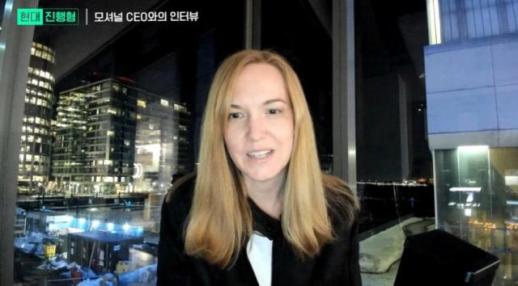 Hyundai JV Motional remains on track to put driverless taxi on roads this year SEOUL, March 08 (AJP) -Motional, the autonomous driving joint venture of Hyundai Motor Group, said it remains on track to launch its fully driverless robotaxi service in Las Vegas in the second half of 2026, reaffirming the commercialization timeline it first outlined in January. Laura Major, chief executive of Motional, reiterated the plan during an appearance on Hyundai Motor Group’s official podcast channel, Hyundai Now, where she outlined the company’s technological direction and commercialization strategy for autonomous mobility. Major said the company recently redesigned its autonomous driving system architecture around a generative artificial intelligence-based large driving model (LDM), describing the shift as a key milestone in the development of autonomous driving technology. “The decision to redesign Motional’s autonomous driving system architecture around AI and transition to a large driving model marked an important turning point,” Major said, adding that the move has helped improve driving quality, responsiveness, scalability and operating efficiency despite the technical risks associated with overhauling an existing system. Motional is focusing on building a fully driverless Level 4 robotaxi service, with safety remaining the company’s top priority. Major said the firm applies an end-to-end (E2E) AI approach to general driving scenarios that account for more than 90 percent of real-world road situations, while employing a separate “guardrail” safety framework to handle rare edge cases such as emergencies. “These exceptional scenarios become critical training data that help improve the overall performance of the autonomous driving system,” she said. Motional currently operates research and development hubs across the United States and is conducting intensive testing in Las Vegas and Pittsburgh. Major said the two cities offer contrasting urban environments that help refine the system’s adaptability. Las Vegas features a modern grid-based layout with wide roads, while Pittsburgh presents more complex driving conditions with narrow streets, older infrastructure and intricate intersections. “Testing across these different environments helps us build a general-purpose autonomous driving system that can operate in virtually any city,” she said. The company also highlighted the role of real-world data accumulated through pilot programs with ride-hailing platforms such as Uber and Lyft. Through those trials, Motional has gathered more than 130,000 autonomous ride experiences, generating insights into passenger behavior and in-vehicle interaction — including how riders access trip information, whether they prefer onboard displays or smartphones, and how features such as route changes or mid-ride stops should be integrated into driverless services. Major said improving the passenger experience will be just as critical as advancing the underlying driving technology as the company approaches commercialization. “Our goal is not only to develop autonomous driving technology but also to deliver a seamless and intuitive passenger experience,” she said. Hyundai Motor Group’s Hyundai Now series explores mobility technologies and industry trends, and Major’s appearance marked the first time a senior executive from the group participated directly in the program. Major recently received the SDV Innovator Award from North American automotive magazine MotorTrend for her contributions to software-defined vehicle innovation. 2026-03-08 13:53:05
 -
 South Korea weighs ownership caps in crypto exchanges under new law SEOUL, January 29 (AJP) - South Korea’s Financial Services Commission (FSC) is again pushing to limit major shareholders’ stakes in cryptocurrency exchanges, arguing the platforms function as public infrastructure as they move into a fully regulated licensing system. The proposal has drawn attention over whether it will be reflected in the Digital Asset Basic Act being prepared by the ruling Democratic Party, as industry groups warn that forcing large shareholders to sell would infringe on property rights. FSC Chairman Lee Eok-won said at a news briefing on Tuesday that regulators are considering ownership caps in connection with the Digital Asset Basic Act, citing the “public-infrastructure nature" of crypto exchanges and their entry into the regulated system through an approval-based licensing regime. “How we design the new framework is important,” Lee said. Lee added that concentrated control by a specific shareholder could create conflicts of interest, saying regulators and the ruling party share a sense of the need for reform and are in close discussions on how to proceed. The government and the ruling party plan to use the Digital Asset Basic Act to broadly overhaul digital-asset regulation, including rules for stablecoins, the classification of digital-asset businesses, and licensing and approval requirements. Crypto exchanges currently operate under a partial regulatory framework based on a three-year reporting system. Under a new approval-based regime, exchanges would gain permanent operating status. Regulators say they want to establish a more dispersed ownership structure as exchanges are formally brought into the regulated system, in order to strengthen public accountability and responsible management. With regulators reviving the ownership-cap proposal, attention is focused on whether they can reach consensus with the Democratic Party. Lawmakers across party lines have previously raised concerns that government intervention in the governance of private companies could be excessive. Lee Jung-moon, a lawmaker who leads the Democratic Party’s digital-asset task force, said on Tuesday that while there is broad agreement on the principle of limiting major shareholders’ stakes, there are differing views on whether such limits should be written directly into legislation. He said he would gather opinions within the party. If the plan is legislated, all five major won-denominated cryptocurrency exchanges would be required to reduce major shareholders’ stakes. The FSC has proposed capping such holdings at 15 to 20 percent. The Digital Asset eXchange Alliance (DAXA), an industry body representing major exchanges, has strongly opposed the proposal. * This article, published by Aju Business Daily, was translated by AI and edited by AJP. 2026-01-29 15:26:49
 -
 Korea Exchange to extend stock trading hours to 12 starting in June SEOUL, January 13 (AJP) - The Korea Exchange plans to introduce premarket and after-hours trading starting in June, extending daily stock trading to 12 hours to keep pace with global moves toward near–round-the-clock markets. The exchange currently operates from 9 a.m. to 3:30 p.m. Beginning in June, it aims to double that window. Exchange officials said the move is intended to broaden investor access in line with international standards, referring to long-term ambitions for the benchmark index. Major overseas exchanges are moving in a similar direction. The New York Stock Exchange and Nasdaq are pursuing 24-hour trading in the second half of this year, while regulators in the U.K. and Hong Kong are reviewing extended hours. Competitive pressure has also intensified at home following the rapid growth of NextTrade, an alternative trading system launched in March last year. NextTrade operates a premarket session from 8 a.m. to 8:50 a.m. and an after-hours market from 3:30 p.m. to 8 p.m. Trading on alternative platforms accounted for about 12 percent of total market volume in the previous session, the exchange said. To differentiate itself, the Korea Exchange is considering opening a premarket as early as 7 a.m. A trading day running from 8 a.m. to 8 p.m. would mirror NextTrade’s schedule but could put the exchange at a disadvantage on transaction fees. If the earlier opening is adopted, South Korea’s equity market could operate from 7 a.m. to 8 p.m The exchange said it plans to solicit feedback from member firms as early as this week before finalizing the schedule. Beyond equities, the exchange plans to extend derivatives trading hours to 24 hours a day by the end of 2027, from the current 19 hours, which would make it the first market in Asia to offer round-the-clock derivatives trading. It also plans to shorten the stock settlement cycle to T+1 from T+2, following trends in advanced markets. The United States and Canada completed the shift to T+1 in May 2024, and the U.K. and Europe are expected to follow around October 2027. 2026-01-13 09:00:43
 -
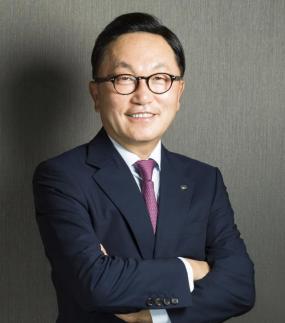 Son of Mirae Asset founder moves to core Mirae unit to renew speculation on generational shift SEOUL, January 01 (AJP) -Park Jun-beom, the eldest son of Mirae Asset Chairman Park Hyun-joo, has moved from Mirae Asset Venture Investment to Mirae Asset Securities, the core unit of South Korea's top asset managing conglomerate, renewing speculation about a generational shift under making despite the founder's long-stated opposition to hereditary succession. Mirae Asset Securities said Thursday that Park, previously a senior investment reviewer at Mirae Asset Venture Investment, was reassigned through a personnel reshuffle the previous day. Beginning this year, he will work in the proprietary investment (PI) division, which focuses on investments in new-growth industries and innovative companies. Born in 1993, Park majored in economics at Washington University in St. Louis. After graduating, he worked as a project manager at game developer Netmarble starting in 2020. He joined Mirae Asset Venture Investment in 2022, where he led startup deal sourcing and investment execution, including a secondary-share investment in apparel brand Andar, according to industry sources. His move to Mirae Asset Securities — widely regarded as the group’s core operating arm — has fueled market speculation that preparations for a future management succession may be gaining momentum. A Mirae Asset Securities official, however, downplayed such interpretations, saying the reassignment reflects Park’s professional background rather than a governance shift. “His experience as a venture investor focused on long-term investments in innovative companies will be useful for proprietary investment activities,” the official said, adding that Mirae Asset maintains a professional management system and that the chairman’s children are not expected to take board positions.Speculation over succession has been floated after change in the ownership structure of Mirae Asset Consulting, the holding company at the top of the group’s governance chain, two years ago. Regulatory filings placed Park Jun-beom as the second-largest shareholder of Mirae Asset Consulting after receiving 25,884 shares, or 3.33 percent, from his aunt Park Jung-sun through a gift transaction. His stake rose from 8.19 percent to 11.52 percent, second only to Chairman Park Hyun-joo’s 48.63 percent. The transfer pushed Park’s mother, Kim Mi-kyung, to third place with a 10.24 percent stake. His sisters, Park Ha-min and Park Eun-min, each hold 8.19 percent, while cousins Song Sung-won and Song Ha-kyung hold 1.37 percent each. Mirae Asset Consulting sits at the apex of the group’s ownership structure, which runs through Mirae Asset Global Investments, Mirae Asset Capital, Mirae Asset Securities and Mirae Asset Life Insurance. The group has been making meaningful strides on the global market. In September, the company's global exchange-traded fund assets have surpassed 250 trillion won ($179.2 billion), reaching 254 trillion won. Its ETFs are now operated across multiple markets, including South Korea, the United States, Canada, Australia and Japan, making Mirae Asset the world’s 12th-largest ETF provider by assets. Mirae Asset’s global ETF assets have grown at an average annual rate of 37 percent over the past decade, nearly double the global industry average of about 20 percent. * This article, published by Aju Business Daily, was translated by AI and edited by AJP. 2026-01-01 15:14:47
 -
 South Korean crypto exchange Korbit fined over anti-money laundering breaches SEOUL, December 31 (AJP) - South Korea’s Financial Intelligence Unit (FIU) has fined cryptocurrency exchange Korbit 2.73 billion won ($2 million) for violations of anti-money laundering (AML) obligations, issuing an institutional warning against the company. The Financial Services Commission (FSC) said on Wednesday a comprehensive FIU inspection found Korbit had breached legal requirements, including prohibitions on transactions with unreported virtual asset service providers (VASPs) and obligations related to customer due diligence and transaction restrictions. The FIU held a sanctions review committee meeting on Tuesday and finalized follow-up measures after considering past sanction precedents, Korbit’s voluntary corrective actions and relevant legal standards, the commission said. The FIU conducted an on-site inspection of Korbit from Oct. 16 to 29, uncovering around 22,000 violations related to customer due diligence and transaction-restriction requirements. Korbit was also found to have supported 19 virtual asset transfer transactions involving three overseas VASPs that had not met reporting requirements under South Korean law, violating the ban on dealing with unreported providers. In addition, inspectors identified 655 cases in which Korbit failed to conduct required money-laundering risk assessments when supporting new transactions, including those involving non-fungible tokens. 2025-12-31 16:28:44
 -
 South Korea's Shinhan Card reports leak of data on 190,000 merchants Shinhan Card headquarters in Seoul/ Courtesy of Shinhan Card SEOUL, December 23 (AJP) - Shinhan Card said on Tuesday information on about 190,000 merchants, including store owners’ mobile phone numbers, was leaked in an incident caused by an employee rather than a cyberattack. According to financial industry sources, Shinhan Card confirmed the data leak through an internal investigation and reported the case to the country's Personal Information Protection Commission (PIPC). The company said the incident was not the result of hacking or an external system breach, but involved an employee. Most of the leaked information consisted of mobile phone numbers belonging to merchants, Shinhan Card said. Cases in which a phone number, name and date of birth were exposed together were limited. The company said it has so far found no evidence that the employee sold the data or committed additional crimes, adding that the information appears to have been used to boost sales performance. Shinhan Card said it launched an internal probe after the privacy watchdog contacted the company last month. Following about three weeks of data analysis, the company concluded that between March 2022 and May this year, an employee leaked information on roughly 190,000 merchants, including business registration numbers, store names and merchant-owner mobile phone numbers. Shinhan Card has posted an apology and notice on its website and will allow merchants to check whether their information was affected. The company also plans to notify affected merchants individually. A Shinhan Card official said further investigation is under way to determine whether the incident involved improper use of personal information beyond its intended purpose. The official said the company will move swiftly to provide compensation and other remedial measures if customer harm is confirmed. 2025-12-23 14:53:53
 -
 Hanwha completes acquisition of Indonesia's Ciptadana Asset Management SEOUL, December 16 (AJP) - Hanwha Investment & Securities said on Tuesday it has completed the acquisition of Ciptadana Asset Management in Indonesia, strengthening its foothold in Southeast Asia’s fast-growing capital markets. Ciptadana Asset Management is part of Indonesia’s sixth-largest conglomerate, Lippo Group, and has more than 30 years of experience in the country’s financial sector. Hanwha agreed in 2023 to acquire an 80 percent stake in both Ciptadana Securities and Ciptadana Asset Management. After completing the takeover of Ciptadana Securities in October last year, the South Korean firm received final approval from Indonesia’s Financial Services Authority for the asset management acquisition. The transaction was finalized recently, giving Hanwha a dual-track presence in Indonesia across securities brokerage and asset management, Hanwha said. Hanwha plans to deepen its strategic partnership with Lippo Group and introduce digital asset management solutions tailored to local market conditions and customer needs. “Ciptadana Securities and Ciptadana Asset Management will play a key role in developing Indonesia’s digital financial ecosystem,” Jang Byung-ho, chief executive officer of Hanwha Investment & Securities, said in a press release. “We will continue to support their growth with the aim of becoming a leader in the ASEAN financial market.” * This article, published by Economic Daily, was translated by AI and edited by AJP. 2025-12-16 11:11:38
 -
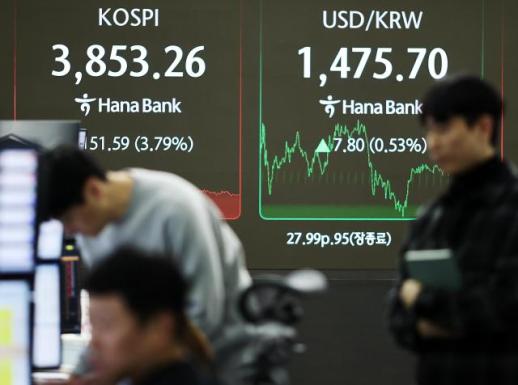 Korea sees largest monthly stock outflow as foreign funds pivot to bonds SEOUL, December 03 (AJP) - Foreign investors offloaded a net 14.2 trillion won ($9.7 billion) worth of South Korean equities in November, the largest monthly divestment since records began in the 2000s, the International Finance Center (IFC) said in a report on Wednesday. The outflow surpassed the previous highs of 12.9 trillion won logged in March 2020 at the onset of the COVID-19 pandemic and 10.1 trillion won in April this year amid U.S. tariff-related tensions. While foreign investors exited equities, they sharply increased their exposure to South Korean bonds. Net inflows reached 17.2 trillion won in November, pushing foreign bond holdings from 312.3 trillion won at the end of October to a record 329.5 trillion won a month later. Shin Sul-wee, senior researcher at the IFC, said the large outward flow from stocks reflected rising turnover amid a 57.3 percent jump in the Korean market’s capitalization this year. “The absolute scale of stock sales in November was significant,” Shin said. “But this appears to be portfolio rebalancing in response to higher stock prices and concerns over a potential AI bubble, rather than a sign of deteriorating fundamentals for Korean equities.” * This article, published by Economic Daily, was translated by AI and edited by AJP. 2025-12-03 16:34:43
 -
 Celltrion secures Korea Eximbank financing for US biosimilar plant acquisition SEOUL, November 25 (AJP) - Korea Eximbank said Tuesday it will provide 350 billion won (about $237 million) in financing to support Celltrion’s acquisition of Eli Lilly’s biosimilar manufacturing plant in the United States. The acquisition is aimed at strengthening the Korean drugmaker’s supply chain and expanding its presence in the world’s second-largest biosimilar market. Celltrion earlier said it will spend a total of roughly 1.4 trillion won on acquisition, early operations and later expansion of the plant. The U.S. market is expected to grow rapidly as patents for blockbuster drugs worth more than 1 trillion won in annual sales expire. Washington’s continued push to lower healthcare costs through greater biosimilar uptake is also driving demand, the company said. * This article, published by Aju Business Daily, was translated by AI and edited by AJP. 2025-11-25 14:39:12
 -
 Victims of Belgian real estate fund mis-selling at brokerages will get compensation SEOUL, November 24 (AJP) - Korea Investment & Securities will compensate investors in more than 450 cases linked to the mis-selling of a Belgian real estate fund, industry sources said Monday. The brokerage concluded that 458 of 883 complaints constituted mis-selling, equivalent to 24.1 percent of the 1,897 total fund sales. The fund, launched in June 2019, was designed to invest in office leases for Belgian government agencies and generate profits after a five-year holding period. Instead, surging interest rates and a sharp downturn in Europe’s real estate market left investors with losses. Korea Investment & Securities has set a base compensation range of 30 to 60 percent, with payouts rising to as high as 80 percent for vulnerable investors. Of the confirmed cases, 232 will receive 30–35 percent and 172 will receive 40–45 percent. KB Kookmin Bank, another seller of the fund, is also offering 40–80 percent compensation. As of Nov. 17, the Financial Supervisory Service (FSS) had received 372 dispute cases tied to the two firms, with 90 resolved through voluntary settlements. The FSS is currently investigating three sales companies for potential mis-selling, a process that could push compensation rates even higher. “If internal control violations related to mis-selling are confirmed, we may readjust compensation standards for all disputes, including previously settled cases,” FSS Governor Lee Chan-jin said. * This article, published by Aju Business Daily, was translated by AI and edited by AJP. 2025-11-24 10:51:56