
Journalist

Kim Ji-yoon
yoon0930@ajunews.com
-
 Bitcoin Holds Above $81,000 as Hopes for U.S.-Iran Deal Lift Risk Appetite Bitcoin edged higher and held above $81,000, supported by improved risk appetite tied to expectations of progress in end-of-war talks between the United States and Iran. Bitcoin was trading at $81,308 as of 8 a.m. on the 7th, up 0.24% from a day earlier, according to CoinMarketCap. After reclaiming the $81,000 level on May 5 for the first time in four months, it has remained around that range. Major altcoins were mostly higher. Solana rose 2.82% to $89.06, and XRP gained 0.42% to $1.42. Ethereum fell 0.88% to $2,346. Market participants pointed to expectations that U.S.-Iran end-of-war negotiations could advance. A U.S. online outlet earlier reported the two sides were close to signing a memorandum of understanding with 14 items. The report said the MOU would include a temporary suspension of Iran’s nuclear enrichment and reopening the Strait of Hormuz. Uncertainty around the talks, however, continued to leave room for volatility. Iran’s chief negotiator, Mohammad Bagher Ghalibaf, the speaker of parliament, voiced displeasure on May 6 local time, calling the report a “fake Axios operation.” In South Korea, bitcoin was trading at about 119.56 million won on Bithumb at the same time, down 0.22% from a day earlier. The so-called “kimchi premium,” in which domestic prices trade above overseas levels, stood at 1.617%.* This article has been translated by AI. 2026-05-07 08:33:15
 -
 KakaoBank, Kakao Pay post record Q1 results as noninterest income grows KakaoBank and Kakao Pay posted record first-quarter results as they expanded noninterest businesses such as platform services and overseas investments. The shift is aimed at reducing earnings volatility tied to interest rates and policy changes, and at building finance platforms used in everyday life. KakaoBank said in a regulatory filing on the 6th that its first-quarter net profit rose 36.3% from a year earlier to 187.3 billion won, the highest on record. Noninterest income increased 7.5% to 302.9 billion won, accounting for 37% of operating revenue. The results reflect a strategy to diversify revenue beyond traditional loan-deposit margins, as tighter household lending oversight has limited banks’ ability to expand profits. KakaoBank has pursued initiatives including entry into Southeast Asia, a loan-comparison platform and an investment tab, seeking to grow beyond a basic banking app into an everyday “super app.” In the quarter, KakaoBank’s fee and platform revenue rose 4.1% to 80.8 billion won. Fee profit jumped 47% from a year earlier, supported in part by the investment-tab service that links asset viewing to execution. Overseas gains also contributed: KakaoBank recorded 93.3 billion won in nonoperating profit from valuation gains after Superbank, an Indonesian digital bank it invested in, went public. KakaoBank’s plan to pursue the acquisition of a capital company within the year is also seen as part of its diversification push, aimed at building a nonbank portfolio. Chief Financial Officer Kwon Tae-hoon said on an earnings conference call, “If we acquire a capital company, we can quickly improve profitability by lowering funding rates through an improved credit rating.” Kakao Pay is also shifting its focus from a payments-centered model toward a broader financial platform. On a consolidated basis, its first-quarter operating profit rose sevenfold from a year earlier to 32.2 billion won, a record, while revenue climbed 41.7% to 300.3 billion won. Financial services grew to nearly half of total revenue, as investment and insurance services expanded and reduced reliance on payment fees. Platform businesses such as advertising and telecom brokerage also grew, supporting a more diversified revenue mix. For longer-term growth, the company is targeting AI-based financial services. It plans to upgrade its in-house AI service, Pay i, and expand payment and remittance functions linked to Kakao’s AI ecosystem. 2026-05-06 16:27:48
 -
 Kakao Pay posts record Q1 operating profit, extends streak of profitability Kakao Pay said it posted its highest-ever quarterly results in the first quarter, driven by growth across its payments, financial services and platform businesses. In a regulatory filing on Tuesday, the company reported consolidated revenue of 300.3 billion won and operating profit of 32.2 billion won for the January-March period. That was up 41.7% and 630.9%, respectively, from a year earlier, both record highs. Operating margin rose to 10.7%, and net profit margin reached 11.6%, both in double digits. Transaction volume also increased. Consolidated transaction value rose 15% from a year earlier to 50.9 trillion won. Revenue-contributing transaction value climbed 15% to 14.6 trillion won, holding at about 29% of total transaction value. The balance of Kakao Pay Money top-ups continued to rise, reaching 2.5122 trillion won. Remittance transaction value also grew 15% from a year earlier as stock trading expanded. Financial services led the gains. Revenue from the segment jumped 82% to 145.9 billion won, helped by a 137% increase in investment-service revenue and a 78% rise in insurance-service revenue. The segment accounted for 49% of total revenue, as the company broadened earnings beyond payments. Payments revenue rose 13.3% to 138.4 billion won. Online payments at merchants outside the Kakao Group increased 24%, supporting revenue growth, the company said, citing data-driven solutions aimed at boosting partner sales. Overseas payment transaction value increased 20% from a year earlier. Subsidiaries also contributed. Kakao Pay Insurance posted first-quarter revenue of 24.3 billion won, up 85% from a year earlier, while regular premium payments rose 157%. Kakao Pay Securities reported quarterly revenue of 100.1 billion won and operating profit of 23.6 billion won, both record highs. Chief Executive Shin Won-geun said the company’s data-driven business model and new growth engines have moved onto a firmer track. “We will keep our growth momentum solid so that technological innovation can translate into higher corporate value,” he said.* This article has been translated by AI. 2026-05-06 14:43:17
 -
 Lotte Card Q1 Operating Profit Jumps 201% to 41.5 Billion Won Lotte Card said Tuesday it posted 41.5 billion won ($415억원) in operating profit for the first quarter, up 201.4% from 13.8 billion won a year earlier. The company also reported a rebound in membership after last year’s large-scale personal data leak. First-quarter membership totaled 9,566,000, up 10,000 from a year earlier. Asset quality indicators improved as well. As of the end of March, the delinquency transition rate — the share of performing loans that become loans overdue by at least two months — stood at 0.318%, close to the pre-Legoland incident level of 0.311%. Lotte Card kept a double-digit market share. Based on personal and corporate credit sales among eight dedicated card issuers tracked by the Credit Finance Association, its first-quarter share was 10.6%, following 11.0% in the previous quarter. Lotte Card attributed the results to a stable earnings structure built around a portfolio focused on high-quality customers. It also cited stronger risk management and lower bad-debt costs. CEO Jeong Sang-ho said, “It was an important time to show the company’s resilience after last year’s cyber incident, and employees worked together to achieve the valuable result of higher operating profit.” He added, “We will continue to respond to internal and external uncertainty as one team.” Separately, a Lotte Card official said that because a final decision by the Financial Services Commission is still pending, the company will “faithfully explain” its efforts to prevent damage from the incident in seeking reduced sanctions. On April 30, Lotte Card said a second meeting of the Financial Supervisory Service’s sanctions review committee confirmed heavy penalties, including a 4.5-month business suspension and an administrative fine of about 5 billion won. 2026-05-06 14:34:24
 -
 KakaoBank posts record Q1 net profit of 187.3 billion won on stronger noninterest income KakaoBank said in a regulatory filing on Tuesday that it posted a record first-quarter net profit of 187.3 billion won ($187.3 billion won), up 36.3% from a year earlier. Operating revenue rose 4.4% to 819.3 billion won. The results were driven by growth in noninterest income. Noninterest income increased 7.5% from a year earlier to 302.9 billion won, topping 300 billion won for the first time and accounting for 37% of operating revenue. Fee and platform income rose 4.1% to 80.8 billion won. Interest income climbed 2.7% to 515.6 billion won. Net interest margin was 2.00%, down 0.09 percentage point from a year earlier. Loans outstanding totaled 47.699 trillion won. Loans to mid- and low-credit borrowers accounted for 32.3% of the total, down about 0.5 percentage point from a year earlier but above the regulator’s 30% target. Loans to individual business owners stood at 3.403 trillion won, up 348 billion won from the previous quarter. Asset quality remained stable. The delinquency rate rose 0.01 percentage point from a year earlier to 0.51%. The ratio of substandard or below loans was 0.53%, and the credit loss ratio was 0.55%, both unchanged from the previous quarter. Deposits totaled 69.356 trillion won, increasing by more than 1 trillion won over three months. Regular savings deposits fell amid a strong domestic stock market, but demand deposits and time deposits grew. Balances in group accounts rose by about 1 trillion won, supporting growth in demand deposits. KakaoBank’s customer base also expanded. Total customers reached 27.27 million at the end of the first quarter, up 570,000 over three months. Monthly active users hit a record 20.32 million. The bank said nonoperating gains included a 93.3 billion won valuation gain tied to its investment in Indonesia’s digital bank Superbank, supporting the rise in net profit. A KakaoBank official said the bank achieved balanced growth by focusing on loan expansion centered on individual business and policy loans, while diversifying through fee and platform businesses and treasury operations. The official said the bank will strengthen a sustainable growth structure based on its platform and global businesses.* This article has been translated by AI. 2026-05-06 08:18:20
 -
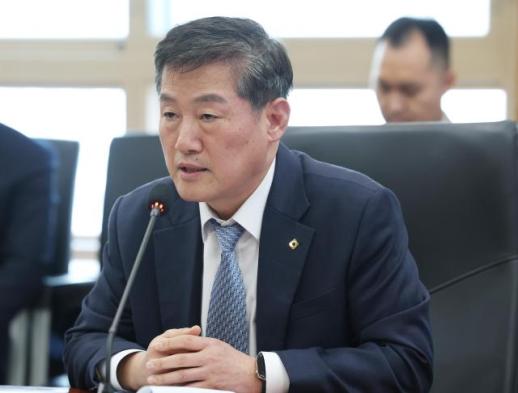 Credit Finance Association to Open Applications for Next Chair Starting May 6 The Credit Finance Association will begin recruiting candidates on May 6 as it moves into full-scale preparations to select its next chair, financial industry officials said. The appointment could be finalized as early as June. According to the financial sector on May 5, the association held a board meeting the previous day and approved in writing a plan to form its chair nomination committee. The committee will have 15 members: 14 representatives from member companies — seven from card issuers and seven from capital companies — plus one auditor. The committee will be chaired by Seong Young-su, CEO of Hana Card. The association plans to post the election notice on May 6 and accept applications through May 19. It will narrow the field through a document review on May 27. On June 4, candidates will be interviewed and committee members will hold a secret ballot. If the vote produces a single nominee, the nominee will be confirmed through a general meeting and must win a majority vote to be formally appointed chair. If the nominee comes from the private sector, the process is expected to conclude at a general meeting in June. If the nominee is a public official, the association is expected to hold a general meeting in July because the candidate must undergo an employment review under the Public Service Ethics Act. The association has been led by an acting chair for more than seven months since the term of Chair Jeong Wan-gyu ended in October last year. The delay is attributed to uncertainty in senior government personnel schedules amid discussions on reorganizing financial authorities, along with the expiration of terms for some member company CEOs, officials said. Industry officials say the sector needs a leader who can convey to the government and the National Assembly the challenges facing the industry amid fee and lending regulations. Names mentioned include Seo Tae-jong, former head of the Korea Financial Training Institute, and Kim Geun-ik, former chief of the Korea Exchange market surveillance committee. Private-sector names include Lee Dong-cheol, former vice chairman of KB Financial Group, and Woo Sang-hyeon, former vice president of BC Card. In academia, Kim Sang-bong, an economics professor at Hansung University, has also been cited.* This article has been translated by AI. 2026-05-05 16:05:31
 -
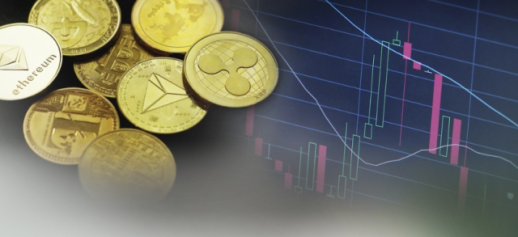 South Koreans’ Crypto Holdings Halve in a Year as Stablecoin Holdings Double South Korean investors’ crypto holdings and trading volume have dropped by more than 60 trillion won over about a year, while stablecoin holdings moved in the opposite direction, more than doubling. The shift is widely attributed to money moving into a strong stock market and to a preference for dollar-linked assets amid a weak won. Data the Bank of Korea submitted on Monday to Rep. Cha Gyu-geun of the Rebuilding Korea Party, a member of the National Assembly’s Planning and Finance Committee, showed domestic crypto holdings totaled 60.6 trillion won as of the end of February. The figure sums investors’ assets at month-end market prices across the country’s five major crypto exchanges: Upbit, Bithumb, Korbit, Coinone and Gopax. Holdings surged from 50.6 trillion won in August 2024 to a peak of 121.8 trillion won in January last year, when U.S. President Donald Trump took office. They have since fallen to less than half that level in 1 year and 1 month. Average daily trading value also declined. It rose from 2.7 trillion won in August 2024 to 17.1 trillion won at the end of December that year, but stood at about 4.5 trillion won in February. Won-denominated deposits on exchanges, often seen as funds waiting to be invested, fell to 7.8 trillion won in February from 10.7 trillion won at the end of December 2024. The decline was attributed to a combination of a buoyant domestic stock market drawing investment funds and falling crypto prices. Stablecoin holdings, however, increased. They rose from 88.5 billion won at the end of July 2024 to a peak of 872.3 billion won at the end of December last year. The total eased to 607.1 billion won in February, but was still about 2.2 times the level in January last year (278.2 billion won). Industry officials pointed to stronger demand for dollar-based assets amid a high exchange rate. Kim Min-seung, head of Korbit’s research center, said fluctuations in the won-dollar exchange rate appeared to have influenced demand for stablecoin investments. He added that with most coins weakening on overseas exchanges, funds that had moved abroad may also have returned to the domestic market. * This article has been translated by AI. 2026-05-05 15:48:17
 -
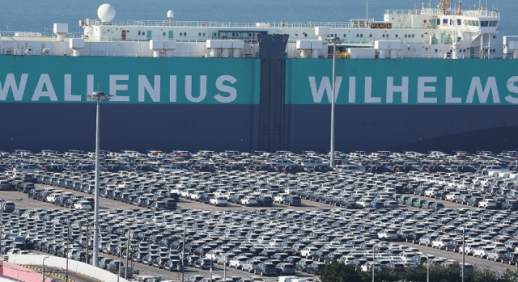 Auto Installment Loan Rates Top 10% at Some Firms as Funding Costs Rise Auto installment loan rates are climbing sharply as funding conditions worsen for card issuers and capital companies. Some capital firms have pushed rates above 10%, and the rise in card bond yields suggests rates could climb further. According to the Credit Finance Association on Saturday, the average installment rate for new cars at six dedicated card issuers last month — based on a 30% cash down payment and a 36-month term — ranged from 4.60% to 6.63%. That is more than a 2 percentage-point increase in four months, compared with the low-3% to low-4% range in the fourth quarter of last year. Major capital companies posted higher rates than card issuers, at 5.12% to 8.80%. Meritz Capital’s top rate reached 10.8%. Hana Capital’s average rate rose 1.58 percentage points, from 5.52% in the previous quarter to 7.1% in April. The increases reflect higher funding costs for card issuers and capital companies. Unlike banks, specialized credit finance companies do not take deposits and largely fund lending by issuing specialized financial company bonds and commercial paper. Amid instability in the Middle East, yields on three-year AA+ card bonds have stayed in the 4% range, hitting 4.167% on March 23. With a typical two- to three-month lag before higher funding costs feed into loan pricing, installment rates are expected to face additional upward pressure. Still, rates may vary by model and automaker marketing strategy. Automakers sometimes work with financial firms to offer ultra-low-rate financing or cashback on key models to boost sales, which can keep rates low despite higher funding costs. Some Chinese-made electric vehicles are being offered with financing starting in the 0% range. An industry official said higher funding costs leave room for additional rate increases, but added that a dual-track market — with ultra-low rates for low-priced Chinese EVs regardless of broader rate moves — is likely to persist for the time being. * This article has been translated by AI. 2026-05-03 17:03:17
 -
 Insurers’ K-ICS Solvency Ratios Improve as Higher Rates Cut Liabilities Major insurers affiliated with financial holding groups posted broadly improved K-ICS solvency ratios in the first quarter, helped by rising interest rates that reduced insurance liabilities and by additional capital raising, the industry said. According to the insurance industry on Tuesday, Tongyang Life’s first-quarter K-ICS ratio rose to 185.8% from 127.2% a year earlier. KB Insurance’s ratio increased to 188%, while Shinhan Life and KB Life improved to about 200% and 277%, respectively. The K-ICS ratio measures whether an insurer can pay claims even after unexpected losses, serving as a gauge of financial strength. The main driver was higher interest rates. Insurers typically carry large long-term liabilities, and when rates rise, the present value of those liabilities falls, easing the balance-sheet burden and lifting solvency ratios. Company actions also contributed. KB Life increased sales of protection-type policies to build its contract service margin, or CSM, reflecting expected future profit from insurance contracts in present-value terms. Tongyang Life strengthened capital through steps including issuing subordinated debt. Looking ahead, the industry expects a shift from focusing on headline K-ICS ratios to managing solvency based on “core capital.” Starting next year, a system will separately assess the share of capital that can directly absorb losses, such as paid-in capital and retained earnings. An industry official said securing higher-quality capital will matter more than simply increasing capital.* This article has been translated by AI. 2026-04-29 16:12:17
 -
 Court Temporarily Halts FIU’s Partial Business Suspension of Coinone for One Month A partial business suspension ordered against South Korean virtual asset exchange Coinone, which had been set to take effect on the 29th, has been put off for one month. According to the legal community and the virtual asset industry on the 28th, the Seoul Administrative Court decided to temporarily suspend the effect of the sanction until May 29 in a lawsuit Coinone filed against the head of the Financial Intelligence Unit (FIU) seeking to overturn the partial suspension, along with Coinone’s request for a stay of enforcement. The court’s move pauses the sanction while it reviews the stay request and reaches a final judgment. It is not a final decision on the stay petition. The FIU held a sanctions review committee meeting on the 13th and imposed a three-month partial business suspension on Coinone from April 29 to July 28, citing violations including duties to block prohibited transactions and to verify customer identities. It also levied an administrative fine of 5.2 billion won. Coinone filed the cancellation suit and the stay request with the Seoul Administrative Court on the 27th, two days before the suspension was to begin. The decision means Coinone will not be subject to the planned partial suspension for the next month. Coinone’s legal challenge adds to a widening court fight between virtual asset exchanges and regulators. Upbit and Bithumb have also filed administrative lawsuits and sought stays to contest FIU sanctions. * This article has been translated by AI. 2026-04-28 17:05:03