
Journalist

Kim Ji-yoon
yoon0930@ajunews.com
-
 Naver Pay to Cover Fees for Small Merchants for Family Month Promotion Naver Pay (Npay) will cover payment fees for small online and offline merchants as part of a promotion tied to May, widely observed in South Korea as “Family Month.” Naver Pay said April 28 that it will support Npay fees incurred from May 4 to May 10 by eligible small merchants using its online and in-store payment services, as well as Naver’s reservation and ordering services. The company said the program is intended to help small business owners benefit from increased spending during a period when payments typically concentrate around Children’s Day and Parents’ Day through online shopping, in-store payments and transactions made via Naver reservations and orders. Merchants classified as “small sellers” under National Tax Service criteria — including Npay online and in-store payment merchants and Naver reservation and order merchants — will be included automatically, without a separate application. For online and reservation/order merchants, the company will cover fees across all payment methods. For in-store payment merchants, support applies to transactions paid with Npay Money and points. The total eligible Npay fees accrued during the support period will be paid in full in a lump sum in June. This is the seventh time Naver Pay has introduced a plan to support or lower fees for merchants. It previously covered in-store payment fees in full for small and midsize merchants during the Lunar New Year holiday period in February. A Naver Pay official said the company will continue efforts to practice “mutual growth finance” by providing services and support measures that help small business owners who use Npay grow their businesses.* This article has been translated by AI. 2026-04-28 09:18:17
 -
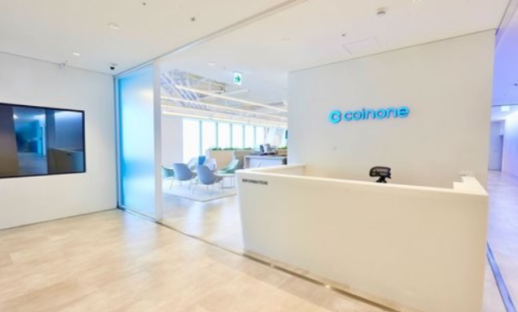 Coinone Files Lawsuit, Seeks Injunction Against FIU Partial Business Suspension South Korean cryptocurrency exchange Coinone has filed an administrative lawsuit and sought a court injunction to block a partial business suspension ordered by the Financial Intelligence Unit under the Financial Services Commission, the virtual asset industry said. According to the industry on the 28th, Coinone retained law firm Lee & Ko on the afternoon of the 27th and filed a suit with the Seoul Administrative Court seeking to overturn the FIU’s three-month partial suspension. It also submitted a request to stay enforcement, the industry said. The FIU held a sanctions review meeting on the 13th and penalized Coinone for violations including a duty to block prohibited transactions and customer identification requirements. The agency ordered a three-month partial suspension from April 29 to July 28 and imposed an administrative fine of 5.2 billion won. If the court grants the stay, the suspension scheduled to begin on the 29th would be halted until a ruling on the merits. The move mirrors steps taken by Upbit and Bithumb, which have also gone to court over FIU sanctions. Separately, a court decision is also expected on the 29th on whether to grant Bithumb’s request to suspend enforcement of its partial business suspension. The court is expected to weigh, among other factors, whether Bithumb’s ongoing transaction-blocking measures sufficiently address concerns about harm to the public interest, according to industry officials.* This article has been translated by AI. 2026-04-28 09:15:15
 -
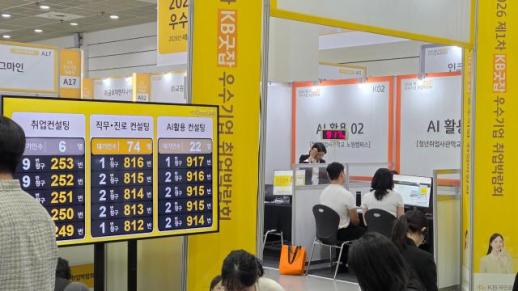 KB Goodjob Job Fair Draws Crowds as Young Koreans Face AI-Era Hiring Squeeze “Even when job postings go up these days, most are for experienced hires. Companies don’t hire many entry-level workers, so I’m trying anything I can. AI makes me uneasy, but I have to work to become someone who can keep up with it.” Jeong Mi-ju, 26, said that Monday at the “2026 First KB Goodjob Excellent Companies Job Fair” at COEX in Seoul’s Gangnam district. Dressed for an interview, she carried a backpack filled with resumes and a portfolio. Preparing since January for an IT job, Jeong said she was ready to interview if she got the chance at the fair. Now in its 29th year, the KB Goodjob fair has drawn about 6,200 companies over time and provided jobs to 45,000 job seekers, organizers said. About 250 companies participated this year. The venue was packed from the 10 a.m. opening, with attendees ranging from vocational high school students to college students, soon-to-be graduates and troops nearing discharge. Many young visitors said they felt hiring had become tougher as AI spreads, and that they came to secure any opportunity they could. Na In-chae, 29, who worked two years on a contract in public relations and marketing and is now seeking a new job, said, “You can definitely feel there are fewer openings and the competition is higher.” She added, “At work, it feels like AI is required, so I’m trying to earn at least one more certificate. Still, I’m relieved I’ll be interviewing with two companies here today.” Kim Ye-rin, 28, preparing for a job in electronics and IT, said, “As AI’s role grows, I think every day about what I can do.” She said she visited the booth of a company that had rejected her application to ask what she lacked and to get feedback. “Even if I don’t get a good opportunity, I hope they see this kind of initiative in a positive way,” she said. Programs aimed at helping job seekers use AI drew especially heavy interest. A recruiting briefing titled “Job-hunting strategies in the AI era” was crowded even before it began. When speakers explained prompts for writing cover letters with generative AI, some attendees held up phones to record the screen. As seats filled, others stood outside on tiptoe to listen. The AI-based “Career Solution Zone,” which offers customized job counseling, was also crowded. The program provides comprehensive consulting tailored to each job seeker’s readiness and supports training to strengthen job-search literacy using AI. Organizers said that 1 hour and 50 minutes after opening, 99 people had taken waiting tickets. A 19-year-old identified by the surname Kim said after a session, “I’m very interested in robotics, and it helped to get detailed, personalized advice on whether to work right away or go to college.” Kim said they planned to look around more, using the counseling as a guide, noting that many related companies had booths at the fair. KB Kookmin Bank said it plans to continue supporting participating companies after the fair, including by offering specialized talent-matching services linked to KB Goodjob partner institutions. If participating companies hire full-time employees, the bank will provide hiring support funds of 1 million won per person, up to 10 million won per year. KB Kookmin Bank CEO Lee Hwan-joo said he hopes the event will be “a place of challenge and opportunity” where young job seekers can fully demonstrate their abilities. He said the bank will continue a range of social contribution activities alongside KB Goodjob to “do our best to establish ourselves as a lifelong financial partner for the public.”* This article has been translated by AI. 2026-04-27 15:54:16
 -
 Hyundai Card Q1 Net Profit Rises 5.4% to 64.7 Billion Won Hyundai Card reported higher first-quarter net profit, extending year-over-year gains as membership and credit card spending increased and interest costs fell. In a regulatory filing on the 24th, the company said net profit for the January-March period totaled 64.7 billion won, up 5.4% from 61.4 billion won a year earlier. Operating revenue rose 22.4% to 1.1815 trillion won, while operating expenses increased 23.5% to 1.0936 trillion won. Interest expenses declined 5.8% to 179.7 billion won from 190.8 billion won, supporting profitability. Membership also grew. New members increased by 47,000 in the quarter, bringing total membership to 12.71 million. Credit card purchase volume climbed 6% to 44.7843 trillion won from 42.2603 trillion won a year earlier. Asset-quality indicators edged up but remained generally low. The effective delinquency rate rose 0.05 percentage points from the end of last year to 1.21%. The general delinquency rate excluding refinancing loans increased 0.06 points to 0.85% from 0.79%. The 30-day-plus delinquency rate excluding refinancing loans, however, was 0.85%, down 0.05 points from a year earlier. A Hyundai Card official said strengthened product competitiveness helped sustain growth across key indicators, including membership and credit card spending, and that operating profit and net profit have risen year over year for four consecutive quarters. The official added that a focus on financial products for end users and proactive risk management has improved profitability while keeping asset quality solid.* This article has been translated by AI. 2026-04-24 14:39:47
 -
 Bitcoin Holds Near $78,000 as Oil Jumps on Renewed U.S.-Iran Tensions Bitcoin held above $78,000 as military tensions between the United States and Iran flared again and global oil prices extended a four-day surge. According to CoinMarketCap, bitcoin was trading at $78,266 as of 8 a.m. on the 24th, down 0.43% from a day earlier. Major altcoins also weakened. Solana fell 1.37% to $86.20, and ether slid 2.72% to $2,333.09. XRP edged up 0.03% to $1.43. Market participants said the standoff around the Strait of Hormuz capped gains. President Donald Trump wrote on Truth Social on the 23rd that he had ordered any vessel laying mines in the strait to be sunk without hesitation. Oil prices jumped 3.1% from the previous day, and the broader geopolitical risk weighed on sentiment, limiting bitcoin’s upside, the report said. Still, bitcoin stayed near the $78,000 level after Strategy, the publicly listed company that holds the most bitcoin, bought about $2.5 billion worth from the 12th to the 19th, local time. In South Korea, bitcoin was trading at about 116.30 million won ($78,395) on Bithumb at the same time, up 0.19% from a day earlier. The so-called kimchi premium, when domestic prices exceed overseas prices, stood at 0.304%. * This article has been translated by AI. 2026-04-24 08:33:20
 -
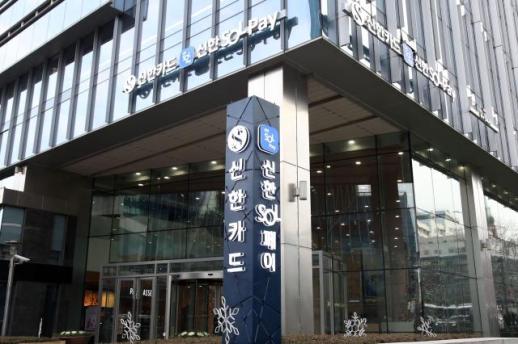 Shinhan Card Says 2,600 Merchant Records Confirmed as Credit Data Leak in 2025 Breach Shinhan Card said Wednesday that a financial regulator’s investigation found about 2,600 cases within a merchant data breach disclosed in December 2025 also involved leaked credit information. In a notice posted on its website, the company said the findings relate to a personal data leak that occurred on Dec. 23, 2025, and that the regulator confirmed additional exposure of credit information. Shinhan Card said it cannot individually notify 52 of the roughly 2,600 affected cases because the data subjects cannot be identified, and it is issuing the public notice for that reason. The company said it took steps to block further leakage as soon as it became aware of the incident in December and completed a review of related internal processes. It emphasized that no separate leak has occurred since that time. Shinhan Card previously reported that the December incident involved 192,088 leaked records tied to merchants. It said the latest review confirmed that about 2,600 of those cases qualify as leaks of personal credit information. The company again apologized for the leak of personal credit information and said it will work to ensure customers can use Shinhan Card services with confidence. 2026-04-23 18:00:16
 -
 Korea Financial Regulators Stall Insurance Training Institute’s Token, AI Plans South Korea’s Insurance Training Institute, a nonprofit education body, is seeking to expand into new digital-asset-based businesses beyond its core training mission, but financial regulators have not approved the move, effectively putting the plan on hold. The delay is also fueling debate over whether the expansion fits the purpose of an educational institution. According to reporting by Ajunews on the 23rd, the institute submitted an application to the Financial Services Commission on Feb. 9 seeking approval to amend its charter. The proposed changes center on issuing an “education token” and establishing and investing in an AI subsidiary. More than two months later, approval has not been granted, the report said. The institute separately filed a request on the 2nd asking to be notified of the outcome and urged a prompt decision, but the commission still has not signed off. Through the charter revision, the institute aimed to issue an “education token” for uses such as paying course fees and to lay the groundwork for eventually expanding globally with a digital-asset-based payment infrastructure. Critics say the effort could go beyond the role of a nonprofit training institution. The institute was established to educate insurance industry workers, raising questions about whether issuing tokens or expanding revenue-generating activities through a subsidiary aligns with its founding purpose. Some observers say a business model that includes issuing and operating digital assets could effectively amount to a separate finance or platform business. An FSC official said there were concerns the plan could fall outside an education institution’s role, and that the commission has asked the institute for legal opinions and supplemental materials. There is also criticism that pushing a charter change premised on token issuance is premature because a basic law on digital assets that would include requirements for issuing stablecoins has not been enacted. Under the FSC’s “guidelines on cashing out virtual assets held by nonprofit corporations,” announced in May last year, nonprofit virtual-asset transactions are allowed only on a limited basis for converting donated assets into cash for donation management. Using virtual assets for payments, purchases or operations is not yet permitted. Cho Jeong-hee, an attorney at law firm Decode, said the current guidelines are intended to allow nonprofits to receive donations in virtual assets, adding that it is difficult to interpret and apply them more broadly. The institute, however, said the business is being reviewed within regulatory boundaries and does not pose a problem. An institute official said systems such as paying tuition with tokens or providing scholarships to trainees would be examined going forward, but added that no specific implementation plan has been set. * This article has been translated by AI. 2026-04-23 17:04:00
 -
 Crypto Slips as U.S.-Iran Ceasefire Talks Cloud Outlook; Bitcoin Holds Near $75,000 Cryptocurrencies, including bitcoin, edged lower as uncertainty grew over ceasefire negotiations between the United States and Iran. According to CoinMarketCap, bitcoin was trading at $75,642 as of 8 a.m. on the 22nd, down 0.47% from a day earlier. It remained well above the roughly $70,000 level seen a week ago. Major altcoins were also slightly weaker. Tether slipped 0.01% to $1, Solana fell 0.38% to $85.36, and Ethereum declined 0.36% to $2,311.83. Ripple (XRP) was down 0.32% at $1.42. Market uncertainty persisted after the U.S.-Iran talks failed to reach a concrete agreement. Iran’s negotiating team said on the 21st it would not attend the second round of ceasefire talks. President Donald Trump declared an extension of the ceasefire, helping avert an immediate clash, but a maritime blockade continued, appearing to spur some risk-off sentiment. In South Korea at the same time, bitcoin on the won-based exchange Bithumb was up 0.20% from a day earlier at about 112.32 million won ($75,789). The so-called “kimchi premium,” which refers to domestic prices trading above overseas levels, instead stood at minus 0.112%. * This article has been translated by AI. 2026-04-22 08:24:46
 -
 Credit Finance Association Starts Search for Next Chair as Candidate Field Shifts The Credit Finance Association has begun the process of selecting its next chair, seven months after the term of Chair Jeong Wan-gyu ended, prompting a reshuffling of potential candidates. With profitability squeezed by merchant fee regulations and pressure to expand new businesses, the card industry says it needs a leader who understands the sector and can communicate effectively with regulators. According to the financial sector on the 21st, the association plans to hold a meeting later this month with its 15 board member companies to discuss forming a chair nomination committee. The association aims to complete the committee’s formation by early next month and then launch a full recruitment process. Because the selection typically takes about six weeks from recruiting candidates to appointment, the next chair is expected to be chosen in June. However, if the candidate is a public official, the timeline could slip to July due to a required public service ethics review. The association has remained under an acting leadership structure for more than seven months as the appointment has been delayed since Jeong’s term ended. As the nomination committee comes into view, the candidate field is also shifting. Among private-sector contenders, Woo Sang-hyun, a vice president at BC Card, and Kim Sang-bong, a professor of economics at Hansung University, have been confirmed as intending to run. Woo has worked at BC Card as well as Hyundai Card and Hyundai Capital, and also has experience at the Ministry of Finance and Economy and the Financial Services Commission, giving him both public- and private-sector credentials. He is reported to have retired from BC Card at the end of last month. Kim has served for more than six years as an adviser to the association and has worked at Shinhan Card, and is seen as having strong industry knowledge. He also signaled his intention to run last year. He plans to begin campaign preparations in early next month, promoting a plan to diversify revenue through overseas expansion and increased investment. Among government-linked candidates, Seo Tae-jong, a head of the Korea Banking Institute, and Kim Geun-ik, a head of the Korea Exchange’s Market Surveillance Committee, have been mentioned, but no notable moves have been detected since late last year. Industry officials say a government-linked appointment is again seen as likely. Of the six chairs appointed since 2010, only one, Kim Deok-su, came from the private sector. Kim previously served as CEO of KB Kookmin Card. A card industry official said, “We need someone who can strongly represent card companies’ positions while maintaining a smooth relationship with regulators,” adding, “We need someone who communicates well with the authorities.” 2026-04-21 15:32:04
 -
 Why Toss Is Publishing Books to Boost Users’ Financial Literacy Toss, the mobile finance platform known for simplifying money transfers, is expanding its push to raise users’ financial literacy by publishing books. After releasing two personal finance titles in 2024 and 2025, it has now added a standalone book based on an industry tour of the United States. According to the financial industry on the 16th, Toss Securities, a Toss affiliate, published “We Went!: Silicon Valley, Washington, D.C., and Texas,” a compilation of U.S. field reports. The book records analysts’ visits to key hubs of the U.S. economy. In May 2024, Toss published “THE MONEY BOOK,” covering basic knowledge and everyday questions across saving, investing, loans, real estate and insurance. It ranked No. 1 on Kyobo Book Centre’s overall bestseller list online and offline and No. 1 in Aladin’s business and economics category. In November last year, Toss also published the economics magazine “The Money Issue.” The steady publishing effort reflects Toss’ founding identity of building “a world where anyone can use finance conveniently and equally.” The company says people handle money throughout their lives but often lack opportunities to learn about it properly. Rather than focusing only on tactics for growing wealth, Toss has aimed to change how users think about money and plan their lives. The book strategy also aligns with the MZ generation’s “text-hip” trend, in which reading is treated not only as self-improvement but as a shareable personal taste. As short-form content dominates, a culture of expressing values through text has spread, and efforts to explain finance in everyday language have drawn a positive response, the industry says. Toss also appears to view higher financial literacy as a path to stronger brand trust. At the end of March, the Toss Bank website recorded 650,000 monthly visitors. The site offers financial content across 11 categories, and users have increasingly turned to it to find and read information they need. Toss is also preparing a follow-up edition to “Unusual Challenge,” a book published for the company’s 10th anniversary in 2022, according to industry officials. A Toss official said the company is explaining finance in everyday language to break the perception that it is difficult and rigid. “Through books, we want to narrow gaps in financial understanding and create an environment where anyone can naturally build economic knowledge,” the official said. 2026-04-16 16:15:52