
Journalist

Ahn Tae-joon
zero@ajunews.com
-
 Japan Urges MBK to Halt Makino Machine Tool Deal, Citing National Security Private equity firm MBK Partners, which previously drew concerns in South Korea over potential leaks of national core technologies through overseas sales, has now been urged by the Japanese government to stop a planned acquisition on similar grounds. The move is expected to affect the outlook for the ongoing management control dispute at Korea Zinc involving MBK and Young Poong. According to the Nikkei newspaper on the 23rd, the Japanese government issued a recommendation to halt MBK’s plan to acquire Japanese machine tool maker Makino Milling Machine Co., citing the Foreign Exchange and Foreign Trade Act. Machine tools are considered dual-use goods that can be used for both civilian and military purposes and are designated a “core sector” under the law. Foreign investors must undergo prior government screening before acquiring shares. Japan said Makino’s machine tools are sensitive items with high potential military use and are widely used across defense equipment, including missiles and submarines, as reasons for the recommendation. A company receiving such a recommendation must decide within 10 days whether to accept it; if it refuses, the government can issue a stop order. Chief Cabinet Secretary Minoru Kihara said at a regular briefing that “it is true that a recommendation to halt the investment was issued as of the 22nd,” adding that it reflected the review panel’s judgment that there was a risk of developments that could harm national security. Japan’s sensitivity to technology leakage is often linked to the “Toshiba Machine COCOM violation” case from 40 years ago, in which a Japanese company illegally exported high-performance machine tools to the former Soviet Union, contributing to improvements in Soviet submarine technology. The decision also aligns with a broader global tightening of rules around strategic industries and materials, including defense, rare earths, critical minerals and mining. Major countries such as the United States and China have strengthened efforts to limit foreign influence in key technologies and strategic sectors on economic security grounds. The fact that MBK’s fund includes capital from China and the Middle East likely weighed on Japan’s assessment. Concerns over MBK’s overseas sales of core technologies have surfaced in South Korea before. In 2019, MBK pursued a sale of Doosan Machine Tools to China, but the deal was reported to have collapsed after opposition from the South Korean government over fears of leaking national core technologies, including design and manufacturing know-how for high-precision five-axis machining centers. Subsequent overseas sale attempts also failed, and the company was ultimately sold in 2021 to South Korean firm DTR Automotive. With Japan now also moving to block MBK’s acquisitions and sales, related controversy is expected to intensify in the Korea Zinc control fight. Korea Zinc is described as the country’s only company producing critical minerals based on national core technologies and advanced strategic technologies, and analysts say the identity of any acquirer could significantly affect supply-chain stability and key national industries. As the importance of Korea-U.S. supply-chain cooperation has grown following plans to build a smelter in Tennessee, U.S. political circles, as well as those in South Korea, are closely watching MBK’s bid to secure management control of Korea Zinc.* This article has been translated by AI. 2026-04-23 18:27:23
 -
 SK, Doosan Join Korea Business Delegation as President Lee Begins Vietnam Visit President Lee Jae-myung, fresh from a state visit to India, has arrived in Vietnam, his second stop, as business leaders converge to carry out an economic delegation schedule. The push reflects an effort to expand business in Vietnam — seen alongside India and Brazil as a key “Global South” market — and to hedge against global uncertainty. Large-scale investment announcements are expected again at the Korea-Vietnam Business Forum on the 23rd. According to the business community on the 22nd, Samsung Electronics Chairman Lee Jae-yong, LG Group Chairman Koo Kwang-mo, HD Hyundai Group Vice Chairman Chung Ki-sun and Hyosung Group Chairman Cho Hyun-joon moved on to Vietnam after completing the India delegation program. The Vietnam leg is being led by SK Group Chairman Chey Tae-won, who also heads the Korea Chamber of Commerce and Industry. Chey and Doosan Enerbility Chairman Park Ji-won, among other senior executives, boarded a flight to Vietnam that day. Financial leaders are also joining Lee’s state-visit schedule, led by Financial Services Commission Chairman Lee Eok-won. They include KB Kookmin Bank CEO Lee Hwan-ju, Shinhan Bank CEO Jeong Sang-hyeok, Hana Bank CEO Lee Ho-seong, Woori Bank CEO Jeong Jin-wan and NH Nonghyup Bank CEO Kang Tae-young. Vietnam is South Korea’s third-largest trading partner after China and the United States. Last year, total Korea-Vietnam trade included $62.8 billion in exports and $31.8 billion in imports. Overall trade expanded from $86.8 billion in 2024 to $94.6 billion. Korea’s four major conglomerates have built major production bases in Vietnam. Samsung Electronics operates six manufacturing plants and one research and development center nationwide and produces more than 50% of its smartphones there. SK Group has been expanding local energy infrastructure projects, including power plants and liquefied natural gas terminals. Hyundai Motor has been strengthening production and sales through its local joint venture (HTMV), and ranked No. 1 in local sales in both 2023 and 2024, beating Toyota. LG Electronics is developing Vietnam as a key production hub for its automotive components business, while affiliates LG Innotek and LG Display also run major production sites in the country. For Vietnam, South Korea is a key economic partner. Vietnam’s business outlet VN Economy reported that South Korea is Vietnam’s largest foreign investor, with cumulative registered investment estimated at 126 trillion won to 133 trillion won. Vietnam’s ambassador to South Korea, Vu Ho, said the core agenda of Lee’s trip and the business delegation is shifting bilateral cooperation from capital- and labor-dependent industries to advanced sectors such as semiconductors and artificial intelligence. He said that could help meet the two countries’ goal of $150 billion in trade by 2030. Attention is now focused on the Korea-Vietnam Business Forum on the 23rd. The event is expected to feature announcements on strategic cooperation and private-sector memorandums of understanding covering not only advanced technologies such as semiconductors, but also nuclear power, high-speed rail and large-scale new-city infrastructure. A business official said Vietnam is a key country with the capacity to fill gaps left by China in both production and market terms, adding that, as in India, Korean companies are likely to announce investments worth several trillion won. 2026-04-22 18:05:14
 -
 Korea's first tanker slipping past Hormuz on its way home SEOUL, April 19 (AJP) -A tanker carrying petroleum products is heading to South Korea after passing through the Strait of Hormuz during a brief reopening, in what would mark the first such arrival since the waterway’s intermittent blockade began amid tensions between the United States and Iran. According to shipping industry sources on Sunday, the vessel — identified as the Navik 8 McAllister — transited the strait on the evening of April 18, when access was temporarily restored, allowing a number of ships in the Persian Gulf to move into the Gulf of Oman. The reopening was short-lived as Iran’s Islamic Revolutionary Guard Corps reinstated the blockade later in the evening. The tanker is carrying around 500,000 barrels of petroleum products, including naphtha, gasoline, jet fuel and diesel, and is currently moving through the Indian Ocean after clearing the Gulf of Oman. It is expected to arrive at Ulsan Port in southern coast around May 10. If the shipment reaches its destination as scheduled, it would mark the first case of a tanker passing through the strait and arriving in South Korea since late February, when the Eagle Valour exited just before the initial closure. Most vessels that managed to pass during the brief reopening were bound for China and India, with only a limited number heading toward South Korea. The other successful vessels are yet to be identified. Despite its significance, the cargo is unlikely to ease supply pressures. At roughly 500,000 barrels, it falls far short of meeting South Korea’s energy demand, suggesting that tight supply conditions and elevated oil prices could persist until stable access through the strait is restored. The stop-and-go nature of traffic through the chokepoint continues to underscore the vulnerability of energy supply chains, with ripple effects expected across fuel prices and the broader economy. 2026-04-19 17:35:32
 -
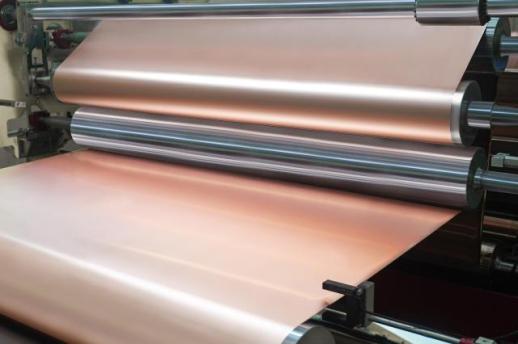 Lotte Energy Materials, Doosan Electronics sign MOU on copper foil for high-performance PCBs Lotte Energy Materials and Doosan Electronics’ Electronic BG division have signed a memorandum of understanding to cooperate on evaluating, developing and supplying copper foil needed to produce high-performance printed circuit boards for artificial intelligence data centers and network equipment. According to industry sources on the 22nd, the two companies agreed to work together on next-generation materials aimed at reducing signal loss and improving reliability, as demand grows for faster, higher-layer PCBs to handle large volumes of data in advanced industries such as AI semiconductors and 5G communications. The companies signed the MOU in February under the title “MOU on development evaluation and supply cooperation for copper foil used in high-performance PCBs.” They said they would cooperate on developing and applying ultra-very-low-profile (HVLP) copper foil for high-speed transmission environments such as AI accelerators, servers and switches. They also agreed to optimize low-loss copper-clad laminate (CCL) and copper foil, and to build a stable supply system based on quality and delivery schedules for mass-production use. Through the partnership, Doosan Electronics and Lotte Energy Materials said they aim to strengthen global competitiveness by quickly providing material solutions that meet customer requirements for performance, reliability, manufacturability and supply stability. They also said the collaboration between domestic materials makers would help reduce import dependence for certain items and support supply-chain stability and localization of materials technology. Kim Yeon-seop, CEO of Lotte Energy Materials, said HVLP copper foil and low-loss CCL are key materials in the AI networking era. “Through cooperation with Doosan Electronics, which leads the global network market, we will advance a stable supply system and further strengthen global competitiveness,” he said.* This article has been translated by AI. 2026-03-22 10:15:23
 -
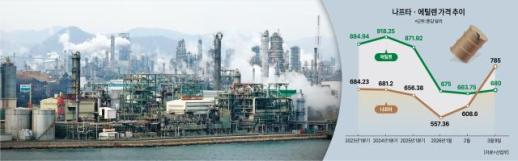 Korea Petrochemical Sector Exposed as Russia, Middle East Naphtha Supplies Tighten South Korea’s petrochemical industry has been laid bare by the latest naphtha crunch, with experts pointing to a fragile supply chain now squeezed on multiple fronts. With imports of Russian naphtha already blocked and Middle Eastern supplies disrupted by war risks, the sector is facing what industry officials describe as a potential collapse in operations. While restarting Russian naphtha imports is cited as the most direct remedy, analysts say it is effectively impossible for South Korea, a U.S. ally, because it must comply with sanctions on Russia. The same constraint is expected to limit efforts to expand imports of “commercial tank” naphtha, which can be blended from multiple origins. Industry officials said Tuesday that Korean petrochemical companies previously secured naphtha steadily from three main sources: Russia, the Middle East and other countries. In the 2010s, companies enjoyed a boom as supply prices were about 60% of today’s naphtha prices and demand for petrochemical products was strong in China and elsewhere, generating operating profits in the trillions of won for individual firms. That picture changed in the 2020s as China brought large petrochemical complexes online, halted imports of Korean products, and the 2022 Russia-Ukraine war cut off Russian naphtha, a key supply source. Company performance deteriorated sharply, officials said. To fill the gap left by Russia, Korean firms increased imports from the Middle East, a shift that made them more vulnerable to any disruption in the Strait of Hormuz, industry officials said. China, meanwhile, imported large volumes of Russian naphtha after the Ukraine war, as export routes to South Korea and Japan narrowed, strengthening its petrochemical competitiveness and pressuring Korean companies, experts said. They added that access to Russian crude and naphtha helps explain why China can respond more flexibly to an Iran war and a Strait of Hormuz blockade. The Financial Times reported that China has built competitive integrated refining and petrochemical complexes based on Russian crude and naphtha, while South Korea and Japan face overlapping pressures including higher raw material and electricity costs, shrinking domestic markets and weaker currencies. As allied economies including South Korea, Japan and the European Union have come under strain, the U.S. government temporarily suspended sanctions on Russian crude and petrochemical products on March 12 local time, but it remains unclear whether the move will have meaningful impact. The measure allows transactions for Russian crude and petrochemical products already on ships through April 11, but industry officials said it is far from enough to cover the shortfall in Middle Eastern supplies. “There is currently no way to import petrochemical products by evading sanctions on Russia, and there is a risk of even greater damage if sanctions are violated,” a petrochemical industry official said. Those concerns are also fueling worries that the South Korean government and companies will struggle to import commercial-tank naphtha stored at ports around the world, because it is likely to contain some Russian-origin material, officials said. After Russian naphtha imports were blocked in 2022, some Korean petrochemical companies increased purchases of commercial-tank naphtha stored in Tunisia. They later halted imports entirely after Bloomberg and other foreign media raised suspicions that the cargoes included Russian naphtha, according to industry officials. Another industry official said Korean companies are believed to be importing commercial-tank naphtha from Singapore and Indonesia, where origin is relatively easier to verify. The official added that companies will also move aggressively to secure supplies to prevent a worst-case scenario in which ethylene production stops.* This article has been translated by AI. 2026-03-17 17:12:18
 -
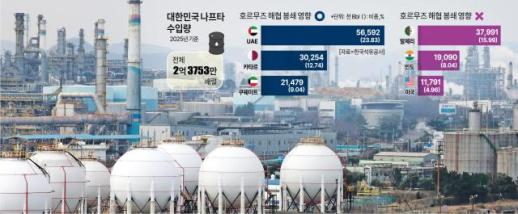 South Korea Scrambles for Naphtha Supplies After Strait of Hormuz Closure South Korea’s government and petrochemical companies are moving to secure alternative naphtha supplies from Algeria, India and the United States as concerns grow that domestic stockpiles of the widely used feedstock could run out. Industry officials said Tuesday that the government and companies have set a joint plan to check on-the-ground naphtha inventories in those countries and to contact global commodities traders including Glencore and Trafigura, aiming to bring as much available supply into South Korea as possible. A government official said authorities are “communicating closely with companies” to build alternative supply lines and are pursuing ways to identify and secure naphtha stocks outside the Middle East. The push follows the closure of the Strait of Hormuz after U.S. and Israeli airstrikes on Iran, a development that has hit South Korea’s petrochemical sector, which largely imports naphtha from Middle Eastern producers. Remaining domestic inventories are believed to be less than two weeks’ worth, according to the industry. If naphtha runs out and production of basic petrochemical feedstocks such as ethylene, butadiene and aromatics stops, output of a wide range of consumer necessities derived from them would also halt, the industry warned. About half of South Korea’s naphtha supply comes from refining imported crude oil, while the rest is imported as naphtha, mainly from the Middle East. More than half of imported volumes — 54% — are sourced from the United Arab Emirates, Qatar and Kuwait, which are inside the Strait of Hormuz, leaving supplies exposed to the closure. As supply lines wavered, major petrochemical makers including LG Chem, Lotte Chemical, Hanwha Solutions, DL Chemical and Yeochun NCC cut naphtha cracker (NCC) operating rates to the 50% range, cited the possibility of force majeure and shifted into emergency management, the industry said. In response, the Lee Jae-myung government decided to take a more direct role in managing naphtha rather than leaving it solely to the private sector. At a Cabinet meeting chaired by President Lee Jae-myung at the government complex in Sejong on Tuesday morning, Deputy Prime Minister and Minister of Economy and Finance Koo Yun-cheol said disruptions were occurring in naphtha supply because of heavy reliance on the Strait of Hormuz and that the government plans to designate naphtha as an economic security item within the week. The government is also expected to pursue steps to restrict overseas exports of naphtha refined from crude oil and prioritize domestic supply. An economic security item refers to raw materials, parts and equipment that the government manages closely because heavy dependence on specific countries and supply-chain disruptions could severely affect daily life and the national economy. Officials and companies are said to be placing particular hopes on Algeria and India, which are major oil-producing countries believed to have relatively more naphtha on hand. They are also reviewing whether to confirm and import commercial tank naphtha stocks — mixed-origin supplies — available in the Singapore and Indonesia markets. Lee Deok-hwan, an emeritus professor of chemistry at Sogang University, said, “Other than Algeria, India and the United States, it is difficult to find an objectively better naphtha supply chain,” adding that with the risk of a sharp drop in demand for petrochemical products due to shortages, “it is a serious crisis for the national economy, so (the public and companies) have no choice but to trust and follow the government’s active efforts.” 2026-03-17 17:04:25
 -
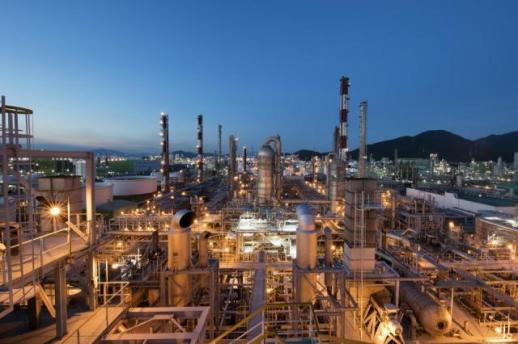 Government, Creditors Press Petrochemical Firms for Ethylene Cuts by Late March South Korea’s petrochemical makers are facing an unprecedented squeeze as instability in the Middle East disrupts supplies of raw materials, but the government and major creditors are holding firm on cutting domestic ethylene output. The Ministry of Trade, Industry and Energy and creditor institutions led by the Korea Development Bank are telling companies that if they want government support to weather the downturn, they must produce a voluntary plan by the end of March to reduce output at naphtha cracking centers, or NCCs. The main focus is the Yeosu industrial complex, where competing interests have slowed progress, unlike the Daesan complex, which has prepared merger and reduction plans, and the Ulsan complex, which has more financial room after earlier voluntary cuts. Industry officials said March 10 that Hanwha Solutions, DL Chemical and Lotte Chemical, along with GS Caltex and LG Chem, are in talks to meet the government-creditor demand. The companies have broadly agreed to set up a jointly funded subsidiary to operate NCCs together, but are reported to differ over how much capacity to cut. Government and creditors are watching Hanwha Solutions, DL Chemical and Lotte Chemical most closely, expecting the biggest potential reduction if the three reach a deal. Annual ethylene capacity at Yeocheon NCC’s No. 1 and No. 2 plants — a joint venture of Hanwha Solutions and DL Chemical — and at Lotte Chemical’s Yeosu NC plant totals about 3.05 million tons, about 25% of South Korea’s overall ethylene output. A senior creditor official visited Yeocheon NCC late last year to discuss reductions with company executives. The three companies favor a “merge first, cut later” approach: establishing the joint subsidiary within the year and then finalizing reductions based on changes in global market conditions. Government and creditors, however, are said to be pushing “cut first, merge later,” using the prospect of financial and tax support to press for a reduction plan by the end of March before creating the joint unit. A key obstacle is that all three run downstream petrochemical businesses that rely on basic feedstocks supplied by the NCC operations, making it difficult to agree quickly on cuts. Yeocheon NCC’s No. 1 plant is known to mainly produce feedstocks for DL Chemical, while No. 2 largely supplies Hanwha Solutions. Some creditors are seen as favoring shutting No. 2 and having the three companies jointly source feedstocks from Lotte Chemical’s Yeosu NC plant, but it is unclear whether companies that have had stable supplies will accept that plan. Tensions between Hanwha Group and DL Group, deepened by last year’s debt-default scare, are also cited as complicating a broader compromise. Even if the companies agree on additional cuts, they still face likely resistance from workers and unions. Industry officials say that for every 300,000 tons of NCC output reduced, about 100 workers are believed to lose their jobs. With the implementation of a revised Trade Union and Labor Relations Adjustment Act — known as the “Yellow Envelope Act” — expanding protections for strikes, the companies could face the risk of a general strike if they move unilaterally on reductions. Still, industry officials said it will be difficult for the companies to reject government and creditor demands as their finances have deteriorated after accumulated losses, including at Yeocheon NCC. They said the government and creditors are pressing their case with offers of new funding support and conversion to perpetual bonds. “Variables such as the Iran war and differences among companies make it hard to reach a voluntary reduction agreement,” a petrochemical industry official said. “This is a time when flexible policy management is needed, such as extending the deadline set by the government.”* This article has been translated by AI. 2026-03-10 18:05:02
 -
 Yeocheon NCC Weighs Halting Butadiene Unit as Naphtha Supply Tightens Yeocheon NCC, which declared force majeure after disruptions in raw-material supplies linked to U.S. and Israeli strikes on Iran, may halt its butadiene (BD) production facilities at its Yeosu No. 2 plant, industry sources said. With the Strait of Hormuz blocked and Middle East naphtha supplies disrupted, the company is expected to suspend output first for products with weaker customer demand. The move could push already strained operating rates — which had fallen below 70% due to supply uncertainty — down into the 50% range, heightening concerns across the Yeosu industrial complex. Industry officials said Tuesday that Yeocheon NCC began cutting naphtha feedstock input last week to lower the operating rate at its BD2 plant. Some in the industry say the company could gradually reduce feedstock further and ultimately suspend the facility temporarily. The review reflects difficulties securing naphtha from Middle Eastern countries such as the United Arab Emirates amid the war involving Iran, the officials said. South Korean petrochemical companies typically source about half of their naphtha from domestic refiners and import the rest from the Middle East and elsewhere. Companies with vertically integrated refining and petrochemical operations can draw on crude inventories to better withstand supply disruptions from the Hormuz blockade, but firms focused solely on petrochemicals face immediate constraints on producing basic petrochemical feedstocks such as ethylene. Yeocheon NCC was established as a 50-50 venture between Hanwha Solutions and DL Chemical to refine basic feedstocks used to make petrochemical products including ethylene, aromatics and butadiene. It supplies most of its output to Hanwha Solutions and DL Chemical, while exporting some to Germany’s BASF and other customers. The force majeure notice was sent to BASF, and the disclosure is said to have leaked through foreign media reports. Petrochemical industry officials warn that naphtha shortages could lead companies at South Korea’s three major petrochemical complexes to suspend operations or sharply cut run rates, starting with Yeocheon NCC. If the war drags on, they said, companies already suffering prolonged losses from structural downturn conditions tied to oversupply from China and the Middle East could see sales and customer networks erode further. Yeocheon NCC is also under pressure to produce a voluntary cutback plan for its naphtha cracking center (NCC), as requested by the government and creditors, industry officials said. The Ministry of Trade, Industry and Energy and creditor groups led by the Korea Development Bank have asked petrochemical companies in the Yeosu complex — including Hanwha Solutions, DL Chemical, Lotte Chemical, GS Caltex and LG Chem — to submit voluntary reduction plans by no later than the end of March, the officials said. Lee Deok-hwan, an emeritus professor of chemistry at Sogang University, said diversifying crude oil and naphtha supply chains is difficult. “Because of U.N. sanctions, imports from Russia are impossible, and most Canadian supplies are already pre-purchased,” he said. “The crisis in the refining and petrochemical industries caused by the war involving Iran is only beginning, and the situation is very serious. Government authorities need to recognize that.” A Yeocheon NCC official said, “As of now, there are no plans to shut down the BD2 plant.” 2026-03-10 18:03:43
 -
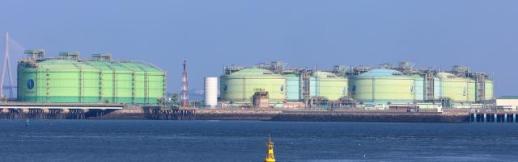 LNG Price Spike Threatens Power-Rate Relief for Steel, Petrochemical Sectors Ahead of K-Steel Law A surge in liquefied natural gas prices following the outbreak of war involving the United States and Israel and Iran is expected to deepen concerns in South Korea’s electricity-intensive steel and petrochemical industries, which are highly sensitive to power costs. The jump in fuel costs could strengthen the government’s reluctance to expand electricity-rate relief, potentially disrupting steelmakers’ carbon-neutral plans and the petrochemical sector’s efforts to consolidate naphtha cracking capacity. Industry officials said on the 4th that the Ministry of Trade, Industry and Energy and the Ministry of Climate, Energy and Environment began consultations this month to draft an enforcement decree for the Special Act to Strengthen Steel Industry Competitiveness and Support the Transition to Carbon Neutrality, known as the K-Steel law, which takes effect in June. A key issue is whether the decree will include provisions to cut electricity rates. As domestic steelmakers accelerate a shift from coal-fired blast furnaces to lower-carbon electric arc furnaces in line with the government’s 2030 carbon-neutral policy and the European Union’s Carbon Border Adjustment Mechanism, electricity prices have become a major driver of production costs. The National Assembly and the industry ministry are said to be supportive of rate relief through the decree. But the climate ministry, which holds authority over electricity pricing, is negative. Experts cite Korea Electric Power Corp.’s heavy debt burden as a major reason. KEPCO had total debt of 206 trillion won and borrowings of 130 trillion won as of last year, leaving its finances under strain. KEPCO posted operating profit of 13.5248 trillion won last year, helped by four years of increases in industrial electricity rates to 181.9 won per kilowatt-hour and lower fuel costs as global LNG prices fell. However, with LNG prices rising sharply since the start of the year due to the Iran war, it is unclear whether strong results will continue this year. Industry officials expect that, amid firm opposition from the climate ministry, electricity-rate relief is likely to be excluded from the K-Steel law decree. If the anticipated relief does not materialize, major steelmakers such as POSCO and Hyundai Steel would likely have to revise their carbon-neutral road maps. The industry is expected to recalibrate domestic investment in electric arc furnaces and speed up plans to build an integrated electric arc furnace steel mill in Louisiana, where electricity costs are said to be 30% to 40% lower than in South Korea. The petrochemical industry says conditions are even tougher. Higher LNG prices threaten to blunt the impact of previously announced power-support measures, while prices for Middle Eastern crude oil and naphtha — key feedstocks for petrochemical products — have continued to rise. On Feb. 25, the government announced a support package for petrochemical integration, including financial, tax and cost measures, in exchange for cuts in commodity petrochemical output such as ethylene through the consolidation of naphtha cracking centers. HD Hyundai Chemical and Lotte Chemical at the Daesan industrial complex were named as the first beneficiaries. The package includes a plan to designate the Daesan complex as a distributed energy special zone, allowing companies to buy electricity directly from private power producers instead of KEPCO, addressing the difficulty of providing direct rate cuts to the petrochemical sector given KEPCO’s accumulated losses. The aim is to reduce distribution steps and transmission costs so petrochemical firms can use electricity at prices 4% to 5% lower than the general grid. But because most private generators rely on LNG, their power prices are highly sensitive to fuel costs. Unlike the general grid, where KEPCO can partially absorb fuel-cost shocks through measures such as freezing rates, companies worry that LNG price increases would translate directly into higher electricity bills on private networks. A petrochemical industry official said the spike in raw material prices tied to the Iran war was a severe blow for companies that had been getting some relief from higher commodity product prices. The official warned that if the war drags on, more firms may be unable to withstand mounting losses and could halt plant operations.* This article has been translated by AI. 2026-03-04 18:03:24
 -
 HMM Busan Relocation Plan Gains Traction as Major Shareholders Signal Support President Lee Jae-myung’s remarks, followed by signals of support from Korea Development Bank, a major shareholder, have brought a possible relocation of HMM’s headquarters to Busan back into focus. Industry watchers say the company could replace three outside directors whose terms end next month, then call an extraordinary shareholders meeting to revise its articles of incorporation to enable the move. Union opposition, including the possibility of a strike, remains a key variable. According to the industry on Wednesday, KDB Chairman Park Sang-jin said at a press briefing the previous day that the Ministry of Oceans and Fisheries and the Korea Ocean Business Corp. had presented a schedule to complete HMM’s move to Busan in March or April. “If the relocation is confirmed, we will actively support it,” Park said. The comments effectively formalized the relocation push in line with Lee’s presidential campaign pledge. KDB and the Korea Ocean Business Corp. are HMM’s No. 1 and No. 2 shareholders, holding 35.42% and 35.08%, respectively. The biggest obstacle is HMM’s articles of incorporation, which stipulate that the company’s headquarters is in Seoul. The company must revise the articles at a shareholders meeting before it can begin practical work for a relocation. Amending the articles requires a special resolution backed by at least two-thirds of shareholders present. With KDB, the Korea Ocean Business Corp. and the National Pension Service holding more than 70% of HMM shares, the government could secure approval if the item is put to a vote. Investment banking sources said the agenda for HMM’s regular shareholders meeting on March 26 is not expected to include an articles change. No such item was included in shareholder proposals that closed earlier this month. In the shipping industry, a leading scenario is that KDB and the Korea Ocean Business Corp. will replace the three outside directors whose terms expire at the regular meeting, convene an April board meeting to approve an articles-change proposal, and then seek shareholder approval at an extraordinary meeting in May. Practical work for the Busan move is expected to ramp up in the second half of this year. HMM’s onshore union, made up of employees working in Seoul, is strongly opposed. It is expected to begin rallies in the Yeouido area next week and hold a strike resolution rally in front of Cheong Wa Dae to block the relocation, according to reports. Under labor law, management decisions such as relocating a headquarters are generally not subject to lawful industrial action. However, that could change when the amended Trade Union and Labor Relations Adjustment Act, known as the Yellow Envelope law, takes effect next month. If a management decision is interpreted as having a substantial impact on working conditions, it could be treated as a legitimate subject of labor action. If an HMM strike materializes, it would be the first general strike at a major company since the law’s implementation, drawing close attention from business, labor and legal circles. 2026-02-26 18:04:31