
Journalist

AJP
-
 Kim Do-yeong, Ahn Hyeon-min and Shea Whitcomb homer as South Korea wins final WBC tune-up South Korea’s national baseball team closed its pre-tournament schedule with a win ahead of the 2026 World Baseball Classic. The team managed by Ryu Ji-hyeon beat Japan’s Nippon Professional Baseball club Orix Buffaloes 8-5 on March 3 at Kyocera Dome in Osaka in an official WBC exhibition game. South Korea finished its two-game exhibition series against Japanese clubs at 1-0-1 after a 3-3 tie with the Hanshin Tigers a day earlier. The team previously went 4-1 in five warmup games in Okinawa against KBO clubs including the Samsung Lions, Hanwha Eagles and KIA Tigers. South Korea will now travel to Tokyo. It opens group play on March 5 at Tokyo Dome against the Czech Republic. The offense showed power, scoring eight runs on 10 hits, including three home runs, as the team sharpened its bats ahead of the opener. Ahn Hyeon-min had three hits, including a homer. Leadoff hitter Kim Do-yeong of the KIA Tigers homered for the second straight day. Korean American slugger Shea Whitcomb of the Houston Astros hit his first exhibition hit as a home run. Starter Dane Dunning, a Korean American pitcher with the Seattle Mariners, worked three scoreless innings, allowing three hits and striking out one. Wearing the national team uniform for the first time ahead of the tournament, he delivered a strong debut. Relievers Ko Woo-suk of the Detroit Tigers, Kim Young-gyu of the NC Dinos and Cho Byung-hyun of the SSG Landers each threw a scoreless inning from the fifth through the seventh.* This article has been translated by AI. 2026-03-03 17:12:00
 -
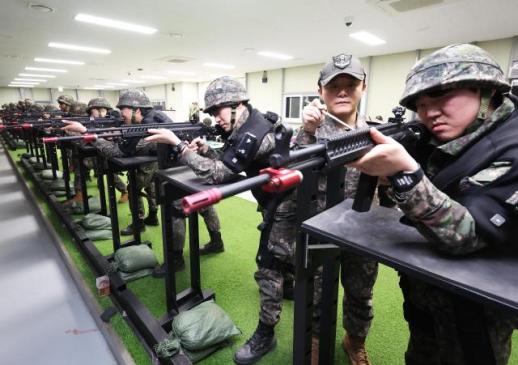 First reserve forces training begins amid heightened global tensions SEOUL, March 03 (AJP) - Amid growing global uncertainty, this year’s first reserve forces training began on Tuesday in South Korea. As military clashes between Iran and the United States and Israel continue for a fourth consecutive day, reserve troops conducted urban combat drills and video-based simulated live-fire training at the Pyeongtaek–Osan Advanced Reserve Training Center under the Republic of Korea Army 51st Infantry Division in Pyeongtaek, Gyeonggi Province. Amid ongoing international security instability, this year’s reserve training exercises will be carried out nationwide in phases. 2026-03-03 17:10:09
 -
 KG Mobility February Sales Fall 2.6% to 8,237 on Export Slump KG Mobility (KGM) said Tuesday it sold 8,237 vehicles in February, down 2.6% from a year earlier. Domestic sales rose 38.3% to 3,701 units, while overseas sales fell 21% to 4,536. KGM said its domestic performance improved on higher deliveries of the Musso, launched in January. February marked the company’s strongest monthly domestic sales in five months, since September last year (4,100 units). Musso sales increased 24% from the previous month to 1,393 units, following 1,123 in January. Exports of the Torres EVX rose 22% from the prior month to 1,445 units, but total exports edged lower overall. KGM said it plans to boost sales by strengthening customer engagement and brand communication at home, rolling out new models such as the Musso, and stepping up efforts in export markets.* This article has been translated by AI. 2026-03-03 17:09:06
 -
 S. Korea's benchmark KOSPI drops due to war in Middle East SEOUL, March 03 (AJP) - The benchmark KOSPI plunged on Tuesday as geopolitical tensions escalated following the outbreak of war between the United States and Iran. The KOSPI closed at 5,791.91, down 452.22 points, or 7.24 percent, from the previous session. The tech-heavy KOSDAQ also fell 55.08 points, or 4.62 percent, to finish at 1,137.70. An electronic board at the dealing room of Hana Bank in central Seoul displayed the sharp decline in the benchmark index. 2026-03-03 17:08:45
 -
 Travel YouTuber Pani Bottle Draws Profile Image for Kim Seon-tae’s New Channel Kim Seon-tae, known as “Chungju Man” during his time as a public official, has launched a new YouTube channel, and the person behind its profile illustration has been revealed as travel YouTuber Pani Bottle, who has about 2.54 million subscribers. Pani Bottle wrote on social media on the 3rd, “I tried making the profile drawing for ‘ex-Chungju Man’ Kim Seon-tae’s new channel.” He added, “I support Kim Seon-tae, now a private citizen, as he makes a fresh start.” Kim opened his YouTube channel, titled “Kim Seon-tae,” on the 2nd. The channel description says, “Promoting everything in the world.” It has already surpassed about 10,000 subscribers. After Kim signaled his intention to resign, speculation circulated about a possible offer from Cheong Wa Dae, a move into politics, or recruitment by a major company or an entertainment agency. Kim instead chose to pursue YouTube. Kim joined the civil service in 2016 as a ninth-grade official and oversaw the city of Chungju’s official YouTube channel, “ChungTV,” which drew attention after surpassing 900,000 subscribers. 2026-03-03 16:58:16
 -
 Kia’s February Global Sales Fall 2.8% to 247,401 Vehicles Kia said Tuesday it sold 247,401 vehicles worldwide in February, down 2.8% from a year earlier. Domestic sales fell 8.7% to 42,002 units, while overseas sales slipped 1.5% to 205,005. Special-purpose vehicle sales totaled 394 units. The Sportage was Kia’s best-selling model globally, with 47,081 units sold. It was followed by the Seltos with 24,305 and the K4 with 18,434. In South Korea, the Sorento led sales with 7,693 units. In the domestic passenger-car segment, Kia sold 9,896 units, led by the Ray (3,241), K5 (2,175) and K8 (1,384). Domestic RV sales totaled 25,447 units, including the Sorento, Sportage (3,800), Carnival (3,712) and EV3 (3,469). In commercial vehicles, Kia sold 6,659 units, including the PV5 (3,967) and Bongo III (2,607). Electric vehicle sales reached 14,488 units, topping 10,000 in a month for the first time and marking a record monthly total. The PV5 led with 3,967 units, followed by the EV3 with 3,469 and the EV5 with 2,524. Overseas, the Sportage was the top seller with 43,281 units, followed by the Seltos with 22,875 and the K4 with 18,434. Special-purpose vehicles totaled 394 units, including 64 sold domestically and 330 overseas. A Kia official said domestic sales temporarily declined because the Lunar New Year holiday reduced the number of business days from a year earlier. The official said the company will work to improve sales with new models and eco-friendly vehicles, including the Seltos hybrid, PV5 and EV5.* This article has been translated by AI. 2026-03-03 16:57:30
 -
 GM Korea February Sales Fall 7.6% to 36,630 Vehicles GM Korea said Tuesday it sold 36,630 vehicles in February, down 7.6% from a year earlier. Domestic sales stayed below 1,000 units for a second straight month, following January. Overseas sales totaled 35,703 vehicles, about 97.5% of the company’s February volume. Exports of the Chevrolet Trailblazer, including derivative models, rose 7.8% from a year earlier to 13,004 units. In South Korea, GM Korea sold 927 vehicles, a 37.4% drop from a year earlier. The Chevrolet Trax Crossover led domestic results with 771 units. Gustavo Colossi, vice president for sales, service and marketing at GM Korea, said the company has prepared special promotions for March as the spring season begins, aiming to expand opportunities for customers to experience the competitiveness of Chevrolet products.* This article has been translated by AI. 2026-03-03 16:54:08
 -
 Middle East crisis: Korea pulled into war axis with 70% oil exposure SEOUL, March 03 (AJP) - South Korea sources roughly 70 percent of its crude oil from the Middle East — and about 95 percent of that volume passes through the narrow Strait of Hormuz off Iran’s coast. Tankers bound for Korea and other Asian destinations must transit the strategic waterway, navigating under the shadow of Iran’s Islamic Revolutionary Guard Corps (IRGC), which has threatened to “set fire” to vessels and “not let a single drop of oil leave the region.” The warning sent immediate tremors through Seoul’s financial markets, contributing to a 6.6 percent plunge in the benchmark KOSPI on Tuesday. According to the Korea Petroleum Association, 69.1 percent of the 1.028 billion barrels of crude oil South Korea imported last year came from the Middle East. Separately, 20.4 percent of liquefied natural gas imports were sourced from the region. The Strait of Hormuz is one of the world’s most critical energy chokepoints. About 15 million barrels per day — roughly 27 percent of global seaborne crude oil trade — transit the strait. The world’s largest tankers shuttle oil and gas from the Middle East to Asia through the 21-mile-wide, 100-mile-long passage, bordered by Iran to the north and Oman and the United Arab Emirates to the south. Given that 65.65 percent of South Korea’s imported crude passed through Hormuz last year, a prolonged disruption would severely complicate the country’s energy procurement. Seoul is preparing contingency measures should the oil shock intensify. First Vice Minister of Economy and Finance Lee Hyoung-il said Tuesday that if “any signs of abnormality” emerge from the U.S.–Iran conflict, authorities would swiftly deploy the government’s 100 trillion won-plus market stabilization program in coordination with relevant agencies. The government has held daily emergency meetings since the Feb. 28 strikes. Officials stress that South Korea currently faces no immediate supply disruption, although traffic through the strait has slowed to a crawl since hostilities flared up over the weekend. The last Korean-flagged vessel to transit the passage was an HMM container ship that exited the Strait of Hormuz safely on Sunday without incident. Authorities say strategic reserves provide a significant buffer. The International Energy Agency (IEA) recommends member states maintain emergency oil stocks equivalent to at least 90 days of net imports. South Korea’s government-held crude reserves stand at about 100 million barrels — enough for 117 days of consumption. Including private-sector inventories, officials estimate the country has secured more than 200 days’ worth of supply. Still, Lee said Seoul is exploring alternative sourcing outside the Middle East should the conflict drag on. Jane Boulden, professor at the Royal Military College of Canada, said the immediate impact on countries such as South Korea would likely be economic. “The first effect would be sustained increases in oil prices and disruptions to global supply chains if shipping restrictions persist,” she said. Christian Lequesne, professor at Sciences Po, predicted short-term oil price spikes but noted that if Iran were to attack multiple Gulf states, stronger regional coordination could help contain price pressures. “It would take time for the United States to reopen the Strait of Hormuz if Iran actively obstructs it,” Lequesne said, adding that such an operation would be difficult but “not impossible for the U.S. Navy.” The New York Times reported Monday that South Korea and Japan are among the Asian economies most vulnerable to a Hormuz blockade due to their heavy reliance on Middle Eastern energy and limited domestic production. Japan imports about 90 percent of its crude oil from the Middle East and has stockpiled reserves equivalent to 254 days of supply as of the end of last year. Japan’s three major shipping companies — Mitsui O.S.K. Lines, Nippon Yusen and Kawasaki Kisen — have suspended navigation through the Strait of Hormuz, ordering vessels to remain in safer waters, according to the Nikkei newspaper. Like South Korea, Japan sources crude oil and LNG from the Middle East via Hormuz, underscoring the broader Asian exposure to any sustained blockade. South Korea’s National Intelligence Service (NIS) announced Wednesday that it has formed a “Middle East Situation Response Task Force” and is holding daily emergency review meetings chaired by its director. Established on Feb. 28, the task force is monitoring supply-chain risks and providing real-time intelligence to relevant agencies. The NIS is conducting on-site inspections across the energy, logistics, defense and shipbuilding sectors in preparation for a potential Hormuz disruption. The agency also warned that terrorist groups could exploit regional instability to stage attacks and said it is intensifying domestic and international terrorism risk assessments and preventive measures. For now, South Korea remains shielded by its reserves and stable tanker operations. But with roughly two-thirds of its crude flowing through a single narrow corridor flanked by Iranian waters, the country remains tightly tethered to the trajectory of a widening Gulf conflict. 2026-03-03 16:43:28
 -
 Director Ryoo Seung-wan on the on-set approach of Park Jeong-min and Zo In-sung in 'Humint' A single scene can hold countless perspectives. Even in the same place and time, a director and actors may experience the moment differently. <Choi Song-hee’s B-Cut> looks past the polished “A-cut” on screen to the behind-the-scenes record that still carries the set’s temperature. By cross-editing interviews with the people who made the work, it reconstructs the “B-cut” moments that were often more intense than the finished frame. <Editor’s note> Vladivostok, where secrets and truths sink into an icy sea, is the setting for the film “Humint.” Against that harsh backdrop, director Ryoo Seung-wan captures characters colliding at close range. Alongside Ryoo’s trademark action and tension, the film’s pull is also the actors’ screen presence. Off camera, however, the mood was lighter, with confessions like “I worried it would feel cringey” and sheepish explanations such as “I just walked.” Park Jeong-min plays Park Geon, a section chief in North Korea’s Ministry of State Security, portrayed as a man of cold judgment and quick movement. Park said he trained by going back and forth between the gym and running routes to narrow the distance between himself and the character. “When the director gave me the script, he said Park Geon is a masculine character with a lot of action, so I needed to prepare,” Park said. “I trained at the gym. I thought he should be someone with a clear purpose, a wild kind of person. Usually, once filming gets going, you start to get self-absorbed — you think no one else can play the role, so you fuse the character with yourself. But with ‘Humint,’ I was scared. Until I saw the finished film, I worried the distance between Park Geon and Park Jeong-min was so big it would make me cringe. Thankfully, after watching it, it didn’t feel that way. I was relieved it wasn’t awkward.” Park said the references Ryoo provided while shaping Park Geon’s sharp image sometimes added welcome pressure. “There were so many films,” Park said. “Director Ryoo would put movies on a USB drive or lend me DVDs. There was ‘Tinker Tailor Soldier Spy’ and Hong Kong films, too. Watching them actually made me more confused. I’m not Chow Yun-fat. Ha.” As Park worked to project a tougher look, crew members also focused on presenting what he called “the coolest Park Geon.” Park said the lighting director studied his face from every angle, down to the height of a single strand of hair, to find the most effective visual design. “Before we started shooting, the lighting director told me to come to the production company office,” Park said. “They filmed my face 360 degrees and tried countless designs — hair up, hair down — to find a masculine look that fit me. The lighting director was under pressure, too. Ha. I had to look good.” Park said he also kept up daily routines to maintain his appearance on camera. “I mostly ran,” he said. “These days people call it ‘trimming the margins.’ Ha. Even after losing weight, I ran every morning to reduce puffiness before filming. It made a big difference.” Ryoo said Park’s preparation stood out to the entire set. “Jeong-min came in after losing a huge amount of weight,” Ryoo said. “I was surprised, and the staff were, too. He looked like a different person. As always, Park Jeong-min is known for thorough preparation and for immersing himself in his role. There are many actors with sculpted faces, but I think the actors we’re drawn to are the ones whose attitude shows on screen. Sometimes you can feel a person’s mind even in a shot of their back. In the end, what’s captured is the actor’s condition. A director can’t manufacture an actor’s charm. You can find an optimal angle and set the lights, but you can’t sustain it for two hours with that alone.” If Park reshaped himself with careful discipline, Zo In-sung, who plays a National Intelligence Service agent known as Manager Jo, began from a different place. Ryoo said he wrote the role with Zo in mind from the start, and described a strong overlap between the character and the actor. “The character’s name is ‘Manager Jo’ because I was thinking of Zo In-sung when I wrote the script,” Ryoo said. “Viewers will be curious about him, but you can think of Manager Jo as Zo In-sung. Ha. He lives alone, he only works, and when his own work (acting) doesn’t go well, he suffers. The sync rate is very high.” A walking scene that some viewers have described as a “runway” moment also drew differing, playful takes from actor and director. “I just walked,” Zo said. “They told me to walk in, so I walked in. Ha. There wasn’t any special direction. I thought it was important to carry over the emotion from the previous scene. I didn’t intend to walk in a cool way.” Ryoo said the scene was not designed to look like a runway, but that it stayed with audiences. “We didn’t deliberately make it like runway walking,” he said. “Zo In-sung is harder to shoot in short takes. There are long walking scenes early on for Park Geon, too — he walks a long way, even to a North Korean restaurant. But no matter how long Park Geon’s scene is, what stays with viewers is Manager Jo’s walk. Ha. I wanted to tell the story of someone who ultimately has to walk alone, someone who ends up alone at some point. In-sung actually stripped away model-like walking and kept it plain. He’s someone from a different world.” Ryoo’s view that an actor’s appeal is not created by a director but captured in the performer’s on-set “condition” runs through “Humint.” The film, he said, was filled by the actors’ hard-won self-proof — Park and Zo aiming for a strong image without losing humility, and bringing energy that contrasted with Vladivostok’s cold landscape.* This article has been translated by AI. 2026-03-03 16:33:30
 -
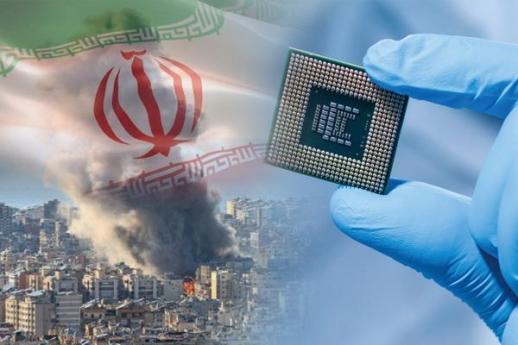 Middle East Crisis: Chipmakers unworried, investors disagree SEOUL, March 03 (AJP) - South Korean memory producers do not expect the flare-up in the Middle East to disrupt their unprecedented upcycle, with DRAM prices projected to nearly double in the first quarter from the prior three-month period that already delivered record chip profits. Market tracker TrendForce recently forecast a 90–95 percent quarter-over-quarter surge in conventional DRAM contract prices for the first quarter, driven by sustained artificial intelligence (AI) demand. As escalating geopolitical tensions unsettle global logistics and energy markets, questions have emerged over whether the conflict could interfere with this upward pricing trajectory. For South Korea’s major semiconductor manufacturers, however, the immediate logistical fallout appears limited. Rather than citing macro shocks as a catalyst for further price adjustments, Samsung Electronics and SK hynix remain focused on the underlying supply-demand imbalance. While rising oil prices and maritime bottlenecks have weighed on other industries, memory chips remain structurally insulated. Lightweight and high in value, they are predominantly transported via air freight, leaving ocean shipping disruptions a secondary concern. An SK hynix official said transportation expenses account for only a small portion of overall manufacturing costs. “The memory industry is not directly linked to the Middle East issue,” the official said. “The market is already facing a severe supply shortage relative to demand, and prices have risen sharply. It is unlikely this geopolitical factor will serve as an additional driver.” Samsung Electronics is not implementing specific countermeasures related to cost burdens but remains cautious. “Semiconductors are mostly shipped by air, though finished consumer electronics move by sea, so the impact is not entirely absent,” an official familiar with the matter said. The company’s immediate priority has been employee safety, strongly recommending remote work for staff stationed in the Middle East. On potential price adjustments, the official added: “If cost burdens materialize, they could influence pricing, but it is difficult to quantify at this stage. We need to assess how the situation evolves.” Investors nevertheless turned jittery. Shares of Samsung Electronics tumbled 11.41 percent to 191,800 won ($130.89) and SK hynix 12.82 percent to end Tuesday at 926,000 won, pushing the main Kospi down 7.24 percent in one of its steepest single-day falls. Logistics experts caution warn secondary effects — particularly energy costs- could prove more consequential than direct shipping disruptions. Kang Kyung-woo, emeritus professor of traffic and logistics engineering at Hanyang University, noted that semiconductor firms had already built substantial inventories in anticipation of supply chain volatility. “In the short term, logistics impact will not be significant,” Kang said. However, he underscored energy and geopolitical realignments as longer-term variables. “Semiconductor production is energy-intensive. While direct shipping effects are minimal, indirect impacts through energy supply disruptions are likely,” he said. Increased demand for defense technologies could also tighten supply chains further, adding sustained pressure to an already constrained market. 2026-03-03 16:30:43