
Journalist

AJP
-
 UPDATE: Korea's factory output turns negative in Jan on reduced chip activity **Additional data information added** SEOUL, Mar 04 (AJP) - South Korea’s factory output turned negative for the first time in three months in January on slower semiconductor and construction activity, underlining the fragility of the economic recovery as the year-end base effect faded. Mining and manufacturing output fell 1.3 percent in January from the previous month — the first decline since October, according to data released by the Ministry of Statistics and Data Wednesday. The downturn was driven largely by shipbuilding and semiconductor production. Output from “other transport equipment,” which includes tankers and container ships, shrank 17.8 percent from a month earlier. Semiconductors — a linchpin of the Korean economy — saw production fall 4.4 percent from the previous month and 5.2 percent from a year earlier. Reflecting the slowdown, the average capacity utilization rate for manufacturers slipped 1.4 percentage points to 71.2 percent, while inventories rose 0.2 percent during the same period. Mining and manufacturing shipments also decreased 1.4 percent from the previous month. “The growth trajectory for high-value-added products, such as High Bandwidth Memory (HBM), remains robust,” said Lee Doo-won, director general for economic trend statistics, noting that the pace of semiconductor production growth had already begun to slow since September. Domestic machinery orders edged down 0.1 percent from a year earlier. While private-sector orders rose 4.1 percent, a 53.1 percent plunge in public-sector orders — following a massive 93.2 percent surge the previous month — dragged down the overall figure. “The decline in public machinery orders in January indicates that new large-scale social overhead capital (SOC) projects have entered a lull,” Lee said. The construction sector also swung sharply lower as the year-end spending boost evaporated. Construction investment, which had jumped 12.1 percent in December, plunged 11.3 percent in January, erasing the earlier gains. “A strong base effect was at play following the push-out style of construction completions in December, as both the public and private sectors rushed to exhaust year-end budgets,” Lee added. Despite the current slump, the outlook for construction showed tentative improvement, with total orders rising 35.8 percent from a year earlier. Building orders increased 24.1 percent, while civil engineering orders — including railways — surged 70.5 percent. Still, Lee struck a cautious note, warning that first-quarter performance warrants close monitoring as the January decline came in sharper than expected. A split economic outlook Facility investment provided a bright spot – at least for now, rebounding 6.8 percent from the previous month. The recovery was led by a 41.1 percent surge in semiconductor manufacturing equipment and a 16 percent increase in automotive investment, fueled by a wave of corporate vehicle replacements at the start of the year. While the spillover of export strength into facility investment is a positive signal, the ministry remained cautious. “Uncertainty remains high regarding when the construction sector — which still faces a thin order backlog — will bottom out and rebound,” the ministry said. Economic indicators also showed a notable divergence between current conditions and future expectations. The cyclical component of the coincident composite index, which measures the present economic climate, remained unchanged at 99. In contrast, the cyclical component of the leading composite index — a gauge of future trends — rose 0.7 points to 102.3. A reading of 100 marks the threshold between expansion and contraction. The gap suggests that while optimism about a future recovery is building, the immediate reality remains challenging. “The leading index rose due to a sharp increase in exports, but it is still difficult to say the economy has fully recovered,” the ministry said, pointing to the disconnect between the two indicators. Korea’s exports in January surged 33.9 percent from a year earlier to $65.85 billion, while the monthly trade balance recorded a surplus of $8.7 billion — the 12th consecutive month in the black, according to the Ministry of Trade, Industry and Energy. However, retail sales for food and other non-durable goods — a barometer of household sentiment — plunged 5.4 percent year on year, far steeper than the 0.5 percent decline recorded the previous month. By sector, sales at supermarkets and convenience stores fell 13.8 percent, while those at large hypermarkets tumbled 20.1 percent, reflecting tightening household spending. 2026-03-04 09:48:26
 -
 Mannatech Korea Launches Brain Plus Supplement With Phosphatidylserine and L-Theanine Mannatech Korea said it launched a new product, “Brain Plus,” on Feb. 27, aimed at supporting cognitive function and easing tension. The company said the product was developed with a focus on helping prevent age-related cognitive decline and reducing stress-related tension. The main ingredient, phosphatidylserine, is included at 300 mg. The company said the ingredient provides a functional benefit for cognitive improvement and also supports skin health, including protection from UV-related skin damage and helping maintain moisture. The product also contains 200 mg of L-theanine, which the company noted has been recognized by the Ministry of Food and Drug Safety for its tension-relief function. Mannatech Korea said the formula was systemized based on its technology and combines 16 additional ingredients, including proprietary components such as aloe vera gel powder, tragacanth gum and trehalose, along with ginkgo leaf extract, silk peptide, turmeric and black pepper extracts, and taurine. The product comes in tablet form and is designed to be taken once a day, three tablets per dose. The company said it is targeting older adults who want to manage memory, students preparing for exams who need focus, and office workers who frequently face job-related stress. “We arranged the ingredients so consumers can manage physical cognitive health and psychological tension in combination,” a Mannatech Korea official said. “It will be a suitable option for consumers seeking to maintain a healthy daily life.” The company said the product can be found on Mannatech Korea’s official website. * This article has been translated by AI. 2026-03-04 09:36:00
 -
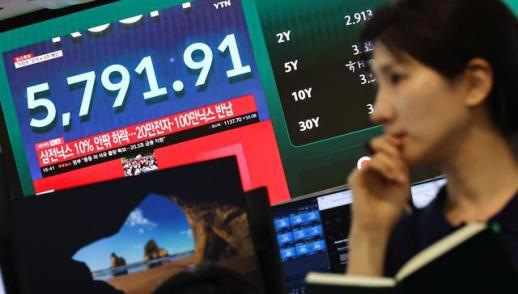 Middle East turmoil pounds Korean stocks and won for second session SEOUL, March 04 (AJP) - South Korean shares extended their downward spiral in the aftermath of the Middle East crisis, losing more than 5 percent at the opening bell Wednesday following Tuesday’s rout. South Korea’s benchmark KOSPI tumbled 6.09 percent to 5,444.51 on panicky retail selling after a 7.24 percent plunge in the previous session. The retreat later eased to around 3 percent by about 9:20 a.m., as foreign and local institutional investors moved to scoop up large-cap stocks that had fallen more than 10 percent. A similar pattern played out on the secondary bourse. The KOSDAQ’s earlier 6 percent drop moderated to about 2.6 percent, also on buying by foreign and domestic institutions. Defense stocks were the sole winners among large-cap names. LIG Nex1 soared 25 percent after surging by the daily limit of 30 percent on Tuesday, amid speculation that the Cheongung-II missile defense system — also known as M-SAM — could see deployment in the Middle East to help defend airspace around Iran. Among heavyweights, Samsung Electronics fell about 7.89 percent, while SK hynix dropped 5.96 percent. Hyundai Motor declined 8.40 percent, and affiliate Kia retreated 8.72 percent in early trading. The dollar — which briefly touched the crisis-level 1,500 won in the overnight offshore market — eased to 1,476.20 won. 2026-03-04 09:35:12
 -
 About 140 South Koreans in Iran and Israel evacuated to neighboring countries SEOUL, March 4 (AJP) - About 140 South Koreans who had been staying in Iran and Israel have been evacuated to neighboring Turkmenistan and Egypt, the Ministry of Foreign Affairs here said on Wednesday. In Iran, about two dozen South Koreans split into two buses arranged by the South Korean Embassy there and left Tehran on Monday and safely arrived in neighboring Turkmenistan the following day amid escalating tensions in the Gulf region following last Saturday's U.S.-led airstrikes on the Middle Eastern country. The evacuees included not only residents but also about 10 embassy staff members and their families, as well as some Iranian nationals who are family members of South Koreans or ethnic Koreans. Also leaving Iran were Lee Do‑hee, head coach of Iran's women's national volleyball team, and Lee Ki‑je, a defender for Iranian professional soccer club Mes Rafsanjan FC. According to the ministry, about 40 South Korean residents still remain in Iran. A ministry official said withdrawing the embassy is "not currently being considered," adding that the government will continue to take responsibility for evacuations while monitoring whether the situation becomes prolonged. In Israel, where about 600 South Korean nationals including around100 short-term visitors are currently staying, some 113 people left Jerusalem and Tel Aviv on Tuesday and arrived in Egypt later that day. Separately, two South Koreans in Bahrain and two in Iraq also evacuated to Saudi Arabia and Turkey, respectively. Meanwhile, Kim Young-bae, a lawmaker of the ruling Democratic Party (DP), on Tuesday urged the government to draw up plans to safely evacuate South Korean residents and travelers in the Middle East to neighboring countries in case the situation worsens. "As many as 21,000 South Koreans are currently residing in some 13 countries in the Middle East. Among them, about 4,000 short-term visitors including travelers are in Dubai, the United Arab Emirates," he said. 2026-03-04 09:31:00
 -
 Braves’ Jurickson Profar Tests Positive for PEDs Again, Facing 162-Game Ban Atlanta Braves outfielder Jurickson Profar, a teammate of infielder Kim Ha-seong, has tested positive for a banned substance for the second time in his career. ESPN reported that a performance-enhancing drug was detected in Profar’s drug test on March 4 (Korean time). Profar previously tested positive last year and was suspended for 80 games. With a second violation, he now faces a 162-game suspension. Profar became the sixth player to be caught twice in MLB drug testing since the league strengthened penalties in 2014, according to the report. Before the 2025 season, Profar signed a three-year, $42 million contract with Atlanta. If the suspension is finalized, he would forfeit his $15 million salary for this season. Profar, who is from Curacao in the Netherlands, had been expected to play for the Netherlands in the 2026 World Baseball Classic, but his participation is now in doubt. Profar and Kim have been close friends, playing together with the San Diego Padres and again in Atlanta. 2026-03-04 09:30:55
 -
 Lee Kun-hee Collection Tour Heads to Chicago With 2,000 Years of Korean Art The Lee Kun-hee Collection’s overseas tour is continuing, with Chicago set as the next stop after the first exhibition in Washington. The National Museum of Modern and Contemporary Art and the National Museum of Korea said on the 4th that the tour’s second exhibition, “Korean National Treasures: 2,000 Years of Art,” will be held at the Art Institute of Chicago. Opening on the 7th, the show brings together 257 objects from 140 cultural properties spanning traditional and modern Korean art. Highlights include seven national treasures and 15 “treasures” from the National Museum of Korea, as well as 13 major works of modern and contemporary art from the National Museum of Modern and Contemporary Art, including pieces by Kim Whanki, Park Su-geun and Chang Ucchin. The international tour of works donated by the late Lee Kun-hee began in November last year with the special exhibition “Korea’s Treasures: Collecting, Cherishing, Sharing” at the Smithsonian’s National Museum of Asian Art in Washington, D.C. The museum said the show drew about 80,000 visitors, its largest attendance for a special exhibition in the past five years. The tour now moves to Chicago, where it will run from March 7 to July 5 at the Art Institute of Chicago, described by the organizers as one of the most influential museums in the United States. The institute is housed in a building constructed for the 1893 World’s Columbian Exposition, which the article notes was a significant venue where Joseon presented an exhibition to introduce its history and culture to the international community after the 1882 Korea-U.S. treaty. The Art Institute expanded in 2009 with the Modern Wing designed by architect Renzo Piano. Organizers said this exhibition will be the first Asian art special exhibition held in the Modern Wing’s first-floor special exhibition galleries. The exhibition includes many nationally designated cultural properties. Among 22 representative works from the National Museum of Korea are Jeong Seon’s “Inwang Jesaekdo,” Kim Hong-do’s “Chuseongbudo,” a white porcelain bowl inscribed with “Cheon·ji·hyeon·hwang,” a gilt-bronze Buddha from the Three Kingdoms period, the Goryeo-era “Thousand-Armed Avalokiteshvara” painting, and the early Joseon text “Seokbosangjeol.” From the National Museum of Modern and Contemporary Art’s Lee Kun-hee Collection, the show presents 13 modern and contemporary masterpieces reflecting Korea’s turbulent 20th-century history. In addition to Kim Whanki’s “Sanhullim 19-II-73#307” (1973) and Baek Nam-sun’s “Paradise” (1936), shown in the first tour stop, 11 newly selected works will be added. Among them are Lee Jung-seop’s “Bull” (1950s) and “Family and First Snow” (1950s), Park Su-geun’s “Woman Pounding Grain” (1957), and Chang Ucchin’s “Ferryboat” (1951). Also included are Kim Eun-ho’s “Ganseong” (1927), Park Rae-hyun’s “Flute” (1956), Lee Jong-woo’s “Portrait of a Friend” (1926), Lee Ungno’s “Crowd” (1988), and Kim Ki-chang’s “War Horses” (1955). The works, once privately held, became public assets after Lee’s family donated them to the nation in 2021. Organizers said the title “Korean National Treasures” is intended not only to refer to officially designated national treasures but also to convey the idea of “the nation’s treasures” shared by the public. After the Chicago run ends July 5, the exhibition will move to the British Museum in London, where it is scheduled to be held from Oct. 1 to 2027-01-31. 2026-03-04 09:25:14
 -
 Shin Wonho to Return With First Mini Album 'ONE' Singer and actor Shin Wonho, a member of the group Cross Gene, is returning to music. He will release his first mini album, ‘ONE,’ at noon on March 4 through major online music platforms. The title track, ‘Warzone,’ is a pop song with an unconventional structure that portrays lovers who hurt each other, reconcile and continue healing through a repeating cycle. While framed as a love story, it also raises a question about what true peace means, aiming to deliver a layered message. The six-track album also includes ‘Hug me,’ about a moment of wanting to lean deeply into someone’s embrace; ‘Placebo,’ a pledge to push past limits; and ‘Chaewoo,’ which depicts an empty soul being filled. Instrumental versions of ‘Warzone’ and ‘Chaewoo’ are also included. Shin has rolled out teaser content ahead of the release, including 10-second track preview videos featuring melodies in different moods and his distinctive vocal tone, drawing strong reactions from global fans. He also took on self-producing across the project, highlighting his musical capabilities. The mini album ‘ONE’ will be available at noon on March 4 on major online music platforms.* This article has been translated by AI. 2026-03-04 09:15:19
 -
 Shinhan Bank Launches Web-Based 'Shinhan eFX' Platform for Corporate FX Trading Shinhan Bank said Tuesday it has revamped its non-face-to-face foreign exchange trading platform for corporate clients, "Shinhan eFX," into a web-based service. Shinhan eFX is a specialized FX platform that lets corporate customers check real-time exchange rates online and execute trades. It offers transactions commonly used in corporate FX operations, including immediate settlement, spot FX, forward FX, market average rate (MAR) trades and FX swaps. The key change is that eFX, previously offered as an add-on within the bank’s corporate internet banking, has been converted into a standalone platform. Shinhan Bank said it upgraded functions so orders can be executed immediately using real-time quote collection and an automated pricing engine, and it fully introduced "netting settlement" and "forward maturity management" features. Netting settlement combines or offsets multiple transactions in the same currency and settlement account so only the net difference is paid, improving cash-management efficiency and reducing unnecessary settlement funding burdens. A Shinhan Bank official said the service has moved beyond an add-on to become a dedicated FX platform, adding that the bank will "raise corporate customers’ FX risk management to the next level" through differentiated features such as real-time trading, forward maturity management and integrated support for netting settlement.* This article has been translated by AI. 2026-03-04 09:04:05
 -
 Hyundai Opens Whitney Museum Exhibition 'Hyundai Terrace Commission: Kelly Akashi' Hyundai Motor said Wednesday it will present the third exhibition in its long-term partnership with the Whitney Museum of American Art in New York, “Hyundai Terrace Commission: Kelly Akashi,” from March 8 (local time) through Aug. 23. The Hyundai Terrace Commission is a program launched in 2024 by Hyundai Motor and the Whitney to give artists and curators room for creative experimentation beyond conventional formats, the company said. Akashi, the third artist selected for the commission, was born in the United States in 1983 and is based in Los Angeles. She has worked with materials including glass, bronze and stone, exploring themes of life and the limits of existence. For the Whitney presentation, Akashi will introduce new works spanning installation, sculpture and animation, drawing on personal experience. The exhibition centers on “Monument (Altadena)” (2026), which reconstructs in glass bricks a chimney and the walkway leading to it — the only part left after a wildfire in northern Los Angeles in January last year destroyed the artist’s home and studio. Installed on the museum’s fifth-floor terrace, the work reframes the space as a site for reflection on survival, loss and the incompleteness of what remains. Also on view is “Inheritance (Distressed)” (2026), inspired by the lace doily of the artist’s grandmother that was lost in the same fire. The work raises questions about how inherited legacies should be treated and remembered. The exhibition’s broader material inquiry into traces, memory and aftereffects extends to an animated work, “Remnants (Constellations)” (2026), shown on a large outdoor media wall on the terrace. “Rebuilding is not simply restoration, but a practice that symbolizes devoted labor and a dialogue with history,” Akashi said. “The process of stacking bricks one by one projects memory itself, and memory regains meaning through constant attention and patience.” “Each brick contains a record of the labor and transformation it has undergone, and together they become a new presence that holds traces of the past,” she said. Whitney curator Marcela Guerrero said Akashi “skillfully handles a range of materials, including glass and steel, and has harmoniously realized the conceptual and technical completeness essential to large-scale outdoor sculpture.” A Hyundai Motor official said the company hopes the exhibition will prompt audiences to reconsider the relationship between individuals and communities and to explore the possibility of genuine solidarity, in line with the commission’s aim of bringing artistic inspiration to more people.* This article has been translated by AI. 2026-03-04 09:03:23
 -
 Six South Korean Music Rights Groups Form Joint Front on AI Copyright Lee Si-ha, president of the Korea Music Copyright Association, has launched what the group called a “declaration of war” for the AI era in his first official move since taking office. Citing rapid growth in generative AI and what he described as unprecedented upheaval in the global music business, Lee called an emergency meeting of music rights organizations. On Feb. 26, the heads of six groups formally launched the K-Music Rights Organizations Coexistence Committee, known as the Coexistence Committee. The committee brings together the Korea Music Copyright Association (President Lee Si-ha), the Korea Record Industry Association (President Choi Kyung-sik), the Korea Entertainment Producers Association (President Lim Baek-woon), the Together Music Copyright Association (Chairman Han Dong-heon), the Korea Music Performers Association (President Lee Jeong-hyeon) and the Korea Music Content Association (Chairman Woo Seung-hyeon). Lee was elected chair. The committee said the industry faces a “fourfold crisis”: the spread of generative AI, blockchain-driven decentralization, overseas outflows of Hallyu-related revenue, and a reshaping of the platform market. It said it aims to go beyond policy proposals and position South Korea as a rule-setter by taking the lead in “copyright management technology.” At the center of its plan is a blockchain-based integrated infrastructure to unify fragmented rights data. The committee said it will seek core technology to link four major codes into a single data structure: ISWC (International Standard Musical Work Code) for musical works such as composition and lyrics; ISRC (International Standard Recording Code) for sound recordings; YouTube’s CID (Content ID) system used to identify rights holders by recognizing audio and content in uploaded videos; and UCI (Universal Content Identifier), a national content identification system. The goal, it said, is to complete a “K-copyright standard model” that can track, collect and distribute royalties in real time without missing a single use, and to strengthen leadership in the copyright market. To carry out the plan, the six groups agreed to form a joint AI response task force, create a single negotiation channel and establish a joint fund, aiming to speak with one voice rather than respond separately. At the launch ceremony, the leaders also signed a joint declaration titled, “In the AI era, we declare the noble sovereignty of human creation,” pledging to protect creators’ rights against big capital and algorithms. The declaration calls for banning AI training without creators’ consent, requiring transparency in AI generation processes, and institutionalizing clear distinctions between human-created works and AI-generated output. “The next two years are a golden time that will determine the survival of Korea’s music industry,” Lee said. “Individual responses cannot stop this massive wave, so six organizations have joined hands. We will establish the copyright management system we build as a global standard and make Korea lead the world’s copyright order.” The committee said it will begin regular meetings and move quickly to design an integrated platform and pursue related institutional improvements.* This article has been translated by AI. 2026-03-04 09:00:47