
Journalist

AJP
-
 KOSPI rolls back seven days along with sliding Asian markets SEOUL, March 03 (AJP) - Asian markets extended losses while Korean market took the biggest fall Tuesday as rising tensions between the United States, Israel and Iran pushed oil prices higher and kept regional risk sentiment fragile. Brent crude climbed to $80.35 per barrel, up from $77.7 a day ago, as concerns grew over potential disruptions through the Strait of Hormuz, a vital corridor for global energy shipments. The waterway accounts for roughly one-fifth of global seaborne crude flows, much of which is bound for Asia. Korea Leads Regional Declines Korea bore the brunt of the selloff after reopening from a holiday. The benchmark KOSPI fell 7.24 percent to 5,791.9, swinging between a high of 6,180.5 and a low of 5,791.7 before closing near session lows. The drop marked the first decline of more than 7 percent since Aug. 5, 2024. When the index plunged 8.77 percent on Tuesday, it was pushed back toward levels last seen on Feb. 19, when it closed at 5,677.25. Trading turnover reached 52.5 trillion won ($35.7 billion). Losses were broad-based, with decliners far outnumbering advancers. Foreign investors sold 5.15 trillion won worth of shares, while institutions offloaded 886.3 billion won. Retail investors stepped in with purchases of 5.8 trillion won, partially absorbing the pressure. The tech-heavy KOSDAQ dropped 4.6 percent to 1,137.7, though foreign and institutional buying provided relative support compared with the main board. Heavyweight exporters retreated sharply. Samsung Electronics fell 9.9 percent to 195,100 won, and SK hynix declined 11.5 percent to 939,000 won, reversing part of their recent rally. Automakers were among the steepest decliners, with Hyundai Motor sliding 11.7 percent and Kia losing 11.3 percent. LG Energy Solution fell 8 percent, tracking weakness across growth-oriented names. Industrial and biopharma shares also softened, with Samsung Biologics down 5.5 percent and Doosan Enerbility retreating 8.8 percent. In contrast, defense and shipping names stood out as clear gainers. Hanwha Aerospace surged 19.8 percent, while the broader aerospace and defense sector advanced 17 percent. Shipping shares climbed 15.7 percent, reflecting expectations of tighter freight conditions amid geopolitical uncertainty. The Korean won weakened to 1,469.3 per dollar, underscoring external pressure as energy import costs rise. Japan, China Follow Lower Japan’s Nikkei 225 fell 3.1 percent to 56,279.1, while the broader TOPIX declined 3.24 percent, as export-oriented sectors tracked global risk aversion. Losses were more moderate in Greater China. Hong Kong’s Hang Seng Index slipped 1.1 percent, and the Shanghai Composite eased 1.5 percent, as policy expectations helped temper the broader downturn. Safe-Haven Assets Gain Ground Gold rose 1.2 percent to $5,311.6 per troy ounce, extending gains as investors shifted toward defensive assets. Bitcoin traded around $68,220 after volatile swings earlier in the session. With oil prices holding above $80 and currencies under pressure, markets across Asia remained sensitive to developments in the Middle East, leaving volatility elevated heading into upcoming U.S. economic data releases. 2026-03-03 17:28:31
 -
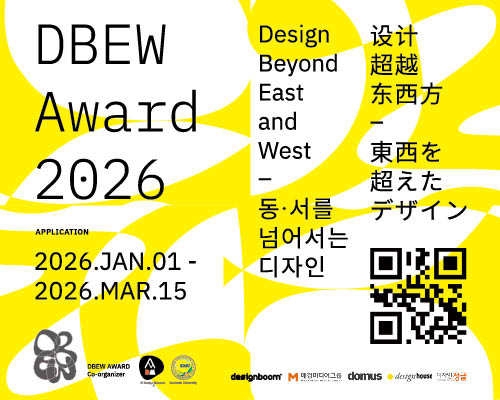 Kookmin University to host international design award in Milan SEOUL, March 03 (AJP) - Kookmin University and the Association for Industrial Design (ADI) will co-host the Design Beyond East and West (DBEW) Award 2026, an international competition aimed at redefining the universal values of contemporary design. The university appointed Paola Antonelli, the senior curator of architecture and design at the Museum of Modern Art (MoMA), to serve as the jury chair for the event. The award seeks to move beyond geographical and cultural divisions to explore how design can integrate human interaction with technology in daily life. The competition marks a significant collaboration between South Korean academia and the Italian design industry to lead global discourse on design education. It is specifically structured to recognize the symbiotic relationship between educators and students, shifting the focus from final products to the creative pedagogical process itself. By honoring both the student's work and the instructor's guidance, the organizers intend to set a new direction for international design leadership and sustainable social impact. The award accepts entries across three main categories: space and architecture; product and fashion; and visual, communication, and service design, which includes artificial intelligence and digital media. To participate, undergraduate or graduate students, or recent graduates within two years of completion, must submit works created within the last two years alongside a faculty mentor. The judging panel includes international experts such as sustainable design theorist John Thackara, industrial designer Stefano Giovannoni, architect Cho Byoung-soo, and Lou Yongqi, president of Shanghai Tech University. "The structure in which professors and students collaborate and submit entries together is a differentiated and meaningful attempt not seen in existing awards," Paola Antonelli said. She noted that the mutual process of teaching and learning between teachers and students maximizes educational achievement. Antonelli further described design as an "act of building bridges," rooted in specific cultural contexts yet connected through abstract principles. Jeong Seung-ryul, president of Kookmin University, stated that the DBEW Award emphasizes the importance of human thinking and collaboration in the era of artificial intelligence. He noted that universities should function as spaces for questioning and debating the creative process rather than just teaching technical skills. President Jeong expressed his hope that the event would serve as a platform for educators and students worldwide to share common problem-solving approaches, reflecting the university's philosophy of building an educational ecosystem without boundaries. The competition has already received hundreds of entries from more than 30 countries since January. Submissions remain open until March 15, 2026, with the final winners to be announced on March 25, 2026. A total prize pool of 25,000 dollars will be awarded during a ceremony and forum scheduled for April 21, 2026, at the ADI Design Museum during Milan Design Week. 2026-03-03 17:14:19
 -
 Kim Do-yeong, Ahn Hyeon-min and Shea Whitcomb homer as South Korea wins final WBC tune-up South Korea’s national baseball team closed its pre-tournament schedule with a win ahead of the 2026 World Baseball Classic. The team managed by Ryu Ji-hyeon beat Japan’s Nippon Professional Baseball club Orix Buffaloes 8-5 on March 3 at Kyocera Dome in Osaka in an official WBC exhibition game. South Korea finished its two-game exhibition series against Japanese clubs at 1-0-1 after a 3-3 tie with the Hanshin Tigers a day earlier. The team previously went 4-1 in five warmup games in Okinawa against KBO clubs including the Samsung Lions, Hanwha Eagles and KIA Tigers. South Korea will now travel to Tokyo. It opens group play on March 5 at Tokyo Dome against the Czech Republic. The offense showed power, scoring eight runs on 10 hits, including three home runs, as the team sharpened its bats ahead of the opener. Ahn Hyeon-min had three hits, including a homer. Leadoff hitter Kim Do-yeong of the KIA Tigers homered for the second straight day. Korean American slugger Shea Whitcomb of the Houston Astros hit his first exhibition hit as a home run. Starter Dane Dunning, a Korean American pitcher with the Seattle Mariners, worked three scoreless innings, allowing three hits and striking out one. Wearing the national team uniform for the first time ahead of the tournament, he delivered a strong debut. Relievers Ko Woo-suk of the Detroit Tigers, Kim Young-gyu of the NC Dinos and Cho Byung-hyun of the SSG Landers each threw a scoreless inning from the fifth through the seventh.* This article has been translated by AI. 2026-03-03 17:12:00
 -
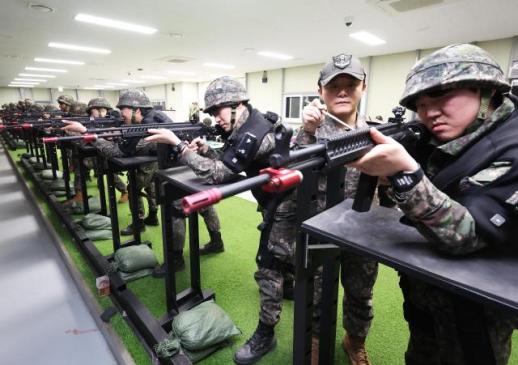 First reserve forces training begins amid heightened global tensions SEOUL, March 03 (AJP) - Amid growing global uncertainty, this year’s first reserve forces training began on Tuesday in South Korea. As military clashes between Iran and the United States and Israel continue for a fourth consecutive day, reserve troops conducted urban combat drills and video-based simulated live-fire training at the Pyeongtaek–Osan Advanced Reserve Training Center under the Republic of Korea Army 51st Infantry Division in Pyeongtaek, Gyeonggi Province. Amid ongoing international security instability, this year’s reserve training exercises will be carried out nationwide in phases. 2026-03-03 17:10:09
 -
 KG Mobility February Sales Fall 2.6% to 8,237 on Export Slump KG Mobility (KGM) said Tuesday it sold 8,237 vehicles in February, down 2.6% from a year earlier. Domestic sales rose 38.3% to 3,701 units, while overseas sales fell 21% to 4,536. KGM said its domestic performance improved on higher deliveries of the Musso, launched in January. February marked the company’s strongest monthly domestic sales in five months, since September last year (4,100 units). Musso sales increased 24% from the previous month to 1,393 units, following 1,123 in January. Exports of the Torres EVX rose 22% from the prior month to 1,445 units, but total exports edged lower overall. KGM said it plans to boost sales by strengthening customer engagement and brand communication at home, rolling out new models such as the Musso, and stepping up efforts in export markets.* This article has been translated by AI. 2026-03-03 17:09:06
 -
 S. Korea's benchmark KOSPI drops due to war in Middle East SEOUL, March 03 (AJP) - The benchmark KOSPI plunged on Tuesday as geopolitical tensions escalated following the outbreak of war between the United States and Iran. The KOSPI closed at 5,791.91, down 452.22 points, or 7.24 percent, from the previous session. The tech-heavy KOSDAQ also fell 55.08 points, or 4.62 percent, to finish at 1,137.70. An electronic board at the dealing room of Hana Bank in central Seoul displayed the sharp decline in the benchmark index. 2026-03-03 17:08:45
 -
 Travel YouTuber Pani Bottle Draws Profile Image for Kim Seon-tae’s New Channel Kim Seon-tae, known as “Chungju Man” during his time as a public official, has launched a new YouTube channel, and the person behind its profile illustration has been revealed as travel YouTuber Pani Bottle, who has about 2.54 million subscribers. Pani Bottle wrote on social media on the 3rd, “I tried making the profile drawing for ‘ex-Chungju Man’ Kim Seon-tae’s new channel.” He added, “I support Kim Seon-tae, now a private citizen, as he makes a fresh start.” Kim opened his YouTube channel, titled “Kim Seon-tae,” on the 2nd. The channel description says, “Promoting everything in the world.” It has already surpassed about 10,000 subscribers. After Kim signaled his intention to resign, speculation circulated about a possible offer from Cheong Wa Dae, a move into politics, or recruitment by a major company or an entertainment agency. Kim instead chose to pursue YouTube. Kim joined the civil service in 2016 as a ninth-grade official and oversaw the city of Chungju’s official YouTube channel, “ChungTV,” which drew attention after surpassing 900,000 subscribers. 2026-03-03 16:58:16
 -
 Kia’s February Global Sales Fall 2.8% to 247,401 Vehicles Kia said Tuesday it sold 247,401 vehicles worldwide in February, down 2.8% from a year earlier. Domestic sales fell 8.7% to 42,002 units, while overseas sales slipped 1.5% to 205,005. Special-purpose vehicle sales totaled 394 units. The Sportage was Kia’s best-selling model globally, with 47,081 units sold. It was followed by the Seltos with 24,305 and the K4 with 18,434. In South Korea, the Sorento led sales with 7,693 units. In the domestic passenger-car segment, Kia sold 9,896 units, led by the Ray (3,241), K5 (2,175) and K8 (1,384). Domestic RV sales totaled 25,447 units, including the Sorento, Sportage (3,800), Carnival (3,712) and EV3 (3,469). In commercial vehicles, Kia sold 6,659 units, including the PV5 (3,967) and Bongo III (2,607). Electric vehicle sales reached 14,488 units, topping 10,000 in a month for the first time and marking a record monthly total. The PV5 led with 3,967 units, followed by the EV3 with 3,469 and the EV5 with 2,524. Overseas, the Sportage was the top seller with 43,281 units, followed by the Seltos with 22,875 and the K4 with 18,434. Special-purpose vehicles totaled 394 units, including 64 sold domestically and 330 overseas. A Kia official said domestic sales temporarily declined because the Lunar New Year holiday reduced the number of business days from a year earlier. The official said the company will work to improve sales with new models and eco-friendly vehicles, including the Seltos hybrid, PV5 and EV5.* This article has been translated by AI. 2026-03-03 16:57:30
 -
 GM Korea February Sales Fall 7.6% to 36,630 Vehicles GM Korea said Tuesday it sold 36,630 vehicles in February, down 7.6% from a year earlier. Domestic sales stayed below 1,000 units for a second straight month, following January. Overseas sales totaled 35,703 vehicles, about 97.5% of the company’s February volume. Exports of the Chevrolet Trailblazer, including derivative models, rose 7.8% from a year earlier to 13,004 units. In South Korea, GM Korea sold 927 vehicles, a 37.4% drop from a year earlier. The Chevrolet Trax Crossover led domestic results with 771 units. Gustavo Colossi, vice president for sales, service and marketing at GM Korea, said the company has prepared special promotions for March as the spring season begins, aiming to expand opportunities for customers to experience the competitiveness of Chevrolet products.* This article has been translated by AI. 2026-03-03 16:54:08
 -
 Middle East crisis: Korea pulled into war axis with 70% oil exposure SEOUL, March 03 (AJP) - South Korea sources roughly 70 percent of its crude oil from the Middle East — and about 95 percent of that volume passes through the narrow Strait of Hormuz off Iran’s coast. Tankers bound for Korea and other Asian destinations must transit the strategic waterway, navigating under the shadow of Iran’s Islamic Revolutionary Guard Corps (IRGC), which has threatened to “set fire” to vessels and “not let a single drop of oil leave the region.” The warning sent immediate tremors through Seoul’s financial markets, contributing to a 6.6 percent plunge in the benchmark KOSPI on Tuesday. According to the Korea Petroleum Association, 69.1 percent of the 1.028 billion barrels of crude oil South Korea imported last year came from the Middle East. Separately, 20.4 percent of liquefied natural gas imports were sourced from the region. The Strait of Hormuz is one of the world’s most critical energy chokepoints. About 15 million barrels per day — roughly 27 percent of global seaborne crude oil trade — transit the strait. The world’s largest tankers shuttle oil and gas from the Middle East to Asia through the 21-mile-wide, 100-mile-long passage, bordered by Iran to the north and Oman and the United Arab Emirates to the south. Given that 65.65 percent of South Korea’s imported crude passed through Hormuz last year, a prolonged disruption would severely complicate the country’s energy procurement. Seoul is preparing contingency measures should the oil shock intensify. First Vice Minister of Economy and Finance Lee Hyoung-il said Tuesday that if “any signs of abnormality” emerge from the U.S.–Iran conflict, authorities would swiftly deploy the government’s 100 trillion won-plus market stabilization program in coordination with relevant agencies. The government has held daily emergency meetings since the Feb. 28 strikes. Officials stress that South Korea currently faces no immediate supply disruption, although traffic through the strait has slowed to a crawl since hostilities flared up over the weekend. The last Korean-flagged vessel to transit the passage was an HMM container ship that exited the Strait of Hormuz safely on Sunday without incident. Authorities say strategic reserves provide a significant buffer. The International Energy Agency (IEA) recommends member states maintain emergency oil stocks equivalent to at least 90 days of net imports. South Korea’s government-held crude reserves stand at about 100 million barrels — enough for 117 days of consumption. Including private-sector inventories, officials estimate the country has secured more than 200 days’ worth of supply. Still, Lee said Seoul is exploring alternative sourcing outside the Middle East should the conflict drag on. Jane Boulden, professor at the Royal Military College of Canada, said the immediate impact on countries such as South Korea would likely be economic. “The first effect would be sustained increases in oil prices and disruptions to global supply chains if shipping restrictions persist,” she said. Christian Lequesne, professor at Sciences Po, predicted short-term oil price spikes but noted that if Iran were to attack multiple Gulf states, stronger regional coordination could help contain price pressures. “It would take time for the United States to reopen the Strait of Hormuz if Iran actively obstructs it,” Lequesne said, adding that such an operation would be difficult but “not impossible for the U.S. Navy.” The New York Times reported Monday that South Korea and Japan are among the Asian economies most vulnerable to a Hormuz blockade due to their heavy reliance on Middle Eastern energy and limited domestic production. Japan imports about 90 percent of its crude oil from the Middle East and has stockpiled reserves equivalent to 254 days of supply as of the end of last year. Japan’s three major shipping companies — Mitsui O.S.K. Lines, Nippon Yusen and Kawasaki Kisen — have suspended navigation through the Strait of Hormuz, ordering vessels to remain in safer waters, according to the Nikkei newspaper. Like South Korea, Japan sources crude oil and LNG from the Middle East via Hormuz, underscoring the broader Asian exposure to any sustained blockade. South Korea’s National Intelligence Service (NIS) announced Wednesday that it has formed a “Middle East Situation Response Task Force” and is holding daily emergency review meetings chaired by its director. Established on Feb. 28, the task force is monitoring supply-chain risks and providing real-time intelligence to relevant agencies. The NIS is conducting on-site inspections across the energy, logistics, defense and shipbuilding sectors in preparation for a potential Hormuz disruption. The agency also warned that terrorist groups could exploit regional instability to stage attacks and said it is intensifying domestic and international terrorism risk assessments and preventive measures. For now, South Korea remains shielded by its reserves and stable tanker operations. But with roughly two-thirds of its crude flowing through a single narrow corridor flanked by Iranian waters, the country remains tightly tethered to the trajectory of a widening Gulf conflict. 2026-03-03 16:43:28