
Journalist

AJP
-
 Oil shock and shipping risks loom over Korea's 2% growth and bullish stock outlook SEOUL, March 01 (AJP) -Escalating geopolitical tensions in the Middle East following U.S. and Israeli strikes on Iran are threatening to splash cold water on Korea’s stock market rally and fragile economic recovery, underpinned by stable fuel prices and exchange rates. Given the country’s heavy dependence on imported energy and maritime trade routes, even a limited disruption in the Gulf region could ripple quickly through oil markets, shipping costs and industrial production. Vice Industry Minister Moon Shin-hak convened an emergency meeting Sunday with officials from the foreign, climate, oceans and finance ministries, along with state-run energy firms and major business groups. The session reviewed vulnerabilities across energy supply, trade, logistics, financial markets and sector-specific exposures. The immediate concern is the Strait of Hormuz — the narrow artery through which roughly 27 percent of global seaborne oil trade passes. Korea imports 70.7 percent of its crude oil and 20.4 percent of its liquefied natural gas (LNG) from the Middle East. Any prolonged disruption would directly hit refining margins, petrochemical feedstock costs and electricity generation. Officials said Korea holds several months’ worth of strategic oil reserves and maintains gas inventories above mandatory levels, providing short-term cushioning capacity. If private-sector crude stocks fall below a critical threshold, the Ministry of Trade, Industry and Energy plans to release reserves stored at nine strategic bases nationwide, including Yeosu and Geoje. But contingency planning now includes more severe scenarios. Global investment banks such as JPMorgan have warned that a full-scale closure of the Strait of Hormuz, coupled with broader military escalation, could push Brent crude toward $120–130 per barrel — nearly double the $64 baseline assumed in the Bank of Korea’s latest economic outlook. The Bank of Korea last month projected 2.0 percent GDP growth and 2.2 percent inflation for 2026, premised on stable oil prices near $64 per barrel. Those forecasts did not factor in the current escalation. A sustained oil spike would quickly erode Korea’s terms of trade, raise production costs across manufacturing and compress household real incomes through higher gasoline and utility prices. Energy-intensive industries would feel the strain first. Refiners could see short-term inventory gains, but petrochemicals, steelmakers and airlines would likely face margin compression. LNG-dependent power generators would encounter higher fuel procurement costs, complicating electricity pricing and public utility finances. The Korea International Trade Association (KITA) held a separate emergency logistics meeting Sunday to review contingency routes in case of Hormuz disruption. While many container carriers have already been bypassing the Suez Canal via the Cape of Good Hope since the Red Sea disruptions in late 2023, crude and LNG tankers remain heavily exposed to Gulf transit routes. If shipping lanes are rerouted via Omani ports such as Salalah or Duqm, freight rates could surge by 50 to 80 percent, with transit times extended by three to five days. War-risk insurance premiums have historically risen as much as sevenfold during regional crises — costs that would feed directly into export prices. Direct export exposure to Gulf states remains relatively small. The seven countries bordering the Strait of Hormuz account for just 1.9 percent of Korea’s total exports, or $13.68 billion. But indirect effects through higher energy prices and freight costs are far more consequential. According to KITA estimates, a 10 percent rise in global oil prices increases Korea’s export unit prices by 2.09 percent but reduces export volumes by 2.48 percent, resulting in a net 0.39 percent decline in export value. In an economy where exports account for roughly 40 percent of GDP, that dynamic carries significant macroeconomic weight. The government has pledged liquidity support for affected exporters and expanded logistics vouchers to offset freight cost spikes. Authorities are also reviewing the possible deployment of temporary vessels should maritime congestion intensify. So far, supply-chain vulnerabilities beyond oil and gas appear limited. Only a handful of chemical inputs — including bromine used in flame retardants and ethylene glycol for synthetic fibers — rely heavily on Middle Eastern sourcing. Officials say domestic production expansion and supplier diversification are underway. Still, the broader macroeconomic risk is unmistakable. Korea’s 2 percent growth outlook rests heavily on a semiconductor rebound and export recovery. A sustained oil shock could offset that tailwind by squeezing corporate margins and dampening consumer spending simultaneously. For now, Seoul’s strategy is defensive: manage reserves, stabilize logistics and prevent excessive pass-through of oil prices into consumer inflation. Vice Minister Moon emphasized that authorities would “thoroughly manage” the transmission of global oil volatility into domestic fuel and gas prices. If escalation remains contained, the damage may prove manageable. But should tensions intensify, Korea’s 2026 growth narrative may hinge less on semiconductor momentum and more on the price of a barrel of oil — and the safety of a narrow shipping lane thousands of miles away. 2026-03-01 13:56:46
 -
 Blackpink's Rosé becomes first K-pop artist to win at Brit Awards with 'APT.' SEOUL, March 01 (AJP) - Rosé of K-pop group BLACKPINK made history on Sunday, becoming the first K-pop artist to claim a trophy at the Brit Awards, one of Britain's most prestigious music ceremonies. The New Zealand-born South Korean singer took home the International Song of the Year award for "APT.," her chart-topping collaboration with Bruno Mars, at the 46th Brit Awards held at Co-op Live Arena in Manchester. "Give a shoutout to BLACKPINK. Jennie, Jisoo and Lisa; I love you guys so much. Thank you for always inspiring me," said Rosé after receiving the trophy in Manchester, naming her fellow group members. She also expressed gratitude to Bruno Mars, calling him her "greatest mentor and closest friend." "APT.," a pre-release single from Rosé's debut studio album "rosie," became a global sensation after its October 2024 release. Inspired by a popular Korean drinking game, the track logged a 45-week run on the Billboard Hot 100 — the longest ever for a K-pop song — peaking at No. 3. The win adds to a remarkable awards streak for Rose. In September 2025, the track earned her two trophies at the MTV Video Music Awards, including Song of the Year. It was also nominated in three categories at this year's Grammy Awards, though it did not secure a win there. Rosé is also the only K-pop artist to have been nominated at the Brit Awards twice — once as a member of Blackpink and once as a solo act. K-pop's presence at the ceremony extended beyond Rosé's win, as performers EJae, Audrey Nuna and Rei Ami took the stage to perform "Golden," the theme song from the Netflix original series "KPop Demon Hunters." 2026-03-01 11:08:12
 -
 S. Korea's Lee calls for peace, reconciliation on March 1st Independence Movement anniversary SEOUL, March 01 (AJP) - South Korean President Lee Jae Myung on Sunday called for peace and coexistence on the Korean Peninsula and beyond, as he marked the 107th anniversary of the March 1st Independence Movement at a ceremony held at the COEX convention center in southern Seoul. Lee personally presented awards to independence movement meritorious persons at the ceremony before delivering his address. The following is the full text of President Lee's commemorative address: Respected citizens of Korea and 7 million compatriots overseas, and independence movement meritorious persons and their families, 107 years ago today, the powerful cries of "Long live Korean independence!" rang out to the world. On that day, everyone was one. There were no differences of class or status, no differences of age or gender. Yeongnam and Honam were one, and there was no distinction between left and right. From Pyongyang, Seoul, Busan and Sinuiju — truly, from Mount Halla to Mount Baekdu, the entire country was filled with the sound of hurrah. Our forebears stood against Japanese imperial suppression through active resistance at home, and armed and diplomatic struggle abroad, carrying that spirit forward into the establishment of the Provisional Government of the Republic of Korea. Because they united as one for a greater cause beyond small differences, the March 1st Revolution was at last able to bear fruit in the joy of liberation. On the occasion of the 107th March 1st Independence Movement Day, I offer infinite respect and wholehearted tribute to the patriotic forebears who gave their lives for the independence of our nation. I also extend my deepest gratitude to the four surviving independence movement meritorious persons and their families. Had it not been for our forebears who threw everything aside for the independence of the motherland and for the hope of tomorrow in which their descendants would live, the free and prosperous Republic of Korea we enjoy today could never have existed. Therefore, honoring and paying tribute to the devotion of our forebears is a special reward for a special sacrifice, and the minimum measure necessary for the maintenance of our community. As I announced on Liberation Day, I will take special care to expand the discovery and commendation of undecorated independence movement meritorious persons, and to more substantially support their bereaved families. I will designate the area around Hyochang Park as the "National Hyochang Independence Park," and establish a broad plan for the utilization of the Shanghai provisional government building, so that the spirit of independence of our forebears may be honored for generations to come. Furthermore, in this year that marks the 150th birth anniversary of Baekbeom Kim Gu, I will carry on his noble aspirations through commemorative projects in which all citizens can participate together. I will surely build a fair nation where common sense prevails — where the self-deprecating saying "three generations are ruined if you join the independence movement" disappears, where those who devoted themselves for the nation are respected, and where acts of betrayal against the community are sternly judged. Respected citizens, The world a century ago, when the March 1st Revolution broke out, was an era of upheaval in which the strong preyed upon the weak. Korea and many other nations suffered the pain of losing their sovereignty and enduring colonial rule. Only after experiencing the devastation of the World Wars did the international community establish new norms to mediate disputes between nations and manage peace. However, a century later today, the world is once again entering a period of upheaval. The international norms established over the 80-plus years since the World War II are being seriously threatened by the logic of force. In order not to repeat the same mistakes, we must seek lessons from history. The spirit of the March 1st Revolution of our forebears offers great teachings to us and people around the world today. The March 1st Revolution was a declaration of independence and a declaration of peace, a compass that pointed to the future of peace and coexistence toward which we must advance. Through the March 1st Declaration of Independence, our forebears lamented "the loss of the opportunity to contribute to world culture with new technology and originality." Upon achieving independence, they also expressed their grand aspiration that they would "illuminate the dawning light of a new civilization in human history with the humanitarian spirit cultivated over thousands of years." They dreamed of a democratic republic in which the people would be the true masters, and they dreamed of a peaceful world of great harmony — not one that exploited other nations through force, but one in which people understood and supported each other, stood together in solidarity, and lived together in harmony. This is why, in this era of crisis in which democracy and peace are once again under threat, we must all deeply reflect on the spirit of the March 1st Revolution. In 1919, we were a powerless colonial people, but the citizens of the Republic of Korea in 2026 are becoming a people with the power to move the hearts of people around the world and with infinite potential to change the world. The Republic of Korea is the only nation among those liberated from colonialism to have simultaneously achieved industrialization and democratization. Our great citizens of the Republic of Korea achieved industrialization after liberation through the "Miracle on the Han River." Even under the oppression of dictatorship, we realized democracy through the April 19th Revolution, the May 18th Democratization Uprising, and the June 10th Democracy Uprising, and we astonished the entire world by illuminating the light of popular sovereignty through the Candlelight Revolution and the Revolution of Light. Our Republic of Korea, equipped with a top-10 global economic power "sufficient to enrich the lives" of our people and a top-5 global military strength "sufficient to repel the invasions of others," is making the dreams of our forebears into reality — expanding the breadth of understanding and empathy and spreading peace — with our "strength of high culture" that ranks 7th in world influence. What made this possible was the spirit of the March 1st Revolution that has been continuously passed down through the blood of our people. The spirit of the March 1st Revolution — which our forebears championed and our people have carried forward — is surely a bright light that will guide the people of the world living through this era of crisis, in which democracy and peace are shaking, toward a new world of hope. Respected citizens, Let us begin realizing the dream of peace and coexistence that our forebears so earnestly desired, starting here and now, on the Korean Peninsula. Building a peaceful Korean Peninsula that grows together — through coexistence and cooperation rather than hostility, on the foundation of trust rather than distrust — is the path to fully inheriting the spirit of the March 1st Revolution. Let us never turn away from the firm lesson of history that hostility and confrontation bring no benefit to either side. Let us bring an end to this era of conflict and confrontation that has continued for well over half a century, and advance boldly toward a Korean Peninsula of peace, coexistence, and shared prosperity. As I have made clear on numerous occasions, our government respects the system of the North, and will neither engage in any hostile acts nor pursue any form of absorption unification. Just as we have proactively taken various measures to reduce military tensions between the two Koreas and restore mutual trust through actions rather than words, we will consistently pursue the necessary steps for peace on the Korean Peninsula and the restoration of inter-Korean trust. The drone infiltration incident last year, which occurred entirely contrary to the intentions of this government, was a grave criminal act that threatens peace on the Korean Peninsula and something that must never happen. Any act that provokes tension and conflict on this Korean Peninsula where both Koreas live together cannot be justified by any excuse. So that such a thing never happens again, we will thoroughly investigate the truth, hold those responsible accountable, and establish institutional preventive measures. We will continue efforts to resume dialogue with the North. As a "pacemaker," we will communicate with the United States as well as neighboring countries so that North Korea-U.S. dialogue can resume at the earliest possible time. We will do everything in our power to transform the armistice regime into a peace regime through substantive reduction of inter-Korean tensions and cooperation with relevant nations. As the North is also establishing and implementing a new five-year plan, we hope it will come to the table for dialogue without delay, leave behind the dark past, and draw a new future together. We hope that the mansei cries of our forebears, who yearned for world peace, will ring out again as a shared pledge between North and South toward a Korean Peninsula of peace and shared prosperity. Relations with Japan must also be developed on the basis of the March 1st spirit, which pursued peace and shared prosperity. The two countries of Korea and Japan have shared a turbulent history. Throughout our society, painful traces of that history still remain, and there are victims and bereaved families who continue to suffer. In the past, the two nations opened the door to the normalization of diplomatic relations for the sake of a future of good neighborly friendship and cooperation, even while carrying unhealed pain and wounds. Over the past 60 years, Korea and Japan have deepened their cooperation in all areas — diplomacy, economy, society, and culture — and have developed their relationship as close neighboring countries sharing a front yard. Now, as we face a harsh international situation, is precisely the time for Korea and Japan to respond to reality and open the future together. The people's sovereignty government will make efforts through practical diplomacy to face the past squarely, resolve current challenges together, and advance toward the future together. We will continue shuttle diplomacy with Japan and actively support both nations' citizens to further feel the effects of relationship development and open new opportunities together. We expect the Japanese government to respond in kind so that the two countries can open a "new world of good relations based on genuine understanding and empathy." In order to wisely respond to an era of upheaval, harmony in Northeast Asia is more important than ever. The late patriot Ahn Jung-geun, through his "Theory of Peace in the East," argued that cooperation among Korea, China, and Japan is the path to contributing to world peace. Reflecting on the significance of peace and harmony in Northeast Asia, I have visited China and Japan in succession since early this year, emphasizing that the three nations of Korea, China, and Japan must find common ground, communicate, and cooperate. We will not stop our efforts for harmony and prosperity, as our forebears who sought to carry the peace of Northeast Asia to the peace of the world wished. Respected 52 million citizens of the Republic of Korea and 7 million compatriots overseas, Our forebears transcended small differences, united as one, achieved independence, and laid the foundations of the Republic of Korea. If our great citizens of the Republic of Korea, who have inherited that spirit, pool our strength together and fully exercise the potential we possess, there is no reason we cannot make the peaceful world our forebears dreamed of into reality. Let us together build the advanced democratic model nation, the peaceful Korean Peninsula free from the fear of war, and the Republic of Korea where culture blossoms and prosperity flourishes — the very things our martyred forebears and patriotic independence fighters gave their lives wishing for. With the spirit of the March 1st Revolution, let us together open the path of peace and democracy, mutual prosperity and shared benefit. Together with the great citizens of the Republic of Korea, I will advance toward that light — the light our forebears longed for without ceasing. Thank you. 2026-03-01 10:42:22
 -
 Korean Air to Open Renovated Flagship Lounge at LAX Korean Air said Saturday it will open a next-generation flagship lounge on March 6 (local time) at Los Angeles International Airport in California. The new lounge is in the Tom Bradley International Terminal. Ahead of the opening, the airline held a two-day preview event starting Feb. 26 (local time), drawing about 200 guests for an introduction and tour. Korean Air said it invested about 65 billion won and completed the lounge after 22 months of construction. The facility consists of two lounges: a first-class lounge on the sixth floor and a Miler Club and Prestige lounge on the fifth floor. With a total area of 1,675 square meters — 1.27 times larger than before — it is the largest overseas lounge directly operated by Korean Air, the company said. The lounge sits on an upper level of the terminal and includes a balcony terrace and an open layout with floor-to-ceiling windows, designed to provide a more spacious environment and broad views of the terminal interior. Korean Air said the interior was designed to bring in natural light and reflect Los Angeles’ energy. It combines warm wood textures and premium stone to express what it called “Modern Korean Luxury,” blending Korean restraint with a contemporary feel. The airline said it also installed artworks inspired by Korean aesthetics throughout the space, including pieces referencing buncheong ware, brushstroke-style ink work and the curved form of a moon jar. The first-class lounge includes two private rooms and will offer personal a la carte dining service, the airline said. The Miler Club and Prestige lounge will feature an open-kitchen live station where chefs prepare food, along with local craft beer and a signature blended coffee available only on site, Korean Air said. The Miler Club will offer both a buffet and a dedicated special menu, with ordering available by scanning QR codes at seats. Beyond dining, the lounge includes a business zone, a family zone and shower rooms, the airline said. Korean Air said LAX, California’s largest airport, is a key North American hub for the carrier, linking Asia, Central and South America, and the U.S. mainland. The airline said it plans to continue expanding and upgrading lounge infrastructure at home and abroad to meet customer demand after the launch of an integrated airline. Following LAX, it plans to proceed with lounge expansion and renovations at major overseas hub airports, including New York’s John F. Kennedy International Airport, with openings to be announced within the year. A Korean Air official said the new lounge will strengthen the airline’s standing at LAX and deliver “a new level of premium service,” adding that the company will continue investing to improve the travel experience. * This article has been translated by AI. 2026-03-01 10:12:17
 -
 S. Korea enters era of 1 million foreign patients, moves to regulate medical fees SEOUL, March 01 (AJP) - South Korea's medical tourism boom shows no signs of slowing, with the number of foreign patients having surpassed the 1 million mark for the first time in 2024 and no meaningful reversal in sight — prompting the government to tighten oversight of fees charged to overseas visitors. The Ministry of Health and Welfare recently announced proposed amendments to the enforcement decree and rules of the Act on Supporting Overseas Expansion of Medical Services and Attraction of International Patients, establishing a clearer legal basis for investigating fees and medical charges at facilities catering to foreign patients. Under the existing law, the ministry is authorized to examine commission fees — payments that medical institutions make to brokers for attracting foreign patients — as well as the medical charges levied on those patients. However, the scope of duties that could be delegated to its supporting agency, the Korea Health Industry Development Institute (KHIDI), had remained ambiguous until now. Ministry officials say the law had long allowed for such investigations but that the delegation framework under the enforcement decree lacked clarity, adding that the revised rules would also require medical institutions to report commission fees and medical charges when submitting their annual performance records. The ministry noted that the amendments do not impose new mandatory obligations and that reporting systems were already in place, meaning significant changes on the ground were not expected. Authorities said they hope the clearer mandate will help generate reliable policy statistics on the foreign patient attraction market. According to a statistical report by the KHIDI, the number of unique foreign patients treated in South Korea in 2024 — excluding repeat visits — reached about 1.17 million, surging 93.2 percent from the previous year. It marked the first time the figure has crossed the 1 million threshold since the medical tourism program began in 2009, when just about 60,000 foreign patients were recorded. Among foreign visitors that year, about 919,000 patients who used overseas-issued cards spent a combined 1.4 trillion won ($972 million) on medical services, averaging about 1.5 million won per person. 2026-03-01 09:48:54
 -
 Over 130 IAF aircraft gather to demonstrate full-spectrum combat readiness in Pokhran POKHRAN, INDIA, March 01 (AJP) - The Indian Air Force (IAF) successfully conducted its massive triennial firepower demonstration, 'Vayushakti,' at the Pokhran Field Firing Range near Jaisalmer, Rajasthan. The exercise underscored the IAF's seamless combat readiness and its ability to deliver lethal strikes with surgical precision. The event was graced by the Supreme Commander of the Armed Forces, Hon'ble President Droupadi Murmu, along with senior military leadership and civil dignitaries. The exercise operated under the IAF's core doctrine: "Achook, Abhedya aur Sateek" (Infallible, Invincible, and Precise). This year’s Vayushakti stood out by moving beyond a simple display of ordnance. For the first time, the exercise was conducted with a defined operational storyline, simulating a live combat theatre. This allowed for a more realistic demonstration of how air power is integrated into modern, high-intensity warfare. The exercise featured a formidable fleet of over 130 aircraft, including frontline fighters such as the Rafale, Su-30 MKI, Mirage-2000, MiG-29, Jaguar, and Hawk. Support assets like the C-17, C-130J, and C-295 transport aircraft, along with Apache and Chinook helicopters, played vital roles. The simultaneous precision strikes by the French-made Rafale and the Russian-origin Su-30 MKI highlighted the IAF's diverse and versatile aerial capabilities. The IAF demonstrated its long-range strike capabilities using advanced air-to-ground precision-guided munitions. A key highlight was the integrated air defence showcase, featuring the Akash and Spyder surface-to-air missile systems, working in tandem with Indian Army air defence assets to neutralize simulated aerial threats. The exercise also emphasized jointmanship and special operations. Garud Commandos and Para SF teams performed high-stakes insertions and simulated urban interventions. Rapid response missions, including assault landings at Advanced Landing Grounds (ALGs) and casualty evacuations (CASEVAC), were executed with clinical efficiency. Spanning both day and night, Vayushakti proved the IAF’s ability to maintain 24/7 dominance over the battlespace. As darkness fell, aircraft equipped with advanced night-vision and targeting systems struck targets with pinpoint accuracy, illuminating the desert sky and demonstrating all-weather operational superiority. An IAF official stated, "Vayushakti is a reaffirmation of our sovereign deterrence and our commitment to national security. By combining jointmanship with cutting-edge technology, we are fully prepared for the challenges of future warfare." Local analysts noted that the exercise not only validated the operational effectiveness of indigenous weapon systems under the 'Atmanirbhar Bharat' (Self-Reliant India) initiative but also sent a strong strategic signal of regional stability and deterrence. 2026-03-01 09:46:27
 -
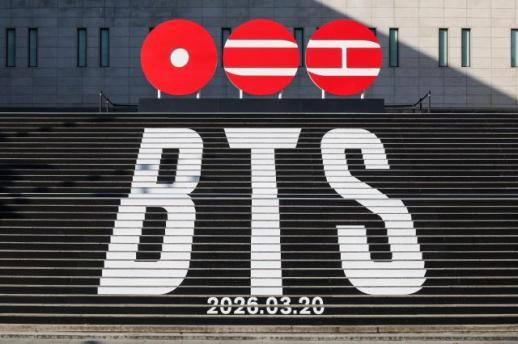 BTS Comeback D-20: Police scramble to curb mass overnight camping ahead of Gwanghwamun concert SEOUL, March 01 (AJP) - South Korean police are wrestling with how to manage the prospect of mass overnight camping by BTS fans ahead of the K-pop group's free comeback concert at Gwanghwamun Plaza on March 21, as global audiences descend on the capital with no ticket in hand. Reports say officers are in talks with the Seoul Metropolitan Government over administrative guidance measures to deter fans from seizing stretches of the plaza and surrounding pavements for extended periods before the show. Police assess that ticketless fans will queue through the night to secure vantage points offering even a partial view of the stage, a concern amplified by estimates that the crowd on the day could swell to about 260,000 people — stretching from the plaza down to Sungnyemun. The challenge, authorities said, is that overnight waiting in itself does not constitute a clear legal violation. Fans who remain on pavements or the plaza without blocking traffic cannot be cited under road traffic law or charged with obstructing public passage, nor can their presence be classified as an illegal assembly. While Seoul city ordinances permit administrative guidance and fines for unauthorized occupation of public space, police official say officers would have no choice but to appeal to fans' goodwill, urging them to move along rather than resorting to force. Police plan to deploy officers to patrol the area starting the day before the concert, and are conducting preemptive safety inspections of rooftops and ventilation structures on nearby high-rise buildings to prevent fall accidents from overcrowding. Authorities are also moving swiftly against a wave of online ticket fraud, having flagged 81 suspected scam posts — many demanding fees of 150,000 won to 1 million won for proxy ticketing services — and requesting that the Korea Communications Standards Commission remove and block them. 2026-03-01 08:51:37
 -
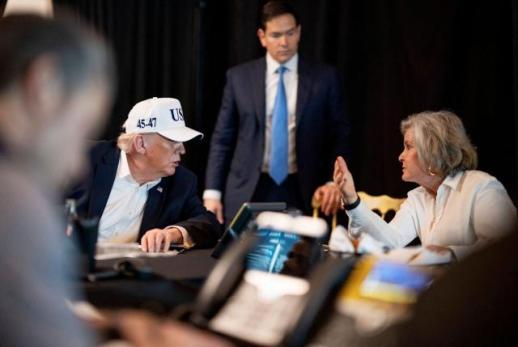 ANALYSIS: Seoul on alert in fear of Iran crisis shockwaves reaching Northeast Asia SEOUL, March 01 (AJP) -South Korea convened an emergency National Security Council working-level meeting Saturday evening as the Iran crisis escalated, underscoring how quickly a Middle East conflict can translate into strategic and economic risk in Northeast Asia. The National Security Office reviewed the situation on the ground, assessed impacts on national security and the economy, and prioritized the safety of Korean nationals in the region. President Lee Jae Myung was briefed and directed officials to place citizen protection first while closely monitoring developments and preparing for a prolonged scenario. The urgency reflects the scale of events. U.S. President Donald Trump declared on social media that Iran’s Supreme Leader Ayatollah Ali Khamenei was dead, framing it as “the single greatest chance” for Iranians to reclaim their country and signaling that joint U.S.-Israeli airstrikes would continue “as long as necessary.” Israel has indicated Khamenei was killed, though Tehran has not issued definitive confirmation. Regardless of formal verification, the claim alone marks a dramatic escalation: the potential removal of the Islamic Republic’s top authority introduces succession uncertainty, raises the likelihood of retaliatory escalation, and shifts the conflict from deterrence to regime-level confrontation. Iran has already responded with missile and drone strikes against Israel and U.S. military bases in the region. Reports of attempts to restrict shipping through the Strait of Hormuz — a chokepoint for roughly 20 to 30 percent of global seaborne crude — have injected immediate volatility into energy markets. For South Korea, heavily dependent on imported oil and global trade flows, that channel represents the most direct economic exposure. Security repercussions on the Korean Peninsula Yet beyond oil prices and currency swings, the crisis carries a deeper strategic resonance for the Korean Peninsula. The U.S. decision to escalate militarily against Iran — including the reported targeting of its supreme leader — signals that Washington is willing to employ decisive force when it judges long-term threats to outweigh immediate risks. While the Iranian case differs significantly from North Korea’s nuclear status and deterrence structure, the broader message is unmistakable: the United States retains both the capability and the political will to act preventively under certain conditions. For Pyongyang, led by nuclear-armed and nuclear-ambitious leader Kim Jong Un, the episode offers competing lessons. On one hand, it may reinforce the regime’s long-held conviction that nuclear weapons are the ultimate guarantee of survival — a shield against external intervention. On the other, it underscores that strategic isolation, internal repression, and overt missile or nuclear brinkmanship do not remove the possibility of calibrated military action by adversaries. North Korea’s deterrence posture is structurally different from Iran’s. Pyongyang already possesses an operational nuclear arsenal and tested delivery systems, creating a far more immediate retaliatory risk calculus. That mutual deterrence raises the threshold for direct military confrontation. But it does not eliminate pressure, especially if the international community judges that proliferation or escalation is crossing unacceptable lines. For Seoul, the priority is twofold. First, to ensure that alliance coordination with Washington remains tight and predictable, minimizing the risk of misinterpretation in Pyongyang. Second, to maintain robust crisis communication mechanisms that reduce the possibility of accidental escalation in a tense regional environment. South Korea’s security planners worry that events in the Middle East can shape strategic psychology in East Asia. A U.S. demonstration of force elsewhere can alter threat perceptions, alliance expectations, and the signaling environment on the Korean Peninsula. In such moments, clarity and restraint matter as much as capability. At the same time, Seoul policymakers would have to closely watch the economic dimension of the shock. Rising oil prices, shipping disruptions, and renewed currency volatility could intersect with security anxieties, amplifying uncertainty. Korea’s recent equity surge and relative currency stabilization were signs of improving sentiment; a prolonged Middle East conflict could challenge that stability. 2026-03-01 07:37:03
 -
 BTS’ Jung Kook builds solo success with ‘Seven’ and ‘GOLDEN’ ahead of group comeback With BTS preparing to return in March, anticipation is rising worldwide. The comeback news, carried by “Arirang,” and plans for a world tour are expected to trigger immediate reactions beyond the music industry, affecting tourism and broader local economies. BTS is seen as both a force with global economic impact and a symbolic name that has elevated South Korea’s image. Ahead of the comeback, this outlet is publishing a “BTS member profile” series examining the group’s seven members one by one. <Editor’s note> Jung Kook, BTS’ youngest member, has carried one of the group’s broadest roles — main vocalist, lead dancer and sub-rapper. Onstage, he is known for steady live vocals paired with precise performance, and his work has extended into songwriting. His nickname, “golden maknae,” has become shorthand for that range. In 2023, his solo debut single “Seven” established his name beyond the group’s achievements. The song topped domestic and international charts and debuted at No. 1 on Billboard’s Hot 100 upon entry. On Spotify, it set a record as the fastest track by an Asian artist to reach 1 billion streams. The momentum continued with his first solo album, “GOLDEN,” which led in both sales and streaming and cemented his standing as a solo act. “GOLDEN” frames what the album calls Jung Kook’s “golden moments.” Built around “Standing Next to You,” the track order follows an emotional arc from the start to the end of love. The retro-funk title track highlights his groove-driven vocals and performance, while the album leans into pop-centered global sounds. Collaborations with world-renowned producers also underscored his positioning as a global pop star. Vocals remain his core strength. Rather than relying only on power, he shifts smoothly between chest voice and falsetto to shape a song’s mood. Even while executing BTS’ demanding choreography, he is known for stable live singing — a key reason he has long been central to the group’s vocal line. With performance added, he is often described not as a “dancing singer,” but as a vocalist who completes the stage. He has also steadily built a record as a creator. From “OUTRO: Love is Not Over” to “Autumn Leaves,” his solo track “Begin,” and the fan song “Magic Shop,” he contributed his own language to BTS’ narrative. Later releases such as “Still With You,” “My You” and “Never Let Go” showed a careful approach to emotion and melody. “Still With You,” in particular, has remained widely discussed beyond the fan base, highlighting his songwriting sensibility. His impact is reflected in streaming figures. On Spotify, “Seven” and “Standing Next to You” each surpassed 1 billion streams, setting a first for an Asian solo singer, and his cumulative streams on his personal account also reached a new milestone. Jung Kook is no longer defined only as “the group’s youngest member,” but as a solo artist proving himself through results in the global pop market. As BTS returns as a team, Jung Kook is set to resume his role as a central vocalist. At the same time, he has already secured a clear place as a solo artist — across performance, vocals and records — and remains one of the most direct examples of how far K-pop has reached.* This article has been translated by AI. 2026-03-01 06:03:21
 -
 Culture Minister Choi Hwi-young Attends K League 1 Opener, Discusses Soccer’s Growth Culture, Sports and Tourism Minister Choi Hwi-young visited the opening match of the K League 1 season and met with officials to discuss ways to sustain the growth of professional soccer. The ministry said Choi attended the Hana Bank K League 1 2026 match between Incheon United and FC Seoul at Incheon Football Stadium on the 28th, encouraged players and heard on-site views from soccer officials on measures to support the sport’s continued development. Before kickoff, Choi held a meeting with professional soccer officials, including a vice president of the Korea Professional Football League, the owner and CEO of Incheon United, and the CEO of FC Seoul. They exchanged views on improving the stadium experience for fans and strengthening development programs for professional and youth players. Choi also urged the K League to actively join efforts to curb ticket scalping and promote fair access, following a revision to the National Sports Promotion Act that bans illegal purchases and resales of sports tickets. The revision was promulgated Feb. 27 and takes effect Aug. 28. “Professional soccer has grown thanks to the efforts of the players on the field, the fans in the stands, and club and league officials who dedicate themselves behind the scenes,” Choi said. He added that professional soccer is a high value-added industry linking sports, leisure culture and tourism, and said the government would stay in close contact with the field and provide institutional and policy support so the K League can continue to grow.* This article has been translated by AI. 2026-02-28 19:24:00