
Journalist

AJP
-
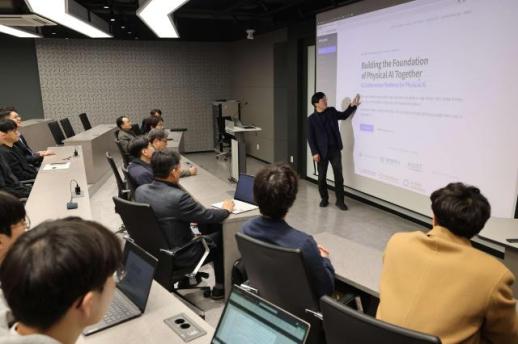 KAIST launches deep tech scale-up valley to drive physical AI implementation SEOUL, February 27 (AJP) - The Korea Advanced Institute of Science and Technology in South Korea announced on February 27 that it held a performance report meeting for the Deep Tech Scale-up Valley project at its main campus in Daejeon. During the event, the university unveiled its implementation strategy for Physical AI, focusing on moving robot technology out of the laboratory and into actual industrial settings. The Deep Tech Scale-up Valley is a joint initiative between South Korea's Ministry of Science and ICT, Daejeon Metropolitan City, and the Korea Advanced Institute of Science and Technology (KAIST). The university has secured 13.65 billion won in funding for a three-year and six-month period starting in 2025. Led by Professor Kim Jung, the project aims to build a robotics innovation ecosystem by commercializing deep tech developed at the institute. A Robot Alliance has been formed to support this goal, including KAIST Holdings, Daejeon Techno Park, the Daejeon Center for Creative Economy and Innovation, Angel Robotics, and YuRobotix. The project operates on a three-pillar system: technology commercialization, deep tech R&D, and commercial scale-up. In its first year, the initiative achieved 23 billion won in technology transfers and investment attraction through Physical AI lectures, startup pitching events, and networking sessions. Physical AI refers to technology that combines robotics with artificial intelligence, allowing machines to perceive, judge, and act autonomously in the real world. While government R&D and corporate investments are increasing, KAIST noted that practical business models remain limited. The report meeting redefined Physical AI as a challenge of industrial structure rather than just a competition of algorithms, emphasizing that commercialization requires the organic integration of research, factories, and the investment ecosystem. Researchers highlighted that applying Physical AI to industry requires meaningful data generated from actual worksites rather than just virtual environments. This involves collaborating with skilled professionals in manufacturing to accumulate data that reflects human physical senses and judgment. Professor Kong Kyoung-chul of the Department of Mechanical Engineering at KAIST emphasized the need for a concrete platform. For AI trained in a virtual environment to function properly in the real world, the accuracy of virtual technology must improve, and physical variables in reality must be managed predictably, Professor Kong Kyoung-chul said. Professor Myung Hyun of the School of Electrical Engineering at KAIST noted that research into Physics-Informed Neural Networks (PINN) is currently active. The completion of Physical AI is possible when hardware researchers who understand physical systems and AI researchers who implement learning structures work together, Professor Myung Hyun said. He added that AI must understand physical laws rather than just processing large volumes of data. KAIST plans to establish a value chain connecting researchers, industrial experts, and corporations to solve actual industrial problems. We must move beyond competing over data volume and consider how to execute AI in the actual physical world, said Professor Kim Jung, Head of the Department of Mechanical Engineering at KAIST. Based on our specific strategies, we will support startups and companies to succeed in commercializing Physical AI. The Deep Tech Scale-up Valley project will proceed with building Physical AI platforms, discovering and investing in startups, establishing testbeds, and expanding cooperation networks with global robotics companies. 2026-02-27 11:07:43
 -
 Lee to visit Singapore and the Philippines next week SEOUL, February 27 (AJP) - President Lee Jae Myung is set to embark on a trip to Singapore and the Philippines next week, Cheong Wa Dae said on Friday. According to presidential spokesperson Kang Yu-jung, Lee is scheduled to depart for Singapore on Sunday for a summit with Prime Minister Lawrence Wong. During his three-day stay there, Lee will also meet with ceremonial head of state Tharman Shanmugaratnam. Lee will then attend a joint event between the two countries to discuss exchanges and expand cooperation in artificial intelligence (AI)-related areas, while meeting with people working in the field. Kang described Singapore as a transportation, logistics and financial hub that leads regional free trade, expressing expectations that Lee's trip will strengthen cooperation in trade, investment and infrastructure while expanding collaboration into "promising future sectors" such as AI and nuclear energy. After wrapping up his itinerary there, Lee will travel to Manila for a summit with Philippine President Ferdinand Romualdez Marcos Jr., and will attend a business forum and other events. Calling the Philippines a longtime partner as South Korea's first Southeast Asian country to establish diplomatic relations, Kang said that the archipelagic country was also the first Asian country to send the largest number of troops to aid South Korea during the Korean War. She added that Lee's summit, slated for March 3, would be even more meaningful as it marks the 77th anniversary of bilateral relations. Kang also expressed hope that the visit will deepen the two countries' cooperation across various sectors including defense, trade, nuclear energy, shipbuilding and critical minerals. She added that the Philippines, which assumed the rotating chair of the Association of Southeast Asian Nations (ASEAN) this year, followed by Singapore next year, will help further foster the visions of the Comprehensive Strategic Partnership (CSP) established in October 2024. 2026-02-27 11:04:19
 -
 Kookmin University research team has two papers accepted for CVPR 2026 SEOUL, February 27 (AJP) - A research team led by Professor Lee Seong-won of the Department of Electronics Engineering at Kookmin University has had two papers accepted for the IEEE/CVF Conference on Computer Vision and Pattern Recognition 2026. The IEEE/CVF Conference on Computer Vision and Pattern Recognition (CVPR) is regarded as a premier international academic event in the fields of artificial intelligence and computer vision. Known for its rigorous review process and low acceptance rates, the conference serves as a global stage where leading universities and research institutions share core technological advancements. The research was conducted through a joint collaboration between the team of Professor Lee Seong-won at Kookmin University and the team of Professor Kim Eun-tae at Yonsei University. The two institutions worked together to develop methods that combine theoretical precision with practical scalability. The first paper, titled Rethinking Pose Refinement in 3D Gaussian Splatting under Pose Prior and Geometric Uncertainty, proposes a new optimization framework to address camera pose errors and geometric uncertainties. These issues are central challenges in 3D Gaussian Splatting, a prominent technique for 3D scene reconstruction. By integrating pose priors and geometric uncertainty analysis, the framework enables more stable and precise three-dimensional reconstruction, with potential applications in digital twins, robotics, and immersive content creation. The second paper, titled HypeVPR: Exploring Hyperbolic Space for Perspective to Equirectangular Visual Place Recognition, introduces a method for visual place recognition using hyperbolic space. This approach is designed to overcome representation differences between standard perspective images and equirectangular (omnidirectional) images. The framework maintains robust recognition performance across different camera formats, providing a foundational technology for autonomous driving, drones, and extended reality (XR). CVPR is a conference where computer vision researchers worldwide aspire to present, as it strictly evaluates the originality and completeness of research, Professor Lee Seong-won said. We will continue to strengthen our global competitiveness through research that possesses both theoretical sophistication and practical application. Professor Lee Seong-won added that Kookmin University (KU) intends to focus on creating leading research results and fostering talent in the fields of artificial intelligence and computer vision. 2026-02-27 10:59:32
 -
 Volkswagen Group Korea Names Michael Ant as Head of Volkswagen Brand Unit Volkswagen Group Korea said Thursday it will appoint Michael Ant as president of its Volkswagen brand unit, effective April 1. Till Scheer, president and CEO of Volkswagen Group Korea, has overseen the Volkswagen brand in addition to his broader duties since February 2024, working to strengthen core business capabilities and improve organizational efficiency, the company said. Building on that foundation, Ant will take overall responsibility for Volkswagen brand operations, maintaining continuity in strategic direction while focusing on strengthening brand execution. Under the group’s operating structure in South Korea, he will report directly to Scheer. Ant joined the Volkswagen Group in 1998 and has held key posts in major markets including Germany and China, working across brands such as Volkswagen, Skoda and Audi. The company said his broad experience is expected to support the Volkswagen brand’s growth in the South Korean market. Volkswagen Group Korea said the appointment reflects its continued commitment to the South Korean market and its intent to boost operating efficiency and competitiveness through closer cooperation among its brands.* This article has been translated by AI. 2026-02-27 10:48:17
 -
 K-pop girl band aespa to release collaborative single 'Keychain' SEOUL, February 27 (AJP) - K-pop girl band aespa will drop "Keychain," a collaborative single with Grammy-winning artist Anderson .Paak on Friday, the four-member group's agency SM Entertainment said. The collaborative track will unveil globally at 2 p.m. (0500 GMT) across major streaming platforms. "Keychain" serves as an original soundtrack (OST) for "K-POPS!," a film produced, directed and starring Anderson .Paak. The song blends the artist's signature hip-hop, R&B and funk-rooted sound with aespa's distinctive vocal tone and performance style. Anderson .Paak, a Korean American musician, first rose to prominence with his 2016 album "Malibu," which earned him his first Grammy nomination. In 2021, he formed the project duo "Silk Sonic" with Bruno Mars. The pair topped the Billboard Hot 100 and went on to win nine Grammy Awards, solidifying the 40-year-old's global profile. The collaboration has drawn attention as a cross-cultural partnership between a leading K-pop act and an established American pop artist. aespa, debuted in 2020, is a fourth-generation K-pop girl group known for its aggressive electronic production style rooted in "hyperpop" and "cyberpunk/industrial aesthetics." The quartet, Karina, Giselle, Winter and Ningning has built its sonic identity around high-intensity synth textures, metallic sound design and digitally layered vocal processing. K-POPS! portrays the Korean American community, one of the fastest-growing multicultural groups in the United States, through a family comedy centered on identity, music and generational connection. The film is set to premiere in North America on Feb. 27. Meanwhile, aespa is set to continue its "2026 aespa LIVE TOUR – SYNK : aeXIS LINE" with performances in Macau on March 7 and 8. 2026-02-27 10:42:24
 -
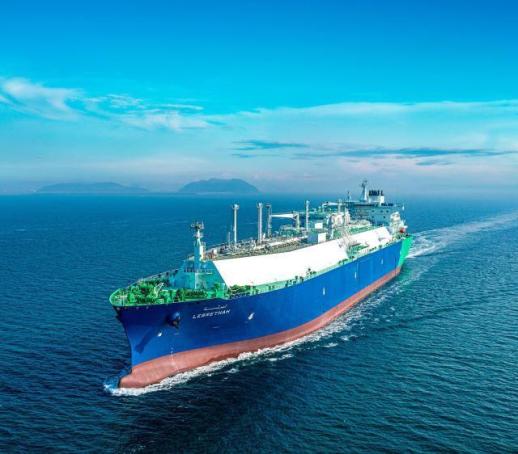 Hanwha Aerospace diversifies into LNG trading with landmark Venture Global contract SEOUL, February 27 (AJP) - Hanwha Aerospace has secured a 20-year liquefied natural gas supply agreement with U.S. producer Venture Global, signaling a strategic expansion beyond its core defense and aerospace operations into global energy markets. Under the deal revealed Friday, Hanwha Aerospace will secure 1.5 million tons of LNG annually for 20 years starting in 2030, supplying the fuel to end users across Europe and Asia. The volume represents about 4.4 percent of South Korea's total annual LNG consumption, based on 2024 figures of about 34.12 million tons. The agreement is part of a broader push by the Hanwha Group to build an integrated LNG value chain, leveraging affiliates across the energy supply spectrum. Hanwha Ocean brings shipbuilding and floating LNG production capabilities, Hanwha Energy handles LNG power generation and operations, and Hanwha Shipping oversees maritime transport. Hanwha Aerospace said the move into LNG is designed to bolster its core defense and shipbuilding businesses as well as open new revenue streams. Geopolitical tensions have ushered energy supply chains to become increasingly intertwined with national security strategies, particularly in Europe, where governments are seeking to diversify away from Russian gas. The company plans to use its energy portfolio as leverage to deepen security partnerships with client nations and expand defense exports, while also driving LNG carrier orders for Hanwha Ocean. "Defense, shipbuilding and energy are closely linked as pillars of national security," a Hanwha Aerospace spokesperson said. "We will contribute to global security through eco-friendly energy solutions spanning production, distribution and utilization." Hanwha Aerospace has been steadily laying the groundwork for the venture, investing about 180 billion won ($125 million) in U.S. LNG firm NextDecade in 2024 and signing a memorandum of understanding with Hanwha Energy and Korea South-East Power in 2025 to expand global LNG supply networks. 2026-02-27 10:33:13
 -
 Actor Im Ju-hwan Confirms He Previously Worked at a Coupang Logistics Center Actor Im Ju-hwan has acknowledged that he previously worked at a Coupang logistics center. A representative of his agency, Basecamp Company, said on the 27th that Im "has experience working at a Coupang logistics center in the past." The comment followed online posts and social media chatter in which people claimed they had seen Im at a Coupang logistics site. One user wrote that they worked alongside him and posted, "Maybe he was bored because he didn’t have a project." Others also circulated accounts saying Im worked hard on site. Online reactions ranged from, "I guess it’s true actors have to take part-time jobs when they don’t have work," to, "What’s the problem if he’s earning money in a healthy way?" * This article has been translated by AI. 2026-02-27 10:30:20
 -
 Hansung Motor Expands Gangneung Service Center, Doubling Annual Repair Capacity Hansung Motor said Thursday it has expanded its Gangneung service center to strengthen service capacity in the region. The company said the expansion is aimed at improving access to maintenance and shortening reservation wait times by upgrading service infrastructure. The Gangneung center increased its general maintenance work bays to six. With the expansion, the center's annual repair capacity will double to as many as 10,000 vehicles, the company said, helping it more steadily meet demand for routine maintenance in the Yeongdong area of Gangwon Province. Hansung Motor said it expects significantly shorter waits for regular inspections and general repairs for customers in Gangneung and along the East Coast, while easing the burden of traveling long distances to service centers in other areas. The company cited a recent integrated expansion of its Seongdong service center as part of efforts to improve efficiency and expertise at key hubs in the Seoul metropolitan area. It said it is also investing in regional locations, including building new service centers, expanding existing sites and adding specialized staff nationwide. CEO Kim Marco said, "Investment in service centers leads directly to customer satisfaction," adding, "We will continue to work to provide more stable and convenient maintenance services by closely reflecting service demand by region."* This article has been translated by AI. 2026-02-27 10:24:06
 -
 North Korean leader visits family mausoleum with newly-elected party members SEOUL, February 27 (AJP) - North Korean leader Kim Jong-un visited his family's mausoleum as soon as the country's key party congress wrapped up, state media reported on Friday. According to the state-run Korean Central News Agency, Kim paid his respects at the Kumsusan Palace of the Sun where the embalmed bodies of the two Kim seniors lie in state, accompanied by key party officials and other members who were newly elected at the country's ninth party gathering the previous day. KCNA said participants "solemnly reaffirmed" their resolve to fulfill their tasks set out by the party. In a closing statement earlier, Kim declared that policies and decisions made at the weeklong party congress will be "brilliantly carried out without fail." Held almost every five years, the party congress brings together a large number of party members and other representatives from across the country to review the past five years and set the direction for domestic and foreign policy for the next five years. This year's gathering ran for seven days from Feb. 19 and concluded with a military parade and other commemorative events. 2026-02-27 10:18:37
 -
 Peugeot All-New 3008 Smart Hybrid wins two Korea Car of the Year design awards Peugeot said on the 27th that its All-New 3008 Smart Hybrid won the “Design of the Year” award in two separate “2026 Korea Car of the Year” evaluations run by the Korea Automobile Writers Association (AWAK) and the Korea Automobile Journalists Association (KAJA). Both groups annually assess newly launched vehicles in South Korea and select winners by category. Peugeot said the results formally recognized the model’s design strengths as well as the brand’s credibility and product competitiveness in the local market. AWAK conducted on-road testing of 41 vehicles in January at Everland Speedway in Yongin, Gyeonggi Province, then finalized winners after scoring 22 detailed items including design, performance, convenience and safety, efficiency and innovation. The 3008 was named “Design of the Year” after receiving 50% of the vote in the design category. Peugeot’s 308 Smart Hybrid, which the company said signaled the start of smart hybrids in South Korea, also won “Internal Combustion Crossover of the Year,” highlighting the competitiveness of Peugeot’s smart-hybrid lineup. KAJA held its final judging on Feb. 5 at the Korea Transportation Safety Authority’s Korea Automobile Testing & Research Institute (KATRI) in Hwaseong, Gyeonggi Province. It said it weighed overall product value and consumer purchase intent using 10 indicators, including exterior design, interior and perceived quality, instrument layout and ease of operation, handling and driving feel, acceleration, noise and vibration performance, high-speed stability and braking, safety and convenience features, fuel economy and maintenance, and price and purchase intent. In KAJA’s “Design of the Year” category, where seven models competed, the All-New 3008 Smart Hybrid received the highest evaluation. The association cited a fastback profile that modernizes Peugeot’s signature “feline look,” a forward-looking “Panoramic i-Cockpit,” and what it called reasonable price competitiveness, describing the vehicle as a key model for the brand’s next step forward. “Peugeot’s 3008 sweeping the design category at both major journalist associations means the strength of Peugeot design has been clearly recognized by Korean customers and the market,” Bangsil, CEO of Stellantis Korea, said. “Building on our strong design DNA, Peugeot will establish itself as a brand that delivers an experience beyond expectations by adding product appeal — including smart-hybrid technology — and price competitiveness,” Bangsil said.* This article has been translated by AI. 2026-02-27 10:13:46