
Journalist

AJP
-
 Volkswagen Group Korea Names Michael Ant as Head of Volkswagen Brand Unit Volkswagen Group Korea said Thursday it will appoint Michael Ant as president of its Volkswagen brand unit, effective April 1. Till Scheer, president and CEO of Volkswagen Group Korea, has overseen the Volkswagen brand in addition to his broader duties since February 2024, working to strengthen core business capabilities and improve organizational efficiency, the company said. Building on that foundation, Ant will take overall responsibility for Volkswagen brand operations, maintaining continuity in strategic direction while focusing on strengthening brand execution. Under the group’s operating structure in South Korea, he will report directly to Scheer. Ant joined the Volkswagen Group in 1998 and has held key posts in major markets including Germany and China, working across brands such as Volkswagen, Skoda and Audi. The company said his broad experience is expected to support the Volkswagen brand’s growth in the South Korean market. Volkswagen Group Korea said the appointment reflects its continued commitment to the South Korean market and its intent to boost operating efficiency and competitiveness through closer cooperation among its brands.* This article has been translated by AI. 2026-02-27 10:48:17
 -
 K-pop girl band aespa to release collaborative single 'Keychain' SEOUL, February 27 (AJP) - K-pop girl band aespa will drop "Keychain," a collaborative single with Grammy-winning artist Anderson .Paak on Friday, the four-member group's agency SM Entertainment said. The collaborative track will unveil globally at 2 p.m. (0500 GMT) across major streaming platforms. "Keychain" serves as an original soundtrack (OST) for "K-POPS!," a film produced, directed and starring Anderson .Paak. The song blends the artist's signature hip-hop, R&B and funk-rooted sound with aespa's distinctive vocal tone and performance style. Anderson .Paak, a Korean American musician, first rose to prominence with his 2016 album "Malibu," which earned him his first Grammy nomination. In 2021, he formed the project duo "Silk Sonic" with Bruno Mars. The pair topped the Billboard Hot 100 and went on to win nine Grammy Awards, solidifying the 40-year-old's global profile. The collaboration has drawn attention as a cross-cultural partnership between a leading K-pop act and an established American pop artist. aespa, debuted in 2020, is a fourth-generation K-pop girl group known for its aggressive electronic production style rooted in "hyperpop" and "cyberpunk/industrial aesthetics." The quartet, Karina, Giselle, Winter and Ningning has built its sonic identity around high-intensity synth textures, metallic sound design and digitally layered vocal processing. K-POPS! portrays the Korean American community, one of the fastest-growing multicultural groups in the United States, through a family comedy centered on identity, music and generational connection. The film is set to premiere in North America on Feb. 27. Meanwhile, aespa is set to continue its "2026 aespa LIVE TOUR – SYNK : aeXIS LINE" with performances in Macau on March 7 and 8. 2026-02-27 10:42:24
 -
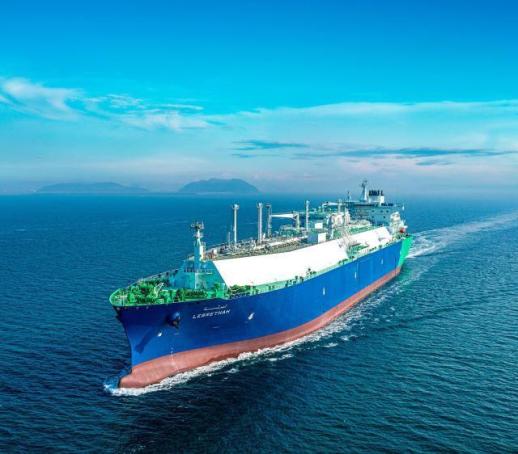 Hanwha Aerospace diversifies into LNG trading with landmark Venture Global contract SEOUL, February 27 (AJP) - Hanwha Aerospace has secured a 20-year liquefied natural gas supply agreement with U.S. producer Venture Global, signaling a strategic expansion beyond its core defense and aerospace operations into global energy markets. Under the deal revealed Friday, Hanwha Aerospace will secure 1.5 million tons of LNG annually for 20 years starting in 2030, supplying the fuel to end users across Europe and Asia. The volume represents about 4.4 percent of South Korea's total annual LNG consumption, based on 2024 figures of about 34.12 million tons. The agreement is part of a broader push by the Hanwha Group to build an integrated LNG value chain, leveraging affiliates across the energy supply spectrum. Hanwha Ocean brings shipbuilding and floating LNG production capabilities, Hanwha Energy handles LNG power generation and operations, and Hanwha Shipping oversees maritime transport. Hanwha Aerospace said the move into LNG is designed to bolster its core defense and shipbuilding businesses as well as open new revenue streams. Geopolitical tensions have ushered energy supply chains to become increasingly intertwined with national security strategies, particularly in Europe, where governments are seeking to diversify away from Russian gas. The company plans to use its energy portfolio as leverage to deepen security partnerships with client nations and expand defense exports, while also driving LNG carrier orders for Hanwha Ocean. "Defense, shipbuilding and energy are closely linked as pillars of national security," a Hanwha Aerospace spokesperson said. "We will contribute to global security through eco-friendly energy solutions spanning production, distribution and utilization." Hanwha Aerospace has been steadily laying the groundwork for the venture, investing about 180 billion won ($125 million) in U.S. LNG firm NextDecade in 2024 and signing a memorandum of understanding with Hanwha Energy and Korea South-East Power in 2025 to expand global LNG supply networks. 2026-02-27 10:33:13
 -
 Actor Im Ju-hwan Confirms He Previously Worked at a Coupang Logistics Center Actor Im Ju-hwan has acknowledged that he previously worked at a Coupang logistics center. A representative of his agency, Basecamp Company, said on the 27th that Im "has experience working at a Coupang logistics center in the past." The comment followed online posts and social media chatter in which people claimed they had seen Im at a Coupang logistics site. One user wrote that they worked alongside him and posted, "Maybe he was bored because he didn’t have a project." Others also circulated accounts saying Im worked hard on site. Online reactions ranged from, "I guess it’s true actors have to take part-time jobs when they don’t have work," to, "What’s the problem if he’s earning money in a healthy way?" * This article has been translated by AI. 2026-02-27 10:30:20
 -
 Hansung Motor Expands Gangneung Service Center, Doubling Annual Repair Capacity Hansung Motor said Thursday it has expanded its Gangneung service center to strengthen service capacity in the region. The company said the expansion is aimed at improving access to maintenance and shortening reservation wait times by upgrading service infrastructure. The Gangneung center increased its general maintenance work bays to six. With the expansion, the center's annual repair capacity will double to as many as 10,000 vehicles, the company said, helping it more steadily meet demand for routine maintenance in the Yeongdong area of Gangwon Province. Hansung Motor said it expects significantly shorter waits for regular inspections and general repairs for customers in Gangneung and along the East Coast, while easing the burden of traveling long distances to service centers in other areas. The company cited a recent integrated expansion of its Seongdong service center as part of efforts to improve efficiency and expertise at key hubs in the Seoul metropolitan area. It said it is also investing in regional locations, including building new service centers, expanding existing sites and adding specialized staff nationwide. CEO Kim Marco said, "Investment in service centers leads directly to customer satisfaction," adding, "We will continue to work to provide more stable and convenient maintenance services by closely reflecting service demand by region."* This article has been translated by AI. 2026-02-27 10:24:06
 -
 North Korean leader visits family mausoleum with newly-elected party members SEOUL, February 27 (AJP) - North Korean leader Kim Jong-un visited his family's mausoleum as soon as the country's key party congress wrapped up, state media reported on Friday. According to the state-run Korean Central News Agency, Kim paid his respects at the Kumsusan Palace of the Sun where the embalmed bodies of the two Kim seniors lie in state, accompanied by key party officials and other members who were newly elected at the country's ninth party gathering the previous day. KCNA said participants "solemnly reaffirmed" their resolve to fulfill their tasks set out by the party. In a closing statement earlier, Kim declared that policies and decisions made at the weeklong party congress will be "brilliantly carried out without fail." Held almost every five years, the party congress brings together a large number of party members and other representatives from across the country to review the past five years and set the direction for domestic and foreign policy for the next five years. This year's gathering ran for seven days from Feb. 19 and concluded with a military parade and other commemorative events. 2026-02-27 10:18:37
 -
 Peugeot All-New 3008 Smart Hybrid wins two Korea Car of the Year design awards Peugeot said on the 27th that its All-New 3008 Smart Hybrid won the “Design of the Year” award in two separate “2026 Korea Car of the Year” evaluations run by the Korea Automobile Writers Association (AWAK) and the Korea Automobile Journalists Association (KAJA). Both groups annually assess newly launched vehicles in South Korea and select winners by category. Peugeot said the results formally recognized the model’s design strengths as well as the brand’s credibility and product competitiveness in the local market. AWAK conducted on-road testing of 41 vehicles in January at Everland Speedway in Yongin, Gyeonggi Province, then finalized winners after scoring 22 detailed items including design, performance, convenience and safety, efficiency and innovation. The 3008 was named “Design of the Year” after receiving 50% of the vote in the design category. Peugeot’s 308 Smart Hybrid, which the company said signaled the start of smart hybrids in South Korea, also won “Internal Combustion Crossover of the Year,” highlighting the competitiveness of Peugeot’s smart-hybrid lineup. KAJA held its final judging on Feb. 5 at the Korea Transportation Safety Authority’s Korea Automobile Testing & Research Institute (KATRI) in Hwaseong, Gyeonggi Province. It said it weighed overall product value and consumer purchase intent using 10 indicators, including exterior design, interior and perceived quality, instrument layout and ease of operation, handling and driving feel, acceleration, noise and vibration performance, high-speed stability and braking, safety and convenience features, fuel economy and maintenance, and price and purchase intent. In KAJA’s “Design of the Year” category, where seven models competed, the All-New 3008 Smart Hybrid received the highest evaluation. The association cited a fastback profile that modernizes Peugeot’s signature “feline look,” a forward-looking “Panoramic i-Cockpit,” and what it called reasonable price competitiveness, describing the vehicle as a key model for the brand’s next step forward. “Peugeot’s 3008 sweeping the design category at both major journalist associations means the strength of Peugeot design has been clearly recognized by Korean customers and the market,” Bangsil, CEO of Stellantis Korea, said. “Building on our strong design DNA, Peugeot will establish itself as a brand that delivers an experience beyond expectations by adding product appeal — including smart-hybrid technology — and price competitiveness,” Bangsil said.* This article has been translated by AI. 2026-02-27 10:13:46
 -
 POSCO Picks Eight Core Steel Products to Target Future Markets POSCO said Thursday it has selected eight core strategic products aimed at securing a lead in future steel markets and has set up a “One Team” structure to strengthen its fundamental competitiveness. In early February, the company created new project teams for stainless steel for next-generation growth markets, PosMAC for renewable energy, high-manganese steel, and an electric-arc-furnace premium steel initiative. Those join four teams launched in December — energy plate, electrical steel sheet for power applications, Giga Steel and HyperNO — completing its “eight core strategic product technology development project teams,” which are now fully operating. POSCO said it has been building the project-team system since late last year to rebuild steel competitiveness and secure future growth engines, integrating management from technology development through production and sales. The eight teams are placed directly under the Pohang and Gwangyang steelworks so research results can be applied immediately on the production floor, the company said, as it seeks to expand high value-added steel products and capture future market leadership. POSCO said it will differentiate product groups between the two plants based on their R&D and production strengths. Pohang will focus on improving performance and developing energy steel used in oil and gas, power generation and renewable energy, in line with rising global electricity demand, aiming to become a leading producer of energy steel. Gwangyang, where automotive steel sheet is a mainstay, will strengthen competitiveness as a mobility-focused plant centered on new growth steel to secure leadership in autonomous driving and future mobility and to meet rising demand for low-carbon products. POSCO Group Chairman Jang In-hwa said in his New Year’s address that the company must “complete the portfolio of eight core strategic products, which are key to future industries, and strengthen market leadership.” POSCO also said it plans to take the lead in improving the domestic steel ecosystem in step with the government’s “steel industry advancement plan.” A company official said that amid an increasingly difficult business environment — including a flood of low-priced imports and global tariff barriers — POSCO will break down departmental boundaries to expand its portfolio around the eight products and solidify leadership in future industrial markets.* This article has been translated by AI. 2026-02-27 10:12:21
 -
 Asiana Airlines to Operate Mileage-Only Flights on Hong Kong, Phuket Routes Asiana Airlines said Thursday it will operate mileage-only international flights on its Incheon-Hong Kong and Incheon-Phuket routes. The carrier plans a total of 68 flights: 44 on the Incheon-Hong Kong route from April 13 to June 28, and 24 on the Incheon-Phuket route from April 7 to June 28. Depending on sales, seats may also be sold for cash, allowing customers to choose between award tickets and paid fares. Reservations open at 9 a.m. Thursday, and all remaining seats can be purchased using miles. Asiana said this is its first mileage-only operation on the Hong Kong route. For Hong Kong, one-way award tickets require 15,000 miles in economy class and 22,500 miles in business class. For Phuket, the one-way rates are 20,000 miles in economy and 30,000 miles in business. During peak travel periods, mileage required increases by 50% compared with off-peak periods. An Asiana official said the airline launched the mileage-only flights, including new routes, to make it easier for customers to use miles and to broaden their options, adding it will continue to review additional ways to expand mileage use.* This article has been translated by AI. 2026-02-27 10:06:16
 -
 Volvo Korea Says EX30 Orders Top 1,000 a Week After Price Cut Volvo Car Korea said Thursday that new orders for its premium all-electric SUV, the EX30, topped 1,000 within a week of the company announcing price cuts. The company said the result shows the model’s product competitiveness and its aggressive pricing strategy are gaining traction even as competition intensifies in the electric-vehicle market. As part of a strategy to lower barriers to entry for imported premium EVs and strengthen its leadership in the EV market, Volvo Car Korea previously cut prices for the EX30 and the EX30 Cross Country (EX30CC) by as much as 7.61 million won, depending on trim. After the reductions, the EX30 Core is priced at 39.91 million won (down 7.61 million won), the EX30 Ultra at 44.79 million won (down 7 million won), and the EX30CC Ultra at 48.12 million won (down 7 million won). Volvo Car Korea said the move was intended not only as a pricing decision but also to deepen long-term relationships with existing customers who have chosen and trusted the brand. The company said it will continue to strengthen its value as a premium brand by standing behind the vehicle’s product quality and safety, as well as the ownership experience after purchase. “This achievement reflects a match between customer demand and our global strategy to lead the EV market, built on the EX30’s strong product competitiveness,” Volvo Car Korea CEO Lee Yoon-mo said. He added the company will keep working to deliver what it calls the value of “Swedish luxury” to more customers and help them experience it.* This article has been translated by AI. 2026-02-27 09:54:16