
Journalist

AJP
-
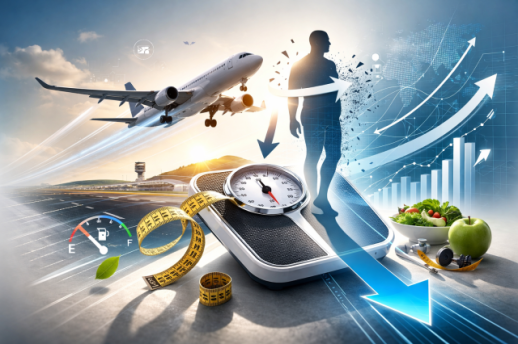 Small Weight Changes Can Signal Bigger Health Shifts, Experts Say Early this year, U.S. investment bank Jefferies said major U.S. airlines could save as much as $580 million (about 8.255 trillion won) in fuel costs this year. The analysis linked the savings to the surge in glucagon-like peptide-1 (GLP-1) obesity drugs, saying lower average passenger weight could reduce takeoff weight and improve fuel efficiency. The report estimated that a 10% drop in average passenger weight could cut fuel costs by up to 1.5%. For airlines, it is an unexpected benefit. In 2018, United Airlines saved about $290,000 (about 412.69 million won) a year in fuel by printing its in-flight magazine on lighter paper. Before that, it pursued weight cuts down to the gram, even removing a single olive from a salad. Now passenger weight loss has emerged as a new variable. The same principle applies to the human body: small changes can drive measurable effects. Weight is often treated as a simple marker of dieting success, but even a 1 to 2 kilogram shift can prompt sensitive responses across body systems. Understanding how the body detects small weight changes can support more precise health management. Blood pressure is a clear example. In obese patients with hypertension, losing 1 kilogram is associated with a 1.6 mmHg drop in systolic blood pressure and a 1.3 mmHg drop in diastolic pressure. The numbers may look small, but for people with hypertension they can be meaningful enough to affect medication dosing and cardiovascular risk. Joints also respond quickly. A 1-kilogram weight gain adds 3 to 4 kilograms of load to the knee joint, helping explain why stair climbing can worsen pain. Conversely, many people say their knees feel noticeably better after losing just 2 to 3 kilograms. Sleep quality can be sensitive as well. Snoring and sleep apnea are linked to excess fat around the neck, which can press on the airway and interfere with breathing. With a 1-kilogram weight loss, the respiratory disturbance index, or RDI, tends to fall by about 0.5 to 1 event. As aircraft fuel efficiency reacts to small shifts in weight, the body’s functions also move in tandem with modest weight changes. Metabolic function can respond especially fast, and small adjustments in weight may improve blood sugar and inflammation levels over a short period. Medical research has recently drawn attention to “metabolic age” as an indicator used to gauge healthy lifespan and aging. Even without formal testing, it can be inferred through indirect signals. A larger waistline (90 centimeters for men, 85 centimeters for women), higher fasting blood sugar (100 mg/dL) and rising triglycerides are commonly cited signs that metabolic stress is building. Kim Jeong-eun, director of the 365mc Fat Stem Cell Center and a family medicine specialist, said a higher metabolic age suggests the body is gradually losing efficiency in burning energy. “When metabolic function declines, you can gain weight more easily even with the same food, and recovery from fatigue can be slower,” Kim said. Experts say close observation of physical changes is central to health management, and that improving daily habits is key to keeping metabolism “younger.” Basic steps include cutting back on simple sugars and refined carbohydrates that rapidly raise blood sugar, and eating enough protein to prevent muscle loss. A vegetable-centered diet that includes berries, dark leafy vegetables and omega-3 fats can reduce inflammation and help stabilize metabolism. Kim said not only what people eat but also the order matters. Kim recommended eating vegetables slowly for about five minutes just before or at the start of a meal, then moving to protein. That sequence, Kim said, can promote the release of hormones that increase fullness and help control overall intake. Exercise is most effective when it combines strength training and aerobic activity. Lower-body strength exercises such as squats, lunges and deadlifts stimulate large muscle groups and can help improve metabolism. Doing 100 to 150 minutes a week of aerobic exercise such as brisk walking or running, two to three times a week, can support steadier blood sugar and fat burning. Kim said that for people with diabetes or those who need blood sugar control, light walking within 30 minutes after a meal is especially effective because it helps muscles use glucose. 2026-02-26 17:18:58
 -
 Galaxy S26: a phone with "nunchi" – and a price to match SEOUL, February 26 (AJP) - “Nunchi” is one of those Korean words that resists direct translation. It refers to a kind of social intuition — the ability to read the ambience, anticipate needs, and move before being asked. Those who lack it are considered daft; those who possess it are quick, nimble, perceptive. With the new Samsung Galaxy S26, Samsung Electronics is attempting to embed that instinct into hardware. After nearly three decades of phone-making, Samsung’s latest flagship is framed less as a device that waits for commands and more as one that anticipates them — an invisible hand moving ahead of its user. “Now Nudge”: AI that steps in While texting a friend to set up plans, the phone’s “Now Nudge” feature quietly cross-checks the calendar and surfaces a reminder about a conflicting appointment. No separate query required. Even Bixby has grown more agile. “My eyes are tired — how should I change the settings?” Instead of directing users to menus, the assistant applies “Eye Comfort Shield” directly within the chat interface, eliminating the friction of navigation. The aim is compression: fewer taps, fewer searches, fewer interruptions. Privacy, built in If anticipation is one pillar, privacy is the other. For Seoul’s tightly packed subway commuters, the standout feature may be “Privacy Display,” available exclusively on the Samsung Galaxy S26 Ultra. Unlike aftermarket privacy films, the Ultra integrates the technology at the display-panel level, diffusing light pixel by pixel. Activated through the quick panel, the screen remains clear to the user while appearing black from side angles — top, bottom, left, and right. Security has also been upgraded. An AI-driven “Call Screening” function answers unknown numbers on the user’s behalf, summarizes the caller’s intent in real time, and analyzes live conversations to flag potential voice-phishing attempts. Visual AI: Circle to Search evolves Visual AI — bypassing even voice and text — continues to expand. Samsung’s upgraded “Circle to Search” recognizes multiple elements simultaneously. Draw a circle around a celebrity’s outfit — top, pants, and bag — and the phone retrieves shopping results for all items at once. What once required multiple searches is compressed into a single gesture. The camera as canvas In the AI era, cameras are no longer confined to capturing reality. With the upgraded “Photo Assist” tool, users can select a full-body photo, choose a jacket saved in the gallery, and type: “Put these clothes on me.” The AI image signal processor (ISP) modifies the wardrobe seamlessly, preserving a history log that allows edits and reversions without creating duplicate files. Daytime photos can also be transformed into nighttime scenes with natural lighting adjustments — turning static images into editable environments. Comforts come at a cost Automation, however, carries a premium. Powered by Qualcomm’s Snapdragon 8 Elite Gen 5 for Galaxy, the S26 lineup enters new pricing territory. The base Galaxy S26 starts at 1,254,000 won (about $940). The Galaxy S26 Ultra begins at 1,797,400 won. The 512GB Ultra model surpasses the two-million-won threshold for the first time in the series, priced at 2,050,400 won. The question now is not whether the phone is capable. It is whether users — particularly younger consumers — will view AI-driven anticipation as liberation from friction or as an over-eager assistant that intrudes too often. Samsung has given its phone nunchi. Whether consumers welcome that instinct — and pay for it — will determine whether anticipation becomes the next default in the smartphone era. 2026-02-26 17:08:06
 -
 KB Kookmin Bank Expands Senior Programs, Blending Culture and Wealth Management As South Korea’s population ages rapidly, banks are intensifying competition for senior customers, expanding beyond financial advice into tailored services that combine wealth management with cultural and educational programs. The financial industry said on the 26th that KB Kookmin Bank is significantly expanding senior-focused programs this year to strengthen customer engagement. The bank is moving away from a consultation-only approach, pairing cultural experiences with locally focused seminars to build a long-term customer base. Kookmin Bank’s Golden Life Division revamped its senior lineup under this year’s theme of “transition and expansion.” It is widening Golden Class — seminars covering financial and nonfinancial topics — from a Seoul-centered operation to regional cities such as Busan and Daegu, and has newly introduced Golden Days, a culture-based invitation program. The bank aims to link senior community-building to expanded wealth management over time. On the 25th, the bank held the first Golden Days event, inviting about 1,180 long-term preferred customers age 50 and older to watch “Life of Pi.” Kookmin Bank rented the entire GS Arts Center for the event, and demand was strong, with a reported competition rate of about 244 to 1. Kookmin Bank said it plans to run Golden Days as a regular program rather than a one-off event and develop it into a senior brand, including “Golden Life of You” and “Life with KB Kookmin Bank.” From March through September, it plans small-group dining events, book clubs and talk shows, and in November it plans a concert inviting about 1,000 people. Starting on the 27th, the bank will hold Golden Class senior wealth management seminars in major regions including Daejeon, Busan, Daegu and Gwangju. Topics will range from using digital financial services to inheritance and gifting, managing retirement assets, nursing and caregiving, and health management. The bank plans to broaden invitations beyond bank customers to include clients of its nonlife insurance and life affiliates, operating the effort as a groupwide integrated customer-management model. Lectures will also be open to local residents to attract potential customers. Banks’ focus on the senior market reflects the rapid growth in older adults’ assets. Those assets are estimated to have nearly quadrupled from about 1,172 trillion won in 2011, when related statistics began to be compiled. Kookmin Bank said customers age 50 and older account for nearly 48.4% of its total customer base, and demand for retirement-asset management is rising. The bank also cited the potential to expand wealth management fees and other noninterest income through long-term management of senior customers’ assets. Kookmin Bank operates 18 Golden Life Centers and is expanding related products, including testamentary substitute trusts. As demand grows for comprehensive advice spanning pension tax strategies, inheritance and gifting, housing, nursing and caregiving, and cash-flow management, the bank’s senior-focused services are widening. The financial industry expects competition for senior customers to intensify further. With slower growth and older adults emerging as a core customer group with relatively stable assets, financial services are expected to keep expanding beyond investment into daily living, caregiving and cultural offerings. 2026-02-26 16:45:00
 -
 Samsung Electronics becomes first South Korean company to hit $1 trillion market cap SEOUL, February 26 (AJP) - Samsung Electronics has become the first South Korean company to reach a market capitalization of over US$1 trillion. As of Thursday's market close, Samsung Electronics' market value was tallied at $1.03 trillion. Only 13 companies worldwide have market caps of $1 trillion or more. The milestone lifted the electronics giant to No. 12 globally in terms of market value, surpassing supermarket chain Walmart and pharmaceutical company Eli Lilly. In Asia, it ranks third behind TSMC (No. 6) and Saudi Aramco (No. 7). Shares of Samsung Electronics surged 7.13 percent or 14,500 won from the previous session to close at 218,000 won, pushing its global ranking up two spots to No. 12 in a single day. The rise appeared to be buoyed by earlier news that Nvidia reported a record fourth-quarter revenue of $68.13 billion. Meanwhile, domestic rival SK hynix's market cap stood at $532.2 billion, ranking No. 21 globally. 2026-02-26 16:40:02
 -
 42dot CEO Park Min-woo Vows to Help Hyundai Motor Group Lead Mobility Industry Park Min-woo, the newly appointed head of Hyundai Motor Group’s Advanced Vehicle Platform (AVP) division and CEO of 42dot, moved to strengthen internal cohesion and communication with employees. At an all-hands meeting with 42dot staff on the morning of the 26th at the company’s Pangyo headquarters in Seongnam, Gyeonggi Province, Park said he would help Hyundai Motor Group “establish itself as a leading company in the mobility industry” by building on 42dot’s potential. Park was also reported to have outlined the company’s direction, stressing technology development from the customer’s perspective and creating synergies through closer cooperation with Hyundai Motor Group’s AVP division. He also handed out rice cakes and “Dujjonku,” described as Dubai-style chewy cookies, as commemorative gifts to employees. Park, an autonomous driving technology specialist who previously worked at Nvidia and Tesla, is seen as a key figure to drive Hyundai Motor Group’s software-defined vehicle (SDV) and physical AI strategies. While at Tesla, he took part in developing Autopilot, the company’s driver-assistance software. At Nvidia, he was considered one of a small number of executives who communicated directly with CEO Jensen Huang.* This article has been translated by AI. 2026-02-26 16:34:58
 -
 Monk Seonjae Demonstrates Pine Nut Noodles, Calling Food ‘Medicine’ Biting into a round dumpling, a crisp cucumber aroma spread across the palate, bringing a fresh lift after a winter of heavy air and fine dust. A hands-on event where participants made and tasted Monk Seonjae’s pine nut noodles — praised by chef Ahn Sung-jae on Netflix’s variety show “Culinary Class Wars” — was held Feb. 26 at the Korean Temple Food Culture Experience Center in Seoul’s Jongno district. Hosted by the Korean Buddhist Cultural Heritage Foundation, the event featured Seonjae, known for popularizing temple cuisine, demonstrating how to make “Seungso” pine nut noodles. She toasted pine nuts in a pan, finely chopped them and blended them with water to make the broth. She kneaded flour dough with blanched zucchini and spinach, then pulled thin noodles. She also ground cucumber, mixed it with starch and shaped small, round dumplings. Thinly sliced cucumber and Korean melon, lightly salted, were added as garnish. “Seungso” (僧笑) refers to a dish tasty enough to make a monk smile. The noodles highlighted the ingredients’ natural color and fragrance, with pine nuts complemented by the clean scent of cucumber and Korean melon for a mild, refreshing finish. Journalists attending the session split into four teams of four to five people and followed Seonjae’s recipe, pulling noodles and shaping dumplings by hand. Seonjae repeatedly emphasized that “food is medicine,” saying the hardest part of cooking is deciding who will eat it. “You have to make food that fits that person — food that becomes medicine,” she said. “The scriptures say all food is medicine. People usually call seasonings ‘flavoring,’ but in Buddhism it’s the idea of adding taste and medicine. It’s not food that only tastes good; it should suit the person’s palate and be good for the body.” She said thinking, taste and the body are connected. “Your taste changes when your thinking changes,” she said. “When your taste changes, your body changes. To avoid wasting food, you have to think of it as precious.” Seonjae said visitors who want to eat her cooking must come one to two hours before mealtime. “You have to make the food together,” she said. “You need to know what went into it to understand its value.” She also urged ingredients that align with Buddhism’s view of life. “You can only become healthy by eating ingredients that respect nature’s life — not ones that pollute the soil, water and air,” she said, adding that many people are unfamiliar with ingredients such as bang-a and perilla. “Bang-a makes soybean paste stew sweet and delicious. We need to teach children these things.” Seonjae stressed learning “what is ours” first. “If our children don’t know how to ferment sauces or make kimchi, our culture will disappear,” she said. “Then even our DNA will have to change. We must protect our culture.” The Jogye Order said it plans to intensify efforts to promote temple cuisine. Ilhwa, head of the Korean Buddhist Cultural Heritage Foundation, said at the event that it was meaningful that temple food has recently drawn attention through media as an important cultural phenomenon. The foundation will keep working with countries including France and the United Kingdom to globalize temple cuisine, Ilhwa said. 2026-02-26 16:33:00
 -
 SK Bioscience Wins EU Flu Vaccine Project; VioL Rebrands; HLB Pharma Honored SK Bioscience wins European flu vaccine project SK Bioscience said Feb. 26 it was selected, with its German unit IDT, for a first-phase assignment under a next-generation vaccine development initiative run by the European Commission’s Health and Digital Executive Agency, or HaDEA, under a mandate from the European Health Emergency Preparedness and Response Authority, or HERA. The companies will join Australian vaccine platform firm Vaxxas in a three-party consortium to develop patch-based vaccines for seasonal influenza for older adults and pandemic influenza (avian influenza) for all age groups. It is the first time SK Bioscience has won a project from European health authorities, the company said. HaDEA will provide a total of 12.9 million euros (about 22.2 billion won) for first-phase research, including a Phase 1 clinical trial. Depending on technology validation and clinical results, support could later expand to as much as 225 million euros (about 383.6 billion won), SK Bioscience said. Chief Executive Ahn Jae-yong called it “the first case” in which the combined global network and technical capabilities of SK Bioscience and IDT, following the IDT acquisition, have led to business results. He said the company will continue seeking opportunities to enter Europe with vaccines it develops and strengthen competitiveness through innovative platforms. VioL changes name to ‘VioL Medical’ to sharpen medical-device identity VioL, a maker of energy-based medical devices, said Feb. 26 it has changed its corporate name to VioL Medical. The company said adding “Medical” preserves existing brand assets while making its identity as a specialized medical-device company clearer and signaling its aim to meet global standards. It said it plans to raise market share in key markets in North America, Europe and Asia and strengthen local distribution networks. It also plans to continue expanding investment to advance next-generation energy-based devices and research and development. Founded in 2009, VioL Medical offers microneedle radio-frequency-based medical devices. The company said it has been strengthening its business foundation step by step since being acquired last year by VIG Partners. CEO Lee Eun-cheon said the name change reflects a commitment to create practical value in clinical settings and deliver sustainable growth for partners, customers and investors. He said the company will set a new standard in the global medical market based on differentiated technology and clinical competitiveness. HLB Pharma named one of Korea’s 100 Best Companies to Work For for third straight year HLB Pharma said Feb. 26 it was named to the “2026 Korea’s 100 Best Companies to Work For,” marking its third consecutive year on the list. The awards were presented the previous day at the “2026 24th Korea’s Best Companies to Work For” ceremony. The company said CEO Park Jae-hyung was also named “Most Respected CEO in Korea,” winning for a third straight year. Vice President Kim Man-gyu received the “GPTW Pioneer Award,” and Director Lee Yong-woo, who oversees HR and general affairs, received the “GPTW Innovation Leader Award.” HLB Pharma said it runs a communication program that allows the CEO and new employees to exchange views informally. It also cited a monthly allowance paid to employees’ parents and an early-departure work culture aimed at improving efficiency, as part of efforts to build a workplace that respects family and personal life. Park said the company has steadily pursued workplace-culture innovation based on the belief that sustained growth comes from people. He said HLB Pharma will further strengthen competitiveness by building an environment where employees can take pride in their work and stay engaged.* This article has been translated by AI. 2026-02-26 16:24:18
 -
 Samsung Chairman Lee Jae-yong’s Stock Holdings Near 40 Trillion Won as KOSPI Surges After the KOSPI broke above 6,000 for the first time and then cleared the 6,300 level just one day later, Samsung Electronics Chairman Lee Jae-yong’s stock holdings were valued at nearly 40 trillion won, according to a report. Corporate analysis firm Korea CXO Institute said on the 26th that Lee’s stock valuation totaled 38.7738 trillion won, based on the Feb. 25 closing prices. If treated as a single listed company, that value would rank about 23rd by market capitalization in South Korea. Lee holds shares in seven issues: Samsung Electronics, Samsung C&T, Samsung Life Insurance, Samsung SDS, Samsung E&A, Samsung Fire & Marine Insurance, and Samsung Electronics preferred shares. His Samsung Electronics stake totals 97,414,196 shares. Using a common-share price of 203,500 won per share, that holding alone was valued at 19.8237 trillion won. The institute said Lee’s other major holdings were valued at 12.3840 trillion won in Samsung C&T, 5.1363 trillion won in Samsung Life, and 1.2721 trillion won in Samsung SDS. Hong Ra-hee, honorary director of the Leeum, Samsung Museum of Art, was valued at 17.9336 trillion won in stock holdings. Hotel Shilla President Lee Boo-jin held 16.1991 trillion won, and Samsung C&T President Lee Seo-hyun held 13.9079 trillion won, the report said. Together, the four members of the Samsung family had combined stock holdings valued at 86.8146 trillion won, it said. Hyundai Motor honorary chairman Chung Mong-koo’s stock wealth also topped 10 trillion won, reaching 10.3024 trillion won. Hyundai Motor Chairman Chung Euisun was valued at 9.9973 trillion won, near the 10 trillion won mark. Their combined holdings totaled 20.2998 trillion won, exceeding 20 trillion won, the institute said. The report also listed Celltrion Chairman Seo Jung-jin, valued at 16.7744 trillion won, and Meritz Financial Group Chairman Cho Jung-ho, valued at 13.0492 trillion won, as members of the 10 trillion won stock-wealth club. * This article has been translated by AI. 2026-02-26 16:21:24
 -
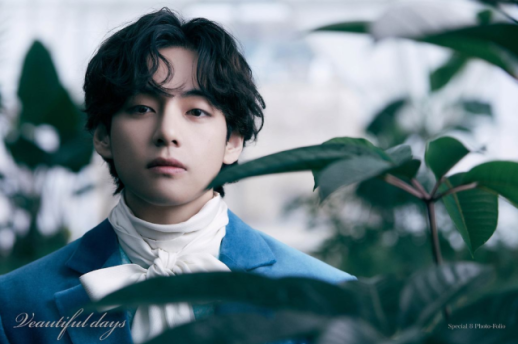 BTS Comeback D-23: V more than a pretty face Editor’s Note — As BTS prepares to return as a full seven-member act with a new album set for March 20 and an open-stage performance at Gwanghwamun on March 21, following a near four-year hiatus for rotational military service, AJP revisits the group’s 13-year trajectory. This series reexamines BTS’s history, music, performance identity and enduring appeal. The seventh installment traces the roots and growth of Jimin. SEOUL, February 26 (AJP) - As of 3:20 p.m. (KST) Thursday, the main trailer for BTS’ “WORLD TOUR ‘ARIRANG’ LIVE VIEWING” had surpassed 484,000 views within 17 hours of release, drawing more than 130,000 likes and 8,000 comments on YouTube. These are not just promotional tallies. They are signals — evidence that global attention around BTS remains not only intact, but active. And within that orbit, V continues to exert a distinct gravitational pull. Born Kim Taehyung on Dec. 30, 1995, in Daegu, V spent his early years between the city and the rural county of Geochang. His entry into entertainment has since become part of BTS lore: accompanying a friend to an audition, he was encouraged by staff to try out himself — and became the only successful candidate from Daegu that year. When BTS debuted in 2013, he was revealed last, earning the nickname “secret weapon.” More than a decade later, that early mystique has matured into something more durable: presence. Magnetism, in V’s case, is not about volume. It is restraint. His deep baritone — warm, slightly husky, almost cinematic — lends emotional weight to BTS’ discography. In an industry often dominated by high-register intensity, his tone anchors songs, adding contrast and depth. A solo identity shaped by texture That sensibility defined his 2023 solo album Layover, a project that leaned into jazz, R&B and vintage soul rather than maximalist pop spectacle. The album debuted at No. 2 on the Billboard 200 and remained on the chart for eight weeks — a performance that suggested sustained engagement beyond first-week momentum. On the Billboard Hot 100, V has recorded multiple solo entries. “Christmas Tree” reached No. 79 in 2022. In 2023, “Love Me Again” debuted at No. 96, while “Slow Dancing” climbed to No. 51 — his highest solo peak. “FRI(END)S” later reached No. 65, followed by “Winter Ahead (with Park Hyo Shin)” at No. 99 and “White Christmas (with Bing Crosby)” at No. 93 in 2024. In the U.K., “Slow Dancing” peaked at No. 24 on the Official Singles Chart, while “FRI(END)S” rose to No. 13 — reinforcing his foothold in one of the world’s most competitive music markets. The pattern is not explosive volatility. It is consistency. Digitally, V’s reach is equally formidable. When he launched his personal Instagram account, he reached 1 million followers in 43 minutes and 10 million in under five hours — benchmarks later recognized by Guinness World Records. Within 16 days, he ranked No. 1 among Korean male celebrities in follower count. As of Feb. 26, 2026, his account stands at 70.33 million followers. Individual posts routinely surpass 10 million — even 20 million — likes, thresholds rarely crossed by entertainers globally. His 2021 “Butter Concept Photo” became one of the fastest posts by a Korean artist to hit 10 million likes. International media have frequently noted his visuals. In 2017, he topped TC Candler’s “100 Most Handsome Faces,” an annual ranking curated by U.S.-based film critic TC Candler and The Independent Critics that has become a recurring fixture in global pop culture discourse. What distinguishes V is duality: understated yet theatrical, playful yet composed. On stadium stages, he projects scale. In quieter moments — live broadcasts, interviews, impromptu gestures — he cultivates intimacy. The contrast feels intentional rather than accidental. In an industry defined by acceleration and constant reinvention, V’s trajectory suggests a different model: evolve without urgency, command attention without overt exertion. As BTS approaches its “ARIRANG” comeback moment, the rising digital metrics tell a familiar story. The fascination surrounding V has not faded. If anything, it has deepened — quieter, steadier, and no less powerful. The next installment will focus on Jungkook. 2026-02-26 16:18:07
 -
 South Korea holds live-fire drill on border islands SEOUL, February 26 (AJP) - This year's first maritime live-fire drill was conducted in waters off the West Sea, the Marine Corps said on Thursday. The drill, which involved K9 self-propelled howitzers, took place on the northernmost islands of Baeknyeong and Yeonpyeong near the Northern Limit Line (NLL), the de facto maritime border between the two Koreas. Calling it a "routine, annual and defensive" drill, the Marine Corps said about 190 rounds were fired. The maritime drill, typically held three to four times a year, was halted under the 2018 inter-Korean military pact as part of efforts to ease military tensions between the two Koreas. But it resumed in June 2024 in response to a series of North Korean provocations including its bizarre campaign of sending trash-filled balloons toward the South. Four such drills were held last year. 2026-02-26 16:09:53