
Journalist

AJP
-
 Toyota Korea Holds Awards for 19th Dream Car Art Contest National Qualifier Toyota Korea said Wednesday it held an awards ceremony Feb. 25 at the CONNECT TO cultural complex for the national qualifier of the 19th Toyota Dream Car Art Contest. The Toyota Dream Car Art Contest is the automaker’s global social contribution program that invites children worldwide to freely depict their “Your Dream Car.” The Korean qualifier drew a record 3,396 entries this year, Toyota Korea said. Judging was conducted in three age groups: under 8, ages 8-11, and ages 12-15. Entries were evaluated on message delivery, originality and artistic quality, with 59 works selected as final winners. Nine gold, silver and bronze winners across the three divisions received certificates and prizes and advanced automatically to the global final, the World Contest. Winners also received one-of-a-kind keepsakes, including a snow globe trophy featuring their artwork and a custom calendar. Toyota Korea ran the ceremony as a brand experience program for customers. The 59 winning works were displayed at CONNECT TO for about two weeks starting Feb. 13, and videos of the artworks were shown on in-store digital screens, the company said. The venue also offered hands-on programs for award recipients, including a World Rally Championship-themed RC car experience, an LED mood light-making activity, and a guided Toyota Gazoo Racing tour highlighting the company’s philosophy of “making ever-better cars through motorsports.” Kim Hyeongjun, a director at Toyota Korea, said the contest was meaningful because it connected children’s imagination with Toyota’s values of individuality and diversity. He said the company will continue to support Korean children’s dreams and communicate with future generations as a brand that respects individuality beyond mobility. The winning works can be viewed on Toyota Korea’s official website.* This article has been translated by AI. 2026-02-26 16:03:41
 -
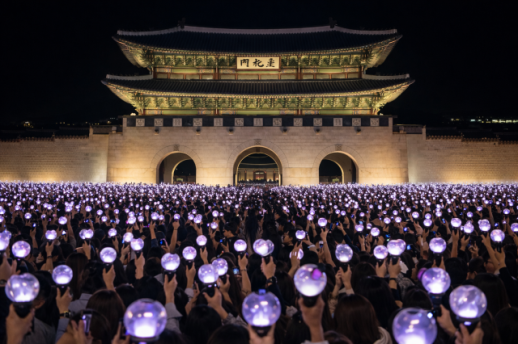 BTS Comeback D-23: When free meets the resale machine SEOUL, February 26 (AJP) - Standing, A-4 section, seat 3n. +15.” A Wednesday search for “BTS Gwanghwamun” on X did not just surface fan updates. It revealed a marketplace. The shorthand “+15” meant 150,000 won ($105.5) — for a ticket whose official price is zero. Dozens of similar posts appeared within hours, some already stamped “transfer completed.” The event in question — BTS Comeback Live: ARIRANG — is scheduled for March 21 at 8 p.m. at Gwanghwamun Square, a civic landmark more commonly associated with candlelight protests and World Cup gatherings than pop spectacles. Within 14 minutes of ticketing opening at 8 p.m. on Feb. 23, resale posts began circulating. To enter the resale ecosystem, one must first learn its dialect. “+10.” “Foreign OK.” “All verification possible.” Sellers frequently mention “a-om,” shorthand for account transfer. The method involves canceling a reservation during low-traffic hours so a buyer can attempt an immediate rebooking. The maneuver carries obvious risk: once released, tickets can be captured by bots or competing users. Another term, “pal-om,” refers to transferring the wristband distributed after identity verification at the venue. Though designed as a safeguard, social media accounts openly advertise wristband transfer “reservations,” typically charging around 10,000 won upfront, promising refunds if unsuccessful. Beyond individuals, a parallel micro-economy appears to be forming. Some accounts claim more than 3,000 successful wristband transfers and advertise “99.8% success rates.” Others promote real-time cancellation monitoring, offering to secure newly released tickets for a 10,000 won deposit and an additional 40,000 won upon success. These figures are self-reported and cannot be independently verified. But they reveal how resale services brand themselves: efficient, data-driven, near-guaranteed. Some accounts list multiple adjacent seats despite one-ticket-per-person rules, suggesting resale activity has in some cases evolved into semi-organized brokerage operating alongside official systems. Police have requested removal of at least 34 posts related to proxy purchasing or suspected scams. Major resale platform TicketBay has banned listings for the event. Yet most transactions unfold on decentralized social media channels, where enforcement is uneven at best. Not uniquely Seoul Ticket resale frenzies are hardly confined to Korea. When Taylor Swift launched her 2022 Eras Tour, 3.5 million fans registered for Ticketmaster’s Verified Fan presale in the United States. When tickets went live on Nov. 15, the system crashed within an hour amid surging traffic, though 2.4 million tickets were sold in a single day. Original prices ranged from $49 to $499, with VIP packages up to $899. Resale listings later climbed as high as $3,800. The backlash triggered congressional scrutiny of Live Nation, Ticketmaster’s parent company, over antitrust concerns. Seoul’s case differs in one essential respect: the face value was zero. According to the Korea Creative Content Agency, scalping cases surged from 359 in 2020 to 4,224 in 2022 as live events resumed after the pandemic. Following the launch of an integrated reporting portal in 2021, reported cases declined to 2,224 in 2024 and 1,649 in 2025. Authorities continue to warn fans against purchasing overpriced resale tickets, citing fraud risks. But private transactions conducted through messaging apps and encrypted social media channels remain difficult to police comprehensively. Some artists have experimented with aggressive countermeasures. Singer Jang Beom-june canceled an entire concert booking in 2024 after evidence of resale prices reaching six times face value. He later tested NFT-based tickets and dynamic QR codes that refresh periodically to prevent screenshot fraud. Such measures reflect a broader industry acknowledgment: traditional ticketing controls struggle in an era of instantaneous digital arbitrage. A civic square, a commercial logic Gwanghwamun Square is not merely a venue. It is a symbolic public commons capable of hosting tens of thousands — a stage for democratic mobilization and national celebration. By staging a free comeback concert there, organizers signaled a shared civic moment. Yet digital marketplaces obey a different logic. When demand is global and supply is finite, even zero acquires a shadow price. “I love musicals, so I buy tickets quite often,” said a 32-year-old Seoul resident who asked not to be named. “I don’t think resale is entirely bad. Some people simply can’t log in at the exact ticketing time because they’re at work.” She added: “Extreme markups feel uncomfortable. But if someone secured a ticket on my behalf, I can understand paying a premium. If both sides agree, I don’t see it as inherently wrong.” In the age of global fandom, free is no longer free. 2026-02-26 15:58:59
 -
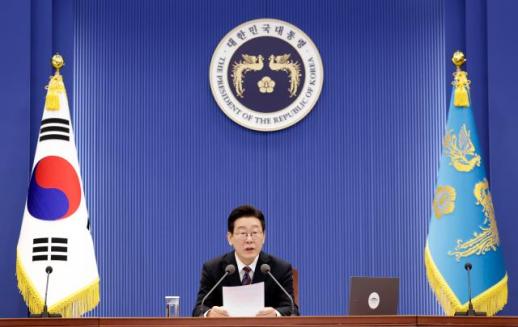 President Lee Jae Myung urges patience in building trust with North Korea SEOUL, February 26 (AJP) - South Korean President Lee Jae Myung stated Thursday that long-standing hostility between the two Koreas cannot be erased with a single measure, responding to North Korean leader Kim Jong-un's speech from a day ago, which characterized Seoul's outreach as a "deception." During a meeting with senior secretaries at the presidential office, President Lee addressed Kim's report at the 9th Congress of the Workers' Party, in which the North Korean leader ruled out further dialogue. President Lee emphasized that trust must be built gradually through persistent effort, eventually leading to a state of mutual understanding and empathy. "Hostile feelings and a mindset of confrontation that have accumulated over a long time cannot be eliminated in an instant through one breakthrough measure," President Lee said. The president's remarks come at a time of deep division within South Korean politics regarding North Korea's policy. While critics have labeled the administration's conciliatory tone as a submissive stance, President Lee argued that the country must move past a history that "rushed toward confrontation and war." He questioned whether previous "insulting or threatening acts" toward the North had effectively protected national interests or state security. President Lee's push for engagement follows a significant deterioration in inter-Korean ties during the previous administration of President Yoon Suk Yeol. Under the Yoon government, the 2018 Comprehensive Military Agreement was suspended, and Pyongyang officially designated South Korea as its "primary foe." President Lee, who assumed office in 2025, has attempted to pivot back toward the de-escalation strategies seen during the Moon Jae-in era, though Pyongyang has so far remained unreceptive. President Lee noted that the process of reconciliation would not be immediate, citing a Korean proverb that one cannot be full with the first spoonful of rice. He stressed that the administration would focus on its own efforts to build trust rather than blaming the other side for the current stalemate. The administration remains committed to seeking communication and cooperation to establish what President Lee described as "structural peace and stability" on the Korean Peninsula. President Lee concluded that consistent effort is the only way to overcome the "hostile two-state" doctrine recently codified by the North. 2026-02-26 15:53:46
 -
 Hanwha Aerospace Ships First Australia-Built AS9 Self-Propelled Howitzers Hanwha Aerospace has shipped AS9 self-propelled howitzers for the first time from its plant in Australia. The AS9 is an Australia-tailored variant of the K9, which holds more than 50% of the global self-propelled howitzer market. The company said on the 26th it held a shipment ceremony at H-ACE in Geelong, Australia, for three AS9 units produced locally. The first Australia-built AS10 ammunition resupply vehicle is also scheduled to leave the plant within the year. Hanwha Aerospace plans to supply the Australian Army with a total of 30 AS9 howitzers and 15 AS10 vehicles. H-ACE, completed in August 2024, is described as Korea’s first overseas production base for the defense industry. Built on a site of about 150,000 square meters, it includes 11 facilities, including a main building, production and assembly areas, a driving test track and a firing range. Hanwha Aerospace said it aims to use the successful operation of the Australian plant to respond more directly to defense demand in the Indo-Pacific, and to use the site as a production base not only for Australia but also for key allied countries. The company also said it will accelerate efforts to target markets tied to AUKUS, a U.S.-Australia-UK security partnership, and the Five Eyes intelligence alliance of the United States, Britain, Canada, Australia and New Zealand. A Hanwha Aerospace official said, “The first shipment of self-propelled howitzers made at an overseas production base means K-defense exports have entered a new stage,” adding, “We will develop the Australian plant into a core production hub for the Indo-Pacific region.” 2026-02-26 15:48:30
 -
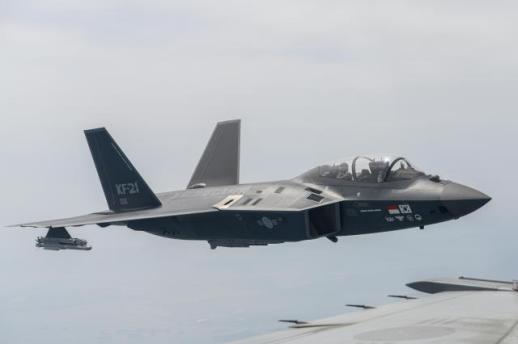 KAI to hold board meeting on new chief amid 'parachuting appointment' controversy SEOUL, February 26 (AJP) - The Korea Aerospace Industries (KAI) is scheduled to hold a board of directors meeting on Thursday to discuss the nomination of a former military official to lead South Korea's aerospace and defense powerhouse. The meeting follows a delay the previous day, when the board postponed tabling the appointment of the new chief executive officer after the company union launched protests against what it termed a "parachuting appointment" from the government. Kim, a former head of the unmanned aerial vehicle division at the Defense Acquisition Program Administration (DAPA), was tapped to lead the company. He graduated from the Air Force Academy and served as an officer for 20 years before joining DAPA as a special recruit. During his tenure at the state arms procurement agency, Kim held various roles including head of defense export support and director of planning and coordination. Kim is expected to bridge his experience in unmanned aerial systems at the Defense Acquisition Program Administration with the strategic goals of South Korea's primary aerospace firm. While at the state arms procurement agency, he oversaw the development and management of drone programs, a sector that KAI is actively expanding as part of its future growth portfolio. His background in defense export support is also viewed as a potential asset for the company as it seeks to market the KF-21 fighter jet and other indigenous platforms to international buyers. The KAI union raised concerns over the transparency of the selection process and Kim's professional suitability. Union officials alleged that the internal recommendation committee was bypassed after narrowing the field to two finalists, with Kim suddenly emerging as the nominee. The union also pointed to Kim's previous experience as an advisor to a presidential campaign as evidence of political influence in the selection. "Internal records show that a candidate recommendation committee was in operation," a KAI union official said. "While the process of narrowing down the candidates to two was underway, a nominee suddenly appeared, bypassing them. If the candidate had come through the normal personnel system, we would have no reason to object." The controversy reflects long-standing friction within KAI regarding the appointment of military officials to top executive posts. While the union stated that military experience itself is not a disqualifier, it argued that previous leaders from the armed forces have struggled to integrate with existing corporate culture and focused excessively on hiring other former military personnel. Union representatives also questioned whether Kim's specific expertise in drones was sufficient to lead the country's primary aerospace manufacturer. Structural issues at KAI contribute to the recurring leadership disputes. Although classified as a private company, its largest shareholder is the state-run Export-Import Bank of Korea, which holds a 26.41 percent stake. This ownership structure allows for significant government influence over management. Historically, seven out of the eight individuals who have served as KAI president came from military or government backgrounds, with only one internal promotion to the top spot. Industry analysts suggest that government intervention is often viewed as a necessity due to the nature of the defense and aerospace sectors. Projects like the KF-21 fighter jet require decades of research and massive capital investment that may not provide immediate commercial returns. Internal assessments suggest that such national strategic projects would be difficult to sustain under a purely profit-driven private management model without state backing. Despite the current friction, industry observers expect the appointment process to proceed ahead of the annual general shareholders' meeting scheduled for March 26. To meet this timeline, KAI would need to finalize the nomination through Thursday's proceedings or a subsequent provisional board meeting to officially name Kim as a candidate for the internal board of directors. The incoming chief executive will face immediate pressure to validate the appointment through tangible results. Key tasks include the successful deployment of the KF-21 to the South Korean Air Force and securing new international export contracts. Observers noted that achieving these milestones will be essential for the new leadership to overcome political controversy and rebuild trust with the internal workforce. 2026-02-26 15:32:23
 -
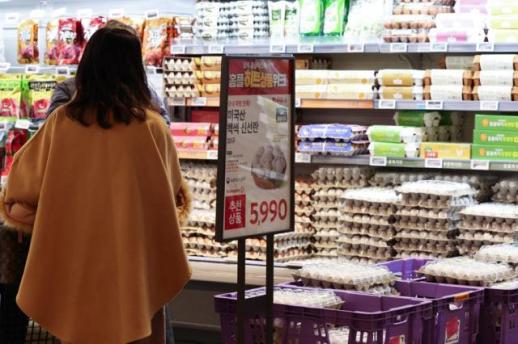 Household spending shrinks amid soaring inflation SEOUL, February 26 (AJP) - Consumer spending fell last year for the first time since the coronavirus pandemic, as high inflation led consumers to tighten their wallets, the Ministry of Data and Statistics said on Thursday. Spending dropped sharply on areas related to quality of life, such as clothing and recreational activities. Education-related expenditures also fell amid a shrinking school-age population. According to the ministry, the average monthly household spending was 2.94 million Korean won, up 1.7 percent from a year earlier, but real consumption, adjusted for inflation, actually fell 0.4 percent. By category, households appeared to prioritize essentials while cutting back on discretionary spending, with declines most pronounced in household goods and services (-6.1 percent), food and beverages (-1.1 percent), and clothing (-2.1 percent). Spending on recreational and leisure activities including travel and books, as well as indulgences like tobacco and alcohol, also declined. Notably, in a country where parents are highly enthusiastic about academic achievement, spending on children's education fell 4.9 percent. The ministry attributed the decline to rising costs of private crammers, with the shrinking school-age population also playing a role. Consumption weakened among most middle-income households. Spending among the top 20 percent of earners rose 6.1 percent, while spending in lower income brackets declined. "The decline in education spending appears to reflect a shrinking school-age population, resulting in the overall drop in consumption," said Seo Ji-hyun, a ministry official. 2026-02-26 15:28:49
 -
 Korean Air, UK’s Skyports to Co-Develop eVTOL Integrated Operations Platform Korean Air said on the 26th it has partnered with UK advanced air mobility infrastructure firm Skyports Infrastructure to jointly develop an integrated operations platform for electric vertical takeoff and landing aircraft, or eVTOLs, for urban air mobility. The two companies signed a memorandum of understanding that afternoon at the Drone Show Korea (DSK) 2026 event at BEXCO in Busan, the airline said. Attendees at the signing included Kim Gyeong-nam, head of Korean Air’s Aircraft Technology Research Institute, and Ankit Das, Skyports’ chief technology officer, among other officials. eVTOL aircraft use electric power to take off and land vertically without a runway. Korean Air said they are considered suitable for future air transport, including urban operations, because they are more than 100 times quieter than helicopters. Under the partnership, the companies plan to combine Korean Air’s integrated control system, ACROSS — specialized in flight and traffic management for advanced air mobility — with Skyports’ VAS, which focuses on vertiport operations. They aim to develop a platform that oversees the full process, from a passenger’s arrival at a vertiport through boarding, arrival at the destination and passing through security screening. A Korean Air official said smooth service delivery is becoming increasingly important for advanced air mobility and other low-altitude air traffic management, adding that cooperation with Skyports, described as a global leader in vertiport design and operations, is significant. 2026-02-26 15:27:17
 -
 Korea's battery makers forge lithium alliance to counter China's grip SEOUL, February 26 (AJP) - POSCO Group and SK On have sealed a long-term lithium supply deal worth up to 25,000 tons through 2028, in the latest sign that South Korean battery players are locking arms to build a domestic supply chain capable of challenging China's stranglehold on the global battery market. Under the agreement announced Wednesday, POSCO Argentina will ship lithium extracted from the Salar del Hombre Muerto salt flat in Argentina's Salta province to SK On's electric vehicle battery projects in Europe and North America. The volume is enough to produce batteries for about 400,000 EVs, and SK On is also exploring the use of the material in energy storage systems. The deal marks POSCO's largest lithium supply contract since it launched commercial production in Argentina in 2024. POSCO Group Chairman Jang In-hwa recently outlined a vision to elevate battery materials, LNG, energy and recycling as the group's "Next Core" business pillars. For SK On, the contract bolsters a "de-China" lithium procurement strategy at a time when the raw material accounts for about 40 percent of cathode costs - the single most expensive component in a battery cell. The partnership arrives after a bruising 2025 for South Korea's battery sector. The combined value of terminated contracts in the final months of last year exceeded 17 trillion won ($11.9 billion). Ford Motor scrapped a 9.6 trillion won deal with LG Energy Solution in December, while SK On itself dissolved its BlueOval joint venture with Ford, splitting control of three gigafactories. The combined global EV battery usage of LG Energy Solution, SK On and Samsung SDI slid to about 15.4 percent during of 2025, down 3.3 percentage points year-on-year, according to SNE Research. China's CATL alone commanded 39.2 percent, while BYD held 16.4 percent - meaning a single Chinese automaker-battery maker now outsells all three Korean producers combined. A government-backed study released Tuesday by the Korea Institute for Industrial Economics and Trade reinforced the urgency. The report found that South Korea has fallen behind China across most next-generation industries, including batteries, where Chinese firms have achieved localization rates exceeding 90 percent across raw materials, components and equipment. "Competition between Korea and China has now shifted from simple catch-up to structural rivalry," said Cho Eun-kyo, head of KIET's China analysis team. "China has built integrated industrial systems that Korea is struggling to match." The POSCO-SK On lithium deal is part of a broader wave of domestic collaboration. In August last year, Hyundai Motor, Kia and all three Korean battery makers signed a memorandum of understanding to jointly develop EV battery safety technologies, including shared patents and fire prevention systems - the first time a Korean automaker and its domestic cell suppliers had pooled resources on safety. "The global EV battery market is a competition between countries, and the way we can survive it is cooperation - going beyond competition," LG Energy Solution CEO Kim Dong-myung said at the signing ceremony. Later in December, Samsung SDI struck a deal with automaker KGM to co-develop battery pack systems based on its 46-millimeter cylindrical cells. The partnership is notable because KGM had previously relied almost exclusively on BYD and other Chinese suppliers for its passenger EV batteries. On the commercial front, LG Energy Solution secured a cumulative $16 billion worth of battery contracts with Mercedes-Benz over 2024 and 2025, spanning more than 150 gigawatt-hours of next-generation cylindrical cells. Industry sources said the orders were clinched after intense competition with China's CATL and Farasis Energy. The government has also stepped forward, with Seoul moving to back the industry with both money and policy. In January 2025, the government unveiled a plan to channel at least 21 trillion won into eco-friendly vehicles and batteries, with 7.9 trillion won earmarked for the secondary battery sector - a 31.7 percent increase from the previous year. In November, it announced an additional 280 billion won over four years for next-generation battery technologies including all-solid-state and lithium-sulfur cells. How effective Korean battery solidarity can play to challenge China's dominance remains an open question. Chinese manufacturers control more than 90 percent of the global ESS market and have built end-to-end supply chains that Korean firms are still assembling piece by piece. But the flurry of domestic alliances signals a strategic recalibration that the industry's survival depends on collective, rather than solitary, strength. 2026-02-26 15:26:01
 -
 BOK seen on extended hold as financial risks resurface SEOUL, February 26 (AJP) - Financial stability concerns have re-emerged as the decisive variable in South Korea’s monetary policy outlook this year as inflation and economic growth return to target range. The Bank of Korea’s Monetary Policy Board on Thursday unanimously kept the benchmark rate unchanged at 2.5 percent, where it has remained since the May 2025 cut. “With inflation expected to remain stable near the target level, economic growth is projected to improve at a stronger-than-expected pace,” the BOK said in its statement. Governor Rhee Chang-yong in a post-meeting briefing shared the internal concerns over the gap between the overnight policy rate and the three-year government bond yield as “excessive,” saying rates could move higher in the second half should financial imbalances intensify. Markets interpreted the decision as extending the pause rather than preparing for tightening. The three-year government bond yield fell 5.6 basis points to 3.068 percent, while the 10-year yield declined 4.6 basis points to 3.510 percent, reflecting expectations that policy neutrality may last longer than previously thought. Improving macro conditions also lessen the rationale for further easing. The BOK revised up its 2026 growth forecast to 2.0 percent from 1.8 percent projected in November. Consumer price inflation is expected to reach 2.2 percent, broadly in line with last year’s 2.1 percent pace. The projections are consistent with outlooks from the International Monetary Fund and the OECD. If realized, the economy would be running at its estimated potential growth rate after slowing to 1.0 percent in 2025. Notably, the BOK in January removed language referencing further easing from its policy statement — a subtle but meaningful shift in forward guidance. Liquidity and leverage back in focus Thursday’s meeting placed heavy emphasis on excess liquidity and leveraged asset investment, particularly in real estate and equities. Household credit reached 1,978.8 trillion won ($1.38 trillion) in the fourth quarter of last year. Policymakers have repeatedly warned that household loans — especially property-related borrowing — have approached levels that threaten financial stability and must be reduced. The red-hot equity market has added to those concerns. The KOSPI surged 3.1 percent on Thursday, topping 6,200 a day after breaking above the 6,000 milestone, raising renewed debate over asset-price overheating. While the BOK’s six-month dot plot still assigns a higher probability to a rate cut than a hike, it effectively signals prolonged neutrality unless clearer directional signals emerge. What appears to concern policymakers most is the composition of growth. According to the BOK’s Economic Outlook report released Thursday, growth excluding the IT sector is projected at just 1.4 percent within the revised 2.0 percent headline forecast. That compares with the same 1.4 percent non-IT projection when overall growth was previously estimated at 1.8 percent. The data suggests that Korea’s recovery is becoming increasingly dependent on semiconductors and IT exports — a concentration risk that complicates policy normalization. 2026-02-26 15:19:49
 -
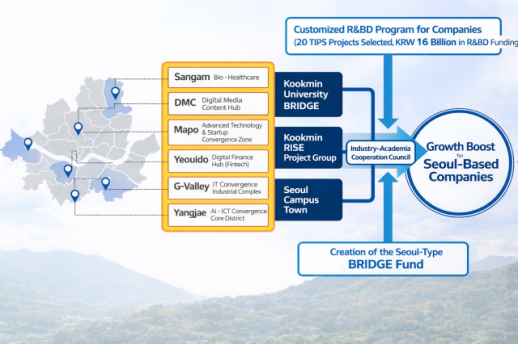 Kookmin University selected for S. Korea's Seoul BRIDGE project to commercialize strategic technologies SEOUL, February 26 (AJP) - Kookmin University announced on Thursday that its Industry-Academic Cooperation Foundation has been selected for the Seoul BRIDGE project. The initiative is a key component of the Regional Innovation System and Education (RISE) framework, a project managed by the Seoul Metropolitan Government to align university research with regional economic needs. Through this selection, Kookmin University will receive 650 million won annually over the next four years, totaling 2.6 billion won in financial support. the university intends to use these funds to commercialize research in five of South Korea's primary strategic sectors: artificial intelligence, bio-health, fintech, robotics, and creative industries. To address the historical gap between campus research and industrial application, the university is forming an industry-academic cooperation council. This group will include researchers, corporate representatives, and field experts to create a steady collaboration pipeline. The goal is to identify technical hurdles faced by startups and small businesses in Seoul and match them with existing university patents or research through a demand-based Research and Business Development (R&BD) system. The university also plans to establish the Seoul BRIDGE Fund. This fund will capture 30 percent of all technology transfer revenue to be reinvested into the program, creating a self-sustaining cycle for future research and development. According to the Seoul Metropolitan Government, Kookmin University was selected based on its strong track record in startup support and technology income. In the most recent JoongAng Ilbo university rankings—a prominent annual evaluation of higher education in South Korea—the school ranked second in industry-academic cooperation income per science professor and first in revenue per startup. These figures reflect the university's transition into a "company-builder" style accelerator that provides investment and post-management support rather than just simple licensing. "The selection for the Seoul BRIDGE project is a turning point that will allow us to connect our research capabilities directly to Seoul's strategic industries," said Son Jin-sik, the head of the Kookmin University Industry-Academic Cooperation Foundation and vice president for planning. "We aim to build a deep-tech startup ecosystem in the northeastern district of Seoul, creating a growth model where the university and the local community thrive together." The program will focus on practical technology applications rather than theoretical research throughout the four-year funding period. 2026-02-26 15:08:07