
Journalist

AJP
-
 FNC Entertainment Tops 100 Billion Won in 2025 Revenue, Posts Third Straight Quarterly Profit FNC Entertainment, or FNC, said on the 27th that its 2025 consolidated revenue totaled 102.4 billion won, while operating results were around break-even, with an operating loss of 200 million won. Revenue rose 16.1 billion won from a year earlier, topping 100 billion won for the first time in eight years since 2017. Operating profit improved by 4.0 billion won from the previous year, reflecting both sales growth and stronger profitability. On a consolidated basis, fourth-quarter revenue was 35.0 billion won and operating profit was 900 million won, extending a streak of operating profit for a third consecutive quarter since the second quarter. On an annual basis, the company said it has improved operating profit by about 3.0 billion to 5.0 billion won each year since 2022. Net loss widened from a year earlier, but the company said the increase was due to valuation losses on derivatives tied to convertible bonds, reflecting a rise in its share price. It said the loss was a non-cash, book entry from revaluing the fair value of conversion rights at the end of the period and was not directly related to operating activities. Chief Executive Officer Kim Yu-sik said the company’s “selection and concentration” strategy and business restructuring, pursued steadily since 2023, have been reflected in results each year and brought performance to around break-even, adding that it expects to enter a “full-fledged profit phase” going forward. Kim said the music business will continue to expand domestic and global fandoms, support the growth of newer artists and strengthen core areas such as albums, concerts and merchandise. He said results from the drama production business are expected to become visible soon, and that the actor management business will also continue efforts to improve profitability through activities including acting and fan meetings. * This article has been translated by AI. 2026-02-26 14:21:16
 -
 Milan Korea House Sets Record Attendance During Winter Olympics The Ministry of Culture, Sports and Tourism said it and the Korean Sport & Olympic Committee operated Korea House in Milan from the 5th to the 22nd around the 2026 Milan-Cortina Winter Olympics, drawing the largest crowd in the program’s history. The ministry said Korea House, opened at Villa Necchi Campiglio in central Milan, drew 32,656 visitors over 18 days, or about 1,800 a day on average. Online reservations for about 1,700 people per day sold out throughout the period, prompting organizers to raise the daily reservation cap to 2,000. Visitors were largely local and international, the ministry said. About three-quarters were Italians. In a satisfaction survey, Italian and English accounted for 95% of response languages, and about 90% of respondents said they were satisfied, citing strong interest in the programs and content. The ministry said Korea House also produced results as a venue for sports diplomacy. For the first time at a Korea House opening event, 13 International Olympic Committee members attended, including IOC Executive Board member Spyros Capralos. Visits continued after the opening, including by IOC Vice President Juan Antonio Samaranch Jr. Officials from international sports federations and national Olympic committees, along with athletes and other figures in international sport, also visited for exchanges and cooperation, the ministry said. Kim Jaeyeol, elected to the IOC Executive Board, attended the opening and other key official events, and IOC Athletes’ Commission member Won Yoonjong held a news conference at Korea House after his election. Korea House also served as a support hub for South Korea’s athletes, the ministry said. It hosted four group cheering events for the national team, including for short track and curling, and ran a visit program for athletes. On the final day, it held a team wrap-up ceremony to mark the close of the competition and recognize athletes’ efforts. Organizers also ran cultural programs aimed at showcasing South Korea, drawing strong interest from visitors. The Korea Tourism Organization and CJ presented a hands-on tourism program under the “K-Dailycation” concept, and 320 people took part in a K-beauty experience over five days. A four-day K-pop cover-dance program drew 600 participants, who learned choreography to songs including those associated with K-pop Demon Hunters and BLACKPINK’s Jennie. A business-to-business tourism event was also held, inviting Italian travel agencies and media. The ministry said it sought to link on-site promotion to the development and sale of future travel products to South Korea. The National Museum Foundation of Korea introduced its “MU:DS” merchandise on site and drew strong interest, the ministry said. During the event, it sold 2,507 items for about 65 million won in revenue. The “magpie-and-tiger” badge, which had also been popular in South Korea amid the K-pop Demon Hunters boom, sold out early. Other items included products featuring motifs such as the gat and mother-of-pearl, along with an Irworobongdo pouch, a moon-jar key ring and items related to the Pensive Bodhisattva. Average daily sales at Korea House were about 3.61 million won, the ministry said. That was about three times the roughly 1.2 million won in average daily MU:DS sales during the Lee Kun-hee Special Exhibition held at the Smithsonian museum in the United States from last November through February. Korean street foods such as hotteok and fish cakes were also popular. Culture Minister Choi Hwi-young visited Korea House on the 7th and sold street food himself to promote Korean food, the ministry said. Hands-on events linking traditional culture to the global popularity of Squid Game and K-pop Demon Hunters also drew attention. Traditional games featured in Squid Game, including ddakji and gonggi, drew an enthusiastic response from local visitors, and Italy’s state broadcaster said “Squid Game was recreated at Villa Necchi Campiglio in Milan.” Trying on hanbok and the gat, which drew worldwide attention through K-pop Demon Hunters, was also among the most popular programs, the ministry said. Choi said, “On the Olympic stage, where the world’s attention is focused, we were able to vividly feel the stature of Korean culture and Korean sports through Korea House.” He added, “At the upcoming 2028 Los Angeles Summer Olympics, we will operate a Korea House where the appeal of K-sports and K-culture comes together, based on this experience and these results.”* This article has been translated by AI. 2026-02-26 14:15:36
 -
 Kang Sue-jin to step down as Korea National Ballet director after 12-year tenure Kang Sue-jin, the Korea National Ballet’s seventh director and artistic director, will step down April 4, ending a 12-year term that began with her appointment in 2014. The company said Feb. 26 that after leaving the post, Kang is expected to be hired as a professor at Seoul Cyber University. In a statement released that day, Kang said the past 12 years were “another passionate and happy time” in her life. “I feel nothing but gratitude to the dancers and audiences who trusted and supported me through every moment with the Korea National Ballet,” she said. “Now I am wrapping up my role and turning my steps toward places our society needs.” She added that she hopes her experience can serve as “a small light” for young people pursuing their dreams in underserved regions, and said she will focus on mentoring future generations and giving back for the support she has received as an artist. During her tenure, Kang worked to strengthen the company’s artistic identity, systematize its creation-based foundation and expand its international standing, the company said. It maintained classical ballet traditions while also developing contemporary works and introducing overseas repertoire to build a balanced program. In 2025, the company staged choreographer John Neumeier’s full-length drama ballet “The Camellia Lady” for the first time in Asia, the company said, calling it a milestone for the domestic ballet scene. The production, which requires substantial resources, was cited as evidence the company can handle international-level repertoire. The company also said Kang focused on strengthening its organizational base, gradually increasing the number of company dancers. It expanded the long-stable quota of regular positions by 28.75% — including planned additions in 2026 — to improve job stability. Soon after her 2014 appointment, Kang also renamed the supporters’ group “KNB Society” and reorganized its operating system to institutionalize private sponsorship, the company said. Supporter membership grew from 40 in 2014 to about 100 in 2025, nearly a 2.5-fold increase. Sponsorship revenue rose from about 50 million won in 2014 to about 430 million won in 2025, nearly a tenfold increase, it said. * This article has been translated by AI. 2026-02-26 14:06:20
 -
 Trendy living ideas from Seoul SEOUL, February 26 (AJP) -The 2026 Seoul Living Design Fair opened Wednesday at COEX in southern Seoul, transforming the cavernous exhibition halls into a playground of textures, light and ideas. Now in its 31st year, the country’s largest interior and lifestyle showcase returns under the theme “Sustainable Living and Design.” Organizers say around 450 domestic and international brands have joined this year’s edition — the biggest lineup yet. For five days through March 1, COEX becomes a walk-through mood board of modern living. From sculptural sofas and modular shelving to mood lighting, tactile textiles and next-generation home appliances, every aisle offers a snapshot of how Koreans are reimagining their homes. This year, sustainability is not just a buzzword — it’s the backbone. Recycled woods, bio-based fabrics, low-energy lighting and smart energy systems take center stage. Brands are leaning into warmer palettes, natural finishes and compact, multifunctional designs that reflect urban living realities. Visitors move from minimalist studio setups to cozy, plant-filled living rooms and tech-forward kitchens, exploring spaces that feel both practical and aspirational. The fair captures a shift: homes are no longer just places to live, but carefully curated reflections of values — wellness, efficiency and environmental awareness. Since its launch, the annual fair has evolved into a barometer of Korea’s design culture, where industry insiders scout emerging brands and everyday consumers gather inspiration for their next renovation — or simply their next idea. 2026-02-26 14:04:50
 -
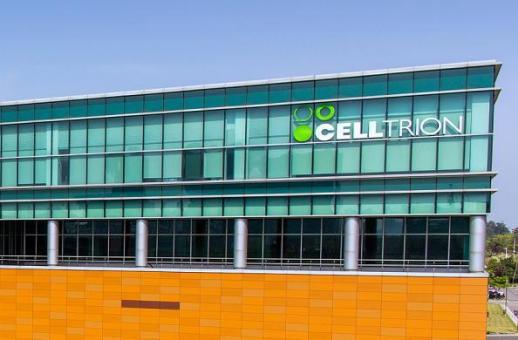 Celltrion ramps up US manufacturing to buffer against tariffs SEOUL, February 26 (AJP) - Biopharmaceutical company Celltrion said Thursday that it has taken steps to ensure its U.S. operations remain uninterrupted amid growing uncertainty over tariffs following a Supreme Court ruling last week. In a statement, Celltrion said it is ready to respond regardless of how tariff-related issues are resolved after the U.S. Supreme Court found U.S. President Donald Trump's sweeping global tariffs policy unlawful. Celltrion, which acquired U.S. drugmaker Eli Lilly's biopharmaceutical manufacturing facility in Branchburg, New Jersey, late last year, said it completed a full inspection and preparations for full operations by the end of January and began manufacturing this month. The company said it has also begun procedures to manufacture its own products locally and plans to build a system linking production with its direct sales network to supply them across the U.S. as soon as possible. Under its phased plans, Celltrion said it will hedge against tariff uncertainty by supplying the U.S. market with products manufactured at its Branchburg plant. 2026-02-26 13:58:08
 -
 KB Financial, Agriculture Ministry to Invest 2.5 Billion Won in Regional Support Programs KB Financial Group said Thursday it signed a memorandum of understanding with the Ministry of Agriculture, Food and Rural Affairs to jointly support local communities, small businesses and young people. The partnership is based on the government’s “5 hubs, 3 special zones” policy and aims to provide locally felt infrastructure and living support aligned with balanced national development. The two sides will pursue three programs as a package — youth support, balanced regional development and small-business support — and provide a total of 2.5 billion won over three years. KB Financial will contribute 300 million won over three years to the “1,000-won breakfast” program, which the ministry is running with local governments and universities. It will also invest 1.6 billion won over three years in rural energy self-sufficient village projects. Solar power facilities will be installed at 12 sites across five regions: two in the central area, three in the southwest, two in Daegu-North Gyeongsang, three in the southeast, and two in the Gangwon-Jeju area. Revenue from the facilities will be used as a community fund. In addition, KB Financial will provide 600 million won over three years for the “Hearty Lunch for Workers” initiative to ease dining costs for employees at regional small and midsize companies and help local restaurants recover sales. The company expects 1.2 million workers to benefit over three years. A KB Financial official said the group will build an integrated model of shared growth spanning youth, regions and small businesses to deliver changes people can feel on the ground, adding that public-private cooperation will strengthen execution and ensure results flow back to local communities.* This article has been translated by AI. 2026-02-26 13:57:00
 -
 Draft Manuscripts of Park Ji-won’s ‘Yeolha Ilgi’ Named Korean National Treasure The Korea Heritage Service said on the 26th it designated a set of draft manuscripts of “Yeolha Ilgi,” a travel account written by Park Ji-won after returning from Qing China in the late Joseon period, as a state-designated cultural heritage treasure. The “Draft Manuscripts of Park Ji-won’s Yeolha Ilgi,” held by Dankook University’s Seok Juseon Memorial Museum, preserves material from the earliest stage of the work’s production. Park (1737-1805) compiled the account after visiting Beijing and other areas, including Rehe. The agency said the manuscripts include an early original text — a book made from the author’s handwritten manuscript — produced after Park’s return from Qing. It said the many copied versions of “Yeolha Ilgi” preserved in Korea and abroad are considered to have been organized on the basis of this original, including the table of contents, order and text. The museum holds 10 types in 20 volumes of draft materials, but the agency said not all are believed to be Park’s own handwritten originals. The collection shows revisions and additions made by his descendants and literary associates. From the 10 types in 20 volumes, the agency designated four types in eight volumes as treasures as Park’s handwritten originals: two volumes of Yeonhaeng Eumcheong (Geon and Gon), which include Western learning-related terms and new content not found in the standard edition; one volume that includes Yeonhaeng Eumcheongrok 4 and Yeonhaeng Eumcheonggi 3, which the agency said reflects the earliest form of the original; four volumes titled Yeolha Ilgi Won, Hyeong, I and Jeong, an original text with a preface and paragraphs; and one volume of Yeolha Piseorok, which contains many passages not included in the standard edition. The agency said the draft set allows researchers to examine both the work’s original form and the process of revision and adaptation by Park and later hands. It said the manuscripts merit treasure status given the work’s influence as a leading Silhak text of the late Joseon period. The Korea Heritage Service also said it designated three other items as treasures: “Amitabha Buddha Preaching,” a Buddhist painting at Hyeondeungsa Temple in Gapyeong; a seated stone Vairocana Buddha at the former Jingusa Temple site in Imsil; and a seated stone triad of Sakyamuni Buddha with associated reliquary items at Sinheungsa Temple in Yangsan.* This article has been translated by AI. 2026-02-26 13:54:18
 -
 Hyundai Rotem CEO Lee Yong-bae elected head of Korea Space Technology Promotion Association The Korea Space Technology Promotion Association said Lee Yong-bae, CEO of Hyundai Rotem, was elected as its new chairman at a general meeting on the 26th. His term is three years. Lee graduated from Jeonju University with a degree in business administration and earned a master’s in business administration from Kyung Hee University. He has held senior planning roles at Hyundai Motor, served as a vice president in charge of planning at Hyundai Wia, and was CEO of Hyundai Motor Securities before becoming CEO of Hyundai Rotem in 2020. Hyundai Rotem has been strengthening its aerospace capabilities, including launching development last year of methane engine technology for the country’s first reusable space launch vehicle. In his inaugural remarks, Lee said he felt a “heavy sense of responsibility” to lead the association at a time when South Korea’s space industry is entering the NewSpace era in earnest. He said he would focus all efforts on building a globally competitive space ecosystem. He said he would pursue three key tasks: expanding government-private cooperation, identifying business models such as boosting investment, and strengthening international cooperation networks so Korean companies can compete in global markets. The association was established in May 2014 to foster the space technology industry. It has 118 member companies, including Hyundai Rotem.* This article has been translated by AI. 2026-02-26 13:45:07
 -
 Park Chan-wook Named Jury President for 79th Cannes Film Festival, a First for a Korean Director Park Chan-wook will serve as jury president for the 79th Cannes Film Festival, the festival’s organizers said. The Cannes organizing committee announced on Feb. 25 (local time) that Park was appointed to lead the competition jury at the festival in May. It is the first time a Korean has been chosen to chair the jury that decides the Palme d’Or winner since Cannes was founded. In a joint statement, Cannes President Iris Knobloch and General Delegate Thierry Fremaux cited Park’s “originality,” “remarkable visual style” and his ability to capture the inner lives of characters with unusual fates. They said they were pleased to honor his talent and to spotlight Korean cinema’s standing as it “grapples deeply with the questions of the times.” Park has a long history with Cannes. He won the Grand Prix in 2004 for “Oldboy,” the Jury Prize in 2009 for “Thirst,” and best director in 2022 for “Decision to Leave.” He also served as a competition juror in 2017, but this will be his first time returning as the panel’s leader. The 79th Cannes Film Festival will be held May 12-23 in the southern French resort city of Cannes. 2026-02-26 13:42:21
 -
 MINI Korea Launches Limited-Run Paul Smith Edition Electric Cooper SE BMW MINI is officially launching a limited-edition electric vehicle in South Korea that combines MINI styling with design elements from British fashion brand Paul Smith. The project is part of MINI’s new “Customization 2.0” strategy, aimed at reflecting customers’ tastes and lifestyles and strengthening the brand’s fan culture. Jeong Su-won, head of BMW MINI Korea, said at a Feb. 26 media event in Seoul’s Yongsan district that MINI entered the Korean market in 2005 with sales of 761 vehicles and has since sold a cumulative 134,103 units through last year — a 176-fold increase. “This year, through Customization 2.0, we will launch new models that actively reflect customers’ lifestyles across six areas — music, art, sports, travel, fashion and tech,” Jeong said. The first model under that push is the all-electric MINI Cooper SE Paul Smith Edition unveiled at the event. The collaboration incorporates Paul Smith’s design philosophy throughout the exterior and interior. The roof, grille, side mirror caps and wheels feature “Nottingham Green,” a signature Paul Smith color, while Paul Smith lettering is engraved on items including the door handles, wheel caps and front and rear design elements. Inside, the seats, dashboard and floor mats use Paul Smith’s 46-stripe signature pattern. When the door opens, a “Hello” projection appears on the ground. The model is offered in three colors: Inspired White, Statement Gray and Midnight Black. The Paul Smith Edition is limited to 100 units in South Korea and has sold out. Jeong said the full allotment was reserved within about a month of preorders opening last month, and the company has placed an order for additional units. “On the back of that support, we decided to add an internal-combustion Paul Smith Edition model around the second half of the year,” he said. He also said MINI plans to introduce 11 models this year that more closely align the brand with owners’ lifestyles. The vehicle uses an electric motor rated at 218 horsepower and 33.7 kg·m of maximum torque, reaching 100 kph from a standstill in 6.7 seconds. It carries a 54.2 kWh high-voltage battery and is rated at 5.3 km/kWh in efficiency. On a single charge, it is certified for 300 kilometers under Korean standards and up to 402 kilometers under the WLTP standard. With fast charging, the battery can be charged from 10% to 80% in about 30 minutes. The price in South Korea is 59.7 million won. With the national EV subsidy (3.96 million won) and local subsidies (9.14 million won, based on Haenam County in South Jeolla Province), the purchase price can fall into the 40 million won range. * This article has been translated by AI. 2026-02-26 13:36:44