
Journalist

AJP
-
 Hyundai Marks Chung Ju-yung’s 25th Anniversary With Tribute Concert in Seoul Hyundai Motor Group marked the 25th anniversary of the death of founder Chung Ju-yung with a memorial concert that highlighted his entrepreneurial spirit through music. The group said it held the “25th Anniversary Concert for the Late Asan Chung Ju-yung, Honorary Chairman of Hyundai Group” on Feb. 25 at the Concert Hall of the Seoul Arts Center. In a tribute, Hyundai Motor Group Chairman Chung Euisun said the event was prepared to honor the lasting “resonance” left by his grandfather. “His convictions and every challenge began with people,” Chung said. “He believed in human potential and achieved innovation for people.” Chung said that while 25 years have passed, the message feels stronger as the group and society face “many difficulties and challenges at home and abroad.” He added, “I will continue to carry on my grandfather’s spirit to build a better future,” pledging to keep pursuing people-centered innovation. About 2,500 people attended, including members of the extended Hyundai family as well as figures from business, politics and culture, the group said. Among those arriving before the program began were HD Hyundai Chairman Chung Ki-sun, Hyundai Commercial President Chung Myung-yi and Hyundai Card Vice Chairman Chung Tae-young. Chung Mong-joon, chairman of the Asan Foundation, briefly told reporters, “Thank you for coming today. My father would also be grateful that you came.” Attendees also included Lotte Group Chairman Shin Dong-bin; Hong Ra-hee, former director of the Leeum Museum of Art; National Assembly Speaker Woo Won-shik; Kim Jong-in, former interim leader of the People Power Party; and lawmaker Na Kyung-won. Actor Yoo Hae-jin and other figures from the arts and entertainment world were also seen. Chung Ju-yung is widely regarded as a leading business figure who helped open new ground in South Korea’s industrial development through bold vision, determination and innovation focused on people. Born the eldest son of a poor farmer, he built his business from nothing, repeatedly taking on challenges that seemed impossible, the group said. The name “Hyundai,” meaning “modern,” reflects Chung’s entrepreneurial drive in the 1940s, when Korea was poor, to pursue modernization so people could live better, the group said. The concert was held under the theme “Continuing Resonance.” Pianists Kim Sunwook, Sunwoo Yekwon, Cho Seong-jin and Lim Yunchan performed, with the program intended to express in music Chung Ju-yung’s achievements in challenging the impossible and the hope those efforts offer to today’s generation. Park Min-seon, 31, of Anyang, Gyeonggi Province, said it was “even more meaningful” because it is rare for four pianists to share one stage. “The repertoire also felt meaningful,” she said. Hyundai Motor Group said it planned the concert to share the founder’s life and philosophy of forging new paths for a better life. To keep the focus on the event’s purpose, tickets were not sold; admission was limited to invited guests, including public-service workers, future talent, key figures from various fields and Hyundai employees, the group said. Attendees received a gift set that included Chung’s autobiography, “Born in This Land,” and an event booklet. A Hyundai Motor Group official said the group’s vision of “Progress for Humanity” is rooted in the founder’s people-centered management philosophy, adding that the company will continue efforts for a more prosperous life and a sustainable future through ongoing innovation. 2026-02-26 10:15:29
 -
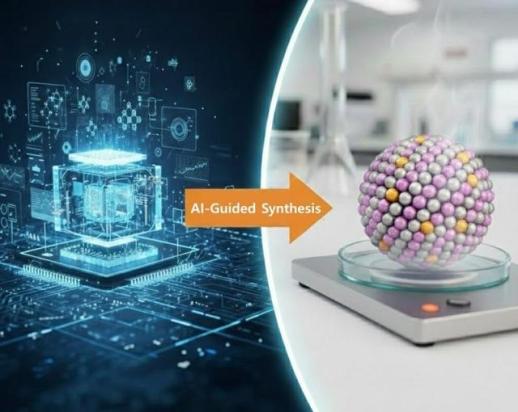 South Korean researchers use AI to design high-efficiency catalysts for hydrogen vehicles SEOUL, February 26 (AJP) - A research team from the Korea Advanced Institute of Science and Technology and Seoul National University has developed a technology that uses artificial intelligence to precisely predict the arrangement of atoms in catalysts. By calculating atomic tendencies before conducting experiments, the researchers identified a way to improve both the performance and durability of the fuel cells that power hydrogen vehicles. Hydrogen fuel cells are often described as the heart of eco-friendly mobility, but they remain expensive and have limited lifespans. Much of this is due to the platinum catalyst, a critical material that generates electricity. Platinum reacts slowly, its performance drops over time, and its high cost drives up the price of hydrogen cars. The South Korean team addressed these issues by using AI to design a more efficient atomic structure for the catalyst. The research focused on platinum-cobalt alloy catalysts. While these alloys are powerful, creating a stable, ordered structure known as an intermetallic compound typically requires extremely high heat. This heating process often causes the tiny particles to clump together or become unstable, which limits their use in real-world fuel cells. To solve this, the team used machine learning simulations to analyze how atoms move and arrange themselves at the atomic level. The AI discovered that introducing a small amount of zinc acts as a mediator. This zinc allows the atoms to settle into their proper positions more easily, creating a more precise and stable structure. In simple terms, the AI found a more efficient path for the atoms to follow, acting like a digital blueprint that was then tested in a laboratory. When the researchers synthesized the zinc-platinum-cobalt catalyst based on these AI predictions, it showed higher activity and better long-term durability than traditional platinum catalysts. This suggests that the AI-guided design can successfully translate from a virtual simulation into a high-performance physical material. The technology is expected to help reduce manufacturing costs and extend the life of fuel cells in various sectors, including passenger cars, long-haul trucks, ships, and energy storage systems. KAIST's Department of Materials Science and Engineering Professor Cho Eun-ae stated that the study used machine learning to predict atomic ordering before realizing it through actual synthesis. She noted that AI-based material design will provide a new paradigm for developing next-generation catalysts. Jang Hyun-woo, a doctoral student at KAIST, and Ryu Jae-hyun, a researcher at Seoul National University (SNU), served as joint first authors for the study. The findings were published in the energy materials journal Advanced Energy Materials on January 15. (Paper information) Journal: Advanced Energy Materials Title: Machine Learning-Guided Design of L1₀-PtCo Intermetallic Catalysts: Zn-Mediated Atomic Ordering DOI: https://doi.org/10.1002/aenm.202505211 2026-02-26 10:07:06
 -
 BOK holds at 2.5% as asset inflation fuels leverage risks SEOUL, February 26 (AJP) - The Bank of Korea (BOK) kept its benchmark interest rate unchanged at 2.5 percent on Thursday, extending a pause that has been in place since May last year, as surging asset prices rekindle concerns over leveraged investing and record-high household debt. The decision at the central bank’s second policy meeting of 2026 was widely expected. In January, the BOK subtly shifted its policy language, removing references that implied further easing and signaling a more cautious stance amid financial stability risks. Behind the hold lies a delicate balancing act. While growth uncertainties persist in an unpredictable global trade environment, domestic liquidity remains ample. Broad money (M2) rose 0.6 percent in December from a year earlier, underscoring a still-expansionary financial backdrop. The pressing concern for policymakers is debt. As of the fourth quarter of last year, household credit reached 1,978.8 trillion won ($1.37 trillion), up 14 trillion won from the previous quarter and edging closer to the symbolic 2,000 trillion won threshold. Despite repeated government measures to curb mortgage lending — the main driver of credit expansion — borrowing momentum has proven resilient. Capital-region housing prices remain heated, even after successive tightening steps. At the same time, equities are staging a historic surge. The KOSPI has soared roughly 42 percent in just the first two months of this year, following a 76 percent jump last year. The pace has drawn a wave of retail investors back into the market — many relying on borrowed funds. Outstanding margin loans climbed sharply from 28.7 trillion won as of Jan. 15 to 31.7 trillion won by Wednesday, reflecting aggressive leveraged positioning. Such dynamics heighten systemic sensitivity. If the Korean won were to weaken sharply again, any acceleration of foreign capital outflows could trigger forced liquidations among leveraged domestic investors, amplifying market volatility. For the moment, exchange-rate risks have moderated. The dollar, which hovered around 1,460 won in January, has retreated to the 1,430-won range in February amid a broader pullback in the U.S. currency. 2026-02-26 09:50:35
 -
 Mercedes-Benz Korea Signs Retail of the Future Deal With 11 Dealers, Launch Set for April Mercedes-Benz Korea said it held a signing ceremony on the 25th at the Shilla Seoul hotel with 11 authorized dealers to support the rollout of a new vehicle sales model, “Retail of the Future” (RoF). The company said RoF will be officially implemented April 13. Under RoF, Mercedes-Benz Korea will integrate vehicle pricing and inventory management that previously differed by dealer. Customers will be able to buy vehicles at a single company-set price at any authorized showroom nationwide, without negotiating, and check nationwide inventory in real time, the company said. The company said a standardized sales process spanning online and offline channels is intended to provide the same level of customer experience nationwide. Mercedes-Benz Korea and the 11 dealers said they have worked since 2023 to prepare for RoF, including building systems, stabilizing operations, training dealers and establishing on-site processes. They said they plan to continue close cooperation to ensure the new model takes hold. “RoF is a strategic decision to ensure customers can enjoy a consistent and trustworthy purchase experience, wherever and whenever, that matches the brand,” Mercedes-Benz Korea CEO Matthias Geitl said. He said it was meaningful to be able to introduce the new sales model in April based on close discussions with the 11 dealers over the past three years, with shared goals of improving customer experience and satisfaction and pursuing mutual growth. Starting April 13, customers will be able to check vehicle prices and information on the official Mercedes-Benz website, choose an authorized showroom nationwide, and proceed with detailed purchase consultations and test drives, the company said. Mercedes-Benz Korea and its dealers also agreed to continue the social contribution activities they have jointly carried out over the past 12 years after RoF is introduced. Mercedes-Benz Korea said it launched the “Mercedes-Benz Social Contribution Committee” in 2014 with its local affiliates and the 11 authorized dealers and has carried out various social contribution programs aimed at growing together with Korean society. 2026-02-26 09:36:23
 -
 Korea's top-shelf defense export K9 anchors India's frontline firepower in evolving form POKHRAN, INDIA, February 26 (AJP) - The desert does not forgive hesitation. At the Pokhran Field Firing Ranges, under the abrasive winds of the Thar Desert, the K9 Vajra-T halted only long enough to compute its fire solution. Turret rotating independently of the hull, target data fed digitally, the first round was out within 30 seconds. On the move, the gun delivered in under a minute. Moments later, the battery displaced — engines growling, tracks carving arcs through sand — before counter-battery response could materialize. This was the tempo of “Exercise Agni Varsha,” conducted by the Indian Army’s Southern Command and observed by defense journalists from 25 countries. Tanks, mechanized infantry, legacy artillery, rocket platforms, Apache attack helicopters, indigenous ALH gunships and drones operated in concert. But the rhythm of the maneuver hinged on one platform: the K9. From Korean flagship to Indian backbone The Vajra-T is derived from South Korea’s K9 Thunder, widely regarded as Korea’s flagship land weapon system and one of its most successful high-value defense exports. Manufactured in India through a partnership between Hanwha Aerospace and Larsen & Toubro, the program reflects both technology transfer and industrial localization. More than 50 percent of components are now produced at L&T’s Hazira facility. The first 100 units were delivered ahead of schedule, prompting a repeat order for another 100, with localization set to exceed 60 percent. The platform’s battlefield credentials explain why it has become both Korea’s top-shelf artillery export and the backbone of India’s integrated firepower. Why K9 sits at the top tier of Korean defense exports The K9’s status is not symbolic. It commands roughly half of the global tracked 155mm self-propelled howitzer export market, operates in 11 countries and exceeds 1,700 units worldwide. Its competitive edge rests on several defining features: range, speed and survivability delivered as a complete ecosystem rather than a standalone gun. The 155mm/52-caliber platform projects precision fire beyond 40 kilometers, unleashes six to eight rounds per minute in burst mode, and delivers its first shot within 30 seconds when halted — or under a minute on the move — while a 1,000-horsepower engine drives it across deserts, mountains and high-altitude sectors with equal reliability. Its fully rotating 360-degree turret allows engagement without hull repositioning, compressing exposure time in counter-battery environments, and when paired with the K10 resupply vehicle and integrated digital fire-control architecture, the system sustains high-tempo “shoot-and-scoot” operations that modern warfare demands. That fusion of firepower, mobility, rapid deployment timelines and export-ready industrial partnership is what has elevated the K9 beyond a successful artillery piece into Korea’s top-shelf land defense export — and why it now anchors India’s evolving frontline firepower doctrine. The K9 is rarely sold alone. The K10 Ammunition Resupply Vehicle — carrying 104 rounds and transferring ammunition at 12 rounds per minute — sustains high-tempo operations. Packages typically include maintenance, training and technology transfer. This ecosystem model — rather than a standalone hardware sale — has driven repeat procurement in Europe, Asia and the Middle East. Competitiveness in Europe In European competitions, including Norway’s procurement process, the K9 outperformed Germany’s PzH 2000. The determining factors were structural: faster delivery cycles (18–24 months versus 3–5 years), balanced price-to-performance ratio, proven operation across desert, arctic and mountainous environments, and willingness to localize production and transfer technology – as well proven in the track record in India. Essential along India’s Pakistan frontier Along India’s western border with Pakistan, artillery is not a secondary arm — it shapes deterrence posture. In desert sectors and open plains, where concealment is limited, mobility and rapid displacement determine survivability. The K9’s range allows engagement of deep targets while maintaining operational depth. Its rapid response time and shoot-and-scoot capability reduce exposure to counter-battery fire. The powerful engine sustains maneuver across sand under extreme temperatures. Indian officials have noted the system’s operational deployment and its positioning along sensitive border sectors. Within India’s doctrine, the K9 forms a forward mobile strike layer, complementing legacy systems positioned further rearward. As the final salvos faded over Pokhran, the K9 units shifted positions with practiced discipline. Within minutes, their tracks were erased by wind. The exercise underscored why the K9 is widely regarded as Korea’s top-tier land defense export: speed, adaptability and integration into modern maneuver warfare. In India’s evolving artillery doctrine — particularly along sensitive borderlines — the K9 Vajra-T is no longer a procurement success. It is operational infrastructure. 2026-02-26 09:33:21
 -
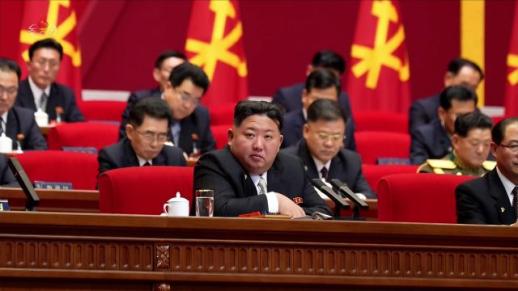 Pyongyang sidelines Seoul while signaling potential for Washington ties SEOUL, February 26 (AJP) - North Korean leader Kim Jong-un stated that there is "no reason not to get along" with the United States if Washington abandons its hostile policy, even as he intensified his rhetoric against South Korea by vowing to permanently exclude the country from the category of "compatriots." North Korea's state media Korean Central News Agency (KCNA) reported Thursday that Kim delivered a summary report during the 9th Congress of the Workers' Party of Korea, which concluded the previous day. Kim noted that the future of relations with the U.S. depends entirely on Washington's willingness to respect North Korea's status as a nuclear-armed state. He stated that Pyongyang is prepared for both "peaceful coexistence or eternal confrontation," placing the responsibility for the next move on the U.S. While maintaining a measure of strategic flexibility toward Washington, Kim took an exceptionally aggressive stance toward South Korea, effectively sidelining Seoul from any future diplomatic roadmap. He characterized the conciliatory approach of the Lee Jae Myung government as a "deception" and repeatedly dismissed the possibility of dialogue. Kim further solidified his "hostile two-state" policy, declaring that South Korea would be "permanently excluded from the category of our fellow countrymen." The North Korean leader warned that any actions by South Korea perceived as a threat to the security environment could trigger the use of physical force, including "preemptive strikes." He claimed that such actions could lead to the "complete collapse" of South Korea, emphasizing that the North has the technical and theoretical means to execute such a response. The timing of these declarations is significant as the Congress of the Workers' Party serves as the highest decision-making body in North Korea. These rare gatherings are used to define the nation's strategic direction and consolidate the leader's authority. By delivering these remarks during the 9th Congress, Kim has effectively codified the "hostile two-state" doctrine into the country's formal political roadmap. The current hostility represents a sharp departure from the inter-Korean relations seen under former President Moon Jae-in. Between 2017 and 2022, the two nations engaged in significant diplomacy, leading to the 2018 Panmunjom Declaration and multiple high-level summits. This period of engagement eventually paved the way for the first-ever meeting between a sitting U.S. president and a North Korean leader. Tensions began to resurface and eventually sour during the administration of President Yoon Suk Yeol, who prioritized military deterrence and strengthened trilateral cooperation with the U.S. and Japan. Under the Yoon government, the 2018 Comprehensive Military Agreement was effectively scrapped, and North Korea officially designated South Korea as its "primary foe" in early 2024. Despite the 2025 election of the Lee Jae-myung administration, which has signaled a preference for de-escalation, Pyongyang indicated that it has no intention of returning to a partnership for unification. Kim described the habit of treating South Korea as a fellow ethnic group as an "erroneous practice" that should no longer be tolerated. Kim concluded the report by signaling a policy of strategic ambiguity. He noted that North Korea's future military and diplomatic maneuvers would remain hidden, suggesting that keeping rivals unable to calculate Pyongyang's next moves would serve as a psychological deterrent. 2026-02-26 09:19:04
 -
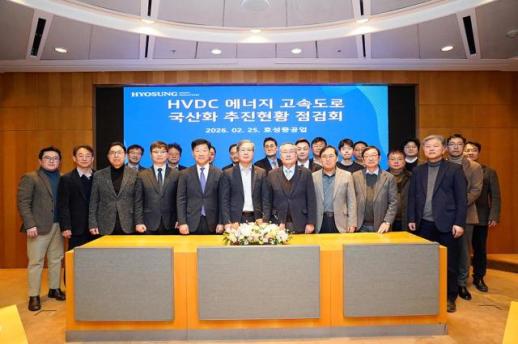 Hyosung Heavy Industries Reviews HVDC Localization Plan With Industry, Academia Hyosung Heavy Industries outlined a roadmap to localize high-voltage direct current, or HVDC, technology, a key element of the government-led “West Coast Energy Superhighway” project. The company said Wednesday it held a review meeting at its headquarters in Seoul’s Mapo district with officials from Korea Electric Power Corp., the Korea Electrical Manufacturers Association, and experts from industry, academia and research institutes. The West Coast Energy Superhighway is a national backbone grid project aimed at reliably delivering large-scale offshore wind power to the Seoul metropolitan area. The meeting was set up to closely assess progress in localizing large-capacity, voltage-source HVDC technology — an area that has relied heavily on overseas technology — and to discuss next steps. Hyosung Heavy Industries presented the status of its localization work on key components for a 2-gigawatt voltage-source HVDC system, including converter valves and control systems. The company said voltage-source HVDC makes power control easier than conventional current-source systems and is advantageous for grid stability, making it essential for connecting renewable energy. Presentations also were given by leading domestic experts. Professors from Seoul National University, Yonsei University and Kyungpook National University, participating as a technical cooperation group, discussed research in areas including system optimization and grid-stabilization technologies. Lee Jong-pil, a center director at the Korea Electrotechnology Research Institute who joined as an adviser, presented on certification testing for converter valves, a core component. Participants agreed the West Coast Energy Superhighway could serve not only as a domestic grid buildout but also as a springboard for Korean HVDC technology to enter global markets. They said technology self-reliance could lead to a broader domestic HVDC ecosystem spanning equipment, systems and engineering, and strengthen export competitiveness. “HVDC technology is at the core of national energy security,” Seoul National University professor Choi Seong-hwi said. “To reduce dependence on overseas technology and secure sovereignty over the power grid, building a localization ecosystem is essential.” A Hyosung Heavy Industries official said the company is moving ahead with localization “without disruption” based on capabilities built up in power equipment and HVDC technology. The official said Hyosung plans to complete the project successfully through close cooperation with related organizations, including the government and KEPCO, and to expand into global markets.* This article has been translated by AI. 2026-02-26 09:18:21
 -
 KGMC Delivers First E-STANA, South Korea’s First 7-Meter Low-Floor Electric Bus KGM Commercial, or KGMC, said Feb. 26 it has begun deliveries after handing over the first unit of its E-STANA, a 7-meter-class low-floor electric bus it says is the first of its kind developed in South Korea. KGMC held the handover ceremony Feb. 25 at Jagyeong Village Bus in Gwangmyeong, Gyeonggi Province, with KGMC CEO Kim Jong-hyun and Jagyeong Village Bus CEO Jang Gwan-su attending along with officials from Gwangmyeong City Hall, the Gyeonggi Village Bus Association and representatives of about 10 village-bus companies in the province, the company said. Jagyeong Village Bus, founded in 1992, operates in southern Gwangmyeong and serves areas with limited transportation options. The company said it chose the low-floor E-STANA to better serve riders with mobility challenges. "Until now, there was no domestic 7-meter low-floor electric bus, so we had no choice but to buy diesel buses," Jang said. "KGMC’s E-STANA, the first domestically produced 7-meter low-floor electric bus, will be a practical, close-to-home means of transportation that people with disabilities and older adults can use more conveniently." KGMC said the E-STANA was independently developed with South Korean road conditions in mind and is designed for safety, durability and convenience. Features include a 12.3-inch digital instrument cluster, an electronic parking brake system, an electronic brake system, auto-hold, electronic stability control and a rear-collision warning system, as well as wheelchair-access convenience equipment based on city-bus specifications. The bus is equipped with a 154.8-kWh lithium-ion high-voltage battery from Samsung SDI and has a driving range of 328 kilometers per charge, KGMC said. KGMC said the model is eligible for national and local government subsidies for electric vehicles, as well as subsidies for low-floor buses, which it said can reduce buyers’ costs. KGMC is also expanding outreach through a nationwide E-STANA roadshow that visits bus operators. The company said it has held events at about 30 locations since January, starting in Seoul and Gyeonggi Province and moving through Chungcheong and Honam, and plans to visit about 10 more sites in the Yeongnam region, including Busan, through March. * This article has been translated by AI. 2026-02-26 09:15:19
 -
 Hyundai Glovis Wins South Korea Labor Minister’s Award for Safety Cooperation Hyundai Glovis said it has received a South Korean labor minister’s award in recognition of its work to prevent accidents at industrial sites. The company said Thursday it was named an outstanding participant in a large company-small business workplace safety cooperation program at a signing ceremony held Wednesday at the Peace & Park Convention in Seoul’s Yongsan district. Attendees included the minister of employment and labor, the head of the Korea Occupational Safety and Health Agency, Hyundai Glovis Safety and Environment Center chief Kim Il-hwan and about 250 government and corporate officials, the company said. The program is hosted by the Ministry of Employment and Labor and administered by the Korea Occupational Safety and Health Agency. It supports parent companies and partner firms in voluntarily carrying out workplace safety and health improvements. Hyundai Glovis said it was recognized for continuing field-focused safety and health support tailored to logistics worksites and for actively reflecting feedback from partner companies and workers. It said it has recorded zero serious industrial accidents from 2021 to the present. Since 2021, the company has provided partner firms with free side safety supports for vehicle carriers to help prevent falls during loading and unloading. It later developed a second-generation support designed to improve both convenience and safety and expanded distribution, it said. Hyundai Glovis also said it developed and distributed a customized lightweight safety helmet for truck drivers. The new helmet weighs 250 grams, with volume reduced by 16% and weight by 14% compared with conventional industrial helmets, it said. The helmet passed safety certification screening by the Korea Occupational Safety and Health Agency, the company said. The company said it also runs virtual reality-based hands-on safety training and selects and rewards a monthly safety excellence employee to help embed a workplace safety culture. “Under the belief that our partners’ safety is Hyundai Glovis’ safety, we have continued a shared-growth approach to safety management,” a company official said. “We will continue expanding safety and health programs with our partners to raise safety standards across industrial sites.”* This article has been translated by AI. 2026-02-26 09:06:28
 -
 OPINION: Risks lurking behind South Korea's export boom SEOUL, February 26 (AJP) - Despite heightened external uncertainty, exports have posted unexpectedly strong performance so far this year. Preliminary cumulative figures through mid-February show an increase of roughly 30 percent, a notable gain. With the domestic economy still struggling to regain its footing after a prolonged slump, this export surge comes as welcome relief. Still, it remains uncertain how long this momentum can last. Uncertainty persists in the semiconductor sector, which accounts for more than 30 percent of South Korea's exports. Expectations have been buoyed by surging demand from artificial intelligence (AI) data centers and forecasts of a semiconductor "supercycle," with the market expected to expand by more than 15 percent annually through 2030. Yet as both the IMF and OECD have cautioned, the path of artificial intelligence remains highly uncertain, and questions persist over whether the enormous investment being poured into the technology by major global tech companies will ultimately pay off. With OpenAI reportedly scaling back its computing ambitions and Nvidia pulling a long-term investment agreement with it, policymakers and companies should watch for an AI bubble and reassess whether the semiconductor supercycle still has much further to run. Equally uncertain is the persistence of the so-called "K-boom" in defense, shipbuilding, and nuclear power. Exports of defense products to NATO members have surged following Donald Trump's retreat from traditional alliance commitments, while deepening South Korea–U.S. cooperation in shipbuilding and nuclear energy has provided an additional boost to export growth. Whether these tailwinds will prove durable remains an open question. At the same time, South Korean defense exports to NATO members face real headwinds including stiff competition from established suppliers such as France, Germany and the U.S., and a persistent preference among alliance members to source equipment domestically. Nor should Seoul take its partnership with Washington for granted, as U.S. foreign policy has rarely been less predictable. The same caution applies to industries such as food and biotechnology, which have become notable export drivers in recent years thanks to the resurgence of the Korean Wave. Japan's once-formidable cultural export boom now seems like a relic of another era, and there is no guarantee that the Korean Wave will not lose momentum. South Korea has avoided the catastrophic collapses that scarred Japan, but it has long struggled with sluggish growth. Meanwhile, emerging competitors - not just China but increasingly India and Viet Nam - are rapidly closing the gap. None of this means the Korean Wave will vanish, but South Korea cannot afford to assume its momentum will last. It is also worth assessing whether recent export performance truly reflects companies' fundamental competitiveness - that is, enduring strengths such as technological capability, production efficiency, and organizational effectiveness that are less reliant on external conditions. For example, the technological level of semiconductors, displays, and secondary batteries was already assessed in 2024 as lagging behind China, highlighting how quickly competitiveness may be eroding. If this trend continues, export competitiveness in these industries is likely to decline as well. Even so, maintaining the current level of exports amid rising global trade uncertainty is no small feat, and both export competitiveness and the Korean Wave appear set to remain resilient for the time being. For now, South Korea's export-oriented companies and industries seem likely to sustain their growth. However, no company or sector is immune to rapidly changing external conditions, and the risks surrounding the current boom require careful attention and proactive preparation. * This article, published by Aju Business Daily, was translated by AI and edited by AJP. 2026-02-26 08:57:23