
Journalist

AJP
-
 Asian markets advance; KOSPI leapfrogs above 6,000 SEOUL, February 25 (AJP) — Asian markets opened higher on Wednesday on expectations that U.S. tariff measures would be applied more selectively following a landmark Supreme Court ruling, but their gains were eclipsed by the KOSPI’s staggering rally. Seoul’s main-board index surged past the 6,000-point mark at the opening bell, lifted by heavyweight technology shares as concerns over artificial intelligence-related disruptions eased. As of 11:10 a.m., the KOSPI was up 2.06 percent at 6,092, extending gains to more than 14.3 percent this month and over 42 percent so far this year, according to data from the Financial Supervisory Service. Shares of Samsung Electronics rose 1.75 percent to a record 203,500 won, while SK hynix added 2.59 percent to 1,031,000 won, helping propel the broader market higher. The advance followed a rebound on Wall Street, driven by fresh developments in artificial intelligence that helped ease concerns over disruption in the software sector. Meta Platforms said it would deploy a large volume of graphics processing units from Advanced Micro Devices to expand its AI data centers, boosting sentiment toward high-bandwidth memory suppliers such as SK hynix and Samsung Electronics. Investor confidence was further supported by expectations that the Federal Reserve will hold interest rates steady in March. Meanwhile, the Cboe Volatility Index, often referred to as Wall Street’s “fear gauge,” declined, signaling reduced market anxiety. The tech-heavy KOSDAQ gained 0.26 percent to 1,168.06. The won strengthened as AI-related concerns eased and optimism over U.S.-Iran nuclear talks reduced risk-off sentiment, with the dollar slipping 1.60 won to 1,440.90. Individual investors were net buyers of 922.9 billion won ($640 million), while foreign and institutional investors sold a net 651.9 billion won and 329.8 billion won, respectively. According to the Financial Supervisory Service, foreign investors have remained net sellers this year, unloading about 13.8 trillion won in February and roughly 17.3 trillion won over the first two months, suggesting the rally has been largely driven by domestic capital. Autos and non-chip stocks mixed Non-chip large-cap stocks showed mixed moves. Auto shares rallied after Hyundai Motor Group announced plans to invest 10 trillion won over the next five years in the Saemangeum region, focusing on data centers and robotics production facilities. Markets viewed the move as signaling a strategic shift toward physical AI and advanced manufacturing. Hyundai Motor jumped 9.73 percent, while Kia surged 13.56 percent to 197,800 won. SK Square rose 3.08 percent to 636,000 won, and Samsung Life Insurance gained 2.23 percent to 229,000 won. Samsung Biologics slipped 0.06 percent to 1,722,000 won, while LG Energy Solution climbed 0.73 percent to 415,500 won. In defense and aerospace, Hanwha Aerospace fell 2.34 percent to 1,212,000 won. Shipbuilders also retreated, with HD Hyundai Heavy Industries down 0.34 percent and Hanwha Ocean slipping 0.42 percent. Entertainment shares extended losses amid heavy upfront investment and restructuring costs, with HYBE, JYP Entertainment and YG Entertainment all trading lower. Asia mostly higher Elsewhere in Asia, markets traded mostly higher. Japan’s Nikkei 225 added 1.35 percent to 58,097.01, while Hong Kong’s Hang Seng Index rose 0.22 percent. Chinese stocks also extended gains on expectations that recent U.S. tariff revisions could work in China’s favor. The optimism followed the U.S. Supreme Court’s decision to strike down President Donald Trump’s reciprocal tariffs. Although a new 15 percent global tariff was introduced, China is expected to face a relatively lower effective rate. Goldman Sachs estimates the changes could reduce the average U.S. tariff on Chinese goods by about five percentage points. Meanwhile, the People’s Bank of China kept its benchmark loan prime rates unchanged for a ninth consecutive month, with the one-year rate at 3.0 percent and the five-year rate at 3.5 percent. As of Wednesday morning, the Shanghai Composite rose 0.29 percent to 4,129.48. 2026-02-25 11:43:21
 -
 New boy band CHASER to release debut album ROUTE 01: Burning Point SEOUL, February 25 (AJP) - South Korean boy band CHASER is scheduled to make its official debut on Wednesday with the release of its first mini album. The five-member group, consisting of Kangbin, Caseke, Ren, Yoonsung, and Sihun, will launch ROUTE 01: Burning Point at 6 p.m. (0900 GMT) across global streaming platforms including Spotify and YouTube Music. The album serves as the introductory chapter to the group's planned narrative universe, focusing on themes of energy and ambition. The nine-track record is led by the title track "INVINCIBLE," an uptempo pop-rock song characterized by a heavy guitar riff and prominent bass lines. The track is designed to showcase the group's vocal harmonies and high-intensity performance style. CHASER preceded the launch with a series of promotional materials, including concept photos and a highlight medley of the tracks. A music video teaser for the lead single featured the members in a vintage setting before transitioning to imagery of motorcycles and smoke, intended to reflect the song's themes of resilience. The album explores several genres beyond pop-rock. The tracklist includes "Sweet Like Sugar," a synth-pop song; "Criss Cross," a hip-hop trap track; and "Dreamers," described as a youth anthem. Other songs include the mid-tempo jazz-inspired "Knock Knock," the motivational "MATCH POINT," and "Yagwangun," a track centered on the concepts of growth and hope. The release of ROUTE 01: Burning Point marks the formal entry of the rookie group into the South Korean music industry. 2026-02-25 11:25:04
 -
 Kia's Georgia plant tops 5 Million vehicles in cumulative production SEOUL, February 25 (AJP) - Kia's American unit in Georgia has reached a cumulative production of 5 million vehicles, the automaker said Tuesday. Production is expected to accelerate further as its West Point plant begins producing the new version of its Telluride SUV, adding the spacious hybrid model to the regular mass-production lineup, alongside assembly lines for midsize Sorento and compact Sportage SUVs. With the start of hybrid production, the plant with an annual capacity of 340,000 units can produce the full range of powertrains, from internal combustion and electric to hybrid vehicles. Kia attributed the hybrid rollout to growing demand for eco-friendly vehicles in North America, where interest in hybrids has remained steady along with fully electric vehicles. The automaker also pointed to U.S. policies that continue to promote locally built vehicles. "The West Point plant is the only facility in the world that produces the Telluride," said Yoon Seung-kyu, head of Kia's North American sales, adding that reaching the milestone of 5 million vehicles in cumulative production, along with starting hybrid manufacturing, reflects the expansion of its local operations. 2026-02-25 11:13:02
 -
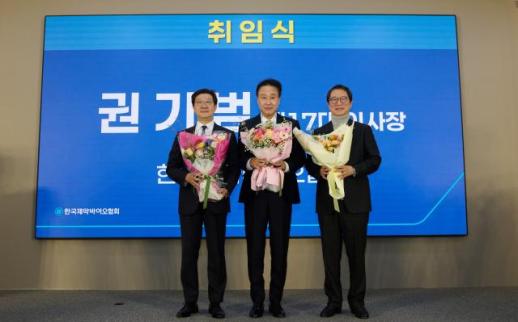 Korea Pharmaceutical and Bio-Pharma Association Names Kwon Ki-beom as New Board Chair The Korea Pharmaceutical and Bio-Pharma Association said it held its 81st regular general meeting on Feb. 24 at its fourth-floor auditorium in Bangbae-dong, Seoul, approving its 2026 business plan and a budget totaling 11,888.06 million won. It also approved as submitted the appointment of directors and auditors — 48 director companies and two auditor companies — and unanimously passed its 2025 settlement of accounts and amendments to its bylaws. For 2026, the association said it will push to build a government-industry governance framework to advance discussions on an R&D-linked compensation system and drug pricing policy. It also plans to strengthen ethical management by improving transparency in pharmaceutical sales and marketing, expanding training for contract sales organizations, and promoting a stronger industry compliance culture. To meet its “Pharma Bio Vision 2030,” the association said it will promote open innovation, accelerate digital transformation and the convergence of new technologies such as artificial intelligence, and expand R&D infrastructure and talent development. It also plans to boost global competitiveness by building support systems for entry into advanced markets, strengthening networks in emerging markets, and expanding global production and training hubs. Priorities also include manufacturing and quality innovation, securing stable drug supply systems, improving investment and manufacturing conditions to spur vaccine development, fostering the raw materials and parts-and-equipment sectors, and diversifying supply chains. In opening remarks, Chairman Noh Yeon-hong said South Korea’s pharmaceutical and bio industry has achieved qualitative and quantitative growth and reached a turning point. “We will work to build an innovative ecosystem for new drug development, enhance global competitiveness, improve access to medicines and strengthen social responsibility,” he said. Noh added that the association will further reinforce ethical management to be seen as a trusted industry. At a handover and inauguration ceremony held after the meeting, outgoing board chair Yoon Woong-seop, chairman of Ildong Pharmaceutical, who completed a two-year term, said, “I feel a sense of fulfillment that I was able to be with you in a role dedicated to protecting the industry’s rightful value.” Incoming board chair Kwon Ki-beom, chairman of Dongkook Pharmaceutical, said in his inaugural address that last year’s results included $13.8 billion in technology exports for new drugs and $10.7 billion in pharmaceutical exports, “a remarkable achievement” representing 65% growth from 2024. He said the industry should maintain the momentum and continue steady growth to achieve more than $50 billion in exports. Kwon also said he hopes the public and private sectors will work together toward a “global top 7” goal. “Regulation is important and necessary, but I urge that the policy direction’s weight be shifted toward fostering and growing the industry,” he said. The association also said it held the seventh Korea Pharmacy Awards ceremony jointly with the Korean Pharmaceutical Association and the Korea Pharmaceutical Distribution Association. It selected Yoon Won-young, chairman of Ildong Holdings, as the winner in the pharmaceutical and bio category and presented an award. It also presented a plaque of appreciation to Yoon Seok-geun, chairman of Ilsung IS, who served as the ninth board chair.* This article has been translated by AI. 2026-02-25 11:06:00
 -
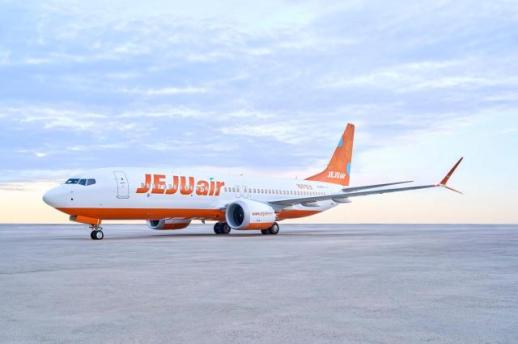 Jeju Air to Add Four Daily Round Trips on Gimpo-Jeju Route, Raising Total to 26 Jeju Air said Tuesday it will add four daily round-trip flights on the Gimpo-Jeju route starting March 29, when its summer schedule begins. With the increase, the carrier will operate up to 26 round trips a day on the route, up from a maximum of 22 scheduled round trips. Jeju Air said that is the highest number of flights among airlines serving the Gimpo-Jeju corridor. The added service will bring Jeju Air’s frequency to about two flights an hour on the route and increase capacity by about 1,500 seats a day, round-trip basis. According to the Transport Ministry’s aviation information portal, about 2,514,500 passengers flew Jeju Air on the Gimpo-Jeju route last year. That accounted for 16.9% of the route’s total 14,835,900 passengers and was the largest share among low-cost carriers. In January, Jeju Air carried about 227,400 passengers on the route, the most among low-cost carriers, up 38.6% from about 164,100 a year earlier. “We are continuing to expand air service so Jeju residents and travelers visiting Jeju can move more conveniently between Jeju and Gimpo at the times they want,” a Jeju Air official said.* This article has been translated by AI. 2026-02-25 10:45:17
 -
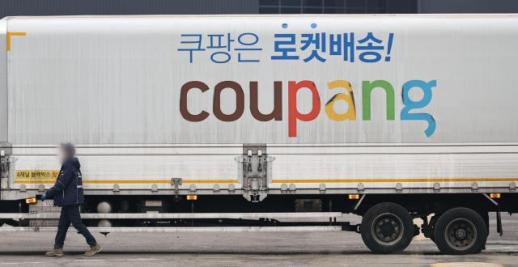 Coupang confirms data breach affected 200,000 accounts in Taiwan SEOUL, February 25 (AJP) - Coupang Inc., the American operator of the biggest ecommerce platform in South Korea, disclosed on Wednesday that a massive data breach involving 33.7 million accounts included approximately 200,000 users located in Taiwan. The e-commerce giant cited a forensic analysis by cybersecurity firm Mandiant, which linked the Taiwanese breach to the same former employee responsible for the unauthorized access of South Korean user data in November 2025. While the perpetrator accessed 200,000 accounts in Taiwan, investigators found that data from only one of those accounts was actually saved by the individual. The update follows a series of forensic audits aimed at determining the full scope of the security failure. Mandiant and other third-party experts confirmed that "highly sensitive information" was not leaked in any region, including Taiwan. The compromised data was reportedly limited to basic contact information and order histories rather than passwords, financial records, or government-issued identification numbers. The breach originally came to light on November 29, 2025, after a former software developer, identified as a Chinese national, allegedly used an internal signing key to bypass security protocols. South Korean authorities previously noted that the incident stemmed from a failure to revoke authentication credentials after the employee left the company. Coupang Inc. had initially stated in December 2025 that there was no evidence of Taiwanese customers being affected. The company has since clarified that the former employee saved data from a total of approximately 3,000 accounts globally, including the single account in Taiwan. The disclosure arrives as Coupang Inc. aggressively expands its logistics footprint in Taiwan. The company stated it has been coordinating with the Ministry of Digital Affairs in Taiwan and South Korean regulators throughout the investigation. No instances of secondary harm or identity theft related to the breach have been detected. 2026-02-25 10:43:56
 -
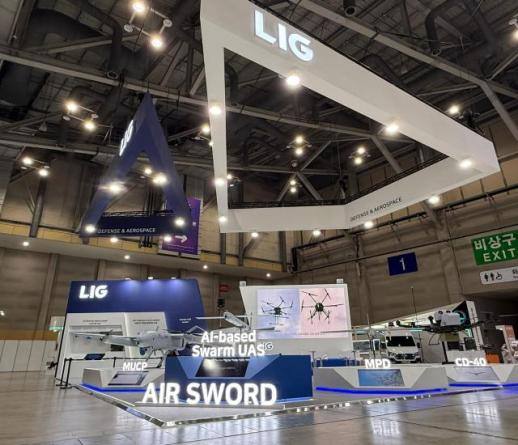 LIG Nex1 to Unveil AI-Powered Swarming Kamikaze Drone at DSK 2026 LIG Nex1 said it will showcase an integrated unmanned aircraft solution spanning kamikaze, reconnaissance and transport drones at Drone Show Korea DSK 2026, being held for three days through the 27th at BEXCO in Busan. At the exhibition, the company is unveiling for the first time an artificial intelligence-based small kamikaze drone. Developed with the Agency for Defense Development, the model can be operated in swarms and uses a canister-launch, multiple-launch method. LIG Nex1 is also displaying its Medium-sized Unmanned Aerial Vehicle Common Platform (MCUP), a hybrid transport drone with a 40-kilogram payload, a small reconnaissance-and-strike combined drone (MPD), and an “integrated avionics system” tailored to advanced air vehicles (AAV) expected to be used in future urban air mobility. A company official said, “Based on our advanced capabilities ranging from surveillance and reconnaissance to strike and transport solutions, we will help accelerate the completion of an advanced science and technology force built on manned-unmanned teaming.”* This article has been translated by AI. 2026-02-25 10:28:55
 -
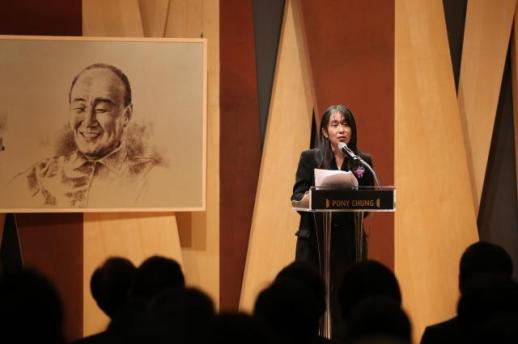 K-literature takes center stage in Africa after Han Kang's Nobel win SEOUL, February 25 (AJP) - Korean literature has officially overtaken K-pop music and K-drama as the most documented aspect of South Korean culture in Africa, a report released by the Ministry of Culture, Sports and Tourism showed Wednesday. The 2025 Global Hallyu Trend Analysis Report, released by the culture ministry and the Korea Culture Information Service Agency (KCISA), indicates that Korean literature now accounts for 32.8 percent of all media coverage related to Hallyu (the Korean cultural wave) in Africa. This surge in interest was primarily sparked by Han Kang, who became the first South Korean and the first Asian woman to win the Nobel Prize in Literature in October 2024. Born in 1970 in Gwangju, South Korea, Han is a celebrated novelist and poet whose works, such as "The Vegetarian" and "Human Acts," frequently explore historical trauma and the fragility of human existence. The Swedish Academy recognized her "intense poetic prose" that confronts these universal struggles, triggering a global re-evaluation of South Korean written works. While K-pop remains the dominant cultural export in Asia, Europe, and the Americas, Africa has emerged as a unique market where literary news and events outpace other entertainment categories. Following the prize announcement, global media coverage of Korean literature spiked to 32.4 percent of all foreign news reports during the final quarter of 2024, a dramatic jump from just 1.2 percent in the preceding quarter. The popularity of South Korean novels in Africa is particularly evident in Nigeria, which ranked second globally, surpassing both the United States and Sweden, in digital documentation and media mentions regarding Han Kang's achievement. Official sources from the Korean Cultural Centre Nigeria (KCCN) noted that dedicated literary gatherings were held in Abuja to celebrate the win and introduce works such as The Vegetarian and Human Acts to local audiences. The KCCN highlighted that the resonance of South Korean literature in Africa stems from "cultural compatibility." Readers in the region find that K-novels frequently address universal themes of patriarchy, generational trauma, and social justice, which mirror contemporary issues in many African countries. Notably, these readers engage with South Korean works despite a challenging local reading environment; official statistics indicate that the average Nigerian reads less than one book per year, though literary interest remains concentrated among highly engaged academic and cultural communities. Japan and the West see parallel literary interest The report also identifies Japan as a major hub for Korean literature. Japan recorded the highest volume of documentation for the category at 37.5 percent of its total Hallyu coverage, marking the only Asian country where literature is the primary point of interest over K-pop or K-drama. Japanese media emphasized the significance of the "first Asian woman" to win the prize and highlighted her works' delicate worldviews. This interest persists even as Japan sees a shift in reading habits. Data suggests that while 62.6 percent of Japanese adults do not read a book monthly, those who do engage with high-profile literary awards and translated works read an average of 6.2 books per year. Western nations have also shown significant engagement following the Nobel Prize announcement. In the U.S. and Germany, South Korean novels have moved beyond niche academic interests to mainstream media, with The Vegetarian remaining the most discussed work. In the U.S. where the average citizen reads approximately 8 books per year, Korean literature has benefited from a robust infrastructure of translation and literary discussion. Similarly, in Germany, readers average roughly 6.25 books per year, providing a fertile market for the philosophical and social depth associated with modern South Korean novels. The growth of Korean literature is supported by increased institutional translation efforts and the "Netflix effect," where series like "When Life Gives You Tangerines" and the animated film "K-Pop Demon Hunters" have sparked secondary interest in original stories and broader South Korean heritage. In South Korea, where this cultural wave originates, adults read an average of 5.4 books per year, though this figure rises significantly when digital formats such as web novels are included. 2026-02-25 10:06:08
 -
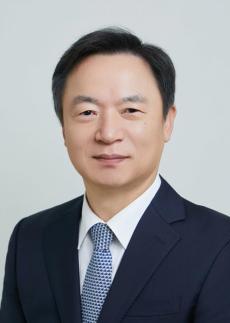 KAMA Names Jeong Dae-jin as New Chairman Korea Automobile & Mobility Association (KAMA) said Jeong Dae-jin, a former deputy minister for trade at the Ministry of Trade, Industry and Energy, was elected its 19th chairman at a regular general meeting held on the 25th. Jeong entered public service after passing the 37th national civil service exam and held key posts across the former Ministry of Commerce, Industry and Energy, the former Ministry of Knowledge Economy and the current trade and industry ministry, working in industrial policy, investment promotion and the creative industries, the association said. He also served as director general for trade policy and as deputy minister for trade, overseeing major external trade issues affecting South Korea’s leading industries, it said. KAMA said Jeong is well suited to lead the association as protectionist policies in the United States and the European Union and shifting trade regulations reshape the global environment. The association added it expects his leadership to pursue both continuity and innovation in its operations, strengthening the competitiveness of South Korea’s auto industry and supporting its transition to future mobility. Jeong is scheduled to hold an inauguration ceremony on March 3 and begin his official duties as the 19th chairman.* This article has been translated by AI. 2026-02-25 10:06:08
 -
 S. Korea 'watching for possible US-North Korea talks' as Trump prepares for China trip SEOUL, February 25 (AJP) - South Korea is keeping a close eye on developments ahead of U.S. President Donald Trump's visit to China late next month, South Korea's U.S. envoy said on Monday. At a press briefing with South Korean correspondents in Washington, D.C., Ambassador to the U.S. Kang Kyung-wha said, "With all possibilities in mind including the possible resumption of dialogue between the U.S. and North Korea, we are closely watching related developments." She added that the embassy remains in frequent contact with U.S. government agencies including the National Security Council and the State Department, to share updates on North Korea and to discuss policies toward Pyongyang. "We are monitoring the situation, taking into account various factors including Russia's ongoing war in Ukraine, U.S.-China relations, and the growing military ties between North Korea and China," she said. Stressing that U.S. policy toward North Korea remains unchanged, she said that Washington will closely communicate with Seoul. When asked about Trump's new global tariffs, which came after the U.S. Supreme Court ruled his reciprocal tariffs illegal, Kang said the embassy would closely monitor the Trump administration's next steps while supporting Seoul's discussions with Washington to ensure they proceed "in a favorable atmosphere." She said the South Korean government would respond to the situation "in a way that best serves the national interest," while admitting that "uncertainties remain." Kang also vowed to work closely with South Korean companies and businesses based in the U.S. to keep them updated in a timely manner on any developments. 2026-02-25 10:05:47