
Journalist

AJP
-
 Jang Hang-jun’s ‘The Man Who Lives With the King’ Tops 6 Million Moviegoers in 20 Days '왕과 사는 남자' has drawn more than 6 million moviegoers. Showbox said on the 24th that the film passed 6 million in cumulative admissions on its 20th day in theaters, on the 23rd. It reached the mark faster than '왕의 남자' (29 days) and '사도' (26 days), and matched the pace of the hit '광해, 왕이 된 남자.' Set in 1457 at Cheongnyeongpo, the historical drama follows a village chief who chooses exile to revive his community and a young deposed king sent into exile. The film is directed by Jang Hang-jun and stars Yoo Hae-jin, Park Ji-hoon, Yoo Ji-tae and Jeon Mi-do. '왕과 사는 남자' is now playing in theaters.* This article has been translated by AI. 2026-02-24 07:57:15
 -
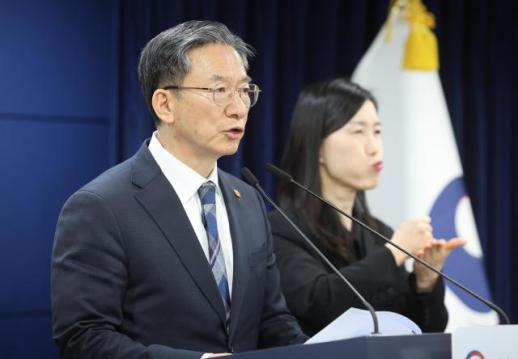 South Korea wins UK court bid to void Elliott ISDS award SEOUL, February 24 (AJP) -South Korea has won a decisive legal battle in a UK court to overturn an international arbitration ruling that had ordered the government to pay roughly 160 billion won ($110 million) to U.S. hedge fund Elliott Management, the Justice Ministry said in a release issued late Monday. The British High Court set aside the 2023 investor-state dispute settlement (ISDS) award, meaning the arbitration decision can no longer stand. The case will now return to arbitration proceedings. The dispute stems from the controversial 2015 merger of Samsung C&T and Cheil Industries. Elliott, then a shareholder of Samsung C&T, filed the ISDS claim in 2018 under the Korea-U.S. Free Trade Agreement (FTA), arguing that it suffered losses after the National Pension Service (NPS) backed the merger. In June 2023, the Netherlands-based Permanent Court of Arbitration (PCA) ordered Seoul to pay $107.8 million in damages and interest. With accrued interest, the compensation had risen to about 160 billion won as of this month — roughly 7 percent of Elliott’s original claim of more than 1 trillion won. Seoul immediately sought to annul the award in the UK, the seat of arbitration, arguing that the tribunal had exceeded its jurisdiction. A first-instance court dismissed the challenge in August 2024, ruling that the relevant FTA provisions were outside the scope of review under the UK Arbitration Act. But the UK Court of Appeal reversed that decision in July last year and sent the case back to the High Court. In the remanded proceedings, the High Court sided with the Korean government and formally set aside the award. NPS not a “state organ” At the heart of the case was whether the National Pension Service qualifies as a state organ under international law — a key “gateway” requirement for ISDS claims under Article 11.1 of the Korea-U.S. FTA. The UK court accepted Seoul’s argument that the NPS has a separate legal personality from the government, that pension fund management is not a core sovereign function such as defense or public security, and that its day-to-day investment decisions are not fully subordinate to the state. The ruling marks the first time an overseas court has recognized that the NPS’ exercise of shareholder voting rights cannot automatically be treated as state action for ISDS purposes, a precedent the Justice Ministry said would help shield Korea from future treaty-based claims by activist funds. However, the court noted that actions by the Blue House and the Ministry of Health and Welfare related to the merger could still qualify as “relevant measures” under the FTA, meaning those issues may be revisited in renewed arbitration. Justice Minister Jeong Seong-ho called the decision a significant victory, noting that UK courts overturn arbitration awards in only about 3 percent of cases. “We pierced the narrow needle’s eye,” Jeong said at a briefing, adding that the government spent only about one-sixth of Elliott’s legal costs in pursuing the challenge. The win follows another high-profile ISDS outcome last year in which Seoul avoided roughly 400 billion won in damages in a dispute with Lone Star over the sale of Korea Exchange Bank. Elliott is expected to appeal the UK ruling. If it does not, the arbitration tribunal will reconsider the matter, this time excluding the NPS from the scope of state liability. 2026-02-24 07:53:11
 -
 Actress Kim Ji-su Shares Update From Prague, Says She’s Preparing New Work 배우 김지수가 자신의 근황을 전했다. Kim Ji-su shared an update on social media on the 22nd, posting photos from her daily life in Prague and saying she is preparing “productive work” there. In the post, she wrote, “Hearing such joyful, hearty laughter made me laugh, too. I think laughter might be the strongest cure-all.” She added that many people assume she is simply traveling, but said she has been living between Prague and South Korea. “Even in Prague, I’m not just spending time anymore — I’m preparing productive work,” she wrote. Kim said it can be overwhelming and difficult at times, but that solving things one by one is part of the fun. “I like myself for living diligently,” she wrote, adding, “Spring is coming soon — not the spring that comes every year, but another new spring.” Born in 1972, Kim debuted in 1992 as a talent recruited in SBS’ second open audition. * This article has been translated by AI. 2026-02-24 07:39:15
 -
 Automakers’ Humanoid Robot Strategies Diverge: Mass Market vs. Lights-Out Factories The world’s five biggest automakers competing in humanoid robots are pursuing sharply different strategies, drawing attention to which approach will win out. Hyundai Motor Group and Tesla are preparing for mass production based on the idea that humanoids can be used broadly, though they are targeting different areas. BMW, Mercedes-Benz and Toyota, meanwhile, are focusing on maximizing productivity and moving toward fully unmanned factories using humanoids. According to the auto industry on Feb. 23, Hyundai is upgrading functions centered on manufacturing processes, aiming to deploy Boston Dynamics’ Atlas in industrial sites in 2028. Atlas is built on an adult male scale — 190 centimeters tall and 90 kilograms — with 56 joints, hands equipped with tactile sensors and 360-degree sensing. It can carry up to 50 kilograms and has cognitive capabilities such as charging itself or swapping batteries when power runs low. It can also work in extreme conditions from minus 20 to 40 degrees Celsius. Hyundai is conducting advanced verification tests with Atlas at its Global Innovation Center in Singapore. Tesla’s strategy is to mass-produce Optimus by the end of 2027 and enter the general-purpose AI robotics market faster than the other big five automakers. Optimus is 173 centimeters tall and weighs 57 kilograms, and can walk at 8 to 10 kilometers per hour. It has 40 joints and eight sensors and can carry up to 20 kilograms. Tesla plans to validate tasks such as moving battery cells and sorting parts at its Gigafactory by the end of this year, then begin outside sales next year. To support that plan, it has built a production system at its Fremont, California, plant capable of making more than 1 million Optimus units a year. BMW, Mercedes and Toyota have each chosen alliances with startups, focusing less on retail sales of humanoids and more on boosting vehicle production efficiency. BMW partnered with U.S. startup Figure AI and deployed Figure 02 at its Spartanburg plant, conducting about a year of testing. Figure 02 is 160 centimeters tall and can carry parts weighing up to 25 kilograms. With AI reasoning capabilities, it can perform tasks autonomously and hold conversations with people. It has reportedly assembled chassis components, handled storage of more than 90,000 parts and worked on production of BMW’s key SUV model, the X3. BMW plans to deploy its next model, Figure 03, this year. Mercedes is testing Apollo, developed by U.S. humanoid company Apptronik, at plants in Berlin and Hungary. Apollo is 177 centimeters tall, can lift up to 25 kilograms and operate for 22 consecutive hours. Its detachable lower body can be configured with wheels or for bipedal walking, allowing use not only in manufacturing but also in logistics, construction, retail and delivery. For cognition and decision-making, it uses Gemini Robotics. Toyota placed Digit, a humanoid from U.S. startup Agility Robotics, at its Woodstock plant in Ontario, Canada. When an autonomous vehicle carrying Digit arrives at a destination inside the plant, the robot jumps out of the trunk and moves parts boxes. After about a year of testing, Toyota plans to expand Digit’s duties this year to more difficult assembly processes. Automakers are moving quickly in humanoids in part because of the industry’s existing strengths. Control, driving and perception technologies already used in vehicles can shorten the development process for AI robotics. Another advantage is the ability to deploy robots in large factories and directly measure productivity gains. Humanoids can be up to three times more productive than humans and can operate around the clock. AI robotics with action, cognition and language capabilities can also be used for ultra-precise parts assembly, painting and quality inspection — areas traditionally handled by skilled workers — making fully unmanned “dream factories” possible. Hyundai estimates it could save 1.7 trillion won a year by replacing just 10% of its existing production workforce with AI robotics. Still, companies must keep improving the technology while also cutting costs. Atlas is currently expected to cost about $130,000 per unit (187 million won). The industry estimates an acceptable price point for mass adoption at around 50 million won. Tesla plans to lower Optimus’ average price by 2027 to 27 million to 40 million won, roughly the level of a compact sedan. Hwang Gwang-taek, a senior researcher at the Export-Import Bank of Korea’s Overseas Economic Research Institute, said humanoids still have limited ability to respond outside specific scenarios and that high upfront investment costs weigh on companies’ short-term profitability. He said longer-term challenges include rebuilding systems to deploy humanoids and rising operating, maintenance and repair costs for robotics. * This article has been translated by AI. 2026-02-24 05:07:21
 -
 POSCO Expands Electrical Steel Output to Offset Weak Plate and Hot-Rolled Demand 포스코가 전기강판 생산을 확대하며 사업 포트폴리오 다변화에 속도를 내고 있다. 중국발 공급과잉과 전방 산업 침체로 후판·열연강판 등 범용 제품의 수익성이 흔들리자 고부가가치 특수강 비중을 늘려 실적을 방어하겠다는 전략이다. 23일 업계에 따르면 포스코는 저가 철강재 수입 급증과 글로벌 수요 부진으로 국내 열연·후판 시장의 수익성이 크게 악화한 가운데 전기강판 생산을 꾸준히 늘려온 것으로 나타났다. 포스코의 전기강판 생산량은 2023년 60만t에서 2024년 73만t, 2025년 82만t으로 증가했다. 3년 새 30% 이상 늘어난 것이다. 전체 조강 생산에서 차지하는 비중은 아직 크지 않지만, 범용재 수요가 위축된 상황에서도 생산이 확대됐다는 점이 주목된다. 전기강판은 전기적 특성을 강화한 특수강으로 전기차 모터, 산업용 모터, 변압기 등 전력 변환 장치의 핵심 소재로 쓰인다. 기술 장벽이 높아 경기 변동에 민감한 범용재보다 수익성이 비교적 안정적인 소재로 평가된다. 시장 성장 전망도 제시됐다. HTF 마켓 인텔리전스는 세계 전기강판 시장 규모가 2025년 약 63조원에서 연평균 8.2% 성장해 2033년 약 100조원에 이를 것으로 전망했다. 이는 최근 몇 년간 생산 물량이 연간 수요 기준선에 못 미쳤다는 후판·열연강판 시장과 대비된다고 업계는 보고 있다. 전기강판은 방향성(변압기용)과 무방향성(전기차 구동 모터용)으로 나뉜다. 포스코는 무방향성 전기강판에 투자를 집중하고 있다. 전기차 수요 정체 국면에서도 기술 개발을 통해 국내에서 유일하게 무방향성 전기강판을 생산하고 있다고 회사는 밝혔다. 포스코는 2023년 총 1조원을 투자해 연산 30만t 규모의 하이퍼 NO 공장을 완공한 뒤 생산 라인을 증설해 광양 30만t, 포항 70만t 등 총 100만t의 전기강판 생산 체제를 구축했다. 대표 제품인 하이퍼 NO는 포스코가 만든 구동 모터용 무방향성 전기강판으로, 철손을 최소화한 것이 특징이라고 회사는 설명했다. 포스코는 글로벌 완성차 업체를 중심으로 전기강판 수출을 확대한다는 방침이다. 포스코 관계자는 "현재 도요타와 테슬라 등 글로벌 자동차사에 구동 모터용 전기강판을 공급하고 있다"며 "신제품 개발과 품질 고도화를 통해 점유율을 점진적으로 끌어올릴 계획"이라고 말했다. * This article has been translated by AI. 2026-02-24 05:06:04
 -
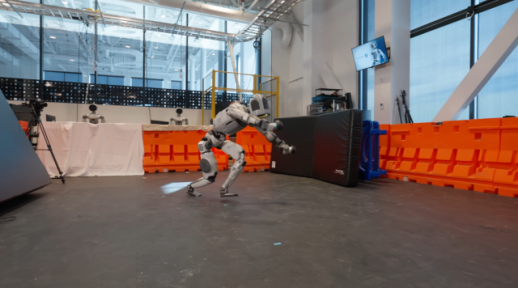 Humanoid Robot Boom Lifts South Korea Auto Parts Makers, Boosting Sales and Jobs As the humanoid robot market shows signs of taking off, South Korea’s auto parts industry is also seeing a lift. Expanding investment by major automakers, including Hyundai Motor, is creating spillover benefits for suppliers. The shift from internal-combustion vehicles to EVs had raised concerns about job losses, but the industry is now also looking at potential net hiring tied to new businesses. Industry officials said Monday that Hyundai Mobis surpassed 60 trillion won in annual revenue for the first time last year, helped by the start of operations at its North American electrification plant and rising output of higher value-added parts such as automotive electronics. Hyundai Motor’s push beyond electrification into new areas such as robotics is also expected to benefit Hyundai Mobis. Hyundai Motor Group said it will allocate 71.1% of its planned 125.2 trillion won in domestic investment from this year through 2030 to future businesses including robots and EVs. In the U.S., it plans to invest $26 billion (about 37.7 trillion won) through 2028. Boston Dynamics is set to begin mass production of the humanoid Atlas in 2028. Hyundai Mobis set up a robotics business unit last year and has begun hiring development and manufacturing-technology staff. A Hyundai Mobis official said the company is recruiting talent to develop actuators, a core component for robots, adding that large-scale investment across the industry could make robotics a key source of income. Other suppliers are also seeking entry into robotics and other new businesses by building on their existing strengths. SL, an auto parts company based in Daegu, is expected to see revenue growth as it takes charge of assembling Hyundai Motor’s mobile logistics robot, MobED. MobED is set to begin mass production and sales starting in the first quarter of this year, with a sales target of 10,000 to 15,000 units by 2029. Annual revenue is estimated at about 150 billion to 200 billion won, with part of that expected to be reflected in SL’s results as a contract manufacturer. An SL official said robot parts are not far removed from the company’s electrification-related auto parts technology, adding that SL plans to expand the business based on its long-standing relationship with Hyundai Motor. SL’s consensus operating profit estimate for this year is 418.5 billion won, up 2.8% from last year’s 407.1 billion won. The industry’s restructuring is also showing up in employment data. According to the Korea Employment Information Service report, “Industry and Job Transition Map for Auto Parts Manufacturing,” the number of workers in domestic auto parts manufacturing stood at 250,700 as of June last year, up 4,100 from a year earlier. The number of businesses was 8,668, an increase of 334 from 2020. Industry officials said automakers’ investment in future businesses is feeding through to job creation among suppliers. As demand for internal-combustion parts shrinks and the sector shifts toward electronics and software, hiring is also moving toward technology-focused roles. Moon Hak-hoon, a professor in the Department of Future Automobiles at Osan University, said employment gains may have been driven by new-business demand from global automakers, adding that hiring for research and development to expand into areas such as robotics is likely to continue for some time.* This article has been translated by AI. 2026-02-24 05:04:47
 -
 Global Auto Giants Race to Deploy Humanoid Robots in Factories Global automakers are beginning to put humanoid robots on factory floors, accelerating a shift toward production sites where people and robots work side by side. With forecasts that the humanoid market could eventually surpass the size of the auto industry, competition to secure an early lead is expected to intensify. According to industry officials on Feb. 23, Hyundai Motor, Tesla, BMW, Mercedes-Benz and Toyota plan to deploy humanoids they developed on their own or with partners starting this year to boost productivity. Hyundai Motor Group has completed performance tests of a research version of its humanoid robot Atlas and says it is readying it for real-world use. After a one- to two-year validation period, the group plans to complete a factory around 2028 capable of producing more than 30,000 Atlas units a year. Mass-produced Atlas robots are to be rolled out first at Hyundai Motor Group Metaplant America in Georgia, then to overseas production hubs in Singapore, India and the Middle East, where they would handle parts sorting and assembly tasks. Tesla’s humanoid Optimus is also being deployed this month at its Austin, Texas, plant to learn vehicle assembly work. Tesla hired Optimus trainers for about a year to teach the robot factory workers’ movement patterns, concluding the technology is advanced enough for on-site use this year. Tesla is also preparing for retail sales. Beginning in the second quarter, it plans to convert its Fremont, California, EV line that produced the Model S and Model X into an Optimus mass-production base, with sales to the public starting around next year. BMW, Mercedes-Benz and Toyota have also begun factory deployments. BMW said it put Figure 02, a humanoid developed by U.S. startup Figure AI, into its Spartanburg, South Carolina, plant and produced 30,000 units of the midsize SUV X3. Mercedes-Benz is testing Apollo, a humanoid co-developed with U.S. robotics startup Apptronik, at its plants in Berlin and Hungary. Toyota said it will more than double this year’s deployment volume of Digit from a year earlier. Digit, co-developed with a U.S. startup, is supporting production of the compact SUV RAV4 at a plant in Woodstock, Canada. A report by the Export-Import Bank of Korea projects the global AI robotics market will grow 46% annually through 2034 to $375.9 billion (about 545 trillion won). Morgan Stanley has forecast the humanoid robot market could reach $5 trillion by 2050, exceeding the global auto industry’s $4 trillion size.* This article has been translated by AI. 2026-02-24 05:03:26
 -
 BTS Comeback D-26: Racing the clock: scramble for Gwanghwamun tickets SEOUL, February 23 (AJP)-By the time the newsroom clock hit 7:59 p.m. on Feb. 23, conversation had faded to a whisper. Laptop screens were lined up like starting blocks. Smartphones lay face-up beside keyboards, refresh buttons ready. Some reporters counted under their breath. Others stared silently, afraid even to blink. At exactly 8 p.m., everyone clicked. For half a second, nothing happened. Then the screen flickered. 45,908 ahead of you.” “98,991 waiting.” The numbers appeared without warning, floating in a gray queue window that instantly turned hope into calculation. This was the line for free tickets to BTS’s comeback concert at Gwanghwamun Square — and this was only the local queue. A separate booking section existed for overseas users. Fifteen thousand tickets. Tens of thousands of applicants. And no clear way to know where anyone really stood. Within seconds, the newsroom fell silent. Everyone was watching the same thing: a slowly ticking queue on NOL Ticket. Some reporters refreshed compulsively, only to be thrown back to the end. Others refused to touch their mouse, afraid a single mistake would erase their place. “My number dropped by 200, then froze.” “Mine went backward.” “I’m still at sixty thousand.” Whispers spread from desk to desk, half complaint, half disbelief. The system separated domestic and overseas users, and booking sections differed by seat type. No one knew how many tickets remained. The interface offered no clues — only shrinking numbers and spinning icons. Each refresh felt like a gamble. By 8:05 p.m., tension had settled over the office like humidity. A close call Suddenly, a sharp squeal broke the silence. “She got in!” One reporter had reached the payment page. Relief rippled across nearby desks. Then came the groan. She had clicked the wrong button while paying the transaction fee. The window refreshed. The screen returned to the beginning. Twenty-five minutes in, the system showed that 98 percent of tickets were already gone. One screen displayed a remaining waiting number of 7,300. Hope was thinning. By 8:40 p.m., two more reporters made it through. But the real battle had only begun. Frantic finger work followed. Finding an empty seat required relentless tapping, beating, and refreshing. The search felt endless. If a seat was not secured and paid for within minutes, it vanished. Groans and nervous laughter spread as clicking slowed and screens froze. Why the frenzy The March 21 Gwanghwamun concert marks BTS’s first full-group comeback stage in three years and nine months, tied to the release of their fifth studio album, “ARIRANG,” on March 20. Instead of launching with a traditional paid tour, the group opted for a fan-first model: a free outdoor show in central Seoul, a live global stream on Netflix, cinema broadcasts in more than 75 countries, and domestic screenings via CGV, Lotte Cinema, and Megabox. Those who made it through the queue were competing for more than a ticket. The available sections included standing areas near the main stage and reserved seats stretching toward Admiral Yi Sun-sin’s statue, with Gyeongbokgung Palace as a backdrop. Some seats had restricted views. Others required watching through giant LED screens. Each person could book only one ticket and pay a service fee. None of that mattered. In the waiting room, every option felt like a privilege. By 9 p.m., browsers were slowly closing. “I’ll watch it online,” one reporter said quietly. “At least we experienced it,” another replied. There was no bitterness — only fatigue and a sense of shared ordeal. The experience itself became part of the story. For nearly an hour, reporters were no longer observers but participants in the same digital crowd as millions of fans — refreshing, waiting, hoping. In those moments, journalism and fandom briefly overlapped. The Gwanghwamun concert is only the beginning. BTS will follow with cinema broadcasts in April and then launch their largest-ever world tour, spanning 82 shows in 34 cities. Seoul will also host the “BTS THE CITY ARIRANG SEOUL” project, turning parts of the capital into a pop-up festival. But for many at AJP, the most vivid memory will remain Feb. 23 at 8 p.m. A blinking cursor. A five-digit number. Oh, well, there's always Netflix. 2026-02-23 21:15:02
 -
 Korea Zinc Chairman Choi Yoon-beom Bets on Board Shake-Up Ahead of March Shareholder Vote Choi Yoon-beom, chairman of Korea Zinc, has made a high-stakes push to reshape the board ahead of the company’s March annual shareholders meeting. The strategy is to seat all three director nominees backed by the company, strengthening his side ahead of an expected proxy fight at future shareholder meetings. On Sunday, Korea Zinc said it held an extraordinary board meeting and confirmed it will convene its 52nd annual general meeting of shareholders on March 24 at the Koreana Hotel in Seoul’s Jung District. With the company agreeing to put many items proposed by major shareholders on the agenda, the meeting is expected to be a turning point in the management control dispute. The main focus is the election of new directors. Of the 19 board seats, four directors have had their duties suspended under a court injunction, leaving 11 aligned with Choi and four aligned with MBK Partners and Young Poong, the company said. The terms of six inside and outside directors, including Choi and an adviser identified as Jang, expired on Feb. 16. Both sides are expected to wage a close vote battle over the six openings. The MBK-Young Poong alliance recommended five new director candidates, including Choi Yeon-seok, a partner at MBK Partners, and Park Byung-wook, for non-executive director posts, the company said. Korea Zinc nominated two candidates, including Choi, and also put forward Walter Field McLellan as a new outside director nominee recommended by Crucible, a joint venture tied to a smelter project in Clarksville, Tennessee. Choi’s side holds 44% in friendly stakes, narrowly ahead of the MBK-Young Poong alliance at 41%, according to the company. If all three company-backed nominees are elected, the board would be reshaped to a 9-6 split favoring Choi’s camp, it said. Another variable is an ongoing Financial Supervisory Service accounting review involving Korea Zinc and Young Poong. Depending on the outcome, Choi’s management decisions could come under scrutiny, potentially affecting the agenda item on his reappointment as an inside director. At Sunday’s extraordinary board meeting, Korea Zinc accepted most agenda items proposed by MBK Partners and Young Poong. The alliance had asked the company to include items to appoint an interim chair; set the number of directors to be elected at six; elect five directors, including two non-executive directors and three outside directors; convert 392.5 billion won in discretionary reserves into retained earnings; amend the articles of incorporation to introduce an executive officer system and conduct a stock split; and approve revisions to rules governing executive retirement payments. Korea Zinc said it will submit all but the interim chair appointment item to the annual meeting agenda. 2026-02-23 20:21:20
 -
 Korea, Brazil Business Leaders Discuss Cooperation in K-Content, Food and Advanced Manufacturing South Korean and Brazilian business leaders met to discuss expanding cooperation in key sectors including advanced manufacturing, strategic minerals and artificial intelligence, as well as agrifood and health and lifestyle industries, and delivered their proposals to Brazil’s president during his state visit to South Korea. The Federation of Korean Industries (FKI) said it co-hosted the Korea-Brazil Business Forum with Brazil’s trade and investment promotion agency, ApexBrasil, on Feb. 23 at the Lotte Hotel in Seoul’s Sogong-dong district. Attendees included Brazilian President Luiz Inacio Lula da Silva and South Korean Industry Minister Kim Jeong-gwan, along with about 400 government officials and businesspeople from both countries, FKI said. Lula’s delegation included about 300 executives from major Brazilian companies, including ApexBrasil Chairman Jorge Viana, Embraer CEO Francisco Gomes Neto and Petrobras CEO Magda Chambriard. The group was more than twice the size of the delegation that accompanied Lula during a 2021 state visit, according to the organizers. Discussions focused on three areas: K-content and related creative industries, food, and advanced manufacturing and strategic minerals. In the health, lifestyle and creative industries session, participants discussed cultural-content cooperation centered on K-content, which organizers said is spreading across South America, and explored potential links between Brazil’s cosmetics ingredients and South Korea’s K-beauty industry. In agrifood, the forum examined cooperation models pairing Brazil, described as a stable supplier of agricultural and livestock products, with South Korean companies that have processing, distribution and branding capabilities. In advanced manufacturing, strategic minerals and AI, participants discussed combining Brazil’s capabilities with South Korea’s manufacturing strength to expand cooperation from traditional manufacturing into advanced industries. FKI and ApexBrasil signed six memorandums of understanding to continue expanding industrial and investment cooperation, FKI said. In a keynote address, Lula urged closer cooperation between the two countries’ business communities and expressed expectations for broader economic ties. After the forum, Viana shared the results with Lula and said, “This forum will serve as a turning point that leads to tangible outcomes in economic cooperation between the two countries.” Kim, representing the South Korean government, said Brazil is South Korea’s largest economic cooperation partner in South America and that the two countries have significant potential in strategic industries including aviation, automobiles, shipbuilding, batteries and critical minerals. He added that, as uncertainty in the trade environment grows, resuming negotiations on a Korea-Mercosur trade agreement would help expand trade and investment and create a more stable trade environment. FKI Chairman Ryu Jin said Brazil is a resource-rich country with competitiveness in food, energy and aviation and holds strategic importance in global supply chains. He called for moving beyond trade-centered ties toward an era of shared prosperity driven by investment and industrial cooperation.* This article has been translated by AI. 2026-02-23 18:12:20