
Journalist

AJP
-
 Assured leadership in Japan and AI bet refuel Asian markets SEOUL, February 09 (AJP) - Reinforced political leadership in Japan and renewed optimism over artificial intelligence helped refuel Asian equities on Monday, reversing much of last week’s sharp selloff. Japan’s Nikkei 225 jumped after the ruling Liberal Democratic Party secured a landslide election victory, strengthening support for Prime Minister Sanae Takaichi and her “strong Japan” agenda. The Nikkei closed up 2.9 percent at 56,363.9, after briefly breaking above the 57,000 mark. The upbeat mood in Tokyo set the tone across the region, lifting Korean equities in a broad-based rebound. South Korea’s benchmark KOSPI surged 4.1 percent to 5,298.04, while the KOSPI 200 jumped 4.4 percent to 780.9, marking one of the strongest daily gains in recent months. The tech-heavy KOSDAQ also advanced sharply, rising 4.3 percent to 1,127.6. Buying was driven primarily by foreign and institutional investors. On the main board, overseas investors bought 441.5 billion won ($302 million), while institutions added 2.71 trillion won. Retail investors took profits, selling 3.30 trillion won. A similar pattern emerged on the KOSDAQ, where foreigners bought 162.8 billion won and institutions added 484.5 billion won, while individuals sold 605.9 billion won. Sector-wise, gains were led by electrical equipment, energy and semiconductor shares, as optimism returned to AI, power infrastructure and defense themes. HD Hyundai Electric jumped 10.8 percent to 931,000 won, standing out among power equipment names. Semiconductor heavyweights rallied after Jensen Huang, CEO of Nvidia, said artificial intelligence had entered a phase of generating tangible profits, helping revive global AI-related sentiment. Samsung Electronics climbed 4.9 percent to 166,400 won, while SK hynix advanced 5.7 percent to 887,000 won. Energy and defense names were also in demand. Hanwha Solutions surged 13.6 percent to 47,700 won, while Doosan Enerbility rose 7.2 percent to 95,400 won. Hyundai Motor gained 2.3 percent to 478,000 won. Hanwha Aerospace added 1.02 percent to 1,193,000 won after reporting record results. The company posted 2025 revenue of 26.61 trillion won and operating profit of 3.03 trillion won, up 137 percent and 75 percent year on year, respectively, marking its third consecutive year of record earnings. Growth was driven by its land defense and aerospace businesses, as well as the full-year consolidation of Hanwha Ocean. Among a handful of losers, Sampyo Cement slid 14.2 percent to 16,860 won, while EM&I plunged 21 percent to 1,084 won and Koiz fell 16.6 percent to 3,720 won. In currency trading, the won strengthened modestly, closing at 1,460.6 per dollar, up 0.3 percent from the previous session, as improved risk sentiment supported Asian currencies. Elsewhere in the region, China’s Shanghai Composite Index rose 1.4 percent to 4,123.1, extending gains alongside the broader Asian rally. 2026-02-09 17:52:25
 -
 Jeju Air Returns to Profit After Five Quarters, Citing More Next-Gen Jets Jeju Air returned to an operating profit for the first time in five quarters. The airline said Monday it posted fourth-quarter 2025 revenue of 474.6 billion won and operating profit of 18.6 billion won. Revenue rose 5.4% from a year earlier, and operating results swung to a profit. For all of 2025, revenue fell 18.4% from the previous year to 1.5799 trillion won. The company reported an operating loss of 110.9 billion won. Jeju Air attributed the fourth-quarter improvement to a larger share of next-generation aircraft. In the fourth quarter, it added two purchased Boeing 737-8 jets and returned one older aircraft, lowering the fleet’s average age. The shift helped cut fuel costs. Cumulative fuel expenses for the first through third quarters of 2025 were about 19% lower than in the same period of 2024, the company said. Jeju Air said it will focus this year on strengthening fundamentals. It plans to introduce seven next-generation aircraft, continue reducing older planes, and sell assets to manage liquidity and financial ratios. The airline expects solid results to continue in the first quarter. According to the Transport Ministry’s aviation information portal, Jeju Air carried about 1.176 million passengers in January, up 33.5% from about 881,000 a year earlier and 2.6% higher than January 2024’s roughly 1.146 million. A Jeju Air official said the company is centering its strategy on disciplined management to respond to growing uncertainty, including wider swings in oil prices and exchange rates, a reshaping aviation market and intensifying competition. The official said Jeju Air will work to improve operational stability and efficiency to build a sustainable profit structure and boost performance.* This article has been translated by AI. 2026-02-09 17:51:33
 -
 South Korea inks fighter jet maintenance deal with Philippines SEOUL, February 9 (AJP) - South Korea has signed a deal with the Philippines to provide support and maintenance services for fighter jets, Korea Aerospace Industries (KAI) said on Monday. Under the performance-based logistics (PBL) deal, worth about 101.4 billion Korean won (about US$70 million), which runs through 2028, KAI will provide maintenance and logistics support for its FA-50 fighter jets supplied to the Philippines. The three-year deal comes as an initial one-year pilot contract worth 27 billion won in December 2024 delivered stable operating results. The latest deal also reflects long-term trust between the two countries after KAI's previous contracts in 2010 for the South Korean Air Force's T-50 trainer planes and Surion transport utility helicopters. The Philippines is a major client for the FA-50. The country first purchased a dozen FA-50PH aircraft in 2014 and acquired an additional 12 last year, building a close relationship with South Korea over about 10 years through follow-up services and logistics support. KAI said maintenance and support services are crucial because they can generate two to five times the revenue of initial aircraft sales, making them a key part of its growth strategy. Park Kyung-eun, a KAI executive, said, "We will work hard to provide optimized support and services tailored to each client and country to sustain exports of home-grown aircraft while expanding markets and maintaining competitiveness in the global aerospace and defense market." 2026-02-09 17:49:12
 -
 CJ CheilJedang Q4 profit drops 15 pct on weak domestic sales SEOUL, February 09 (AJP) - CJ CheilJedang said fourth-quarter operating profit fell about 15 percent from a year earlier as weak domestic consumption offset gains from its overseas food business. Operating profit for the three months ended December reached 181.3 billion won ($124 million), down from 219.9 billion won a year earlier, according to regulatory filings on Monday. Revenue rose about 1 percent to 4.54 trillion won. For the full year, CJ CheilJedang posted revenue of 17.75 trillion won, down less than 1 percent from 2024. Operating profit fell about 15 percent to 861.2 billion won as the bio division faced weak demand for high-margin products including tryptophan and specialty amino acids. On a consolidated basis including logistics unit CJ Logistics, the company reported annual revenue of 27.34 trillion won and operating profit of 1.23 trillion won. The food division reported annual revenue of 11.52 trillion won, up about 2 percent, with overseas sales reaching a record 5.92 trillion won and surpassing domestic sales for the first time. Fourth-quarter overseas food revenue hit an all-time high of 1.61 trillion won, up about 9 percent from a year earlier. Domestic food sales declined about 4 percent to 1.31 trillion won in the quarter, hurt by weak consumer spending and rising costs. The company said it would expand overseas sales of hit products including dumplings and rice products while improving efficiency. "We will accelerate global business expansion based on our only-one spirit and quickly secure innovative growth drivers for the future," a company official said. 2026-02-09 17:27:48
 -
 Korea targets $109B Middle East arms market amid aggressive budgeting SEOUL, February 09 (AJP) - With hundreds of billions of dollars pouring into Middle Eastern rearmament, South Korea’s defense industry is moving aggressively to claim its share—using a major arms fair in Riyadh as the gateway to a $109 billion market. The coordinated push is centered on the World Defense Show (WDS), running from Feb. 8 to 12 in the Saudi capital. The event is the region’s largest integrated defense exhibition and a key platform for securing long-term export contracts and industrial partnerships. This year’s show has drawn record participation from Korean companies, reflecting Seoul’s ambition to position itself as a major supplier in a region long dominated by U.S. and European arms makers. Major manufacturers, including Hanwha Aerospace, Hyundai Rotem, LIG Nex1 and Korea Aerospace Industries (KAI), are showcasing their systems. In particular, HD Hyundai Heavy Industries, LIG Nex1, KAI and EO System have jointly operated a combined booth, highlighting what industry officials describe as a “one-team” approach. The strong showing comes as defense budgets across the Middle East and Africa surge amid intensifying security threats and delayed modernization programs. According to Mordor Intelligence, the Middle East and Africa defense market is expected to reach $73.4 billion in 2026 and expand to about $109.4 billion by 2031, implying an average annual growth rate of 8.3 percent. The broader Middle East and North Africa region already accounts for roughly 27 percent of global major arms imports, according to the Stockholm International Peace Research Institute (SIPRI). Qatar, Saudi Arabia, Egypt and Kuwait rank among the world’s top 10 importers. Strategic analysts say recent regional tensions have reinforced these trends. The Israel–Hamas war, clashes between Israel and Hezbollah in Lebanon, and continued friction involving Iran and its proxies have all contributed to rising military spending. SIPRI estimates that Middle Eastern military expenditure reached $243 billion in 2024, up 15 percent from the previous year. Demand is growing for long-range strike systems, integrated air and missile defense, and naval security—areas in which Korean firms have already built export track records in Europe and Asia. Diversification and Localization For Korean exporters, a crucial shift is under way. Gulf and North African buyers, long dependent on U.S. and European suppliers, are increasingly diversifying their sources, pairing high-end Western platforms with more cost-effective alternatives. At the same time, localization and technology-transfer requirements are intensifying under national strategies such as Saudi Arabia’s Saudi Vision 2030, which aims to raise domestic defense procurement to 50 percent of total spending by the end of the decade. Korean firms, which have demonstrated co-production and technology-sharing models in Poland, are now promoting similar frameworks in the Middle East. A notable feature of this year’s WDS is the way Korean companies are presenting themselves as integrated solution providers rather than stand-alone exporters. Hanwha is using the exhibition to promote localization-ready systems aligned with Vision 2030, including a K9A1 self-propelled howitzer configured for desert operations and local production. “Discussions on exports to Saudi Arabia are under way, but it is difficult to say a deal will be finalized this year,” a Hanwha Aerospace official said. Hyundai Rotem is seeking to build on growing interest in its K2 main battle tank, following major contracts in Poland. Regional media reported that senior Iraqi defense officials visited the company’s booth and showed interest in the platform, with officials noting that political stabilization could lead to more concrete talks. KAI is also quietly cultivating expectations around potential exports of its KF-21 fighter, which will be introduced to partners such as the Philippines and the United Arab Emirates. Meanwhile, Hyundai WIA, making its WDS debut, is using the event to raise its profile as a key subsystem supplier. The company is the sole producer of gun barrels for the K9 howitzer and K2 tank. “Our defense-related revenue has more than doubled over the past three years,” a Hyundai WIA official said. Market Confidence The sector’s momentum is also reflected in financial markets. Korea’s benchmark KOSPI has recently surpassed the 5,000-point mark, signaling investor confidence in the country’s transition toward high-value manufacturing and defense industries. Hanwha Aerospace’s latest earnings have reinforced that trend. The company’s consolidated sales nearly doubled to 26.6 trillion won ($18.21 billion) in 2025, with operating profit jumping 75 percent year-on-year to 3.03 trillion won. Both revenue and operating profit reached all-time highs, while Hanwha Ocean also set record results for the third consecutive year since 2023. Combined sales of Hanwha Aerospace, Hyundai Rotem, LIG Nex1 and KAI exceeded 40 trillion won for the first time, reaching about 40.9 trillion won. Operating profit totaled roughly 5.2 trillion won, ushering in what analysts describe as a “5-trillion-won operating profit era.” The four companies’ combined order backlog is approaching 100 trillion won, effectively securing four to five years of production and signaling that the sector has entered a phase of structural growth rather than a short-term boom. For Korea’s defense exporters, the Middle East is no longer a peripheral market. It is fast becoming a central pillar in their global strategy—where scale, localization and long-term partnerships will determine who captures the next phase of the region’s rearmament boom. 2026-02-09 17:27:15
 -
 Dong-A Socio Holdings 2025 Operating Profit Rises 19.1% to 97.8 Billion Won Dong-A Socio Holdings said it posted solid results last year on broad-based growth across major subsidiaries. The company said Monday that its consolidated operating profit rose 19.1% from a year earlier to 97.8 billion won. Revenue increased 7.2% to 1.4298 trillion won. In the fourth quarter, revenue rose 14.7% to 371.9 billion won, while operating profit fell 26.4% to 16.0 billion won from the same period in 2024. Healthcare subsidiary Dong-A Pharmaceutical reported revenue of 726.3 billion won, up 7%, as all business segments grew. Operating profit rose 2% to 86.9 billion won. Over-the-counter drug sales climbed 26.4% to 223.9 billion won, and the Bacchus fatigue drink business rose 2.1% to 270.0 billion won. The consumer health business fell 5.7% to 196.1 billion won. Biopharmaceutical contract manufacturer STGen Bio posted revenue of 103.7 billion won, up 76.2%, driven by overseas commercialization of a Stelara biosimilar and expanded new orders. Operating profit jumped 323.4% to 7.1 billion won. Logistics unit Yongma Logistics reported revenue of 423.8 billion won, up 5.8%, and operating profit of 21.0 billion won, up 10.6%. Affiliate Dong-A ST, in which Dong-A Socio Holdings is the largest shareholder, said on a separate basis that operating profit fell 16.1% to 27.2 billion won last year, while revenue rose 16.3% to 745.1 billion won. Fourth-quarter revenue increased 22.6% to a quarterly record 200.4 billion won, but operating profit swung to a loss. Prescription drug revenue rose 19% to 527.8 billion won on higher sales of key products including growth hormone Grottropin and indigestion treatment Motilitone. Overseas business revenue increased 12.8% to 170.4 billion won, supported by biosimilar growth. In R&D, Dong-A ST said it completed a Phase 2a trial of DA-1241, a treatment candidate for metabolic dysfunction-associated steatohepatitis and Type 2 diabetes being developed through its U.S. affiliate Metavia. It said a Phase 1a trial of obesity candidate DA-1726 is ongoing. The company also said it will run a Phase 1 trial in the first half for antibody-drug conjugate candidates targeting gastric and pancreatic cancers after acquiring ADC specialist AbTis. It said Phase 1 trials in South Korea are also underway for a dementia treatment and an immuno-oncology drug. Another affiliate, CDMO company ST Pharm, reported operating profit of 55.1 billion won last year, up 98.9%, and revenue of 331.6 billion won, up 21.1%. In the fourth quarter, ST Pharm posted revenue of 129.0 billion won and operating profit of 26.4 billion won, up 11.4% and 15.9%, respectively, from the same period a year earlier. ST Pharm said results improved on growth in its oligonucleotide drug CDMO business. Annual oligonucleotide revenue rose 35% to 237.6 billion won, and its order backlog stood at 204.0 billion won at the end of last year. In January, it won a new single supply contract worth 83.0 billion won.* This article has been translated by AI. 2026-02-09 17:15:00
 -
 BTS Comeback D-40: More than a pretty face — Jin *Editor’s Note — As BTS prepares to return as a full seven-member act with a new album set for March 20 and an open-stage performance at Gwanghwamun on March 21, following a near four-year hiatus for rotational military service, AJP revisits the group’s 13-year trajectory. This series reexamines BTS’s history, music, performance identity and enduring appeal. The second installment traces the BTS member Jin's roots and growth. SEOUL, February 09 (AJP) - With 40 days to go until BTS’s March 21 comeback show, fan attention is once again sharpening around individual members. Among them, Jin, the group’s eldest, is making clear he is not content with symbolic seniority. He topped the January Idol Ranking conducted by global fandom platform Star Planet, collecting 155,385 votes in a poll held from Jan. 1 to 25. The result earned him a week-long advertising feature at Digital Media City Station in Seoul — a familiar but still telling marker of sustained fan engagement. The numbers reflect more than online enthusiasm. Jin’s recent musical and performance results point to a solo career that has moved beyond experimentation. His title track “Don’t Say You Love Me” from the 2025 mini album Echo has surpassed 800 million cumulative streams on Spotify. His Blu-ray release #RUNSEOKJIN_EP.TOUR in JAPAN, documenting the final stop of his first solo tour, topped Oricon’s Weekly Video Ranking in early February, leading both the combined DVD/Blu-ray and Blu-ray-only charts. First-week sales exceeded 14,000 copies. These milestones are the product of gradual accumulation rather than sudden reinvention. Born on Dec. 4, 1992, Kim Seok-jin debuted with BTS in 2013 as a vocalist in a group initially driven by performance and rap-centered structures. As BTS’s albums grew more narrative and musically layered, his role expanded accordingly. His solo development began within group releases. “Awake” on WINGS (2016) introduced a restrained, introspective tone. “Epiphany” on LOVE YOURSELF 結 Answer (2018) became a thematic anchor in concerts. “Moon,” included on MAP OF THE SOUL: PERSONA (2019), broadened his appeal with a more accessible sound. That progression culminated in “The Astronaut” (2022), produced with Coldplay and released shortly before his military enlistment. The single charted globally and marked his transition toward independent visibility. Jin enlisted in December 2022 and served 18 months as an assistant drill instructor in Yeoncheon, becoming both the first BTS member to enter and complete mandatory service. He was discharged in June 2024. Since then, his solo work has shifted into album-centered form. HAPPY (2024) debuted at No. 4 on the Billboard 200, while Echo (2025) entered at No. 3, confirming steady upward momentum. The results suggest a developing catalogue rather than a series of isolated releases. Beyond music, Jin has maintained a consistent media presence through Run Seokjin and Netflix’s Kian’s Bizarre B&B, earning major variety and popularity awards in 2025. His commercial profile remains strong, with endorsement deals spanning fashion, beauty, food and technology — from Gucci and Fred to Laneige and Ottogi — reinforcing his reputation as a reliable sales driver. Across recording, touring, broadcasting and branding, Jin has quietly built one of the most structurally balanced solo portfolios within BTS. As the group moves toward its long-awaited full reunion, his trajectory stands out not for spectacle, but for continuity. Having navigated enlistment, reentry and reinvention ahead of his peers, Jin now returns to the group not simply as its eldest member, but as one of its most methodically prepared. The next installment will track SUGA. 2026-02-09 17:12:49
 -
 Korea Sports Council to Run Official Website for 2026 Milan-Cortina Winter Olympics The Korea Sports Council said Monday it will operate an official website during the 2026 Milan-Cortina d’Ampezzo Winter Olympics to provide information on South Korea’s athletes and the competition. The special site will feature official athlete profiles, event schedules, real-time results and past Olympic records. Schedules and results will be delivered quickly and accurately through an information link with the International Olympic Committee. Athlete interviews, on-site Team Korea updates, and Olympics-related event information from the council and sponsors will be shared through social media and the website. The site will also list South Korea’s past Olympic results and profiles of previous medalists, including their honors. A national team archive will provide details on the current delegation’s activities, national team history and results from previous competitions. Yoo Seung Min, president of the Korea Sports Council, said the website will provide real-time information such as schedules and results to boost public interest in the Olympics and build support for the team.* This article has been translated by AI. 2026-02-09 17:12:00
 -
 Hyundai Motor Group Falls to No. 4 Outside China as BYD Overtakes in EV Sales Hyundai Motor Group was overtaken by China’s BYD in electric vehicle sales last year in the global market excluding China. According to market research firm SNE Research on Sunday, BYD sold 627,000 EVs outside China last year, up 141.8% from a year earlier. That put BYD in third place by automaker, ahead of Hyundai Motor Group’s 609,000. Volkswagen ranked No. 1, delivering 1.266 million vehicles, up 60.0%. Tesla was No. 2 with 1.01 million, down 10.7%. It was the first time Hyundai Motor Group posted lower annual EV sales than BYD in the market excluding China. SNE Research said BYD’s push into overseas markets, backed by price competitiveness and in-house battery technology, became clear in last year’s rankings. BYD has expanded and built plants in Europe (Hungary and Turkey) and Southeast Asia (Thailand, Indonesia and Cambodia). It also diversified its portfolio to match regional demand, focusing on commercial vehicles and small cars. Hyundai Motor Group, despite relatively steady growth, ceded third place as BYD’s sales surged. SNE Research said the Ioniq 5 and EV3 led results, but sales of key models such as Kia’s EV6 and EV9 and Hyundai’s Kona Electric slowed, limiting momentum. Hyundai Motor Group delivered about 166,000 vehicles in North America last year. SNE Research noted concerns that price competitiveness could be hurt if the United States raises tariffs on South Korean-made cars back to 25%. “Hyundai Motor Group has room to partially cushion tariff risk by expanding local production, including at Hyundai Motor Group Metaplant America (HMGMA) in Georgia,” SNE Research said. But it warned that if tariffs expand to parts, even U.S.-assembled vehicles could face cost pressure, making lineup mix, pricing strategy and the pace of supply-chain localization key variables. EV registrations outside China, including plug-in hybrids, totaled 7.662 million last year, up 26.6%. SNE Research said that compared with 2024, when growth slowed to 6.0% amid a temporary demand slump, the market appears to be entering a recovery phase. The compound annual growth rate from 2017 to 2025 was 37.7%. By region, Europe rose 34.9% to 4.257 million vehicles, accounting for 55.6% of the market excluding China. North America fell 5.0% to 1.736 million after clean-vehicle tax credits under the Inflation Reduction Act ended in September last year. Asia excluding China totaled 1.233 million, up 58.5%. SNE Research said growth held in 2025, but the market’s focus shifted from policy-driven expansion to profitability, supply chains and price competitiveness. It said moderate growth is likely to continue in 2026, but regional volatility could increase as tariffs, regulations and incentives change.* This article has been translated by AI. 2026-02-09 17:06:00
 -
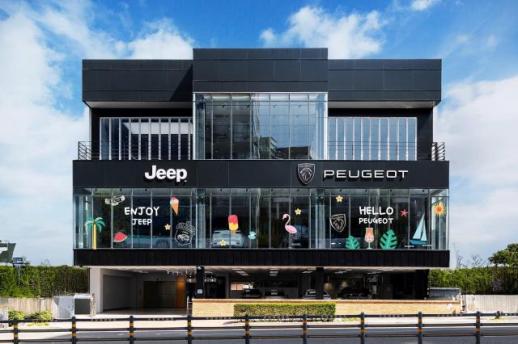 Stellantis Korea to Offer Voluntary Buyouts for First Time in Three Years Stellantis Korea will offer voluntary buyouts for the first time in three years as weak domestic demand persists and its parent company’s performance worsens. According to the auto industry on Monday, Stellantis Korea has recently begun accepting applications from employees. The program covers about 70 workers in the national sales division, which handles sales and marketing for brands including Peugeot and Jeep. There are no age or tenure limits. The company said the process is based entirely on voluntary departures and will follow relevant laws and procedures. Stellantis last carried out restructuring in South Korea in 2023, about three years ago. The latest restructuring is being implemented across all global regions where Stellantis operates, including South Korea. Stellantis has said it would absorb losses of 22.2 billion euros (about 38.4 trillion won) incurred while reshaping its business amid slowing demand for electric vehicles. The move follows prolonged weakness in the EV market, including after the U.S. government tightened requirements for Inflation Reduction Act EV tax credits in October last year. Stellantis is a global automaker formed through the merger of Fiat Chrysler (FCA) and PSA Group. It has 14 brands, including Jeep and Peugeot. Its South Korean results have also remained weak. Jeep sales in South Korea totaled 2,072 units last year, down 21% from 2,628 a year earlier. Peugeot sold 979 units, up 3% from 947. A Stellantis Korea official said the step is part of a global efficiency strategy and a restructuring program being pursued simultaneously in key regions, including South Korea. The official said the company’s domestic business operations will not be affected.* This article has been translated by AI. 2026-02-09 17:03:00