
Journalist

AJP
-
 HD Construction Equipment posts 2025 combined sales of 8.32 trillion won HD Construction Equipment, HD Hyundai’s integrated construction-equipment holding company launched in January, said Thursday that its two units — HD Hyundai Construction Equipment and HD Hyundai Infracore — posted combined 2025 sales of 8.3243 trillion won and operating profit of 457.3 billion won. HD Hyundai Construction Equipment reported 2025 sales of 3.7765 trillion won and operating profit of 170.9 billion won. Sales rose 9.8% from a year earlier, but operating profit fell 10.3% due to higher one-time costs tied to restructuring its China business. The company cited strong growth in emerging markets, Europe and China. Sales in emerging markets rose 21% year over year as mining and infrastructure development continued. Europe and China grew 18% and 26%, respectively, on improving demand. HD Hyundai Infracore posted 2025 sales of 4.5478 trillion won and operating profit of 286.4 billion won, up 10.5% and 55.5% from a year earlier. Its engine business recorded sales of 1.3264 trillion won and an operating margin of 14.3%. An HD Construction Equipment official said the company will strengthen integration synergies and region-specific sales strategies in line with a global market recovery. The official said it will also focus on securing future technology competitiveness and diversifying profit sources, including the aftermarket, engines and compact equipment businesses, to support sustained growth. 2026-02-06 15:12:00
 -
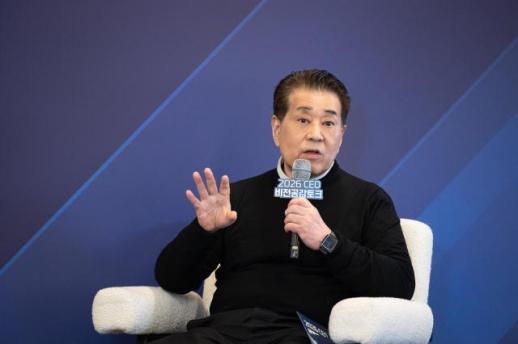 POSCO Chair Chang In-hwa urges faster AI transformation in employee town hall POSCO Group Chairman Chang In-hwa met with about 70 Seoul-area employees Thursday at the POSCO Center for the company’s first employee communication event of the year, a “CEO empathy talk,” to discuss the group’s management philosophy. The session ran about 90 minutes, with a vision briefing by topic followed by open discussion. Chang told participants to prioritize communication and listening, devoting most of the time to debate and Q&A. Asked about the group’s core competitiveness, Chang said POSCO Group is “solid” while also “having wings for the future.” He said the liquefied natural gas (LNG)-centered energy business, along with steel and battery materials, is viewed as the group’s “Next Core,” and its role as a key profit source will be expanded. On the importance of corporate culture, Chang said, “No matter how great the vision and strategy are, what executes them is ultimately our organizational culture.” He added that “overwhelming results” come when employees focus on fundamentals with a spirit of challenge, and that change begins with “empathy,” with management and employees looking in the same direction. Discussion also focused on the group’s artificial intelligence transformation, or AX, strategy and how to use AI. Chang said the group should shift to a goal-driven “Mission Oriented AX” strategy aimed at intelligent autonomous manufacturing, top-level execution capability and new value creation. He said POSCO Group plans to raise the odds of success by concentrating on key tasks and to strengthen external cooperation to speed deployment. Asked about expanding AI and automation and the changes that could follow, Chang said, “AI is now social infrastructure, and the company that converts to AX faster will win.” He said employees’ familiarity with AI is key to introducing autonomous processes, and pledged to expand programs and training opportunities to build AI capabilities. Chang urged employees to become “the main players of change” leading the group, and to meet this year’s management goals through bold, fast execution. He also called on employees to make it a year of proactively protecting their own safety and that of colleagues. POSCO Group said it plans to continue the CEO town hall in the second and third quarters, focusing on Gwangyang and Pohang, and to link the events with employee invitations and site visits to create an environment more focused on delivering results.* This article has been translated by AI. 2026-02-06 15:03:00
 -
 Blockchain expert says adoption in banking is shifting toward financial infrastructure SEOUL, February 06 (AJP) - Global financial institutions are increasingly viewing stablecoins and tokenized deposits as essential infrastructure rather than speculative assets, according to Xin Yan, co-founder and chief executive officer of Sign, a blockchain technology company. This shift is driven by the demand for programmable money that can function natively on-chain. Unlike traditional fiat currency, which relies on fragmented legacy systems, on-chain assets allow for direct settlement, payments, and collateralization without the need for manual intervention. Earlier concerns regarding the technical resilience of blockchain networks have largely subsided. The infrastructure supporting stablecoins has been tested through multiple market cycles and real-world applications. The primary challenges remaining are legal and regulatory, as many jurisdictions have yet to establish frameworks that recognize digital representations of sovereign currency. Xin Yan expects 2026 to bring significant regulatory clarification, moving the industry from debating the existence of these assets to integrating them into the formal monetary system. To scale these systems, financial institutions must bridge the gap between asset settlement speed and compliance verification. While blockchain transactions occur in seconds, identity and compliance checks often still rely on manual processes. The immediate priority for governments and institutions is the transition of identity and entity proofs into digital, verifiable credentials. This digitization allows records to be accessed and verified on-chain instantly, matching the speed of the underlying assets. The long-term role of these technologies is the comprehensive digitization of the global financial system. Whether through stablecoins, tokenized deposits, or central bank digital currencies, the objective is to remove friction from capital movement. Xin Yan notes that successful implementation will likely be invisible to the general public. Instead of focusing on the underlying blockchain technology, users will experience faster business operations and instant money movement. This efficiency is intended to increase the turnover of capital and improve the fluidity of global trade. Trust remains a central factor in the adoption of on-chain systems. For large banks, enterprise blockchain networks offer a more transparent and easier-to-track environment than legacy ledgers. These systems allow for layered data access, ensuring that information is shared only with authorized parties. By moving information flow onto a blockchain, banks can reduce maintenance costs and eliminate the need for large teams to reconcile different ledgers. The automated and transparent nature of these records also makes fraudulent activity more difficult to execute, potentially strengthening the existing trust advantage held by traditional financial institutions. 2026-02-06 14:59:11
 -
 HD Hyundai Electric posts 2025 operating profit of 995.3 billion won, up 48.8% HD Hyundai Electric said Thursday it posted 2025 revenue of 4.0795 trillion won and operating profit of 995.3 billion won, up 22.8% and 48.8% from a year earlier. Sales of power equipment, driven by overseas markets, rose 29.7%. The company cited expanding AI-related industries and rising investment in high-power infrastructure such as data centers, with strong conditions continuing in its key North American market. Revenue in Europe climbed 38.3% from a year earlier and accounted for more than about 10% of total sales. Annual orders totaled US$4.274 billion, exceeding its full-year target of US$3.822 billion. The order backlog rose 21.5% to US$6.731 billion, strengthening its medium- to long-term growth base. A company official said HD Hyundai Electric has already secured more than three years of backlog as global investment in power infrastructure increases. The official said the company will focus on strengthening partnerships, including reserving production schedules with key customers, rather than aggressively expanding orders, to manage external risks such as exchange rates and raw material prices, and will continue a selective order strategy centered on profitability.* This article has been translated by AI. 2026-02-06 14:54:20
 -
 South Korea in talks with UNC for more access to DMZ SEOUL, February 6 (AJP) - South Korea is in close consultations with the U.N. Command (UNC) on ways to effectively manage the Demilitarized Zone (DMZ), the Ministry of Defense said on Friday. The development comes as South Korea reportedly proposed managing the southern side of the heavily fortified zone, which extends 2 kilometers south of the demarcation line separating the two Koreas. South Korea is seeking civilian access to more areas on the southern side of the front line, which have been under the UNC's jurisdiction since the 1953 armistice that ended the Korean War. But the UNC apparently opposed the proposal, saying it could make it difficult to maintain peace and stability in the buffer zone. South Korea currently have to obtain permission from the UNC whenever it needs to bring in heavy equipment for construction work, while some tourism projects remain halted. The ministry said it has been holding working-level talks with the UNC to manage the areas more efficiently since Defense Minister Ahn Gyu-baek assumed his post in July last year. 2026-02-06 14:37:04
 -
 Kazakhstan unveils draft of new constitution for nationwide referendum SEOUL, February 06 (AJP) - The Embassy of the Republic of Kazakhstan has released details regarding a new draft constitution that proposes a comprehensive transformation of the nation's political and legal framework. Initiated by President Kassym-Jomart Tokayev, the reform moves beyond simple amendments to establish a new governance model that will be finalized through a nationwide referendum. The push for a new constitution follows a proposal made by President Kassym-Jomart Tokayev during his Address to the Nation on September 8, 2025. A 130-member Constitutional Commission, including legal experts, civil society representatives, and government officials, reviewed more than 2,000 public proposals submitted via digital platforms. Because the revisions affected 77 articles—roughly 84 percent of the existing document—the commission elected to draft an entirely new text to reflect the country's evolving political landscape. At the core of the proposed changes is a fundamental restructuring of the legislative and executive branches. The draft establishes a unicameral parliament, known as the Kurultai, consisting of 145 deputies elected through a proportional representation system for five-year terms. This system is intended to strengthen the institutional development and accountability of political parties. Additionally, the reform introduces the position of vice president, who will represent the president in dealings with various domestic and international organizations. Legal protections for citizens are significantly expanded under the new draft. It enshrines the Miranda rule and the presumption of innocence into the constitution while prohibiting the retroactive application of laws that impose new burdens on citizens. The document also introduces specific protections for the legal profession and intellectual property. In the digital sphere, the constitution for the first time addresses the protection of citizens' rights within the digital environment, reflecting a shift toward prioritizing human capital and innovation. Social and values-based provisions are also clarified in the 95-article text. The draft reinforces the secular nature of the state by clearly separating religion from government and public education. It defines marriage as a voluntary and equal union between a man and a woman, a move framed as a measure to protect traditional values and strengthen the legal protection of women's rights. The preamble now identifies human rights and freedoms as the highest priority of the state, serving as the guiding principle for all subsequent articles. The drafting process involved open broadcasts of commission meetings to maintain public transparency. While the new text marks a significant departure from the previous governance structure, the draft acknowledges the role of the existing constitution in the history and state-building of Kazakhstan. Public consultation remains open through the e-Otinish and eGov digital platforms. The Constitutional Commission is continuing its work to refine the draft before the document is put to a final vote by the citizens of Kazakhstan. 2026-02-06 14:27:11
 -
 SK Biopharm posts record profit on strong US sales of epilepsy drug SEOUL, February 06 (AJP) - SK Biopharmaceuticals said on Friday that its operating profit more than doubled last year to a record high, driven by strong U.S. sales of its epilepsy drug cenobamate. The drugmaker reported consolidated operating profit of 203.9 billion won for the year, up about 112 percent from a year earlier. Revenue rose 29.1 percent to 706.7 billion won, while net profit increased 11.6 percent to 253.3 billion won. Cenobamate, marketed in the United States under the brand name Xcopri, generated U.S. sales of 630.3 billion won for the year, up around 44 percent. The company said the drug was the main driver of the profit surge and also delivered about 27 billion won in annual royalty income. Monthly prescriptions for cenobamate in the United States reached about 47,000 in December. In the fourth quarter, total prescriptions rose 6.8 percent from the previous quarter and 29.2 percent from a year earlier. Fourth-quarter revenue increased 19.2 percent year-on-year to 194.4 billion won, while operating profit fell 34 percent to 46.3 billion won. The company attributed the quarterly decline in profit to year-end seasonality and inventory in transit, despite steady prescription growth. * This article, published by Aju Business Daily, was translated by AI and edited by AJP. 2026-02-06 14:17:44
 -
 Koreans' overseas stock buying nearly matches current account surplus SEOUL, February 06 (AJP) - South Korean purchases of overseas stocks tripled from a year earlier to a record high last year, nearly matching the country’s record current account surplus, according to central bank data released on Friday. Preliminary balance-of-payments figures from the Bank of Korea (BOK) showed South Korean residents bought $114.3 billion worth of foreign equities in 2025, up $72.2 billion from the previous year. That amounted to 92.9 percent of the country’s record current account surplus of $123 billion. By investor type, asset managers, securities firms and insurers accounted for $42.1 billion in overseas equity purchases, while public institutions, including the National Pension Service, bought $40.7 billion. Individual investors purchased $31.4 billion in foreign stocks. However, when overseas exchange-traded fund investments made through asset managers are included, total direct and indirect overseas equity investment by individuals is estimated to exceed that of public institutions, Kim Young-hwan, head of the BOK’s Economic Statistics Department, said. The central bank views the trend as a structural factor influencing the won's weakness. Kim said the surge in overseas stock investment last year “offset a significant portion” of the impact stemming from the large current account surplus, Kim said. * This article, published by Aju Business Daily, was translated by AI and edited by AJP. 2026-02-06 13:55:35
 -
 Hanwha pitcher Moon Dong-ju left off 2026 WBC roster with shoulder injury This series takes a closer look at issues involving players on the field, using interviews, records and career context. <Editor’s note> Hanwha Eagles pitcher Moon Dong-ju has been left off South Korea’s roster for the 2026 World Baseball Classic in March because of a shoulder injury. The Korea Baseball Organization announced the WBC roster on Thursday at the Korea Press Center in Seoul, with national team manager Ryu Ji-hyun and KBO Strengthening Committee chairman Cho Kye-hyun in attendance. Moon’s absence drew attention because he had been included in the team’s first training camp last month in Saipan. Ryu said Hanwha notified him on Jan. 30 that Moon’s shoulder condition was not good. “He was preparing for a bullpen session, but we were told the pain actually got worse,” Ryu said, explaining the decision to exclude him. Moon is scheduled to visit a hospital on Friday, and the results could shape Hanwha’s season. Hanwha signaled a win-now push in free agency by signing Kang Baek-ho to a four-year deal worth up to 10 billion won. The club also retained Son Ah-seop — described as the KBO’s all-time hits leader — on a one-year contract worth 100 million won. After finishing as runner-up last season, Hanwha’s lineup depth has improved. But the pitching staff faces clear holes compared with last year. Foreign starters Cody Ponce (Toronto Blue Jays) and Ryan Weiss (Houston Astros) left for the United States, and left-hander Kim Beom-su moved to the Kia Tigers as a free agent. Hanwha added foreign pitchers Wilkel Hernandez and Owen White, and selected Wang Yen-cheng under the league’s newly introduced Asia quota, but questions remain about how much they can cover those losses — especially with Moon, expected to fill a No. 3 or No. 4 starter role, now hurt. The severity of Moon’s injury is still unknown, but shoulder problems are often viewed as more difficult for pitchers than elbow injuries. Even if he returns, concerns remain that he could lose velocity or effectiveness. Hanwha’s title chances are expected to hinge in part on how quickly Moon recovers. 2026-02-06 13:15:00
 -
 LIG Nex1, L3Harris Begin Developing Weather Payload for Cheollian Satellite 5 LIG Nex1 said it has begun developing a weather payload for the geostationary meteorological and space-weather satellite Cheollian Satellite 5 with L3Harris, a global space and defense company. The company said Friday that it held a project kickoff meeting on Feb. 4 (local time) at L3Harris’ site in Fort Wayne, Indiana, formalizing a cooperation framework between the two companies. The Cheollian Satellite 5 program is designed for a private company, rather than the government, to serve as the lead R&D organization and carry out the full process from satellite design to manufacturing, testing and integration. Under the agreement, L3Harris will handle the payload’s core design and development, while LIG Nex1 will oversee domestic quality control, performance testing and system integration with the satellite bus, the company said. The new payload is expected to significantly improve forecast accuracy and timeliness compared with the currently operating Cheollian Satellite 2A. It will be optimized for observing East Asia, including the Korean Peninsula, and will include hazardous weather tracking and monitoring functions. LIG Nex1 previously signed a 274.5 billion won agreement with the Korea Meteorological Industry Technology Institute to develop the Cheollian Satellite 5 weather payload. A LIG Nex1 official said the partnership is “a strategic cooperation model” that goes beyond a simple technology transfer by integrating advanced space technology into South Korea’s development system and building expertise. The official said it will serve as a key foundation for expanding localization and strengthening technological self-reliance in next-generation satellite programs.* This article has been translated by AI. 2026-02-06 12:57:00