
Journalist

AJP
-
 Vietnam Streamlines Rail Approval Process to Speed Infrastructure Projects Vietnam’s Ministry of Construction has abolished and adjusted some administrative procedures in the rail sector to speed up rail infrastructure development. Vietnam’s government website reported on Jan. 22 that the ministry eliminated several rail-related procedures effective Jan. 1. The changes follow Decision No. 2,267 (2,267/QD-BXD), announced by the ministry on Dec. 10. Under the decision, the ministry’s approval process for commercialization policy for rail line-connection projects was scrapped, along with the Vietnam Railway Authority’s procedure for issuing safety assessment certificates for urban rail systems. The decision also reorganized responsibilities among agencies. The Vietnam Register will issue safety and environmental compliance certificates for rail vehicles, while the Vietnam Railway Authority will oversee rail vehicle registration and issue operating permits. Permits related to rail connections and approvals to install or remove level crossings will be handled by the Vietnam Railway Authority or provincial and municipal people’s committees. Certification for specialized personnel, including rail inspectors, was newly assigned to the Vietnam Register. The Ministry of Construction will retain authority to approve plans for maintaining and managing rail facilities.* This article has been translated by AI. 2026-01-28 16:42:33
 -
 SK hynix to cancel 12.24 trillion won in treasury shares to boost shareholder value SK hynix said in a regulatory filing on Tuesday that it has decided to cancel 12.24 trillion won ($12.24 trillion) worth of its own shares. The company will cancel 15.3 million common shares on Feb. 9. The par value is 5,000 won per share. SK hynix said the cancellation will be carried out under the proviso to Article 343(1) of the Commercial Act, using treasury shares previously acquired within the limit of distributable profits and canceled by a board resolution. It said the total number of shares outstanding will fall, but paid-in capital will not. * This article has been translated by AI. 2026-01-28 16:42:26
 -
 SK hynix posts record annual revenue of 97.1 trillion won and operating profit of 47.2 trillion won Breaking: SK hynix posts record annual revenue of 97.1 trillion won and operating profit of 47.2 trillion won* This article has been translated by AI. 2026-01-28 16:42:24
 -
SK hynix Q4 revenue tops 32 trillion won, a quarterly record SK hynix Q4 revenue tops 32 trillion won, a quarterly record SK hynix said its fourth-quarter revenue topped 32 trillion won, setting a record for the company’s quarterly sales.* This article has been translated by AI. 2026-01-28 16:39:00
-
 Lotte Cinema Unveils February Exclusive “Lottepick” Animation Lineup Lotte Cinema has announced its February lineup for “Lottepick,” a series of exclusive theatrical releases. With animation emerging as a major draw at the box office, the chain said it curated three themed titles aimed at both families on school break and dedicated animation fans. “I Am Star! X Pripara The Movie -Miracle of Encounter!-,” a collaboration marking the 10th anniversary of “I Am Star!” and “Pripara,” will open exclusively on Feb. 4. The two franchises are long-running staples of girls’ animation, and the film brings to theaters a crossover project fans have sought for years. The children’s series “Octonauts” returns with a new season, “Land Creature Rescue Operation,” opening Feb. 12. Lotte Cinema described it as an adventure education animation in which the Octonauts and their agents set out to rescue land animals, expanding their missions beyond the sea to land and sky. “Baby Tyranno Devo: It’s OK to Be a Herbivore!” opens Feb. 25. The coming-of-age adventure follows Devo, a baby carnivorous dinosaur raised among a herd of herbivores, as he navigates mishaps and friendships. Set in the Cretaceous period, the film features Devo, his family and a range of colorful dinosaur characters. Lotte Cinema said, “To match the school vacation season and holidays, we selected three animated films that all generations can enjoy together. We will continue to introduce outstanding content across genres each month through ‘Lottepick.’”* This article has been translated by AI. 2026-01-28 16:36:21
 -
SK hynix posts record annual operating profit of 47.2 trillion won SK hynix reported an annual operating profit of 47.2 trillion won, its highest on record. 2026-01-28 16:36:18
-
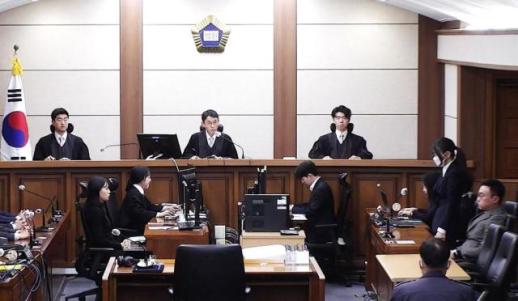 Former first lady sentenced to 20 months in prison for bribery charges SEOUL, January 28 (AJP) - Former first lady Kim Keon Hee was sentenced on Wednesday to one year and eight months in prison for accepting bribes, one of multiple allegations against her. In a televised verdict, the Seoul Central District Court in southern Seoul found her guilty of accepting luxury handbags and jewelry in return for favors from secretive religious sect Unification Church, better known as the Moonies. However, it dismissed charges that she was allegedly involved in a stock manipulation scheme and in interfering with candidate nominations during the 2022 by-elections. The sentence was far shorter than the 15-year prison term prosecutors had sought last month. The court also ordered Kim to forfeit 12.8 million won (US$8,988). With Wednesday's ruling, Kim and her husband, who was sentenced to five years in prison earlier this month over one of several charges related to his botched Dec. 3 martial law debacle in 2024, became the country's first former presidential couple to both be imprisoned on criminal convictions. Meanwhile, later in the day, Kweon Seong-dong, the former leader of the main opposition People Power Party (PPP), was sentenced to two years in prison for receiving 100 million won in political funds from the church in 2022. 2026-01-28 16:35:33
 -
 South Korea to End Capital-Area Commuter Buses Run by Relocated Public Agencies Public agencies that relocated outside the Seoul metropolitan area will be required to stop operating chartered commuter buses to and from the capital region, a move aimed at strengthening the effectiveness of the relocation policy. The government said it will also prepare measures to improve living conditions in innovation cities. According to the government on Tuesday, the Ministry of Land, Infrastructure and Transport sent official notices to public agencies on Monday and Tuesday instructing them to wind down capital-area charter commuter bus operations run by agencies moved to innovation cities. The guidance calls for ending operations within three months, and completing all terminations within six months if contract cancellations trigger penalties. The step follows comments by President Lee Jae Myung at a New Year’s news conference on Jan. 21, when he said there is no relocation effect if agencies move to the regions but still run charter buses for commuting to the capital. A ministry survey found that, as of the end of last year, 47 of 149 relocated public agencies were operating charter commuter buses to the capital region. The buses operate from eight innovation cities, excluding Busan and Jeju, with about 22 billion won spent annually. In North Chungcheong Province, 10 of 11 agencies run weekday commuter buses to the capital region; in Gangwon Province, six of 11 do. Commuter buses for civil servants traveling between the capital region and the Government Complex Sejong were fully suspended in December 2021. The ministry said that more than a decade after the relocations, some agencies are still running commuter buses for employees traveling to the capital rather than supporting local settlement. It said the practice undermines regional economic contributions and efforts to revitalize innovation cities, and that the decision was made after interagency discussions. Separately, the ministry said it plans to speed up work to improve living conditions in innovation cities. It said ministries are identifying short-term tasks with their affiliated agencies and will also work with local governments to develop measures to improve conditions in innovation cities during a second phase of public agency relocations. * This article has been translated by AI. 2026-01-28 16:30:25
 -
 South Korea to Launch Public Growth Fund in June, Begins Design Talks South Korea’s Public Participation Growth Fund is expected to be launched and sold around June. The Financial Services Commission said it held its first task force meeting on Tuesday to discuss the fund’s product structure and management plan. The policy fund is designed to let ordinary investors make long-term investments in advanced strategic industries through a publicly offered fund. The public fund will spread money across multiple sub-funds managed by private investment professionals. Key targets are expected to include companies tied to advanced strategic industries such as semiconductors and secondary batteries, as well as related infrastructure firms. The goal is to raise 600 billion won a year, totaling 3 trillion won over five years. Participants agreed the tax benefits are more generous than those offered by existing policy funds, including an income deduction of up to 40% depending on the investment amount and a separate 9% tax rate on dividend income. They also said product design should balance the policy goal of long-term investment in advanced strategic industries with fund returns. The task force plans further talks on the main investment targets and allocation ratios, incentives and performance reviews to encourage managers to run the fund in line with its purpose, and criteria for selecting sub-fund managers. The commission said it plans to finalize and announce the product structure in March, then select managers for the public fund and sub-funds before launching the product for retail investors around June.* This article has been translated by AI. 2026-01-28 16:30:19
 -
 SK hynix to Cancel 12.24 Trillion Won in Treasury Shares * This article has been translated by AI. 2026-01-28 16:27:26