
Journalist

AJP
-
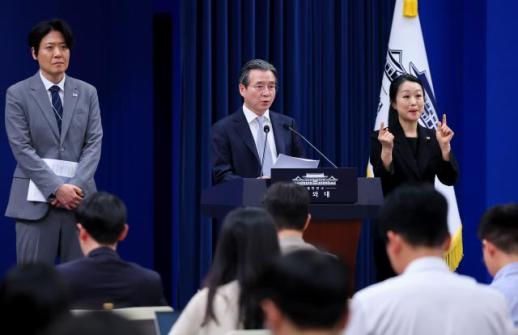 Kim Yong-beom says long-term capital gains tax break will stay; tax deferral helped cool Gangnam prices Kim Yong-beom, head of policy at the presidential office, said Monday the long-term holding special deduction for home-sale capital gains taxes will “of course” be maintained. Speaking at a news briefing at Cheong Wa Dae, Kim addressed a bill by Progressive Party lawmaker Yoon Jong-oh that would abolish the deduction entirely. Kim said the government is only considering adjustments and that claims it would reduce owner-occupancy are “not true at all.” Kim added, however, that officials need to consider whether applying the same 40% deduction rate to both residence and holding periods fits the goal of reshaping the housing market around owner-occupiers. “If the system is reorganized around actual residence, there may be cases worth considering for non-residence, but we need to gather more opinions,” he said, stressing that the government will do its best to ensure there are no problems protecting owner-occupiers with a single home. The long-term holding special deduction reduces taxes on gains from selling real estate held for at least three years, with the deduction rising with the holding period. For example, selling a single home held and lived in for at least 10 years can qualify for a 40% holding-period deduction and a 40% residence-period deduction, making 80% of the capital gain tax-exempt. Last month, President Lee wrote on X, formerly Twitter, that “normalizing the abnormal practice of cutting taxes for people who speculated for a long time on homes they don’t live in” is not a “tax bomb.” He said that to properly protect single-home owners, it would be right to reduce tax breaks tied to non-resident holding periods and increase breaks tied to resident holding periods. Kim said Lee had signaled plans to rationalize the tax system by differentiating among categories such as multiple-home owners, non-residents and ultra-high-priced homes, and that ministries and related organizations are studying options. Kim also said the presidential office believes the deferral of heavier capital gains taxes on multiple-home owners — set to expire May 9 — helped bring more homes to market and contributed to price declines in premium apartment areas such as Seoul’s Gangnam district. He said listings increased after the government announced it would end the deferral, and prices fell particularly in high-priced apartment areas including Gangnam’s three districts and Yongsan. Kim said that since Jan. 23, sale listings in the three Gangnam districts and Yongsan have risen about 46%, and price gains have turned into declines. He called it a meaningful change that high-end apartment areas fell first, an unusual pattern that also matters in terms of easing asset inequality. He said sales of Seoul apartments held by multiple-home owners in March rose 32% from a year earlier, and 73% of buyers were people without homes. He said it was also positive that transactions were centered on end-users such as young people. Looking ahead, Kim said some decline in listings is inevitable after the deferral ends, but he argued the same pattern seen in 2021 is unlikely to repeat because strong measures such as lending rules and the land transaction permit system are already in place. On the government’s pledged plan to supply 60,000 housing units, Kim said it will begin as announced. 2026-05-04 17:37:25
 -
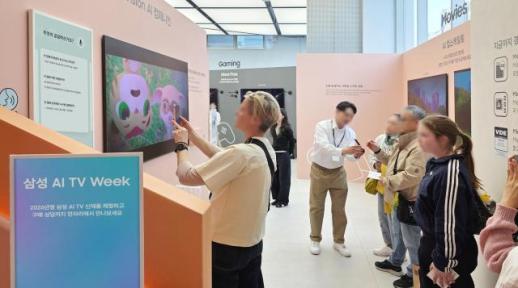 Samsung Elec changes TV chief as Chinese rivals ascend SEOUL, May 04 (AJP) - Samsung Electronics has replaced the head of its television business as South Korean TV brands' long-held dominance over global premium market is being threatened by Chinese rivals whose price appeal has been reinforced with open-source artificial intelligence features. Once-household TV names Samsung and LG Electronics are increasingly being squeezed on global shelves by Chinese competitors repowered with AI specs. According to 2025 data from Counterpoint Research, Chinese manufacturers TCL and Hisense captured a combined 25 percent share of the global TV market by shipment volume, overtaking the combined 24 percent held by Samsung and LG. Samsung accounted for 15 percent and LG 9 percent. The competitive shift became more visible in December 2025, when TCL briefly surpassed Samsung in monthly TV shipments to claim the global top spot. The rise of Chinese manufacturers has coincided with their rapid adoption of low-cost, high-efficiency AI models such as DeepSeek across consumer electronics. Companies including TCL and Haier are integrating open-source large language models into televisions and home appliances to provide advanced voice interaction and smart-home functions once viewed as strengths of Korean premium brands. Against that backdrop, Samsung Electronics on Monday announced a surprise leadership change in its visual display business, appointing President Lee Won-jin, head of the company’s Global Marketing Office and a former Google executive, to replace President Yong Seok-woo as division chief. The reshuffle is widely viewed as a strategic shift toward strengthening Samsung’s AI ecosystem and software capabilities rather than relying solely on hardware competitiveness. “With the integration of on-device AI in home appliances, data security and the ecosystem connecting these devices have become paramount,” said Chae Sang-mi, a professor of business administration at Ewha Womans University. “The appointment of a former Google executive suggests Samsung may be pivoting toward a premium, AI-centric ecosystem that leverages data and device networks to differentiate itself.” Industry observers say Samsung is increasingly attempting to counter Chinese manufacturers not only through premium hardware, but also through platform-based services such as its ad-supported streaming platform Samsung TV Plus and broader connected-device ecosystems. Samsung’s visual display and digital appliance businesses reportedly posted a combined annual operating loss of around 200 billion won ($145 million) last year, reflecting mounting pressure in the mass-market segment. Japanese daily Nikkei reported late last month that Samsung is considering withdrawing its TV and home appliance sales operations from China by the end of this year, although manufacturing operations would remain in place. Asked about the possibility during a public event in Seoul last month, former visual display head Yong acknowledged that the Chinese market remains “challenging” and said the company was “reviewing the business in various ways.” Samsung said Monday that it has “no official position yet” regarding the reported withdrawal. Chae said such a move would reflect broader structural changes in the global electronics market. “As Chinese brands upgrade from budget to premium strategies with AI capabilities, Samsung’s market share in standard segments has inevitably dropped,” she said. “From a business perspective, exiting low-margin areas to focus on high-value premium products is a necessary strategic move.” Despite losing ground in overall shipment volume, Samsung and LG continue to dominate the ultra-premium segment. According to market research firm Omdia, the two South Korean companies accounted for nearly 80 percent of global revenue in televisions priced above $2,500, with Samsung holding 49.6 percent and LG 30.2 percent. TCL and Hisense each accounted for roughly 1 percent in the premium category. Still, analysts say the broader competitive landscape is shifting quickly as AI lowers software barriers and accelerates the rise of Chinese consumer electronics brands beyond low-cost manufacturing. For Samsung, the challenge is no longer simply maintaining leadership in televisions, but defending its ecosystem advantage in an AI-driven consumer market increasingly shaped by Chinese competitors. 2026-05-04 17:36:39
 -
 Samsung, Meta Set for AI Smart Glasses Showdown in Second Half of 2026 The market for artificial intelligence-powered smart glasses, widely seen as a next-generation device after smartphones, is expected to heat up in the second half of the year as Samsung Electronics and Meta prepare competing launches. As AI moves into eyewear, companies are betting on real-time translation, hands-free controls and faster processing of visual information to push “wearable AI” into the mainstream. Industry sources and foreign media reported Sunday that Samsung, working with Google and Qualcomm, is expected to reveal its next AI smart glasses as early as July. Attention is focused on Samsung’s second-half “Galaxy Unpacked” event, scheduled to be held in London, where the company could show the device publicly for the first time. The product is being developed as a three-way effort: Samsung’s hardware, Google’s Android-based wearable operating system and a dedicated Qualcomm chipset. Samsung previously said at an Unpacked event early last year that it would work with Google and Qualcomm to build an extended reality, or XR, ecosystem. Samsung’s glasses are expected to emphasize a lighter, everyday eyewear form rather than a headset-style XR device. Cameras and sensors in the frame are expected to track a user’s gaze, while Google’s generative AI, Gemini, would analyze objects in view or provide real-time interpretation and translation services. The device is also expected to be “screenless,” with no separate display, to keep weight down and focus on an AI assistant and audio functions. Qualcomm’s Snapdragon AR1 chip is expected to serve as the device’s processor, handling complex AI algorithms quickly. The glasses are expected to support immediate interaction without a smartphone connection. The price is expected to range from $379 to $499. Meta, meanwhile, is stepping up its push into South Korea with its Ray-Ban Meta smart glasses. The company recently set July as the launch date for its AI glasses in the country, after strong global demand. It is expected to lead with the second-generation Ray-Ban Meta glasses and also introduce two Oakley Meta series models in a goggle-like design. Unlike Samsung’s expected approach, Meta’s product is described as keeping the look of regular glasses while inserting display lenses and maximizing voice-based “Meta AI” assistant features. Users can listen to music, make calls and capture point-of-view photos. The South Korea models are expected to include Korean-language features and services tailored to local users, as part of a strategy to improve convenience for customers in the country. Both companies are investing heavily in AI smart glasses as they compete for leadership in what they see as a “post-smartphone” market. Smartphones have clear physical limits, while glasses are directly tied to a user’s field of view, making them a strong platform for AI to understand context, the report said. Counterpoint Research said the global AR smart glasses market grew 98% in 2025 from a year earlier. Growth in the second half of last year rose 148% from the same period a year earlier. “AI smart glasses will be a contest over who delivers the most convenient AI user experience,” an industry official was quoted as saying. With Samsung’s ecosystem strength facing Meta’s early technology lead, the official said, the smart glasses market appears to be approaching a turning point.* This article has been translated by AI. 2026-05-04 17:36:19
 -
 KOSPI hits record high, approaching the 7,000 mark SEOUL, May 04 (AJP) - Korea’s benchmark KOSPI led gains across Asia on Monday, surging more than five percent to a fresh high as markets in China and Japan remained closed for holidays, while Hong Kong posted comparatively modest gains. The KOSPI closed 5.12 percent higher at a record 6,936.99, after moving between an intraday low of 6,741.63 and a high of 6,937.00. The rally was driven by strong foreign and institutional buying, with foreign investors purchasing 3.00 trillion won ($2.04 billion) worth of shares and institutions adding 1.94 trillion won, while retail investors sold 4.79 trillion won, indicating a market led by offshore and institutional flows. Large-cap technology and semiconductor stocks led the advance, supported by continued optimism over artificial intelligence investment and improving global tech sentiment. SK hynix jumped 12.5 percent to close at 1,447,000 won, after touching an intraday high of 1,450,000 won, while SK Square surged 17.8 percent to 991,000 won. Samsung Electronics rose 5.4 percent to 232,500 won, extending gains across the broader chip sector. Gains also spread to other sectors. LG Energy Solution climbed 2.5 percent to 472,000 won, while Hyundai Motor added 1.5 percent to 539,000 won. In the industrial and defense sector, Hanwha Aerospace rose 3.4 percent to 1,465,000 won and Doosan Enerbility edged up 0.1 percent to 127,200 won, while HD Hyundai Heavy Industries slipped 0.7 percent to 680,000 won. Biotech heavyweight Samsung Biologics rose 1.02 percent to 1,485,000 won. By sector, conglomerates led the gains, rising 11.6 percent, followed by electrical equipment and securities, which both climbed 8.6 percent. Theme-wise, cable-related stocks surged 17 percent, while power equipment and optical communication sectors advanced 11.4 percent and 10.5 percent, respectively. On the junior KOSDAQ, the index rose 1.8 percent to close at 1,213.74, moving between 1,211.39 and 1,222.65 during the session. Foreign investors bought 555.3 billion won worth of shares, while retail investors sold 448.9 billion won, and institutions offloaded 73.6 billion won. Among major stocks, battery and materials names led the gains. EcoPro rose 1.9 percent to close at 155,800 won, while EcoPro BM jumped 4.6 percent to 215,500 won. Biotech stocks were mixed. Alteogen gained 1.2 percent to 373,000 won, while HLB edged up 0.2 percent to 60,900 won and Peptron climbed 2.7 percent to 267,500 won. Samchundang Pharm, however, fell 1.4 percent to 409,500 won. In the robotics and equipment sector, Rainbow Robotics rose 3.2 percent to 685,000 won, while LEENO Industrial added 1.3 percent to 120,800 won. The Korean won strengthened 0.5 percent to 1,467.7 per dollar. Elsewhere in Asia, Hong Kong’s Hang Seng Index rose 1.3 percent to 26,120.0, while Japan’s Nikkei 225 and China’s Shanghai Composite remained closed for holidays. Market sentiment was also supported by developments in the Middle East, as the United States announced a new initiative, dubbed “Project Freedom,” aimed at facilitating the movement of commercial vessels through the Strait of Hormuz. Under the plan, U.S. Central Command said it would deploy guided missile destroyers, more than 100 aircraft and unmanned platforms, and around 15,000 personnel to support maritime operations. However, officials indicated that direct naval escort of commercial ships would not be part of the operation, suggesting a coordination-based approach involving governments, insurers, and shipping firms. The initiative comes amid mounting pressure in global energy markets, with more than 2,000 vessels and approximately 20,000 crew members stranded in and around the Strait of Hormuz, according to the International Maritime Organization. Oil prices remained volatile. Brent crude traded at $108.8 per barrel, up 0.6 percent, while West Texas Intermediate rose 0.5 percent to $102.5. 2026-05-04 17:27:28
 -
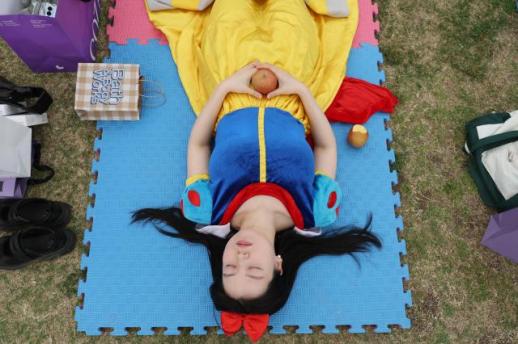 In South Korea, even sleep becomes a public competition SEOUL, May 04 (AJP) - In South Korea, where overwork and sleep deprivation have become almost a national condition, even rest now comes with rules, timers and a scoreboard. At the Han River on Saturday afternoon, 170 contestants arrived armed with plush toys, mosquito-proof determination and creative signs — including one reading, “Don’t wake me up unless you’re a prince” matched in modern-day Sleeping Beauty gown for Seoul’s annual Han River Napping Championship. Since overwork and chronic sleep deprivation come with the journalist’s job, I joined them. The rule was paradoxically simple: fall asleep in public — deeply — while everyone watches. Going to sleep required rituals and performance. A pre-nap yoga session intended to relax participants did the opposite for someone unaccustomed to stretching both muscles and stress. Some contestants clung to oversized stuffed animals like emotional-support teammates. One wore a sleep mask labeled “Offline.” Another built a miniature “sleep zone” complete with neck pillows and warning tape. The challenge was not merely to nap. It was to nap competitively. Lying among 170 strangers in an open public space, the experience of trying to rest became something communal — and for many, strangely unfamiliar. Participants were fitted with heart-rate monitors checked every 30 minutes, while organizers wandered through the crowd armed with feathers and mosquito sound effects to sabotage sleepers. Winners were chosen based on how steadily and deeply their heart rates dropped over time, turning the ancient human act of collapsing from exhaustion into quantified performance art. Then every 30 minutes, the host’s microphone shattered the silence again. From afar, the riverside scene looked peaceful, almost whimsical. Up close, it resembled a wellness survival game show: rest under observation, relaxation under evaluation. Yet for many participants, the event felt less absurd than oddly familiar. “I usually sleep about three to four hours a day,” said Nam Ji-soo, a 30-year-old office worker. “Work doesn’t really stop, and even on weekends, it’s hard to feel fully rested.” University student Park Jun-seok blamed the modern holy trinity of insomnia — social media, short videos and endless notifications. “You lie down to rest, but something always distracts you,” he said. “Social media and YouTube end up being the biggest cause of my lack of sleep.” Their exhaustion reflects a broader national pattern. South Korea ranked near the bottom globally in the IKEA Sleep Report 2025, placing 50th out of 57 surveyed markets with one of the world’s lowest sleep satisfaction levels. Koreans averaged just 6 hours and 27 minutes of sleep per night, among the shortest durations recorded. And even that may be optimistic. A separate 2025 study by the Korean Society of Sleep Research estimated actual average sleep time at only 5 hours and 25 minutes. Another report found Koreans sleep roughly 90 minutes less than the OECD average. Perhaps most revealing is what happens before bed: nearly 70 percent of adults use smartphones until the moment they fall asleep, while more than 60 percent keep their phones beside them overnight. The sleep deficit is coupled with overwork and stress, and experts say the daydreaming or sleeping contests reflects something deeper about modern Korean life. “Sleeping is something we usually do alone, in a private space. But here, it happens in public,” said Kim Jae-hwi, a psychology professor at Chung-Ang University. “Koreans are turning the most private time into a public show.” And perhaps that is what made the scene feel strangely fitting. In a country where productivity rarely powers down and smartphones follow people into bed, even doing nothing now requires an organized event, a heart-rate tracker and an official excuse to rest. For one afternoon at the Han River, sleep stopped being invisible. It became performance, competition — and somehow, entertainment. For me, it was the rarest luxury of all: sanctioned rest disguised as work. 2026-05-04 17:23:28
 -
 Korea’s 5 Automakers Sell 666,248 Vehicles in April, Down 3.3% on Middle East Uncertainty Uncertainty tied to the war in the Middle East clouded South Korea’s auto exports in April, producing mixed results among the country’s five automakers. Hyundai Motor and Renault Korea posted year-on-year declines amid a gap in new-model launches and weaker exports, while Kia, KG Mobility (KGM) and GM Korea reported gains on steady demand for popular models and more diversified export markets. Industry data released Sunday showed combined global sales by Hyundai, Kia, KGM, GM Korea and Renault Korea totaled 666,248 vehicles in April, down 3.3% from a year earlier. Domestic sales fell 8.8% to 117,314, while overseas sales slipped 2.1% to 548,483. Hyundai sold 325,589 vehicles worldwide in April, down 8% from a year earlier. Domestic sales dropped 19.9% to 54,051, and overseas sales fell 5.1% to 271,538. A Hyundai official said sales weakened as parts supply disruptions at suppliers reduced production of key models such as the Palisade and G80, while demand built up ahead of new-model launches. The official said Hyundai plans to expand sales by rolling out a series of competitive new models this year, starting with a Grandeur facelift. Kia reported global sales of 277,188 vehicles, up 1%. Overseas sales edged down 0.7% to 221,692, but domestic sales rose 7.9% to 55,045, driving overall growth. A Kia official said sales in Arab and Middle Eastern markets fell somewhat due to geopolitical risks, but strong demand in Korea and in overseas regions outside the Middle East supported growth. The official said Kia will seek to sustain momentum with eco-friendly vehicles, including electric and hybrid SUVs. KGM sold 9,512 vehicles in April, up 6.5% from a year earlier, led by export growth. Domestic sales fell 4.6% to 3,382, while exports rose 13.8% to 6,130. Among export models, Musso topped 6,000 units for the first time in four months, since December 2025, when it sold 7,000. A KGM official said exports are recovering, with April sales up 6.5% year-on-year and up 4.7% on a cumulative basis. The official said Musso has been well received at home and drew favorable reviews at a global launch event last month, and KGM plans to expand launches by country and strengthen cooperation with local dealers to increase volumes. GM Korea sold 47,760 vehicles in April, up 14.7% from a year earlier. Domestic sales were 811 and exports were 46,949. It was the company’s third month this year with sales above 40,000 vehicles, following January and March. Renault Korea sold 6,199 vehicles in April, down 40.5% from a year earlier. Domestic sales fell 23.4% to 4,025, and exports dropped 58% to 2,174. A Renault Korea official said sales declined as economic uncertainty persisted, including higher oil prices linked to the Middle East war. The official said the company will increase customer promotions starting in May, citing the proven competitiveness of its HEV E-Tech models. * This article has been translated by AI. 2026-05-04 17:18:36
 -
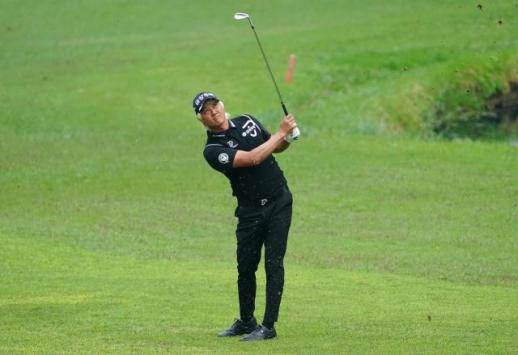 Korea Golf Association Admits Errors in Heo In-hoi Score Change at GS Caltex Maekyung Open The Korea Golf Association on Sunday acknowledged operational mistakes in the scoring controversy involving Heo In-hoi at the 45th GS Caltex Maekyung Open. In a statement issued Sunday, the association said that while it ultimately ruled Heo’s original ball out of bounds during the third round played May 2, “there were several mistakes” in how the situation was handled. The association said it based its decision on multiple accounts from an on-site forecaddie, the caddies of Heo’s playing partners, broadcast staff and a referee. It admitted errors including: allowing play to continue with a provisional ball after the OB occurred but recording a par instead of a double bogey; failing to inform the player of the OB ruling while the final round was underway; and delaying formal guidance and public notice. Heo played on without realizing his tee shot on the seventh hole in the third round had been ruled OB. In the final round on May 3, he shot 7-under and finished tied for the lead with Song Min-hyeok and Jo Min-gyu. But as he prepared to enter a playoff, tournament officials notified him that his score on the previous day’s seventh hole had been changed from par to double bogey. With a two-stroke penalty applied, Heo fell to a tie for third at 9-under 275. “We apologize for the confusion caused to tournament officials, players, players’ families and fans,” the association said. It pledged to strengthen competition operations and said it will form an incident response committee to revise its operating manual to prevent a recurrence. The episode has drawn attention overseas. U.S. golf outlets including Golf Digest and Golfweek criticized what they called an “absurd ruling” on the Asian Tour. Golf Digest ran the headline, “Bizarre retroactive penalty in Korea, golfer excluded from playoff over previous day’s issue,” while Golfweek published, “Absurd Asian Tour ruling, golfer eliminated from playoff a day later.” Foreign reports highlighted the unusual timing: a penalty assessed about 24 hours later that kept a player who had been in the title fight out of the playoff. They also described disputes among players over the ruling and a tense atmosphere during the final round, raising questions about the tournament committee’s application of the rules.* This article has been translated by AI. 2026-05-04 17:09:31
 -
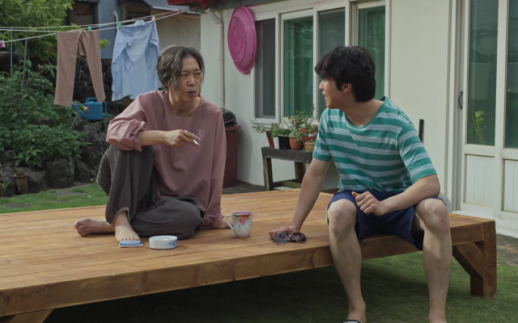 South Korean film 'My Name' wins Audience Award at Italian festival SEOUL, May 04 (AJP) - South Korean film "My Name," directed by Chung Ji-young and centering on the 1948 Jeju 4.3 massacre, won the Audience Award at the Udine Far East Film Festival in Italy on Monday, the film's distributor Let's Films said. The victory at Europe's largest festival dedicated to Asian cinema suggests that South Korean historical narratives are gaining universal resonance through popular vote. The Audience Award is determined by direct ballots from attendees at the Nuovo Giovanni Theater. This marks a significant moment for a film dealing with specific domestic trauma to receive direct validation from an international audience. Production company Let's Films said the movie tells the story of 18-year-old Shin Woo-bin and his mother, Yeom Hye-ran, as they navigate the legacy of the incident. Since its April 15 release, the film has attracted 191,000 viewers in South Korea while maintaining grassroots momentum through organized relay screenings. The Jeju 4.3 Incident refers to a series of uprisings and subsequent brutal suppressions on Jeju Island, currently one of South Korea's favorite getaway destinations, between 1948 and 1954. According to the Jeju 4.3 Peace Foundation, the military and police campaign resulted in the death of an estimated 30,000 people, representing roughly 10 percent of the island's population at the time. Historical records from the National Institute of Korean History show that the Northwest Youth League, a right-wing paramilitary group, carried out many of the most severe atrocities against civilians. The group was primarily composed of Christian refugees who had fled the northern region of the peninsula to escape communist persecution. Driven by extreme anti-communist sentiment and a sense of displacement, members of the Northwest Youth League engaged in widespread extrajudicial killings, rape, and torture. Their presence on the island was often characterized by a lack of oversight, leading to indiscriminate violence against those suspected of leftist sympathies. Let's Films stated that the international recognition in Udine highlights the potential for South Korean cinema to facilitate global understanding of human rights issues. The film continues to play in South Korean theaters as civic groups host additional screenings to maintain public awareness. 2026-05-04 17:06:20
 -
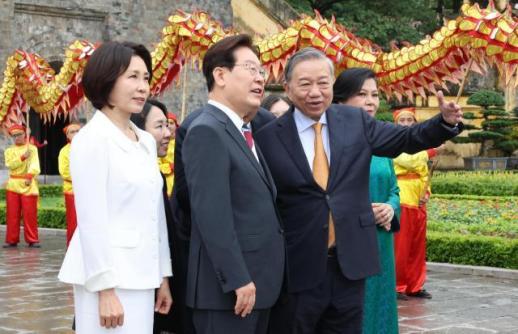 Lee Jae-myung to Host Children’s Day Event at Cheong Wa Dae President Lee Jae-myung will host a Children’s Day event May 5 at the Cheong Wa Dae main building and Nokjiwon lawn, the presidential office said. It will be the first Children’s Day invitation event since the presidential office returned to Cheong Wa Dae. Children invited include those from areas facing population decline, multicultural families and neighborhoods near Cheong Wa Dae. About 200 children and guardians are expected, including children Lee and first lady Kim Hye-kyung have met through visits to disability welfare centers and child care facilities, as well as children and families connected through meetings with patients with rare diseases. Presidential Chief of Staff Kang Hoon-sik and Senior Secretary for Social Affairs Moon Jin-young will attend, along with Health and Welfare Minister Jeong Eun-kyeong, the office said. Children will tour the main building and hear an explanation of Cheong Wa Dae’s history. They will also visit the Sejong Room and Chungmu Room with the presidential couple, rooms familiar to the public through live broadcasts of Cabinet meetings. The group will then move to Nokjiwon, near Sangchunjae, for free play time. For the day, the lawn will be set up as a pop-up playground with swings and a small airplane ride, and will offer activities including cupcake-making for healthy eating and hand-washing lessons. Cheong Wa Dae said it planned the event so that “our children can dream together of a hopeful and bright future” as Children’s Day is celebrated again at the complex.* This article has been translated by AI. 2026-05-04 17:05:44
 -
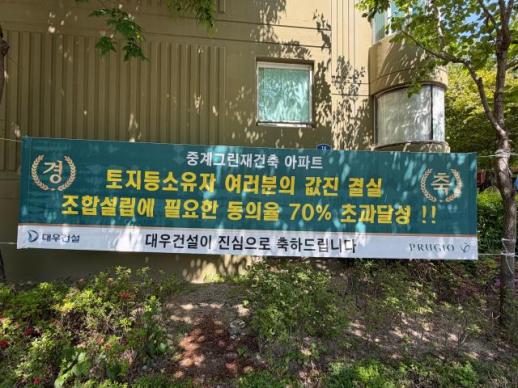 Seoul’s Nowon District Heats Up on Redevelopment Hopes as Rules Ease Seoul’s redevelopment market in the northern districts is heating up, led by Nowon-gu. The so-called “Nodogang” area — Nowon, Dobong and Gangbuk — has been posting a string of record-high apartment prices, driven by the Seoul city government’s push to allow higher-density development and by demand concentrating in large complexes. We visited two key redevelopment sites in Nowon: Junggye Green and Hagye Jangmi apartments. According to the Korea Real Estate Board on the 4th, apartment sale prices in Nowon-gu have risen 3.38% so far this year, outpacing Seoul’s overall increase of 2.65%. In the last week of April, Nowon-gu’s weekly gain was 0.18%, higher than Gangbuk-gu (0.14%) and Dobong-gu (0.13%). Weekly increases in March and April held in the 0.18% to 0.32% range, ranking among the highest in Seoul. That contrasts with a sharp slowdown in the southern districts, including Gangnam-gu (-0.02%) and Seocho-gu (0.01%). The shift is attributed to buyers priced out of Gangnam amid lending curbs and peak-price concerns, along with reduced jeonse supply pushing more renters to buy. At Junggye Green and Hagye Jangmi, redevelopment expectations were visible throughout the complexes. Construction company banners congratulated residents on reaching the consent threshold to form a promotion committee. Both complexes sit about a 30-second walk from Line 7 stations — Junggye Station and Hagye Station — and are also favored by end-users because an elementary school is reachable by crossing a single street. Junggye Green is a large complex of 25 buildings and 3,481 households, and transactions continued as moves took place. The real estate platform Asil reported three sales and seven jeonse deals last month. A 59-square-meter unit sold in March for 720 million won, a record high, up about 140 million won from 577 million won in July last year. Hagye Jangmi, a 15-building complex with 1,880 households, also showed a clear price rise. A 59-square-meter unit traded last month for 780 million won, the highest price on record. That was about 175 million won higher than 605 million won in July last year. Policy changes by the Seoul city government also appear to be supporting Nowon-gu’s rise. Seoul is pursuing a plan that introduces a mixed-use redevelopment model around transit hubs and allows high-density projects of up to 60 stories. Under the plan, Hagye Jangmi is expected to pursue redevelopment up to 59 stories, while Junggye Green is expected to pursue a plan up to 49 stories and 4,360 households. Expectations have also been lifted by the use of a public support system to shorten administrative procedures and speed up projects. A Seoul city official said the city applied a “high-density, mixed-use development centered on transit hubs” concept while revising district unit plans for parts of Sanggye, Junggye and Hagye neighborhoods in Nowon-gu. The official said some transit-area complexes can now apply a floor area ratio of up to about 400% through measures such as zoning upgrades. The official added that while Junggye Green is near a station, it differs from complexes that qualify for the high-density mixed-use standard because there are no nearby semi-residential or commercial zones. Seo Jin-hyeong, a professor in the Department of Real Estate and Law at Kwangwoon University, said Nowon-gu had lagged in redevelopment because existing floor area ratios were already high, limiting additional capacity and weakening project feasibility. He said the latest easing of floor area ratio rules could become a catalyst for revitalizing redevelopment. 2026-05-04 17:04:35