
Journalist

AJP
-
 KOSPI stretches rally to 11 sessions, with gains now eclipsing past cycles SEOUL, January 16 (AJP) - South Korean stocks extended their historic advance on Friday, pushing the KOSPI up for an 11th consecutive session and underscoring a rally that has grown not only longer, but materially stronger than previous market upswings. The benchmark index rose 0.9 percent to close at 4,840.7, marking a 13.8 percent gain since Jan.2 as the market continued to notch new highs with near-daily regularity entering the new year. The KOSDAQ added 0.4 percent to 954.6, while the KOSPI 200 climbed 1.2 percent to 794.6. While the current run has yet to surpass the longest streak on record — 13 consecutive gains between Sept. 4 and 24, 2019 — the scale of the advance has already far exceeded it. The 2019 rally delivered a cumulative rise of about 6.9 percent, roughly half the magnitude of the present move, highlighting the unusually strong momentum underpinning this cycle. Liquidity indicators suggest the rally is not yet being driven by aggressive leverage. Customer deposits, a proxy for idle equity capital, stood at approximately 893 trillion won ($607.5 billion) in mid-January, up more than 8 trillion won since the start of the year. The continued buildup, even as prices rise, has been interpreted as evidence that additional buying capacity remains on the sidelines. At the same time, margin trading balances have increased only gradually, hovering near 283 trillion won, while equity fund assets expanded to roughly 2,240 trillion won. The pattern suggests that inflows are broadening into medium-term investment allocations, rather than being concentrated in short-term speculative trades. The dollar was held steadily around 1,471 won. Despite the elevated level, intraday volatility was limited, easing immediate concerns about disorderly capital outflows. Sector-wise, non-ferrous metal stocks led gains, driven by expectations that U.S. investment in mineral refining could accelerate supply-chain restructuring and elevate the strategic importance of the sector. Korea Zinc jumped 10.2 percent to 1,585,000 won after reports that the company is considering building a large-scale smelting facility in Tennessee, potentially with U.S. policy backing. Market participants noted that such a move could strengthen the company’s long-term position in graphite, zinc and rare-metal supply. Among individual names, NamSun Aluminum Preferred surged 30 percent to 18,210 won. Large-cap stocks posted mixed results. Samsung Electronics rose 3.6 percent to 148,900 won after hitting an intraday record, while SK hynix added 1.0 percent to 756,000 won. Doosan Enerbility advanced 6.5 percent to 95,300 won, while Hyundai Motor slipped 2.0 percent to 414,000 won. Elsewhere in the region, sentiment was more subdued. Japan’s Nikkei 225 fell 0.3 percent to 53,936.2, while China’s Shanghai Composite edged down 0.3 percent to 4,101.9. 2026-01-16 17:47:28
 -
 From kimchi to cola, everyday eating fuels Korea's chronic disease spike SEOUL, January 16 (AJP) - From kimchi to cola, everyday eating fuels Korea's chronic disease spike South Korea exports some of the world’s most carefully engineered products: K-pop choreographed to the millisecond, cars built for global roads, smartphones that set industry standards. Yet when it comes to everyday health, the country is quietly losing control — not in hospitals, but at the dining table. Despite its global image as a land of fresh vegetables and fermented food, roughly one in five Korean adults now lives with hypertension, diabetes, hypercholesterolemia — or a combination of all three. These are diseases typically associated with Western lifestyles: ultra-processed foods, excess salt, sugar-sweetened beverages and sedentary habits. Korea, it turns out, has adopted many of those risks without fully shedding its own. According to the latest National Health Statistics released by the Korea Disease Control and Prevention Agency (KDCA), sugar intake in Korea increasingly comes from carbonated soft drinks, which ranked second among major sources in 2024. Sodium tells a more culturally revealing story. Salt remains the single largest source of sodium intake, accounting for 15.6 percent of the daily total. Close behind are foods deeply embedded in Korean identity: napa cabbage kimchi and soy sauce. Together, these staples quietly push sodium consumption well beyond recommended levels — not through excess, but through routine. The result is visible in the data. Hyperlipidemia — elevated blood lipid levels tied to diet and inactivity — affected 23.6 percent of adults in 2024, roughly one in four. Diabetes cases have risen even faster: from just over 2 million in 2014 to more than 3.6 million in 2024, a jump of 73 percent. Among people in their 20s and 30s, the increase was sharper still, nearly 80 percent over the decade — a demographic long assumed to be protected by youth and metabolism. It is not that Korea is neglecting the problem. Cholesterol-lowering drugs are effective: among patients receiving treatment, 86 percent manage to keep cholesterol under control. The problem is that only about half of those who need medication actually take it. Diabetes reveals an even wider gap. While six in ten patients receive treatment, only one in four successfully keeps blood sugar within the recommended range. Medication alone, doctors say, cannot compensate for daily habits. “Diabetes is a disease where early management dramatically reduces complications,” said Bae Hong-won, director of the Gangwon Health Examination Center. “But people in their 20s and 30s tend to neglect it, assuming they’re still young. Once it develops, it requires lifelong care.” Experts stress that prevention does not require radical dieting or expensive interventions. Sometimes, it’s about sequence. Professor Cho Young-min of Seoul National University Hospital points to a simple adjustment: eat vegetables first, followed by protein and fat, and leave carbohydrates for last. This order slows glucose absorption and reduces blood sugar spikes — no prescription required. Movement matters just as much. A 15-minute walk after meals, even at a leisurely pace, helps muscles absorb glucose more efficiently, lowering post-meal blood sugar levels. Dietary patterns, however, remain stubborn. Analysis of national nutrition data published in Nutrition Research and Practice found that rice-centered diets were linked to higher triglycerides in men and lower “good” HDL cholesterol in both sexes, reinforcing the connection between carbohydrate-heavy meals and metabolic disease. Recognizing the risk, the KDCA has begun distributing tailored educational materials at workplaces, particularly targeting people in their 30s and 40s — the most economically active group, yet one with relatively low awareness of cardiovascular disease. “To prevent and manage chronic conditions, regular checks of blood pressure, blood sugar and cholesterol are essential,” said former KDCA Commissioner Jeong Eun-kyeong. “But just as important is practicing healthy lifestyle habits every day.” The illnesses reshaping Korean health are not born in laboratories or genetics. They are born at the table — one familiar meal at a time. 2026-01-16 17:47:18
 -
 Lee to hold New Year's press conference next week SEOUL, January 16 (AJP) - President Lee Jae Myung will hold his first press conference of the new year next week, presidential secretary for public relations Lee Kyu-yeon said on Friday. According to the secretary, the president will outline his plans for what he has called a "great transformation," aimed at achieving a major leap forward for the country. The conference, scheduled for 10 a.m. at Cheong Wa Dae next Wednesday is expected to last about 90 minutes, with around 160 domestic and foreign journalists invited. Like his two previous press conferences in July and November last year, which marked his 30th and 100th days in office, he will deliver opening remarks and then take questions on key issues across different areas. 2026-01-16 17:37:08
 -
 East Asian rate decoupling: A tale of four economies SEOUL, January 16 (AJP) - East Asia is no longer a monolith but a disparate economic powerhouse that accounts for roughly a quarter of global GDP and a third of world trade. For years, the combined output of its leading quartet—China, Japan, South Korea and Taiwan—has surpassed that of the euro zone, underpinned by an export engine that remains the envy of the West. Beneath this shared headline strength, however, a deep monetary divergence is taking hold. Nowhere is the split more visible than in the policy corridors of the region’s central banks. As growth models diverge, so too do interest-rate paths—revealing sharply different economic realities among neighbors once viewed as a bloc. Japan: BOJ tightening stirs domestic friction and global tremors Since his appointment in 2023, Bank of Japan Governor Kazuo Ueda has moved decisively to dismantle Japan’s decades-long zero-rate regime. Starting with a hike from -0.1 percent to 0.1 percent in March 2024, the BOJ has delivered successive increases—to 0.25 percent, 0.5 percent and, most recently, 0.75 percent in December—bringing the benchmark rate to the brink of 1 percent. The pivot is fundamentally defensive. Consumer inflation has remained above 2 percent since 2022, a sustained stretch not seen since the bubble era. After years of dismissing inflation as transitory, the BOJ has been forced to respond to a cost-of-living squeeze that is increasingly entrenched. At the core of Japan’s inflation problem lies the yen. Ultra-low rates long enabled the yen carry trade, in which investors borrowed cheaply in yen to chase higher returns overseas. While this strategy supported exports, an excessively weak currency has become a liability—raising import costs and amplifying inflation. Japan imports more than 60 percent of its food on a caloric basis and roughly 80 percent of its energy, leaving the economy acutely vulnerable to currency depreciation. Political resistance remains a constraint. Prime Minister Sanae Takaichi, a staunch defender of Abenomics, has previously dismissed rate hikes as “stupid.” During a meeting with Ueda last November, she reportedly offered little more than a noncommittal “I see,” stopping short of endorsing the tightening path. Global markets are also on edge. Higher Japanese rates threaten to unwind an estimated ¥500 trillion ($3.26 trillion) in carry-trade positions. The risks were laid bare on Aug. 5, 2024, when a sudden reversal triggered synchronized sell-offs across markets from New York to Seoul. Still, doubts persist over how far tightening can go. “Japan’s growth turned negative in the third quarter of last year, real wage gains continue to disappoint, and corporate investment remains weak,” said Jung Yong-taek, a senior researcher at IBK Securities, adding that growth projections for 2026 have slipped back below 1 percent. “With the fiscal deficit near 5 percent and Prime Minister Takaichi pressing for renewed quantitative easing, we expect at most one additional rate hike this year,” Jung said. Nomura Securities echoed that view in its Japan Macro Outlook 2026, forecasting a pause in the BOJ’s tightening cycle as policymakers wait to see whether core inflation slips below the 2 percent target. Similar caution has been expressed by global asset managers including Morgan Stanley and BlackRock. China: Aggressive easing fails to awaken a somnolent economy China stands at the opposite extreme. Beijing has slashed its loan prime rate from 3.85 percent in 2021 to a record low of 3 percent by May last year, flooding the system with liquidity in hopes of reigniting growth. The strategy has succeeded—at least on the industrial front. Output surged, reinforcing China’s position as the world’s factory. In 2025, the country posted a record $1.2 trillion trade surplus. BYD overtook Tesla in electric vehicles, while ChangXin Memory Technologies emerged as the world’s fourth-largest memory-chip maker. Yet the benefits have largely bypassed households. Ultra-low rates accelerated the implosion of a property sector that holds roughly 70 percent of household wealth. As defaults mounted, home prices fell more than 20 percent. With savings offering minimal returns, households had little buffer against the collapse—deepening the real estate downturn rather than cushioning it. Consumption remains anaemic. Consumer inflation has stayed below 1 percent, reflecting persistent deflationary pressure. Retail sales growth has slowed to around 1 percent—an abrupt drop in an economy once accustomed to 8 percent expansion—casting doubt on Beijing’s 5 percent growth target. Producer prices tell a similar story, falling 1.9 percent in December as overcapacity fuels cutthroat price wars. Excess supply continues to overwhelm domestic demand, eroding margins and confidence. Beijing is widely expected to stay dovish. “After the Communist Party designated domestic demand-driven growth as a core priority for 2026 at December’s Central Economic Work Conference, accommodative policy is likely to persist,” said Park Soo-jin, a researcher at Mirae Asset Securities. Still, Park cautioned that the limits of monetary easing are becoming clear. China’s M2 money supply continues to decelerate despite rate cuts, underscoring waning transmission. Attention is now turning to the March “Lianghui” meetings, where authorities are expected to outline structural reforms beyond liquidity injections. South Korea and Taiwan: A shared pause, divergent realities South Korea and Taiwan—key pillars of the global semiconductor supply chain—have both opted for policy stasis. The Bank of Korea has held its benchmark rate at 2.5 percent since May 2025, while Taiwan’s central bank has kept rates at 2 percent for nearly two years. The similarity ends there. In Seoul, the pause reflects constraint. The won has weakened more than 4 percent against the dollar from its 2024 average, trading near 1,474 as of Friday. With a 1.25 percentage point yield gap with the United States, further cuts risk accelerating capital outflows and currency depreciation—especially as the yen regains strength. BOK Governor Rhee Chang-yong reinforced this hawkish bias on Thursday by removing references to “possible rate cuts” from the policy statement. While ruling out further easing, he also acknowledged that hikes cannot be an option due to South Korea’s 1,800 trillion won ($1.33 trillion) household debt burden. Property-related loans alone exceed 1,000 trillion won. A rate hike, Rhee warned, could destabilize housing rather than contain it—triggering defaults and a sharper downturn. Taiwan’s inaction, by contrast, reflects confidence. The economy is projected to grow 7.4 percent in 2025, according to the Central Bank of the Republic of China—far outpacing South Korea’s 1.8 percent forecast. Taiwan’s GDP per capita has overtaken Korea’s for the first time in more than two decades, while its $138 billion trade surplus is nearly double Seoul’s. The engine is semiconductors. TSMC, the linchpin of the global AI supply chain, is expected to post record revenues of $122 billion and operating profits of $60 billion. With exports driving growth, policymakers see little reason to risk tightening. Domestic conditions are equally benign. Inflation remains near the 2 percent target, and the Taiwan dollar has been stable around 31 to the U.S. dollar. Unlike South Korea, Taiwan can afford to wait. 2026-01-16 17:03:59
 -
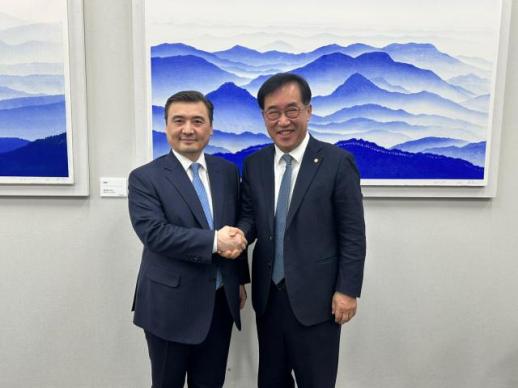 Kazakhstan pushes Alatau Smart City and logistics in Seoul talks SEOUL, January 16 (AJP) - The Kazakh ambassador to South Korea has met with a leading lawmaker to discuss cooperation on logistics and the Alatau Smart City project. The Embassy of Kazakhstan said Thursday that Ambassador Nurgali Arystanov met with Maeng Sung-Kyu, the chair of the National Assembly's Land, Infrastructure and Transport Committee, in Seoul on January 14. The talks focused on transport and logistics, which Kazakh President Kassym-Jomart Tokayev has identified as a national strategic priority. A key subject was the Alatau Smart City development. Both officials noted the importance of a memorandum of understanding signed in December 2025 between Kazakhstan's Ministry of Industry and Construction, the Alatau City Authority, and the Korea Overseas Infrastructure & Urban Development Corporation (KIND). Ambassador Arystanov invited Meng to an upcoming international event in Astana. The two sides also reviewed the growth in tourism and travel between the nations, credited to increased direct flights from Air Astana, SCAT Airlines, Asiana Airlines, and Eastar Jet. 2026-01-16 16:48:38
 -
 Korean memory makers share boom year with employees in cash and stock rewards SEOUL, January 16 (AJP) -South Korea’s two largest memory chipmakers, Samsung Electronics and SK hynix are rolling out handsome cash and stock rewards for their employees amid red-hot earnings and extended stock rally. Samsung Electronics said its Device Solutions (DS) division, which oversees the company’s semiconductor operations, has set its excess profit incentive (OPI) at 47 percent of annual salary, according to an internal notice circulated this week. The rate applies across memory, System LSI and foundry businesses. Based on Samsung’s average employee compensation of 130 million won as of March last year, the average bonus payout is projected at roughly 61 million won per employee. OPI is paid once a year when a business unit exceeds performance targets set at the beginning of the year. The incentive can reach up to 50 percent of annual salary, within a cap of 20 percent of excess profit, and together with the target achievement incentive (TAI) forms the backbone of Samsung’s performance-based compensation system. The DS division’s payout reflects a sharp turnaround in semiconductor profitability. After entering recovery in the second half of last year, shipments rose rapidly across memory products, including high-bandwidth memory (HBM) and commodity DRAM. In the fourth quarter, Samsung Electronics posted best-ever three-month operating profit of 20 trillion won. The chip division is projected to have contributed 80 percent of the profit. The contrast with recent years is pronounced. The DS division’s OPI was set at 14 percent last year amid weak chip conditions and zero in 2023. Within Samsung’s Device Experience (DX) division, the Mobile Experience (MX) business set its OPI rate at 50 percent, translating into an average payout of about 65 million won per employee. The higher rate reflects strong sales of the Galaxy S25 series and Galaxy Z Fold/Flip7, up from 44 percent in 2024. OPI rates for the Visual Display (VD), Digital Appliances (DA), network and medical device businesses were set at 12 percent. Management support, Harman, the win-win cooperation center and the global CS center received 39 percent, while the production technology research institute was assigned 36 percent. SK hynix will again operate a “shareholder participation program” this year, allowing employees to receive part of their annual profit-sharing (PS) bonus in company shares, following the program’s initial rollout last year. According to industry officials on Thursday, the company announced the plan in an internal notice the previous day, with applications open through Jan. 22. Under the program, employees can elect to receive between 10 percent and 50 percent of their PS in SK hynix shares, in 10-percentage-point increments. PS is paid once a year based on annual performance, with a ceiling of 50 percent of annual salary, equivalent to 1,000 percent of base pay. For example, an employee earning 100 million won who opts to receive 50 percent of PS in shares would receive stock worth 50 million won. If the shares are held for one year, the employee receives an additional cash payment equal to 15 percent of the stock value, or 7.5 million won. Unlike last year — when shares could be distributed in four installments in the fourth quarter based on prevailing stock prices — participants this year must receive all elected shares at once at the start of the year. PS payments are expected as early as late January or early February. Under a revised labor-management framework, SK hynix scrapped its previous PS cap and now funds bonuses using the full 10 percent of the prior year’s operating profit. Of the calculated PS, 80 percent is paid in the current year, with the remaining 20 percent deferred over two years in 10-percent installments. Future operation of the stock-based program could be influenced by a proposed third revision of the Commercial Act, which would require companies to retire treasury shares. The bill is scheduled for review at a National Assembly subcommittee meeting on Jan. 21, raising the possibility of legislative action later this month or in March. Industry estimates widely put SK hynix’s operating profit for last year at nearly 45 trillion won. On a simple calculation, that level of profitability would translate into profit-sharing bonuses of roughly 136 million won per employee. SK hynix releases fourth-quarter and 2025 results on Jan. 29. Samsung Electronics shares closed Friday 3.5 percent up at fresh record high of 148,900 won and SK hynix also revisited the peak of 756,000 won. 2026-01-16 15:45:28
 -
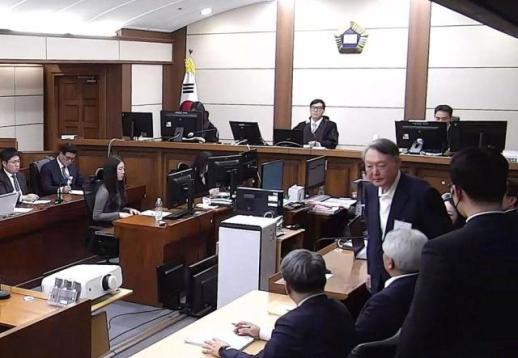 Ex-president gets 5 years in prison in first verdict on martial law-related charges SEOUL, January 16 (AJP) - Former President Yoon Suk Yeol was sentenced to five years in prison on Friday over one of several charges related to his botched martial law debacle. The Seoul Central District Court in southern Seoul handed down the sentence over charges that Yoon obstructed law enforcement by blocking investigators and other officials who attempted to detain him following his abrupt late-night declaration of martial law on Dec. 3, 2024. It was Yoon's first sentencing among his eight different cases related to the debacle including the main charges of insurrection and abuse of power, whose verdict is likely to be handed down next month. Prosecutors had earlier sought 10 years in prison for Yoon - five years for obstruction of official duties, three years for abuse of power, and two years for fabricating official documents, making Thursday's sentence about half of what they had requested. In a nationwide televised trial, the court said Yoon, who had a duty "more than anyone to uphold the Constitution and obey the rule of law," deserves criticism for disregarding procedural requirements meant to prevent abuse of presidential power. The court also found Yoon guilty of convening only a few select Cabinet members to give the appearance of proper deliberation and of drafting a post hoc document related to the declaration to cover up procedural flaws. "When convening a Cabinet meeting, a notice should be given to all members," the court said, adding that notifying only some members infringes on their rights. The court also dismissed Yoon's argument that the Corruption Investigation Office for High-Ranking Officials (CIO), an independent agency established to root out government corruption, lacks jurisdiction over charges of insurrection and abuse of power. Thursday's verdict came about 145 days after the first hearing in the case was held in August last year. 2026-01-16 15:44:40
 -
 Daewoo E&C to build AI data centers in southwestern counties SEOUL, January 16 (AJP) - Daewoo Engineering & Construction announced a plan Friday to build artificial intelligence data centers with a combined power capacity of 500 megawatts in South Jeolla Province. The company said it signed a memorandum of understanding with the municipal governments of South Jeolla Province, Jangseong County, Gangjin County and a consortium of public and private partners, to develop AI data centers in the region. Under the agreement, the partners plan to build two major AI data centers in Jangseong and Gangjin counties, with power capacities of 200 megawatts and 300 megawatts, respectively. Daewoo E&C will serve as a core construction partner in the consortium, participating across the engineering, procurement and construction process. Daewoo E&C has been expanding its non-housing businesses, including data centers, to reduce reliance on the housing market and to strengthen its role as a developer involved in development, investment and operations. As part of that strategy, the company has broadened its data center portfolio, starting with the Empyrion Digital AI Campus project in Seoul’s Gangnam district and expanding into projects such as the Jangseong Fine Data Center, described as South Jeolla’s first data center, where it participates as both an investor and builder. Chairman Jung Won-ju attended the groundbreaking ceremony for the Jangseong Fine Data Center on Dec. 15, where he said data centers are “core infrastructure” for the AI era and can play a key role in revitalizing regional economies and strengthening national competitiveness. The consortium said it plans to build high-efficiency, environmentally friendly data centers and develop AI infrastructure with global competitiveness. * This article, published by Aju Business Daily, was translated by AI and edited by AJP. 2026-01-16 15:39:13
 -
 About a dozen injured as bus crashes onto sidewalk in Seoul SEOUL, January 16 (AJP) - A bus crashed onto a sidewalk in Seoul on Friday, leaving two people seriously hurt and about a dozen others injured. According to rescue workers who arrived shortly after the accident, the bus ran onto the sidewalk near Seodaemun subway station at around 1:15 p.m. About 11 people including the bus driver were believed to be passengers on board and suffered minor injuries, while the two people seriously injured were pedestrians. Police said there were no signs of drunk driving but will conduct a drug test on the driver while investigating the exact cause of the accident. 2026-01-16 15:22:06
 -
 Actress Nana cleared of assault charges in home break-in case SEOUL, January 16 (AJP) - Actress Nana has been cleared of assault charges filed by a man who allegedly broke into her home late last year, police said Friday. Police in Guri, Gyeonggi Province said they would not pursue charges of attempted murder and assault against Nana in a countersuit filed by the intruder, determining that her actions were in self-defense. After questioning Nana last week, police concluded that her actions were lawful self-defense, in line with prosecutors who had placed the man in his 30s in custody on robbery charges. The case drew renewed attention online earlier this month after the suspect, arrested for breaking into Nana's home, filed a complaint from a detention center, claiming the actress injured him with a weapon. He allegedly climbed a ladder to Nana's home in the early hours of Nov. 15, entered through an unlocked door, and demanded valuables. Nana, who woke to her mother's screams, tried to stop him. During the confrontation, Nana reportedly injured the man's jaw while defending herself. 2026-01-16 14:57:29