
Journalist

AJP
-
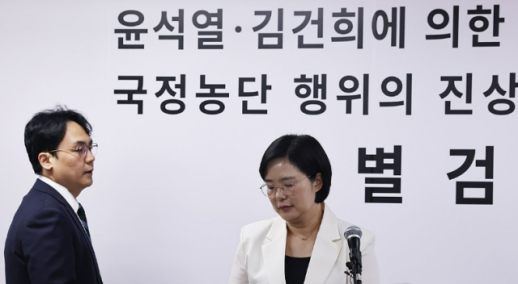 Special counsel team docks investigator one month’s pay for posting case records on SNS The second comprehensive special counsel team, led by special counsel Kwon Chang-young, has disciplined a special investigator with a one-month pay cut for posting investigation-related materials on social media. Assistant special counsel Kim Ji-mi said at a regular briefing on May 4 that the investigator was found to have posted materials filmed during the investigation along with personal reflections on SNS. She said the team decided on discipline after convening a rewards and discipline committee, conducting a fact-finding review and hearing the investigator’s statement. The investigator was reported to have uploaded parts of a suspect’s interrogation record and a photo of an appointment letter, along with a post suggesting the investigation experience could help build professional expertise. The posts have since been deleted. Kim said the special counsel team had already asked staff to refrain from using SNS as part of internal security management, and had previously notified personnel to avoid posting work-related content whenever possible. She said the team plans to use the incident to again stress the need to follow security rules. The team, however, ruled out a separate plan to broadly inspect investigators’ personal SNS accounts. It said it is not considering measures such as checking individual accounts across the board.* This article has been translated by AI. 2026-05-04 15:27:25
 -
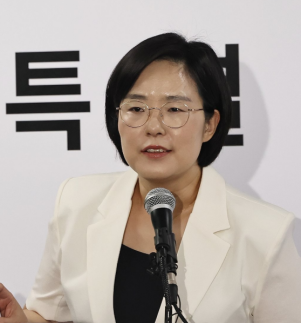 Special Counsel Says Military Counterintelligence Showed Signs of Martial Law Planning in Early 2024 The second special counsel team said it has confirmed indications that the Republic of Korea Army Counterintelligence Command began preparing for martial law in the first half of 2024. The disclosure adds to an earlier insurrection special counsel probe that viewed a martial law declaration as planned in advance, and it suggests preparations may have moved beyond planning toward implementation. Assistant Special Counsel Kim Ji-mi said at a regular briefing Monday afternoon at the special counsel office in Gwacheon, south of Seoul, that the team "confirmed indications of preparations for martial law" during interviews with Counterintelligence Command officials. The earlier insurrection special counsel team has investigated on the premise that a martial law declaration was not an improvised step but was planned beforehand. It cited, among other points, that military personnel-related notes in a notebook kept by Noh Sang-won, a former commander of the Korea Defense Intelligence Command, were reflected in actual personnel decisions, concluding the idea of martial law had been discussed over a considerable period. The second special counsel team’s latest findings are being read as signs that concrete preparations may have followed that planning stage. Investigators are now focusing on how the military’s internal chain of command operated during the alleged preparations. The team is continuing to question related figures to verify the facts surrounding the overall preparation process, officials said.* This article has been translated by AI. 2026-05-04 15:22:23
 -
 GameStop makes $56 billion bid for eBay, WSJ reports GameStop has made a $56 billion offer to buy eBay, a deal that would pit the smaller video game retailer against the larger e-commerce company and could turn hostile. According to The Wall Street Journal, GameStop CEO Ryan Cohen offered $125 a share for eBay, with consideration split 50% cash and 50% GameStop stock. The bid is about 20% above eBay’s closing price on the previous trading day. Cohen said GameStop began buying eBay shares on Feb. 4 and now holds about 5%. Cohen also signaled he could take his case directly to shareholders if eBay’s board rejects the proposal. He argued that combining GameStop’s physical store network with eBay’s online marketplace could cut costs and improve profitability. He also cited both companies’ strength in collectibles such as trading cards as a source of potential synergy. Cohen said he would serve as CEO of the combined company and take no salary, receiving compensation tied to performance. Financing remains a key hurdle. Reuters reported Cohen has secured a debt commitment letter for $20 billion from TD Bank. As of late January, GameStop had about $9 billion in cash, cash equivalents and marketable securities. That suggests additional funding, including from outside investors, would be needed to complete a $56 billion transaction. The size gap is also significant. GameStop’s market capitalization is about $12 billion, far below eBay’s roughly $46 billion. eBay’s improving results could further complicate the bid. The company recently reported first-quarter revenue of $3.089 billion and gross merchandise volume of $22.2 billion, with GMV up 18% from a year earlier. It also issued a second-quarter revenue outlook above market expectations, raising questions about whether shareholders will readily back a sale. GameStop has improved profitability through restructuring, but growth in its core business remains weak. Fiscal 2025 fourth-quarter revenue was $1.104 billion, down from a year earlier. While its cash position has strengthened, analysts said the proposed deal is still too large for GameStop to shoulder on its own. Some in the market view the offer as more than a takeover attempt, saying it reflects Cohen’s ambition to expand GameStop beyond video game retail into a major e-commerce platform. Others cautioned that without firm financing and shareholder support, the proposal could end up as little more than a statement of intent.* This article has been translated by AI. 2026-05-04 15:21:24
 -
 Samsung Names Marketing Chief Lee Won-jin to Lead TV Business in Rare Midyear Shake-Up Samsung Electronics has replaced the head of its TV business in an unusual leadership change outside its typical year-end executive reshuffle. The move comes as global TV demand remains sluggish and profitability continues to weaken, prompting Samsung to push its TV strategy beyond hardware toward content and services. Samsung said on 4일 that Lee Won-jin, president and head of global marketing for its Device eXperience (DX) division, was appointed president and head of the DX division’s Visual Display (VD) Business, while also leading the service business team. Yong Seok-woo, who had led the VD Business, will move to a role as an adviser to the head of the DX division. The reshuffle reflects Samsung’s assessment that the TV business faces more than a temporary earnings slump and that hardware-led growth has reached its limits. Samsung estimated the TV business posted an operating loss in the 600 billion won range in the fourth quarter of last year, then narrowly returned to a 200 billion won profit in the first quarter. Samsung has held the No. 1 spot in the global TV market since 2006, but the company has struggled to translate that lead into strong profits. Samsung has cited intense price competition from Chinese manufacturers as a key factor squeezing margins. Companies such as Hisense and TCL, backed by a large domestic market and government support, have dominated the liquid-crystal display (LCD) market and have recently expanded pressure into large-screen and higher-value segments, including organic light-emitting diode (OLED) TVs. According to market researcher Omdia, Samsung’s global market share stood at 29.1% last year, while TCL and Hisense posted 13.1% and 10.9%, respectively. Samsung has also begun broader restructuring across its home appliance business. The DA Business, which oversees home appliances, recently held a management briefing for employees and outlined future business plans aimed at improving profitability. Since late last month, Samsung has also launched a management review of its Korea business unit, which handles domestic sales and marketing for TVs, home appliances and smartphones. The company is also reported to have decided to exit its China home appliance business, 34 years after entering the market in 1992. First Korean Google vice president signals push to strengthen TV software Lee’s appointment is seen as a sharp break from past leadership in Samsung’s TV unit, as he is a marketing specialist rather than a career engineer. A non-developer leading the VD Business is a rarity, with the last such case dating to Choi Gee-sung in 2007, about 20 years ago. Lee previously served as CEO of Adobe Systems Korea in 2005 and as the first head of Google Korea in 2007. He later became the first Korean to serve as a vice president at Google’s headquarters in 2011, overseeing advertising and services. After joining Samsung in 2014, he was credited as a key figure in expanding the company’s ad-supported free streaming service, Samsung TV Plus, and its Samsung Art Store subscription service for viewing artwork on TV screens. While Samsung’s TV leaders have focused on hardware advances such as higher resolution and larger screens, Lee’s leadership is expected to accelerate a shift toward a platform model that generates recurring revenue through content and service payments on TVs. An industry official said the global TV market has already entered a mature phase, and Samsung is signaling it wants to define the TV not simply as a display device but as a living-room platform centered on content and advertising revenue. The official said the strategy aims to secure sustainable growth by strengthening TV software competitiveness. 2026-05-04 15:13:11
 -
 K-pop girl band aespa prepares for second full-length album with pre-release single 'WDA' SEOUL, May 04 (AJP) - South Korean girl group aespa will release a pre-release single titled Whole Different Animal on May 11. The track serves as the initial signal for the rollout of the group's second full-length album. The release strategy replicates a successful formula used during the campaign for their first studio album. The group's previous pre-release track Supernova recorded top positions on major music charts in South Korea and established strong momentum for the subsequent album launch. Whole Different Animal will be available on major music streaming platforms at 6 PM (0900 GMT) on May 11. A music video for the single will premiere simultaneously on the SMTOWN YouTube channel. Promotional teaser images released Monday depict a narrative shift within the group's fictional worldview. The visuals titled The Creature show a new entity born from chaos and the group members in a state of tension. The upcoming second full-length album, titled LEMONADE, features ten tracks spanning various musical genres. According to the group's social media channels, this project marks the beginning of a new chapter for their overarching storytelling narrative. The full version of the album LEMONADE is scheduled for release at 1 PM on May 29. 2026-05-04 15:06:36
 -
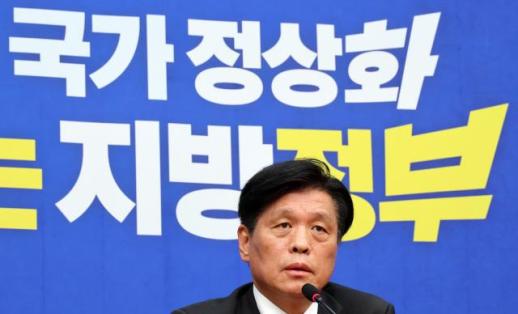 South Korea’s ruling party says timing of special counsel bill needs review amid internal debate Cho Seung-rae, secretary-general of the Democratic Party of Korea, said the party needs further discussion on when to move a bill to appoint a special counsel to investigate alleged “fabricated indictments,” taking a cautious line ahead of the June 3 local elections. His remarks on May 4 marked the party’s first official position after President Lee Jae-myung said he would leave the timing and procedure to the party. At a news briefing at the National Assembly, Cho said the party had introduced the special counsel bill based on findings confirmed through a National Assembly special committee’s fact-finding probe into the alleged fabricated indictments. Earlier that morning, Cho had told MBC Radio’s “Kim Jong-bae’s Focus” that passage before the local elections was possible. He later said he also stressed on the program that the party should weigh the bill itself and its potential impact on the election. Separately, the presidential office’s senior secretary for political affairs, Hong Ik-pyo, delivered Lee’s position, saying “a national consensus has formed” on the special counsel issue. Hong said Lee called it a must to uncover the truth and restore judicial justice through a special counsel, but asked the ruling Democratic Party to decide the specific timing and procedures after gathering public opinion and deliberating. The Democratic Party last month wrapped up the special committee’s activities on April 30 and immediately introduced the “fabricated indictment special counsel bill.” The bill would allow a special counsel to investigate the Ssangbangwool North Korea remittance case and the Daejang-dong and Wirye new town development corruption cases. The bill also includes a provision for the special counsel to handle the maintenance of prosecutions in cases transferred to it, prompting controversy over whether it effectively grants the special counsel authority to drop indictments. 2026-05-04 15:06:26
 -
 Seven in 10 older elementary students in Korea use AI SEOUL, May 04 (AJP) - Seven out of 10 South Korean elementary school students in upper grades use generative artificial intelligence tools, surveyed showed Monday, with nearly 15 percent frequenting them to underscore how deeply AI has entered childhood education and daily life in one of the world’s most digitally connected societies. According to a nationwide survey released Monday by the Korean Teachers and Education Workers Union, 72.1 percent of fourth- to sixth-grade elementary students said they had used generative AI tools like ChatGPT and Gemini. Among them, 57.4 percent said they used them occasionally, while 14.7 percent reported frequent use. The online survey was conducted from April 9 to 22 among 2,804 upper elementary students nationwide ahead of Children’s Day. Half of respondents said they spend more than two hours a day on smartphones, tablets or other smart devices after school. Smartphones are banned in classrooms in Korea. Among them, 21.1 percent reported using devices for two to three hours daily, while 15.9 percent said they spent three to four hours. Another 12.2 percent said they use smart devices for more than four hours after school. Longer screen time became markedly more common in higher grades. Among sixth graders, 36.8 percent said they used smart devices for more than three hours a day after school — more than double the 16.9 percent reported among fourth graders. Heavy use was also more pronounced among older students. Some 16.5 percent of sixth graders said they spent more than four hours a day on devices, compared with 6.7 percent of fourth graders. Only 4.7 percent of respondents said they do not use smart devices after school. Another 20.5 percent said they use them for less than one hour daily, while 25.6 percent reported one to two hours of use. The survey suggested after-school supervision also plays a role in device dependency. Among children left alone after school, 16.5 percent reported using smart devices for more than four hours daily, compared with 9.7 percent among children who stayed with parents or other adults. The teachers’ union said the findings point to widening gaps in after-school care and warned that a lack of supervision may be accelerating excessive reliance on digital devices. About 40 percent of respondents also acknowledged difficulty controlling their smartphone use. When asked whether they struggled to stop using devices, 7.1 percent said “often,” while 33.9 percent answered “sometimes.” Overall, 42.5 percent reported experiencing problems related to device use. The most common issue was excessive screen time, cited by 21.1 percent, followed by difficulty concentrating on studies at 16.8 percent and conflicts with family members over device use at 12.8 percent. The findings echo broader international concerns over children’s growing dependence on AI and digital technology. The Organization for Economic Co-operation and Development said in its “Digital Education Outlook 2026” report that generative AI is spreading rapidly across education systems worldwide and is becoming increasingly accessible to students, while warning that overreliance on such tools could weaken learning and reduce engagement in cognitive processes. The survey also suggested that smartphones may be filling a broader emotional and social void for children facing intense academic pressure and limited free time. When asked what schools, families and society should prioritize to support children’s development, respondents most frequently cited ensuring sufficient time for rest and play, at 42.4 percent. That was followed closely by reducing academic burden at 42.0 percent. A safe environment free from school violence was cited by 34.8 percent. The teachers’ union said the results reflect structural changes in children’s daily lives amid the rapid expansion of digital technology and called for urgent policy responses. It proposed establishing national guidelines for AI use in education, creating clearer rules for smart-device use between schools and families, strengthening data privacy protections for minors, guaranteeing time for rest and play after school, and easing academic pressure through tighter regulation of private tutoring. 2026-05-04 15:03:52
 -
 Agency apologizes for G-Dragon racial slur attire SEOUL, May 04 (AJP) - K-pop star G-Dragon's agency has issued an official apology Monday after the Big Bang member performed in a stage outfit containing a Dutch racial slur. The incident in Macau has renewed concerns regarding the South Korean entertainment industry's frequent lack of cultural and linguistic verification in fashion. Styling choices in K-pop often derive from a focus on visual aesthetics that ignores the social or historical weight of foreign fashion graphics. This recurring phenomenon highlights a gap between the global reach of South Korean artists and the localized expertise of their management teams. Controversy erupted following the "Macau K-SPARK" event on Saturday, where the 37-year-old appeared wearing a t-shirt featuring the phrase "RONNY, EEN GEILE NEGER JONGEN." The Dutch text includes sexual terminology and "neger," a derogatory term for Black people. Global fans launched immediate criticism on social media platforms after images of the performance circulated. Critics argued that such a high-profile artist, who serves as a global fashion icon, should be subject to more rigorous styling reviews. "We sincerely apologize for the fact that the artist's performance costume included phrases that were inappropriate in a social and cultural context," Galaxy Corporation said in a statement released May 4. The agency acknowledged the importance of "meticulous cultural sensitivity and responsible review" in the aftermath of the backlash. It pledged to overhaul internal verification procedures for all styling and artist activities to prevent future oversights. Similar incidents have taken place previously, as South Korean labels frequently prioritize the visual appeal of Western-style graphics without confirming their meanings. This fashion-related ignorance remains a significant risk for artists acting as international cultural representatives. Galaxy Corporation stated it will implement more cautious standards to ensure the diverse cultural backgrounds and values of global fans are respected. The firm expressed regret for the "disappointment and concern" caused to the international audience. 2026-05-04 14:59:58
 -
 Anthropic in talks with Blackstone, Goldman on $1.5B venture to expand enterprise AI Anthropic is pursuing plans to form a new company with major Wall Street investors including Blackstone and Goldman Sachs in a deal valued at $1.5 billion, or about 2.1 trillion won. The venture would help companies backed by private equity firms adopt artificial intelligence tools. The Wall Street Journal reported on May 4, citing sources, that Anthropic is in late-stage talks to set up the company with Blackstone, Hellman & Friedman, Goldman Sachs and General Atlantic. An announcement could come as soon as May 5, the sources said. Anthropic, Blackstone and Hellman & Friedman are expected to be core investors, each contributing about $300 million, or roughly 420 billion won, the report said. Goldman Sachs is also expected to join as a founding investor with about $150 million, or about 210 billion won. Total investment commitments are projected at about $1.5 billion. The company is expected to advise businesses on where and how to use AI and support implementation in day-to-day operations, including at private equity-owned firms. OpenAI has also been reported to be discussing a similar partnership model with the private equity industry. Both companies are accelerating efforts to win enterprise customers seeking to cut costs and improve efficiency. The Journal said Anthropic is viewed as a leader in the enterprise AI market, though OpenAI is moving quickly into the space. Anthropic has also been mentioned as a possible stock market listing as soon as this year, and its revenue has reportedly been rising rapidly as its coding tool, Claude Code, gains popularity.* This article has been translated by AI. 2026-05-04 14:54:15
 -
 Coupang Play Gains Share With HBO Releases as Rivalry for No. 2 OTT Spot Intensifies In April, the user gap between South Korea’s streaming services Tving and Coupang Play widened again. Mobile Index data released on the 4th showed Tving posted 7,708,645 monthly active users, while Coupang Play had 9,101,593. The difference was about 1.39 million users. Tving’s MAU fell 3.95% from the previous month, while Coupang Play rose 0.61%. Among major platforms, Netflix logged 14,799,836 MAU, down 7.02% from the prior month. Wavve rose 1.27% to 3,897,570. Disney+ had seen its February MAU jump by nearly 1 million due to a compensation program for customers affected by a KT hacking incident, but in April it fell 8.31% to 3,462,195. Coupang Play attributed its MAU increase to exclusive content, including new HBO titles and recently talked-about films. The film “The Man Who Lives With the King” was released exclusively on Coupang Play on April 29 through an individual purchase model. HBO original series “Euphoria Season 3” was also added. Tving, in its third year streaming KBO games, saw users decline in April. While the pro baseball season opening was expected to boost traffic, the platform showed limited gains in new users. Still, activity among existing users increased. A Tving official said, “MAU declined, but average daily active users rose by double digits from the previous month,” adding that repeat visits tied to the KBO League and Tving originals such as “Yumi’s Cells Season 3” and “Heart Signal 5” appeared to have helped increase viewing time. 2026-05-04 14:51:19