
Journalist

AJP
-
 Lunar New Year train tickets to go on sale next week SEOUL, January 7 (AJP) - Advance train tickets for the Lunar New Year break will go on sale next week, railway operator KORAIL said Wednesday. Tickets will be available online for a week starting next Thursday, about a month in advance, for trains running during the weeklong holiday from Feb. 13 to 18. The first two days of pre-booking will be reserved for senior citizens aged 65 and older, people with disabilities, and recipients of national merit honors. Ordinary citizens can book tickets for the remaining days until Jan. 21. However, booking dates may vary by destination. KORAIL said it has extended the booking period from two to three days to prevent overcrowding and server congestion. 2026-01-07 15:44:55
 -
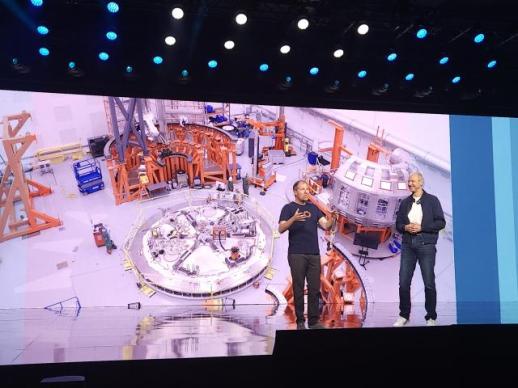 Siemens maps AI-led industrial shift at CES, with fusion reactors highlighting digital twin strategy LAS VEGAS (AJP) - At CES 2026, Siemens outlined a vision for an AI-driven restructuring of global industry, arguing that artificial intelligence is moving beyond software applications to become a foundational element of physical systems across manufacturing, logistics, energy, and infrastructure. At the center of that strategy is digital twin technology, which the company presented as the key mechanism for applying AI safely and reliably in the real world. Siemens framed digital twins not as visualization tools but as operational replicas of physical systems. By integrating design data, operating conditions, physical laws, and real-time sensor information, digital twins allow companies to test and validate thousands of scenarios before assets are built or deployed. According to Siemens, this capability is critical in industries where errors carry high costs or safety risks, and where traditional trial-and-error approaches are impractical. Roland Busch, president and CEO of Siemens, emphasized those constraints during his keynote on Jan. 6 at the Venetian Hotel in Las Vegas. “In the industrial world, AI hallucinations are not acceptable,” Busch said. “AI that enters physical systems is no longer just a feature. It becomes a force with direct real-world impact.” Reliability and safety, he added, are prerequisites for deploying AI at industrial scale, making digital twins a necessary foundation rather than an optional enhancement. The company used nuclear fusion energy as its most prominent example of that approach in practice. Siemens highlighted its collaboration with Commonwealth Fusion Systems, a U.S.-based fusion startup, to demonstrate how digital twins can accelerate development in fields defined by extreme complexity and risk. Fusion reactors require precise coordination among magnets, cooling systems, and power controls, where even small design flaws can have serious consequences. Busch said such systems leave no room for real-world experimentation. “In these environments, trial and error in the physical world is not an option,” he said. Every design choice and operating condition must be validated in a digital twin, where physical behavior can be simulated repeatedly before any hardware is built. Siemens argued that this process shortens research and development timelines while reducing the likelihood of costly or dangerous failures. Siemens positioned the fusion work as a template rather than a one-off case. The same digital twin framework, the company said, can be applied to factories, logistics centers, and power grids. By combining virtual replicas of these systems with AI, operators can anticipate disruptions, optimize performance, and adjust operations in real time. Busch described this shift as a move away from reacting to problems after they occur toward designing systems that act proactively. Partnerships with major technology firms were presented as critical to making that model work at scale. Siemens pointed to its collaborations with NVIDIA and Microsoft as efforts to link AI-accelerated computing, simulation technologies, and industrial AI copilots into a single workflow spanning design, manufacturing, and operations. The company also showcased hands-free, smart-glasses-based guidance for shop-floor workers, positioning it as a way to improve safety and productivity while narrowing skill gaps. At CES 2026, Siemens focused less on individual product announcements than on defining how AI can be embedded into physical systems without compromising safety or reliability. By using fusion reactors as a proving ground for digital twin technology, the company sought to show how AI-driven simulation can reduce risk and compress development cycles in the most demanding industrial environments, before extending that same logic across manufacturing, logistics, energy, and infrastructure. 2026-01-07 15:44:38
 -
 Acting US envoy leaves Seoul after brief stint SEOUL, January 7 (AJP) - Acting U.S. Ambassador to Seoul Kevin Kim returned to the U.S. less than three months after assuming the post. According to diplomatic sources on Wednesday, Kim recently notified the Ministry of Foreign Affairs of his departure. He is believed to have left for the U.S. to spend Christmas and has not returned to Seoul, as he may be assigned a new role there. The Korean American, who handled North Korea-related affairs at the U.S. State Department from 2018 to 2020, Kim arrived in October last year, after being appointed to the interim post. He coordinated a summit between U.S. President Donald Trump and South Korean President Lee Jae Myung on the sidelines of the Asia-Pacific Economic Cooperation (APEC) summit in the southeastern city of Gyeongju. Kim's sudden departure raises concerns here, as the ambassador post has been vacant for almost a year. Former Ambassador Philip Goldberg left the position in January last year, and since then, two acting ambassadors, Kim and Joseph Yun, another Korean-American who previously served as U.S. special representative for North Korea policy, have temporarily filled the role. In a statement on its website, the U.S. Embassy in Seoul said, "James 'Jim' Heller is currently serving as the Chargé d'Affaires ad interim," adding that he "began his assignment in Seoul as the Deputy Chief of Mission" in July last year. The career diplomat, who "most recently served" in Australia, New Zealand, and the Pacific Islands, is a U.S. Army veteran. He holds a B.A. and M.A. from the University of Michigan and is a graduate of the Hopkins-Nanjing Center. 2026-01-07 15:12:19
 -
 Aekyung recalls popular 2080 toothpastes containing banned preservative SEOUL, January 07 (AJP) - Aekyung Industrial said on Wednesday it is voluntarily recalling six toothpaste products manufactured in China after testing detected a preservative ingredient that is banned from use in oral-care products in South Korea. The recalled items are 2080 Basic Toothpaste, 2080 Daily Care Toothpaste, 2080 Smart Care Plus Toothpaste, 2080 Classic Care Toothpaste, 2080 Triple Effect Alpha Fresh Toothpaste and 2080 Triple Effect Alpha Strong Toothpaste. The products were manufactured by Chinese firm Domy and imported and distributed in South Korea by Aekyung Industrial. The recall follows a quality inspection carried out by the company last month, which found trace amounts of triclosan, a preservative that is prohibited in oral-care products. Aekyung immediately suspended imports and shipments of the affected products and reported its recall plan to the Ministry of Food and Drug Safety, the company said. Consumers who purchased the recalled products can apply for a full refund through Aekyung Industrial’s customer service center or its website. Aekyung said all of its other toothpaste products are manufactured in South Korea and that no issues have been identified with their ingredients or quality. 2026-01-07 14:23:02
 -
 PPP leader apologizes for ex-president's martial law debacle SEOUL, January 7 (AJP) - Jang Dong-hyeok, the leader of the main opposition People Power Party (PPP), on Wednesday apologized for the disgraced former President Yoon Suk Yeol's martial law debacle last year. During a press conference at the party's headquarters in Yeouido, Seoul, he said Yoon's Dec. 3 declaration of martial law was a "wrong and inappropriate" measure, which caused "great confusion and inconvenience to the public and hurt party members who have upheld the constitutional order of liberal democracy." "We bear a heavy responsibility for failing to fulfill our role," Jang said. He then vowed to reflect deeply on past mistakes and to renew both himself and his party. Jang's apology came about four months after he was elected party leader in August last year, amid internal calls by some party members that the conservative party should distance itself from Yoon ahead of local elections in June to avoid another rout. He added that the party would consider changing its name to "reestablish its values and direction," a common strategy political parties often resort to in order to rebrand and regain public support. But it remains to be seen whether the PPP will be able to recover from its dismal public support and win over voters, especially after far-right YouTuber Ko Sung-kook joined the party as a member the previous day. 2026-01-07 14:17:00
 -
 HD Hyundai Heavy another US Navy ship repair contract SEOUL, January 07 (AJP) - HD Hyundai Heavy Industries has secured another maintenance, repair and overhaul (MRO) contract from the U.S. Navy, this time for a logistics support vessel assigned to the Navy’s 7th Fleet. The company said on Wednesday it recently won a regular overhaul project for the 41,000-ton cargo ship USNS Cesar Chavez, which was commissioned in 2012, without revealing the value of the contract. HD Hyundai Heavy Industries said it will begin work on Jan. 19 at a pier in Ulsan. The overhaul will cover more than 100 items, including repairs to the hull and structures, propulsion systems, electrical equipment and auxiliary machinery. The company plans to complete the work and deliver the vessel to the U.S. Navy in March. The contract follows the company’s completion of MRO work on the USNS Alan Shepard, its first U.S. Navy ship overhaul project, which was awarded in August. The Alan Shepard departed earlier this week after undergoing repairs. HD Hyundai Heavy said the initial Alan Shepard contract covered about 60 repair items, but the scope expanded significantly after an additional 100 items were identified during the overhaul process, extending the work schedule and substantially increasing the contract value. Ju Won-ho, president of HD Hyundai Heavy Industries, said the company’s successful completion of its first U.S. Navy MRO project demonstrated its technological capabilities and operational expertise. "We plan to further strengthen efficiency and capacity to expand its presence in the U.S. naval ship MRO market," he said. 2026-01-07 13:49:46
 -
 Hyundai Steel Industry wins $450 million offshore wind contract in South Korea SEOUL, January 07 (AJP) - Hyundai Steel Industry, a unit of Hyundai Engineering & Construction, said on Wednesday it has won a $450-million contract to manufacture and install substructures for an offshore wind farm in South Jeolla Province. The company signed a deal with Hanwha Ocean covering fabrication and installation of substructures for the project. The contract is valued at 611.5 billion won ($450 million), with work scheduled to run from this month through January 2029. Hyundai Steel Industry said it will apply the “pre-piling” method for the first time in South Korea, a technique that involves installing piles before placing the substructure. The approach is expected to shorten construction schedules and improve installation accuracy. The Shinan Ui offshore wind farm is a large-scale project that will build 390 megawatts of generating capacity in waters southeast of Uido in Shinan County, South Jeolla Province. Hyundai Steel Industry has accumulated offshore wind construction experience at home and abroad since taking part in the Tamra offshore wind project in 2012, South Korea’s first commercial offshore wind farm. Its portfolio includes projects in Taiwan, Hallim on Jeju Island and Jaeun in South Jeolla Province. “This Shinan Ui project will be an opportunity to elevate South Korea’s offshore wind construction technology to the next level,” Park Yong-seop, executive director and head of Hyundai Steel Industry’s offshore wind business division, said in a statement. 2026-01-07 13:39:04
 -
 OPINION: Why Korean words are likely to stay “Language is the dress of thought,” wrote Samuel Johnson, suggesting that the words a society adopts reveal what it values, often more clearly than any manifesto or statistic. If that is true, then the latest update to the Oxford English Dictionary offers an unusually revealing glimpse into the cultural mood of the moment. This year, the dictionary added several Korean-origin words, including haenyeo and ramyeon, alongside terms such as jjimjilbang, bingsu, sunbae, ajumma, Korean barbecue and officetel. The additions follow last year’s inclusion of words like dalgona, maknae and tteokbokki, marking a second consecutive expansion of Korean vocabulary in English’s most authoritative record. The Oxford English Dictionary does not chase trends. It documents language only after words have been used repeatedly, across contexts, and with enough consistency to leave a durable trace. Once entered, words are not removed, even if their popularity fades. Inclusion, therefore, signals not momentary fascination but cultural absorption. What stands out is the shift in emotional tone between last year’s additions and this year’s. In 2024, dalgona entered the dictionary on the back of the global phenomenon Squid Game. The candy, fragile and unforgiving, became a symbol of competition, survival and elimination—an object perfectly suited to a story about pressure and precarity. It captured the anxieties of an era defined by zero-sum contests and relentless performance. This year’s standout word, haenyeo, points in a different direction. The term refers to the traditional women divers of Jeju Island, whose lives have recently drawn global attention through the Netflix drama When Life Gives You Tangerines. Unlike spectacle-driven narratives, the series portrays endurance rather than victory, responsibility rather than escape. The haenyeo are not heroic in a conventional sense; they are steady, repetitive and deeply embedded in family and community. Their appearance in the English dictionary suggests a growing global attentiveness to quieter forms of dignity. The same sensibility runs through other newly added words. Ramyeon, long familiar as instant food, has taken on a broader cultural meaning through Korean storytelling. In dramas and films, it is rarely eaten alone. It appears late at night, after hardship, shared between people who may lack the words to express what they feel. In K-Pop Demon Hunters, ramyeon is not fuel for action but what comes afterward—a pause, a moment of regrouping, a sign of togetherness. Such scenes require no explanation for global audiences, because food-sharing is one of the most universal human rituals. Words like jjimjilbang tell a similar story. They describe spaces designed not for efficiency or privacy, but for rest and shared presence. A jjimjilbang is not simply a facility; it is a place where strangers lie side by side, where time slows, and where bodies and conversations are allowed to exist without urgency. The word resists translation because it names an experience rather than a function, a way of being together rather than a service rendered. Taken together, these words suggest that the global appeal of Korean content lies not only in style, technology or production value. It also lies in the moral texture of the stories being told. What travels across borders is a sensibility that values endurance over dominance, care over spectacle and shared time over solitary achievement. Dictionaries change slowly. But when they do, they leave a long shadow. The movement from dalgona to haenyeo—from games of survival to lives patiently lived—marks a subtle but meaningful shift in what resonates globally. ' As BTS prepares to return as a full group, expectations are rising not only for new music but for another wave of Korean language entering everyday global life—this time through lyrics that linger, phrases that are repeated, and emotions that are learned before they are translated. If language is indeed the dress of thought, then English today is beginning to wear words shaped by Korean experiences of food, labor, rest and song. These are not just borrowed terms. They are signals of what the world is learning to notice—and perhaps, to value. *The author is the managing editor of AJP 2026-01-07 11:53:48
 -
 Ramyeon, haenyeo among latest Korean-origin words added to Oxford English Dictionary SEOUL, January 07 (AJP) -As Korean dramas, music and food continue to spread across global streaming platforms and dining tables, the Oxford English Dictionary (OED) has added eight new Korean-origin words to its latest update, underscoring how Korean culture is becoming part of everyday English usage. The newly added entries include ramyeon, haenyeo and sunbae, along with bingsu, jjimjilbang, ajumma, Korean barbecue and officetel. The additions follow last year’s inclusion of seven Korean words such as dalgona, maknae and tteokbokki, marking the second consecutive year that Korean-related terms have expanded in the dictionary. First published in 1884, the OED is regarded as the most authoritative historical record of the English language. Now operated as a continuously updated online platform, it adds new entries only after sustained and verifiable usage in English-language sources. Once included, words are not removed, even if their frequency later declines. The dictionary said the latest additions reflect the growing presence of Korean culture in English-speaking societies, driven largely by the global popularity of Korean television series, films, music and cuisine. The inclusion of haenyeo this year reflects heightened global awareness of Korea’s traditional female divers, fueled in part by the international success of the Netflix drama "When Life Gives You Tangerines", which portrays life in mid-20th-century Jeju and prominently features the island’s haenyeo culture. The series has drawn attention not only to Jeju’s landscape but also to the lives and labor of its women divers, bringing the term into wider English-language discussion. A similar pattern was seen last year with dalgona, which entered the OED following the global phenomenon of "Squid Game". The series propelled the traditional sugar candy into worldwide recognition, with the term appearing frequently in English-language media, recipes and social platforms. Food-related terms continue to feature prominently. Ramyeon is one such example. While the Japanese term ramen was added earlier, the Korean spelling and usage have gained distinct recognition as Korean food and media reached wider international audiences. In recent years, ramyeon has appeared repeatedly in global streaming hits, where it often functions as a shared ritual rather than simply a meal. Social and relational terms were also highlighted. The addition of sunbae reflects growing familiarity with Korean expressions describing hierarchical relationships. Unlike the English word “senior,” sunbae conveys a broader mix of hierarchy, familiarity and responsibility shaped by Korean social norms. Other relational terms, including oppa and maknae, were added in previous updates. Lifestyle-related words such as jjimjilbang and bingsu were included as references to uniquely Korean experiences that are difficult to translate into existing English terms. Their usage has increased as Korean lifestyle content has circulated widely through streaming platforms, social media and travel-related media. The OED also formally added Korean barbecue as an English expression, expanding beyond individual dish names such as galbi, samgyeopsal and bulgogi, which were already listed. The dictionary cited usage dating back to a 1938 Hawaiian newspaper as part of its historical record. According to Jieun Kiaer, a professor of Korean linguistics at the University of Oxford who serves as a consultant to the dictionary, inclusion in the OED requires clear textual evidence that a word is being regularly used and discussed in English-speaking contexts. She noted that once a word enters the dictionary, it remains permanently as part of the historical record. The steady expansion of Korean-origin words in the OED reflects how Korean content and cuisine have moved beyond niche interest to become embedded in everyday language, signaling a lasting linguistic imprint of Korean culture on global English usage. 2026-01-07 11:35:06
 -
 KOSPI unfazed in upward march as Asian markets turn subdued SEOUL, January 7 (AJP) - South Korean stocks surged Wednesday while most Asian markets traded lower, as renewed foreign buying and strength in artificial intelligence-related shares propelled the benchmark to fresh highs. In Seoul, the KOSPI rose 1.0 percent to 4,572.50 as of 11:00 a.m., extending its year-to-date rally and marking another record level. The advance followed a rotation in investor leadership, with foreign investors taking the baton from retail traders after Tuesday's rally. The tech-heavy KOSDAQ slipped 0.8 percent to 948.40, weighed down by losses in entertainment and biotechnology stocks. Overall market sentiment remained stable, with investors rotating among sectors rather than pulling money out of equities. Gains in defense, artificial intelligence and select industrial stocks helped offset weakness elsewhere. Chipmakers led the advance. Samsung Electronics climbed 2.3 percent to 142,100 won ($98.10), while SK hynix jumped 3.6 percent to 752,000 won, extending gains on sustained optimism toward AI-related demand. The rally followed remarks by Jensen Huang, chief executive of Nvidia, who highlighted accelerating demand for advanced computing and memory technologies during his keynote address at CES 2026. Huang's comments reinforced market expectations for continued investment in AI infrastructure, supporting the medium-term demand outlook for high-bandwidth memory and advanced semiconductors produced by Korean chipmakers. Battery and industrial shares traded mixed. LG Energy Solution fell 1.6 percent to 371,500 won, while HD Hyundai Heavy Industries rose 3.3 percent to 568,000 won on continued optimism over shipbuilding orders. Hanwha Aerospace slipped 0.7 percent to 1,015,000 won after recent strong gains. Entertainment stocks underperformed after President Lee Jae Myung's visit to China failed to deliver progress on the long-anticipated lifting of the de facto ban on Korean concerts and entertainment activities. HYBE fell 4.2 percent to 321,500 won, while JYP Entertainment dropped 3.3 percent to 69,200 won. SM Entertainment slid 4.7 percent to 111,600 won, and YG Entertainment declined 3.9 percent to 62,900 won. In the foreign-exchange market, the won traded narrowly at around 1,448.3 per dollar, as gains in equities were offset by lingering external uncertainties. Elsewhere in Asia, Japanese stocks moved lower in early trade. The Nikkei 225 slipped 0.5 percent to 52,284.2, pressured by declines in financial and technology shares. Toyota Motor fell 2.6 percent to 3,344 yen ($21.30), while Mitsubishi UFJ Financial Group edged down 0.3 percent to 2,617 yen. SoftBank Group slipped 0.3 percent to 4,704 yen. In mainland China, the Shanghai Composite edged down 0.1 percent to 4,080.4, while Hong Kong's Hang Seng Index fell 0.5 percent to 26,588.9, as investors remained cautious amid unresolved geopolitical risks. 2026-01-07 11:23:38