
Journalist

AJP
-
 Lee calls for stronger economic cooperation at Beijing forum SEOUL, January 5 (AJP) - President Lee Jae-myung called for stronger "economic cooperation" between South Korea and China during a business forum in Beijing on Monday, where he met with a slew of corporate leaders and executives from both countries as part of his state visit. In his opening remarks, Lee said the two countries were "like ships sailing on the same sea in the same direction," adding, "The two countries have worked together while also competing with each other on this great journey." Lee further explained that the two countries have achieved economic growth and technological advances at the forefront of the global economy, but the current global trade environment no longer allows them to "easily follow the same set route as in the past." "A rapidly changing technology and unpredictable supply chains require us to chart a new path," he stressed. Pointing out that bilateral trade has stalled at around US$300 billion, he emphasized the need to open new routes and new markets. Lee said a "new level of cooperation" would be enabled as the two countries share similar historical and cultural values due to geographic proximity, highlighting that artificial intelligence (AI) could further accelerate it across various sectors including manufacturing and service industries. Citing Chinese President Xi Jinping's reference to South Korea as an "inseparable neighbor," Lee expressed hope that the forum would help participants make a fresh start toward a "mutually beneficial, friendly relationship in economic sectors" through candid talks and discussions. After wrapping up the forum, Lee is set to hold talks with Xi later in the day. 2026-01-05 16:28:53
 -
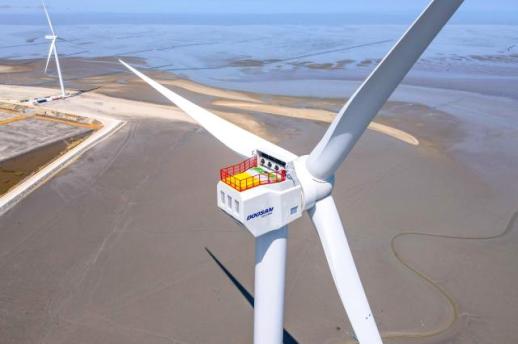 HOT STOCK: Doosan Enerbility jumps over 10% on AI-driven power demand SEOUL, January 05 (AJP) - Shares of Doosan Enerbility surged more than 10 percent on Monday, buoyed by a string of major orders spanning offshore wind and nuclear power, as rising electricity demand in the AI era fuels investor optimism toward power infrastructure plays. The stock ended at 83,200 won, up 10.64 percent. Trading volume topped 12 million shares, well above recent averages, reflecting heightened investor interest. The shares have risen more than fourfold from their closing level of 18,190 won a year earlier. The rally followed news that the company last week secured a 575 billion won ($430 million) engineering, procurement and construction (EPC) contract with Yawol Offshore Wind Power for the 104-megawatt Yeonggwang Yawol Offshore Wind Farm in South Jeolla Province. Under the deal, Doosan Enerbility will supply and install 13 units of its 8-megawatt offshore wind turbines and oversee the entire EPC process, with completion slated for March 2029. The project marks the first commercial deployment of the company’s domestically developed 8-megawatt-class offshore wind turbines, which have received UL certification. Analysts said the contract signals a shift from development to full-scale commercialization, improving earnings visibility through EPC revenue and planned long-term maintenance services. Investor sentiment was further supported by the company’s expanding nuclear power business. Doosan Enerbility recently won a 5.64 trillion won order to supply key equipment for the expansion of the Dukovany nuclear power plant in the Czech Republic, reinforcing its position in the global nuclear supply chain. Expectations of accelerating global investment in nuclear power and small modular reactors, driven by surging electricity demand from AI data centers — particularly in the United States — also boosted foreign investor appetite for the stock, analysts said. 2026-01-05 16:21:05
 -
 China travel surge lifts Incheon airport to record passenger traffic SEOUL, January 05 (AJP) - Incheon International Airport handled a record 239,530 passengers on Jan. 4, the highest daily total since the airport opened in 2001, its operator said on Monday. The figure surpassed the previous record of 234,171 passengers set on Aug. 4, 2019, by nearly 5,000, and was up 13.7 percent from the same day a year earlier, when 210,891 passengers used the airport. By destination, travel to and from China accounted for 49.2 percent of total passenger traffic and recorded the largest year-on-year increase, which the airport operator attributed to visa-free entry policies and a recovery in outbound and inbound tourism. Passenger traffic involving Hong Kong and Taiwan rose 24 percent. Travel demand to Southeast Asia, however, showed relatively modest growth of 1.7 percent despite the winter peak season, partly due to recent developments in Cambodia, the operator said. Despite the surge in traffic, airport congestion remained close to normal levels. As of Jan. 4, the average wait time at departure security checkpoints in Terminal 1 was 7.9 minutes, with a peak of 42 minutes at around 6 a.m. Incheon International Airport Corp. said it is expanding the use of automated systems such as Smart Pass, enhancing training for security screening staff, hiring additional personnel and widening operations at Gate 1 in both Terminal 1 and Terminal 2. 2026-01-05 16:00:44
 -
 Final season of 'Squid Game' wins Critics Choice award again SEOUL, January 5 (AJP) - Netflix's hit South Korean series "Squid Game" won an award for the Best Foreign Language Series at the annual Critics Choice Awards in Santa Monica, California on Sunday. The third and final season of the dystopian thriller beat Apple TV's comedy "Acapulco" and Netflix's Japanese series "Last Samurai Standing" to claim its third Critics Choice honor, having previously won for its first season in 2022 and its second season in 2025. The latest series with six episodes continues the deadly, high-stakes saga that began with its first season in September 2021, once again revolving around hundreds of cash-strapped players who "accept a strange invitation to compete in children's games" for a tempting prize. Earlier in the day, Netflix's hit South Korean anime "KPop Demon Hunters" also won two prizes at the 31st prestigious awards which "honor the finest in cinematic and television achievement." 2026-01-05 15:37:19
 -
 Packaging becomes the real bottleneck in AI race — opening a window for Samsung SEOUL, January 05 (AJP) - In the premium AI chip race, supremacy is increasingly defined not by transistor density but by advanced packaging — the ability to assemble multiple high-performance chips into a single accelerator capable of handling massive workloads efficiently. Packaging was once regarded as a back-end step, sealing finished chips into protective casings and mounting them onto boards, work largely handled by outsourced assembly and test firms. In the era of AI accelerators, however, “advanced packaging” has emerged as a decisive stage of chipmaking, bringing graphics processing units (GPUs) and high-bandwidth memory (HBM) into ultra-close proximity to boost performance, reduce power consumption and shorten time to market. This shift is blurring traditional boundaries between foundries and packaging specialists — and turning packaging capacity into the tightest choke point in the AI supply chain. “Advanced packaging has become essential — not optional — in the AI era. Without it, AI semiconductors simply cannot be built,” said Ahn Ki-hyun, secretary general of the Korea Semiconductor Industry Association. “Globally, only two companies — TSMC and Samsung — currently possess truly advanced AI packaging capabilities.” The most sought-after advanced packaging technology today is CoWoS, short for Chips-on-Wafer-on-Substrate, developed by TSMC. The technology allows logic chips and memory stacks to be integrated on a shared substrate, a configuration essential for high-end AI accelerators. TSMC is struggling to keep up with surging demand from customers such as Nvidia, AMD and major cloud service providers. Google has reportedly scaled back its tensor processing unit (TPU) output target this year despite strong demand, as a significant portion of Taiwan’s CoWoS capacity through 2027 has been reserved for Nvidia — underscoring how critical access to packaging has become. According to TrendForce, TSMC’s monthly CoWoS capacity grew from roughly 13,000–15,000 wafers at the end of 2023 to 35,000–40,000 wafers by late 2024 that doubled to 75,000–80,000 wafers by the end of 2025. The capacity is expected to expand to 120,000 wafers or more in 2026. Even so, demand continues to outstrip supply. The imbalance has made advanced packaging the most acute bottleneck in AI chipmaking. A single 12-inch wafer typically yields only nine to 10 Nvidia H100-class chips even under near-perfect packaging yields, sharply limiting how quickly AI accelerators can reach the market. Nvidia is estimated to account for nearly half of TSMC’s CoWoS output, followed by AMD and Broadcom — which manufactures Google’s TPUs. Remaining capacity is shared among customers including Amazon Web Services, Meta and Marvell. Global shipments of high-end AI accelerators rose sharply in 2024 and are expected to climb further in 2025, intensifying competition for limited packaging slots. Supply constraints have already forced adjustments across the industry, with Google carrying over part of its planned TPU output and server makers such as Dell and Supermicro facing delivery delays that at times stretched beyond 50 weeks. The ripple effects extend beyond AI chips themselves. Prices for legacy memory such as DDR4 have jumped as manufacturers prioritize high-end AI memory, highlighting the strategic value of tightly integrated memory and packaging capabilities. Samsung’s opening The persistent bottleneck is prompting major customers to seek alternatives to TSMC’s near-dominance in advanced packaging — a shift that is bringing Samsung Electronics back into focus. Unlike most competitors, Samsung can offer a turnkey solution that combines foundry manufacturing, HBM supply and advanced packaging under one roof. “Samsung holds an integrated edge,” Ahn said. “It has HBM technology, advanced manufacturing capabilities, fabs, and the ability to package HBM together with CPUs or GPUs. If customers bring a design, Samsung can deliver a fully packaged chip.” The company’s I-Cube (2.5D) and H-Cube (3D) platforms are designed to integrate logic chips with next-generation HBM, a capability expected to grow more important as the industry moves toward custom memory designs and the HBM4 era. Samsung’s share of the combined foundry and advanced packaging market remains modest compared with TSMC, but analysts note that the gap itself underscores Samsung’s potential upside as customers pursue multi-vendor strategies to reduce supply-chain risk. “TSMC, by contrast, does not produce HBM, making it difficult to describe its offering as a full turnkey solution,” Ahn added. That strategy has begun to yield results. Samsung’s recent win to manufacture Tesla’s AI6 chip, valued at an estimated $16.5 billion, is widely seen in the industry as validation of its integrated approach. Packaging sets the pace The growing focus on packaging reflects a broader shift in how AI hardware competitiveness is measured. Even with sufficient GPU designs and memory supply, AI accelerators cannot be shipped without access to advanced packaging lines — making CoWoS and its alternatives the final gatekeeper of AI infrastructure expansion. As AI workloads scale and next-generation chips such as Nvidia’s Blackwell platform enter the market, the industry’s center of gravity is moving from transistor scaling to assembly capacity. For Samsung, the persistent packaging crunch represents less a threat than a strategic opening — one that could reshape competitive dynamics as customers increasingly prioritize supply-chain resilience over single-vendor dependence. “From the perspective of Big Tech firms, receiving a completed AI chip from a single provider is highly attractive,” Ahn said. “Given that TSMC cannot absorb all demand on its own, it is increasingly likely that orders will flow toward Samsung.” 2026-01-05 15:36:51
 -
Incheon Airport sets daily passenger record with nearly 240,000 travelers SEOUL, January 5 (AJP) - A record 239,530 passengers passed through Incheon International Airport last Sunday, the most in a single day since it opened in 2001, operators said on Monday. The figure was nearly 5,000 higher than the previous record of 234,171 set on Aug. 4, 2019, and was also up about 13.7 percent from a year earlier, when 210,891 passengers used the airport. Chinese passengers accounted for the most at 49.2 percent of all travelers, seeing the biggest increase, likely due to a temporary year-long visa-free entry program between South Korea and China that runs until the end of this year. Passenger traffic from Chinese-speaking countries such as Hong Kong and Taiwan also rose by 24 percent. However, the number of travelers to and from Southeast Asia remained relatively low, rising by just 1.7 percent despite the winter peak season, which was attributed to recent revelations of online phishing scams and other crimes, mostly in Cambodia. Despite the record passenger numbers, the airport appears to be handling the surge smoothly, with an average processing time of just 7.9 minutes and a peak wait of 42 minutes at around 6 a.m. The airport said it is expanding automated immigration clearance systems and adding additional security and screening staff. Lee Hak-jae, the airport's president, said, "We will continue to improve convenience for foreign travelers and other visitors by revamping multilingual signage and increasing more personnel." 2026-01-05 14:55:34
-
 South Korea's top business leaders join President Lee on China visit SEOUL, January 05 (AJP) - A large delegation of South Korea’s top business leaders, including the heads of the country’s biggest conglomerates, are accompanying President Lee Jae Myung on his state visit to China as attention turns to whether bilateral economic cooperation can enter a new phase amid shifting global supply chains. Business groups said on Monday that an economic delegation organized by the Korea Chamber of Commerce and Industry is travelling to China to coincide with Lee’s trip from Jan. 4 to Jan. 7. The delegation includes about 200 executives, among them Samsung Electronics Chairman Lee Jae-yong, SK Group Chairman Chey Tae-won, Hyundai Motor Group Chairman Chung Eui-sun and LG Group Chairman Koo Kwang-mo. Also joining the delegation are POSCO Group Chairman Chang In-hwa, GS Group Chairman Huh Tae-soo, LS Group Chairman Koo Ja-eun and CJ Group Chairman Sohn Kyung-shik. It will mark the first visit by a South Korean economic delegation to China since 2019. Industry officials said the trip is being viewed as more than a simple resumption of exchanges, describing it as a potential opportunity to pursue a “new phase” of economic cooperation between the two countries. "Discussions are expected to range from advanced industries — such as semiconductors, batteries, electric vehicles and displays — to services and cultural content," an industry source said. In the semiconductor sector, attention is focused on the recent move by the United States to partially ease restrictions on bringing equipment into Chinese plants operated by South Korean firms. Samsung Electronics and SK hynix run major production bases in Xian and Suzhou, and in Wuxi and Dalian, respectively, raising expectations of limited but practical progress in manufacturing cooperation with China. Automakers and battery makers are also seeking to rebuild their presence in the Chinese market. Hyundai Motor and Kia are rolling out China-specific electric vehicles and repositioning local plants as export bases, while LG Energy Solution is maintaining production in China as part of a broader global supply-chain strategy. During the trip, the delegation plans to hold a South Korea–China business forum to discuss stabilizing manufacturing supply chains, tapping new consumer markets, and expanding cooperation in services and content. Companies are also expected to sign memorandums of understanding and hold one-on-one business meetings. 2026-01-05 14:19:10
 -
 K-pop anime wins two gongs at Critics Choice Awards SEOUL, January 5 (AJP) - Netflix's hit South Korean anime "KPop Demon Hunters" won two prizes at the annual Critics Choice Awards in Santa Monica, California on Sunday. The 110-minute film by Korean-Canadian director Maggie Kang won an award for "Best Animated Feature" and also received a gong for "Best Song" with its main theme song, "Golden" at the 31st prestigious awards which "honor the finest in cinematic and television achievement." By beating competitors from traditional animation powerhouses like Disney and Pixar, the film has boosted its chances as a strong contender in the run-up to the Academy Awards in mid-March, as these awards are often considered the "most accurate predictor" of the Oscars. "KPop Demon Hunters" tells the story of fictional K-pop superstars who possess secret powers to protect their fans from supernatural threats. Its soundtrack has been hugely successful, spending several weeks in the top 10 of the Billboard 200 albums chart, with "Golden" reaching the top spot on Billboard's Hot 100 singles chart. 2026-01-05 14:15:36
 -
 South Korea's Iljin Electric secures largest-ever power equipment deal, valued at $150 million SEOUL, January 05 (AJP) - South Korea's Iljin Electric said on Monday it has signed its largest-ever single supply contract in the United States, bolstering its presence in the North American power equipment market. The company said in a press release that it recently secured a transformer supply deal worth about 198 billion won ($150 million) for a new project by a major U.S. renewable energy developer. Under the contract, Iljin Electric will supply 24 transformers through the third quarter of 2029. The order represents its biggest single contract in the U.S. market and marks its first supply of 525-kilovolt extra-high-voltage transformers for a renewable energy project, the company said. The U.S.-based contractor, whose name was withheld due to confidentiality agreement, is pursuing multiple large-scale renewable energy and energy storage system projects across the country and has worked with Iljin Electric as a strategic partner on renewable projects over the past six years. Iljin Electric said the contract reflects growing confidence in the company’s technology and product quality. “Building on this order, we aim to further strengthen our position in the North American extra-high-voltage power equipment market and secure additional contracts focused on high value-added products,” the company said. 2026-01-05 14:05:41
 -
 SK hynix bets on HBM4 to maintain market lead in AI memory SEOUL, January 05 (AJP) - SK hynix vowed on Monday to extend its leadership in the high-bandwidth memory (HBM) market this year, as investment in artificial intelligence infrastructure accelerates globally. Citing industry data from the World Semiconductor Trade Statistics, the South Korean chipmaker said in a press release that the global semiconductor market will grow 26.3 percent from a year earlier to about $975 billion this year. The memory segment is expected to exceed $440 billion, accounting for 45.1 percent of the total market, SK hynix said. Bank of America has described 2026 as a semiconductor “supercycle” comparable to the boom of the 1990s, forecasting year-on-year growth of 51 percent in global DRAM revenue and 45 percent in NAND flash. Average selling prices are projected to rise 33 percent for DRAM and 26 percent for NAND, the bank said. Demand for AI-oriented memory, led by HBM, is expected to grow rapidly from 2025 through 2028. BOA estimates the global HBM market will reach $54.6 billion in 2026, up 58 percent from a year earlier, with some forecasts suggesting the HBM market in 2028 could surpass the size of the overall DRAM market in 2024. SK hynix said it plans to build on its fifth-generation HBM product, HBM3E, to maintain market leadership as the industry transitions to sixth-generation HBM4 in 2026. The company said HBM3E is increasingly being selected as an “optimal solution” as global technology companies expand custom chip development, citing Nvidia’s Blackwell Ultra AI accelerator series as well as projects by Google and Amazon Web Services. According to Counterpoint Research, SK hynix ranked first in the HBM market with a 62 percent share of shipments as of the second quarter of 2025 and a 57 percent share by revenue in the third quarter. Goldman Sachs has said SK hynix is likely to retain a dominant position in HBM3 and HBM3E through at least 2026 and maintain more than a 50 percent share of the overall HBM market. SK hynix said it secured the world’s first mass-production system for HBM4 in September and is strengthening cooperation with Taiwan's TSMC on advanced packaging technology. The company is also building its Cheongju M15X fabrication plant and establishing a dedicated HBM technology organisation, alongside new global AI research centres and production infrastructure, to meet rising AI memory demand. UBS has forecast that SK hynix could capture about 70 percent of the HBM4 market used in Nvidia’s next-generation “Rubin” platform in 2026. 2026-01-05 13:49:30