
Journalist

AJP
-
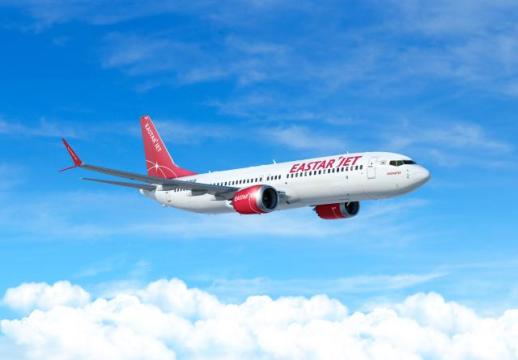 Eastar Jet Leads South Korea With 90% Load Factor After Offering 6.33 Million Seats Eastar Jet said Thursday it posted an annual load factor of 90% last year, the highest among South Korean airlines. The carrier operated 33,600 flights and offered 6,329,790 seats. A total of 5,705,493 passengers flew, putting the load factor at 90.14%. Based on the Transport Ministry’s aviation information portal, the figure was the highest among domestic airlines and well above the overall average load factor of 84.86%. Eastar Jet cited several factors, including competitive fares, flexible route operations, a more comfortable cabin environment on new aircraft, easier airport and in-flight services, and partnership benefits for members. The airline is accelerating fleet modernization, operating 10 Boeing 737-8 aircraft as new planes, half of its 20-aircraft fleet. Because the aircraft are new rather than used, the company said, they feature new leather seats and reduce engine noise by more than 50%, providing a more comfortable flight environment. Eastar Jet also noted that in a service monitoring survey run by Incheon International Airport Corp. last year, its check-in processing time, including waiting, averaged 10 minutes 8 seconds, the shortest among South Korean carriers. The airline said it also provides real-time gate information via mobile and offers airport services such as discounts through partnerships with airport limousine buses and lounges. An Eastar Jet official said, “We thank the many customers who chose Eastar Jet last year,” adding, “In line with our brand slogan, ‘Easy Flight,’ we will continue working to provide an easy and convenient travel experience.”* This article has been translated by AI. 2026-03-12 09:15:48
 -
 KB Kookmin Bank Commits 500 Billion Won to Growth Infrastructure Fund for Advanced Industries KB Kookmin Bank said Thursday it has committed 500 billion won to the KB Kookmin Growth Infrastructure Fund to help build infrastructure for advanced strategic industries. The fund is a 1 trillion won blind pool. KB Asset Management will set up and manage it, and it will be financed entirely with funds from KB Financial Group, including KB Kookmin Bank, KB Insurance and KB Life. The fund will adopt what the bank described as the industry’s first “perpetual closed-end infrastructure fund” structure, aimed at reducing profit-and-loss volatility that can arise in managing large funds. The bank said the structure provides a stable operating base despite the fund’s size in Korea’s infrastructure finance market. The KB Kookmin Growth Infrastructure Fund plans to invest in domestic digital infrastructure, energy infrastructure, the renewable energy transition, and social overhead capital projects tied to balanced regional development. A key project under review is the “Yongin Semiconductor Cluster district energy project.” The bank said it will continue to identify mega infrastructure projects that can raise South Korea’s growth potential. KB Kookmin Bank has been expanding financial support for large infrastructure projects, including arranging financing for the “Sinan Ui offshore wind power project,” selected as the first investment for the Kookmin Growth Fund, and committing capital to the KB Kookmin Growth Infrastructure Fund. The bank said it aims to contribute to meeting the Kookmin Growth Fund’s 10 trillion won supply target under KB Financial Group’s plan to provide 93 trillion won in productive financing by 2030. A KB Kookmin Bank official said the fund is intended to strengthen South Korea’s future growth foundation by expanding investment in advanced strategic industries and core national infrastructure. The official said the bank will continue to support sustainable economic growth and stronger industrial competitiveness through productive financing.* This article has been translated by AI. 2026-03-12 09:15:00
 -
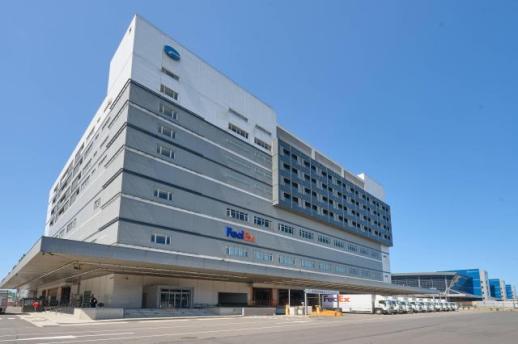 FedEx Expands Taiwan Transshipment Hub to Boost Asia-Pacific Supply Chain Capacity Federal Express Corp., known as FedEx, said Thursday it has expanded its transshipment center at Taiwan Taoyuan International Airport to strengthen its Asia-Pacific network. FedEx called the project its largest single investment in Taiwan since it began operations there 35 years ago. The company said the expansion is expected to improve capacity to meet rising logistics demand tied to advanced technology, semiconductors and e-commerce across Taiwan and the wider Asia-Pacific region. The new facility is about twice the size of the previous site, covering about 19,000 square meters (204,514 square feet). It includes an advanced automated sorting system capable of handling up to 9,000 packages per hour. FedEx said import processing efficiency is 2.5 times higher than at the previous facility, while export processing is up 1.2 times. FedEx also said it has strengthened handling for express parcels and general cargo, as well as special shipments including dangerous goods and cold-chain freight, improving operational safety and supply-chain stability. The company said the new facility reflects the Asia-Pacific region’s growing role as a key base for the global technology industry. Taiwan accounts for more than 80% of global semiconductor production, it said, and rapid advances in new technologies including artificial intelligence are increasing demand for logistics infrastructure that can connect technology hubs, manufacturing bases and growth markets quickly and precisely. FedEx said shipping high-value, time-sensitive products such as semiconductors and precision equipment requires reliability, real-time visibility and strict security throughout the transport process. To meet those needs, it said it applies FedEx Surround Monitoring and Intervention and its SenseAware ID technology to cross-border shipping services. “As Asia-Pacific economies become more closely connected through expanding trade and investment, companies need logistics foundations that can keep pace with changing trade flows,” said Salil Chari, FedEx’s Asia-Pacific regional president. He said the Taiwan expansion underscores FedEx’s commitment to building logistics infrastructure that provides customers with the speed, reliability and flexibility needed to strengthen supply chains and expand into new markets. * This article has been translated by AI. 2026-03-12 09:09:49
 -
 Korea Toyota Opens Lexus-Toyota Hanam Showroom and Service Center Korea Toyota Motor said Thursday it has opened a new Lexus-Toyota Hanam showroom and full-service center in Hanam, Gyeonggi province. The site is a combined hub built around a “3S” concept, offering vehicle sales, service and parts in one location. Customers can handle everything from consultations and contracts to vehicle delivery, maintenance and after-sales service at the same facility. The complex spans about 11,570 square meters (about 3,500 pyeong) across two basement levels and seven above-ground floors, with a showroom, customer lounge and a full-service center. The service center has 10 work bays — six for Lexus and four for Toyota — and can perform regular inspections and general repairs on up to 1,090 vehicles a month. Solar power equipment has been installed on the rooftop to generate part of the building’s electricity use. Manabu Konyama, president of Korea Toyota Motor, said the opening will help provide more convenient service and brand experiences for customers in Seoul’s Gangdong district and eastern Gyeonggi province.* This article has been translated by AI. 2026-03-12 09:09:16
 -
 TXT Wins Japan Gold Disc Award for Best 3 Albums in Asia Category 그룹 투모로우바이투게더가 일본 골드 디스크 대상에서 의미 있는 성과를 냈다. The group TOMORROW X TOGETHER earned a major honor at the Japan Gold Disc Awards. According to the Recording Industry Association of Japan on Tuesday, the group’s third Japanese full-length album, “Starkissed,” was selected in the Asia category for “Best 3 Albums” at the 40th Japan Gold Disc Awards. Released in October last year, “Starkissed” topped Oricon’s weekly combined album ranking and weekly album ranking with the group’s highest score to date. As of November last year, cumulative shipments surpassed 500,000 copies, earning a Gold Disc “Double Platinum” certification. In January, the group released the digital single “SSS (Sending Secret Signals,” featuring HYDE, a member of Japanese rock band L’Arc~en~Ciel and a solo artist, drawing a strong response. The group has maintained steady popularity in Japan. Its fourth full-length album released in South Korea in July last year, “The Star Chapter: TOGETHER,” received a Gold Disc “Double Platinum” certification as of February. The album first earned “Platinum” certification in its release month and added the new certification seven months later. The association issues Gold Disc certifications each month based on cumulative album shipments. TOMORROW X TOGETHER will hold its seventh anniversary special concerts, “2026 TXT MOA CON,” across eight shows in four Japanese cities — Aichi, Chiba, Fukuoka and Hyogo — in May and June. The group previously performed for three days at KSPO DOME in Seoul’s Songpa district, drawing about 33,000 attendees. The group will release its eighth mini album, “7TH YEAR: When the Wind Briefly Stopped in the Thornbush,” at 6 p.m. on April 13. It will be the group’s first full-group album since renewing its contract with BIGHIT MUSIC last year.* This article has been translated by AI. 2026-03-12 09:01:03
 -
 Autonomous A2Z Closes 40.5 Billion Won Pre-IPO Round South Korean autonomous driving company Autonomous A2Z (A2Z) said March 12 it raised 40.5 billion won ($40.5 billion won) in a pre-IPO funding round. Participants included existing investor DS Investment Partners, which served as an anchor, along with Nvestor, KB Investment, KB Securities and Hana Securities. New investors included Daesung Venture Capital, Suin Investment Capital and E&Venture Partners. With 45 billion won raised in the pre-IPO, A2Z said its cumulative funding has increased to 122.5 billion won. A2Z said it will use the funds across its business, including securing inventory to support domestic and overseas expansion, and investing in infrastructure and hiring to develop end-to-end AI autonomous driving technology. The company said the financing will also support preparations for a large-scale autonomous driving demonstration project led by the Ministry of Land, Infrastructure and Transport. A2Z plans to strengthen technical readiness for participation, including securing in advance controllers, sensors and other vehicle components needed for production. A2Z said it will also invest in diversifying overseas operations. In Singapore, it is operating what it described as the first autonomous shuttle bus service in the city center in collaboration with Southeast Asian super app Grab, and is installing and applying its in-house LiDAR Infrastructure System, or LIS, to the local transportation network. In the United Arab Emirates, A2Z said it recently obtained approval from the South Korean government for autonomous driving exports and is pursuing local contracts. In Japan, it has begun a robotaxi demonstration service. The company said it plans to expand commercialization by introducing autonomous driving technology in stages tailored to each country’s legal and regulatory environment. A2Z said it is accelerating development of hybrid end-to-end autonomous driving technology that combines its existing rule-based system with AI. It plans to invest in infrastructure and hiring to train on real-world driving data and advance its software, while focusing on strengthening safety and stability for commercialization of Level 4 fully driverless autonomous driving. A2Z said it will use the investment to begin full preparations to list on the KOSDAQ market within the year. It plans to file a preliminary review application with the Korea Exchange in April for a technology-special listing. The company selected Hana Securities and KB Securities as joint underwriters in 2023. Chief Executive Han Ji-hyeong said the pre-IPO round was a strategic decision to secure practical execution capability for key projects with governments and companies at home and abroad. He said A2Z will strengthen the foundation for commercialization as it pursues an IPO and aims to expand Korean autonomous driving technology globally through mass production of Level 4 vehicles and building a global data ecosystem.* This article has been translated by AI. 2026-03-12 08:33:45
 -
 'A Man Living With the King' Tops 12 Million Admissions, Holds No. 1 Spot The film "A Man Living With the King" has surpassed 12 million admissions. According to the Korean Film Council’s integrated box office database, the film drew 171,426 moviegoers on March 11, holding the No. 1 spot. Its cumulative total reached 12,055,448. Set in Cheongnyeongpo in 1457, the film follows a village chief who volunteers to live in exile to revive his town and a young deposed king sent into exile. The film has won broad support from both critics and audiences. Disney and Pixar’s animated film "Hoppers," directed by Daniel Chong, ranked No. 2 the same day with 11,605 admissions, bringing its cumulative total to 348,380. The film centers on Pixar’s imagined "hopping" technology, which transfers human consciousness into animal robots, as a girl named Mabel becomes a robot beaver and infiltrates the animal world on an unexpected adventure. "Samakdo," directed by Chae Gi-jun, opened that day and drew 11,185 moviegoers. Its cumulative total stood at 12,000. The film depicts a hellish ordeal witnessed in a sealed-off village where prophecies and secrets surround a pseudo-religion that disappeared after Japan’s colonial rule. It stars Jo Yoon-seo and Kwak Si-yang. 2026-03-12 08:18:16
 -
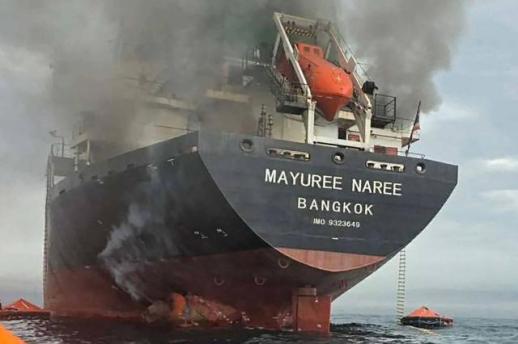 South Korea releasing 22.46 million barrels of oil reserves in IEA joint action SEOUL, March 12 (AJP) -South Korea will release 22.46 million barrels of oil from its strategic reserves as part of the International Energy Agency’s largest-ever coordinated emergency action to stabilize global energy markets shaken by the war in Iran. The Ministry of Trade, Industry and Energy said Wednesday the decision follows an emergency meeting of the International Energy Agency (IEA), where its 32 member countries agreed to release a combined 400 million barrels from emergency stockpiles. The unprecedented move aims to cushion a severe supply shock after the Strait of Hormuz — a vital artery carrying roughly one-fifth of the world’s oil trade — was effectively closed amid the escalating conflict. South Korea’s share amounts to 5.6 percent of the total release, calculated based on each member country's share of oil consumption among the IEA’s 32 members. The planned release of 22.46 million barrels marks the largest drawdown in the country’s history, surpassing the 4.94 million barrels released during the 1990 Gulf War. It is also nearly double the volume South Korea released during the coordinated IEA actions following Russia’s invasion of Ukraine in 2022, when the country contributed a total of 11.65 million barrels across two rounds. IEA Executive Director Fatih Birol said the coordinated action reflects the scale of the disruption facing global oil markets. “The oil market challenges we are facing are unprecedented in scale,” Birol said. “Oil markets are global, so the response to major disruptions must also be global.” The Paris-based agency holds roughly 1.2 billion barrels in emergency reserves among its members. The coordinated release announced Wednesday will be the sixth such intervention since the IEA was founded in 1974 and the largest on record. Seoul said the exact timing and pace of its release will be determined through consultations with the IEA secretariat, taking into account national circumstances and market conditions. A ministry official said the move is expected to help stabilize global oil markets and mitigate the economic impact of surging energy prices. “Through close cooperation with the IEA and major countries, the government will continue working to minimize the burden of high oil prices on the economy and consumer inflation,” the official said. The emergency action comes as the Iran war has sent energy markets into turmoil, with tanker traffic disrupted and Middle East producers struggling to export crude without access to shipping routes. The Thai-flagged dry bulk carrier Mayuree Naree caught fire after being struck by two projectiles while transiting the strait, its operator Precious Shipping said. Three crew members were reported missing and believed trapped in the engine room, while the remaining 20 crew members were evacuated safely to Oman. Iran’s Revolutionary Guards later said the ship had been “fired upon by Iranian fighters,” suggesting a rare direct engagement by the force. Two other vessels sustained minor damage earlier the same day. The Japan-flagged container ship ONE Majesty was hit by an unidentified projectile while anchored in the Gulf, leaving minor damage above the waterline but no injuries among the crew, according to its owner Mitsui O.S.K. Lines and charterer Ocean Network Express. A Marshall Islands-flagged bulk carrier, Star Gwyneth, was also struck about 50 miles northwest of Dubai, damaging its hull. Maritime risk firm Vanguard said the crew remained safe and the vessel was not in danger. Iran’s Revolutionary Guards have warned that ships attempting to pass through the Strait of Hormuz would be targeted, while U.S. President Donald Trump has threatened to intensify attacks on Iran if it continues to block the vital shipping lane. Despite repeated requests from shipping companies, the U.S. Navy has declined to escort civilian vessels through the strait for now, saying the risk of Iranian fire remains too high. U.S. Central Command said its current focus is destroying Iran’s missiles and drones and degrading its ability to disrupt maritime traffic. Energy analysts warn that the reserve release can ease market pressure temporarily, but a sustained stabilization ultimately depends on reopening the Strait of Hormuz and restoring normal oil flows. 2026-03-12 07:39:41
 -
 Choi Bul-am’s Family Says Actor in Rehab, Expected to Be Discharged Soon Actor Choi Bul-am’s family has denied recent rumors that he is seriously ill. In a phone interview with Yonhap News Agency on the 11th, Choi’s son, identified only by his surname, said, “(My father) is currently hospitalized, recovering while receiving rehabilitation treatment,” adding, “He is expected to be discharged soon.” He said back problems were among the reasons Choi stepped down last year from “Korean Table,” a current affairs and culture program on KBS 1TV. He said walking became difficult, and Choi underwent surgery followed by rehabilitation. “He is expected to leave the hospital soon,” he added. Choi, born in 1940, made his debut in 1959 in the play “Hamlet.” He began his full-time acting career in 1965 as a member of the National Theater Company.* This article has been translated by AI. 2026-03-12 07:12:15
 -
 Korea’s Elder Care Demand Surges as Nursing Home Rules Slow New Supply South Korea’s shift into a super-aged society is driving a sharp rise in demand for elder care, but the supply of nursing homes is falling far short, constrained by regulations that make it difficult to open new facilities. Industry officials warn that a “care gap” could soon become reality as entry barriers keep capacity from expanding fast enough. As of Tuesday, industry sources said nursing home bed capacity has increased by an average of 8.4% a year since 2008. However, only 38% of facilities earned A or B grades in evaluations by the National Health Insurance Service, which are generally preferred by families. About one in four facilities was cited for violating staffing standards (24.9%), and 28.5% fell short on adequate toileting services, failing to meet basic requirements. The mismatch is already visible on the ground. Mid- to large-sized nursing homes typically have capacity for about 200 residents, but waiting lists can run into the thousands depending on the facility, according to industry accounts. With population aging accelerating, the number of people waiting is expected to grow, yet new construction is not keeping pace. Under the enforcement rules of the Elderly Welfare Act, operators seeking to build elderly medical welfare facilities or senior welfare housing must first secure land and buildings that meet set standards. In practice, that means a provider cannot establish a facility based only on operating capability or a service model; it must first obtain physical infrastructure, such as purchasing land and constructing a building or leasing suitable premises. Industry officials say those requirements function as a steep barrier to entry. In urban areas, it is difficult to secure enough land for a nursing home, and land purchases and construction costs can range from tens of billions to hundreds of billions of won, effectively limiting new entrants. Factoring in the opportunity cost tied to owning land and buildings, losses in Seoul are estimated at about 8 million won a month, excluding noncovered service revenue. The Ministry of Health and Welfare, the lead agency, has acknowledged the need to improve regulations and is reviewing revisions. But industry groups say steps such as limited easing of facility standards or streamlined administrative procedures have had little impact in the field. Related organizations have formally urged the government to relax establishment requirements and expand the use of public land for facilities. Some experts also argue for a larger role for private nursing homes. Compared with public facilities, private providers can offer more varied services and more tailored care, and can differentiate themselves through facility conditions and programs. They also tend to have shorter waiting periods and can operate more flexibly in areas such as family visits and daily convenience, the article said. Experts say the government should focus on oversight and safety nets while supporting private providers behind the scenes as the main source of supply. Jang Si-ryeong, a senior researcher at the Bank of Korea’s Economic Research Institute, said, “With the end-of-life elderly population set to double over the next 25 years, it is clear that public finances alone have limits.” She added that policymakers should consider ways to offset high real estate costs in major metropolitan areas such as Seoul and Busan to encourage a stable supply of facilities in city centers.* This article has been translated by AI. 2026-03-12 06:04:30