
Journalist

AJP
-
 New Books: 'Venturenomics' Urges Shift From Real Estate to Startups in South Korea Venturenomics=By Kim Gi-yeong, Jium Media. The author says South Korea’s economy is confronting a “trilemma” of real estate dependence, a low birthrate and U.S.-China tensions, and argues the country must break through with innovation. He writes that “the Republic of Korea’s runway is rapidly getting shorter.” In startup terms, “runway” means how long cash reserves can sustain survival. Without innovation, he warns, the national “aircraft” could fail to take off. As what he calls the only solution to secure a runway for a new leap, he proposes a “venture nation” strategy. A central argument is that a real estate-centered structure has weakened innovation capacity. Money tied up in property, he writes, not only resists innovation but also reinforces preferences for jobs at large companies, in professional fields and in the public sector, creating a social climate that discourages entrepreneurship and moves to startups. By contrast, the book says the Chinese government, despite a multiyear property downturn, has refrained from large-scale stimulus and instead focused on strategic industries such as electric vehicles, batteries and artificial intelligence. It says China’s advanced-technology competitiveness has been strengthening quickly, citing the release of DeepSeek as an example. The author calls for “more innovative startups” and points to overseas examples readers can study: Israeli startups targeting the U.S. market from the earliest stages, and Finnish tech firms such as Supercell rising through what he calls the “Nokia diaspora.” He repeatedly notes that domestic-focused Korean startups such as Toss, Baedal Minjok and Zigbang have posted large operating losses, and again stresses the need to expand overseas. He also proposes creating a “startup sovereign wealth fund.” He adds that South Korea’s education structure — often labeled a “medical school republic” — could, paradoxically, become an opportunity to grow K-bio and K-health care industries. The book, however, does not address how to actively cultivate physician-scientists or how the government could build conditions for entrepreneurs to try again after failure, a gap the article notes. Another challenge is breaking what it calls the long-entrenched “myth that real estate never loses.” Soaring home prices are widely seen as obstacles not only to innovation but also to consumption, marriage and childbirth. The president has repeatedly used X to call for stabilizing the real estate market, but the article says no one can guarantee whether the current “war on home prices” will change the market’s direction. “The problem is the nature of capital. Money tied up in real estate rejects innovation. Even when new technology emerges, that capital does not take risks. The entire country’s appetite for risk declines, and the total amount of innovation shrinks. It means capital that flowed into ‘Eterno Cheongdam’ is unlikely to create next-generation semiconductor IP or become seed money for an AI startup. In Korea, real estate is not just an asset but the center of the financial order. As a learned result over the past 20 years, ‘rational’ Koreans came to trust leverage more than labor. Real estate is seen as almost the only ‘investment that does not fail’ in Korean society.” (p. 10) You Are a Runner, Too=By Runnerimba (Yoo Moon-jin), Editor. The author, an experienced runner who logs 800 kilometers a month, writes that “running is the easiest start and creates the biggest change.” He presents running not as simple exercise but as a force that can reshape daily life. Even on days when the body feels heavy, he says, pushing oneself outside to run can ultimately build the confidence of “I can do it.” The book describes benefits of running, saying even short runs can improve cardiovascular endurance and help relieve stress. It also offers practical advice for beginners, including a two-week start plan: for 20 minutes, walk for one minute and run for two minutes, repeating the cycle to build consistency. It also covers when and where to run, pros and cons of morning versus evening runs, and seasonal clothing. The book addresses how to run without knee pain, what to eat before running, how office workers can design routines, how to overcome slumps, and how to prepare for marathons. At the end of each chapter, short tips labeled “Runnerimba’s one-line comment” aim to steady readers when they feel like quitting. Among them: “What a first-time runner needs is not a speedometer but the will to run,” and “Consistency isn’t running every day; it’s continuing to run.” “So the best standard when you jog is this: ‘Can you run while talking?’ It’s simple and applies to anyone. If you can keep a natural conversation while running alongside a friend, that’s jogging. If you’re gasping and can’t finish a sentence, that’s not jogging but high-intensity training. And if you can speak a full sentence without needing to catch your breath afterward, you’re jogging at an appropriate pace. This standard works even when you run alone. You don’t have to actually speak. Count ‘one, two, three, four...’ in your head, hum lyrics, or think, ‘At this pace, I could talk if someone were next to me.’ If you feel that, you’ve already found a great jogging speed.” (pp. 68-69)* This article has been translated by AI. 2026-03-09 16:03:27
 -
 Oil Tops $100 as Bond Yields Rise, Raising Risk of 7% Mortgage Rates in South Korea Rising geopolitical tensions in the Middle East pushed international oil prices above $100 a barrel, adding to upward pressure on market interest rates. If bond yields keep climbing, some analysts say mortgage rates could top 7%. As of the 9th, the five major commercial banks — KB Kookmin, Shinhan, Hana, Woori and NH NongHyup — were offering five-year fixed (hybrid) mortgage rates of 4.14% to 6.74%, according to the banking sector. Compared with early this year’s 3.94% to 6.24%, the top end has risen 0.50 percentage points in about two months. Mortgage rates have continued to rise even though the Bank of Korea has kept its policy rate unchanged for six straight meetings, largely because yields on financial bonds used as benchmarks have moved higher. The five-year financial bond yield jumped 43.1 basis points — from 3.497% in early January to 3.928% on the 9th. (One basis point equals 0.01 percentage point.) Markets have also seen weakening expectations for rate cuts, while talk of a possible supplementary budget has raised concerns about heavier government bond issuance and supply-demand pressure. Analysts say the latest surge in oil prices has added to the upward push on bond yields. West Texas Intermediate futures briefly rose to $111.24 on the morning of the 9th, breaking above the psychological $100 level for the first time since July 2022, when prices were driven up by the war in Ukraine. With oil rising, the upper end of mortgage rates is expected to exceed 7% soon. Market estimates suggest a 10% rise in oil prices could lift government bond yields by up to 15 basis points. If banks’ funding costs and spreads are also adjusted, the increase in mortgage rates could widen to around 40 basis points, analysts said. In July 2022, five-year fixed mortgage rates were about 4.2% to 6.1%. As the impact of oil above $100 filtered through with a lag, rates topped 7% by October that year, reaching 5.3% to 7.4%. With the Iran situation raising even a “$150 oil scenario,” some analysts say mortgage rates could climb into the mid-7% range if tensions persist. Banks’ efforts to manage household lending are also accelerating the rise in borrowing costs. KakaoBank raised mortgage rates by 0.36 percentage points on March 5, lifting its maximum rate to about 6.5%. It was the bank’s second increase this year, following a 0.1-point hike in January. Industrial Bank of Korea also reduced the limits on its interest-rate discount coupons for mortgages and jeonse loans by 0.1 percentage point and 0.2 percentage point, respectively. Cutting preferential rates has the effect of raising borrowers’ loan rates. Kim Jina, a researcher at Eugene Investment & Securities, said worries are resurfacing that higher oil prices could fuel inflation, lead to policy-rate hikes and push up market rates, as seen during the Russia-Ukraine war. “Korea is especially sensitive to inflation and rate increases, so the swings will be severe,” she said. 2026-03-09 15:57:00
 -
 Black Monday exposes vulnerabilities of external-reliant Korean economy SEOUL, Mar 09 (AJP) - The Black Monday bombshell in South Korean capital markets has once again laid bare the vulnerabilities of the country’s external-reliant economy, now facing the dreaded triple highs of oil prices, the dollar and interest rates — a classic recipe for stagflation. Crude prices touched above $110 per barrel for the first time since the early months of Russia’s invasion of Ukraine in 2022, marking one of the fastest climbs since the oil crises of the 1980s. Futures on U.S. benchmark West Texas Intermediate (WTI) and Brent crude soared more than 25 percent Sunday and more than 50 percent since attacks on Iran began on Feb. 28. Dubai crude — the benchmark most relevant for South Korea — closed Friday at $99.14. The jump marks the sharpest escalation in 31 months, since intraday prices briefly cleared $100 in mid-2022 following Russia’s invasion of Ukraine. The sudden spike in the three major benchmarks — which had stabilized near $80 just a week earlier — was triggered by news that Mojtaba Khamenei, the second son of Iran’s late supreme leader Ali Khamenei, has officially succeeded his father. Mojtaba, long seen as a shadow power broker who famously backed former President Mahmoud Ahmadinejad, is widely viewed as a hardliner whose ascension reinforces fears of a prolonged conflict and the potential shutdown of the Strait of Hormuz. The conflict has already brought tanker traffic through the Strait of Hormuz to a near standstill. Roughly 20 million barrels of oil per day — about one-fifth of the world’s seaborne crude supply — normally passes through the narrow waterway linking the Persian Gulf to global markets. Data from Vortexa shows that roughly 16 million barrels per day of oil have effectively been stranded behind the strait and cut off from global supply chains. Retail fuel prices have quickly followed the surge. As of Sunday, the average price of gasoline at filling stations in the Seoul metropolitan area reached 1,945.73 won ($1.35) per liter, while diesel climbed to 1,967.19 won — up 11 percent and 18 percent respectively since Feb. 28. In a rare reversal, diesel prices have now surpassed gasoline for the first time since February 2023. Analysts attribute the inversion to rising marine fuel demand and surging maritime logistics costs as tanker traffic reroutes. U.S. President Donald Trump attempted to calm markets by granting India a temporary waiver to import Russian oil and posting on social media that prices would drop “when the destruction of the Iranian nuclear threat is over.” Market sentiment, however, remained rattled. Asia’s energy exposure magnifies the shock The rapid breach of the $100 psychological threshold reverberated across East Asian markets due to the region’s heavy dependence on Middle Eastern energy supplies. In 2025, Asia absorbed 87 percent of the crude oil and 86 percent of liquefied natural gas (LNG) shipments passing through the Strait of Hormuz. South Korea remains particularly exposed. The country relies on the Middle East for 70.7 percent of its oil imports and 20.4 percent of LNG supplies, of which roughly 15 percent comes from Qatar. Compounding concerns, Qatar’s main LNG export facility — which normally accounts for roughly 17 percent of global LNG flows — is currently offline after being struck by an Iranian drone. On March 6, Qatar’s energy minister Saad al-Kaabi told the Financial Times that it could take “weeks to months” to restore normal operations even if the war were to end immediately. Financial markets buckle Foreign investors reacted swiftly to the deteriorating outlook, dumping more than 3.3 trillion won ($2.4 billion) worth of KOSPI shares on Monday. The benchmark index plunged nearly 8 percent, while the Korean won weakened toward the 1,500-per-dollar level — its lowest point since the aftermath of the global financial crisis 17 years ago. The panic quickly spilled into the bond market. The three-year government bond yield jumped 25 basis points to 3.477 percent, while the 10-year yield rose 15.3 basis points to 3.769 percent — the biggest single-day increase in 41 months since the aftermath of the U.S. Federal Reserve’s aggressive tightening cycle in September 2022. Verbal intervention from policymakers did little to calm investors. President Lee Jae Myung ordered “extraordinary vigilance” from fiscal and monetary authorities, while Bank of Korea senior deputy governor Ryoo Sang-dai warned that the moves in interest rates and the exchange rate appeared “excessive.” The central bank also announced an extension of its currency swap agreement with the Swiss National Bank. Spillover into the real economy The financial turbulence underscores how sensitive South Korea’s economy remains to oil price shocks. A report released March 3 by the Hyundai Research Institute noted that while South Korea ranked as the world’s 12th-largest economy in 2024, it was the seventh-largest consumer of oil globally. The combined shock of rising crude prices and a weakening won is expected to intensify inflationary pressure. Hyundai Research Institute estimates that if international oil prices average $150 per barrel, consumer inflation could rise by 0.8 percentage points to 2.9 percent, while economic growth could slow by a similar margin from its current 2 percent forecast. The Bank of Korea and government projections of roughly 2 percent growth were based on oil prices averaging around $62 per barrel. Should growth slip below 2 percent — following an already weak 1 percent expansion in 2025 — economists warn the economy could drift toward stagflation as import-driven inflation collides with slowing output. “As South Korea is a net energy importer, the upward trend in the current account surplus is likely to lose momentum as oil prices rise,” said Lee Min-hyuk, a researcher at KB Kookmin Bank. Stock rally loses steam The geopolitical shock has also punctured the optimism surrounding Korea’s stock market rally. “Since the KOSPI had outperformed other markets, there is still room for profit-taking, and with a lack of positive catalysts further declines are possible,” said Cho Jun-ki, an analyst at SK Securities. The benchmark index surged 76 percent in 2025 — nearly triple the gains of Japan’s Nikkei 225 or Taiwan’s TAIEX. Even before Monday’s crash, the KOSPI had risen 14.9 percent in 2026, more than double the Nikkei’s roughly 7 percent gain. Bond markets may also face sustained pressure. “During the 2011 Libyan crisis, government bond yields rose by more than one percentage point between the start of the year and August,” said Kim Sung-soo, a researcher at Hanwha Investment & Securities. Kim expects a similar trajectory this year, projecting a ceiling of around 3.5 percent for the three-year yield and 3.9 percent for the 10-year yield. “A quick recovery is unlikely,” he said. Oil outlook remains grim Energy markets are bracing for further volatility. Goldman Sachs warned in a Sunday report that crude prices could exceed $150 per barrel by the end of March, noting that the roughly 20 million barrels of oil transiting the Strait of Hormuz each day places the current crisis on a scale comparable to the oil shocks of the 1970s. Daishin Securities reached a similar conclusion, saying oil could remain above $100 for an extended period if global strategic petroleum reserves begin to tighten. South Korea currently holds strategic petroleum reserves equivalent to roughly 200 days of consumption, according to the Korea National Oil Corporation — the sixth-largest reserve among non-oil-producing countries. 2026-03-09 15:54:59
 -
 Indian spring festival brings colors flying in Miryang SEOUL, March 09 (AJP) - Miryang city in South Gyeongsang Province held the 16th Holi Hai Festival at the Sunshine Miryang Theme Park Cultural Plaza on March 8. Approximately 1,000 Korean and foreign participants joined the event. Holi is a traditional Indian festival celebrating the arrival of spring where people throw colored powder and water at each other. The event was designed as a platform for communication where citizens and foreign residents can enjoy together beyond barriers of nationality and language. The festival began with traditional Indian food experiences and wellness programs, followed by an afternoon session where participants threw colored powder to DJ music. The Yoga Culture Town within the Sunshine Theme Park where the festival was held blended authentic Indian yoga culture with the Holi festival. 2026-03-09 15:49:23
 -
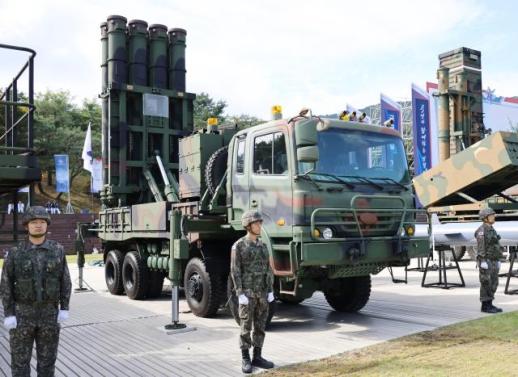 UAE airlifts Korean MSAM II interceptors as Gulf tensions rise SEOUL, March 09 (AJP) - South Korea has delivered more than 30 interceptor missiles for its Cheongung-II (M-SAM II) medium-range surface-to-air missile system to the United Arab Emirates ahead of schedule, as the Gulf state seeks to bolster its air defenses amid rising tensions with Iran. According to government sources, the UAE had requested early delivery of additional Cheongung-II batteries. Seoul reportedly found the request difficult to meet due to existing supply commitments to other buyers such as Saudi Arabia and Iraq, as well as logistical challenges in transporting military equipment to an active conflict zone. The UAE instead asked South Korea to accelerate shipments of interceptor missiles as its stockpiles were being depleted. Abdulkhaleq Abdulla, a prominent Emirati political scientist widely regarded as an unofficial adviser to the UAE president, wrote on X on Monday that Seoul had swiftly supplied the interceptors to help reinforce the country’s missile defense capabilities. “Thank you, South Korea, for urgently sending 30 M-SAM2 interceptor missiles to strengthen our missile defense system against Iranian aggression,” Abdulla said. He added that the missiles were transported in two batches using C-17 military transport aircraft. “South Korea quickly transported the interceptors twice using C-17 aircraft. The Korean missile defense system is already operational in the UAE,” Abdulla wrote, adding that “a friend in need is a friend indeed.” South Korea’s Cheongung-II, also known as M-SAM II, is a domestically developed medium-range air defense system designed to intercept incoming ballistic missiles and aircraft. A single Cheongung-II battery can fire up to 32 interceptor missiles. The additional interceptors supplied to the UAE are expected to be deployed immediately to replenish stocks amid ongoing missile exchanges involving Iran, according to reports. The UAE signed a $3.5 billion deal in January 2022 to acquire the Cheongung-II system from South Korea. Of the 10 batteries contracted, two have already been deployed and are operational in the country. Those batteries reportedly achieved an interception success rate of about 96 percent during recent missile and drone attacks linked to Iran targeting U.S. and Israeli interests in the region. The system has been used to intercept ballistic missiles and drones as the conflict involving Iran, the U.S. and Israel spreads across the Middle East, demonstrating its combat effectiveness. Each Cheongung-II battery costs more than 400 billion won ($268 million), while a single interceptor missile is estimated to cost around 1.5 billion won, roughly one-third the price of a U.S. Patriot interceptor. A Hanwha Aerospace official declined to comment, saying, “We cannot confirm details at this time.” Analysts say that if the Middle East conflict continues to escalate, demand for air defense systems and munitions could surge, potentially boosting global interest in Korean weapons systems that have demonstrated operational performance. 2026-03-09 15:48:05
 -
 South Korea on alert as nearly 200 sailors remain in Persian Gulf SEOUL, March 9 (AJP) - Some 183 South Korean sailors are confirmed in the Persian Gulf, with the government here stepping up efforts to ensure their safety amid the ongoing conflict in the Middle East. After a meeting chaired by Vice Minister and Acting Minister Kim Seong-beom, the Ministry of Oceans and Fisheries said on Monday that about 146 sailors are aboard 26 South Korean-flagged ships, while 37 are on foreign-flagged vessels as of last Sunday. No South Korean sailors have left the ships or asked to do so, though crew numbers may continue to change as sailors board and disembark. According to the ministry, all these South Korean vessels have at least one month's worth of essential supplies, with additional goods available through local agents in the Middle East, except at certain ports. The ministry said it is working with relevant ministries and South Korean diplomatic missions in the Middle East to monitor the situation and provide daily updates to ensure the sailors' safe return if the conflict continues. Kim said the ministry will "carefully prepare measures to ensure sailors' safety in case the situation is prolonged," urging officials to remain on alert and ready to respond to any emergencies until the situation ends. 2026-03-09 15:44:02
 -
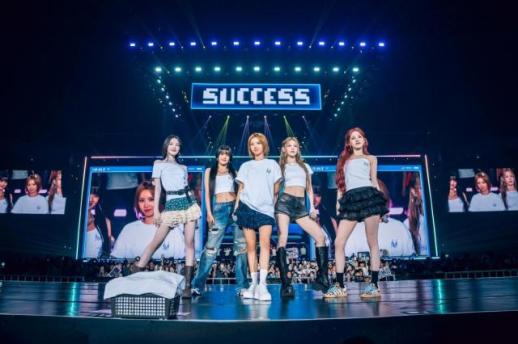 i-dle becomes first K-pop girl band to host solo concert at Taipei Dome SEOUL, March 09 (AJP) - Five-member K-pop girl band i-dle successfully drew more than 36,000 fans on March 7, at a concert held at Taipei Dome as part of its fourth world tour, its agency Cube Entertainment said Monday. The band, comprised of five members -- Miyeon, Minnie, Soyeon, Yuqi and Shuhua -- had their concert tickets sold out immediately after general ticket sales opened on Feb. 1. The upcoming Taipei concert follows the group's three-day concert performance at Taipei Arena during its 2024 world tour. Due to strong demand, limited-view seats for the March concert were also sold out, resulting in four consecutive sold-out shows. Cube Entertainment said the performance marked the first time a K-pop girl act had performed at Taipei Dome. The dome stadium is Taiwan's iconic indoor facility with a maximum capacity of 40,000 seats. Previously, K-pop boy band Super Junior and solo female artist Taeyeon held concerts at Taipei Dome last year. The group kick-started the concert with their latest release "Mono (Feat. skaiwater)." Throughout the concert, i-dle performed songs "Nxde," "LION," "Good Thing," "I Hate Being Sick," and the unreleased track "Crow," along with solo stages for individual members alongside a live band session. For the Taipei audiences, the band also performed "Girlfriend," which had not been included in Seoul concerts, and presented a special cover of "Wu Mian," a song by Taiwanese band Sodagreen. i-dle debuted in 2018 under Cube Entertainment and is known for hit songs such as "Tomboy," "Nxde" and "Queencard." Following the Taipei concert, the band will continue on with its tour at Impact Arena in Bangkok on March 21. 2026-03-09 15:30:29
 -
 Banks Vie for Seoul’s 55 Trillion Won Treasury Account as Shinhan Defends Lead Seoul’s selection of a bank to manage its treasury — a pool of funds totaling 55.2493 trillion won a year — is expected to trigger intensified competition among major commercial banks. According to the financial sector on Monday, the Seoul Metropolitan Government plans to post a bid notice for the city treasury as early as next month. With the review process expected to take about a week, the final operator is likely to be chosen within April. Seoul’s total budget this year (general account plus other special accounts) is 49.3579 trillion won, and its funds total 3.7715 trillion won, bringing the annual amount managed to 55.2493 trillion won — the largest among local governments nationwide. Shinhan Bank currently manages both Seoul’s primary and secondary treasury accounts. Woori Bank handled the Seoul treasury exclusively for 104 years, from the days of the Gyeongseong-bu treasury in 1915 through 2018, before losing the role to Shinhan. The designated bank can secure large volumes of low-cost deposits and related business opportunities, drawing interest from Shinhan, Woori and KB Kookmin Bank. Shinhan is expected to fight to retain the mandate, even if it requires offering a higher contribution, after making substantial investments during its eight years running the city treasury. The bank has promoted initiatives for Seoul residents, starting with support for small merchants through the “Ttaenggyeoyo” Seoul Delivery Plus program, and continuing with the opening of the Donghaeng Store “Jeongdam,” support for alleyway shopping-district merchant groups, and backing for the Seoul Plaza ice rink. Woori, long considered strong in institutional banking, is also expected to push hard to regain the Seoul treasury role. The bank is likely to argue it can create synergies because it holds 56% of district-level treasury accounts across Seoul’s 25 districts. KB Kookmin is seen as a potential dark horse. In Seoul’s evaluation criteria, citizen convenience — including branches and automated teller machines — accounts for 18 points out of 100. By number of branches in Seoul, KB Kookmin leads with 291, ahead of Woori’s 265 and Shinhan’s 250. Shinhan, however, has the most ATMs, with 1,552, topping KB Kookmin’s 1,439. With the weighting for deposit interest rates increased this year, KB Kookmin is also expected to be able to offer the highest rates, backed by its capital strength. Separately, a close contest is also expected in July for Incheon’s treasury mandate, which totals about 15 trillion won. Shinhan manages Incheon’s primary treasury account and NH NongHyup Bank manages the secondary account. Hana Bank, which is moving its holding company headquarters to Cheongna, is also expected to enter the race. The bank has built a record of community initiatives, including support for foreign residents, backing for Inha University Hospital and Asan Cheongna Hospital, and care programs for vulnerable groups. By number of branches in Incheon, Shinhan leads with 49, followed by KB Kookmin with 45, NongHyup with 39, Woori with 35 and Hana with 31. 2026-03-09 15:30:21
 -
 NH NongHyup Bank CEO Kang Tae-young visits AgTech firm Davio to discuss growth NH NongHyup Bank said on the 9th that CEO Kang Tae-young visited the headquarters of Davio, a spatial data and agricultural technology company, to review the growth of a firm backed by the bank’s agri-food fund and discuss ways to support it. Davio, founded in 2012, runs a smart agriculture monitoring business based on spatial data and artificial intelligence technology. The company is expanding its business areas with investment from NongHyup Bank’s agri-food fund. NongHyup Bank said it operates a “life-cycle value-up support system” for companies in the agri-food and AgTech sectors, providing assistance from the investment stage through growth and maturity. During a meeting with Davio CEO Park Ju-heum and other executives, Kang discussed the company’s progress since the investment, support through management consulting and network connections, plans to expand financial support such as loans and guarantees, and future growth strategies including an initial public offering. “Venture capital investment in K-food and AgTech is a key task to strengthen the future competitiveness of South Korean agriculture,” Kang said. “NongHyup Bank will be a reliable financial partner that supports the growth of innovative companies and helps drive industry development.” 2026-03-09 15:27:00
 -
 Arts Council Korea Wins Top Prize at U.S. LACP Vision Awards for Sustainability Report Arts Council Korea (ARKO) said its sustainability reports have received top ratings from recognized evaluators at home and abroad, underscoring its ESG management capabilities. ARKO said Monday it won a domestic Global Standard Management Award (GSMA) for its first-ever “2024 Sustainability Management Report,” and then took the top prize for its “2025 Sustainability Management Report” at the U.S.-based LACP Vision Awards. The organization said it has now won major awards in Korea and overseas for two consecutive years. ARKO’s 2025 report won the grand prize in the nonprofit integrated report category at the LACP “2024/25 Vision Awards.” In the evaluation, which drew participation from more than 1,000 organizations worldwide, ARKO scored 99 out of 100. It received perfect scores in seven of eight categories, including first impression, cover design and message clarity. ARKO also won the Technical Achievement Award for report-writing quality. ARKO said its 2024 report won the grand prize in the sustainability management report category at the 23rd GSMA awards hosted by the Korea Management Certification Institute (KMR), marking the first such achievement in the culture and arts sector. It said the LACP win shows its ESG strategy and results meet global standards. The “2025 Sustainability Management Report” describes ARKO’s efforts on carbon neutrality practices, inclusive arts support and stronger transparent management, the organization said. ARKO Chairman Jeong Byeong-guk said, “Achieving results for two consecutive years, from our first published report to this global award, is a meaningful outcome that shows ARKO’s ESG management efforts have been recognized worldwide.” He added that ARKO will continue to make ESG management a core value in its operations in line with the government’s push to strengthen ESG management at public institutions. The full sustainability management report is available on the ARKO website. * This article has been translated by AI. 2026-03-09 15:21:15