
Journalist

AJP
-
 TWS Wraps Sold-Out Stage Greeting for VR Concert 'Rush Road' TWS met fans at a stage greeting for its first VR concert, “TWS VR CONCERT : RUSH ROAD,” offering a closer-than-usual experience for audiences. The stage greeting, held March 6, sold out quickly as soon as ticket sales opened, underscoring strong interest. Fans packed the theater and cheered as the members appeared, while the group actively engaged with the audience. Members highlighted the VR format’s immersion. Jihoon said he watched the VR concert himself and was surprised by how close it felt, adding jokingly, “We can’t be awkward.” Kyungmin said it felt “like they were sitting on my knees,” drawing a strong response. Some attendees said it was even better than seeing a live concert and that they had watched it multiple times. Asked which stage was most memorable, one response was, “All of them were good.” The group also shared behind-the-scenes details from filming. Youngjae said there were many scenes shot at very close range, so he paid extra attention to skin care “so I wouldn’t be surprised even when seen up close.” Shinyu said there was a moment in filming “Overdrive” where they “patted” 42 — the group’s official fandom name — and that he aimed for that part. Dohun added that there were close-up shots during the “OVERDRIVE” stage, so he prepared his visuals, prompting laughter. Hanjin said he tried to make eye contact by thinking of the camera as 42. The event also featured light exchanges with the audience. When Youngjae asked whether it made them think of popcorn, fans replied, “TWS is sweeter.” When Jihoon asked whether they needed a refreshing drink, fans answered, “Your faces are refreshing,” filling the theater with laughter. Jihoon also asked fans to join the chant during “First Meeting Doesn’t Go as Planned,” saying they should do it even if the person next to them does not. TWS closed by thanking attendees. Youngjae said he was grateful to hear the event sold out and that seeing people enjoy it made the hard work of filming worthwhile. “I’m really happy you enjoyed it,” he said. “TWS VR CONCERT : RUSH ROAD” sold out its first-week tickets shortly after sales opened and also reached No. 2 on Megabox’s overall movie chart, continuing to draw attention. The special stage greeting added to the on-site excitement through direct interaction with fans. The VR concert opened exclusively March 4 at Megabox COEX, with a second round of ticket sales set to open March 11. * This article has been translated by AI. 2026-03-09 13:15:18
 -
 BDH Foundation Chair Bae Dong-hyun Congratulates Kim Yun-ji on Historic Paralympic Biathlon Gold On March 8, Bae Dong-hyun, chair of the BDH Foundation, met BDH Paras athlete Kim Yun-ji at the awards ceremony site and congratulated her after she won a historic gold medal at the 2026 Milan-Cortina Winter Paralympics. Competing in her first Paralympics, Kim won the women’s sitting 12.5-kilometer individual biathlon at the Tesero Cross-Country Stadium in Italy, taking first place in 38 minutes, 00.1 seconds. Kim drew attention for her focus and steady race management in biathlon, which combines cross-country skiing and shooting. The gold was South Korea’s first in biathlon across both the Olympics and Paralympics. It was also the first Winter Paralympics gold ever won by a South Korean woman. It marked South Korea’s second Winter Paralympics gold medal, following Shin Eui-hyun’s gold at the 2018 PyeongChang Winter Paralympics. The article noted that both of South Korea’s Winter Paralympics gold medals have been won by athletes from BDH Paras. The foundation said the result reflected Bae’s long-running interest and support for the development of para sports and athlete assistance, including efforts to broaden participation and help create stable training conditions so athletes can compete internationally. Bae, who attended the ceremony to congratulate Kim, said, “I sincerely congratulate our athlete Yun-ji. I am very happy and proud that the effort and challenge she has quietly continued have led to such a valuable result on the world stage.” Kim has four more events remaining at the Games and is set to continue competing after her breakthrough gold in her Paralympic debut. * This article has been translated by AI. 2026-03-09 13:03:00
 -
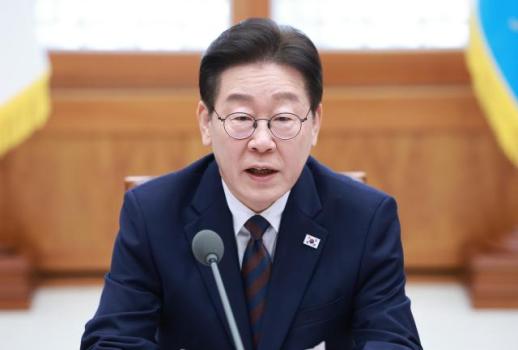 Seoul braces for worst-case scenario as oil shock rattles markets SEOUL, March 09 (AJP) - President Lee Jae Myung on Monday ordered the government to prepare for a “worst-case scenario” as the widening Middle East conflict threatens to deliver a triple shock to South Korea’s economy from high oil prices, dollar, and interest rates. Chairing an emergency cabinet meeting, Lee warned that the trajectory of the crisis remains highly uncertain. “It is difficult to predict how the situation will unfold,” Lee said. “The government must be ready for the worst-case scenario with an extraordinary sense of urgency.” Senior officials from key ministries — including finance, foreign affairs, trade and industry, environment and agriculture — attended the meeting alongside heads of economic agencies such as the Fair Trade Commission and the National Tax Service. Lee instructed authorities to prepare additional market-stabilization measures beyond the existing 100 trillion won ($75 billion) financial safety program, saying the government and the Bank of Korea should be ready to expand interventionist actions if needed. The emergency meeting came after the surge in global oil prices rattled financial markets earlier Monday. The benchmark KOSPI plunged nearly 8 percent, while the Korean won weakened toward levels last seen during the aftermath of the global financial crisis. Government bond yields also jumped about 25 basis points, climbing to their highest levels since September 2022. Lee also warned against profiteering as energy prices rise. “We must strictly crack down on those seeking unfair profits from market turmoil,” he said, adding that the crisis should also serve as a catalyst to “push forward structural reforms to strengthen the resilience of Korea’s capital markets.” With domestic fuel prices approaching 1,900 won per liter, Lee ordered officials to prepare the swift implementation of a price ceiling system for gasoline and diesel. Under the proposed mechanism, the government would cap retail prices and compensate fuel distributors for losses incurred from the policy. He also instructed ministries to work with strategic partner countries to secure alternative supply routes that bypass the Strait of Hormuz, a critical oil chokepoint now facing disruption amid the conflict. Emphasizing the social impact of rising energy costs, Lee vowed to crack down on price collusion, hoarding and speculation by refiners and gas stations. “Violators should face penalties several times greater than the profits they earn from such illegal acts,” he said. “Crisis always carries opportunity,” Lee added. “Everyone is suffering from the same global shock, but how we prepare and respond will determine what comes next.” 2026-03-09 12:19:26
 -
 Black Monday hits Asia on oil price surge; Korean won and bonds also crash SEOUL, March 9 (AJP) — Asian stock markets plunged Monday as fears of a prolonged blockade of the Middle East’s key oil shipping route sent crude prices above $100 a barrel, triggering a broad risk-off selloff across the region. South Korean and Japanese shares suffered the steepest losses in early trading as the prospect of disruptions to energy supplies bound for Asia rattled investors. The benchmark KOSPI dropped as much as 8 percent, retreating to the 5,100 level, while Japan’s Nikkei 225 fell 7.13 percent to 51,657.37. Taiwan’s TAIEX declined 5.45 percent to 31,768.90, and Hong Kong’s Hang Seng Index slipped 2.77 percent to 25,044.34. Sell-side sidecar curbs were triggered immediately after the opening bell on both the main KOSPI and secondary KOSDAQ markets. Geopolitical tensions escalated after U.S. President Donald Trump demanded Iran’s “unconditional surrender,” while Tehran named Mojtaba Khamenei, the son of slain supreme leader Ali Khamenei, as the country’s new leader in what analysts saw as a defiant move signaling a prolonged conflict. The prospect of a drawn-out war pushed oil prices sharply higher. West Texas Intermediate (WTI) crude surged more than 16 percent to $107.92 a barrel, while Brent crude climbed over 17 percent to above $108, marking the first time oil prices have exceeded the $100 threshold since July 2022 as of late Sunday trading. The spike followed disruptions around the Strait of Hormuz, a key artery for global oil shipments, prompting oil producers to reduce output. Given South Korea’s heavy dependence on Middle Eastern energy imports, rising oil prices are expected to weigh heavily on the domestic economy. Foreign investors sold 2.15 trillion won ($1.6 billion) worth of shares on the KOSPI, while domestic institutions dumped 1.3 trillion won. Retail investors stepped in as bargain hunters, buying 3.4 trillion won, but decliners still overwhelmed gainers 865 to 62. Utility and fuel-importing companies were among the few survivors. POSCO International and LG International rose 11.87 percent and 7.22 percent, respectively. The Korean won weakened sharply to 1,497.30 per dollar, compared with 1,475.7 won on Friday, approaching the psychologically critical 1,500 level for the first time since March 12, 2009, during the global financial crisis. Panic extended to the bond market. The three-year Korean government bond yield jumped 25 basis points to 3.477 percent, widening the spread to nearly 100 basis points above the Bank of Korea’s policy rate of 2.50 percent. The 10-year government bond yield rose 15.3 basis points to 3.769 percent in morning trading. Leverage in the domestic stock market has reached record levels. According to the Korea Financial Investment Association, outstanding margin loans stood at a record 33.6945 trillion won as of March 5. Margin loans refer to funds borrowed from brokerages by investors to buy stocks and typically rise when expectations for market gains increase. DB Securities said foreign investors had largely sold Korean equities during the Iran crisis but were selectively buying construction stocks linked to the nuclear power theme. The construction sector recorded the highest ratio of cumulative foreign net purchases relative to market capitalization during the period. As of March 6, the ratio stood at 1.20 percent of market capitalization. Foreign investors also increased holdings in Samsung E&A (0.73 percent) and Hyundai Engineering & Construction (0.64 percent). Analysts said the buying reflects expectations that nuclear power could emerge as an alternative energy source during periods of oil price spikes, while the AI-driven surge in electricity demand is likely to boost nuclear energy investments. Korean companies with strengths in both nuclear and construction sectors are also seen as potential beneficiaries of future reconstruction projects in the Middle East once the conflict subsides. Among market heavyweights, Samsung Electronics fell 9.35 percent to 170,600 won, while SK hynix dropped 11.15 percent to 821,000 won. Defense stocks were mixed after early gains. Hanwha Aerospace declined 6.28 percent to 1,388,000 won, while Hanwha Systems rose 2.33 percent to 162,600 won, remaining one of the few gainers in an otherwise broad market decline. LIG Nex1, the developer of the Cheongung-II missile defense system, initially rose about 4.44 percent at the open but later reversed course, falling 3.12 percent to 808,000 won. Automakers also retreated, with Hyundai Motor sliding 10.31 percent to 496,000 won and Kia declining 8.74 percent to 152,400 won. Battery and biotech stocks weakened as well. LG Energy Solution fell 6.23 percent to 354,000 won, while Samsung Biologics slipped 5.29 percent to 1,557,000 won. 2026-03-09 11:53:24
 -
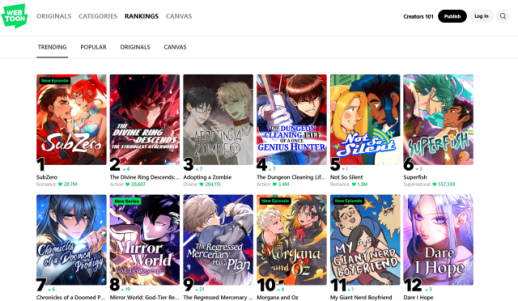 Webtoon Entertainment's simultaneous global releases boost revenue by up to 200% in piracy fight SEOUL, March 09 (AJP) - Webtoon Entertainment, a Naver-controlled company, announced that a pilot program releasing Korean-language webcomics simultaneously across global markets drove payment revenue up by as much as 200 percent, underscoring the platform's intensifying campaign to claw back earnings lost to piracy. The Nasdaq-listed company said Monday that it had tested the initiative on four original Korean titles — including "Childhood Friend Complex" — that are serialized in English, French, Thai and Indonesian. By aligning global release dates with the Korean-language service for series returning from hiatuses of five months to a year, the platform eliminated translation delays that had long left overseas readers reliant on pirate sites for the latest chapters. The results showed that "Childhood Friend Complex" recorded the sharpest surge at about 208 percent in global payment revenue compared to its eight-week pre-hiatus average, other top webtoons following the spike as well. Weekly readership also climbed across all four titles, with "Lee Seop's Romance" posting the highest gain at 82 percent. The company attributed the gains largely to the absorption of paying users who had previously turned to unlicensed translation sites during the gap between Korean and global publication. Titles typically struggle to recover pre-hiatus readership and revenue levels after prolonged breaks, making the immediate rebound all the more notable. "Simultaneous releases demand close collaboration between creators and the platform," Kim Yong-soo, president of Webtoon Entertainment, said. "We will build a fast, efficient translation support system to minimize the burden on creators while working to protect the revenue that has been siphoned off by illegal sites." The simultaneous release strategy operates in tandem with Webtoon Entertainment's proprietary anti-piracy technology, Toon Radar, which uses artificial intelligence to embed invisible identifiers in webtoon images and track unauthorized distribution. The company said the number of titles illegally copied on the day of their official release fell by about 80 percent as of November compared to the average for the first three quarters of the year. 2026-03-09 11:33:47
 -
 OPINION: Is Iranian war part of Trump's broader strategy on China? SEOUL, March 9 (AJP) - The U.S. launched surprise airstrikes on Iran on Feb. 28, escalating tensions in the already volatile Middle East. Under the joint military operation with Israel, codenamed Epic Fury, strikes on military and strategic targets occurred as rounds of nuclear negotiations between Washington and Tehran in Geneva, Switzerland remained deadlocked. U.S. President Donald Trump is widely seen as unpredictable yet intensely transactional, prompting American think tanks and analysts to try to piece together his intentions and speculate on his next moves. The motivations behind the military operation remain unclear, though possible factors include the growing uncertainty of Trump's tariff policies following the Supreme Court's ruling against them, a deepening rivalry with China, and Russia's prolonged war in Ukraine, ahead of the upcoming midterm elections in early November. First of all, his tariff fight is likely to continue despite last month's U.S. Supreme Court ruling that Trump's unilateral tariffs under the International Emergency Economic Powers Act (IEEPA) were illegal. The court found that foreign drug inflows and the U.S. trade deficit did not meet the conditions of the IEEPA and the National Emergencies Act (NEA). However, Trump would still have a range of tools available to a U.S. president, such as Section 122 of the Trade Act of 1974 to address trade deficits; Section 232 of the Trade Expansion Act of 1962 to protect domestic industry; Section 301 of the Trade Act of 1974 to penalize unfair trade practices; Section 201 of the Trade Act of 1974 to impose temporary trade barriers; and Section 338 of the Tariff Act of 1930 to respond to discriminatory trade practices. The strike on Iran appears aimed at removing a source of instability in the Middle East. Israel's cooperation, along with the wave of anti-government protests inside Iran, may have signaled to Washington that conditions were ripe for action. Another possible calculation is that toppling Supreme Leader Ayatollah Ali Khamenei's decades-long iron rule could weaken Iranian-backed armed groups such as Hamas, the Houthis, and Hezbollah. Eliminating Iran's nuclear program may have been another driving factor, with the broader goal of stabilizing the region and helping bring the war in Ukraine to an end. The Trump administration had been negotiating both issues simultaneously, repeatedly saying that Ukraine talks were nearing a final agreement, even as nuclear talks with Iran had been stalled. Iran's international isolation, similar to Venezuela's, may have encouraged him to resort to the strike. Trump may have believed that fully dismantling Iran's nuclear facilities could prompt regime change and that any Iranian retaliation would have limited impact on the U.S., while also potentially creating momentum for peace negotiations in Ukraine. The ripple effects were already being felt across Europe. On March 2, French President Emmanuel Macron announced plans to expand France's nuclear weapons program and offer a nuclear umbrella to European allies, a move aimed at strengthening NATO's collective defense. The announcement echoed a demand Trump had pushed since his first term, that Europe do more to defend itself, and aligned with his broader strategy of transferring the burden of Ukraine's security onto NATO and its members. If Ukraine and Iran are brought under control, Trump would have more room to pursue what may be his longer-term goal, i.e., containing China, a challenge that, as then-vice president-elect JD Vance said at the 2024 Munich Security Conference, could take 40 years or more. The U.S. midterms will be another test of Trump's strategy, though he appears cautiously confident. Last year, Trump secured investment pledges totaling US$8.4 trillion from domestic and foreign companies and is now pressing to make good on those commitments. Even capturing just 10 percent of that, roughly $840 billion to $1 trillion, would deliver a significant economic boost. Bringing the wars in Ukraine and Iran to a close could further strengthen the U.S. economy by helping to stabilize global markets. Even if Trump loses, U.S. policy toward China is unlikely to change, given that both parties in Congress take a hardline stance. This is one reason the midterms may not decisively affect his broader China strategy. Meanwhile, Trump has taken a conspicuously silent approach on Taiwan. Unlike during his first term or the Biden administration when Washington weighed in carefully on Taiwan-related developments, he has not mentioned the island since returning to office. This may signal that, with budgets for Taiwan and the broader Indo-Pacific strategy already in place, there is less need to highlight the issue publicly. Beginning in the second half of 2021, the White House, CIA, and Pentagon warned Congress of a scenario in which Chinese President Xi Jinping could invade Taiwan in 2027. These warnings helped secure funding through the 2023, 2024, and 2025 National Defense Authorization Acts. Congress has steadily built up its financial commitment to Taiwan across successive defense bills. The 2023 NDAA authorized up to $10 billion in military aid through 2027, with annual loans of up to $2 billion and a dedicated regional stockpile of defense materials capped at $100 million. The following year's NDAA allocated $895 billion for Taiwan support, and Congress separately approved $300 million in military supplies and training. The fiscal 2025 NDAA added another $300 million for security cooperation and unlocked up to $1.5 billion in Pentagon stockpile transfers. Indo-Pacific funding has been also secured across successive defense bills. The 2023 NDAA kicked off with $11.5 billion for the Pacific Deterrence Initiative, followed by $14.7 billion in 2024 and $9.9 billion in 2025. Additional funds covered $12.5 billion for Guam facilities, $17.5 billion for regional military infrastructure, and $25 billion for ships, aircraft, and munitions. Trump has also refrained from publicly pressuring allies to increase direct cost-sharing payments, focusing instead on pushing them to raise defense budgets, a move that could translate into more purchases of U.S.-made weapons. Investment pledges have taken priority over cost-sharing demands, with the reasoning that the investment amounts are far larger and that Trump already secured his cost-sharing goals during his first term. Within this strategic framework, North Korea does not appear to be a priority for him. While some had anticipated a summit with North Korean leader Kim Jong‑un during Trump's planned visit to China in late March, that prospect now seems nearly impossible. Trump is unlikely to risk a repeat of the 2019 Hanoi photo-op, as major obstacles remain unchanged: Washington continues to demand complete, irreversible denuclearization, a condition Pyongyang is unlikely to accept. North Korea would likely be unsettled by the U.S. striking Iran during negotiations. With little common ground on denuclearization, neither side has reason to pursue a summit that would go nowhere. Meaningful talks with Pyongyang would likely become feasible only after the war in Ukraine ends, a scenario that would compel North Korea to make new strategic choices for its own survival. As for South Korea, Trump's main concerns have centered on the swift implementation of investment pledges and the "discriminatory" treatment of American companies here. Some of the friction, however, stems from U.S. misunderstanding of South Korea's domestic business landscape, so resolving it will require candor and direct engagement. * This article, published by Aju Business Daily, was translated by AI and edited by AJP. 2026-03-09 11:26:30
 -
 Seoul issues verbal intervention as won hits lowest since global financial crisis SEOUL, March 09 (AJP) - South Korean authorities issued a verbal intervention Monday as the won weakened to its lowest level since the global financial crisis, with officials warning they would take “appropriate” measures to stabilize financial markets. “The bond yields and the won-dollar exchange rate are showing excessive volatility compared with Korea’s economic fundamentals due to Middle East risks,” Bank of Korea Senior Deputy Governor Yoo Sang-dai said during an emergency meeting. The comment came as oil prices surged amid expanding battle zones and fuel production disruptions across the Middle East, including the de facto closure of the Strait of Hormuz, a key artery for global oil shipments to Asia. Market anxiety has also intensified after Iran named Mojtaba Khamenei, a hardline son of the slain supreme leader, as the country’s new leader — a move seen as signaling a prolonged conflict. The U.S. dollar jumped to 1,495.50 won, approaching the psychologically important 1,500-won level for the first time since the aftermath of the global financial crisis on March 12, 2009. The sharp move came as foreign and domestic institutions rushed to sell Korean assets. Foreign investors dumped more than 2 trillion won ($1.5 billion) worth of shares on the benchmark KOSPI in early trading. Government bond yields also climbed in line with global markets, tracking a sharp rise in overseas rates, including nearly 10 basis points in the U.K. 10-year gilt yield. 2026-03-09 11:21:57
 -
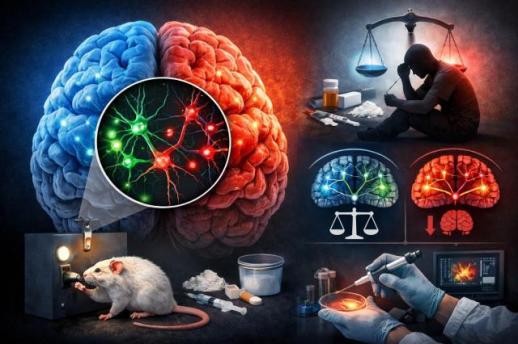 Joint research team identifies neural mechanism behind drug addiction relapse SEOUL, March 09 (AJP) - A joint research team from South Korea and the United States has identified a specific neural circuit in the brain that controls drug-seeking behavior. This discovery challenges the long-held belief that addiction relapse is caused by a general decline in willpower or a permanent loss of function in the prefrontal cortex. A team led by Professor Baek Se-bum of the Korea Advanced Institute of Science and Technology (KAIST) and Professor Lim Byung-kook of the University of California, San Diego (UCSD) announced on March 9 that they have discovered how specific inhibitory neurons in the prefrontal cortex regulate cocaine addiction. Addiction is notoriously difficult to treat because even minor triggers can revive intense cravings long after a person has stopped using drugs. Until now, this phenomenon was largely attributed to the weakening of the prefrontal cortex (PFC), the area of the brain responsible for impulse control. However, the new findings indicate that relapse is actually driven by an imbalance in specific neural circuits rather than a simple decrease in overall brain activity. The study focused on parvalbumin-positive (PV) inhibitory neurons. These cells act as a brake gate in the brain by suppressing the activity of other neurons to maintain neural balance. By monitoring mice exposed to cocaine, the researchers tracked when these neurons activated and how they sent signals to lower brain regions. The researchers found that PV neurons, which make up 60 to 70 percent of inhibitory cells in the PFC, became highly active when the mice sought cocaine. When the mice underwent extinction training—a process to stop them from seeking the drug—the activity of these cells significantly decreased. This suggests that the behavior of PV cells is not permanently damaged by addiction but can be readjusted through behavioral training. To confirm the role of these cells, the team artificially suppressed PV neuron activity, which resulted in a major reduction in cocaine-seeking behavior. Conversely, activating these cells caused the mice to continue seeking drugs even after their training was complete. This effect was specific to drug addiction and did not occur with natural rewards like sugar water, nor was it observed in other types of inhibitory cells such as somatostatin (SOM) neurons. The study identified that the PFC sends these regulatory signals to the ventral tegmental area (VTA), a core part of the brain reward system. The PV neurons act as a control switch in this pathway, influencing dopamine signals to determine whether to maintain or suppress addictive behavior. The findings prove that relapse is determined by whether this specific pathway between the PFC and the reward circuit is properly regulated. Professor Baek Se-bum stated that the research shows drug addiction is a circuit-level problem caused by a collapse in the regulatory balance of specific neurons and downstream circuits. He noted that the discovery of PV cells acting as a gate for addictive behavior provides a critical lead for developing precision-targeted treatment strategies in the future. The study, with Dr. Chung Min-ju of UCSD as the lead author, was published online in the journal Neuron on February 26. The work was supported by institutional funding and international research grants. (Paper information) Journal: Neuron Title: Distinct Interneuronal Dynamics Selectively Gate Target-Specific Cortical Projections in Drug Seeking DOI: https://doi.org/10.1016/j.neuron.2026.01.002 2026-03-09 11:12:03
 -
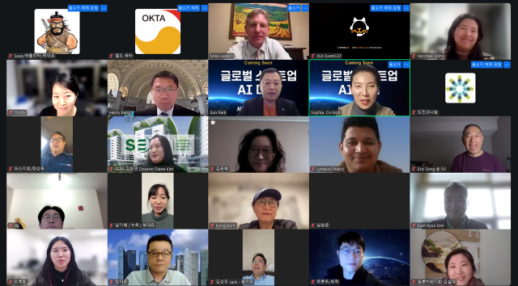 World-OKTA wraps up entrepreneurship training for global AI startup hopefuls SEOUL, March 09 (AJP) - The World Federation of Overseas Korean Traders Associations (World-OKTA) said on Monday it has completed a four-day online entrepreneurship training program designed to sharpen the skills of aspiring founders ahead of its 2026 OKTA Global AI Startup Pitch Competition slated for March 31 in Seoul. Faculty from UC Berkeley, Stanford University and San Jose State University, alongside active venture capital professionals based in Silicon Valley, delivered six sessions spanning AI-driven idea discovery, venture capital investment structures, AI business model design and emerging trends in AI agent technology. "Graduates of this program will receive certificates and be invited to the hybrid-format finals of the Global Startup Competition on March 30," said Sun Park, World-OKTA's branch president of Atlanta. "We also plan to establish a World-OKTA global startup alumni network so that participants can continue to grow as a lasting entrepreneurial community." The initiative builds on the momentum of World-OKTA's inaugural startup competition held in Incheon's Songdo last October, where about 100 startups participated and overseas venture capitalists committed a combined $600,000 in investment. Among the recipients, hydrogen alternative energy developer Viologen secured $500,000 and sleep apnea biotech firm MD Staage raised $100,000. This year's competition, to be held at COEX Magok Convention Center in western Seoul, aims to identify and nurture innovative AI startups led by Korean entrepreneurs worldwide and connect them with global investors and market opportunities. 2026-03-09 10:56:26
 -
 Si Woo Kim ties for 13th at Arnold Palmer Invitational; Akshay Bhatia wins in playoff Si Woo Kim finished tied for 13th at the PGA Tour signature event Arnold Palmer Invitational, which has a $20 million purse. Kim shot a 2-under 70 in the final round at Bay Hill Club & Lodge (par 72) in Orlando, Florida, with four birdies and two bogeys. He closed at 5-under 283, tying Viktor Hovland of Norway, Maverick McNealy, Billy Horschel and Daniel Berger of the United States, and Sepp Straka of Austria. The Arnold Palmer Invitational is one of the PGA Tour’s top-tier signature events, limited to 72 players. Akshay Bhatia of the United States won the title. Bhatia finished at 15-under 273 and beat Berger on the first hole of a playoff to claim his third career PGA Tour victory, his first in 1 year 11 months. He earned $4 million (about 5.94 billion won) in prize money. All three of Bhatia’s PGA Tour wins have come in playoffs. World No. 1 Scottie Scheffler of the United States tied for 24th at 2-under 286. World No. 2 Rory McIlroy of Northern Ireland withdrew after the second round because of back pain.* This article has been translated by AI. 2026-03-09 10:30:00