
Journalist

AJP
-
 Si Woo Kim ties for 13th at Arnold Palmer Invitational; Akshay Bhatia wins in playoff Si Woo Kim finished tied for 13th at the PGA Tour signature event Arnold Palmer Invitational, which has a $20 million purse. Kim shot a 2-under 70 in the final round at Bay Hill Club & Lodge (par 72) in Orlando, Florida, with four birdies and two bogeys. He closed at 5-under 283, tying Viktor Hovland of Norway, Maverick McNealy, Billy Horschel and Daniel Berger of the United States, and Sepp Straka of Austria. The Arnold Palmer Invitational is one of the PGA Tour’s top-tier signature events, limited to 72 players. Akshay Bhatia of the United States won the title. Bhatia finished at 15-under 273 and beat Berger on the first hole of a playoff to claim his third career PGA Tour victory, his first in 1 year 11 months. He earned $4 million (about 5.94 billion won) in prize money. All three of Bhatia’s PGA Tour wins have come in playoffs. World No. 1 Scottie Scheffler of the United States tied for 24th at 2-under 286. World No. 2 Rory McIlroy of Northern Ireland withdrew after the second round because of back pain.* This article has been translated by AI. 2026-03-09 10:30:00
 -
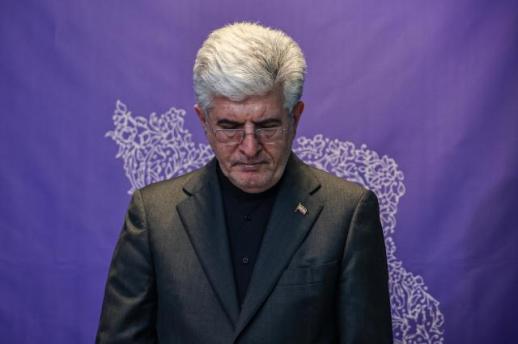 Iranian embassy in Seoul opens condolence book for late supreme leader SEOUL, March 09 (AJP) - The Iranian embassy in South Korea notified the South Korean Ministry of Foreign Affairs on March 8 of the death of Supreme Leader Ayatollah Seyyed Ali Khamenei, whom the mission described as a martyr. In a formal diplomatic note, the embassy said the Iranian leader died February 28 in what it characterized as a "brutal and unjust attack" by the United States and Israel. The message marks the first formal communication from the mission to the South Korean government regarding the leadership transition in Tehran following the start of hostilities in late February. The death of the 86-year-old leader occurred during a wave of joint U.S. and Israeli airstrikes targeting government and military infrastructure across Iran. While U.S. President Donald Trump described the operation as a necessary step to address Iran's nuclear program and regional influence, Iranian officials have condemned the strikes as a violation of national sovereignty and a war crime. The embassy announced it will open a book of condolences at its compound in the Yongsan district of Seoul. The book will be available for signatures on March 9 and March 10, between 10 a.m. and 4 p.m. The diplomatic note, which was also circulated to other foreign missions and international organizations based in South Korea, concluded with standard formal assurances of the embassy's "highest consideration" for the South Korean Ministry of Foreign Affairs. The announcement comes as Iran enters a period of high-stakes political transition. On March 8, the Iranian Assembly of Experts named Mojtaba Khamenei, the son of the late leader, as the new supreme leader. According to reports from the Islamic Republic of Iran Broadcasting, the 56-year-old takes power as the country remains engaged in active military conflict and faces significant internal security measures. South Korean officials have not yet issued a formal response to the embassy's characterization of the event or confirmed whether a representative will visit the mission to sign the condolence book. The South Korean government has previously coordinated the evacuation of its citizens from the region as the security situation deteriorated. 2026-03-09 10:23:43
 -
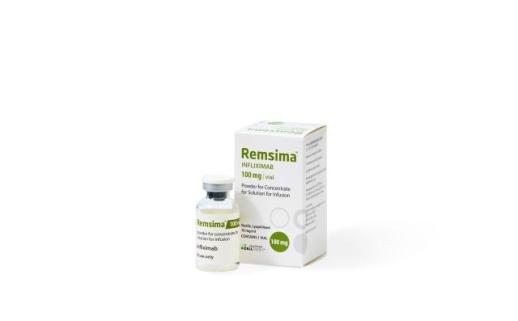 Celltrion solidifies biosimilar dominance across key Asian markets SEOUL, March 09 (AJP) - Celltrion has tightened its grip on major Asian biosimilar markets, with several of its flagship products commanding leading market shares in Singapore, Hong Kong, Thailand and Malaysia, buoyed by an aggressive direct-sales push and a steady pipeline of new launches. Data from IQVIA showed that Celltrion's autoimmune treatment Remsima (infliximab) held the top prescription spot across all four markets as of the third quarter of 2025, capturing 93 percent of the market in Singapore, 77 percent in Hong Kong, 73 percent in Thailand and 65 percent in Malaysia. The company's oncology portfolio has also gained considerable traction. Breast and gastric cancer treatment Herzuma (trastuzumab) secured market shares of 87 percent in Thailand, 57 percent in Hong Kong and 51 percent in Malaysia, while blood cancer drug Truxima (rituximab) held 90 percent in Singapore and 79 percent in Thailand — all ranking first in their respective categories. In Singapore, Celltrion's adalimumab biosimilar Yuflyma has overtaken the original biologic to claim the second-highest market share. The company's Singapore unit plans to roll out a 20mg dosage of Yuflyma alongside the existing 40mg option ahead of upcoming adalimumab tenders, aiming to widen its competitive edge. Celltrion has also launched Yuflyma in Malaysia and Thailand. Celltrion's Thai subsidiary has forged long-term partnerships with every university hospital in the country, where Remsima, Truxima and Herzuma are now used as the sole biosimilar in each of their categories. The firm is broadening its product lineup across the region, with plans to secure approval for Stoboclo-Osenvelt (denosumab) in Singapore this year and to introduce three new products — Steqeyma (ustekinumab), Vegzelma (bevacizumab) and Omlyclo (omalizumab) — in Thailand. "We are elevating prescription outcomes on the back of product competitiveness and supply stability in Asia's tender-driven markets, and positive perceptions of Celltrion products are spreading rapidly," a company spokesperson said. "We will devote our full efforts to deepening the performance of existing products while ensuring the timely launch of new ones." 2026-03-09 10:16:21
 -
 Hyundai Wia Holds 2026 Partnership Day, Pledges Shared Growth With Suppliers Hyundai Wia said it held its “2026 Partnership Day” on March 6-7 at Haevichi Hotel & Resort in Seogwipo on Jeju Island, where it shared its business strategy and vision with suppliers. The event brought together 123 key suppliers to discuss ways to pursue sustainable shared growth. Hyundai Wia holds the gathering each year in early January on Jeju Island. This year’s theme was “Our journey together creates a bigger future.” CEO Kwon Oh-sung said, “The foundation of Hyundai Wia’s 50-year history has been our suppliers,” adding that they are “true partners” who go beyond transactions to think through technology, overcome crises and share results. Hyundai Wia said it will work with suppliers to strengthen technology leadership, including collaborating from the product planning stage and jointly pursuing development and cost innovation for mass production. The company also said it will accelerate digital transformation using artificial intelligence to shorten development timelines and prevent potential mistakes in production and quality processes. To support suppliers’ AI adoption and technical capabilities, Hyundai Wia said it will expand training support by using Hyundai Motor Group’s Global Shared Growth Cooperation Center to provide practical education that can be applied on the job. At the event, it hosted an AI lecture by Park Hee-jun, a professor in Yonsei University’s industrial engineering department, to help suppliers strengthen AI and digital transformation skills. Hyundai Wia said it will expand shared-growth programs, including offering low-interest loans to suppliers through a 68 billion won fund. It said it will pay all amounts in cash to small and midsize suppliers with annual sales under 100 billion won and will make holiday payments early. The company also said it will strengthen support for suppliers’ safety management. Hyundai Wia said it will also help suppliers expand sales channels by supporting participation costs for overseas exhibitions and covering expenses for obtaining Korea Customs Service’s Authorized Economic Operator certification to strengthen import-export operations. A Hyundai Wia official said the company’s 50th anniversary this year was possible thanks to its suppliers, adding that it will “open the next 100 years” through shared growth with partners. * This article has been translated by AI. 2026-03-09 09:57:00
 -
 RIIZE Wraps First World Tour 'RIIZING LOUD' With 420,000 Fans 그룹 라이즈가 첫 월드 투어의 피날레를 성공적으로 마무리했다. RIIZE has successfully closed out its first world tour, drawing a total of 420,000 fans, the group’s agency said. The group launched its first world tour, “RIIZING LOUD,” in July 2025 and performed in 21 cities worldwide, from Asia to North America. The finale ran March 6-8 at KSPO DOME in Seoul’s Olympic Park, drawing 32,000 fans over three days after organizers opened even limited-view seats amid strong demand. Online livestreams on Beyond LIVE and Weverse were offered on March 6 and 8, with viewers tuning in from countries including the United States, France, Germany, Australia, New Zealand, Finland, Japan, China and Thailand. A live viewing was also held March 7 in 143 movie theaters across 10 locations worldwide. RIIZE performed a new 27-song set over about 2 hours and 40 minutes, backed by a live band. The show featured band-arranged tracks, performances shifting between hard-hitting and bright moods, and concept-driven staging tailored to each song. Highlights included an opening run with “Bag Bad Back,” “Siren” and “잉걸,” along with “Something’s in the Water,” staged with a projection effect evoking an underwater setting. “Fame” used a moving crown-of-thorns set and a turntable lift, while “Combo” featured galaxy-like lasers across the ceiling. The concert also debuted a Korean version of “All of You,” with member Seongchan credited as a lyricist. The group introduced an outro for “9 Days,” made by member Anton, and an intro remix of “Impossible.” Other moments included a mic-stand choreography version of “Get A Guitar,” the musical-like staging of “Fly Up,” and close-to-the-crowd performances of “One Kiss” and “Inside My Love.” Near the end, the members looked back on the tour, telling fans, “What we realized during our first world tour is that wherever we went, BRIIZE (the fan club name) was with us. We felt the place we wanted to be most wasn’t any venue, but by BRIIZE’s side.” They added, “Everything was possible thanks to BRIIZE’s cheers, the moments we relied on each other even when it was hard, and the staff who worked with us behind the scenes,” offering thanks. They also said they sometimes wondered whether the group was “moving in a good direction,” but that seeing fans convinced them they were on the right path. “We should keep looking only at BRIIZE. Now we can’t do without BRIIZE,” they said, adding, “Thank you for loving the world of RIIZE. We’ll keep working so that world can grow in a great way, so let’s keep going together,” with some members in tears. Fans filled the venue holding orange light sticks, the group’s signature color, and staged events including a flash display during “Midnight Mirage,” slogan messages, card sections, sing-alongs and surprise cheers. In response, RIIZE performed the encore song “Happy! Happy! Happy!” from the animated series “씰룩” soundtrack. * This article has been translated by AI. 2026-03-09 09:48:17
 -
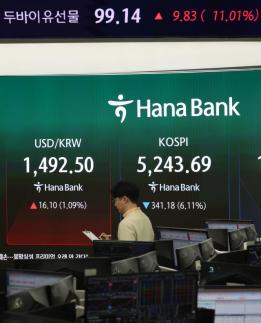 Seoul stocks and won in freefall on oil price surge SEOUL, March 09 (AJP) - South Korean shares extended a freefall Monday as markets entered the second week of the war in Iran, with the conflict widening after Tehran named the son of slain Supreme Leader Ali Khamenei as the country’s new leader — a move seen as defying the United States and Israel and signaling a prolonged confrontation likely to rattle global energy markets. South Korea’s benchmark KOSPI tumbled 6.65 percent to 5,213.61, while the tech-heavy KOSDAQ fell 5.74 percent to 1,088.35 as of 9:01 a.m., pressured by surging oil prices. The won weakened sharply, with the dollar rising to 1,493.10 won. International oil prices surged above the psychologically important $100-per-barrel level for the first time in nearly four years. Defense-related shares were among the few gainers in an otherwise broad market decline. Hanwha Aerospace and Hanwha Systems rose 1.22 percent and 6.04 percent at the open, respectively, while LIG Nex1 — the developer of the Cheongung-II missile defense system — gained about 4.44 percent in early trading after surging roughly 64 percent last week. According to Rep. Yoo Yong-won of the National Defense Committee, about 60 interceptor missiles were launched from two Cheongung-II batteries deployed in the United Arab Emirates, achieving a reported interception rate of around 96 percent. The UAE has also asked Seoul to accelerate deliveries of additional Cheongung-II batteries under an existing contract and supply interceptor missiles ahead of schedule. KOSPI top players became primary targets of institutional selling. Samsung Electronics fell about 7.07 percent as its union moved ahead with a vote on strike. SK hynix also dropped 6.71 percent. Hyundai Motor declined 7.59 percent, while affiliate Kia retreated 7.90 percent in early trading after a recent Bernstein Research report identified Hyundai Motor among automakers most exposed to the widening conflict in Iran. The market turmoil comes as the Middle East war enters its second week. Iran on Sunday named Mojtaba Khamenei, the son of slain Supreme Leader Ali Khamenei, as the country’s new supreme leader after the elder Khamenei was killed along with senior regime figures in U.S.-Israeli airstrikes on Feb. 28. The move widely interpreted as consolidating hardline control in Tehran raised fears that the conflict with the United States and Israel could stretch into a prolonged regional confrontation. 2026-03-09 09:38:31
 -
 Seo Seung-jae, Kim Won-ho win second straight All England Open men’s doubles title Seo Seung-jae and Kim Won-ho (Samsung Life Insurance) won back-to-back All England Open men’s doubles titles. The world No. 1 pair beat Malaysia’s Aaron Chia and Soh Wooi Yik 2-1 (18-21, 21-12, 21-19) in the men’s doubles final of the BWF World Tour Super 1000 event at Utilita Arena in Birmingham, England, on March 9 (Korean time). They became the first team in 40 years to repeat as champions at the tournament since Park Joo-bong and Kim Moon-soo won in 1985 and 1986. The two reunited early last year after seven years apart and are regarded as one of South Korea’s top men’s doubles pairings. They reached No. 1 in the world rankings within six months of rejoining and last season won 11 BWF World Tour titles, setting a single-season record. In women’s singles, world No. 1 An Se-young fell short of becoming the first South Korean singles player to win the All England Open in consecutive years. She lost 0-2 (15-21, 19-21) to world No. 2 Wang Zhiyi of China in the final on March 8. An had won all 10 of her previous meetings with Wang, but came up short at the All England. Her unbeaten run since the Denmark Open in October ended at 36 straight wins. In women’s doubles, world No. 4 Baek Ha-na and Lee So-hee (Incheon International Airport) finished runners-up. They lost 0-2 (18-21, 12-21) to world No. 1 Liu Shengshu and Tan Ning of China in the final on March 8. Baek and Lee were seeking their first All England Open title in two years, dating to 2024, but missed out.* This article has been translated by AI. 2026-03-09 09:33:00
 -
 Kim Yun-ji becomes first South Korean woman to win Winter Paralympics gold SEOUL, March 9 (AJP) - Biathlete Kim Yun-ji on Sunday won gold at the Winter Paralympics, which kicked off last week in Milan and Cortina d'Ampezzo, Italy. Kim finished with a time of 38:00.1 in the women's sitting sprint 12.5-kilometer biathlon, narrowly ahead of Germany's Anja Wicker, who crossed the finish line with 38:12.09. Kendall Gretsch of the United States took bronze with 38:36.1. With the victory, she became the first South Korean woman to win a gold medal at the Winter Paralympics. The historic achievement was also South Korea's first Winter Paralympics gold medal in about eight years, since skier Shin Eui-hyun won gold in cross-country skiing at the 2018 Paralympics in the alpine city of Pyeongchang, Gangwon Province. The para biathlon combines cross-country skiing and shooting over 12.5 kilometers, with the fastest finisher taking gold. Later in the day, Lee Je-hyuk won bronze in the men's snowboard cross SB-LL2, marking South Korea's first-ever Paralympic medal in the discipline. This year's Winter Paralympics run until March 15. 2026-03-09 09:13:38
 -
 Hyundai Rotem Unveils Supplier Support Plan for Korea Defense Industry Hyundai Rotem said it will introduce a new profit-sharing program and sharply expand financial support to help its partner companies grow alongside the firm. The company said Monday it unveiled its strategy at the “2026 Hyundai Rotem Defense Co-Growth Cooperation Conference,” held March 6 at its Changwon plant in Changwon, South Gyeongsang Province. The plan focuses on supporting suppliers’ localization of parts and research and development for future advanced weapons. The strategy is aimed at expanding access to financing and widening opportunities for technological self-reliance, Hyundai Rotem said, as part of efforts to strengthen the quality of South Korea’s defense industry ecosystem. Attendees included local district lawmakers, representatives from 67 partner companies and Hyundai Rotem employees. In welcoming remarks, CEO Lee Yong-bae said the world is paying attention to the capabilities and role of South Korea’s defense industry amid rapidly changing international conditions. He called on Hyundai Rotem and its partners to “bind together as a community of shared destiny” and deepen mutual trust. Hyundai Rotem said it will significantly expand financial support for partner companies starting this year. It will introduce a new “co-growth profit-sharing program” under which, when the company wins new overseas orders, it will share results with suppliers that helped improve export competitiveness. Under the program, after a localized parts development succeeds and a first contract is signed, Hyundai Rotem will return 100% of cost savings from localization to the supplier in the contract year and 50% the following year. If transactions for the localized part or technology continue over the long term, the company said it will provide additional support by guaranteeing order volumes for the supplier. To help suppliers raise funds, Hyundai Rotem said it expanded its “co-growth fund” to 150 billion won, more than double the previous 70 billion won. On March 6, it signed a three-way memorandum of understanding with partner companies and Shinhan Bank on “Hyundai Rotem partner company co-growth and productive financial support.” The company said it plans to support trade finance, guarantees and preferential loan rates, alongside efficient operation of the fund. Hyundai Rotem also said it will invest 200 billion won in R&D through 2027 to support development of future advanced weapons, localization of parts and performance improvements. The scope includes next-generation manned and unmanned ground weapons platforms, aerospace, artificial intelligence and unmanned systems, as well as localization and performance upgrades of key components. The company said it will also run technical support and training programs. It plans to form a consultative group with partner companies, universities and research institutes to facilitate technical exchanges, and to support self-reliance by linking partner proposals and business needs to government projects. Hyundai Rotem said it will expand training for partner-company employees through its technical training institute, with more than 5,600 participants expected this year. Hyundai Rotem said it will step up efforts to prevent leaks of partner companies’ technology and personnel. It will provide expert consulting to improve security management systems, including simulated hacking and training to respond to malicious emails. When requesting technical materials from partners, the company said it will require a strengthened security system, and it will add a clause to its ethics code aimed at preventing poaching of partner-company personnel to protect key talent. The company also reorganized to strengthen co-growth cooperation. Previously handled by the purchasing planning team under the purchasing division, the work will now be led by a newly created co-growth cooperation office directly under the purchasing division, with a co-growth cooperation team under it. The office will form a consultative body with all relevant departments and provide on-site support for partner companies’ technology and quality in coordination with the government and related agencies, Hyundai Rotem said. A Hyundai Rotem official said the technological competitiveness of South Korea’s defense industry comes from growing together with partner companies, and the company will continue support to build a solid industrial foundation where all can grow.* This article has been translated by AI. 2026-03-09 09:09:25
 -
 Hyundai, Kia’s X-ble Shoulder wearable robot wins South Korea KS certification Hyundai Motor and Kia said Monday their industrial wearable robot, the X-ble Shoulder, has received KS certification from the Korea Institute for Robot Industry Advancement. KS certification is a state-run system that verifies products and services meet Korean Industrial Standards. The process is carried out through organizations designated by the Korean Agency for Technology and Standards; in robotics, it is administered by the Korea Institute for Robot Industry Advancement. The company said the approval is the first case in South Korea in which the quality of a wearable robot has been secured under nationally recognized standards. The X-ble Shoulder is designed to reduce musculoskeletal strain for workers in industrial settings, and the certification formally recognizes its safety and quality, Hyundai Motor and Kia said. Hyundai Motor and Kia said they are continuing development and commercialization of the X-ble series, which they describe as human-centered robotics technology. The X-ble Shoulder uses a non-powered torque-generation structure, making it lightweight and eliminating the need for charging, the company said. It also applies a muscle-compensation module to generate assistance, which can reduce shoulder joint load by up to 60% and activation of the anterior and lateral deltoid muscles by up to 30%, it said. The robot is being used at worksites across Hyundai Motor Group affiliates as well as at Korean Air and Korea Railroad Corp., the company said. It added that it is expanding the business scope, including by signing a memorandum of understanding last year with the Rural Development Administration. Hyundai Motor and Kia said they are also developing the X-ble Waist to help reduce strain for workers handling heavy loads. In addition, research and development is underway on the X-ble MEX, a wearable robot intended to help paraplegic patients walk, for use in rehabilitation and medical fields. Choi Ri-gun, a managing director at Hyundai Motor and Kia Robotics Lab, said the X-ble Shoulder “has come to lead safety and quality standards for industrial wearable robots in Korea” through KS certification. He said the company will focus on developing products that improve the practicality of robotics technology and can contribute to industrial worksites globally. Hyundai Motor and Kia also cited overseas safety recognition. The company said the X-ble Shoulder received ISO 13482 certification from DNV (Der Norske Veritas), a European Union integrated certification mark registration body, in February last year, and later obtained additional certification under the EU Machinery Directive in May.* This article has been translated by AI. 2026-03-09 08:52:47