
Journalist

AJP
-
 Korean fintech rushes to Vietnam's crypto market amid regulatory easing SEOUL, September 25 (AJP) -With a young, tech-savvy population, strong investment inflows, and government-backed pilot frameworks, Vietnam is increasingly being seen as an ideal springboard for Korean exchanges and fintech firms seeking growth beyond saturated domestic markets. As Upbit, Bithumb, and BDACS jostle for early-mover advantage, Vietnam’s regulatory sandbox may well determine the next phase of Korea’s digital finance ambitions in Southeast Asia. According to Chainalysis, investment capital flowing into Vietnam’s blockchain sector from 2023 to 2024 is expected to exceed $105 billion, with estimated profits of $1.2 billion. A separate report by Triple-A, a Singapore-licensed crypto payment provider, noted that more than 17 million Vietnamese (17% of the population) own digital assets, far above the global average of around 7%. For three consecutive years, Vietnam has ranked among the world’s top five nations for cryptocurrency adoption. The momentum received a major boost with Resolution No. 05/2025/NQ-CP, signed by Deputy Prime Minister Ho Duc Phoc, which greenlighted a five-year pilot program for digital asset exchanges starting Sept. 9, 2025. If no replacement law is introduced, the framework will remain in effect thereafter. The resolution outlines participation for service providers, issuers, investors — both domestic and foreign — under guiding principles of caution, transparency, safety, and efficiency. At a training session hosted in August by the Vietnam Blockchain and Digital Asset Association (VBA), officials said five local institutions — SSI Securities, Techcom Securities, VIX Securities, MB Bank, and VP Bank — are expected to secure pilot licenses. Under such backdrop, Dunamu, operator of Korea’s largest crypto exchange Upbit, signed an MOU with MB Bank on Aug. 12 during the Vietnam–Korea Economic Forum, coinciding with General Secretary To Lam’s state visit to Seoul. Under the deal, Dunamu will support MB in building a licensed exchange, developing legal frameworks, investor protection systems, and training professionals. “More than 20 million people own cryptocurrencies here, with annual trading volume topping $8 trillion and blockchain capital ranking in the global top five,” said Oh Kyung-seok, CEO of Dunamu. “Vietnam has massive potential. Combined with Upbit’s model, we can help shape a trusted digital financial infrastructure.” While Dunamu has previously attempted overseas expansion via Upbit APAC, regulatory hurdles restricted full-scale investment. Current branches in Singapore, Indonesia, and Thailand operate as local partnerships, with Korea providing branding and technology. Analysts believe the MB Bank partnership is a stepping stone for deeper penetration into Vietnam. Rival exchange Bithumb, Korea’s second-largest, is also eyeing Vietnam’s pilot program. The firm recently struck a global cooperation deal with U.S.-based fintech World Liberty Financial (WLF), co-founded by two sons of former U.S. President Donald Trump. Although Bithumb publicly stated it has “no official information” on its Vietnam entry, financial sector sources said the company has been preparing for months to establish a joint venture or equity partnership, in line with Vietnam’s cap on foreign ownership at 49%. Blockchain fintech BDACS, which partnered with Woori Bank to issue the KRW1 stablecoin pegged 1:1 to the Korean won, also announced plans to enter Vietnam. On Sept. 23, BDACS signed a strategic deal with IDGX, a subsidiary of IDG Capital Vietnam, to build international-standard infrastructure for trading and custody. The project — expected to launch within the year under Vietnam’s regulatory sandbox — will integrate exchanges, custody services, and payment systems, creating a digital asset financial hub. 2025-09-26 14:16:40
 -
 Impeached ex-president makes first public appearance after refusing dozen previous hearings SEOUL, September 26 (AJP) - Disgraced former President Yoon Suk Yeol on Friday attended a hearing for his trial over last year's botched martial law debacle. After skipping about a dozen hearings citing poor health, he made his first public appearance in nearly three months. The trial at the Seoul Central District Court in southern Seoul began at 10:15 a.m., with charges including abuse of power and obstruction of official duties related to the Dec. 3 declaration of martial law. Noticeably thinner and frail with gray hair, Yoon appeared in court wearing a navy suit without a tie. During the trial, Yoon's legal representative reportedly denied all the allegations, reiterating what Yoon has been claiming. They said, "Yoon declared martial law to cope with an emergency situation and later lifted it, shortly after the National Assembly voted to end it." Media were permitted to film for about a minute before the trial began, making it the first time a lower court criminal trial, not just a verdict, was televised. Later in the day, another hearing for his bail was also held upon his request, which drew criticism from those who suspect that Yoon's decision to appear at Friday's hearing was a calculated tactic to attend only hearings that serve his own interests. In his court-permitted defense which lasted about 20 minutes, Yoon said that being detained at a remand prison in Uiwang, Gyeonggi Province, makes it difficult for him to sufficiently prepare for ongoing investigations by independent prosecutors and related trials. He added that his prolonged detention may be "unconstitutional since he is not a violent criminal," and complained about his life in a tiny cell. Regarding his health, Yoon said, "Despite not being in a critical condition, attending every hearing is quite demanding," promising that he will fully cooperate with future hearings and proceedings if granted bail. 2025-09-26 14:09:30
 -
 Strong U.S. Data and Trump Remarks push the KRW-USD Above 1,410 SEOUL, September 26 (AJP) - The U.S. dollar shot up above 1,410 won in early Seoul trading Friday for the first time in four months on stronger-than-expected U.S. growth data and renewed jitters over trade prospects after U.S. President Donald Trump stressed that South Korea's $350 billion investment commitment in the U.S. should be made "up front". Fears about the hefty greenback price tag Korea may be forced to bear unsettled the markets. The KOSPI lost 2.1 percent and the secondary Kosdaq 1.7 percent as of 11:00 a.m. Friday. The dollar trades above 1,410, a level not seen since May 15. The dollar index, which measures the greenback against six major currencies, rose 0.70% to 98.485, as expectations for another Fed rate cut faded. The Commerce Department reported a revised second-quarter GDP growth rate of 3.8%, up from a preliminary 3.3%, marking the highest growth since the third quarter of 2023. The stalled trade deal with the U.S. weighed heavily over the Korean won. President Donald Trump reiterated that South Korea's investment in the U.S. under a trade agreement would be "up front" amid ongoing trade negotiations. The $350 billion figure amounts to 84 percent of South Korea's foreign reserves as of August. Government officials, including President Lee Jae-myung, have discussed a currency swap with U.S. Treasury Secretary Scott Besant to mitigate market impact, but the U.S. remains reluctant. "If Korea complies with the U.S., it could risk another financial crisis," said Moon Da-un, a researcher at Korea Investment & Securities. NH Futures economist Wi Jae-hyun added, "The strong dollar and investment uncertainty are increasing upward pressure on the exchange rate." At the same time, the won-yen cross rate was 941.71 won per 100 yen, up 0.70 won from the previous day, while the yen-dollar rate rose 0.68% to 149.840 yen. Meanwhile, Seoul sought to bolster foreign confidence at the Korea Investment Summit, an IR on Korean economy sponsored by the government in New York. The foreign exchange market trading hours will be be extended to around the clock instead of closing at 2 a.m. Seoul will also allow offshore won settlement institution enabling foreign institutions to open won-denominated accounts in Korea and directly manage won-based deals. Regulations will be eased to allow foreigners to freely trade, hold, and raise funds in the Korean won. Enhancing accessibility and freedom of FX trade is a prerequisite for Korea's bid to join the MSCI Developed Market status. * This article, published by Aju Business Daily, was translated by AI and edited by AJP. 2025-09-26 11:30:43
 -
 North Korea sends high-ranking delegation to UN for first time in seven years SEOUL, September 26 (AJP) - North Korea's high-ranking official has left Pyongyang to attend the ongoing session of the United Nations General Assembly in New York this week, the state-run Korean Central News Agency reported on Friday. Along with his entourage, Vice Foreign Minister Kim Son-gyong arrived in Beijing on an Air Koryo flight the previous day, en route to New York, becoming North Korea’s first high-level official to attend the annual UN gathering in seven years. Kim is scheduled to speak on the final day of the assembly's 80th session next Monday. Previously, Foreign Ministers Ri Su-yong and Ri Yong-ho represented North Korea at the assembly from 2014 to 2018. North Korea's UN Ambassador Kim Song has delivered speeches so far without the participation of any high-level officials, after the country's leader Kim Jong-un's meeting with U.S. President Donald Trump in Hanoi was terminated with a mere photo-op in 2019. Meanwhile, North Korean Foreign Minister Cho Son-hui is visiting Beijing this weekend, just a few weeks after the country's leader traveled there to attend a massive military parade early this month. During her four-day trip, she will sit down for talks with her Chinese counterpart Wang Yi on Saturday, according to a spokesperson from China's Foreign Ministry. Her trip comes as the reclusive country prepares its own large-scale military parade to mark the 80th anniversary of the ruling Workers' Party on Oct. 10. She is expected to discuss invitations to the event. 2025-09-26 11:04:25
 -
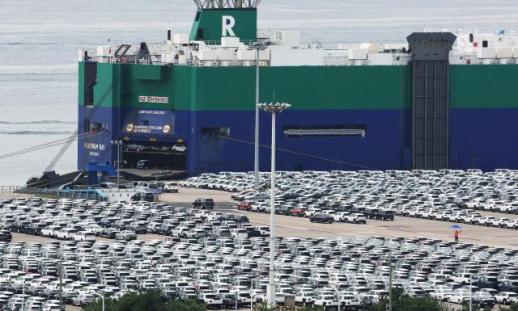 Korea's BSI eases, but outlook uneasiness persists due to U.S. uncertainty SEOUL, September 26 (AJP) - South Korean business sentiment eased for the second consecutive month thanks to robust chip exports and consumer spending spurred by government relief program, but uneasiness persisted due to trade uncertainties related to the United States. The Composite Business Survey Index (CBSI) rose 0.6 points to 91.6 from the previous month, sustaining upward movement for the second straight month, according to the Bank of Korea data released Tuesday. In the CBSI, derived from key indices in manufacturing and non-manufacturing, a reading below 100 means companies pessimistic about business conditions outnumber optimists, while a figure above the benchmark, the opposite. Manufacturing BSI edged up by 0.1 points to 93.4, led by production and new orders, while non-manufacturing CBSI gained 1.1 points to 90.5 due to improved profitability. The Korean Inc. however remains wary about business outlook as delay in a trade deal with the United States that translates into higher tariffs and barriers. The CBSI for the following month fell to 88.5. Manufacturing and non-manufacturing BSI are projected to fall to 89.4 and 87.9, respectively. Lee Hye-young, head of the Bank of Korea's Economic Sentiment Survey Team, attributed the gloom to U.S. tariff negotiations and fewer business days due to the long Chuseok holiday. Within manufacturing, electronics and telecommunications equipment improved due to strong semiconductor exports and new wireless device launches. However, chemicals and automotive parts struggled due to oversupply from China and weakened competitiveness. Non-manufacturing sectors like retail and scientific services showed improvement, with retail benefiting from Chuseok demand and consumer coupons. The Economic Sentiment Index (ESI), which combines CBSI and consumer sentiment, fell 3.3 points to 91.3, though the seasonally adjusted ESI rose 0.6 points to 92.3. The survey was conducted from Sept. 11 to 18, involving 3,524 companies, with responses from 3,298 - 1,843 in manufacturing and 1,455 in non-manufacturing. * This article, published by Aju Business Daily, was translated by AI and edited by AJP. 2025-09-26 10:07:09
 -
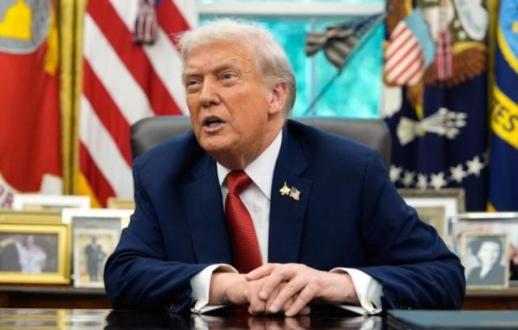 Trump presses for 'upfront' investment pledges from South Korea amid stalled tariff talks SEOUL, September 26 (AJP) - U.S. President Donald Trump on Thursday ramped up his demand that South Korea fulfill its $350 billion investment pledge to Washington in full and upfront. After signing an executive order related to TikTok at the White House, Trump mentioned that the U.S. would receive $550 billion from Japan and $350 billion from South Korea, adding that the payments should be made "upfront." He then went on to boast that his sweeping tariff policy is bringing "tremendous" amounts of money to the U.S. Trump's comments came amid tariff-related negotiations between Seoul and Washington, which have been in a deadlock over the details of the massive investment plans that the two countries agreed to in late July as part of a broader trade deal to lower reciprocal tariffs from 25 percent to 15 percent. In a meeting with U.S. Treasury Secretary Scott Bessent in New York the previous day, Lee, who had earlier warned that a lump-sum cash payment without protective measures such as currency swap deals could lead to a repeat of the 1997 Asian financial meltdown, stressed that the ongoing trade talks should be "in line with the interests of both countries." Meanwhile, the Wall Street Journal reported that the U.S.' trade deal with South Korea has "gotten messier," with U.S. Secretary of Commerce Howard Lutnick raising the "idea of slightly increasing the $350 billion" so that the "final tally could get a bit closer to the $550 billion pledged by Japan." 2025-09-26 09:58:37
 -
 South Korea Bets $100 Billion on AI: A Risky Gamble? SEOUL, September 26 (AJP) - South Korea's $100 Billion AI Bet: A Risky Gamble? The New York Times recently likened data centers to thermometers of the tech industry's health and symbols of the AI bubble. This duality highlights the contradictions of the AI era. Building a data center costs billions, requiring GPUs, cooling technology, power grids, and stable sites. Despite this, companies like Google, Microsoft, and Amazon are increasing investments. Countries like Japan and Singapore are also competing to attract these centers. For investors, data centers are both indicators of the AI boom and potential bubbles. Amid this, South Korea's new government has announced a national strategy to become a top-three AI power, committing to secure 50,000 GPUs and invest 100 trillion won. This unprecedented move is not just political rhetoric but a significant resource allocation. The question is whether this will propel South Korea to new heights or lead to a bubble collapse. The government's bold focus on AI stems from three main reasons. First, traditional growth engines like semiconductors and automobiles no longer drive double-digit growth. With aging and low growth, AI appears as a key future growth candidate. Second, there's a sense of urgency in industrial competitiveness. The U.S. and China have made AI central to national security and dominance. The U.S. is reorganizing semiconductor supply chains, drawing South Korea in, while China is shifting its strategy to AI. South Korea fears becoming a subordinate state if it hesitates. Third, the Lee Jae-myung administration, emerging post-impeachment, needed a clear vision to unify society and drive governance. The 'AI powerhouse' slogan addresses both international tech competition and domestic growth challenges. This bold all-in strategy presents opportunities. It positions South Korea at the forefront of global AI competition. Infrastructure like GPUs and data centers are hard for latecomers to match. Early investment could recreate the semiconductor success. AI could revolutionize productivity in healthcare, administration, finance, manufacturing, and education, benefiting citizens. If small and medium enterprises can access national infrastructure affordably, they could leap forward, reducing reliance on large corporations. However, there are shadows. The sustainability of the 100 trillion won investment is questionable given South Korea's fiscal reality, with rising welfare costs and declining tax revenue. AI investment could become a political target, especially if a new administration takes over. The public-private partnership's uncertainty is another concern. Major companies like Samsung and SK are key to the AI strategy, but cooperation is challenging amid calls for chaebol reform. A special social consensus is needed for unified public-private efforts in AI. Energy is another issue. Data centers require stable power, but the government is hinting at phasing out nuclear energy, focusing on solar and wind. The gap between ideal goals and real demand is vast. Relying solely on renewables without transitional solutions is risky. External risks also loom. The U.S. seeks to control GPU and semiconductor supply chains through alliances, while China remains South Korea's largest trade partner. Leaning too much toward one side could lead to diplomatic burdens. The spread of AI regulations in Europe could pose new barriers for South Korean companies. In this context, a meeting on Sept. 22 in New York marked a turning point. President Lee Jae-myung met with Larry Fink, chairman of BlackRock, the world's largest asset manager. They discussed various cooperation plans, including AI and energy transition. BlackRock, managing over $10 trillion in assets, is a major player in global finance, focusing on sustainability and risk management. It is a significant investor in South Korea, holding stakes in companies like Samsung and Hyundai. The meeting suggests that South Korea's AI strategy could expand beyond domestic projects to global initiatives connected with international capital. BlackRock's risk management philosophy could help South Korea's all-in strategy gain international trust. However, challenges remain. The progressive Lee administration favors a big government approach, which could conflict with AI investment. Policy reversals are possible if political situations change. An AI fund involving private matching, policy finance, and pension funds is needed for continuity. The government plans to create a large national growth fund for high-tech industries. Relations with large corporations are also tricky. Progressive governments traditionally emphasize chaebol reform, but AI requires corporate participation. A political agreement for a public-private alliance in AI is essential. Energy policy must also be adjusted realistically. While expanding renewables is right, data centers need 24/7 stable power. Without a mix of traditional energy sources, the AI all-in could increase bubble risks. Foreign relations are another test. If South Korea appears aligned with the U.S. in AI, economic conflicts with China are inevitable. Cooperation with Japan should be framed as a global public good, and influence in ASEAN, India, and the Middle East should be expanded. The connection with BlackRock could be a practical foundation for this international expansion strategy. South Korea's AI all-in strategy is like a high-speed elevator for the country's future. Success could write a new growth story, but failure could lead to a significant fall. Everything depends on South Korea's approach. Securing fiscal sustainability, building public-private trust, achieving realistic energy transitions, and maintaining balance and expansion in diplomacy are crucial. As the BlackRock meeting showed, partnering with global capital and accumulating small successes could turn South Korea's all-in into a platform for new growth, not a risky gamble. BlackRock's Four Key Points in South Korea AI and digital transformation potential: South Korea's AI strategy and corporate investments in GPUs and digital infrastructure are future growth areas for global capital. Accelerated energy transition: Expanding renewables and a hydrogen-nuclear strategy align with BlackRock's ESG and green infrastructure investment philosophy. South Korea has the opportunity to grow as a Northeast Asian energy hub. Innovative corporate ecosystem: Global competitive 'national champion companies' like Samsung, SK, Hyundai, and POSCO offer stable, long-term returns through partnerships with BlackRock. Institutionalization of public-private cooperation: Potential for formalized collaboration between government and corporations. About Jaewon Kwak Former Deputy Editor of JoongAng Ilbo's Economic Department and Tokyo Correspondent Former Visiting Professor at Seoul National University and Hanyang University Former President of Gyeonggi Science and Technology Promotion Agency Current Visiting Professor at Gachon University and Hoseo University Current Editorial Director at Aju Business Daily * This article, published by Aju Business Daily, was translated by AI and edited by AJP. 2025-09-26 07:35:38
 -
 PHOTOS: Highland harvest in full swing SEOUL, September 25 (AJP) - The hills of Daegwallyeong, South Korea's largest production base for prized highland vegetables, are typically a scene of bustling harvest activity as the nation prepares for the major fall holiday, Chuseok. The annual harvest of goraengji baechu (highland cabbage) and goraengji mu (highland radish) is in full swing. These vegetables are distinct because they are exclusively grown in regions situated 1,000 meters or more above sea level, giving them a unique texture and flavor highly sought after for traditional meals. For the farmers in this high-altitude region, the current harvest season is proving to be a difficult one. Crews are working tirelessly to gather the crops, but the yields are noticeably down, hit by a severe drought and a heatwave this year. 2025-09-25 16:39:24
 -
 North Korea now 'has 2,000 kg of highly enriched uranium' SEOUL, September 25 (AJP) - North Korea is believed to possess up to 2,000 kg of highly enriched uranium (HEU), which could be used to produce nuclear weapons, Minister of Unification Chung Dong-young said on Thursday. "Estimates suggest that North Korea's HEU stockpiles are around 2,000 kg," he said during a press conference in Seoul, citing assessments from experts. If accurate, this would be enough for roughly 100 nuclear weapons, as 20 to 25 kg of uranium is sufficient to produce one bomb. Chung flatly dismissed the need for additional sanctions against North Korea, saying they would no longer be effective in pressuring the country to abandon its nuclear weapons program, as centrifuges are already operating at several facilities. He then added, "Any breakthrough in North Korea's denuclearization can be made through direct talks between Pyongyang and Washington." Due to North Korea's secrete enrichment facilities, which make precise assessment difficult, South Korea's biennial Defense White Paper has merely described the country as having a "substantial amount" of HEU. The minister also mentioned that a more practical and flexible approach to inter-Korean relations is now needed, as the two Koreas should accept a new reality by recognizing each other as independent states, insisting that this would not mean giving up the long-cherished goal of reunification. 2025-09-25 16:34:04
 -
 K-beauty popularity props up Busan's tourism and retail market BUSAN, September 25 (AJP) - South Korea’s southern port city of Busan is riding a surge of foreign arrivals as more visitors venture beyond the capital region — and beauty chain Olive Young is reaping the rewards. According to Busan metropolitan authorities, foreign tourist arrivals reached 2.03 million through July, up 23 percent from a year earlier. The influx has delivered a welcome boost to the local retail market. International purchases at Busan Olive Young outlets totaled 758,385 as of August, up 70 percent from a year earlier — and a staggering leap from just 19,439 in 2022. Olive Young’s test bed outside Seoul Busan carries strategic importance for Olive Young, serving as the brand’s first franchising test bed beyond the Seoul metropolitan area. Starting with its Busan National University Station branch in 2008, the chain now operates 85 stores across the city. A field visit to three flagship locations highlighted strategies tailored to diverse foreign shoppers. “We came to Busan because our social media Xiaohongshu recommended the area to us,” said Jesse Wang, 37, from China, browsing at Olive Young’s Delight Project Store. “We came here to pick up snacks for our friends back home.” At the Seomyeon 1st Street store, product names are displayed in both Korean and English, while shelves mix K-beauty items with instant noodles and snacks promoted alongside Netflix hit K-pop Demon Hunters. Foreign customers account for 65 percent of this location’s revenue. Nearby, the Seomyeon Town branch — spanning 270 pyeong (about 8,900 square feet) — stands as the largest Olive Young store outside Seoul. During June’s Olive Young sale, daily visitors topped 10,000. Global draw, local twists Tourists from 170 countries visited Busan Olive Young stores in 2024, representing 88 percent of UN member nations. In the Haeundae tourism district, foreign purchases jumped 105 percent year-on-year between January and August. Just blocks from the Town branch, the Seomyeon Bujeon Central store operates until 11 p.m., the latest hours among all Olive Young outlets nationwide. The extended schedule makes it the top location for product tester usage, as late-night shoppers from nearby bars and entertainment venues sample skincare lines. “We’ve been to many Olive Young stores during our trip, but this one stood out,” said Janet Yim, 30, and Hira Qureshi, 31, from Chicago at the Jeonpo Station branch. “We even got our skin analyzed by a machine — like a fun dermatology test. We didn’t know we had dry skin until then.” The Jeonpo Station outlet caters to younger shoppers in their 20s and 30s with skin analysis and personal color consultation services. Olive Young has expanded such experiential features nationwide, designating more than 110 stores as “Global Tourism Commercial Districts” with multilingual signage, foreign-language staff, and immediate tax refunds on purchases over 15,000 won. Local flavors, new frontiers Region-specific products drive much of the foreign enthusiasm. The Delight Project Haeundae store, the first standalone branch for Olive Young’s health snack brand, features Busan-themed specialties such as Seed Hotteok Dalgona and the Haeundae Red Pepper Cake Gift Collection. Olive Young aims to cement its role as a tourist retail magnet by fusing experiential content with merchandising — positioning itself at the crossroads of K-beauty, tourism, and local flavor. 2025-09-25 16:06:20