
Journalist

AJP
-
 Hana Bank Launches Revamped Open API Platform, Hana API On Hana Bank said Thursday it has launched Hana API On, a comprehensive revamp of its open API platform, a system that lets outside companies connect to and use banking functions. The bank said the overhaul aims to improve API service quality and strengthen user convenience. Its API services are used more than 56 million times a month on average, it said. Hana API On provides the bank’s key financial services and data in API form, designed to help fintech startups and other companies more easily integrate banking features into their own services. Beyond offering APIs, the platform focuses on usability for development and operations. It also adds a testbed that allows pre-verification under conditions similar to a live environment to improve service stability. The platform’s UI and UX were redesigned to make steps from API search to application, authentication and guide review more intuitive, and it supports mobile web use. For partners, it offers core APIs including: 24-hour real-time exchange rates for 58 currencies; non-login credit loan limit inquiries; and instant account opening through partner platform channels. Hana Bank said the revamp is intended to expand access to financial services and support partner companies in creating new business opportunities. “Hana API On is a platform that connects finance and industry based on openness and connectivity in the digital era,” a Hana Bank official said. “We will continue to expand collaboration with startups and partner companies.” 2026-03-05 10:15:01
 -
 Tesla Tops South Korea’s Imported-Car Market in February as Model Y Sales Near 7,000 Tesla led South Korea’s imported-car market last month, driven by strong sales of the Model Y. The Korea Automobile Importers & Distributors Association said Thursday that new registrations of imported passenger cars in February rose 34.6% from a year earlier to 27,190. That was up 29.7% from January’s 20,960. Cumulative registrations for January and February totaled 48,150, a 35.9% increase from 35,428 a year earlier. By brand, Tesla ranked first with 7,868 registrations, followed by BMW with 6,313 and Mercedes-Benz with 5,322. Lexus recorded 1,113, Volvo 1,095, Audi 991, BYD 957 and Toyota 793. The Tesla Model Y sold about 7,000 units over the month. The Model Y posted 5,275 registrations and the Model Y Long Range 1,740. Over the same period, the BMW 520 recorded 1,067 registrations. By engine displacement, vehicles under 2,000cc accounted for 9,763 registrations, or 35.9% of the total. Models from 2,000cc to under 3,000cc totaled 5,835 (21.5%), 3,000cc to under 4,000cc 421 (1.5%), and 4,000cc and above 352 (1.3%). Other vehicles, including electric cars, totaled 10,819 (39.8%). By origin, Europe accounted for 16,107 registrations (59.2%), followed by the United States with 8,197 (30.1%), Japan with 1,929 (7.1%) and China with 957 (3.5%). By fuel type, hybrids led with 13,721 registrations (50.5%), followed by electric vehicles with 10,819 (39.8%), gasoline with 2,484 (9.1%) and diesel with 166 (0.6%). 2026-03-05 10:12:21
 -
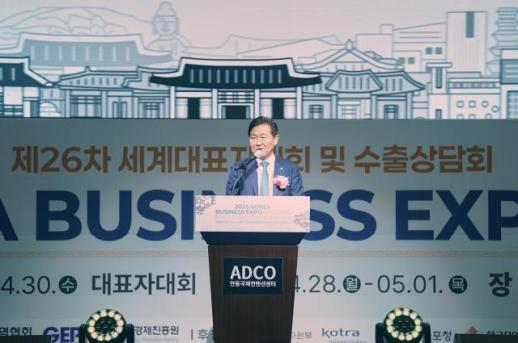 World-OKTA to host K-pop charity concert marking 45th anniversary SEOUL, March 05 (AJP) - The World Federation of Overseas Korean Traders Associations (World-OKTA) will hold a K-pop charity concert on April 1 at KBS Arena Hall in Seoul to mark its 45th anniversary, the organization said. The event, titled "OK Live Concert," represents the trade group's first official cultural project since its founding in 1981. World-OKTA operates about 140 chapters across 70 countries and has focused primarily on supporting Korean businesses abroad and fostering next-generation business leaders. "K-pop has become a global cultural language that connects young people around the world," an event organizer said. "We aim to present a new international exchange platform that combines economy and culture on the occasion of our 45th anniversary." The concert will feature performers spanning multiple genres, including trot singer Song Ga-in, K-pop vocalist Hyolyn, and hip-hop duo Dynamic Duo. World-OKTA said the lineup reflects its goal of bridging senior business leaders with younger generations through cultural engagement. The organization has positioned the event as a hybrid platform combining live performances with networking programs and brand partnership opportunities. The trade group said it is exploring the possibility of expanding the concert into a global tour in major cities. Sponsorship and partnership models are also under consideration. World-OKTA was founded in 1981 to build economic networks among overseas Korean entrepreneurs and support Korean small and medium-sized enterprises seeking international expansion. 2026-03-05 10:06:08
 -
 SK chief to attend at Nvidia's annual AI conference in San Jose SEOUL, March 5 (AJP) - SK Group chairman Chey Tae-won will attend Nvidia's annual GTC conference for the first time slated to be held in the U.S. later this month, according to industry officials. Chey is expected to meet Nvidia CEO Jensen Huang at the conference to be held from March 16 to 19 in San Jose, where industry leaders, developers, and researchers convene to discuss the latest technological trends. Chey is likely to discuss broader cooperation on AI infrastructure and relevant issues with Huang, with their meeting coming about a month after their "chicken-and-beer" dinner in the U.S. GTC, held annually, focuses on artificial intelligence (AI), semiconductors, and computing, while also covering innovations in robotics and autonomous driving. Industry attention is especially high for this year's gathering, with anticipation for Nvidia's unveiling of its next-generation AI accelerator platform, "Vera Rubin." The accelerator is expected to use sixth-generation high-bandwidth memory (HBM4), which is expected to foster partnerships with memory-chip makers including SK hynix. Nvidia is reportedly to have allocated over 60 percent of its HBM4 production for Vera Rubin to SK hynix, with the South Korean memory giant slated to present AI memory technologies and solutions it is developing with Nvidia. 2026-03-05 10:05:27
 -
 ChungjuMan’s Kim Seon-tae launches personal YouTube channel, draws ad buzz in comments Online posts have highlighted a wave of promotional comments tied to the launch of a personal YouTube channel by Kim Seon-tae, known as “ChungjuMan” for running the official YouTube channel of Chungju city in North Chungcheong province. On March 5, multiple online communities circulated posts pointing to comments that appeared to show companies and public institutions boosting the new channel. The posts listed comments from more than 50 companies, including Kyobo Life Insurance, Kia, Lotte Wellfood, Binggrae, Samsung SDS, Samil Pharmaceutical, Speak and YouTube Korea. They also cited participation from more than 20 institutions, including the National Agricultural Museum, the National Institute of Ecology, the National Health Insurance Service, the Ministry of Land, Infrastructure and Transport, and the Republic of Korea Army. In the comments, some wrote, “You said you want to make money, so we came. We’re here to plant a money tree to celebrate your YouTube opening,” and “Looks like there will be a long line of advertisers — should we line up on CatchTable?” Others added, “We heard you want to make money. We’re ready,” “We’ll make sure there are no tax issues all the way to the Blue House,” and “We’ll get in line first. Can we send a transfer?” Kim previously addressed his plans in a video posted March 3 titled “I’m Kim Seon-tae,” saying he “wanted to make more money.” His channel drew attention after surpassing 900,000 subscribers within three days of opening, and many companies have been sending advertising inquiries, according to the report. Some commenters reacting to the posts speculated about potential ad revenue, writing, “How much would the ad fees be if he takes all of that?” and “If you assume 20 to 30 million won per deal, just filming those would come to about 2 billion won in ad pay.” Others wrote, “Even just leaving a comment becomes viral in communities,” and “He quit being a public official to make money — the path is already laid out from the first try.” A separate post on Blind, an anonymous workplace community, showed criticism of Kim’s move. On March 5, a public official posted under the title “Chungju’s Kim Seon-tae is kind of cold,” arguing, “If you’re making a new promotional YouTube, you should bring the people from the same team with you.” The writer added, “With 800,000 subscribers, it becomes a company, and you need staff,” and said that because they were on the same team and appeared in videos together, “there’s some bond, but he’s going out alone.” Another public official responded, “There are a lot of gloomy public officials. They have no ability, but they’re the best at criticizing others.” Kim earned the nickname “ChungjuMan” while handling production and operations for Chungju’s promotional YouTube content, the report said. It also said he submitted a resignation letter to the personnel department on the 13th and then began a long leave. At the time, Kim said, “After 10 years in public service and seven years living as ChungjuMan, I’m now going to say goodbye.” He added, “The fact that someone as lacking as me was lucky enough to succeed was thanks to subscribers’ support.” He also said, “I want to thank the citizens of Chungju who supported me and my colleagues at Chungju City Hall who always showed consideration. The seven years I spent with you were the happiest time of my life. I hope you will continue to love Chungju.”* This article has been translated by AI. 2026-03-05 09:58:02
 -
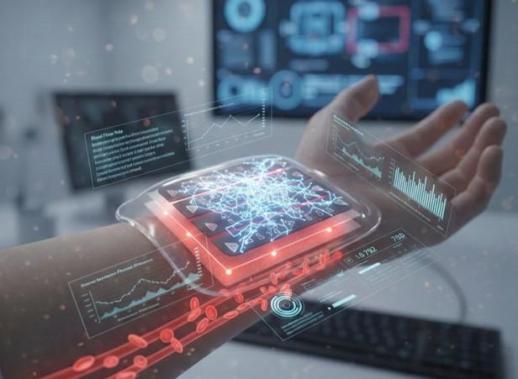 South Korean researchers develop wireless electronic patch for real-time blood flow monitoring SEOUL, March 05 (AJP) - Researchers at South Korea's Advanced Institute of Science and Technology have developed a wireless wearable electronic patch capable of measuring blood flow in real time. The device uses deep learning and multilayer thermal sensing to monitor cardiovascular health without invasive procedures. This technology provides a potential tool for the early detection of cardiovascular diseases and continuous monitoring of patients in clinical settings. Blood flow serves as a critical indicator of cardiovascular health, with fluctuations often signaling conditions such as hypertension, arteriosclerosis, or even physical shock. While Doppler ultrasound is currently the clinical standard for measuring blood flow, its reliance on bulky equipment and trained medical professionals limits its use for continuous daily monitoring. Existing wearable thermal sensors have struggled with accuracy because the depth of blood vessels varies between individuals, distorting the thermal signals used to calculate flow speed. The research team, led by Professor Kwon Kyung-ha of the School of Electrical Engineering at the Korea Advanced Institute of Science and Technology (KAIST), addressed this limitation by creating a multilayer thermal gradient sensing structure. The device features temperature sensors placed at different depths to analyze the three-dimensional movement of heat generated by flowing blood. By integrating a deep learning algorithm, the system can distinguish between the depth of the blood vessel and the actual speed of the blood flow simultaneously. Experimental results showed that the patch can measure blood flow speeds between 1 and 10 millimeters per second with an error margin of less than 0.12 millimeters per second. It also determined blood vessel depths between 1 and 2 millimeters with an accuracy within 0.07 millimeters. When integrated with photoplethysmography (PPG) sensors commonly found in smartwatches, the system reduced blood pressure estimation errors by up to 72.6 percent compared to using PPG sensors alone. This improvement was particularly evident during the Valsalva maneuver, a breathing technique that causes rapid changes in blood pressure. The platform was tested on human subjects through various physiological interventions, including breath-holding, external vascular compression, and cycling. In all scenarios, the blood flow measurements remained consistent with clinical perfusion index standards. The entire system is implemented as a wearable patch with Bluetooth Low Energy (BLE) capabilities, allowing for wireless transmission of biometric data to external devices for real-time analysis. "This technology provides a fundamental platform for more accurate measurement of blood flow and blood pressure," said Professor Kwon Kyung-ha. "By combining this with smartwatches, we can significantly improve the quality of daily health monitoring." The study, led by first author Sim Young-min, a student in the integrated master's and doctoral program, was supported by institutional funding and published in the journal Science Advances on February 6. (Paper information) Journal: Science Advances Title: Deep learning–integrated multilayer thermal gradient sensing platform for real-time blood flow monitoring DOI: https://doi.org/10.1126/sciadv.aea8902 2026-03-05 09:53:12
 -
 Jeju Bank, KT to Build Generative AI Platform in First for Regional Banks Jeju Bank will build a generative artificial intelligence platform, becoming the first regional bank to do so. The bank said Thursday it signed a contract with KT to build the platform and has begun a full-scale AI transition. The project goes beyond adopting new technology, aiming to create an environment in which employees can develop and use AI agents for work. Jeju Bank plans to complete the build in the first half of this year and then expand use in the workplace in stages. The platform will be used for tasks including real-time Q&A based on internal rules, as well as automated drafting of reports and official documents. The bank also plans to roll out AI agents to support key operations, including internal control checks, loan review support and assistance with system development work. Chief Executive Lee Hee-su called the project a key task for realizing Jeju Bank’s new vision, “Digital Jeju 2030.” “As the first regional bank to introduce generative AI into practical work, we will achieve employee-led innovation and provide customers with differentiated financial services,” he said. 2026-03-05 09:45:00
 -
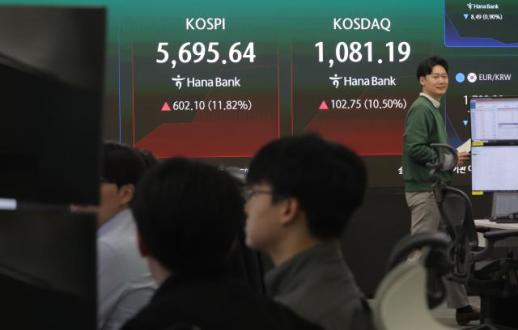 South Korean stocks roar back, up 12% on opening bell SEOUL, March 5 (AJP) – An epic rebound followed an epic downfall for South Korean shares as they opened Thursday 12 percent, instantly erasing the largest-ever collapse of the same scale a day earlier. As of 9:23 a.m., the benchmark KOSPI soared 11.5 percent to 5,684.53, while the tech-heavy KOSDAQ climbed 11.45 percent to 1,090.52. After two consecutive sessions that triggered sell-side sidecars, the opposite sidecar — on the buy side — was activated shortly after the opening bell. Retail and foreign investors piled in in full force, bargain-hunting after the main bourse shed nearly 20 percent over the previous two sessions. Individuals were net buyers of 277.9 billion won ($206 million), while foreigners purchased a net 600.5 billion won. Their buying centered on heavyweight stocks that had become sharply cheaper during the two-day rout. Samsung Electronics surged 13.59 percent to 195,600 won, while SK hynix jumped 15.19 percent to 978,000 won, extending strong gains among semiconductor bellwethers. Automakers also advanced sharply. Hyundai Motor climbed 14.57 percent to 574,000 won, while affiliate Hyundai Mobis rose 9.77 percent to 438,000 won and Kia gained 9.76 percent to 172,000 won. Battery and defense stocks joined the rebound. LG Energy Solution added 8.06 percent to 375,500 won, while Hanwha Aerospace edged up 2.95 percent to 1,362,000 won. Financial shares also rallied, with KB Financial Group rising 10.09 percent to 151,600 won, Shinhan Financial Group gaining 7.66 percent to 95,600 won, and Samsung Life Insurance climbing 8.61 percent to 214,500 won. Market breadth underscored the strength of the rebound. On the main KOSPI board, gainers overwhelmed losers 899 to 20. On the KOSDAQ, 1,660 stocks advanced versus just 59 decliners. The Korean won also strengthened on renewed foreign inflows, with the dollar slipping 2.80 won from overnight to trade at 1,460.70 won. 2026-03-05 09:39:48
 -
 BYD Korea to Provide SEALION 7 SUVs for WDR Symphony Orchestra Korea Tour BYD Korea said Thursday it will provide its midsize SUV, the BYD SEALION 7, as an official courtesy vehicle for the South Korea tour of Germany’s WDR Symphony Orchestra Cologne. The orchestra, with a 79-year history, is regarded as one of Germany’s leading broadcast symphony orchestras, known for a broad repertoire spanning Baroque, Classical and Romantic works as well as 20th- and 21st-century music. The visit is the ensemble’s first in South Korea since 2018, BYD Korea said. The tour begins with a March 5 performance in Busan, then continues to Jinju in South Gyeongsang Province, Gumi in North Gyeongsang Province and Bucheon in Gyeonggi Province, before concluding with a March 11 concert at the Seoul Arts Center in Seoul. During the tour, the SEALION 7 will be provided to the conductor and guest soloists as their courtesy vehicle. BYD Korea said the electric vehicle is designed for quiet operation and stable driving performance. The company said the cabin uses double-laminated glass to help block outside noise, and features headrest-integrated sports seats with heating and ventilation designed for ergonomic support and a stable seating feel. A BYD Korea official said the support is meant to go beyond transportation by accompanying “the artistic journey of world-class artists,” adding that the company will continue cultural collaborations to broaden customer engagement and build trust by showcasing BYD’s brand value and technology. * This article has been translated by AI. 2026-03-05 09:39:21
 -
 Actor Kim Jeong-tae Shares Update on Son Ji-hu, Says His Korean Was Misread as a Disability Actor Kim Jeong-tae has shared an update on his eldest son, Ji-hu, known to viewers by the nickname “Ya-kkung.” A preview for TV Chosun’s “Dad and Me,” Season 3, aired on March 4 and showed Kim appearing on the program. In the clip, Kim said he is the father of two sons and noted that his oldest had previously greeted the public under the nickname Ya-kkung. Kim said his eldest is more comfortable speaking English and has long been interested in other languages. He added that because his son used English, his Korean sounded awkward, leading some to suggest he might have a developmental disability. Ji-hu said, “I don’t have any friends. After getting used to being alone, I felt I didn’t need to make friends anymore.” Kim said, “I don’t know. I didn’t ask in detail. If you talk about it negatively, he’s a character that’s hard to understand.” * This article has been translated by AI. 2026-03-05 09:29:11