
Journalist

AJP
-
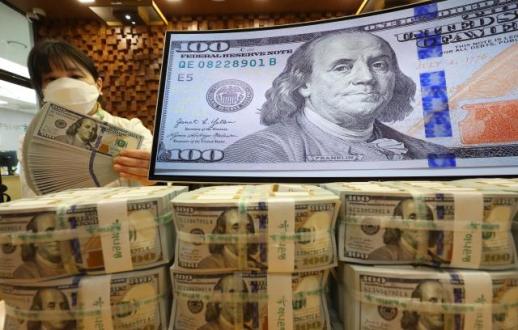 Korea's FX reserves rise in Feb on debt issue amid war-time volatility SEOUL, Mar 05 (AJP) - South Korea’s foreign exchange reserves increased for the first time in three months in February, helped by a $3 billion overseas debt issuance aimed at bolstering ammunition to stabilize the Korean won against major currencies. However, questions remain over how long the increase can be sustained, with the local currency hovering near crisis-era levels in the war aftermath. Foreign reserves rose $1.72 billion from the previous month to $427.67 billion as of end-February — the first increase since November — according to data released Thursday by the Bank of Korea (BOK). The BOK attributed the monthly rise to the successful issuance of foreign exchange stabilization bonds and subsequent investment gains from those funds. Earlier in the month, the central bank tapped global markets with a $3 billion bond issuance to strengthen its intervention capacity. The government issued the U.S. dollar-denominated bonds on Feb. 5, aiming to calm the exchange rate and respond to shifting market dynamics. FX reserves had been declining as authorities intervened to buttress the won, which weakened sharply against major currencies amid rapid capital outflows into U.S. securities. Korean financial authorities deployed a total of $4.7 billion — including $2.6 billion in December and $2.1 billion in January — primarily through a currency swap arrangement between the BOK and the National Pension Service. The currency’s average exchange rate in December consequently appreciated 2 percent to 1,434.9 won per dollar from November’s 1,464.8. It gained a further 0.6 percent in January to 1,427, aided by a broader softening of the U.S. dollar. Those gains were largely erased after the launch of U.S.-Israeli attacks on Iran last Friday and the widening conflict across the Middle East following Iran’s retaliatory strikes on neighboring countries. The dollar briefly surged to around 1,480 won as the KOSPI lost more than 20 percent in two sessions after the war broke out. It later eased to 1,463.50 won as of 8:00 a.m. Thursday amid a partial recovery in oil prices. Despite the volatility, South Korea’s standing in global FX reserve rankings remains largely intact. The country slipped to 10th place globally, losing its ninth-place position to Hong Kong. The shift was primarily driven by the Hong Kong Monetary Authority (HKMA), whose reserves rose $7.7 billion to $435.6 billion in January after realizing substantial gains from asset management operations. 2026-03-05 08:36:46
 -
 AI meets Realpolitik: How the U.S.–Anthropic rift turned a drone strike into a tech crisis SEOUL, March 05 (AJP) - In the latest contradiction from Washington, President Donald Trump last Friday ordered federal agencies to “immediately” stop using what he called the “radical-left” artificial intelligence systems developed by Anthropic, while the U.S. defense secretary labeled the company a risk to “national security.” Only hours later, the president authorized Operation Epic Fury. Within days, the very system Washington had just denounced proved instrumental in the operation — and in Operation Roaring Lion, the parallel Israeli campaign. The same AI platform that helped track and capture the Venezuelan president in February was again deployed to process intelligence and coordinate battlefield decisions. The paradox reveals how deeply generative AI has become embedded in modern warfare — and how dependent even the world’s most powerful military has grown on privately developed algorithms. The U.S. Central Command (CENTCOM), which oversees military operations across the Middle East, relied extensively on Anthropic’s Claude AI to process vast volumes of imaging and signal intelligence, identify potential targets, and simulate strike scenarios. The tool remained in active use even after Trump publicly ordered a government-wide phaseout of Anthropic software. The administration cited the company’s refusal to allow its models to be deployed in “all lawful scenarios,” including intelligence operations that could involve U.S. citizens or autonomous weapons. The Iran strike therefore ignited not only a new debate over AI ethics and civilian oversight but also an unexpected reshuffling of the global AI market. A clash of ethics and wartime pragmatism At the heart of the dispute lies a philosophical and contractual standoff between Anthropic — one of the United States’ leading AI research firms — and the Trump administration. Founded by former OpenAI engineers with a reputation for cautious, human-centered design, Anthropic has placed explicit limits on how its systems may be used. Its internal policies prohibit deployment in large-scale domestic surveillance, autonomous weapons, or operations lacking human oversight. Those guardrails collided directly with the Pentagon’s wartime requirements. In late January, defense officials argued that generative AI operating within classified networks must be unrestricted — usable for “all lawful purposes.” Anthropic’s refusal effectively froze the renewal of its defense contract. The White House responded by designating the company a “supply chain risk entity” and began shifting intelligence infrastructure toward competing models developed by OpenAI and Elon Musk’s xAI. Yet disentangling Claude from U.S. military systems is far from simple. For more than a year, the model had been integrated across critical elements of CENTCOM’s operational environment, from communications filtering to satellite imagery analysis. Its ability to transform raw surveillance data into actionable intelligence made it indispensable to analysts and commanders. Defense experts say replacing the system will take months — an eternity in conflicts defined by real-time decision-making and algorithmic speed. The battlefield paradox The February strike against Iran illustrated the contradiction with unusual clarity. Even as Trump publicly branded Anthropic a national security threat, CENTCOM units continued using Claude-enabled analytics to coordinate drone and mortar operations, identify high-value targets, and estimate potential civilian casualties before strikes. According to intelligence officials, no commercially available AI currently matches the system’s ability to adapt rapidly to dynamic battlefield data without creating internal network vulnerabilities. The episode exposes a deeper strategic dilemma. As militaries integrate generative AI into operational planning, the line between ethical constraint and strategic disadvantage becomes increasingly blurred. Anthropic’s position — that democratic societies should restrict AI use in surveillance and autonomous warfare — resonates with digital rights advocates. For defense planners, however, such restrictions risk slowing decision cycles in conflicts where milliseconds matter. The result is a distinctly twenty-first century paradox: moral restraint may now carry logistical costs. Silicon Valley solidarity The political fallout spread quickly through Silicon Valley. In the days following the Iran strikes, traffic to Anthropic’s Claude platform surged to record levels, briefly causing service outages, according to Bloomberg. The spike reflected growing demand among developers and businesses seeking what many describe as “ethically aligned AI.” OpenAI, whose models underpin several major U.S. government systems, found itself in the opposite position. Recent defense contracts — combined with reports that company executives donated to a pro-Trump political action committee — sparked a social media backlash dubbed the “QuitGPT” movement, as critics warned that AI leadership was becoming politically entangled. Meanwhile, Google’s Gemini platform seized the moment to close the competitive gap. Internal teams reportedly accelerated security certification processes for defense-related deployments, hoping to capture government contracts displaced by the Trump–Anthropic dispute. Industry analysts now describe an emerging “tripolar” race for AI dominance, where corporate ethics, geopolitical alignment, and national security priorities are increasingly intertwined. The confrontation also triggered an unusual display of solidarity across Silicon Valley. Hundreds of employees from Google, Anthropic, and even OpenAI signed an open letter titled “We Will Not Be Divided.” The statement condemned the Trump administration’s designation of Anthropic as a security risk and warned against “state interference in scientific research ecosystems.” Academics and civil society leaders echoed the concern, arguing that the dispute reflects a broader struggle over political control of technological innovation. The rhetoric recalled earlier moments in American tech history — the encryption wars of the 1990s, the Snowden revelations, and the pandemic-era battles over online speech. But the stakes are now significantly higher. Never before has a militarized AI system become a central geopolitical controversy while an active conflict was unfolding. Global ripple effects The repercussions are already spreading beyond the United States. European policymakers, wary of unregulated military AI, have cited the dispute as evidence supporting stricter oversight under the forthcoming EU AI Act. In Israel — a key participant in the Iran operation — defense officials have privately expressed concern about the reliability of U.S. technology partnerships. Chinese state media, meanwhile, portrayed the episode as proof of what it called “chaotic dependence” within American digital infrastructure. Financial markets have reflected the uncertainty. Venture capital has begun flowing toward smaller “responsible AI” startups in Canada and the United Kingdom, as investors bet that ethical compliance could become a competitive advantage. At the same time, U.S. defense technology firms such as Palantir and Anduril rallied on expectations that the Pentagon will accelerate investment in AI-driven battlefield systems. The end of the civilian–military divide The deeper shift, analysts say, is structural. Military strategy, software governance, and domestic politics are rapidly converging into a single ecosystem. AI systems that once belonged in academic laboratories now sit at the center of global power projection. Every algorithm carries geopolitical consequences. The Trump administration’s confrontation with Anthropic has forced the technology sector to confront a fundamental question: whether “civilian AI” can still exist separately from military applications. For decades, defense-funded research produced technologies that later became civilian infrastructure — the internet, GPS, and the neural networks underpinning today’s AI models. Generative AI, however, is different. Its adaptability and general-purpose nature make strict boundaries almost impossible to enforce. For companies like Anthropic, ethical safeguards are core to their identity. For governments operating in crisis, those limits increasingly appear impractical. The Iran operation exposed that divide in stark terms: a president eager to project power, a company defending its principles, and a military choosing performance over politics. That tension may define the next stage of the AI revolution. 2026-03-05 08:35:13
 -
 Jang Hang-jun’s ‘A Man Living With the King’ Tops Box Office for 21st Day, Nears 10 Million Admissions Jang Hang-jun’s “A Man Living With the King” held the No. 1 spot at the box office for a 21st straight day, pushing its cumulative audience past 9.6 million and putting it within reach of the 10 million milestone. According to the Korean Film Council’s integrated ticketing network, the film drew 189,643 moviegoers on March 4 to remain on top. Since opening Feb. 4, it has not relinquished the No. 1 position for a single day. Total admissions stand at 9,597,461. Set in 1457 at Cheongnyeongpo, the film follows the exiled King Danjong and local residents. Strong performances by Yoo Hae-jin, Park Ji-hoon, Yoo Ji-tae and Jeon Mi-do have fueled expectations it will surpass 10 million admissions this week. New releases are beginning to close in. Disney and Pixar’s animated film “Hoppers” opened March 4 and ranked No. 2 with 17,155 admissions for the day. Its cumulative total reached 69,566, making it the clear leader among foreign films. “Hoppers,” about a girl who becomes a robot beaver and goes on an adventure, has posted strong audience scores, including a 98% rating on CGV’s Golden Egg Index. No. 3 went to “Bride!,” which also opened March 4. It drew 7,358 admissions for the day and 7,626 in total. Set in the United States in the 1930s, the film depicts an unconventional romance between the revived “Bride” (Jessie Buckley) and “Frankenstein” (Christian Bale), drawing attention from adult audiences. With “A Man Living With the King” extending its lead and distinctive foreign titles joining the lineup, competition at theaters in March is expected to intensify.* This article has been translated by AI. 2026-03-05 08:33:16
 -
 Actor Noh Sang-hyun Signs Exclusive Contract With HiZium Studio Actor Noh Sang-hyun has signed an exclusive contract with HiZium Studio, the agency said. In a statement released on the 5th, HiZium Studio said it was “very pleased” to partner with Noh, calling him an actor with solid skills and a distinctive look who appeals to audiences at home and abroad. The company said it will support him as a “reliable partner” so he can showcase his abilities across a range of projects. Noh drew global attention in 2022 with the drama “Pachinko,” then expanded his work across genres and roles in dramas including “Survive as a Celebrity Manager,” “Curtain Call” and “Will Everything Come True,” as well as the film “Love in the Big City,” emerging as a rising actor. In “Love in the Big City,” he played Jang Heung-su, portraying varied forms of love. He won the Blue Dragon Film Awards’ best new actor prize at the 45th ceremony and also received the new actor award at the 11th Korea Film Producers Association Awards. Following the contract, Noh is expected to continue active work in both film and television. In the MBC drama “21st Century Grand Prince’s Wife,” set to air in April, he will play Min Jeong-woo, the prime minister of South Korea, described as both cool-headed and humane, leading the series alongside IU and Byeon Woo-seok. He will also appear in the Netflix film “Byeoljit” as Hyeon-tae, an installation artist with firm beliefs and a stubborn streak, reuniting with actor Kim Min-ha. HiZium Studio is a management company representing actors including Go Bo-gyeol, Kwon Seung-woo, Kim Ji-won, Ryu Hae-jun, Bae Kang-hee, Seo Eun-su, Song Joong-ki, Yang Kyung-won, Oh Eui-sik, Lee Chan-ju, Lim Cheol-soo, Jung Jae-kwang and Han Ji-won. It is also a full-service entertainment company that has planned and produced dramas including “UDT: Our Neighborhood Special Forces,” “The Moon Flows in the River,” “My Youth,” “Mr. Plankton” and “A Virtuous Business.” * This article has been translated by AI. 2026-03-05 08:24:21
 -
 Urban Zakapa’s Jo Hyun-ah Says Suzy Stayed Through Her Mother’s Three-Day Funeral Urban Zakapa singer Jo Hyun-ah has spoken publicly about her friendship with singer Suzy. On MBC’s “Radio Star,” which aired March 4, Jo appeared with Oh Seung-hwan, Lee Cheol-min and Yang Sang-guk. Jo described Suzy as “a truly kind-hearted kid,” saying that if Jo does not respond, Suzy will come to her home “to check on me — even my toes — and then leave.” Jo said her mother collapsed one day, leading to the discovery of an illness, and the family later held a funeral. She said Suzy stayed at the funeral for all three days. Jo said many mourners recognized Suzy at the funeral home, but Suzy remained there. Jo added that Suzy even went to the burial site and prayed for her mother. “Thanks to her, I was able to heal a lot from the wound of losing my mom,” Jo said. “Suzy is my guardian angel.” * This article has been translated by AI. 2026-03-05 08:12:26
 -
 Director Jang Hang-jun Walks Back 10 Million-Viewer Pledge for ‘A Man Living With the King’ Film director Jang Hang-jun has scrapped the pledge he made if his movie ‘A Man Living With the King’ reaches 10 million viewers. Jang appeared as a guest on ‘Bae Seong-jae’s Ten Wednesday Live,’ released March 4 on the YouTube channel ‘SBS Radio Erao.’ The appearance drew attention because it marked his return after making the pledge in January. In January, Jang said, “If it somehow becomes a 10 million-viewer film, I’ll change my phone number, change my name, and get plastic surgery so no one can recognize me.” He also said he was “considering naturalization,” adding that he did not want people looking for him and that he would have to throw a party on a boat. The remarks were made as a joke at the time, as he hoped the film would at least break even. But the movie has surpassed 9 million viewers, putting 10 million within reach. Jang reversed course, saying, “I’m grateful for the attention, but I didn’t think this would become news.” He added that he never expected the film to hit 10 million and that he made the comments while worrying whether it could even pass the break-even point. Looking back, he said he was relieved he had not pledged to give away half his assets, and asked, “How can you live while keeping every pledge?” Instead, he said he would hold a coffee-truck event in about two weeks. 2026-03-05 08:00:38
 -
 Korea Golf Course Management Association Unveils Official Mascots The Korea Golf Course Management Association has unveiled its official mascots, “Pilttu” and “Seonggong-i,” as part of an effort to symbolize the future of the golf industry and communicate more closely with golfers. The main character, Pilttu, was introduced on March 4. Its name combines “field” with a Korean term meaning “leader.” Seonggong-i was introduced alongside Pilttu and reflects the message that success is about direction, not speed. The association said it will use the characters’ shared storyline to strengthen golfers’ offline experiences. Using Pilttu’s image, it plans campaigns on ESG (environmental, social and governance), safety and etiquette. Pilttu will also be used as an industry messenger on social media, and the association plans to produce KakaoTalk emoticons using 3D motion to broaden everyday communication. The association also plans to feature 3D versions of the characters in educational guide videos for golf course managers and golfers to make information easier to absorb. It said it will also produce branded goods reflecting the characters’ symbolism to help promote a sustainable golf course culture. Choi Dong-ho, the association’s chairman, said Pilttu and Seonggong-i will be “kind and dependable friends” who bring golfers “a pleasant smile.” He said he hopes the characters will help make golf courses feel more accessible and serve as messengers of a golf culture that people of all ages can enjoy together.* This article has been translated by AI. 2026-03-05 07:58:08
 -
 Seoul may send charter or military planes to bring home Koreans from Middle East SEOUL, March 05 (AJP) -Seoul is mulling to send chartered planes and military transport aircraft to bring home South Korean nationals stranded across the Middle East as commercial flights remain disrupted by the escalating conflict between the United States and Iran, government officials said Wednesday. Second Vice Foreign Minister Kim Jina said the government is reviewing multiple options, including dispatching aircraft and additional rapid-response teams, to assist citizens attempting to leave the region. “The government is considering deploying chartered planes and military transport aircraft, as well as dispatching additional joint rapid-response teams,” Kim said during a joint briefing after an interagency meeting chaired by Prime Minister Kim Min-seok to assess the evolving Middle East situation. Authorities are continuing to track the status of South Korean nationals stranded in the United Arab Emirates and other countries while coordinating with relevant ministries to secure safe and swift returns. About 17,000 South Koreans are estimated to be stranded across roughly 10 Middle Eastern countries affected by the conflict, according to the foreign ministry. The figure excludes short-term travelers. Officials warned that the crisis could prolong or escalate and assured to prioritize the safety of nationals. Earlier this week, around 140 South Koreans and their foreign family members were evacuated from Iran, Israel and Bahrain and relocated to neighboring countries. On Tuesday, 24 South Koreans in Iran were moved to Turkmenistan, while 66 in Israel were evacuated to Egypt. “The foreign ministry will mobilize all available resources and assets to ensure that no South Korean nationals are harmed amid the situation in the Middle East,” Kim said. Prime Minister Kim Min-seok instructed ministries to draw up detailed contingency plans to address the widening fallout from the conflict, including ensuring the safety of Korean citizens and closely monitoring financial and currency markets. He also urged officials to respond proactively to difficulties faced by Korean companies operating in the region. The foreign ministry later held a separate meeting with embassy officials from 14 countries across the Middle East and surrounding areas, including Iran, Israel, Turkmenistan, Egypt and the United Arab Emirates, to discuss ways to facilitate departures, particularly for short-term travelers, as airline operations remain unstable. Meanwhile, travel agencies have begun arranging alternative routes for stranded tourists. About 40 customers of Hana Tour departed Dubai on Wednesday morning and arrived in Taipei the same day, where they will stay overnight before returning to Incheon on a Korean Air flight Thursday. Of roughly 540 customers from Hana Tour and Mode Tour currently in the Middle East, about 240 are in Dubai. Travel firms are coordinating with airlines to secure additional connecting flights from Thursday, while monitoring whether scheduled direct flights from Dubai to Incheon resume without disruption. Industry officials said Cairo’s airport remains fully operational, allowing travelers evacuated there to return home through rerouted commercial flights. 2026-03-05 07:27:50
 -
 Comedian Park Mi-seon Says She Is Gradually Returning to Work After Cancer Treatment Comedian Park Mi-seon has shared an update on her health and work. In a post on social media on Tuesday, Park wrote, “Back on set for the first time in a while. People keep telling me not to work yet, and they’re worried, so I’m going to return to the field little by little.” She added, “Since it’s something I’ll have to fight for the rest of my life, living my everyday life is important, right? I’m going to take it slow without rushing,” and said she especially enjoyed the shoot because she worked with her close friend, actress Kim Jeongnan. In the photo she shared, Park and Kim smile brightly at the camera. Park previously appeared on tvN’s variety show “You Quiz on the Block” in November last year and said breast cancer was found during a comprehensive health screening. She said that when doctors began surgery, they discovered the cancer had spread to her lymph nodes. “When it spreads, chemotherapy is essential,” Park said, adding that she underwent 16 rounds of radiation treatment and is currently receiving medication.* This article has been translated by AI. 2026-03-05 07:24:17
 -
 Oil Prices Jump on U.S.-Israel-Iran War, Boosting Interest in Hybrids and EVs The war involving the United States, Israel and Iran has sent international oil prices sharply higher, fueling consumer anxiety. If volatility persists, demand is likely to shift from internal-combustion vehicles to hybrids and electric vehicles. Some in the industry say eco-friendly models could account for more than half of Hyundai Motor Group’s domestic sales this year. According to industry officials on Tuesday, Dubai crude futures traded on the New York Mercantile Exchange closed at $80.39 a barrel the previous day, up 5.04% from the prior session. That was a 12.7% jump in three trading days from Feb. 27, just before the war began, when it was $71.81 a barrel. After holding a steady $66 to $68 a barrel on average in February, prices have surged more than 5% a day since the Strait of Hormuz was blocked following U.S. airstrikes on Iran, the report said. Experts said a prolonged conflict could push oil to around $130 a barrel. JPMorgan forecast that if Iran’s blockade of the Strait of Hormuz drags on and disrupts maritime transport for three to four weeks, oil would rise above $100 a barrel. In that case, gasoline now priced at about 1,739 won per liter would climb to 1,850 to 1,900 won, an increase of 6.3% to 9.4%. If high oil prices persist, demand is likely to grow for hybrids, plug-in hybrids and EVs. An auto industry official said it is difficult to predict a broad shift in the market based on short-term oil forecasts because vehicle replacement cycles typically run five to 10 years. Still, the official said, if high prices continue amid a rise in localized conflicts globally, consumers facing higher living costs will gravitate toward fuel-efficient hybrids or EVs. Sales data already show a strong shift. Hyundai sold 97,216 vehicles in South Korea in January and February, including 35,897 hybrids and EVs, or 36.9% of the total, up 20% from a year earlier. Kia sold 85,107 vehicles domestically over the same period, with eco-friendly models totaling 48,416 — 30,300 hybrids and 18,166 EVs — for a 56.9% share, a 42.1% increase from a year earlier. If the trend holds, the share of eco-friendly vehicles — now about 30% to 40% of new registrations — is expected to top 50% within the year. The high upfront cost, often cited as the main drawback of eco-friendly vehicles, is also easing as battery prices fall. To compete with internal-combustion vehicles on price, EV battery costs need to drop to around $100 per kilowatt-hour. Germany’s electrive.com reported that EV battery prices fell from $115 per kWh at the end of last year to $100 this year, and are projected to reach $69 by 2030. Tesla, BMW, Hyundai Motor Group and Volvo have cut prices on major EV models by about 13% to 20% this year as battery-pack costs declined. * This article has been translated by AI. 2026-03-05 05:04:04