
Journalist

AJP
-
 Bridgerton Season 4’s Ha Yerin Addresses Racism Controversy, Urges Restraint Actor Ha Yerin has spoken publicly about a recent racism controversy tied to Netflix’s series “Bridgerton 4.” At a news conference held Tuesday afternoon at Community House Masil in Seoul’s Jung-gu district, Ha addressed the issue while appearing as the show’s lead actor. The series previously drew criticism during global promotion after actions that included excluding Ha, prompting allegations of racial discrimination. Fans in South Korea and abroad also lodged complaints with the show’s production company, Shondaland. “While I was on set, I never felt it was racism,” Ha said. “I do think there were times when certain details were overlooked. But I don’t think it was intentional or done consciously.” Ha added that while she did not personally feel slighted, she understands why some people reacted the way they did. She said the moment could be a chance to show tolerance for what was missed and for media outlets to learn that such details should not be overlooked. She also said she hopes the controversy does not lead to excessive criticism or hatred. “Bridgerton 4” follows Benedict Bridgerton (Luke Thompson), a free spirit indifferent to marriage, as he navigates love, identity and class between a “lady in a silver dress” he meets at a masked ball and Sophie Baek (Ha), a maid in real life. Part 1 was released on Netflix on Jan. 29, and Part 2 on Feb. 26.* This article has been translated by AI. 2026-03-04 15:24:31
 -
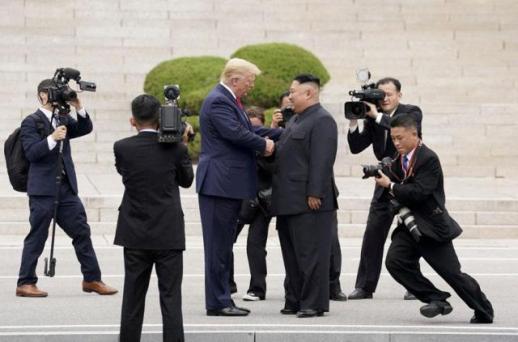 OPINION: What 'Operation Epic Fury' signals to North Korea SEOUL, March 4 (AJP) - North Korean leader Kim Jong-un defined inter-Korean relations as "the most hostile state-to-state relationship," calling South Korea an "eternal enemy" at a rare party gathering that wrapped up late last month. He also said the North has "nothing to discuss with Korean Central News Agency (KCNA). Since former U.S. President George W. Bush labeled Iran, Iraq and North Korea an "axis of evil" in January 2002, the U.S. has waged a sustained war on terror. It toppled Iraq's Saddam Hussein and Libya's Muammar Gaddafi, and carried out precision strikes on three key Iranian nuclear facilities in June last year. With Iran continuing to refuse U.S. demands to ship its enriched uranium abroad - despite having had its nuclear facilities severely damaged, Trump took the drastic measure, risking being drawn deeper into a conflict in the already volatile region. The U.S. appears to have concluded that Iran's nuclear program had reached a point where it could no longer be left unchecked, posing a threat to both U.S. and regional security. Trump also seems to have acted swiftly to prevent the situation from escalating into an even more dangerous nuclear standoff by allowing Iran's program to advance further. These developments are likely to heighten pressure on Kim. By removing Iran's supreme leader, just two months after detaining Venezuelan President Nicolás Maduro and his wife early this year, Trump showed that his "FAFO" warning, which stands for "fool around and find out," was not empty. But it would be contradictory for the Trump administration to engage with North Korea while recognizing it as a nuclear-armed state, making talks between the U.S. and North Korea unlikely anytime soon. Concerns are also growing that a military option could be considered as a last resort to address North Korea's nuclear program, as the U.S. has previously considered striking North Korean nuclear facilities. After North Korea withdrew from the Nuclear Nonproliferation Treaty (NPT) in 1993 and appeared to be moving toward reprocessing spent fuel rods from its reactor to produce nuclear weapons in Yongbyon, the U.S. considered a "precision strike" or a "surgical strike" the following year. William Perry, the then-Defense Secretary who reviewed the option, later recalled that it was not carried out over fears that North Korea might retaliate against South Korea, consequences that would have been difficult to call "surgical." The U.S. would have to take different approaches to nuclear threats from Iran and North Korea, given their differing geopolitical situations and other factors. Iran lacks a major power to back it, while North Korea borders China and Russia, both of which are its traditional allies. Another factor is that North Korea can effectively hold South Korea "hostage." Believing an agreement could be reached through direct negotiations with North Korea's top leader, the U.S. struck deals at every nuclear crisis, helping avert military conflict on the Korean Peninsula, but failing to stop North Korea from advancing its nuclear arsenal. Choosing a military option to denuclearize North Korea would likely trigger a full-scale war and mutual destruction. President Lee Jae Myung has said, "No matter how expensive, peace is better than war." Both Trump and Kim adhere to "peace through strength," making diplomatic efforts essential to prevent a clash, and South Korea, as Lee suggested, may be best placed to serve as a "pacemaker" between them. For now, as Lee said in his address marking March 1 Independence Movement Day last Sunday, South Korea should "communicate closely with the U.S. and neighboring countries so that dialogue between the U.S. and North Korea can resume as soon as possible." With the world growing more unpredictable, South Korea cannot afford to let geopolitical risks intensify on the Korean Peninsula. * This article, published by Aju Business Daily, was translated by AI and edited by AJP. 2026-03-04 15:23:18
 -
 Bridgerton Season 4 Star Ha Yerin Says Grandmother Son Sook Watched — and Blushed at Intimate Scenes Actress Ha Yerin on Tuesday shared her grandmother Son Sook’s reaction after watching Netflix’s series “Bridgerton 4.” Ha attended a press event for “Bridgerton 4” on Tuesday afternoon at Community House Masil in Seoul’s Jung District. Ha, a Korean Australian actor, is known in Korea as the granddaughter of Son, often described as a leading figure in theater. Ha said Son had watched all of “Bridgerton 4,” adding that her grandmother, whose eyesight has recently worsened, watched from close to the TV. “She sent me a message saying, ‘I’m proud of you, I love you,’ and it made me feel warm — and a little emotional,” Ha said. Ha added with a laugh that Son told her that morning, “The revealing scenes are a bit embarrassing.” Ha said she thought her grandmother would skip the sex scenes, “but she watched them all.” Ha said she began dreaming of becoming an actor after watching Son perform on stage when she was young. “I tried to come from Australia to Korea about once a year, and every time, my grandmother was always doing a play,” she said. Ha said she does not remember the title, but recalled seeing a one-person show and a scene in which Son cried while holding a pillow like a baby. “Seeing the audience crying, I thought, ‘This is the power of art,’” she said. “People are all the same, and the emotions we feel are similar. I thought it was an amazing job — to comfort people and help them empathize through theater — and that’s when I started to dream of acting. I’ve been inspired by my grandmother a lot.” Ha said Son is currently performing in a play titled “Noinui Kkum.” Ha said she is leaving on Friday and plans to see the production on Wednesday because her grandmother wants her to attend. Ha added that Son recently told her, “I used to be called Ha Yerin, Son Sook’s granddaughter, but these days I’m called Son Sook, Ha Yerin’s grandmother,” a remark Ha said made her feel both emotional and proud. “Bridgerton 4” follows Benedict Bridgerton (Luke Thompson), a free spirit uninterested in marriage, as he navigates love, identity and class between a masked-ball “lady in a silver dress” and Sophie Baek (Ha), a maid in real life. Part 1 was released on Netflix on Jan. 29 and Part 2 on Feb. 26. 2026-03-04 15:06:58
 -
 Ha Yerin Says Netflix’s ‘Bridgerton 4’ No. 1 Ranking Still Hasn’t Sunk In Actor Ha Yerin shared her thoughts on the global popularity of Netflix series “Bridgerton 4.” A press event for “Bridgerton 4” was held on the afternoon of March 4 at Community House Masil in Seoul’s Jung District. Ha, who stars in the series, attended. “When ‘Bridgerton 4’ hit No. 1 on the global chart, it honestly didn’t feel real,” Ha said. “It felt like something happening outside of me, so it didn’t really sink in.” The series also ranked No. 1 in South Korea shortly after its release. Ha said she had heard it can be difficult for a foreign production to top the local chart, adding that she was “truly grateful” to hear “Bridgerton 4” had reached No. 1 in Korea as well. “Bridgerton 4” is a romance series about Benedict Bridgerton (Luke Thompson), a free spirit indifferent to marriage, who meets a “lady in a silver dress” at a masked ball and becomes caught between her and Sophie Baek (Ha), a maid in real life, as love, identity and class boundaries collide. Part 1 premiered on Netflix on Jan. 29, and Part 2 was released Feb. 26.* This article has been translated by AI. 2026-03-04 14:48:25
 -
 Jin Air to Launch Busan-Phu Quoc Route, Expanding Service From Gimhae Jin Air said Tuesday it will launch a new route from Gimhae Airport to Phu Quoc, a Vietnamese resort island often dubbed the country’s “pearl.” The Busan-Phu Quoc service, the carrier’s third new route introduced from Busan this year after Taichung and Miyakojima, is aimed at strengthening its network based in Busan. Flights begin April 30 and will operate four times a week on Mondays, Thursdays, Fridays and Sundays. Departures leave Gimhae at 7:55 p.m. on Mondays and Fridays and at 8:05 p.m. on Thursdays and Sundays, arriving in Phu Quoc at 11:25 p.m. The return flight departs Phu Quoc at 12:25 a.m., with a flight time of about 5 1/2 hours. Tickets are available through the airline’s website and mobile web and app. The route includes free checked baggage up to 15 kilograms (33 pounds). Located at Vietnam’s southern tip, Phu Quoc is seen as an emerging resort destination linking Da Nang and Nha Trang. Vietnam’s largest island has been designated a government economic special zone and was selected to host the 2027 APEC (Asia-Pacific Economic Cooperation) summit, helping drive rapid development of global infrastructure, the airline said. Jin Air said the launch is part of its push to expand its Busan network. Since 2023, it has opened routes including Nha Trang, Tokyo and Nagoya, it said. With the new service, Jin Air’s international routes departing Busan will rise to 17. A Jin Air official said the airline hopes travelers “experience healing in everyday life” in Phu Quoc, adding it will continue working to develop new routes from Busan and build demand.* This article has been translated by AI. 2026-03-04 14:15:00
 -
 Hanwha Ocean Says It Can Deliver First Canadian Submarine in 2032, Ahead of German Rival Hanwha Ocean, part of a South Korean consortium with HD Hyundai Heavy Industries, said it has emphasized to Canada the potential for broader industrial cooperation as it competes for the Canadian Patrol Submarine Project, or CPSP. The Canadian Press reported on March 3 (local time) that Hanwha Ocean CEO Eo Seong-cheol said the company and the South Korean government view a submarine contract as the start of a deeper industrial relationship between the two countries. Hanwha Ocean and its consortium partner, along with Germany’s Thyssenkrupp Marine Systems, submitted final proposals to the Canadian government on March 2, the deadline. The bids included delivery schedules and investment plans tied to the contract. Eo told the outlet the deal would be a “major catalyst” for bilateral ties. He said the proposal includes investments across areas such as steel, artificial intelligence and space, and would create an average of 25,000 jobs a year from this year through 2044. Eo said the final proposal calls for delivering the first submarine in 2032 and four boats by 2035, and includes what the company described as a firm price estimate. Shipbuilding industry officials said that timeline is faster and more specific than the German bid, which they said pledged to deliver at least two submarines to Canada by 2034. “Hanwha’s proposal is not just a platform proposal,” Eo said. “It is a proposal that combines a clear and accurate delivery plan with a multigenerational industrial partnership, and it fully aligns with Canada’s defense industrial strategy.” He said Hanwha is also interested in other Canadian contracts and is reviewing cooperation in areas including ground defense programs, electronic and AI technologies, and Arctic-related capabilities. Eo cited partnerships with multiple Canadian companies to jointly carry out submarine-related work if it wins. “We have already built strong relationships with capable Canadian companies, and we will expand these partnerships regardless of the contract outcome,” he said. The Canadian Press also carried an interview with TKMS CEO Oliver Burkhard. Burkhard, referring to comments that Canada’s final selection will weigh how much benefit bidders provide to the Canadian economy and industry, said such demands were driven by the actions of Canada’s “southern neighbor,” and were putting pressure on bidders. On Canada’s desire for expanded manufacturing investment in Canada by South Korean and German automakers, he said it should not be assumed that “if there is no car production, it does not help Canada,” adding that everything should not be treated as if it belongs in one basket.* This article has been translated by AI. 2026-03-04 14:12:20
 -
 BTS Comeback D-17: 'ARIRANG' tracklist unveiled as heat builds up in countdown SEOUL, March 04 (AJP) - BTS has drummed up anticipation for its long-awaited comeback with the release of the 14-song tracklist for its upcoming album ARIRANG — the group’s first full-member project in nearly four years — due March 20, with fans already preparing to camp out for the closest view of the open-air comeback show the following day. The tracklist was unveiled by HYBE through its official website and social media channels, accompanied by a visual featuring the album’s logo layered over bold red tape-style graphics — an early hint at the intensity of the group’s reunion era. The album contains 14 tracks led by the title song “SWIM,” alongside “Body to Body,” “Hooligan,” “Aliens,” “FYA,” “2.0,” “No. 29,” “Merry Go Round,” “NORMAL,” “Like Animals,” “they don’t know ’bout us,” “One More Night,” “Please,” and “Into the Sun.” HYBE described ARIRANG as BTS’s first full-length album in nearly four years and a project that carries “special significance” in defining the direction of the seven members moving forward. The comeback marks the group’s first full-member release since entering an extended hiatus, raising expectations not only commercially but culturally as well. The title track “SWIM” is described as an upbeat alternative-pop song centered on perseverance and love for life. Rather than resisting life’s turbulent waves, the lyrics express the determination to keep moving forward at one’s own pace. Group leader RM played a major role in the songwriting process. The album took shape largely in Los Angeles last summer, where BTS collaborated with a global roster of producers including Diplo, Ryan Tedder, and Spanish electronic producer El Guincho. The tracklist reveal triggered immediate engagement online. As of 10 a.m. Wednesday, HYBE’s official post uploaded shortly after midnight had drawn roughly 4.7 million views, 13,000 comments, 203,000 reposts and 308,000 likes on X, with numbers continuing to rise. Major pop culture accounts showed similar traction, each generating more than one million views within hours — underscoring the global anticipation surrounding BTS’s return as a full group. The album’s title has also fueled discussion among fans. “Arirang,” widely recognized as Korea’s most iconic folk song, carries strong cultural symbolism. With BTS planning its comeback stage at Gwanghwamun Square, some fans had expected a stronger Korean-language presence within the album. A number of online comments pointed to the contrast between the Korean title and the predominantly English tracklist. Others expressed curiosity about how the cultural symbolism would translate into the music. Still, many fans voiced confidence in the group’s creative direction, noting BTS’s long-standing ability to blend Korean identity with global pop sounds. As the March 21 comeback event approaches, excitement is spilling beyond the internet. Posts circulating on social media suggest that some fans are already considering camping near Gwanghwamun Square to secure better viewing spots for the open-air performance. The anticipated turnout has prompted the Seoul Metropolitan Government to review the event’s safety preparations. City officials said Tuesday that the safety management plan for the “BTS 2026 Comeback Show” had been conditionally approved, with additional measures to be reinforced in coordination with police and fire authorities. ARIRANG will be released globally at 1 p.m. KST on March 20, followed by “BTS Comeback Live: ARIRANG” at Gwanghwamun Square the next day, with the performance streamed worldwide on Netflix. 2026-03-04 14:10:41
 -
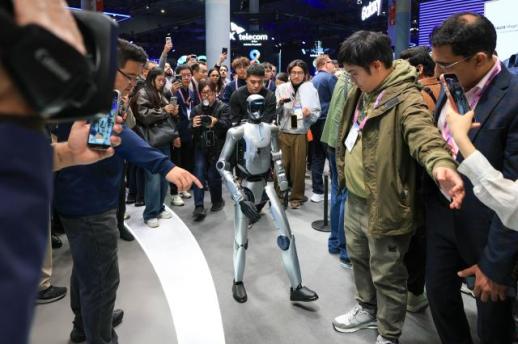 Inside MWC 2026: Korean tech titans redefine the 'Physical AI' and data frontier SEOUL, March 04 (AJP) - South Korean telecommunications giants and global infrastructure leaders are shifting the paradigm of artificial intelligence at MWC 2026, moving beyond digital chatbots toward "Physical AI" and hyper-efficient data architectures. LG Uplus: From voice to humanoid action LG Uplus (LGU+) unveiled its vision for Physical AI, integrating its proprietary AI call agent, ixi-O, with humanoid robotics. Unlike traditional voice assistants, ixi-O is designed to understand emotional context and execute physical tasks. In a live demonstration, the AI analyzed a sudden business trip schedule during a call, automatically adjusted the user's calendar, and signaled a humanoid robot developed by A-Robot to pack a suitcase. CEO Hong Beom-sik emphasized that voice is the "most human connection," predicting a future where AI agents transition from simple command-following to autonomous environmental interaction. SK Telecom: Structural innovation in AI data centers SK Telecom (SKT) is tackling the infrastructure bottlenecks of the AI era through a two-track strategy focusing on "construction" and "connectivity". The company signed a tripartite MOU with Supermicro and Schneider Electric to secure "Pre-fabricated Modular" AI Data Center (DC) solutions, a method that allows pre-designed power and cooling units to be assembled on-site to significantly reduce construction time and costs compared to traditional concrete structures. In a separate move to solve memory bottlenecks, SKT partnered with Panmnesia to develop a CXL-based (Compute Express Link) architecture. This technology allows CPUs, GPUs, and memory to be flexibly pooled across racks, eliminating the need to purchase expensive GPUs just to expand memory capacity and reducing data latency. Nokia’s ‘Doksuri’: A nod to Korean engineering Highlighting the collaborative spirit of the event, Finnish telecommunications leader Nokia introduced its next-generation Remote Radio Head (RRH) named "Doksuri" (Eagle in Korean). According to Cho Bong-yeol, Nokia’s Lead of Product Management, the name represents the "dominance of the skies" and acknowledges the strength of the Korean market. Powered by Nvidia GPUs, the platform enables telcos to process both communication signals and AI inference on a single unit, maximizing investment efficiency. Nokia also showcased its Integrated Sensing and Communication (ISAC) technology, which turns existing 3.5GHz base stations into radar resources to detect drones without additional hardware. 2026-03-04 14:04:47
 -
 Hyundai Motor, Kia Launch MobED Alliance to Expand Robotics Solutions Ecosystem Hyundai Motor and Kia said they are building a multilateral partnership ecosystem centered on MobED to provide customized robotics solutions for customers. The automakers said Tuesday they held a launch ceremony for the “MobED Alliance” at the 2026 Smart Factory & Automation Industry Expo (AW2026) at COEX in Seoul and began full-scale domestic sales of MobED. Attendees included officials from Hyundai Motor and Kia’s Robotics Lab, parts makers such as Hyundai Transys and SL, robotics solution companies including LS TiraYutech and Gaon Robotics, and related organizations such as the Korea AI & Robot Industry Association, the companies said. Hyundai Motor and Kia said the alliance was designed to meet demand for ready-to-deploy, customized solutions for industrial sites, rather than simple hardware adoption. MobED, the alliance’s core platform, is a small mobile platform with a new wheel-drive system, the companies said. It is based on four independently driven DnL (Drive-and-Lift) mechanisms to improve its ability to handle changes in ground conditions. They said MobED can flexibly combine various “top modules” tailored to industry needs, enabling uses such as delivery, patrol, research and video filming. Hyundai Motor and Kia said they plan an ecosystem-led commercialization strategy, supplying complete solutions with specialized partners instead of selling the platform alone. The MobED Alliance will operate as a four-party cooperation framework involving Hyundai Motor and Kia’s Robotics Lab, domestic parts suppliers, robotics solution companies and related organizations, the companies said. The Robotics Lab will provide MobED platform development and core technology, while 10 parts suppliers, including Hyundai Transys and SL, will produce and supply key components such as sensors, electronics and batteries, they said. Five robotics solution companies, including LS TiraYutech and Gaon Robotics, will design customized services based on on-site industrial needs, the companies said. Related organizations, including the Korea AI & Robot Industry Association, will support demonstrations and adoption conditions to help complete a virtuous cycle for the domestic robotics industry, they added. Hyundai Motor and Kia said they plan to use the alliance to establish a business structure supplying MobED to B2B and B2G markets and to strengthen competitiveness across South Korea’s robotics industry through a sustainable ecosystem model. At AW2026, the companies said they unveiled a mass-production MobED model in South Korea for the first time and set up a 180-square-meter hands-on booth so customers could experience the technology. The booth included structures simulating outdoor conditions — such as drainage channels, uneven surfaces, slopes and curbs — to show MobED navigating terrain that is difficult for conventional autonomous mobile robots, they said. Hyundai Motor and Kia said they are offering hands-on trials and purchase consultations at the booth. Customers who cannot visit can submit consultation requests and partnership proposals through the Robotics Lab website, they said. “MobED, whose innovation has been recognized on the global stage, has been reborn as an even more advanced robotics solution through this alliance,” said Hyun Dong-jin, executive director and head of Hyundai Motor and Kia’s Robotics Lab. “Together with our key partners, we will enhance the competitiveness of the domestic robotics industry and lead the expansion of the physical AI ecosystem.” MobED previously won the Best of Innovation award in the robotics category at CES 2026, the companies said. Hyundai Motor and Kia said they will use the alliance to apply physical AI capabilities — combining intelligent software and hardware — more broadly at industrial sites and continue developing technology so robots become practical solutions in customers’ daily lives.* This article has been translated by AI. 2026-03-04 14:03:11
 -
 Hanmi Group Unveils Bronze Plaque Honoring Late Founder Lim Seong-gi’s Drug R&D Vision Hanmi Group has unveiled to the public for the first time a bronze plaque sculpture honoring the achievements and new-drug development philosophy of its late founder, Lim Seong-gi. The group said March 4 that it held an unveiling ceremony March 2 at Hanmi C&C Square near Hanmi Pharmaceutical’s headquarters in Seoul’s Songpa district, following the fifth Lim Seong-gi Researcher Award ceremony hosted by the Lim Seong-gi Foundation. Family members Song Young-sook, the group’s chairwoman, Vice Chairwoman Lim Ju-hyun and CEO Lim Jong-hoon took part in the unveiling. The plaque features Lim’s likeness and his handwritten phrase, “Innovative management for a strong pharmaceutical nation.” It also summarizes his key accomplishments in four sections: beginnings, the start of innovation, R&D-driven management and a major paradigm shift. It lists milestones in chronological order, starting with the 1973 founding of Hanmi Pharmaceutical Industry and the launch of its first product, “T.S Powder.” Other achievements include completion of the Paltan GMP plant, construction of the Dongtan R&D center and what the company described as the largest new-drug technology export deal in South Korea’s pharmaceutical industry. The inscription also includes Lim’s belief: “New drug development is like my life.” The display also highlights his career from the founding of Im Seong-gi Pharmacy to major technology exports, as well as initiatives tied to his “respect for humanity” management philosophy, including pediatric drug development, Hanmi Love Blood Donation drives and stock gifts to employees. Song Young-sook said, “The spirit of Lim Seong-gi is Hanmi Group’s most precious value and legacy that we must keep and engrave,” adding that she hopes Hanmi employees will keep his intentions close to heart.* This article has been translated by AI. 2026-03-04 14:00:00