
Journalist

AJU PRESS Business Team
-
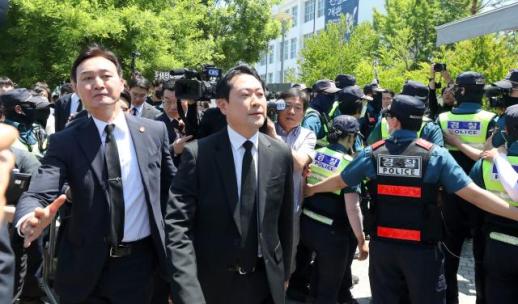 Jang Dong-hyuk Attends 5·18 Memorial, Criticizes Government's Use of Movement Jang Dong-hyuk, the leader of the People Power Party, attended the 46th anniversary memorial ceremony for the 5·18 Democracy Movement for the first time since taking office. After the event, he left without making any comments, but criticized President Lee Jae-myung and the Democratic Party on his Facebook page, claiming they are undermining the spirit of the 5·18 movement. Jang attended the ceremony held at the 5·18 Democracy Square in Gwangju. While he remained silent during the event, he posted on Facebook before and after, targeting President Lee and the Democratic Party. He stated, "While President Lee and the Democratic Party proclaim the spirit of 5·18, they are actually undermining it," adding, "For them, 5·18 is not a value to uphold but merely a tool for expanding their power." He pointed to issues such as the expansion of Supreme Court justices, the introduction of a four-tier judicial system, dedicated trial courts, and the crime of distorting the law, labeling them as "unconstitutional evils rarely seen in a normal liberal democracy." He criticized the 'special investigation into the dismissal of charges' as a declaration of the end of liberal democracy. After the ceremony, he reiterated on Facebook, "The commemorative speech read by President Lee at the 5·18 Democracy Square felt unfamiliar and inappropriate," stating, "I could not applaud even once." Following the memorial, Jang quickly left the venue in a car. This ceremony was his only public schedule for the day. In contrast, Democratic Party leader Jeong Cheong-rae and other party leaders participated in activities such as paying respects at the 5·18 cemetery and holding a central election committee meeting at the site.* This article has been translated by AI. 2026-05-18 16:46:49
 -
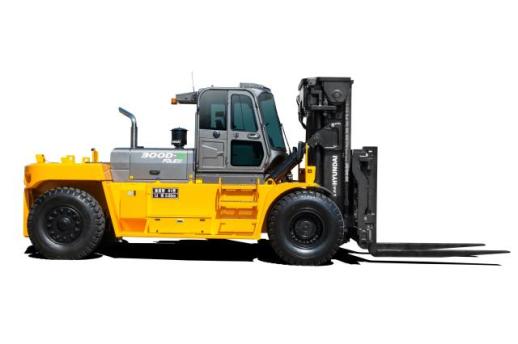 HD Hyundai XiteSolution secures forklift orders in Africa, Middle East SEOUL, May 18 (AJP) - HD Hyundai XiteSolution has secured a series of forklift contracts in Africa and the Middle East, expanding its presence in emerging industrial markets. The company said it recently signed a 37 billion won ($25 million) contract with the Algerian government to supply 316 industrial vehicles. The equipment will be delivered to Algeria in stages by August this year. It said it won the large-scale order by proposing equipment suited to Algeria’s local operating environment and highlighting its stable parts supply and service capabilities. The order includes 10-ton, 25-ton and 30-ton forklifts used for loading and transporting heavy cargo at large construction sites, shipyards and ports. The company said the high share of large and ultra-large models is expected to help improve both sales and profitability. The company has also signed forklift supply contracts worth 4 billion won in the Middle East. HD Hyundai XiteSolution received an order for about 50 small and midsized forklifts from an auto parts company in the United Arab Emirates, as well as an order for about 40 units from a logistics operator in Syria. The company said it is expanding its sales channels by targeting major customers in emerging markets with growing infrastructure needs. “This order reflects not only our product competitiveness but also our ability to carry out projects tailored to customer needs,” said Oh Byung-soo, head of HD Hyundai XiteSolution’s industrial vehicle division. “We will continue to secure additional large-scale order opportunities from key global customers.” 2026-05-18 16:45:23
 -
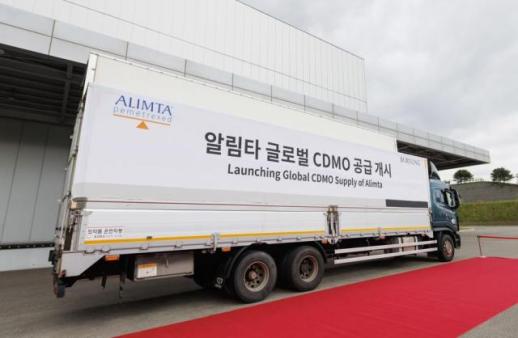 Boryung Begins Supplying Alimta to Taiwan's Lotus, Expanding CDMO Business Boryung announced that it has started supplying the anticancer drug Alimta (active ingredient: pemetrexed) to Taiwan's Lotus Pharmaceutical, marking the expansion of its global contract development and manufacturing organization (CDMO) business. This supply marks the first instance of Boryung's global CDMO operations becoming fully operational. Following the signing of a CDMO contract with Lotus in 2024, Boryung completed quality verification and regulatory procedures before commencing the first supply from its Yesan campus. Boryung's pharmaceutical production facility at the Yesan campus is a smart factory covering 145,097 square meters dedicated to CDMO production. Since its completion in 2019, it has demonstrated global-level production capabilities by obtaining European Union Good Manufacturing Practice (EU-GMP) certification in 2023. The company plans to accelerate the expansion of its global supply of cytotoxic anticancer drugs and its CDMO business. Recently, a shortage of cytotoxic anticancer drugs has become a pressing issue in the global market. Disruptions at major production sites and instability in the supply of active pharmaceutical ingredients have led to shortages of essential anticancer medications, highlighting the importance of securing stable supply chains. Since acquiring Gemza in 2020, Boryung has expanded its portfolio of original anticancer drugs, including Alimta. Last year, it strengthened its anticancer drug portfolio by acquiring the domestic and global business rights for Taxotere. The company emphasizes its advantage in internalizing the production technology of original products within its own facilities. After acquiring the domestic business for Alimta, Boryung has improved the product's competitiveness and profitability by transitioning from a powder formulation to a liquid formulation. The company plans to apply its experience in internalizing production technology and formulation improvement to enhance its competitiveness in the global CDMO market. Kim Sung-jin, Boryung's Chief Strategy Officer (CSO), stated, "The importance of stability in pharmaceutical supply and quality management capabilities is growing in the global market. Based on our global-level production infrastructure and technology, we aim to establish ourselves as a trusted supply partner."* This article has been translated by AI. 2026-05-18 16:45:00
 -
 Court partly sides with Samsung ahead of looming labor strike SEOUL, May 18 (AJP) - A local court on Monday ordered labor unions at Samsung Electronics to maintain normal staffing levels at critical semiconductor facilities even if they go ahead with a planned walkout later this week over wages and performance bonuses. Otherwise, they could face massive fines, dealing a major blow to the unions' plans just days before a deadline for their unprecedented level of strike. The Suwon District Court partially granted an injunction sought by management at Samsung Electronics. While the court did not block the strike itself, it ordered that operations essential to disaster prevention, exhaust and drainage systems, and the prevention of semiconductor wafer damage must continue at normal capacity. To enforce compliance, the court set steep penalties: the two major unions could face fines of 100 million won (US$74,000) per day, while union leaders could be fined 10 million won per day, if they disrupt these essential operations through physical force, threats, or internal directives. Following the ruling, the electronics giant issued an internal notice to employees, warning them not to be misled by the union's efforts to downplay the court's order. It also strongly criticized the union's claim that only minimum weekend-level staffing would be required during the strike, saying the court clearly ordered normal staffing levels at key facilities. "The court's ruling clearly requires regular staffing levels, whether on weekdays, weekends or holidays," the company said. "Safety and security operations must be fully maintained." It added that employees in affected departments would be individually notified of their work requirements during the strike, in accordance with the court's order. Now that it has secured key legal protections to ensure uninterrupted semiconductor production, the company said it still prefers to resolve the wage-related dispute through negotiations. "We will continue our efforts to ensure employees' safety and minimize disruptions at production sites," it said. "Regardless of the court's ruling, we will continue working toward an amicable settlement in wage negotiations." Monday's ruling is likely to give the company the upper hand as both sides remain locked in weeks of stalled talks including government-mediated negotiations, just days before the May 21 strike deadline, and may help avert a full factory shutdown. 2026-05-18 16:42:01
 -
 Cryptocurrency Exchanges Strengthen Internal Controls Amid Performance Decline Domestic cryptocurrency exchanges, including Upbit, have increased investments in security and monitoring despite a significant drop in first-quarter performance this year. This trend follows a series of hacking incidents and heightened scrutiny from the Financial Intelligence Unit (FIU), which has underscored the need for stronger anti-money laundering (AML) and internal control systems.According to the cryptocurrency industry on May 18, Dunamu, which operates Upbit, reported its first-quarter consolidated research and development expenses at 9.2487 billion won, representing 3.94% of its operating revenue. While the company's operating profit and net income fell by approximately 78% compared to the same period last year, its R&D spending actually increased.The R&D initiatives include technologies for detecting identity fraud in customer verification (KYC), identifying malicious traffic from crawling bots, tracking unusual transactions, and implementing smart contracts that execute automatically upon meeting conditions.Bithumb is also focusing on enhancing its security and AML systems despite poor performance. Although it did not disclose specific R&D expenditure figures, the company announced plans to research system architecture for key security enhancements, implement measures to prevent wash trading, and upgrade its suspicious transaction reporting (STR) system.Additionally, Bithumb reflected a fine of 36.8 billion won imposed by the FIU as a provision for litigation in its first-quarter results. This highlights the operational burdens stemming from regulatory actions. In April, Bithumb faced sanctions from the FIU for violations related to unreported cryptocurrency transactions and customer verification obligations under the Act on Reporting and Using Specified Financial Transaction Information. Consequently, the amount set aside for litigation provisions surged from 2.67918 billion won last year to 39.54668 billion won in the first quarter of this year.The push for enhanced security and internal controls among cryptocurrency exchanges is driven by ongoing hacking incidents and stricter regulations from financial authorities. Notably, the Financial Services Commission announced in March plans to introduce an automatic reporting system for high-value transactions involving overseas exchanges or personal wallets, which has increased the investment burden in related systems. The expansion of corporate participation in the cryptocurrency market has further necessitated the advancement of these systems.Experts believe that as the cryptocurrency market becomes more integrated into the formal financial system, the investment burden for exchanges in security and internal controls will continue to grow. Professor Hwang Seok-jin from Dongguk University’s Graduate School of International Information Security stated, "As new digital asset products like stablecoins and security token offerings (STOs) expand, the security and risk management burdens for exchanges will inevitably increase. While the immediate costs may be high, these investments should be viewed as long-term strategies to enhance the trustworthiness and soundness of exchanges."* This article has been translated by AI. 2026-05-18 16:39:00
 -
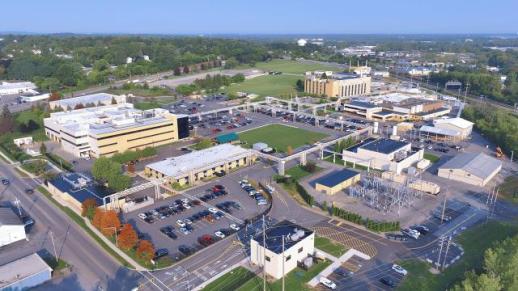 Lotte Biologics Expands Partnership with Otimo Pharma for Antibody Drug Development Lotte Biologics is strengthening its position as a strategic partner by expanding its collaboration scope to include development stages. The company aims to establish a comprehensive partnership that spans from initial development to commercialization. This shift from mere production to development collaboration is expected to enhance the likelihood of future commercialization. On May 18, Lotte Biologics announced that it has signed a contract with the UK-based biotech firm Otimo Pharma for the contract manufacturing of antibody drugs. The company previously entered into a contract with Otimo Pharma in June of last year, and this new order marks an expansion of their partnership. The latest agreement includes not only the production of active pharmaceutical ingredients (API) but also process development. Lotte Biologics will be responsible for producing the API for Otimo Pharma's antibody drug, 'Jankistomig,' at its Syracuse Bio Campus in New York. Based at the Syracuse Bio Campus, Lotte Biologics provides CDMO services ranging from cell line development to large-scale contract manufacturing. Additionally, the company plans to establish a 'dual site' production system connecting North America and Asia through its first factory at the Songdo Bio Campus, which is set to be completed in August this year. In March, Lotte Biologics was recognized as the 'Best New & Relaunch CDMO' at the prestigious 2026 CDMO Leadership Awards. James Park, CEO of Lotte Biologics, stated, "We will actively support new drug development based on our CDMO capabilities that encompass process development to commercial production, and we aim to establish ourselves as a trusted partner in the global market."* This article has been translated by AI. 2026-05-18 16:36:12
 -
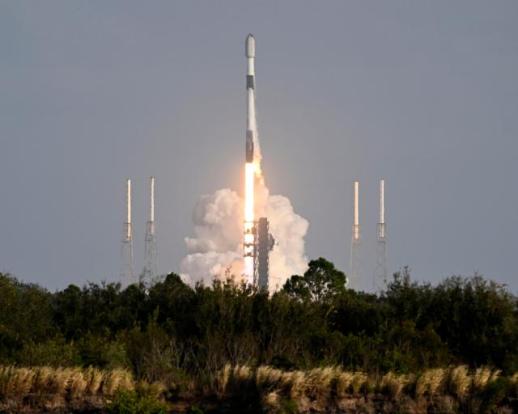 Nasdaq IPO blitz threatens South Korean stock market SEOUL, May 18 (AJP) - Amid unresolved bottlenecks around the Strait of Hormuz, high-profile United States companies including SpaceX, OpenAI, and Anthropic are preparing for consecutive initial public offerings (IPOs) later this year. With foreign capital expected to flock to these massive listings and South Korean investors steadily expanding their overseas portfolios, forecasts are emerging that the domestic stock market could face a correction. The benchmark KOSPI closed 0.31 percent higher at 7,516.04 on Monday. While it recouped some losses on growing expectations that the general strike at Samsung Electronics would come to an end, the index had plunged below the 7,100 mark early in the session, following a decline of more than 6 percent last week. East Asian stock markets had previously pushed higher despite the escalating blockade of the Strait of Hormuz. The KOSPI hit a record high of 7,981.41 at Thursday’s close last week, while Japan’s Nikkei 225 similarly touched an all-time high of 63,442.50 on May 10. Analysts point to various factors behind the sudden stagnation or decline of Asian markets that had seemed bound for endless gains, with the upcoming series of megacap listings in the United States being cited most frequently. The most anticipated listing is SpaceX, which operates small-satellite launch vehicles and manned spacecraft operations. SpaceX is a dominant leader in capturing and deploying multiple satellites into low Earth orbit (LEO). Up to 70 percent of active satellites currently in orbit were launched via the company’s rockets, and 97 percent of global satellite internet speed tests are conducted through its Starlink service. Its broad portfolio, spanning civil and military applications, is considered a core strength. Most notably, its reusable launch vehicles, led by the Falcon 9, allow the company to perform launches at costs up to three times lower than competitors in China and Russia, attracting clients worldwide. Consequently, markets expect SpaceX’s public offering to be the largest in history. Prominent asset management firms, including Morgan Stanley and Goldman Sachs estimate the size of the offering could reach up to $75 billion. This would more than double the previous record of $29.4 billion set by Saudi Aramco, the world's largest oil company, in 2019. The complicating factor is the rising volume of overseas investment by South Korean nationals. In 2025, South Koreans poured an estimated $114.4 billion into overseas equities, more than doubling the roughly $42 billion that flowed out in 2024. The combined value of foreign direct investment into South Korea during the same period stood at only $36 billion. The Bank of Korea (BOK) had sought to incentivize domestic investment by launching Reshoring Investment Account (RIA) products to curb the local currency's sharp depreciation, which fell 6.5 percent over the past year from 1,390 won per dollar in May 2025 to 1,480 won per dollar this May. However, with the SpaceX IPO becoming tangible, those plans are in jeopardy. With leading artificial intelligence companies like Anthropic and OpenAI scheduled for large-scale listings later this year - or the first quarter of 2027 at the latest - capital flight from the South Korean securities market is projected to accelerate. Some forecasts suggest these two firms could even surpass SpaceX’s record-breaking offering size. Domestic brokerage firms are racing to launch SpaceX-related exchange-traded funds (ETFs). Firms, including Korea Investment Management and Mirae Asset Global Investments, are rolling out aerospace-focused ETFs in an effort to retain domestic capital. Yet, blocking the correction appears challenging given the lowered barriers to foreign market entry. While forecasting that the KOSPI could reach 9,000 by the end of the year, NH Investment & Securities projected that "large-scale IPOs such as SpaceX and OpenAI could temporarily dampen the South Korean securities market." "The scale of domestic capital shifting overseas could be substantial," Mirae Asset, which has aggressively invested in SpaceX, also warned of a short-term shock. 2026-05-18 16:34:32
 -
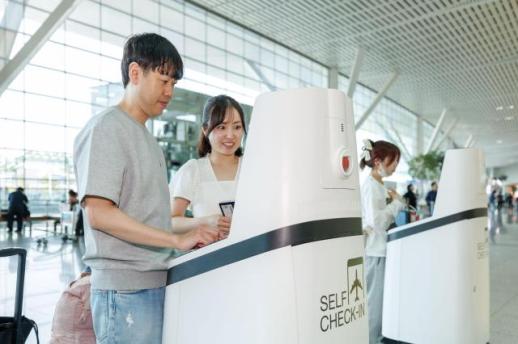 South Korea deploys more service robots amid rising labor costs SEOUL, May 18 (AJP) - South Korea’s main gateway, Incheon International Airport, has deployed autonomous service robots as the country accelerates automation across service industries amid rising wage costs and labor shortages. Incheon International Airport Corporation said Monday that it has begun full-scale operations of 31 autonomous robots, including self-check-in robots, guidance and patrol robots, and docent robots designed to assist passengers and provide cultural information across airport facilities. The rollout reflects a nationwide shift toward automation as South Korean businesses and major companies increasingly turn to service robots to offset mounting labor costs and staffing shortages. South Korea’s minimum wage rose to 10,320 won ($7.5) per hour in 2026, bringing minimum monthly pay for full-time workers to about 2.16 million won based on a 209-hour work month. As labor costs continue to climb, businesses in labor-intensive sectors such as tourism, retail and hospitality are increasingly adopting kiosks and service robots to reduce staffing burdens and maintain round-the-clock operations with fewer workers. According to pricing released by B-ROBOTICS, a robotics affiliate of Woowa Brothers, the operator of Baemin, South Korea’s largest food delivery platform, serving robots can be rented for as low as 299,000 won ($218) per month under a 36-month contract. By comparison, employing a full-time worker at a low-cost eatery such as Gimbap Cheonguk can cost restaurant owners roughly 2.4 million won to 2.8 million won ($1,750-$2,040) a month. The large cost gap is accelerating adoption among small business owners already struggling with rising wages and labor shortages. A survey conducted by part-time job portal Mediawill Networks on April 26 found that 73.7 percent of 114 small business owners said they had used unmanned devices such as kiosks, cooking robots or serving robots over the past year. 48.6 percent of respondents said kiosks helped reduce operating costs, reflecting growing interest in automation tools among small businesses facing rising labor expenses. The shift is also reshaping employment patterns in South Korea’s service sector. In a 2024 report based on surveys of 2,000 restaurants and bars in Seoul, the Korea Employment Information Service found that restaurants introducing kiosks reduced sales and serving staff by about 11.5 percent on average, while tablet ordering systems cut such jobs by roughly 7.5 percent. The report said 55 to 76 percent of businesses cited labor cost reduction as the main reason for adopting digital devices such as kiosks, tablets and service robots. The trend in service-sector automation reflects South Korea’s broader embrace of robotics across the economy. According to the International Federation of Robotics’ “World Robotics 2025” report released in April, South Korea has the highest concentration of industrial robots in the world, with 1,220 robots for every 10,000 manufacturing workers — more than six times the global average. Behind the trend is a deeper structural shift. South Korea officially became a “super-aged” society in 2025, with people aged 65 or older accounting for more than 20 percent of the population, according to the International Labour Organization. At the same time, the country’s working-age population has continued to shrink, intensifying labor shortages across service and manufacturing industries and pushing companies to accelerate investment in robotics and AI-powered automation technologies. 2026-05-18 16:27:28
 -
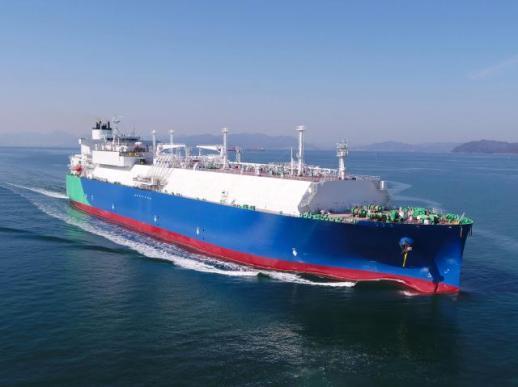 Samsung Heavy Industries Secures Orders for Three LNG Carriers Worth 1.12 Trillion Won Samsung Heavy Industries continues to expand its orders for liquefied natural gas (LNG) carriers. The company announced on May 18 that it has secured orders for three LNG carriers from a shipping company in Oceania, totaling 1.12 trillion won. This month, Samsung Heavy Industries has recorded a total of six orders, including one LNG floating storage and regasification unit (LNG-FSRU) and five LNG carriers, amounting to 2.36 trillion won. In the LNG carrier sector, the company has already surpassed last year's total of 11 vessels before the end of the first half. A Samsung Heavy Industries official stated, "As geopolitical instability in the Middle East continues, the importance of energy security and supply chain diversification is increasing, leading to a growing demand for high-efficiency LNG carriers. We will actively respond to customer needs based on our proven capabilities and quality competitiveness in LNG carrier construction to maintain our order momentum." Additionally, Samsung Heavy Industries participated in the Data Center World (DCW 2026) event held in Washington, D.C., in April to address the rising demand for data center infrastructure. At the event, the company obtained conceptual design certification for a 50MW floating data center (FDC) from the American Bureau of Shipping (ABS) and Lloyd's Register (LR), laying the groundwork for its entry into the global market with its self-developed floating data center.* This article has been translated by AI. 2026-05-18 16:26:39
 -
 SKC Achieves Oversubscription in Capital Increase, Accelerates Glass Substrate Business and Financial Improvement SKC has successfully achieved oversubscription in its capital increase of 1.1671 trillion won, with both existing shareholders and employee stock ownership plans exceeding expectations. According to SKC on May 18, the subscription rate for existing shareholders reached 113.01%, surpassing the 100% mark, while the employee stock ownership plan recorded a high subscription rate of 131.4%. The company attributed the strong interest in the capital increase to improved performance and market expectations surrounding its restructuring focused on semiconductor-related businesses. Notably, the transition to positive EBITDA (earnings before interest, taxes, depreciation, and amortization) after ten quarters and the acceleration of the commercialization of the glass substrate business have positively influenced investor sentiment. SKC stated, "The funds secured through this capital increase will be used to secure future growth drivers and establish financial stability." The company plans to invest 589.6 billion won in its semiconductor glass substrate business partner, Absolix, to expedite commercialization, while 577.5 billion won will be allocated to repay significant debts, improving key financial metrics. This is expected to reduce the debt ratio from approximately 230% at the end of last year to about 129%. A representative from SKC commented, "The success of this large-scale capital increase confirms the market's strong belief in SKC's fundamental restructuring and the potential of next-generation core businesses like glass substrates. We will strategically invest the secured funds to seize the global glass substrate market while striving to enhance shareholder value based on unwavering financial stability." One small shareholder expressed, "When I first heard about the capital increase, I was worried that the stock value might drop. However, SKC's investment in the capital increase is larger than the planned debt repayment, and I am optimistic about the significant investment in the growth of the glass substrate business as a shareholder." Meanwhile, the public subscription for the fractional shares resulting from the allocation process, totaling 23,687 shares, will take place from May 19 to 20. The new shares from this capital increase are set to be listed on June 8.* This article has been translated by AI. 2026-05-18 16:19:51