
Journalist

Antre Lim
-
 Trump's Comments on Taiwan Spark Concern in Taipei "Trump's public statement about being willing to negotiate with Beijing on Taiwan is akin to waving a red flag in front of a bull," said Ryan Hass, director of the China Center at the Brookings Institution. Following President Donald Trump's remarks during his recent visit to China, where he referred to arms sales to Taiwan as a "very good negotiating chip," international attention has intensified. His comments suggest that arms sales to Taiwan could be leveraged in future negotiations with China. On May 17, Reuters reported that Taiwan's President Tsai Ing-wen emphasized on Facebook that "peace and stability in the Taiwan Strait can never be sacrificed or traded away," asserting that Taiwan will not abandon its sovereignty, dignity, or democratic way of life under external pressure. She also pointed out that arms sales to Taiwan are based on the Taiwan Relations Act established after the U.S.-China normalization in 1979, which has served as a strong deterrent for decades. China has ramped up its rhetoric against Taiwan through state media. The Global Times stated, "Trump's remarks reaffirm that the U.S. will not indefinitely support 'Taiwan independence' as some have dreamed," adding that Trump emphasized the U.S. would not fight a war for Taiwan, despite being 9,500 miles away. The publication also noted that the pro-China Kuomintang's Vice Chairman, Xiao Xuchuan, analyzed that Trump's comments could politically impact President Tsai. Amid rising tensions, some close aides to the Trump administration have expressed concerns about the possibility of a Chinese invasion of Taiwan within the next five years, Axios reported. Although China welcomed Trump with elaborate ceremonies, the underlying message is that China views itself as an equal superpower to the U.S. and asserts that Taiwan belongs to China. One aide remarked that the likelihood of Taiwan coming to the U.S.-China negotiation table has increased, stating, "The semiconductor supply chain will not reach self-sufficiency in the U.S., and there is no issue more critical to the economy than this." As the controversy deepens, the U.S. government appears to be working to clarify its stance. According to Politico, U.S. Trade Representative Jamie Greer emphasized in an interview with ABC that there is no change in U.S. policy toward Taiwan. Greer stated, "The president is focused on confirming that nothing is happening in the Taiwan Strait," adding that Trump will decide the timing and execution of arms sales to Taiwan. According to the New York Times, the Taiwanese government has been awaiting White House approval to import $14 billion worth of U.S. weapons, including drone defense systems and air defense systems, over the past few months. Trump had previously mentioned to reporters that he discussed arms sales to Taiwan with President Xi during his return from China aboard Air Force One. 2026-05-18 05:39:56
 -
 The Rise of Voice Phishing: Is Financial Education Keeping Up? Recent news and films often evoke a sense of unease. The barrage of phone calls and text messages can make it difficult to enjoy daily life. From the movie "Voice" to reports of voice phishing-related deaths, and the prevalence of romance scams and online fraud, financial crime has infiltrated our everyday existence. During the day, unsolicited calls about insurance and mobile phone upgrades flood in, while weekends bring requests to participate in various election polls. Stock trading advertisements constantly appear via text messages. Even when we block numbers or filter certain words as spam, our peaceful routines and sometimes our finances are repeatedly disrupted. Financial literacy among adults in South Korea is not as high as one might expect. As finance becomes increasingly complex and shifts toward online and non-face-to-face interactions, financial understanding continues to decline. While it is slightly above the OECD average, the downward trend persists, particularly among young adults in their 20s, seniors in their 70s, and low-income groups. A significant reason for financial victimization is the allure of profit. Many individuals are tempted by the prospect of high returns from high-risk investments, often lured by promises of quick wealth. The sophistication of voice phishing tactics has also increased with advancements in AI and digital technology, leading to a rise in reported cases. In response, financial education will be introduced in high schools this year through a new curriculum titled "Finance and Economic Life." While financial subjects have existed in some form, they were previously included in the 2022 revised curriculum as elective courses in high school social studies. The current textbooks are divided into four main sections: 1) Happy and Safe Financial Living, 2) Income and Expenditure, 3) Saving and Investment, and 4) Credit and Risk Management. Historically, high school economics textbooks have been around 200 pages, and the new financial textbooks are similarly structured, with each section comprising about 50 pages. However, considering real-world applications, the content and length should be adjusted for practicality. There is a pressing need for a continuous financial education program from elementary through high school. Finance can yield profits but can also lead to losses. Nowadays, even elementary students can obtain debit cards, and many middle schoolers use credit cards. Some families even gift stocks during holidays. However, there are limitations to providing systematic and realistic financial education at home. Therefore, financial education should begin at a younger age, tailored to students' comprehension levels. High school financial education should not remain an elective but should be mandatory for all students. In reality, subjects that do not impact college admissions are often less favored by students. Reports indicate that the selection rate for economics courses is not high. However, finance significantly affects both individuals and businesses. Thus, financial courses should be offered on a Pass/Fail basis, regardless of their impact on college admissions, and should be included in graduation requirements. Schools with low enrollment numbers that struggle to offer electives could consider partnering with nearby universities or inviting financial experts to provide practical financial education. More advanced theoretical education can be addressed in college courses later. Financial education must encompass not only potential profits but also the risks of loss. Traditional economic education often focuses on the "positive realm" where everyone benefits. However, behavioral economics and behavioral finance emphasize concepts like prospect theory, loss aversion, and sensitivity. Financial education should not merely convey textbook content mechanically but should be grounded in real-world examples for practical understanding. Finance plays a crucial role in individuals' lives. Therefore, financial education should be continuous and realistic from an early age. There is an increasing need for financial education in schools that aligns with real-world scenarios. * This article has been translated by AI. 2026-05-18 05:04:10
 -
 President Lee Discusses Middle East Peace with Trump President Lee Jae-myung held a phone call with U.S. President Donald Trump on the evening of May 17, discussing the recent U.S.-China summit results and ways to enhance Korea-U.S. relations.According to Chief Presidential Secretary Kang Yu-jeong, the call took place at 10 p.m. and lasted about 30 minutes. The conversation was initiated at the request of South Korea to hear about the outcomes of the U.S.-China summit.During the call, President Trump shared details of the U.S.-China summit with President Lee, and both leaders discussed the peace situation on the Korean Peninsula and the smooth implementation of the Joint Fact Sheet signed last year.President Lee congratulated Trump on the successful state visit to China, which was the first in nine years, and noted that stable management of U.S.-China relations would contribute to peace and prosperity in the Indo-Pacific region and globally.Additionally, President Lee praised the constructive discussions between President Trump and Chinese President Xi Jinping regarding the Korean Peninsula.In response, President Trump affirmed his commitment to play a necessary role in ensuring peace and stability on the Korean Peninsula through close cooperation between the two leaders.The two leaders also recalled that the Joint Fact Sheet announced last year represented a historic agreement that upgraded the Korea-U.S. alliance to a new level, and they agreed to work diligently toward its faithful implementation.Kang noted that President Lee appreciated Trump's proactive leadership in resolving the situation in the Middle East and expressed hope for a swift restoration of peace and stability in the region. Both leaders also expressed anticipation for their upcoming meeting at the G7 summit scheduled for mid-June.Meanwhile, following the U.S.-China summit, President Trump has been sharing the outcomes with allied leaders. On May 15, he spoke for about 15 minutes with Japanese Prime Minister Sanae Takaichi to discuss the results of his visit to China. 2026-05-18 00:04:06
 -
 President Yoon Discusses U.S.-China Summit with President Trump President Yoon Suk Yeol held a phone call with U.S. President Donald Trump on the evening of May 17, discussing the outcomes of the recent U.S.-China summit.Chief Presidential Secretary Kang Yu-jeong stated in a written briefing that President Yoon spoke with President Trump for about 30 minutes starting at 10 p.m. The call was initiated at the request of South Korea to hear the results of the U.S.-China summit.During the conversation, President Trump shared details of the U.S.-China summit with President Yoon, and the two leaders also discussed issues related to peace on the Korean Peninsula and the smooth implementation of the Joint Fact Sheet signed last year.Meanwhile, following the U.S.-China summit, President Trump has been sharing the outcomes with leaders of allied nations. On May 15, he spoke for about 15 minutes with Japanese Prime Minister Sanae Takaichi to discuss the results of his visit to China.* This article has been translated by AI. 2026-05-17 23:12:47
 -
 Samsung Electronics Strike Looms as Government Considers Emergency Mediation Samsung Electronics strike imminent as government weighs emergency mediation As the strike by Samsung Electronics' labor union approaches, the government's concerns are deepening. The administration, which has maintained a principle of 'autonomous resolution' between labor and management, is now officially considering the possibility of emergency mediation, facing a choice between pro-labor policies and national economic risks. Prime Minister Kim Min-seok stated in a public address on May 17 regarding the Samsung strike, "If a situation arises where the strike causes significant damage to the national economy, we cannot rule out any possible response measures, including emergency mediation." He added, "The negotiations on May 18 represent the last real opportunity to prevent the strike, and both labor and management must take this meeting seriously." Lee Jae-yong's leadership shifts negotiations amid labor tensions As the labor dispute at Samsung Electronics escalates toward an unprecedented strike, efforts by Chairman Lee Jae-yong have reopened the door for negotiations. According to industry sources on May 17, following active persuasion efforts by Labor Minister Kim Young-hoon and Samsung Electronics Vice Chairman Jeon Young-hyun on May 15, the two sides have agreed to hold a second post-adjustment meeting on May 18. This will be the last chance for negotiations before the strike scheduled for May 21. Notably, Lee's sincere response has positively influenced the union's previously firm stance of "no further dialogue." Upon returning from an overseas trip, he expressed, "I sincerely apologize to our global customers for causing anxiety and concern due to internal company issues." He also stated, "I bow my head in apology to the citizens who always support, love, and challenge Samsung." Korea's physical AI sector must leverage existing strengths for global competitiveness In the face of the rising physical AI capabilities of the U.S. and China, experts agree that Korea must actively utilize its existing industrial assets to develop physical AI technologies and leverage competitive manufacturing bases for testing and commercialization. As of May 17, both the U.S. and China are focusing on the potential of physical AI to counteract declining manufacturing competitiveness due to high labor costs and low birth rates, consolidating national resources for technology development and commercialization. Reports from Japan's Nikkei Business and the U.S. NexisLexis estimate Korea's physical AI competitiveness to be ranked third, significantly behind the U.S. and China. Korea possesses independent humanoid robot technology that is commercially viable and maintains competitive industrial robot capabilities. However, it lacks the extensive physical AI platforms of the U.S. and China and faces fierce competition from Japan, which has superior industrial robot capabilities. The U.S. leads the market with major tech companies like NVIDIA, Tesla, FiguerAI, and Amazon, while firms like Google and Microsoft, which previously focused on language model-based AI, have accelerated their research and development in physical AI and robotics since last year. Korea-Japan summit to be held with high-level diplomatic honors The Blue House announced on May 17 that it will welcome Japanese Prime Minister Takaiichi with honors equivalent to a state visit ahead of the upcoming Korea-Japan summit in two days. This summit will take place four months after President Yoon Suk Yeol met with Prime Minister Takaiichi in Nara Prefecture, Japan, and will be held in Andong, Gyeongbuk, the hometown of President Yoon. Chief Blue House Spokesperson Kang Yu-jeong stated, "This visit is expected to deepen the strong trust and friendship between the two leaders, as it serves as a reciprocal visit following President Yoon's trip to Nara Prefecture in January." Housing loans surge as authorities target circumvention of business loans The increase in housing loans from financial institutions has expanded in April, reaching the highest level in eight months. Financial authorities are closely monitoring the potential for rising household loans due to increased housing transactions and have decided to significantly strengthen regulations against circumvention of real estate financing through business loans. According to the Financial Services Commission on May 17, total household loans across all financial sectors increased by 3.5 trillion won in April, maintaining the same level as the previous month. Household loans have been on the rise for four consecutive months since turning positive in January after a decline of 1.2 trillion won in December last year. In terms of categories, housing loans increased by 5.5 trillion won last month, a significant rise from 3 trillion won in the previous month. This marks the highest level since August 2025, when it reached 5.8 trillion won. Other loans decreased by 2 trillion won, reversing the previous month's increase of 500 billion won. The decline in credit loans also widened from 2 trillion won to 8 trillion won. Top 10 securities firms report record profits, closing gap with major banks Korea's banking sector has long been the dominant force in the financial market, significantly outpacing other sectors like securities and asset management in profit generation. However, since the second half of last year, this landscape has begun to shift. Riding the wave of a booming stock market, securities firms have seen a surge in net profits, achieving record results in the first quarter of this year. The combined net profit of the top 10 securities firms exceeded 4 trillion won for the first time, narrowing the gap with the top five banks to just 1 trillion won. According to the Financial Supervisory Service's electronic disclosure system on May 17, the combined net profit of the top 10 securities firms (based on equity capital) for the first quarter was reported at 4.3323 trillion won, an increase of 2.3046 trillion won (113.65%) compared to 2.2277 trillion won during the same period last year. This marks the first time that quarterly net profits for securities firms have surpassed 4 trillion won. Reconstruction reshapes Seoul's commercial landscape, boosting local economies Reconstruction and redevelopment have evolved from merely tearing down old homes and building new apartments to reshaping the consumption landscape of cities. The influx of residents due to large-scale developments and infrastructure improvements is boosting local economies, while the demand for new housing is expanding everyday consumption, emerging as a new growth factor for offline commercial areas. Analysis of statistics from Seoul's commercial area analysis service on May 17 revealed a notable increase in the 'resident population' around major redevelopment sites in Seoul over the past five years. The resident population refers to those who stay or reside around streets and buildings and is used as an indicator for commercial area analysis. The most significant growth was observed in Dunchon-dong, Gangdong-gu. The resident population in Dunchon-dong increased by 45.5%, from approximately 5.44 million in the fourth quarter of 2020 to about 7.92 million in the fourth quarter of 2025. During the same period, estimated commercial sales in the area rose from about 85.2 billion won to approximately 101 billion won, an increase of 18.6%. SK Group's restructuring shows positive results in profitability and debt reduction As SK Group enters the third year of its restructuring efforts initiated in 2024, it is beginning to see significant effects, including increased operating profits and reduced debt ratios. While the group's size has slightly decreased as it has streamlined less profitable businesses, sectors such as semiconductors, artificial intelligence (AI), energy, and telecommunications are now generating synergies, positioning the group to accelerate its emergence as a leading global conglomerate comparable to big tech companies. According to reports from the business community on May 17, SK Holdings, the group's holding company, announced in its quarterly report that it achieved consolidated sales of 36.7513 trillion won and operating profits of 3.6731 trillion won in the first quarter of this year. This represents a year-on-year increase of 19% in sales and a remarkable 760% increase in operating profits. The scale of borrowings decreased from 63.231 trillion won to 49.5543 trillion won, a reduction of about 21%, leading to a decrease in the debt ratio from 172.8% to 135.7%.* This article has been translated by AI. 2026-05-17 21:41:07
 -
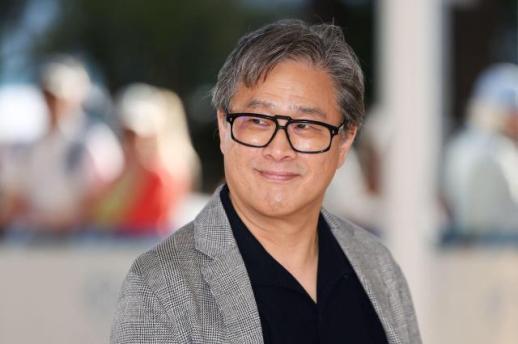 Park Chan-wook Receives France's Highest Cultural Honor Director Park Chan-wook, the jury chair of the 79th Cannes Film Festival, has been awarded France's highest cultural honor, the Commandeur of the Order of Arts and Letters. According to Yonhap News Agency and Reuters, French Minister of Culture Rima Abdul Malak presented the award to Park on May 17 in Cannes. The Order of Arts and Letters is given to individuals who have made significant contributions to the arts and literature or enhanced the international stature of French culture. It is divided into three ranks: Chevalier, Officier, and Commandeur, with Commandeur being the highest. Park is the fourth Korean recipient of the Commandeur honor, following Kim Jong-ok, former head of the Korea Arts and Culture Education Service in 2002, conductor Chung Myung-whun in 2011, and soprano Jo Su-mi last year.* This article has been translated by AI. 2026-05-17 21:27:44
 -
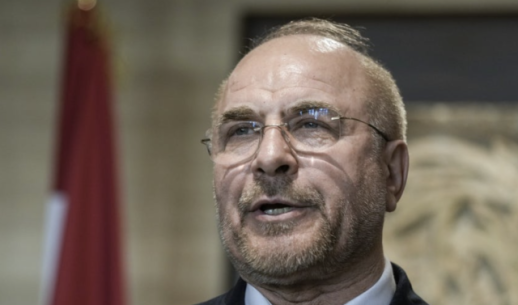 Iran Appoints Mohammad Bagher Ghalibaf as Special Envoy to China Mohammad Bagher Ghalibaf, the Speaker of the Iranian Parliament and head of the negotiation team with the United States, has been appointed as a special envoy to China. According to Yonhap News on May 17, Iranian media reported that Ayatollah Mostafa Khamenei, Iran's Supreme Leader, accepted President Ebrahim Raisi's proposal to appoint Ghalibaf as a special envoy to address issues related to China. The Iranian Tasnim News Agency cited sources stating, "Ghalibaf will serve as a coordinator overseeing various national agencies in Iran concerning China." The timing of this appointment appears to coincide with U.S. President Donald Trump's visit to China from May 13 to 15, as indicated by the source's comment that the appointment was made 'recently.' Ghalibaf's appointment, as the head of the legislative body, significantly elevates the status of Iran's special envoy to China. Previously, the role was typically filled by ambassadors appointed by the president or the foreign minister, and Ali Larijani, the former secretary of the Supreme National Security Council who was assassinated in March during U.S.-Israeli bombings, occasionally engaged in matters related to China in a special envoy capacity. Iran's decision to enhance the status of its special envoy to China suggests that, amid heightened tensions with the U.S. in military and diplomatic arenas, the support from China has become increasingly vital. By appointing a special envoy directly, the Supreme Leader sends a message that China is 'the most important partner.' Ghalibaf's role as the U.S. negotiation representative implies a desire to discuss the negotiation process with the U.S. in detail and closely with China. Furthermore, to formalize control over the strategically significant Strait of Hormuz, Iran requires China's backing, especially in light of international pressures. Ghalibaf, who encompasses both the Iranian leadership and military, is seen as the appropriate figure to engage in discussions with China. During the recent U.S.-China summit, China expressed a negative stance on Iran's imposition of tolls in the Strait of Hormuz, falling short of Iran's expectations. President Trump also highlighted that "China wants to help," emphasizing a behind-the-scenes role, which may widen the gap between China and Iran.* This article has been translated by AI. 2026-05-17 21:22:05
 -
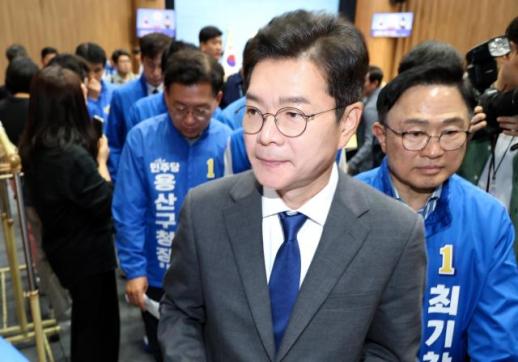 Jung Won-oh Responds to Jang Dong-hyuk's Comments on Conservative Party Jung Won-oh, the Democratic Party's candidate for Seoul mayor, responded to comments made by Jang Dong-hyuk, the leader of the People Power Party, regarding Jung's past assault incident. Jung advised Jang to focus on his own party's candidates instead. According to Yonhap News on May 17, Jung stated on his social media that Jang had claimed he would have been expelled if he were part of a conservative party. Jung remarked, "I have never been interested in parties created by military dictators since my youth. This is just nonsense." Jung further asserted, "In fact, the person facing expulsion from the conservative party, the People Power Party, is Jang himself. Is Jang a pro-Yoon or an anti-Yoon? Even members of the People Power Party are curious about this." He added, "Is he campaigning in Seoul and Busan? Even candidates from his own party are reluctant to have him join their campaign events." Jung criticized Jang's leadership, stating, "The dignity of a party leader is at stake. Instead of focusing on candidates from other parties, a party leader should prioritize the concerns of their own candidates." Earlier that day, Jang had referenced Jung's past assault incident on Facebook, criticizing Democratic Party candidates Song Young-gil, Woo Sang-ho, and Kim Min-seok by stating, "Politicians who were in a karaoke bar in Gwangju on the eve of the May 18 incident 26 years ago would have been expelled from a conservative party long ago."* This article has been translated by AI. 2026-05-17 21:15:49
 -
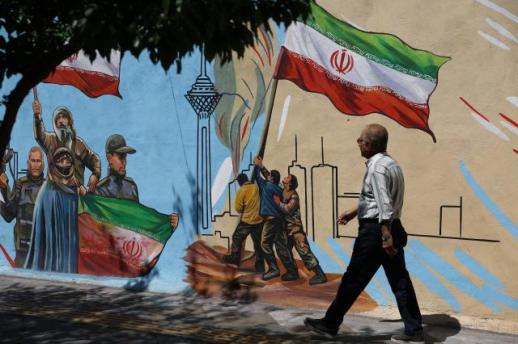 Iranian Media Reports U.S. Response on Key Issues Related to Peace Proposal Iran's Fars News Agency reported on May 17 that the United States has provided responses to five key issues related to Iran's proposed peace plan. According to Yonhap News Agency, sources indicate that the U.S. response includes the following points: refusal to compensate for war damages, the export of 400 kilograms of 60% enriched uranium to the U.S., the maintenance of only one Iranian nuclear facility, refusal to release even 25% of Iran's frozen assets, and linking the cessation of hostilities and negotiations across all fronts. The report criticized these conditions, stating, "Even if Iran accepts these terms, the threat of invasion from the U.S. and the Zionist regime (Israel) remains. This response does not resolve issues but rather seeks to achieve goals that the U.S. could not accomplish through war at the negotiation table." Fars News Agency also noted that Iran has proposed five points to the U.S., including the cessation of hostilities across all fronts such as Lebanon, the lifting of sanctions against Iran, the release of frozen Iranian funds, compensation for war damages, and recognition of Iran's sovereignty over the Strait of Hormuz.* This article has been translated by AI. 2026-05-17 20:48:47
 -
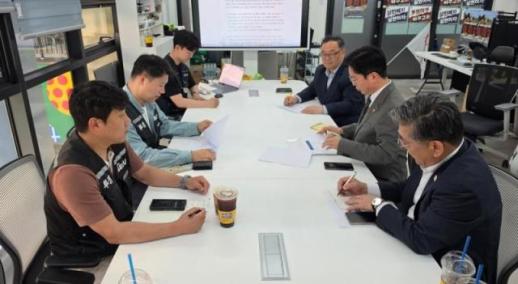 Samsung Electronics Union Claims Management is Using Emergency Mediation to Apply Pressure Samsung Electronics and its labor union are attempting to resolve differences over performance bonuses ahead of government mediation scheduled for the 18th. However, following the government's mention of the possibility of invoking 'emergency mediation,' the negotiation atmosphere has reportedly become tense again. According to Yonhap News on the 17th, Choi Seung-ho, chairman of the Samsung Electronics branch of the Samsung Group's labor union, stated, "Today, we held an informal meeting at the request of Yeom Myung-gu, head of the DS (semiconductor) People Team." Yeom is the chief negotiator representing management in labor negotiations. Choi reported that during the first post-adjustment meeting with the Central Labor Relations Commission, management proposed a 'retreating plan' that deviated from the performance bonus criteria suggested by the commission, questioning whether it could be resolved under the chairman's leadership. He conveyed that he found this unacceptable and stated, "If the same stance is taken in tomorrow's post-adjustment meeting, we will not agree." According to Choi, management's 'retreating plan' maintains a cap on the OPI (excess profit performance bonus) funding at 50% of annual salary, allowing a choice between 20% of EVA (economic value added) or 10% of operating profit. Additionally, if the operating profit of the semiconductor (DS) division exceeds 200 trillion won, they proposed to allocate 9-10% of the operating profit separately from the OPI, dividing it into 60% for the overall division and 40% for each business unit. Choi added, "Moreover, they are pressuring the union by hinting at emergency mediation, and it seems that the company's attitude has changed following the government's mention of emergency mediation." Earlier, during a preliminary meeting with management, Yeom apologized for the damage to labor-management trust and promised to engage sincerely in negotiations. However, following Prime Minister Kim Min-seok's public address suggesting the possibility of invoking emergency mediation, management reportedly adopted a more aggressive stance. Choi remarked, "Management said that if we go to emergency mediation, the union will face difficulties, so they suggested we stop discussing it," adding, "They are pressuring us by claiming the union will suffer greatly, but we will not yield." After Prime Minister Kim's address earlier in the day, he stated, "I have nothing to say about emergency mediation, but I will sincerely engage in post-adjustment to ensure harmony between Samsung Electronics and its labor union." Meanwhile, Samsung Electronics and its union are set to hold a second post-adjustment meeting at the Central Labor Relations Commission in Sejong at 10 a.m. on the 18th, which is expected to be the last opportunity for dialogue before a potential strike.* This article has been translated by AI. 2026-05-17 20:34:03