
Journalist

Antre Lim
-
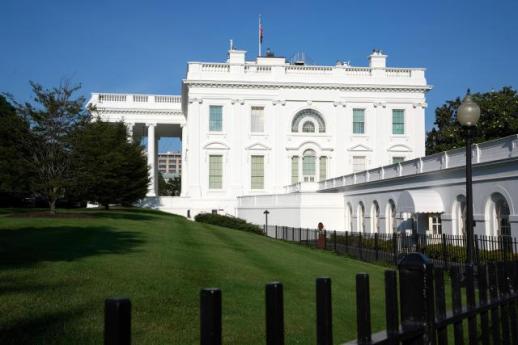 Trump to Soon Approve Taiwan Arms Sales; White House Denies Iran War Delay A senior U.S. military official's comments about a temporary halt to arms sales to Taiwan due to the Iran war prompted a swift denial from the White House. According to Yonhap News on May 23, Reuters reported that a White House official indicated a decision regarding a Taiwan arms package would be made soon. The official clarified that the delay in approving arms sales to Taiwan is not related to the Iran conflict. The official referenced the Trump administration's approval of a $11 billion arms package for Taiwan last year, stating, "As President Trump has indicated, additional approvals will be forthcoming soon." The official emphasized, "President Trump allowed more arms sales to Taiwan than any other president during his first term." Another source cited by Reuters also stated that the delay in arms sales to Taiwan is unrelated to Iran. This source noted, "The U.S. military has sufficient ammunition and weapon stockpiles to carry out President Trump's strategic objectives," adding that the arms sales process typically takes years, making any connection to the Iran war inappropriate. This response effectively counters remarks made by Acting Secretary of the Navy Hong Kao during a congressional hearing on May 21, where he mentioned that arms sales to Taiwan were temporarily halted to secure military supplies needed for the ongoing "Great Fury" operation against Iran. Kao's comments sparked controversy amid concerns raised by U.S. media about potential missile stock shortages due to the prolonged Iran conflict, particularly as a senior military official directly addressed supply issues. U.S. arms sales to Taiwan are governed by the Taiwan Relations Act, enacted in 1979. In January, Congress proposed an additional $14 billion support package for Taiwan, but the Trump administration has yet to grant final approval. Meanwhile, concerns have arisen regarding the potential weakening of U.S. security commitments to Taiwan after President Trump referred to arms sales as a "bargaining chip" following his recent summit with Chinese President Xi Jinping.* This article has been translated by AI. 2026-05-24 02:48:49
 -
 Samsung Electronics Union Vote Exceeds 80%; Some Shareholders Demand Invalidity The union vote on the tentative wage agreement at Samsung Electronics surpassed 80% on May 23, the second day of voting. According to Yonhap News, as of 6:40 PM, 46,185 out of 57,290 eligible voters from the Samsung Group's largest union, the Samsung Corporate Labor Union, participated, resulting in a turnout of 80.62%. At the same time, the second-largest union, the National Samsung Electronics Union, reported a participation of 6,502 out of 8,187 members, yielding a turnout of 79.42%. Combined, the turnout for both unions stands at 80.47%. Voting began at 2:12 PM the previous day and will continue until 10 AM on May 27. For the tentative agreement to be finalized, a majority of eligible voters must participate, and a majority of those who vote must approve it. However, opinions within the unions are divided. The National Samsung Electronics Union and the third-largest union, the Samsung Electronics Labor Union Donghaeng, are currently campaigning against the agreement. Choi Seung-ho, chairman of the Samsung Corporate Labor Union, stated that if the tentative agreement is rejected, he would delegate the remaining negotiations to the new leadership and conduct a vote of confidence. He added that a vote of confidence for the chairman will be held in June, regardless of the voting outcome. As the union voting proceeds, some shareholders are intensifying their calls for the agreement to be declared invalid. The small shareholder platform Act announced that Samsung Electronics accepted its request to review and copy the shareholder registry. This review is expected to take place on May 27 or 28. This request was initiated by the Korea Shareholder Movement Headquarters, which plans to demand a special shareholders' meeting after securing the registry. Previously, the shareholder movement headquarters held a press conference in front of the Supreme Court, arguing that the decision on special bonuses is a shareholder right and emphasizing the need for a special shareholders' meeting. They also plan to file for a provisional injunction to suspend the effectiveness of the agreement and a lawsuit to confirm its invalidity.* This article has been translated by AI. 2026-05-24 02:46:45
 -
 Seoul Mayoral Candidates Clash Over Safety and Development Issues As the June 3 local elections approach, the negative campaigning between Jung Won-oh, the Democratic Party's candidate for Seoul Mayor, and Oh Se-hoon, the People Power Party's candidate, is intensifying. Jung has raised concerns about the missing rebar issue at the GTX-A line's Samsung Station, while Oh has pointed to allegations of corruption in the redevelopment of the Seongdong District's Hyeongdang-dong. During his campaign on May 23, Jung repeatedly highlighted the rebar issue at Samsung Station, calling it a demonstration of Oh's negligence regarding safety. Speaking at a rally in front of Yeonsinnae Station in Eunpyeong-gu, Jung stated, "Oh has neglected safety, leading to continuous accidents in Seoul." He referenced the missing rebar at Samsung Station, saying, "The major cause of the collapse of the Sampoong Department Store was also related to missing rebar. Yet, Oh has not visited the Samsung Station site to this day." Jung criticized Oh, saying, "He should reflect on whether major disasters occur during his terms as mayor. Let's turn Seoul, which is indifferent to safety, into a city that prioritizes safety through our votes." Oh countered by addressing the allegations surrounding the "Agi Ssi Gooddang" preferential treatment and the redevelopment issues in Hyeongdang 7 District. Former People Power Party lawmaker Yoon Hee-sook claimed that while Jung was the mayor of Seongdong, he pressured the redevelopment association to donate 4.8 billion won for the construction of the Gooddang, but later refused to accept the building after its completion. Oh added that the delay in the completion of the project due to insufficient childcare facilities has prevented residents from exercising their property rights. At a rally in Sinjeongnegeori Station in Yangcheon-gu, Oh said, "The 1,000 households in Hyeongdang 7 District, which moved in last June, cannot complete their property registrations due to the childcare facility issue. The Seongdong District Office initially demanded cash contributions but later required the construction of a childcare facility for donation, which raises doubts about Jung's administrative capabilities." Oh also criticized Jung's defense of the allegations, stating that Jung's claim that it was an issue from the previous mayor's term was unacceptable. After visiting the Seoul International Garden Expo in Seongdong-gu, Oh told reporters, "If you served as the head of the Seongdong District for 12 years, you should not evade responsibility. Explain why you did not resolve this issue before leaving office in March, as that reflects incompetence and irresponsibility." The two candidates also continued their back-and-forth regarding a potential joint debate. Jung rejected Oh's proposal for a safety discussion centered on the rebar issue at Samsung Station, stating, "It has been over a week since it was announced to the media, yet he suggests a debate without even visiting the site." He reiterated his refusal, questioning how safety issues could be debated. In response, Oh criticized Jung's stance, saying, "It is inappropriate to question whether a debate on safety can bring about safety. We should discuss methods to ensure safety. If Jung promises to participate in a safety debate, I will visit Samsung Station."* This article has been translated by AI. 2026-05-24 02:40:52
 -
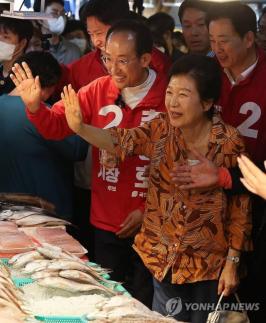 Former President Park Geun-hye's Political Activities Draw Attention Ahead of Local Elections As the June 3 local elections approach, former President Park Geun-hye's activities are garnering attention in the political arena. On May 23, Park visited the Chilseong Market in Daegu, accompanying the People Power Party's mayoral candidate, Chugyeong-ho. She is also scheduled to visit the birthplace of former First Lady Yuk Young-soo in Okcheon, Chungbuk, on May 25. Although she did not deliver a direct campaign speech, her presence just over ten days before the election is interpreted as a message to rally conservative support. This is particularly significant given the competitive nature of the Daegu mayoral race. It is not necessary to view the support of a former president in a strictly negative light. In a democratic society, the freedom of political expression is guaranteed for everyone, including former presidents, who can express their political views and support specific parties or candidates. It is common for former leaders to engage in election support abroad. In the United States, former President Barack Obama actively campaigned for Democratic candidates, while Donald Trump remained a key player in Republican politics after leaving office. Similarly, in Japan, former Prime Minister Shinzo Abe exerted significant influence in supporting the Liberal Democratic Party during his lifetime. Local elections are not solely about regional policy competition. In reality, elections are always influenced by central politics. The evaluation of the government, party approval ratings, and public sentiment regarding presidential governance significantly impact local election outcomes, a phenomenon observed globally. South Korean politics is no exception. The challenge lies in maintaining balance. Local elections are fundamentally about selecting individuals who can foster regional development. This process involves choosing those responsible for policies related to transportation, housing, welfare, safety, and industry—issues that are closest to citizens' lives. As the concentration of resources in the capital region and the decline of rural areas intensify, the role of local governments becomes increasingly crucial. In an era of competition in advanced industries such as AI, semiconductors, biotechnology, and batteries, local governments are evolving from mere administrative bodies to central pillars of regional industrial strategy. However, if elections become overly politicized, the vision for the region's future may be overshadowed by partisan conflict. In the case of the Daegu mayoral election, the 'Park Geun-hye effect' is becoming a larger news story than the economic and industrial strategies for Daegu or the issue of youth outmigration. This indicates that South Korean politics has yet to fully escape its focus on individuals and factions. That said, it is also unrealistic to completely prohibit the political participation of former presidents. The key lies not in the act of supporting candidates but in the manner and message conveyed. If the support merely incites factional unity and fosters hostility toward opponents, social conflict may escalate. Conversely, if a former president conveys messages of unity, responsibility, and moderation, they can elevate the quality of political culture. International examples illustrate this point. While supporting Democratic candidates, former President Obama consistently emphasized messages of unity and trust in American democracy. In contrast, while Trump succeeded in mobilizing a strong support base after leaving office, he is also credited with exacerbating political polarization in the United States. The political influence of a former president can either be an asset or a burden for democracy, depending on how it is wielded. What South Korean politics must be most vigilant against is the 'excess of emotional politics.' In an era where AI-generated fake news, YouTube politics, fandom politics, and hate politics disrupt the electoral landscape, the more political symbols are excessively mobilized, the more elections tend to devolve into contests of emotional mobilization rather than policy competition. Ultimately, it is the citizens who suffer, as issues related to the local economy, jobs, transportation, safety, youth, and welfare are pushed aside. Park Geun-hye's recent actions should also be viewed through this lens. While there may be a rallying effect among conservative supporters, it should not provoke past conflicts and factional divisions. The political influence of a former president must be considered not just as personal politics but also for its symbolic effect on society as a whole. Democracy is a system that allows for diverse political participation, and former presidents are no exception. However, given their significant influence, a higher level of responsibility and restraint is required. Especially in local elections, the focus should transcend party victories and losses to address the essential question: “Who can better develop the region?” Ultimately, voters must assess this point. They should not be swayed solely by political symbols and emotions but should critically evaluate candidates based on their policies, capabilities, and visions for regional development. Local elections are both an extension of central politics and a stage for responsible governance that impacts citizens' lives. What is needed now is not just factional unity but a mature democracy that selects individuals responsible for the future of the region.* This article has been translated by AI. 2026-05-24 02:39:00
 -
 President Lee Visits Traditional Market After Memorial for Roh Moo-hyun President Lee Jae-myung attended the memorial service for the late former President Roh Moo-hyun on May 23 in Bongha Village, Gimhae, and afterward visited the Eodong Traditional Market to meet with citizens and merchants.According to a written briefing by Deputy Spokesperson Ahn Gyu-ryeong, Eodong Traditional Market is a representative market in Gimhae, filled with the warmth of local life and bustling with various food vendors and lively merchants.As President Lee and First Lady Kim Hye-kyung entered the market, they were warmly welcomed by citizens and merchants, who applauded and shouted, "Welcome!" and "Nice to meet you!"The presidential couple walked slowly through the market alleys, greeting citizens and responding to requests for photos.The market was filled with enticing aromas of freshly fried snacks, tteokbokki, and sundae, drawing in visitors. The couple sampled twisted doughnuts and fish cakes, purchasing rice cakes and corn to support the vendors.While visiting a fruit shop, President Lee and First Lady Kim bought raspberries and peaches.President Lee asked, "How much are the peaches?" to which the vendor replied, "30,000 won." First Lady Kim remarked, "That's still expensive," as she carefully observed the prices in their shopping basket. Vendors candidly shared their experiences regarding the current economic situation and market atmosphere, while the presidential couple listened attentively.One vendor requested, "Please cheer for us to do well in business," and President Lee responded with a bright wave of his hand.Throughout the visit, citizens expressed their support, and the presidential couple waved goodbye to the crowd until the end.Deputy Spokesperson Ahn noted, "This visit was arranged to hear the voices of citizens in the traditional market, which is closest to their lives, after attending the memorial service for former President Roh Moo-hyun, and to encourage merchants who are struggling due to the economic downturn."* This article has been translated by AI. 2026-05-24 02:36:25
 -
 Fire in Multi-Family Home in Hwaseong Claims Life of Grandson, Injures Grandmother A fire in a multi-family home in Hwaseong, Gyeonggi Province, resulted in the death of a man in his 20s and serious injuries to an elderly woman in her 80s. According to Yonhap News, the blaze broke out at 12:47 p.m. on the fourth floor of a five-story multi-family building located in the Manse district. The cause of the fire is currently unknown. At the time of the fire, two individuals were present in the unit: a man in his 20s, identified as A, and an elderly woman, identified as B. A was found dead at the scene, while B sustained second-degree burns to her face and was rescued and transported to a hospital. The two were confirmed to be grandmother and grandson. Following the outbreak of the fire, thick black smoke and toxic gases quickly spread throughout the building, prompting residents to evacuate. Four residents on the fifth floor were rescued by firefighters, while eight others managed to escape on their own, preventing further casualties. Fire authorities received reports of black smoke rising from the fourth floor and dispatched 27 pieces of equipment and 75 personnel to the scene for firefighting efforts. The fire was brought under control and fully extinguished within approximately one hour. The fire caused damage to the interior of the unit, and soot damage was reported throughout the building. Police and fire officials plan to conduct a joint investigation to determine the exact cause of the fire, the circumstances surrounding the death, and the extent of property damage.* This article has been translated by AI. 2026-05-24 02:33:47
 -
 Training Aircraft Crashes in Haenam, Injuring Instructor and Student A training aircraft crashed in Haenam, South Jeolla Province, injuring two people, including an instructor and a student. According to Yonhap News, the incident occurred around 3:10 p.m. on May 23, when a DA40NG training aircraft went down in a wooded area near Seokgye-ri in Haenam County. At the time of the crash, the aircraft was carrying a student in their 20s, identified as A, and an instructor, also in their 20s, identified as B. Both were rescued shortly after the accident and transported to a hospital. A was reported to be conscious, while B was reportedly unconscious at the time of rescue. Fire authorities stated that one wing of the aircraft was severely damaged during the crash, but no fire broke out. The aircraft took off from Muan International Airport at approximately 2:40 p.m. and was headed to Sanibi Airfield in Haenam, about 40 kilometers away in a straight line, when the accident occurred. The DA40NG is a four-seat training aircraft manufactured by an Austrian company, and only the instructor and student were on board at the time of the incident. The Aviation and Railway Accident Investigation Committee plans to investigate the cause of the crash, examining potential aircraft defects, weather conditions, and flight paths. This is not the first such incident in South Jeolla Province; in 2016, a training aircraft crash resulted in fatalities. A Cirrus SR20 training aircraft, carrying a civilian pilot and two students, crashed into a field near a hill in Muan County, killing all three on board. Although the aircraft was equipped with an emergency parachute system, it reportedly did not deploy due to the rapid descent.* This article has been translated by AI. 2026-05-24 02:31:41
 -
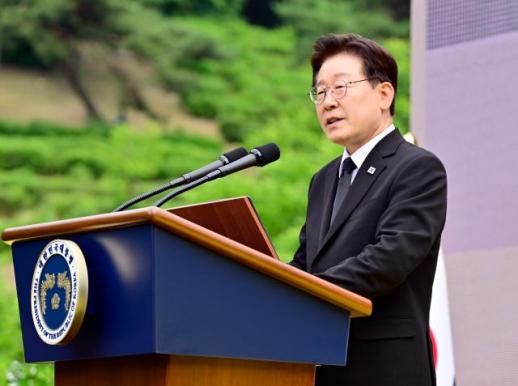
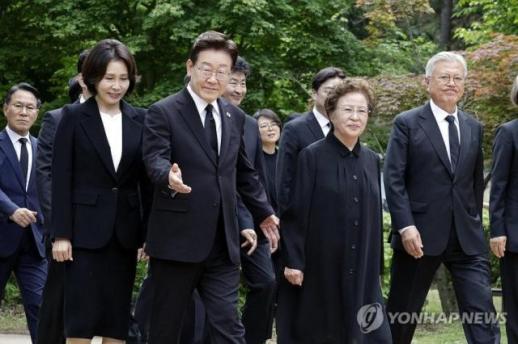 Crisis in the Capital Region: The Legacy of Roh Moo-hyun and Regional Development As the 2026 local elections approach, members of the ruling party gathered in Bongha Village, Gimhae, where former President Roh Moo-hyun is commemorated. On May 23, President Lee Jae-myung attended the 17th anniversary memorial service for Roh, stating, "I will carry on the legacy of President Roh Moo-hyun." He emphasized values such as fairness, balance, inclusivity, respect for humanity, popular sovereignty, and reform. The leadership of the Democratic Party and other figures from the ruling coalition also attended the service, which is interpreted as a politically significant gathering aimed at rallying support ahead of the official campaign period. The name Roh Moo-hyun continues to hold special significance in South Korean politics. He stood against regionalism, sought to change an authoritarian political culture, and left behind the ideal of a "world where people live together." His philosophy of reducing presidential power and emphasizing citizen participation is still regarded as a vital asset for South Korean democracy. Bongha Village has become a symbolic site for progressive politics, transcending its role as a mere memorial space. However, what matters in politics is not merely the declaration of succession but the actual substance behind it. For the slogan of "carrying on the Roh Moo-hyun spirit" to resonate with the public, current political practices and governance must align with that spirit. The core legacy left by Roh was not the victory of a particular faction but the commitment to political reform aimed at returning power to the people. He confronted regionalism, authoritarianism, and entrenched political interests, believing that the legitimacy of power comes from communication with the public. Thus, the essence of the Roh Moo-hyun spirit can ultimately be described as popular sovereignty and common-sense politics. The pressing question is whether South Korean politics is moving in that direction today. In this local election, there are significant criticisms that emotional politics and factional battles are overshadowing policy competition. The proliferation of AI-generated fake news, conspiracy theories, and politically charged content on platforms like YouTube is muddying the electoral waters. Even though it is a local election, the dynamics of central politics are being highlighted over issues like local economies, industrial strategies, youth employment, and housing. The Democratic Party speaks of punishing the ruling party, while the People Power Party advocates for checks on the government. However, issues that citizens feel, such as transportation, housing, welfare, and safety, are being sidelined. Roh Moo-hyun emphasized citizen participation and responsible politics during his lifetime. Yet, the public now feels fatigued by politics. Conflicts are escalating, factions are becoming more extreme, and political discourse is increasingly harsh. If politics continues to foster division and hatred while invoking the Roh Moo-hyun spirit, it cannot be considered a true succession. There are also many economic aspects that need reflection. Roh proposed balanced development as a national strategy, believing that the concentration of power in the capital region could weaken national competitiveness and lead to regional extinction. Policies like Sejong City and innovation cities originated from this awareness. Currently, South Korea is experiencing a renewed intensification of concentration in the capital region. Young people from rural areas are moving to Seoul and the surrounding regions in search of jobs, leaving local universities and small cities struggling for survival. This local election should ultimately focus on who can revitalize the local economy. In an era where competition in advanced industries such as semiconductors, AI, biotechnology, and batteries will determine the nation's future, the role of local governments is becoming increasingly important. The key challenge should be how to create a regional industrial ecosystem, rather than merely engaging in infrastructure projects or populist promises. For the Roh Moo-hyun spirit to be genuinely succeeded, answers must be found at this juncture. Balanced regional development must be placed back at the center of national strategy, and local governments should evolve from mere administrative bodies into platforms for industry and innovation. This is the path that will economically support the vision of a "world where people live together." The issue of reforming power institutions is similarly critical. In his memorial speech, President Lee expressed his intention to push for reforms without being swayed by the backlash from vested interests. However, reforms should not serve as political tools for the benefit of a specific faction but should aim to enhance public trust. Whether it is prosecutorial reform or media reform, the core should be the balance and transparency of power, avoiding any further concentration of power. Another lesson from Roh is the restraint of power. He understood the dangers of presidential authority and emphasized decentralization and citizen participation. If the political sphere truly wishes to invoke the Roh Moo-hyun spirit, it must first reduce the demonization of opponents. Reforms should not be forced through power but should be completed through public empathy and trust. This memorial service in Bongha is not merely a commemorative event. It also serves as a politically symbolic space ahead of the local elections. However, the name Roh Moo-hyun should not be consumed solely as an emotional code for election mobilization. The Roh Moo-hyun spirit should not be the monopoly of a particular faction but rather an asset for all of South Korean democracy. The public is asking: Is the "Roh Moo-hyun spirit" that the political sphere speaks of truly improving the lives of the people? When politics returns to common sense, unity, practicality, and balance, the memorial in Bongha can hold true meaning. The genuine succession of the Roh Moo-hyun spirit must be proven through changes that the public can feel.* This article has been translated by AI. 2026-05-24 02:29:03
 -
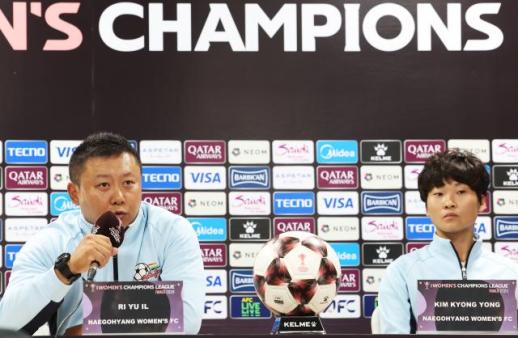 North Korean Coach Ri Yu-il Walks Out of Press Conference Over 'North Side' Reference Ri Yu-il, the coach of North Korea's My Hometown Women's Football Team, walked out of a press conference after expressing dissatisfaction with the term "North Side" during discussions about his team's victory. According to Yonhap News on May 23, My Hometown secured the championship title by defeating Japan's Tokyo Verdy Beleza 1-0 in the final of the 2025-2026 AFC Women's Champions League held at Suwon Sports Complex. During the press conference following the match, Coach Ri expressed his gratitude, stating, "My Hometown has only been established for 14 years, and now we are the best in Asia," while thanking Kim Jong-un, the Chairman of North Korea's State Affairs Commission, and the ruling party. He added, "I am incredibly proud of the players who have followed my guidance through difficult times to achieve this moment. I also want to thank the families and supporters who have wholeheartedly supported us to win." My Hometown arrived in South Korea on May 17 for the tournament, marking the first time a North Korean women's football club has visited since the 2014 Incheon Asian Games. When asked about his experience in South Korea, Ri said, "We were able to play here due to the Asian Football Confederation's arrangements. We focused solely on football, winning, and our development, without any distractions." With this victory, My Hometown also earned the right to represent Asia in the FIFA Women's Club World Cup. Ri emphasized, "My Hometown is a team with a very short history, and today we are experiencing a historic moment as we advance to the world stage as the best team in Asia. The emotions and excitement are beyond words." He continued, "As a coach, the awards ceremony is over, and now we have new challenges ahead. I will do my best to achieve good results on the big stage that lies ahead." However, the atmosphere shifted unexpectedly during the press conference when a South Korean reporter remarked, "The women's football on the 'North Side' has been of a high standard historically." Ri expressed discomfort with the term "North Side" to his interpreter, who then requested, "Please use the correct name for the country." Ri subsequently stated, "I will not take questions from that person," and left the press conference. Previously, during a press conference after a victory against South Korea in the quarterfinals of the 2022 Hangzhou Asian Games, Ri had also objected when a South Korean reporter referred to North Korea as the "North Side," insisting, "It is not the North Side; it is the Democratic People's Republic of Korea."* This article has been translated by AI. 2026-05-24 02:27:00
 -
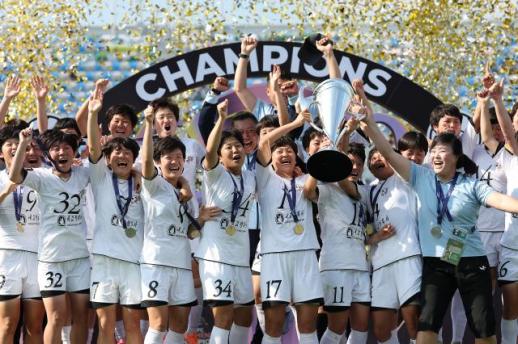 North Korean Women's Soccer Team Wins AFC Champions League Title The Nae Go Hyang Women's Football Team from North Korea has claimed the title of the AFC Women's Champions League by defeating Japan's Tokyo Verdy Beleza 1-0. According to Yonhap News, the decisive match took place on May 23 at the Suwon Sports Complex, where team captain Kim Kyung-young scored the winning goal in the 44th minute. With this victory, Nae Go Hyang becomes the first North Korean team to win this tournament, including its predecessor, the AFC Women's Club Championship. The team also secured a prize of $1 million (approximately 15 billion won). The AFC Women's Champions League is the premier tournament for women's club football in Asia and was officially launched last season. Nae Go Hyang advanced to the final after a comeback victory against Suwon FC Women in the semifinals on May 20, where Kim Kyung-young also scored the decisive goal in a 2-1 win. This marks the first time in 12 years that a North Korean football player has visited South Korea since the 2014 Incheon Asian Games. It is also the first time a North Korean women's club team has competed in South Korea. In their group stage opener last November in Myanmar, Nae Go Hyang suffered a heavy 4-0 defeat to Tokyo Verdy. However, they redeemed themselves in the final, lifting the championship trophy. Kim Kyung-young, who scored the winning goals in both the semifinals and the final, was named the tournament's Most Valuable Player (MVP). During the match, Nae Go Hyang initially struggled against Tokyo Verdy's aggressive pressing but quickly regained composure, maintaining a competitive flow. In the 16th minute, Tokyo Verdy's forward Shio Koshiyu's right-footed shot was saved by goalkeeper Park Joo-kyung, and the defense cleared the danger. Although Nae Go Hyang had only 43% possession in the first half, they capitalized on their opportunities. In the 44th minute, Jeong Geum-yi won a challenge against the opposing defense and set up Kim Kyung-young, who scored with a right-footed shot from near the penalty spot into the bottom right corner. This was Nae Go Hyang's first shot on target of the match. In the second half, Nae Go Hyang focused on solid defense while executing counterattacks. In the 49th minute, Kim Kyung-young headed a cross from Jeong Geum-yi, but it was saved by the goalkeeper. In the 70th minute, Ri Myong-kum's header also failed to result in a goal. Tokyo Verdy attempted to respond with substitutions but could not break through Nae Go Hyang's defense. Frequent mistakes hindered their attacking rhythm, ultimately leading to their defeat at the Asian summit. Meanwhile, it has been 12 years since a North Korean football player visited South Korea, and this is the first time a North Korean women's club team has come to the country.* This article has been translated by AI. 2026-05-24 02:24:25