
Journalist

Avidan Kent
-
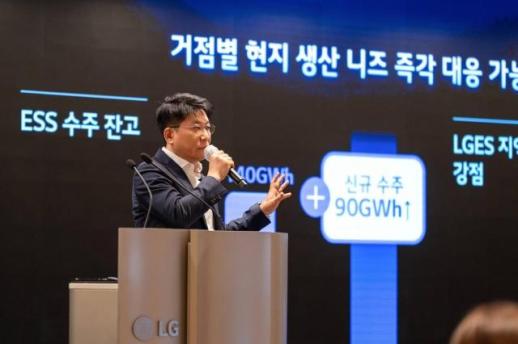 LG Energy Solution Targets ESS to Reach 35% of Revenue, Plans New LFP Product in 2028 LG Energy Solution said demand for cylindrical batteries used in energy storage systems helped lift first-quarter revenue despite weak electric vehicle demand. The company posted 6.555 trillion won ($?) in revenue for the quarter and said it aims to raise the share of ESS sales to 35% by year’s end, up from less than 10% last year and about 25% in the first half of this year. In a conference call on its 2026 first-quarter results on Wednesday, the company said it will use improved cost competitiveness to respond to customer demand for ESS and strengthen its mid- to long-term position. LG Energy Solution said it is preparing a new lithium iron phosphate, or LFP, product to be unveiled in 2028, with 10% higher energy density and 15% better price competitiveness than its existing LFP batteries. Chief Financial Officer Lee Chang-sil said the company had secured an ESS order backlog in North America of about 440 gigawatts as of late April. He said LG Energy Solution plans to secure more than 50 gigawatts of battery production capacity for ESS in North America by the end of this year. The company also expects benefits from the OBB (One Big Beautiful) law pursued by the Trump administration. It said maintaining a 50% to 55% share of U.S.-made batteries in ESS could allow tax credits of up to 40% of investment through 2030. Looking beyond the first quarter, Lee said North American ESS demand remains solid and demand in Europe for high-nickel batteries used in EVs and hybrid vehicles is holding up. He forecast second-quarter performance to grow about 10% from the first quarter and said revenue in the second half could rise 15% to 20% from the start of the year, supported by ESS demand. The company said it ultimately aims to return to profitability even excluding North American production subsidies under the Inflation Reduction Act, or IRA. Kim Min-su, who oversees ESS planning and management at LG Energy Solution, said ESS revenue growth became visible starting in the first quarter as U.S. battery production capacity expanded. He said the company has converted multiple EV production lines to ESS and will focus on stabilizing utilization and cutting costs to improve profitability. To meet North American ESS growth, LG Energy Solution said it will sequentially start ESS production lines not only at its Michigan and Ontario plants but also at its Lansing facility and at joint ventures with Honda and General Motors. The company said the plan would secure an additional 50 gigawatts of production capacity in North America. Kim said the North American ESS market, based on the power grid, is expected to grow about 30% annually through 2030. He added that forecasts of battery oversupply are premature given restrictions on Chinese companies entering the market and concerns about local supply shortages tied to the buildout of AI data centers. The company said sales of its cylindrical batteries, a core product, are expected to remain steady in the second through fourth quarters, supported by rising electric two-wheeler sales in China and India. It said it is also reviewing expanded cylindrical production at its plant in Poland to meet local demand. LG Energy Solution said its flagship 46-series products began shipping to customers from its Ochang plant late last year, and its Arizona plant could begin supplying products as early as this year. It said it has also won orders for volumes to be installed in premium products from European automakers including BMW, as it diversifies its portfolio. The company said it is also preparing next-generation prismatic and sodium batteries. It plans mass production of prismatic batteries for ESS in North America in late 2027. For EV prismatic batteries, it said it is preparing a joint response with customers through a pilot production line at the Ochang plant. LG Energy Solution said sodium batteries, which it described as having better performance than LFP, are expected to see demand mainly for ESS and as replacements for 12- and 24-volt lead-acid batteries. The company said it is working with multiple customers to test 12- and 24-volt sodium battery samples and plans to address the market. LG Energy Solution reported first-quarter 2026 revenue of 6.5550 trillion won and an operating loss of 207.8 billion won. North American production subsidies reflected in the quarter totaled 189.8 billion won. 2026-04-30 11:34:27
 -
 Samsung: No Supply Chain Disruptions Since Middle East War, Freight Cost Risks Rising Samsung Electronics said Thursday that its semiconductor production lines are operating normally and that it has seen no supply chain disruptions since the outbreak of the war in the Middle East. Speaking on a conference call for its 2026 first-quarter earnings release, the company addressed concerns about possible disruptions in supplies of semiconductor raw materials as the conflict drags on. Samsung said it imports process gases from parts of Israel and the Middle East, but has secured safety stock and is responding based on local logistics conditions. It added that risks remain low because it has alternative logistics routes and a diversified supplier base, including partners in the United States and Japan. On power supply, Samsung said it is closely monitoring utility cost trends tied to rising international oil prices and plans to maintain a stable power supply system through close cooperation with the government. The company cautioned, however, that higher oil prices linked to the war are pushing up global sea and air logistics costs, expanding the risk of freight rate increases. To limit the impact, Samsung said it is closely monitoring global inventory levels and optimizing supply chain operations to reduce the cost burden from international transport. It said it is also preparing multiple scenarios in case the war is prolonged, and plans to strengthen its ability to manage volatility while maintaining cost competitiveness and supply capacity through measures such as long-term contracts with logistics firms and fuel-linked freight rates. 2026-04-30 11:33:26
 -
 Actor Park Dong-bin, Known for ‘Juice Waterfall’ Meme, Dies at 56 Actor Park Dong-bin, widely known online for the so-called “juice waterfall” meme, died on the 29th, according to reports. He was 56. Park’s legal name was Park Jong-mun. MK Sports, in an exclusive report, said Park died on the 29th. He was known for strong, grounded performances across film and television. Park first became known to the public through the 1998 film “Shiri.” He later appeared in major Korean films including “Bichunmoo,” “Volcano High,” “Taegukgi: The Brotherhood of War” and “The Three Beauties of Joseon,” building a distinct presence. He worked in both historical and contemporary dramas and was recognized for steady, weighty acting. He married fellow actor Lee Sang-yi in 2020. The couple had one daughter, and Park had spoken in broadcasts and interviews about his affection for his family. Messages of condolence have continued for the bereaved. A wake was reported to be set up at Domin Funeral Hall in Anseong, Gyeonggi Province, VIP Room 5 (4th floor). The funeral procession is scheduled for 8:30 a.m. on May 1, with burial to follow at Wooseong Park Cemetery after a stop at Pyeongonui Sup in Yongin.* This article has been translated by AI. 2026-04-30 11:30:59
 -
 Exhibition Industry Group Urges Lawmaker to Rework COEX Hall Closure Plan The Joint Committee for Promoting Normalization of the Exhibition Industry, led by Chair Kang Ju-yong, met April 29 with Rep. Kim Won-i, the Democratic Party’s floor spokesperson on the National Assembly’s Trade, Industry, Energy, SMEs and Startups Committee, to urge changes to plans to close major COEX exhibition halls for remodeling and to ask for parliamentary mediation. Kang said that if the Korea International Trade Association’s plan leads to a shutdown from July 2027 for about 18 months, export-oriented small and midsize companies could see export losses of about 4.3 trillion won. He said the plan should be reviewed for consistency with policies to foster the MICE industry. Kang also said the association and COEX notified the industry in a blanket announcement in January without sufficient prior consultation, leaving limited time to prepare and increasing the burden on related businesses. The committee has proposed adjusting the construction schedule until the expected completion of KINTEX’s third exhibition hall in late 2028 and securing alternative venues such as Olympic Park. The trade association has not yet presented a detailed position, it said. Kang warned that a prolonged suspension at COEX could push major international exhibitions to Singapore, Shanghai, Tokyo and Dubai, and that winning them back could take considerable time. He said a closure plan without parallel alternatives should be reconsidered. Kim said he shared concerns about the industrial impact of a COEX shutdown and would continue discussions on alternatives so the government can adequately reflect views from the field. He added the issue is also being discussed within the National Assembly and could be reviewed at the party level. Earlier, the committee urged lawmakers to play a coordinating role, arguing the Ministry of Trade, Industry and Energy’s response has been insufficient. It called for an alternative plan by May, withdrawal of the 2027 exhibition space allocation announcement, and measures to keep exhibitions operating during construction through consultations with the government and the Seoul city government. The committee said it will continue its response while monitoring steps by the ministry and the trade association.* This article has been translated by AI. 2026-04-30 11:29:29
 -
 Samsung Electronics Says More 2nm Foundry Customers Coming Into View Samsung Electronics said Thursday on its conference call for first-quarter 2026 earnings that its foundry business is in active talks with multiple large artificial intelligence and high-performance computing customers on 2-nanometer cooperation, and that visible results with some customers are expected in the near term. The company also said HBM4 base dies built on its 4-nanometer process are being recognized for strong performance, helping drive demand for 4-nanometer production. It added that it is actively reviewing ways to expand supply to meet that demand. Samsung said it is also discussing adoption of 2- and 4-nanometer processes with multiple auto robotics customers in the Americas and Greater China. It said it is holding parallel commercialization talks with several major global customers related to silicon photonics, and plans to begin mass production of project assignments with a major optical communications module company starting in the second half of 2026.* This article has been translated by AI. 2026-04-30 11:28:44
 -
 Court Extends Suspension of Detention for Unification Church Leader Han Hak-ja Citing Health A court has extended by one month the suspension of detention for Unification Church leader Han Hak-ja, who was temporarily released citing worsening health. According to the legal community on the 30th, the Seoul Central District Court’s Criminal Division 27, chaired by Presiding Judge Woo In-sung, decided the previous day to extend Han’s suspension of detention. A suspension of detention allows a defendant to be temporarily released when the court finds an urgent reason such as serious illness, childbirth or attending a family funeral. The decision takes effect immediately and, unlike bail, does not require posting a bond. Han’s suspension had been set to expire at 2 p.m. today. Her lawyers filed a request on the 28th, citing a deterioration in her health and the need for hospital treatment. The court granted the request, extending the suspension until 2 p.m. on May 30. The court also restricted her residence during that period to a hospital. This is not the first time the court has granted Han a suspension of detention. Her side sought it three times — in November last year and in February and March this year — and the court approved each request, citing her advanced age and health issues. The decisions have drawn criticism from some civic groups. Han was jailed at the Seoul Detention Center in September last year but met with her lawyers 441 times as of March 31, sparking controversy. It was also reported that other detainees and attorneys faced inconvenience in arranging visits, though the Justice Ministry’s corrections headquarters said it was not preferential treatment. Some have also questioned whether Han’s recent stay in a hospital, rather than a detention facility, reflects sensitivity to the earlier controversy. Han, along with Yoon Young-ho, former head of the Unification Church’s World Headquarters, and others, was indicted and detained in October last year on allegations including that they learned gambling-related police investigation information from People Power Party lawmaker Kwon Seong-dong in October 2022 and destroyed related evidence.* This article has been translated by AI. 2026-04-30 11:27:51
 -
 KOSPI tests 6,700 milestone amid heavy tug-of-war SEOUL, April 30 (AJP) - South Korea's main index is set to end weekly session at fresh historic high, breaking above the 6,700 mark for the first time as foreign buying fended off local profit-taking. The KOSPI rose 0.4 percent to 6,713.16 as of 11:20 a.m. Thursday, testing above 6,700 mark for the first time. Foreign investors bought 332.7 billion won($224 million), while institutions and retail investors sold 214.9 billion won and 90.4 billion won, respectively. The markets are closed Friday for Labor Day. Samsung Electronics edged down 0.1 percent to 225,750 won, failing to sustain earlier gains despite reporting record first-quarter earnings. The company posted operating profit of 57.23 trillion won, up 756.1 percent from a year earlier with the bulk, 53.7 trillion driven won from chip sales. Revenue jumped rising 69.2 percent to 133.87 trillion won and net profit surged 474.3 percent to 47.22 trillion won. SK hynix rose 0.8 percent to 1,303,000 won, tracking gains in global semiconductor stocks amid sustained demand for AI-driven memory products. LG Electronics jumped 5.8 percent to 143,700 won after reporting first-quarter operating profit of 1.67 trillion won, up 32.9 percent from a year earlier, with revenue rising 4.3 percent to a record 23.73 trillion won, driven by solid performance in home appliances and vehicle components. However, gains were capped as cyclicals and heavy industry shares declined. Hyundai Motor fell 2.9 percent to 540,000 won, while LG Energy Solution dropped 1.6 percent to 465,500 won. Doosan Enerbility slipped 0.8 percent to 128,200 won. Defense and shipbuilding stocks also edged lower, with Hanwha Aerospace down 0.6 percent and HD Hyundai Heavy Industries losing 0.4 percent. Investor sentiment remained cautious amid rising global uncertainties. Brent crude hovered above $110 per barrel on Middle East tensions, raising inflation concerns, while the Federal Reserve maintained a cautious stance on interest rates after holding the target range for the third straight session. The Volatility Index (VIX) rose 5.5 percent to 18.8, signaling a pickup in market uncertainty. Overnight, U.S. stocks closed mixed as investors weighed concerns over OpenAI’s growth outlook against strong earnings momentum from major technology firms. The Dow Jones Industrial Average fell 0.6 percent, while the S&P 500 slipped 0.04 percent and the Nasdaq Composite edged up 0.04 percent. Subsequent earnings reinforced the AI investment narrative. Microsoft reported an 18 percent increase in quarterly revenue to $82.89 billion, with cloud revenue rising 29 percent. Alphabet posted a 22 percent rise in revenue to $109.9 billion, while its cloud division surged 63 percent. Amazon reported a 16.6 percent increase in revenue to $181.5 billion, all exceeding expectations. Supporting sentiment, the Philadelphia Semiconductor Index rose 2.4 percent, indicating that global chip demand remains resilient despite recent volatility in AI-related stocks. The junior KOSDAQ underperformed, falling 1.0 percent to 1,208.1, as foreign and institutional investors sold a combined 249.7 billion won, offsetting buying of 292.3 billion won by retail investors. Among major KOSDAQ stocks, Ecopro fell 2.3 percent to 156,300 won, Alteogen declined 1.5 percent to 374,500 won, and Samchundang Pharm dropped 4.4 percent to 423,500 won. In contrast, Rainbow Robotics rose 1.8 percent to 676,000 won on continued interest in AI-related automation. Regionally, Hong Kong’s Hang Seng Index fell 0.6 percent, while China’s Shanghai Composite rose 0.1 percent. Japan’s Nikkei 225 dropped 1.2 percent as investors locked in gains following recent rallies. The Korean won weakened to 1,485.8 per U.S. dollar amid spike in oil prices. 2026-04-30 11:26:47
 -
 EasyAI Pitches AI Video Safety System to Help Workers Get Home Safely EasyAI said it is proposing an AI-based safety management solution aimed at helping industrial workers return home safely, timed to May’s Family Month and Children’s Day. According to the Ministry of Employment and Labor’s provisional results released last month on the “2025 status of fatal accidents subject to disaster investigation,” the number of workplace accident deaths covered by the investigation totaled 605 in 2025, up 16 from 589 a year earlier. By sector, construction accounted for 286 deaths, manufacturing 158 and other industries 161. Workplaces with fewer than 50 employees recorded 351 deaths, more than half of the total, underscoring the need to strengthen safety management at smaller sites. The company noted that industrial accidents among men in their 40s and 50s remain high each year, leaving many fathers — often the main breadwinners — among those most exposed to on-site risks. EasyAI said its AI video analysis-based smart safety management system is designed for industrial sites and supports efforts to prevent serious accidents. It said the system can detect failures to wear safety helmets, safety belts and lanyards; identify emergencies such as unauthorized entry, collapses and fires; flag work hazards including collisions, poor housekeeping and pinch points; and provide a KakaoTalk-based hazard notification service. The solution analyzes site conditions in real time and issues on-site alarms and alerts to managers when it detects safety rule violations or accident risks. The company said it aims to raise workers’ safety awareness and help safety managers respond quickly to dangerous situations. An EasyAI official said, “With Children’s Day and Family Month, protecting the dad in children’s drawings so he can always be there is why our AI safety solution exists,” adding, “We will continue expanding a safety management environment that even small and midsize workplaces can adopt without undue burden, so every father working on site can return safely to his family every evening.”* This article has been translated by AI. 2026-04-30 11:25:41
 -
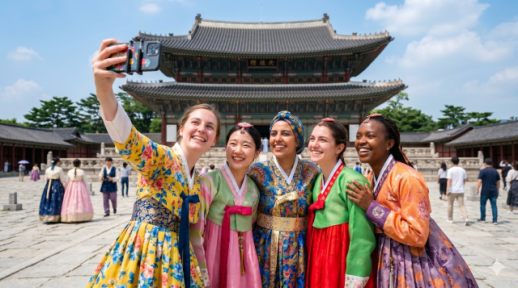 S. Korea sees record inbound tourism driven by resurgent Chinese and Japanese markets SEOUL, April 30 (AJP) - South Korea welcomed a record-breaking number of inbound visitors this month, with the majority of travelers arriving from China and Japan, alongside significant contributions from Taiwan and the United States, data released by the state tourism agency showed Thursday. This surge marks a pivotal moment for the nation's tourism sector, signaling a transition from post-pandemic recovery into a period of historic expansion. According to the latest report from the Korea Tourism Organization, total international arrivals for March reached their highest point in the current cycle, comfortably eclipsing benchmarks established in 2019. Total inbound traffic for the month climbed to 2,045,992 visitors, representing a 26.7 percent increase compared to the same period last year. More significantly, this volume represents 133.2 percent of the arrivals recorded in March 2019, suggesting that the industry has established a new, higher baseline for growth. Cumulative figures for the first quarter of 2026 now stand at 4,743,122 visitors, reflecting a broad and sustained upward trend. Mainland China and Japan continue to serve as the primary anchors of this growth. Chinese visitors totaled 501,060 (24.5 percent), while Japanese arrivals followed closely at 481,789 (23.5 percent). Both markets have now fully surpassed their pre-pandemic levels, with China reaching 102.8 percent and Japan reaching 128.4 percent of their respective 2019 volumes. While these regional mainstays provide the bulk of the volume, the current momentum is increasingly reinforced by a successful diversification of source markets. Beyond these traditional hubs, the data highlights a significant structural shift toward broader global appeal. Taiwan and the U.S. have emerged as standout performers. Taiwanese arrivals reached 192,138, a figure that nearly doubles its 2019 performance at 195.0 percent, while the American market contributed 152,416 travelers, standing at 180.9 percent of its pre-pandemic baseline. Southeast Asian demand remains equally robust, led by Viet Nam at 159.3 percent of its 2019 levels and the Philippines at 153,393 cumulative visitors for the quarter. Overall, the broader categories of the Americas and Europe saw their numbers swell to 169.2 percent of historical benchmarks, indicating a surge in long-haul interest. On the outbound side, the appetite for international travel among South Korean citizens has almost fully returned to its previous level. March saw 2,293,716 citizens travel abroad, representing 98.3 percent of the volume seen in March 2019. This stabilization of outbound patterns, coupled with the record-setting inbound performance, underscores the definitive normalization and subsequent expansion of South Korea's standing in the global travel market. 2026-04-30 11:20:39
 -
 Activist Fund Managers Reaped Big Dividends; KCGI Paid Out 100% of Profit, Align 63% Domestic asset managers known for activist investing posted large cash gains from dividends last year, helped by rising share prices at companies they targeted. Align Partners, one of the most aggressive activist firms, paid out more than 15 billion won in cash dividends. According to the financial investment industry on April 30, Align Partners paid 15.1 billion won in cash dividends out of about 23.9 billion won in net profit last year, a payout ratio of 63%. The dividends effectively went to a single owner. Align Partners’ largest shareholder is Align Holdings, which owns 100% of the firm, and Align Holdings is wholly owned by CEO Lee Chang-hwan. Under that ownership chain, the full 15.1 billion won dividend is effectively attributable to Lee. The size and structure of Lee’s dividend stands out even among other activist-oriented managers. KCGI Asset Management, known in the past as the “Kang Seong-bu fund,” paid out all of its 6 billion won in net profit last year as cash dividends, a 100% payout ratio. KCGI holds 60% of KCGI Asset Management and HS Hwasung holds 40%, meaning about 3.6 billion won went to KCGI and about 2.4 billion won to HS Hwasung. KCGI’s largest shareholder is CEO Kang Seong-bu and related parties, who hold about 64%. Based on that, the owner side, including related parties, is estimated to have received about 2.3 billion won in dividends. Another activist fund manager, Truston Asset Management, paid about 4.1 billion won in cash dividends through its year-end payout out of about 17.9 billion won in net profit. CEO Hwang Seong-taek is the largest shareholder with 50.3%, with 29.2% held as treasury shares and about 20.5% held by other minority shareholders. Based on his stake, Hwang’s dividend income is a little over 2 billion won. Industry officials said Align Partners’ ownership structure as a de facto one-person company helps explain the gap in dividend outcomes. They also said Align Partners’ investment gains likely increased sharply, as the share prices of companies in which it built stakes while pursuing activist campaigns rose noticeably. Some in the industry have raised questions about Align Partners’ dividend structure. One industry official said, “Align Partners is unlisted and effectively a private company, so it’s hard to call it a problem that one controlling shareholder takes a high dividend,” but added, “It is worth thinking about the fact that results created by demanding higher dividends and greater shareholder value from companies ultimately concentrate in the hands of the asset manager’s controlling shareholder.” 2026-04-30 11:19:58