
Journalist

Avidan Kent
-
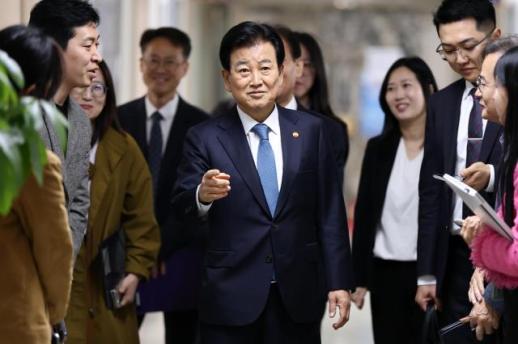 Security Debate Erupts Over Minister Jeong Dong-young's Mention of North Korean Uranium Enrichment Facility The mention of a uranium enrichment facility in North Korea's Guseong by Minister of Unification Jeong Dong-young has plunged South Korean politics back into a security debate. Opposition parties have accused the government of leaking classified information and called for Jeong's dismissal, while the ruling party has countered that the information was already public and that the criticism is politically motivated. However, as is often the case with national security issues, facts take precedence over emotions, and national interests outweigh party politics. A closer examination of the matter reveals a more complex middle ground rather than a simple black-and-white scenario. First, it is essential to confirm whether the name "Guseong" was first disclosed to the world by Minister Jeong. The answer is no. The area around Guseong, located in North Pyongan Province, along with the nearby Banghyeon Aircraft Factory and Banghyeon base, has long been discussed as a suspected site for uranium enrichment by international security research institutions and U.S. think tanks. In 2016, the Institute for Science and International Security (ISIS) suggested that the Banghyeon Aircraft Factory area could potentially house an early small-scale centrifuge research and development facility, estimating it could accommodate around 200 to 300 centrifuges. Subsequently, international media, including Reuters, treated this region as a potential hub for North Korea's nuclear development. In 2024, Bruce Bennett, a researcher at the RAND Corporation, mentioned in an interview with Radio Free Asia the possibility of a large underground facility in the Guseong Yongdeok-dong area being linked to uranium enrichment. In 2025 and 2026, researchers from the Center for Strategic and International Studies (CSIS) continued to raise concerns about the expansion of North Korea's undisclosed nuclear facilities through satellite imagery analysis. In other words, the name Guseong itself cannot be definitively classified as entirely new secret information. In this regard, Minister Jeong's claims do have some factual basis. His assertion that "this name has been mentioned in U.S. research institutions, congressional reports, and media for over a decade, so why has it suddenly become classified?" is not entirely incorrect. In fact, President Lee Jae-myung also defended the issue, stating that it was already known through various research reports and media. However, what is crucial here is not just the existence of the information but who said it, from what position, and in what context. An analysis by a private research institution based on satellite images, defector testimonies, and public data categorizing a site as "suspected" carries a different weight than a sitting Minister of Unification mentioning a specific location in a public forum or the National Assembly. Just because information is publicly available does not automatically make every statement safe. Conversely, it is excessive to immediately label any public trace as "leaking U.S. secrets." In fact, military intelligence authorities have made a different assessment. The Defense Intelligence Agency has stated that the specific location of North Korea's uranium enrichment facilities is classified as a joint secret between South Korea and the U.S. This indicates that publicly available information and actual allied-level information classification can differ significantly. Even if the same name is mentioned, the official confirmation from the government is an entirely different matter. Therefore, Minister Jeong's remarks cannot be conclusively labeled as "an unprecedented leak of classified information," but they also cannot be dismissed as "completely harmless public statements." Ultimately, the essence of this controversy lies more in the pathological structure of South Korean politics than in the information itself. We have become too accustomed to consuming security issues as weapons of party politics rather than from the perspective of national interest. Conservatives easily label the progressive government's approach to North Korea as a security risk, while progressives quickly dismiss conservative criticisms as Cold War tactics. In the process, the truly important questions vanish: How advanced is North Korea's nuclear capability? How will South Korea-U.S. intelligence cooperation be maintained? What should be the strategy for simultaneously deterring North Korea's nuclear threat and engaging in dialogue? The essence is lost, leaving only slogans. Minister Jeong's metaphor that "the moon is the urgency of the North Korean nuclear issue, and the finger is the controversy over the name" holds some persuasive power in this context. North Korea's uranium enrichment capability is not just a matter of Yongbyon. The capacity for nuclear material production is steadily advancing across multiple sites, including Gangseon, Yongbyon, Banghyeon, and suspected facilities in Guseong. The International Atomic Energy Agency (IAEA) has consistently expressed concerns about undeclared enrichment facilities in Yongbyon and Gangseon, while U.S. satellite intelligence agencies continue to track the expansion of new suspected facilities. The real threat lies not in whether a name was mentioned but in the fact that North Korea's nuclear capabilities are growing into a reality. This conflict is not unique to South Korea. The boundary between public and classified information has always been at the center of political clashes in major countries worldwide. A prominent example is the 2003 U.S. controversy over weapons of mass destruction (WMD) in Iraq. The U.S. claimed that Saddam Hussein possessed WMDs and went to war based on satellite images, intelligence reports, and testimonies from defectors. However, no actual WMDs were found after the war. Information became a weapon of politics, and the cost was the U.S.'s credibility and chaos in the Middle East. The government of Tony Blair in the U.K. justified its involvement in Iraq with a document claiming that Iraq could use WMDs within 45 minutes, but much of this was later revealed to be exaggerated or inaccurate. The politicization of information may benefit a regime in the short term, but it ultimately undermines the nation's trust capital in the long run. Israel has also seen clashes between the Prime Minister and opposition whenever assessments from Mossad and military intelligence regarding the potential strike on Iranian nuclear facilities leak to the media. During Netanyahu's tenure, the Iranian nuclear threat was both a security issue and an electoral strategy. However, Israeli security experts have consistently warned that national security is not a party asset but an asset for the entire nation. Japan thoroughly separates publicly available information from classified information at the alliance level regarding North Korean missile and nuclear facility issues. Germany has strengthened parliamentary oversight and multi-layered verification to prevent the misuse of intelligence assessments as political propaganda since the Cold War. All these examples lead to the same conclusion: trust comes from restraint, not speed. South Korea must learn this lesson. First, there must be a strengthened pre-release information review process for public statements made by high-ranking officials at the ministerial level and above. Even if the information is public, if it intersects with South Korea-U.S. joint secrets, coordination with the Ministry of National Defense, the Ministry of Foreign Affairs, and intelligence authorities is necessary. Second, the National Assembly should also undergo a minimum verification process to distinguish between public and classified information when raising security issues. Third, when problems arise, the government should not simply rebut claims as "political tactics" but calmly explain to the public what constitutes public information and what falls into unverifiable areas. Fourth, the media should prioritize presenting the layers of facts over partisan framing. Most importantly, security should be addressed in a language of responsibility rather than excitement. The Book of Proverbs states, "The wise man listens and adds to his learning, and the discerning man acquires wise counsel." National security must also begin with listening. Listening to the facts, to the signals from allies, and to the concerns of others. Politics that shouts without listening ultimately tires the nation. Minister Jeong's remarks about Guseong have become a test of the level of South Korean politics, transcending whether a minister made a gaffe. Will we consume this as yet another partisan battle, or will we use it as an opportunity to establish mature standards for national security? The real danger is not only North Korea's nuclear facilities but also internal divisions and reckless language that could pose a greater threat. National interests are not protected by shouting. They are safeguarded through restraint, trust, and dignity. Security is greater than political tactics, and truth lasts longer than anger. That is the ultimate strength that protects a nation. 2026-04-24 08:42:23
 -
 BLACKPINK’s Jisoo’s Sister Kim Ji-yoon to Make TV Debut on tvN Survival Show BLACKPINK member Jisoo’s older sister will make her broadcast debut on a survival variety show set to air in May. The official social media account for tvN’s “Kill It: Style Creator War” recently announced that influencer Kim Ji-yoon, Jisoo’s sister, will appear on the program. A teaser video released with the post shows Kim, who has 550,000 followers and is known by the nickname “Gunpo Han Hyo-joo.” Kim’s casting comes as attention has focused on a separate controversy involving Jisoo’s older brother. He has faced allegations including illegal filming of sexual activity, an attempted sexual assault case involving a Gangnam-area BJ, and domestic violence. In the attempted sexual assault case, a court rejected a request for an arrest warrant, citing insufficient grounds to support the allegations. As the controversy grew, attorney Eun Hyun-ho of Kim & Chang, legal representative for Jisoo’s one-person agency Blissoo, said the matter “has absolutely nothing to do with the artist or Blissoo.” He said the artist received only limited advice from family members during preparations to establish the agency, adding that no family member has been paid by Blissoo or taken part in decision-making, and that the company “has since been run completely independently.” Some online commenters have questioned that statement, noting that the older brother’s name appears in the production credits for Netflix’s “Monthly Boyfriend,” in which Jisoo appeared. They also pointed to last year’s “Newtopia,” where his name was listed as “Jisoo manager,” keeping the dispute alive. 2026-04-24 08:39:20
 -
 Bitcoin Holds Near $78,000 as Oil Jumps on Renewed U.S.-Iran Tensions Bitcoin held above $78,000 as military tensions between the United States and Iran flared again and global oil prices extended a four-day surge. According to CoinMarketCap, bitcoin was trading at $78,266 as of 8 a.m. on the 24th, down 0.43% from a day earlier. Major altcoins also weakened. Solana fell 1.37% to $86.20, and ether slid 2.72% to $2,333.09. XRP edged up 0.03% to $1.43. Market participants said the standoff around the Strait of Hormuz capped gains. President Donald Trump wrote on Truth Social on the 23rd that he had ordered any vessel laying mines in the strait to be sunk without hesitation. Oil prices jumped 3.1% from the previous day, and the broader geopolitical risk weighed on sentiment, limiting bitcoin’s upside, the report said. Still, bitcoin stayed near the $78,000 level after Strategy, the publicly listed company that holds the most bitcoin, bought about $2.5 billion worth from the 12th to the 19th, local time. In South Korea, bitcoin was trading at about 116.30 million won ($78,395) on Bithumb at the same time, up 0.19% from a day earlier. The so-called kimchi premium, when domestic prices exceed overseas prices, stood at 0.304%. * This article has been translated by AI. 2026-04-24 08:33:20
 -
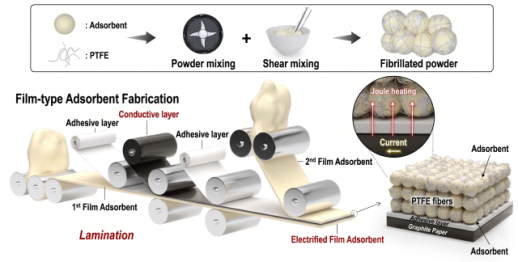 KAIST researchers develop high-efficiency carbon capture technology SEOUL, April 24 (AJP) - A research team at the Korea Advanced Institute of Science and Technology has developed a high-efficiency Direct Air Capture (DAC) technology inspired by electric vehicle battery manufacturing processes, placing them among the top four finalists in a global carbon removal competition. The development addresses the high costs and low efficiency currently hindering the commercialization of technologies that remove carbon dioxide directly from the atmosphere, the research institute said Friday. The research team, led by Professor Koh Dong-yeon of the Department of Chemical and Biomolecular Engineering, was selected as one of four finalists in the 2026 Carbon Removal Challenge. The competition is hosted by OpenAir, a global non-profit organization dedicated to advancing carbon removal solutions. Out of approximately 40 teams from 30 universities worldwide, KAIST was chosen alongside the University of Michigan, Rutgers University, and a joint team from Cornell, Princeton, and Columbia. To overcome the limitations of existing DAC methods, the researchers applied a dry fabrication process typically used for battery electrodes. This solvent-free method involves pressing powders into solid films, allowing carbon-absorbing materials to be packed more densely. The process increased the adsorbent content to 97 weight percent, significantly improving the volume of carbon dioxide captured compared to traditional methods that use liquid-based coatings. The team also improved the regeneration process, which involves releasing the captured carbon for storage or use. By implementing Joule heating—a method that generates heat instantly by passing electricity through a conductor—the system can reach required temperatures within one minute. Additionally, by integrating a water-cooling system inspired by electric vehicle thermal management, the team reduced cooling times by approximately 60 percent, increasing overall productivity. "This achievement recognizes both the innovativeness and the practical applicability of our carbon capture technology," Professor Koh Dong-yeon said. "We plan to actively pursue the commercialization and expansion of this technology through global cooperation in the future." The South Korean team has been invited to present their technology to experts and investors at the Carbon Unbound 2026 conference in New York on May 20, 2026. The research was led by doctoral student Park In-jun, with contributions from a team of students and researchers, including Park In-hwan, Lee Min-hyung, and Karoline L. Hebisch. 2026-04-24 08:29:23
 -
 Wall Street slips as U.S.-Iran talks stall and oil surges for fourth day U.S. stocks fell as additional talks between the United States and Iran remained stalled, reviving fears of wider military tension around the Strait of Hormuz. Oil prices jumped again, and the S&P 500 and Nasdaq Composite, which set record highs a day earlier, turned lower. On April 23 (local time), the Dow Jones Industrial Average closed down 180.70 points, or 0.37%, at 49,309.33. The S&P 500 fell 29.60 points, or 0.41%, to 7,108.30, and the Nasdaq dropped 219.06 points, or 0.89%, to 24,438.50. The S&P 500 and Nasdaq briefly hit fresh intraday records early in the session, then reversed as Iran-related tensions intensified. Profit-taking after the prior day’s highs combined with renewed geopolitical risk. The Strait of Hormuz was at the center of the market’s unease. The Associated Press reported that U.S. President Donald Trump ordered the U.S. military to sink small Iranian boats attempting to lay mines in the strait. The U.S. military also detained another tanker in the Indian Ocean tied to Iranian crude oil. Iran maintained it would not enter talks until the U.S. blockade is lifted. Military pressure also increased. AP reported that the arrival of the George H.W. Bush in the Indian Ocean brought the number of U.S. aircraft carriers deployed in waters near the Middle East to three. Reuters reported that Iran’s Revolutionary Guard on April 22 detained two container ships trying to leave the Strait of Hormuz and was also reported to have fired on those vessels and another ship during the incident. Oil prices extended their rally. Reuters reported U.S. benchmark West Texas Intermediate rose 3.11% to settle at $95.85 a barrel, while Brent gained 3.10% to $105.07. Reports that Iran’s air defenses were activated over Tehran added to anxiety in the oil market. As investors sought safety, the dollar and Treasury yields rose. The dollar index was up 0.19% at 98.80. The 10-year U.S. Treasury yield rose 3 basis points to 4.33%, and the 2-year yield climbed 4 basis points to 3.83%. Technology shares led the decline. ServiceNow slid after saying some large contracts were being delayed due to the fallout from the Middle East war, sparking broader selling in software stocks. IBM also fell sharply despite results topping expectations, as investors focused on slower software growth and concerns about its outlook. Microsoft, Palantir and other large tech names also weakened, leaving the Nasdaq with the biggest drop among the major indexes. Still, earnings helped limit losses. Reuters said that among 123 S&P 500 companies that have reported first-quarter results, 82.1% beat market expectations. After the close, Intel jumped in after-hours trading after issuing a second-quarter revenue forecast above expectations, offering some support to tech sentiment.* This article has been translated by AI. 2026-04-24 08:12:18
 -
 South Korea’s Q1 Surprise Growth Faces Q2 Test From High Oil Prices and Weak Won South Korea posted a surprise expansion in the first quarter, but attention is shifting to cost shocks expected from the second quarter as high oil prices and a weak won threaten to squeeze manufacturers and households. The first-quarter gain also underscored the economy’s heavy reliance on semiconductors, while external risks tied to the Middle East war have yet to fully show up in the data. Growth’s shadow behind a semiconductor-led surge 23일 the Bank of Korea said manufacturing GDP rose 3.9%, led by computers, electronics and optical equipment, including semiconductors. Lee Dong-won, director general of the BOK’s Economic Statistics Department 2, said semiconductors accounted for “a little over half,” about 55%, of the contribution. Excluding semiconductor manufacturing, the first-quarter growth rate could have fallen by more than half from 1.7%, he said. Demand for high value-added products fueled by the artificial intelligence boom helped semiconductors stay resilient even as the Middle East war pushed up global oil prices. Domestic chipmakers posted record results. Samsung Electronics’ first-quarter operating profit was 57.2 trillion won, exceeding its operating profit for all of last year, 43.6011 trillion won. SK hynix posted 37.6103 trillion won in first-quarter operating profit, nearing its full-year profit of 47.2063 trillion won in a single quarter. Outside semiconductors, other manufacturers and domestic demand remain exposed to external variables. With South Korea heavily dependent on energy imports, rising oil prices and the exchange rate could start to compress margins across manufacturing, limiting how far semiconductors alone can carry growth. From the second quarter, the fallout from the Middle East war is expected to be reflected more clearly. Citi has estimated that if Brent crude stays in the $82-a-barrel range, South Korea’s GDP growth this year could fall by 0.45 percentage points. Higher energy prices raise import costs for raw materials, which can feed into corporate cost pressures and consumer inflation. The won’s weakness — near 1,500 per U.S. dollar — adds to import-price burdens and could also curb corporate investment. The second-quarter outlook, analysts say, will hinge on whether strong exports can offset higher energy and currency costs — and how widely those costs spread from manufacturing to domestic demand. Consumer sentiment turns pessimistic Income conditions have improved in the data, but it remains unclear whether gains tied to better terms of trade will translate into stronger domestic demand. Improved corporate earnings could lift wages and household income, but higher oil prices could erode margins and weaken wage momentum. Private consumption, which accounts for about half of the economy, held up, but weakening sentiment is raising concern. Consumer sentiment turned “pessimistic” for the first time in a year amid the Middle East war. The April Consumer Sentiment Index (CCSI) fell 7.8 points from the previous month to 99.2. It was the first reading below 100 since April last year, when it was 93.6. The drop was the steepest since December 2024, when the index fell 12.7 points during an emergency martial law incident. The government and the central bank said the war’s spillover effects are likely to intensify from the second quarter. Lee said, “No one can know” the impact of the war, adding that credit card monitoring shows private consumption has not yet been hit, “but it is clear that the negative impact has grown because of the war.” A Finance Ministry official said second-quarter quarter-on-quarter growth is likely to be revised down as base effects from the strong first quarter combine with construction material supply difficulties and the war-driven rise in oil prices. The official said a strong semiconductor cycle and government policies may provide some cushioning, but uncertainty remains high.* This article has been translated by AI. 2026-04-24 07:53:35
 -
 KOSPI Rally Lifts ‘Million-Won’ Shares to Nine; ESG AGM Concerns and Key Filings ◆Aju Economy Top News ▷‘Million-won’ shares jump from four to nine as stock rally accelerates -Amid a KOSPI rally, the number of so-called “emperor stocks” priced at 1 million won or more surged from four to nine in five months. -The KOSPI closed at 6,475.81, extending its record run to three straight sessions, and briefly topped 6,500 intraday. -Buying focused on sectors expected to benefit from the postwar period, including semiconductors and defense, helped drive gains. -Shares and target prices for major high-priced stocks, including Hyosung Heavy Industries, rose together, boosting market expectations. -Some analysts cautioned about the so-called “emperor stock curse,” saying the next move will depend on earnings and order momentum. ◆Key Report ▷ESG Snapshot: What we saw at annual shareholder meetings -The 2026 March annual general meeting season again highlighted limits on participation by minority shareholders as meetings clustered in a short period. -Despite mandatory cumulative voting, many proposals to amend corporate bylaws were voted down, leaving adoption sluggish. -The report attributed this in part to low direct participation and limited proxy submissions, which weakened the exercise of voting rights. -It also cited a structural problem: packed schedules make it difficult for shareholders to review agenda items thoroughly. -Experts urged stronger education on using electronic voting and proxy systems to expand minority shareholders’ ability to exercise their rights. ◆Major disclosures after the close (23rd) ▷BF Labs to be delisted after auditors refuse to issue an opinion; trading to be suspended for liquidation from the 27th ▷Hansol Iones: Q1 operating profit 7.1 billion won, down 40.2% from a year earlier ▷Multicampus: Q1 operating profit 600 million won, down 86.4% from a year earlier ▷Organic Cosmetic: largest shareholder changed from Im Guk-gang to SUN YANE ▷Haesung Industrial fined 49 billion won by the Fair Trade Commission ▷East Asia Holdings changes company name to ‘Deep Commerce’ ◆Fund flows (as of the 22nd, excluding ETFs) ▷Domestic equity funds: -1.0 billion won ▷Overseas equity funds: -2.4 billion won ◆Key events today (24th) ▷Japan: Consumer Price Index (March) ▷U.K.: Retail sales (March) ▷Germany: Ifo business climate index ▷U.S.: Consumer sentiment index (April, final)* This article has been translated by AI. 2026-04-24 07:52:21
 -
 2PM’s Ok Taec-yeon Marries Non-Celebrity Partner; Hwang Chan-sung to Host 2PM member Ok Taec-yeon is getting married today. According to the entertainment industry on the 23rd, Ok will hold a wedding ceremony at a location in Seoul with his non-celebrity girlfriend, who is four years younger. The wedding will be private. Fellow 2PM member Hwang Chan-sung is expected to serve as host, and the group’s members are reported to sing the congratulatory song. Ok previously announced his marriage plans in a handwritten letter in November last year. At the time, he said, “I promised to spend my life with someone who has understood and believed in me for a long time,” adding, “We will be a steady support for each other as we walk through life together.” In December last year, after winning the Excellence Award for Actor in a Miniseries at the KBS Drama Awards for “I Took the Male Lead’s First Night,” Ok drew attention when he mentioned a name believed to be his bride’s, saying, “I love you, Jihye.” Ok debuted with 2PM in 2008 and began acting in 2010 with the KBS2 drama “Cinderella’s Sister.” He later appeared in “Dream High” and “Vincenzo,” among other works. * This article has been translated by AI. 2026-04-24 07:51:19
 -
 OPINION: What goes up must pay - a warning on Korea's chip windfall A profit windfall is taking shape in South Korea’s chip sector. Samsung Electronics is projected to post 320 trillion won in operating profit this year, while SK hynix could reach 230 trillion won — a combined 550 trillion won. On that estimate, the two Korean chipmakers would edge past Microsoft and Google to rank among the world’s four most profitable tech companies. The temptation is to read this as a triumph of strategy and execution. It is not — at least not entirely. As one industry observer bluntly put it, the surge is “70 percent luck and 30 percent skill.” Over the past year, South Korea has not dramatically expanded capacity or unveiled game-changing technologies. Instead, the rally has been propelled by forces largely beyond its control: Washington’s restrictions on China’s semiconductor sector, the memory-intensive architecture of Nvidia’s AI chips, China’s workaround using large volumes of lower-performance chips, and supply disruptions tied to the industry’s shift from DDR4 to DDR5. Prices for commodity memory have soared as much as 120 percent. In other words, this is less a story of newfound dominance than of favorable winds. And windfalls, by nature, are fleeting. As the column’s metaphor suggests, a strong gust can lift even a pig — but when it dies down, gravity returns. Talk of a prolonged semiconductor “supercycle” lasting through 2028 is gaining traction. History advises caution. Booms invite competition, and competition erodes margins. Already, expansion plans are accelerating. Global players — from Micron to Chinese memory firms — are moving to build new fabs, compressing timelines as profits swell. At the same time, technological responses are emerging: Google’s “TurboQuant,” designed to reduce memory usage, could cut demand by as much as 30 to 40 percent. Policy risks also loom. A potential easing of U.S.-China tensions could unleash a wave of Chinese DDR4 supply into global markets. New entrants and new architectures are also taking shape. From Intel and SoftBank-backed initiatives to Taiwan’s push into memory foundry services, the competitive landscape is broadening. Even Tesla has entered the fray with its Terafab concept. The current shortage, then, is “fragile as glass.” Just a year ago, the narrative centered on crisis and decline. The swing from despair to boom took less than 12 months — a reminder that reversals can be just as swift. The more important question is not how much South Korea earns in this cycle, but what it does with it. The real prize lies not in 550 trillion won, but in building the foundations for ten times that value. That requires a shift from passive beneficiary to active architect — across technology, capacity, policy and business models. First, capacity. Market control in semiconductors ultimately hinges on supply. Expanding DRAM market share from roughly 70 percent to 85 percent by 2030 would consolidate dominance. In a market defined by cyclical scarcity, having more to sell is itself a strategic advantage. Second, technology. The next battleground is already visible: HBM5, HBM6 and CXL-based memory systems. The gap here will determine pricing power. Rivals face constraints — capital shortages in the U.S., technological gaps in China — but those advantages are perishable. Third, policy. For companies generating tens of trillions of won per quarter, subsidies are no longer the binding constraint. Infrastructure is. Faster permitting, dedicated energy supply such as small modular reactors, and national-scale ultrapure water systems matter more than tax breaks. Semiconductors must be treated as strategic infrastructure, not merely a revenue source. Fourth, market structure. The idea of an “OPEC for memory” — a consultative body among South Korea, Japan and Taiwan — may sound ambitious, but it reflects a deeper truth: price-setting power defines hegemony. Establishing a global memory futures exchange in Seoul would be a step toward that goal. Finally, business models. Selling chips alone will not deliver exponential gains. The future lies in packaging memory as part of AI systems — potentially through subscription-based models. If memory firms evolve into platform companies, valuation multiples could expand dramatically, transforming not just profits but market capitalization. South Korea stands at a rare inflection point — one that echoes how resource-rich nations built enduring wealth from temporary booms. Yet the domestic debate risks missing the moment. Political instincts lean toward redistributing gains through taxation, while labor tensions threaten disruptions in an industry that runs continuously, where even a single day of stoppage can cost hundreds of billions of won. The lesson of cycles is simple: good times do not last. The current boom offers a narrow window to design the next one. There is no time to get drunk on 550 trillion won. The difference between a windfall and a legacy — between 550 trillion and 5,500 trillion — will be determined by decisions made now. *The author is the head of the China Economy and Finance Research Institute About the author ▷Master’s degree from Tsinghua University; doctorate from Fudan University ▷Senior research fellow at Daewoo Economic Research Institute ▷Semiconductor and IT analyst ▷Adjunct professor at Sungkyunkwan University Graduate School of China ▷Head of the China Economy and Finance Research Institute 2026-04-24 07:32:58
 -
 Musinsa Opens Seongsu Mega Store With First Permanent Beauty Shop, Taking On Olive Young In Seoul’s Seongsu-dong neighborhood, where CJ Olive Young stores are clustered, fashion platform Musinsa has opened a supersized complex anchored by its first permanent offline beauty shop. The new Musinsa Mega Store Seongsu is a seven-minute walk from Olive Young N Seongsu, billed as the chain’s largest store nationwide. Musinsa is bundling beauty, food and hands-on experiences as it seeks a bigger presence in the offline beauty market. The store, shown during a media tour on April 23, a day before its opening, spans five levels from basement 1 to the fourth floor. Each floor is organized by concept — including Musinsa Girls, Musinsa Young and Musinsa Work & Formal — with separate zones for the shoe specialty area Musinsa KICKS and the bags-and-hats section Musinsa Bag & Cap Club. The layout is designed so shoppers can outfit themselves head to toe within the store. The basement includes a coin karaoke area branded “Musingsa,” built as a large glass capsule that can fit four adults at once. A camera inside allows visitors to record themselves singing. Musinsa applied for the “Musingsa” trademark in July last year and has now brought it into a physical space. The unusual addition reflects Seongsu-dong’s experience-driven retail scene. The most prominent addition is the second-floor beauty zone, a 483-square-meter (about 146-pyeong) space that serves as Musinsa’s first permanent offline beauty store. About 700 beauty brands are carried. Shelves are packed with skin care and hair products, and a dedicated mask-pack display fills an entire section. The merchandising appears to reflect rising foreign tourism in Seongsu-dong and demand for Korean mask packs among visitors. With three Olive Young stores nearby, Musinsa is also emphasizing differentiation. A section called the “Only Musinsa Beauty Zone” groups products sold exclusively through Musinsa Beauty. A Musinsa official said shoppers can find brands recently added to Musinsa Beauty, including the Chinese color cosmetics brand Flower Knows. The area is also designed in red, contrasting with Olive Young’s signature green. The top floor is a new food-and-beverage area called “Food Garden.” Past the entrance, visitors pass Norway’s coffee brand Fuglen, then find a lineup that includes a garaetteok tteokbokki specialty shop, pizza and dessert brands. The setup resembles food halls in large malls or department stores, aimed at keeping shoppers on site longer after they finish shopping. Musinsa’s mega store opening is expected to accelerate its beauty expansion and intensify competition with Olive Young in the Seongsu area. Musinsa created a beauty purchasing organization in the first quarter of this year and hired specialized staff. A Musinsa official said the company plans to continue hiring in the second quarter and expand the beauty team, adding that it aims to “cement its position as an unprecedented fashion-and-beauty hub in Seongsu.” * This article has been translated by AI. 2026-04-24 06:06:31