
Journalist

Avidan Kent
-
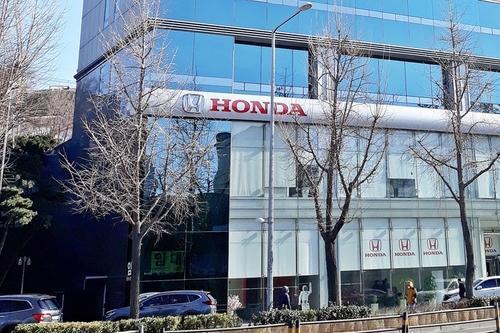 Honda Korea to exit car sales after two decades SEOUL, April 23 (AJP) - Honda Korea announced it will cease automobile sales in the country by the end of 2026, pulling the curtain on a presence that once crowned it the top-selling import brand but withered steadily over the past several years. Lee Ji-hong, CEO of Honda Korea, told a hastily convened press conference on Thursday at COEX in Seoul that the decision came after a thorough review of shifting market conditions and persistent currency headwinds. "We have comprehensively considered changes in the business environment and exchange rate fluctuations, and will terminate automobile sales operations in Korea by the end of 2026," Lee said. The retreat marks a stark reversal for a brand that in 2008 became the first import nameplate to sell more than 10,000 vehicles in a single year in South Korea. Annual sales have since cratered — from about 8,760 units in 2019 to 1,951 in 2025 — battered by what industry experts say is a relatively small portfolio strictly tied to internal combustion and hybrid powertrains in a market increasingly gravitating toward electrified alternatives. In February this year, Honda registered just 23 new vehicles, its lowest monthly tally on record and a mere 0.08 percent of all imported car registrations. Honda's Korean pullback comes as its Tokyo-based parent braces for potentially its first annual net loss since going public in 1957. Honda Motor said in March it expects to record losses of up to 2.5 trillion yen ($15.6 billion) in the fiscal year ending March 2026, driven by massive write-downs on scrapped electric vehicle programs in North America and deepening losses in China, where local EV makers have seized market share. The automaker has cancelled three battery-electric models that were months from production at its Ohio plant and slashed its global 2030 EV sales target from 30 percent to 20 percent. Honda Korea said it will continue to sell motorcycles and aim to strengthen product appeal, customer service and experiential marketing in the two-wheeler business going forward. 2026-04-23 16:11:56
 -
 South Korea Parliament Approves Expansion of Fair Trade Commission to 11 Members South Korea’s Fair Trade Commission will expand its roster of commissioners from nine to 11 for the first time in 30 years. The commission said on the 23rd that the National Assembly passed revisions to the Monopoly Regulation and Fair Trade Act to increase the number of members. Under the amendment, the commission will add one standing commissioner and one nonstanding commissioner, raising the total to 11 from the current nine. The new lineup will be six standing commissioners and five nonstanding commissioners, up from five and four, respectively. The commission’s membership cap has not changed since 1997. With the increase, officials expect reviews and decisions to move faster. The commission cited a rise in its caseload, saying it handled 2,400 cases over the past five years, nearly double the 1990s average of 1,300, while the number of commissioners remained unchanged. The revised law is expected to take effect immediately after it is transferred to the government, approved by the Cabinet and promulgated.* This article has been translated by AI. 2026-04-23 16:09:18
 -
 Korea Activates Emergency Import Financing to Secure Naphtha Supplies Middle East instability has heightened uncertainty over naphtha supplies, prompting South Korea’s financial sector to activate an emergency financing support system for the petrochemical industry. The goal is to quickly raise import letter of credit (L/C) limits to prevent disruptions in raw material imports. The Financial Services Commission said on the 23rd it has set up a joint financial-sector support framework for naphtha imports linked to the Middle East situation. The move follows a recent surge in naphtha prices and growing supply uncertainty as the situation in the Middle East drags on. Naphtha is a key feedstock for South Korea’s petrochemical industry, and any import disruption could affect production across the sector. At the center of the plan is expanding L/C limits. Korea Development Bank, the Export-Import Bank of Korea and commercial banks plan to increase L/C issuance limits for companies that have signed naphtha import contracts, helping them secure funding. When a company applies for L/C support through its main creditor bank, the bank will review the request and, after consultations with the creditor group, move quickly to provide support. Costs will be shared based on each institution’s credit exposure, and the Korea Trade Insurance Corp. plans additional support through import insurance. To speed up assistance, financial authorities will streamline procedures. The time typically required to expand L/C limits — usually more than six weeks — will be cut to within three weeks through simplified due diligence. If needed, the main creditor bank will issue a letter of intent, or LOI, to help companies finalize import contracts. The Financial Services Commission and the Financial Supervisory Service also said they will apply liability protection for staff involved in the process when there is no intent or gross negligence, to encourage active support by financial institutions. At a meeting held the same day, financial-sector officials agreed to maintain close coordination in responding to the Middle East-driven risks and to be ready to execute naphtha import financing support immediately.* This article has been translated by AI. 2026-04-23 16:08:20
 -
 Budget Planning Minister Park Hong-geun Pledges Stronger Role for Cooperatives in Public Services Park Hong-geun, minister of the Office of Planning and Budget, said he will actively support cooperatives so they can strengthen essential parts of people’s lives and play an integrated role linking local economies with welfare and care services. On the 23rd, Park visited the Salim Medical-Welfare Social Cooperative to review how cooperatives in the medical and care sectors are operating and to hold a policy meeting with cooperative officials. Participants included local council representatives and field workers from medical and care, housing, energy, education, employee and youth cooperatives. They discussed ways to revitalize the cooperative sector. The planning office previously set out five strategies under the “5th Basic Plan for Cooperatives (2026–2028),” branded S.M.I.L.E: Scale-up and competitiveness, Mutual cooperation and solidarity, Identity, Local community participation, and Efficiency. The meeting focused on how to apply those strategies in the field. Park said the government plans to flesh out key mid- to long-term tasks for cooperative development, including expanding the supply of public services in local communities and revitalizing federations. He added that support will extend beyond medical and care services to areas such as housing and village management, education and energy. He also said the government will work to create conditions for capable cooperative experts to be active by strengthening education and revitalizing federations, and will seek institutional improvements with relevant ministries so company employees can acquire and pass on businesses through cooperatives.* This article has been translated by AI. 2026-04-23 16:07:35
 -
 South Korea Says No Supply Disruptions Yet for Health, High-Tech Materials; Backup Imports Ready The South Korean government said key industries have not yet seen disruptions in supplies of critical raw materials despite growing concerns that a prolonged war in the Middle East could rattle global supply chains for health care, medical and advanced industries. Officials said they will move quickly to secure alternative import sources if problems emerge. The Ministry of Trade, Industry and Energy said it reviewed supply conditions by sector during a “Middle East war response headquarters briefing” held by video at the Government Complex Seoul on Wednesday. Nam Gyeong-mo, a policy adviser to the industry minister, said core materials for semiconductors, autos, batteries and shipbuilding have not faced supply disruptions so far. The ministry said it is continuing to monitor the risk of higher raw material prices and distribution instability if the conflict drags on. International oil prices remained elevated. As of 7 a.m. Wednesday, Brent crude was $101.50 a barrel and U.S. West Texas Intermediate was $92.69. That was up 40.1% and 38.3%, respectively, from March 27, just before the United States and Israel carried out airstrikes on Iran. JKM, a spot price benchmark for liquefied natural gas, rose by nearly 50% over the same period. Domestic price increases for refined petroleum products were more limited, the ministry said. Compared with March 27, gasoline prices rose 18.5% and diesel rose 25.1%. The government said it is accelerating steps to prevent supply-chain instability tied to the war. In health and medical supplies, it said inventories of IV solution packaging, syringes and medical gloves remain at normal levels and raw materials are being supplied steadily. For IV solution packaging, the government said it has taken steps to avoid supply problems through the end of June and has also been pursuing alternative supply options through prototype testing since late last month. For syringes, the Ministry of Food and Drug Safety has enforced a ban on hoarding since April 14 and is conducting on-site inspections with an enforcement team of about 70 people, the industry ministry said. The ministry said it is also monitoring key manufacturing inputs. Hydrogen bromide used in semiconductor processes is being imported normally, mainly from the United States and Japan, it said. Helium supplies are also stable after securing substitute volumes from the United States. Aluminum wheels used in auto parts have alternative supply lines in place, including Malaysia, India and China, the ministry said. Nickel sulfate, a key battery material, is expected to see limited impact because a large share is produced domestically. Ethylene gas used by shipbuilders is continuing to be supplied with government mediation, the ministry said. HD Hyundai is set to receive 2,000 tons from HD Hyundai Chemical next month, including 200 tons to be supplied first to small and midsize shipbuilders. The ministry said it will accept applications from smaller shipbuilders through the Korea Offshore & Shipbuilding Association. Officials said they are also checking supplies of consumer-related items such as paint, packaging materials, agricultural mulching film, syrup bottles and cosmetics containers. With concerns rising over higher packaging costs, the industry ministry, the food and drug safety ministry and the Ministry of SMEs and Startups have formed a separate task force to manage supply conditions for major items including ramen and infant formula. The government has asked the petrochemical industry to prioritize domestic supply. Thirty-three companies in the Korea Chemical Industry Association said they plan to supply key products — including ethylene, propylene, PE and PP — to the domestic market first. Hanwha TotalEnergies said it is working to normalize supplies of paraxylene (PX) by securing additional naphtha volumes. 2026-04-23 16:06:40
 -
 South Korea to Tax and Regulate Synthetic-Nicotine E-Cigarette Liquids as Tobacco Starting April 24 Starting on the 24th, liquid e-cigarettes made with synthetic nicotine will be officially recognized as “tobacco,” bringing them under full taxation and distribution and health regulations. The government said it aims to close a legal loophole by bringing the products into the regulatory system to improve tax fairness and strengthen public health protections. The Ministry of Economy and Finance said on the 23rd that, under the revised Tobacco Business Act, the legal definition of tobacco will expand from products made from “tobacco leaves” to products made using “tobacco or nicotine (including natural and synthetic)” as a raw material. As a result, liquid e-cigarettes using synthetic nicotine will be subject to the Tobacco Business Act and related tax laws. Manufacturers and importers will be required to pay tobacco-related taxes and charges — including individual consumption tax, tobacco consumption tax, local education tax and the National Health Promotion Charge — when products leave a factory or when imports are declared. To limit market disruption at the start of the system, those taxes will be cut by 50% for two years on a temporary basis. Manufacturers and importers must obtain approval from the finance minister and register with provincial and metropolitan governments. Packaging must carry mandatory warnings and images and list ingredients such as nicotine content. Products must undergo a harmfulness test every two years, and labeling of flavoring substances will be restricted. Retail sales will require designation as a tobacco retailer by local governments. Online sales and sales to minors will be banned. Reselling products after opening them to add other substances or alter the contents will also be prohibited. User restrictions will match those for conventional cigarettes. Synthetic-nicotine e-cigarettes will be banned in no-smoking areas, as other tobacco products are. To reduce confusion early in the rollout, the government will introduce a product identification system. For products made or imported after the effective date, packaging will be required to print identification wording on the front and at the opening area indicating whether tax obligations have been met, so consumers can more easily confirm legal distribution. Inventory produced before the law takes effect will be managed separately. The government said it will set standards that include requiring harmfulness testing, recommending limits on sales of products kept in circulation for long periods, and notifying consumers. It also said it will conduct harmfulness assessments of “nicotine-like” products with chemical structures similar to nicotine and review future management measures.* This article has been translated by AI. 2026-04-23 16:05:41
 -
 Seoul Homebuyers Shift to Smaller Units as New-Home Prices Surge With Seoul’s new-apartment presale prices in the mid-50 million won range per 3.3 square meters, the subscription market is shifting quickly. As construction costs jump and loan rules tighten, buyers are increasingly turning away from the standard 84-square-meter unit and concentrating on smaller homes. According to the redevelopment industry on April 23, the winning score cutoff for the 84-square-meter units at “Ra Clache Zide Fine,” recently offered in Seoul’s Dongjak district, was 62 points, below expectations. With presale prices reaching the 2.5 billion won range, demand thinned because entry is difficult without substantial cash on hand. Smaller 59-square-meter units told a different story. They posted an average competition rate of 39.8-to-1, well above the overall average of 26.9-to-1, and the winning cutoff reached as high as 74 points — higher than the 84-square-meter units. High-score applicants and end users crowded into the less expensive sizes, making small units harder to win. The same pattern has appeared across major Seoul offerings. At “Raemian Elavine” in Banghwa-dong, Gangseo district, the 59㎡B type drew 228.8-to-1 competition and required 69 points, the maximum for a four-person household. The 84㎡B type drew 16.1-to-1, and the minimum winning score fell to 50 points, a gap of nearly 20 points. At “The Sharp Priella” in Mullae-dong, Yeongdeungpo district, all 59-square-meter types had a 69-point cutoff, while the 84㎡B type formed a winning range at a low of 62 points. Even at the ultra-high-priced “Otier Banpo” in Seocho district, smaller units led. The 44-square-meter type recorded 622.8-to-1 competition and an average winning score of 76.5 points — more than 6 points higher than mid-to-large types such as the 84㎡A (70.67 points) and 97.6㎡ (69.5 points). Analysts say as prices and loan barriers rise, high-score applicants are giving up space to enter top neighborhoods, deepening the score divide by unit size. Real estate data firm Real Estate R114 said 218,047 people applied last year for units of 60 square meters or less in the Seoul metropolitan area, surpassing for the first time the 217,322 applicants for mid-size units of 60 to 85 square meters. In Seoul, 59.7% of applicants — about six in 10 — chose small units. The shift is widely attributed to steep price increases and strict lending rules. As of early this year, the average presale price in Seoul was about 1.89 billion won for an 84-square-meter unit, compared with about 1.4 billion won for a 59-square-meter unit, a difference of roughly 490 million won. Factoring in acquisition tax and loan interest, the perceived gap exceeds 500 million won. Relief on construction costs also appears distant. The Korea Institute of Civil Engineering and Building Technology said the construction cost index in February rose 2.04% from a year earlier to 133.69, extending a record-high streak to six straight months. Experts say as long as high interest rates and loan restrictions persist, end users will keep lowering expectations to homes they can realistically win. Supply concerns are also growing as unstable materials procurement delays project starts, potentially pushing up the value of smaller units with lower entry barriers. KICT data show the materials supply index last month fell 16.7 points from the previous month to 74.3; readings below 100 indicate more companies view conditions negatively than positively. Baek Sae-rom, a senior researcher at Real Estate R114, said that as one-person households increase and household formation accelerates, rising presale prices are prompting buyers who initially considered 84-square-meter units to “lower their expectations and change their options to match price levels.” With shrinking household size and heavier financing burdens, she said, the preference for smaller units is likely to become even more pronounced.* This article has been translated by AI. 2026-04-23 16:04:30
 -
 Yuripibu Revamps Bifida Deep Cleansing Oil, Targets Family Month Gift Demand Yuripibu, a skincare brand, has released a revamped version of its “Bifida Deep Cleansing Oil,” saying it strengthened the product’s ability to support skin condition after cleansing as well as remove impurities. Cleansing oils are widely used as a first-step wash to dissolve makeup and sebum, but they have often been treated as separate from moisturizing or barrier care. Yuripibu said it updated the formula to focus on protecting and hydrating skin during cleansing. The renewed product applies fermentation-derived ingredients, including bifida ferment lysate. The ingredient is widely used in cosmetics and is known for helping with skin hydration and maintaining the skin barrier. The formula also blends lactococcus ferment and lactobacillus ferment filtrate. Fermented ingredients are used in the cosmetics industry as materials that can help retain moisture while reducing irritation. The product also contains plant-based oils. Ingredients such as soybean oil, rosehip oil, macadamia seed oil, jojoba seed oil and squalane are commonly used in cleansing oils to help soften and moisturize skin. Oil-based formulas are often used for first-step cleansing because they effectively dissolve oil-soluble residue and makeup. Yuripibu said it improved emulsification speed — the process in which cleansing oil meets water and turns milky to rinse away residue. Faster emulsification can shorten cleansing time and reduce friction on the skin. The company said it adjusted the feel of the product after feedback that the previous version could leave a lingering residue. The scent and texture were also changed. The company applied a yuzu fragrance and an essence-type texture to enhance the sensory experience during washing, reflecting a broader market trend that emphasizes user experience as well as function. Within the lineup, the brand maintained functional distinctions. While “Grante Daily Cleansing Oil” focuses on sebum care and a lighter feel, the Bifida Deep Cleansing Oil emphasizes makeup removal and hydration. In general, consumers with dry skin tend to prefer moisture-focused products, while those with oily or combination skin often favor lighter textures. Industry observers have long stressed the need to minimize irritation during cleansing. Excessive cleansing can damage the skin barrier, making the balance between cleansing power and hydration a key competitive factor. As a result, companies have continued developing cleansing products that combine fermented ingredients and plant-based oils. Yuripibu said it will run a “Family Month” promotion on Naver Smart Store from April 30 to May 11, offering set packages that include its cleansing oil products.* This article has been translated by AI. 2026-04-23 16:00:18
 -
 Philippine Airlines Fuel Surcharge Raised Near Cap for April 16-30 The Philippine Civil Aeronautics Board (CAB) raised the benchmark used for airlines’ passenger fuel surcharges to “Level 19,” near the ceiling, for the April 16-30 period. For passenger flights, the surcharge for international routes will range from 2,070.77 to 15,397.15 pesos depending on the destination, while domestic routes will be charged 627 to 1,834 pesos. That is about 2.5 times higher than the April 1-15 period. The CAB sets fuel-surcharge benchmarks on a Level 0-20 scale. It had stayed at “Level 4” for a long period through March, but raised it to “Level 8” for April 1-15 as fuel prices surged amid conflict in the Middle East. Price monitoring and surcharge-setting had been done on a monthly cycle, but starting in April it was temporarily shifted to a 15-day cycle to respond more quickly to price swings.* This article has been translated by AI. 2026-04-23 15:59:35
 -
 Seoul Expands Floor-Area Ratio Relief to Station-Area Long-Term Lease Housing Redevelopment Seoul is expanding its policy to ease baseline floor-area ratio limits to include station-area long-term lease housing projects, raising expectations that redevelopment zones with approved plans can improve feasibility by reducing required rental housing shares. The city said April 23 that station-area long-term lease housing sites already designated as redevelopment zones and with plans finalized will apply the eased baseline floor-area ratio at the later integrated review stage. Under Seoul’s plan to promote station-area long-term lease housing, developers can receive up to a 30% increase in the baseline floor-area ratio through two steps. First, supplying at least 20% small homes of 60 square meters or less raises the baseline by 20%. An additional increase of up to 10% can be granted by applying a project profitability adjustment factor. In the first project to apply the policy, the Singil station-area redevelopment in Yeongdeungpo District increased the number of units for sale to the public by 29, to 628 from 599. The area received approval for a revised redevelopment plan in 2024, and the change passed the city’s seventh integrated review committee for redevelopment projects on April 16. The adjustment factor applied was 1.45. The city calculates the figure by dividing Seoul’s average officially assessed land price by the project area’s average assessed price, then adding coefficients for site area and household density. A Seoul official said that if the city eases the baseline floor-area ratio by up to 30%, the 20% portion is fixed, while the remaining 10% can vary depending on the adjustment factor. The official said the factor is intended to provide a boost when a project area’s assessed land price is lower than the city’s average for reconstruction and redevelopment. Districts such as Seodaemun and Dongdaemun, where assessed land prices are below the average, are expected to benefit. A key example is the Hongje station-area long-term lease housing urban renewal-type redevelopment near Hongje Station on Seoul Subway Line 3 in Seodaemun District. The district opened a public review of a redevelopment plan in November to build a complex of 3,026 households. Of those, 392 would be redevelopment rental units and 784 public rental units, leaving 1,850 for general sale. If the baseline floor-area ratio is eased through the adjustment factor, the rental share could fall further. In Dongdaemun District, the city on April 16 completed an official notice designating the redevelopment zone and finalizing the plan for the Sinimun 2 station-area long-term lease housing urban renewal-type redevelopment. The project calls for 1,200 households, including 115 rental units and 247 long-term lease units. The official said that with baseline floor-area ratio easing now applied to station-area long-term lease housing redevelopment, the average proportional rate is expected to rise by about 10%. The profitability adjustment factor, however, will not apply in Seoul’s three Gangnam districts and Yongsan District. In the Wonhyoro 1-ga station-area long-term lease housing urban renewal-type redevelopment, for example, the project can receive only the 20% easing tied to supplying at least 20% small homes of 60 square meters or less. Even with that benefit, the project expects the rental share to shrink to 27% from 29%. 2026-04-23 15:58:42