
Journalist

Avidan Kent
-
 South Korea Gasoline Prices Stay Among OECD’s Lowest Despite Oil Surge International oil prices have surged on Middle East geopolitical risks, pushing up gasoline prices worldwide, but South Korea’s pump prices have remained low compared with other advanced economies, industry data showed. Analysts cited government price-stabilization measures and the refining competitiveness and supply capacity of domestic refiners as key factors. According to the industry on Wednesday, Korea National Oil Corp.’s Opinet data for the first week of April showed South Korea’s gasoline price among 23 OECD countries averaged 1,894 won per liter, the second-lowest after Japan. Only three countries, including third-place Canada, were below 2,000 won per liter. Prices in major European countries were far higher, including the Netherlands at 4,045 won, Denmark at 3,868 won, Germany at 3,698 won and France at 3,482 won. On a pretax basis, South Korea ranked first. Its pretax gasoline price was 1,029 won per liter, the lowest among the 23 OECD countries and more than 500 won below the OECD average pretax price of 1,591 won. The industry attributed the competitiveness to large-scale refining facilities and investment in advanced processing. The combined refining capacity of South Korea’s four refiners totals 3.36 million barrels a day, about fifth in the world, with several plants ranking among the world’s largest on a single-site basis, enabling cost savings through economies of scale. Advanced upgrading units that convert low-value products such as bunker C fuel into higher-value gasoline and diesel were also cited as central to price stability. The refining industry is reported to have invested about 34 trillion won in upgrading facilities and related equipment from 2007 to 2024. By increasing the share of higher-value products from the same crude, refiners can support profitability while easing pressure on domestic prices. Government measures also played a role. Data showed that after the outbreak of war in the Middle East, a maximum price system was implemented, and refiners cooperated to stabilize the market by holding back supply-price increases and minimizing margins. Company-run gas stations also joined price cuts, helping reduce the burden on consumers, the analysis said. South Korea’s refining industry also has export strength. Last year, petroleum product exports ranked fourth among the country’s export items, after semiconductors, and offset about 60% of the crude oil import bill, according to the data. That helps explain why South Korea, despite being a non-oil-producing country, is counted among the world’s five largest exporters of petroleum products. A refining industry official said domestic refiners import all crude oil but secure both price and quality through “world-class refining efficiency and advanced upgrading competitiveness,” adding that this helped keep the shock to consumer prices relatively limited even as global oil prices jumped.* This article has been translated by AI. 2026-04-23 11:46:03
 -
 Democratic Party Candidates in Incheon, Gyeonggi and Gangwon Pledge Border-Area Economic Push Candidates for metropolitan-level posts from South Korea’s Democratic Party in Incheon, Gyeonggi and Gangwon said they will coordinate efforts to revitalize the economy in border areas ahead of the June 3 nationwide local elections. Woo Sang-ho, the party’s candidate for Gangwon governor, Choo Mi-ae, the candidate for Gyeonggi governor, and Park Chan-dae, the candidate for Incheon mayor, signed an agreement at the National Assembly on April 23 titled “Agreement for New Change and Coexistence in Border Areas.” They said they will seek to rebrand the term “border areas” as a “peace zone for shared growth and prosperity,” and jointly explore institutional improvements aimed at strengthening residents’ rights and boosting local economies. The three also agreed to cooperate on policies to expand ecological and peace tourism in the Demilitarized Zone, and to energize a consultative body of regional leaders for the peace zone to support residents’ stable livelihoods. After the signing, Woo told reporters the phrase “border areas” was a customary label rather than a legal term. He said the candidates will take steps after the election to move away from negative images tied to security, division and isolation and toward a peace-oriented approach. They also said they will work together to secure support from the central government. Park said, “The most important foundation of the Republic of Korea is peace,” adding he will communicate and cooperate closely with the central government. Choo said the consultative body will work with the central government and ministries to ease regulations affecting the border areas.* This article has been translated by AI. 2026-04-23 11:45:17
 -
 Japan’s FY2025 Exports Hit Record 113 Trillion Yen as AI Chip Demand Offsets Auto Slump Japan’s exports in the last fiscal year rose to a record high, as surging demand tied to artificial intelligence helped offset weaker auto shipments hit by U.S. tariffs. The Nikkei newspaper reported on the 23rd that Japan’s exports in fiscal 2025 totaled 113.2422 trillion yen, up 4.0% from the previous year and the highest on record. Trade statistics released by Japan’s Finance Ministry on the 22nd showed auto exports fell 3.6% to 17.6674 trillion yen. Exports to the United States dropped 15.9%, turning down for the first time in five years. The report attributed the decline to tariff hikes under the Donald Trump administration, saying companies lowered prices to absorb the added costs. AI-driven demand supported shipments elsewhere. The report said demand rose across Asia, including Taiwan, for semiconductor manufacturing equipment, data center cooling systems and electronic components. Exports of materials such as nonferrous metals processed in Japan and copper scrap also increased. Exports to Asia climbed 6.7% to 61.9374 trillion yen. Japan’s trade deficit narrowed to 1.7144 trillion yen, an improvement of 68.4% from a year earlier, the report said. Still, higher energy prices linked to instability in the Middle East were cited as a key risk. Koya Miyamae, a senior economist at SMBC Nikko Securities, said the impact of rising crude prices would be reflected in earnest from April. If oil holds around $100 a barrel, Japan’s fiscal 2026 trade deficit could widen to about 15 trillion yen, the report said. Benchmark WTI crude had been in the $60 range before U.S. and Israeli strikes on Iran, then rose and has recently traded around $90. With Japan heavily dependent on oil imports, higher import costs could directly weigh on the trade balance. Middle East risks could also affect exports. Some Japanese automakers have begun adjusting production of vehicles for the region or changing destination markets, the report said. The Middle East has been a key growth market for Japanese auto exports; shipments there in 2025, measured from January to December, totaled 2.4483 trillion yen, a record high. The latest figures underscore a shift in Japan’s economic center of gravity from traditional manufacturing toward semiconductors and data infrastructure, the report said.* This article has been translated by AI. 2026-04-23 11:39:10
 -
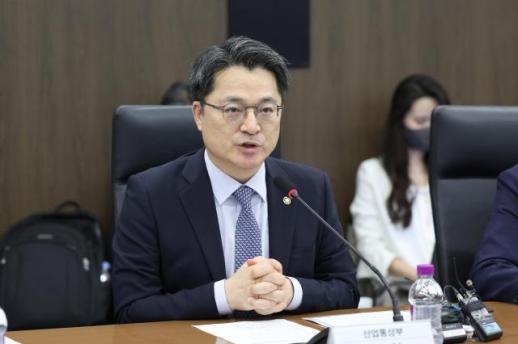 Korea Industry Vice Minister Urges Steelmakers to Keep Supplies Stable, Ease Price Pressures As the prolonged war in the Middle East adds uncertainty to raw-material supply chains, Vice Minister Moon Shin-hak met with South Korea’s steel industry and urged cooperation to ensure stable supplies of steel materials and help ease price pressures. The Ministry of Trade, Industry and Energy said Moon held a meeting with steel industry representatives in Seoul at the Korea Chamber of Commerce and Industry to review supply and demand for major steel products and measures to stabilize prices amid the extended conflict. Steel is a core industry that supplies basic materials to key sectors such as construction, automobiles and shipbuilding. The meeting was convened to check the broader steel supply chain and set up a proactive response system as Middle East-related geopolitical risks persist. At the meeting, the Korea Iron & Steel Association said the domestic steel industry has low dependence on steel products and raw materials from the Middle East, limiting direct impacts from a prolonged war. However, it said higher international oil prices could raise energy costs, and rising ocean freight rates could increase logistics expenses. The government said it will maintain close communication with the industry in case supply-chain uncertainty grows. It also said it will step up efforts to stabilize supply and manage prices, noting that higher steel prices could increase costs for downstream industries including construction and autos. “Even a small disruption in the steel supply chain can lead to a broader crisis across industry,” Moon said, calling on the sector to “actively cooperate” to keep steel materials supplied steadily and reduce the burden on prices. Moon added that the government will actively support industrial restructuring and stronger competitiveness, based on the Steel Industry Act set to take effect in June, to respond to challenges at home and abroad including global oversupply, carbon-neutrality demands and the spread of protectionism.* This article has been translated by AI. 2026-04-23 11:30:19
 -
 Democratic Party’s Han Byung-do declares bid to seek second term as floor leader Han Byung-do, a lawmaker from the Democratic Party who stepped down as floor leader to run in the party’s next floor leader election set for May 6, formally declared his candidacy on Wednesday, seeking a second term. Speaking at the National Assembly’s press briefing room, Han pointed to what he called achievements over the past 100 days, saying he had handled bills related to people’s livelihoods and passed a supplementary budget and a special law on investment in the United States. Han said that within five days of taking office he pushed through a second comprehensive special counsel bill, followed by three judicial reform bills and legislation to establish the Public Prosecution Office and the Serious Crimes Investigation Office. He also said bills tied to government policy tasks were processed under what he described as a solid cooperation system among the party, government and presidential office. Han urged support, saying the next floor leader should swiftly pass livelihood-related legislation to firmly support state affairs and lead the party to a landslide victory in local elections. “The top priority is winning the local elections, the first test for the Lee Jae-myung government,” Han said, pledging to turn regional pledges into legislation, policy and budgets and carry them out quickly. Referring to his past work with Lee, Han said he would help ensure the government’s success through broad legislative efforts and cooperation with the opposition. Han said he served as strategy planning committee chair when Lee was party leader and as chief of the campaign situation room when Lee was a presidential candidate, adding that he would apply that experience after victories in both the general election and the presidential election. He said he would move “like lightning” to process legislation after a local election win, remain open to cooperation with the opposition, but respond firmly to what he called irresponsible obstruction. After the news conference, Han told reporters that the distribution of standing committee posts in the second half of the year would be discussed with the newly elected National Assembly speaker and the opposition, and that the floor leadership team would be formed after reviewing legislative progress by committee. Han had hinted at a run in a meeting with reporters on April 21 and resigned as floor leader. At that time, he said his 100 days in the post felt like a year, describing the responsibility of quickly addressing internal party turmoil while simultaneously pursuing what he called an end to “insurrection,” recovery of livelihoods and broad social reform. He also said there was still much to do, including fully uncovering what he called fabricated indictments by “Yoon Suk Yeol’s political prosecution,” swiftly passing livelihood legislation and achieving constitutional revision. Han was elected floor leader in a by-election on Jan. 11 after the previous floor leader, Kim Byung-kee, resigned amid controversies. In his acceptance speech after that win, Han said the time allowed to the floor leader was short but the responsibility was heavy, and pledged urgent action on what he called ending “insurrection,” prosecutorial reform, judicial reform and improving livelihoods.* This article has been translated by AI. 2026-04-23 11:28:15
 -
 Large Oil Bet Placed Minutes Before Trump Ceasefire Extension, Reuters Reports U.S. President Donald Trump’s surprise announcement extending a ceasefire with Iran was preceded by another large trade in the oil market betting on a price drop, Reuters reported. According to Reuters, traders sold 4,260 Brent crude futures contracts about 15 minutes before Trump announced the extension on April 21. The trade was worth about $430 million, or roughly 630 billion won, at the time — a sizable directional bet on falling prices. Reuters noted the sale came during the typically thin “after-settlement” period, given that the Brent market settles at 1830 GMT. London Stock Exchange Group data showed Brent was little changed just before the trade, edging down to $100.66 a barrel from $100.91. After the ceasefire extension was announced, it slid sharply to $96.83. The timing has raised the possibility that investors who bet on a decline shortly before the announcement may have made substantial profits. Reuters said it was the fourth such large bet since the Iran war, and the third this month. On March 23, about $500 million in selling was reported about 15 minutes before Trump announced a delay in an attack on Iran’s power infrastructure. On April 7, ahead of an announcement of a two-week ceasefire, there was a sale worth about $950 million. On April 17, about $760 million was traded about 20 minutes before Iranian Foreign Minister Abbas Araghchi said Iran would allow passage through the Strait of Hormuz. The repeated trades shortly before major policy announcements have prompted some to raise concerns about possible leaks of inside information. The U.S. Commodity Futures Trading Commission has opened an investigation into a series of unusual crude oil futures trades, including those on March 23 and April 7.* This article has been translated by AI. 2026-04-23 11:27:18
 -
 KOSPI extends record rally past 6,500, driven by semiconductor momentum SEOUL, April 23 (AJP) - Seoul benchmark KOSPI set new milestone Thursday, decoupled from the broad sidelined sentiment across Asia amid Gulf uncertainties, as stronger-than-expected first-quarter GDP and SK hynix earnings underscored the depth of South Korea's chip power. The main index rose 2.1 percent to a new intraday high of 6,551.3 in morning trade after opening at 6,488.83, with advances led by large-cap chipmakers following robust earnings from SK hynix. The undeterred rally this week prompted retail investors to take profits, while foreign investors turned active buyers. Foreign buying totaled 495 billion won, backed by institutional purchases of 289 billion won, while retail investors sold a net 725 billion won. The gains were underpinned by strong momentum in semiconductor shares. Samsung Electronics jumped 5.2 percent to 228,750 won, approaching its previous intraday high, while SK hynix rose 2.3 percent to 1,251,000 won. Earlier in the day, SK hynix reported record-breaking first-quarter earnings, posting an operating profit of 37.6 trillion won, reinforcing expectations that demand for AI-driven memory products remains robust. Other large-cap stocks showed mixed performance. SK Square rose 4.7 percent and Doosan Enerbility gained 5.4 percent, while LG Energy Solution fell 3 percent. HD Hyundai Heavy Industries and Samsung Biologics also traded lower. The tech-heavy KOSDAQ underperformed, falling 0.5 percent to 1,175.7, as foreign and institutional investors offloaded shares, while retail investors stepped in as heavy buyers. Asian markets were mixed, with regional sentiment supported by a temporary reprieve in geopolitical tensions after the United States signaled an indefinite extension of a truce with Iran. Overnight on Wall Street, major indexes closed higher, with the Dow Jones Industrial Average rising 0.7 percent, the S&P 500 gaining 1.1 percent and the Nasdaq Composite advancing 1.6 percent to fresh record highs. Japan’s Nikkei 225 was 0.06 percent off at 59,549.56, while the Shanghai Composite was up 0.11 percent at 4,110.79. The Hang Seng Index fell 0.5 percent to 26,034.12 at the open. Global indicators pointed to relatively stable risk conditions. The VIX volatility index fell 2.97 percent to 18.9, while the Philadelphia Semiconductor Index rose 2.7 percent. Oil prices edged higher, with West Texas Intermediate crude trading near $93 per barrel and Brent crude around $102. The Korean won strengthened slightly, with the exchange rate falling 0.1 percent to 1,477 per dollar. 2026-04-23 11:24:47
 -
 PPP’s Jang Dong-hyeok vows tough action on ‘party-harming’ acts, warns candidates could be replaced People Power Party leader Jang Dong-hyeok, with 41 days to go before the June 3 local elections, warned that the party would take strong action against what he called “party-harming” acts, saying, “You can never win a battle with a military whose discipline has collapsed.” Speaking further at a party supreme council meeting at the National Assembly on April 23, Jang said such conduct “from now on” could be fatal to the election. “It’s time to fight in earnest against the Democratic Party and its candidates,” he said. “Now is the time to correctly identify who we are fighting and fight properly.” He added that if the person engaging in such conduct is a candidate, “I will immediately replace the candidate.” Jang also said the party had moved to have each provincial and city party form an election committee. In areas where candidates for metropolitan mayor or governor have been decided, he said, the local party and the candidate will consult to form a committee, calling it a step that has been taken at every local election. He said the central election committee would be formed after watching how nominations are finalized. After the meeting, chief spokesperson Choi Bo-yoon told reporters that discipline for party-harming acts is “only natural” for a political party and said Jang delivered a strong message to prevent problems and help secure victory. Asked whether forming separate election committees or attacking the leadership would be considered party-harming conduct, Choi said forming separate committees “cannot, of course, be seen as party-harming.” She said the party’s position is that when candidates are confirmed in each region, local committees should be formed even before the central committee is set up so preparations for the local elections proceed steadily. Choi also rejected suggestions that Jang’s remarks were aimed at Gangwon Gov. Kim Jin-tae, who a day earlier urged Jang to “take responsibility,” saying there was “absolutely nothing” to link Kim’s comments to party-harming conduct. On Jang’s earlier request to the party ethics committee to suspend disciplinary action until the local elections end, Choi said it referred to matters already pending, while any newly occurring party-harming acts would still require judgment. She said failing to address repeated conduct related to the local elections would amount to the central party “abandoning” candidates who are campaigning hard. In response, Rep. Bae Hyun-jin, a lawmaker aligned with Han Dong-hoon, criticized Jang, writing on Facebook, “Now you’re even intimidating candidates. Then go to the U.S.” Bae wrote that Jang’s definition of party-harming conduct appeared to be “Don’t come, Jang Dong-hyeok,” adding that his trip to Gangwon the previous day must have upset him. She argued that candidates may feel they have no choice, saying it could be seen as an extreme act of loyalty because Jang “created” a situation in which, to beat the Democratic Party, “the reality is that Jang must not be there.” She also said that candidates nominated by the 17 local party organizations can ultimately be approved through a re-vote by the local party even if the supreme council rejects them. * This article has been translated by AI. 2026-04-23 11:24:28
 -
 LS Materials to Supply Ultracapacitors to U.S. Fusion Power Project for First Time LS Materials said Wednesday it will supply ultracapacitors, or UCs, to a U.S. nuclear fusion power project. The company said the order marks its first supply deal in the fusion power sector and will be used in a demonstration project aimed at commercialization by a U.S. energy company. LS Materials said it expects follow-on orders tied to additional demonstrations and larger orders if the project moves into commercialization. The company said high-output UCs for fusion power require advanced technology and must meet strict verification standards, making early references important as orders expand. It called the supply deal a turning point in establishing a leading position in the market. LS Materials said it is expanding beyond a business focused on wind turbines and uninterruptible power supplies into next-generation power infrastructure, including fusion, hydrogen fuel cells and grid stabilization. It added that the mid- to large-size UC market is dominated by a small number of players, meaning growth could translate directly into gains. Fusion power is a next-generation technology that produces energy using the same principle as the sun, and major countries including the United States, Europe and China are pursuing large-scale projects, the company said. With electricity demand rising sharply as AI data centers spread, investment in fusion is increasing, and demand is also expected to grow for UCs capable of high-output power control. The project will use more than 1,000 large UC modules. LS Materials said its UCs can deliver 15 megawatts of power in 0.06 seconds, providing the instant power needed to operate fusion equipment — a level comparable to supplying electricity used by thousands of households at once. Chief Executive Hong Young-ho said the supply deal is “an important turning point” in accelerating entry into the commercialization market. He said the company will expand orders in next-generation power infrastructure markets including hydrogen fuel cells, AI data centers and grid stabilization. * This article has been translated by AI. 2026-04-23 11:21:16
 -
 Hong Joon-pyo Slams Chosun Ilbo Over Call for Jang Dong-hyeok to Step Down Hong Joon-pyo, former mayor of Daegu, criticized the Chosun Ilbo after it urged People Power Party leader Jang Dong-hyeok to resign, saying the times have changed. In a Facebook post on the 22nd, Hong said he had read a column by what he called a conservative media outlet calling for Jang to step down, adding that it contained “many correct points.” Chosun Ilbo ran a column titled “Chairman Jang Dong-hyeok, Now Is the Right Time to Step Down.” Hong responded by asking who was responsible for the collapse of South Korea’s conservative camp and who had helped elevate and create the Yoon Suk Yeol administration. He also asked who, under the Yoon administration, had encouraged Han Dong-hoon by saying he needed to differentiate himself from Yoon to become the next leader, adding that the Yoon administration was not ruined by conflict with Han. Hong accused those forces of manipulating the conservative camp with the arrogance that they could both install and bring down an administration, and said they were now trying to remove Jang without offering an alternative while bringing back a “immature narcissist” they had supported, which he said would again damage the conservative camp. He also suggested they might be trying to elevate Oh Se-hoon again, as he said happened during the June 2006 local elections if Oh loses the Seoul mayoral race. Addressing conservative media, Hong said they may once have “pulled the strings” in Korean society, but the era and media environment have changed. He said he hoped they would contribute to the country’s future, adding that it was no longer “your era,” but an era for all citizens. Hong previously declared he was cutting ties with Chosun Ilbo. During his 2020 run in Daegu’s Suseong-gu-eul district, Hong criticized Chosun Ilbo coverage that was critical of him, saying he was angered by “false and fabricated” reporting. He questioned whether the paper’s editorial policy was to demand that the public accept “schemes” by a small group of opposition vested interests, and said he would stop reading Chosun Ilbo after 40 years as a subscriber. 2026-04-23 11:20:14