
Journalist

Avidan Kent
-
 Hyundai Motor's Q1 earnings to reflect tariff and war costs SEOUL, April 21 (AJP) - Hyundai Motor is expected to post a sharp drop in first-quarter earnings, as rising tariff burdens, war-related disruptions and currency-driven costs squeeze margins despite relatively resilient global demand. According to data compiled by FnGuide, the automaker’s operating profit is forecast at 2.4 trillion to 2.6 trillion won, down 38 to 50 percent from a year earlier. The company is set to report results on Thursday. The downgrade reflects intensifying cost pressures toward the end of the quarter, including higher tariffs, rising raw material prices and increased warranty provisions, which have become more expensive amid a sharp weakening of the Korean won against the U.S. dollar. Eugene Investment & Securities is among the more cautious, projecting operating profit at 2.46 trillion won. Revenue, however, is expected to remain broadly stable at around 45 trillion won, slightly up from 44.4 trillion won a year earlier. The key swing factor lies in the United States, where tariff-related expenses alone are estimated at around 1 trillion won for the quarter, according to DS Investment & Securities. The anticipated earnings miss appears largely cost-driven rather than demand-led. Global wholesale volumes are projected to have declined by about 3 percent year-on-year, suggesting underlying demand has held up relatively well. Regional performance has been mixed. U.S. shipments were broadly flat at around 243,000 units, reflecting steady demand, while Europe recorded an 8 percent decline. The Middle East saw a steeper 30 percent drop following the outbreak of war, highlighting the growing impact of geopolitical shocks on volume. Product mix trends have also diverged. Hybrid vehicle sales rose about 28 percent year-on-year, supporting revenue, while battery electric vehicle volumes fell 7 percent, limiting margin recovery. Brokerages expect earnings to bottom out in the second quarter before rebounding in the second half, supported by new model launches and a more favorable product mix. 2026-04-21 16:52:56
 -
 South Korea Sees Crypto-Related Complaints Surge More Than 1,000%, Regulator Says Crypto-related complaints surged more than 1,000% in a year, driving an overall rise in financial complaints as exchange-related dissatisfaction grew alongside an investment boom. According to the Financial Supervisory Service report, “2025 Trends in Financial Complaints and Financial Counseling,” released on the 21st, crypto-related complaints totaled 4,491 last year, up 1,014.4% from the previous year. The jump was a key factor behind growth in complaints in the financial investment sector. Financial investment complaints rose 65.4% to 14,944 over the same period. Crypto complaints accounted for 30.1% of all financial investment complaints, emerging as a major category. Most crypto complaints involved exchanges, including failure to deliver promised benefits from promotional events and inconvenience using systems and services. The FSS said dissatisfaction built quickly as investor protection systems remained relatively weak. Overall financial complaints also increased. Total complaints last year rose 10.4% to 128,419. By sector, insurance complaints climbed. Nonlife insurance complaints increased 19.6% to 48,281, and life insurance complaints rose 12.0% to 14,656. Disputes over how insurance payouts are calculated and paid, and whether exclusions apply, were cited as key drivers. Banking complaints fell 10.2% to 21,596, but complaints tied to voice phishing jumped more than 125%, reflecting growing inconvenience during responses to financial fraud incidents. The volume of cases handled also rose. Financial complaints processed last year increased 17.0% to 127,809, and the average processing time lengthened by 5.1 days to 46.6 days. The acceptance rate edged up to 41.3%. The acceptance rate for dispute-related complaints rose sharply to 54.7%, which the FSS said strengthened relief for 피해 victims. * This article has been translated by AI. 2026-04-21 16:48:30
 -
 Cambodia’s Royal Group Partners With Singapore’s Greenlyzer on Green Hydrogen in Southeast Asia Singapore deep-tech company Greenlyzer and Cambodia conglomerate Royal Group have formed a partnership to introduce and expand green hydrogen energy solutions in Southeast Asia, including Cambodia. The two sides recently signed a memorandum of understanding to cooperate on wider adoption of green hydrogen energy. In an April 17 announcement, Greenlyzer said the signing ceremony was attended by Bo Bai, chairman of Alpha Ladder Group, Greenlyzer’s parent company, and Kith Meng, chairman and CEO of Royal Group, among others. Greenlyzer develops next-generation energy systems using artificial intelligence and is working to deploy power-supply technology based on green hydrogen. Under the partnership, the companies will consider pilot deployments of Greenlyzer’s “Green Moving Grid (GMG)” energy system and aim to make practical use of green hydrogen produced in the region. Alpha Ladder Group and Royal Group have previously worked together in digital finance through Alpha’s fintech firm MetaCom and Royal’s commercial lender Wing Bank, including discussions on cross-border payments between Singapore and Cambodia. 2026-04-21 16:46:43
 -
 Margin Debt Hits Record 34 Trillion Won as Stocks Rally; Analysts Warn of Volatility The KOSPI closed at 6,388.47 on April 21, setting a record high, as outstanding margin loans also climbed to an all-time peak. With expectations for further gains, retail investors have increasingly used leverage to take part in the rally. The rapid inflow of funds, however, is also heightening concerns about bigger swings ahead. According to the Korea Financial Investment Association on April 21, outstanding margin loans totaled 34.2592 trillion won as of April 17. The balance rose broadly across both markets — 23.6256 trillion won in the KOSPI and 10.6336 trillion won in the KOSDAQ — surpassing the previous record of 34.0279 trillion won. The pace of growth has been steep. After first exceeding 30 trillion won at the end of January, the balance expanded to 32.6690 trillion won in February and 33.6945 trillion won in March, reaching the 34 trillion won range this month. Sideline cash flowing toward equities has also increased quickly. Investor deposits stood at 121.8173 trillion won the same day, up 11.5283 trillion won from the end of March. Compared with about 87 trillion won at the end of last year, that is an increase of more than 30 trillion won in roughly four and a half months. Money market fund balances were 258.8434 trillion won, holding near record levels, while CMA balances rose to 117.2523 trillion won, continuing an uptrend from the mid-110 trillion won range. The moves have been linked to improving sentiment. Expectations for renewed talks between the United States and Iran have eased geopolitical uncertainty, strengthening retail investors’ appetite for risk assets and lifting demand for margin trading. Margin loans typically expand quickly in rising markets, and the recent index gains appear to have encouraged leveraged bets. Analysts cautioned that heavier leverage can amplify volatility. Margin loans can fuel gains in an up market, but in a downturn they can trigger forced selling, adding to downward pressure. Brokerage analysts said sentiment has improved, but volatility tied to external factors remains a risk. Han Ji-young, a researcher at Kiwoom Securities, said U.S.-Iran ceasefire talks have been thrown into confusion by conflicting statements from both sides since last weekend. She added that markets should keep open the possibility of a two-week extension of the ceasefire negotiation deadline. Seo Sang-young, a researcher at Mirae Asset Securities, said President Donald Trump has suggested the chance of extending the ceasefire is low and indicated the possibility of renewed clashes if talks fail, while Iran has officially maintained distrust and a hard-line stance. As a result, he said, markets are staying cautious rather than fully relieved. 2026-04-21 16:46:02
 -
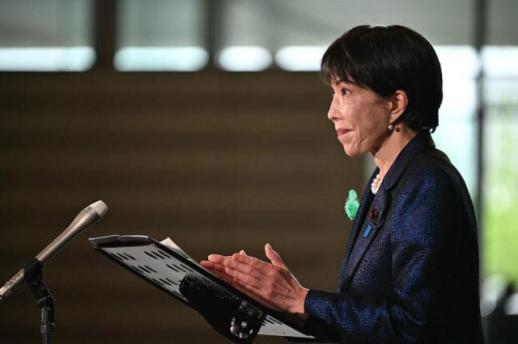 South Korea expresses regret over Japanese PM's offering to war shrine SEOUL, April 21 (AJP) - South Korea expressed "regret" on Tuesday after Japanese Prime Minister Sanae Takaichi sent a ritual offering to the controversial Yasukuni Shrine, which honors Japan's war dead but also enshrines convicted war criminals from World War II. "We express deep disappointment and regret that responsible leaders in Japan have repeatedly made offerings to or visited the shrine," the Ministry of Foreign Affairs said in a statement. The statement comes after Takaichi sent the offering earlier in the day, her first since taking office in October last year, having previously made regular in-person visits to the shrine. Key Cabinet members and other lawmakers also visited the shrine to pay their respects. "We urge to face history and humbly reflect on its past wrongdoings with sincere remorse," the statement added, saying that this would be an important foundation for building a future-oriented relationship based on mutual trust. The island country's first female prime minister has sought to restore relations with Seoul through shuttle diplomacy with President Lee Jae Myung, despite her widely known hardline stance on historical issues with South Korea as a key protégé of Abe's political legacies. But her recent offering to the shrine may again set back efforts to repair strained relations between the neighboring countries over historical issues. 2026-04-21 16:45:06
 -
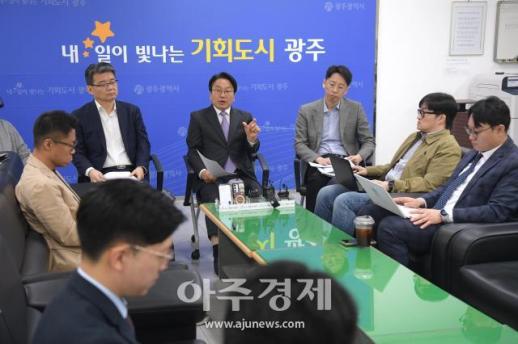 Gwangju Mayor Kang Ki-jung Vows to Wrap Up Remaining Work as City’s ‘Last Mayor’ Kang Ki-jung, mayor of Gwangju, said April 21 that he will work to properly wrap up the city’s remaining tasks as the “last mayor” of Gwangju Metropolitan City. Speaking with reporters over tea at City Hall, Kang said he had recently visited sites across Gwangju and South Jeolla Province and “once again felt the weight of integration.” He said he would closely review city affairs and “firmly bring Gwangju Metropolitan City’s history to a close.” Kang also laid out 10 key tasks he plans to pursue during the remainder of his term. They include a constitutional amendment related to May 18, finalizing subway station names, preparing to launch an integrated special city, and paying relief funds for damage tied to high oil prices. He also cited an AX demonstration valley, pilot operations for self-driving cars, attracting corporate investment, and accelerating preparations to relocate the military airport. Kang said he hopes to share “good news” with residents about a May 18 constitutional amendment alongside next month’s May 18 commemoration ceremony planned at May 18 Democracy Square and the reopening ceremony for the restored former South Jeolla Provincial Office building. He added that, with what he called an important moment approaching ahead of the nation’s first metropolitan-level integration, he would make sure necessary work is not overlooked. * This article has been translated by AI. 2026-04-21 16:42:43
 -
 Jung Won-oh says one-homeowners’ tax break rights must be protected, criticizes Oh Se-hoon Jung Won-oh, the Democratic Party’s Seoul mayoral candidate, writes in the guest book after paying respects at the late President Roh Moo-hyun’s gravesite in Gimhae, South Gyeongsang Province, on April 21. (Yonhap) Jung Won-oh, the Democratic Party’s candidate for Seoul mayor, said April 21 that the current rights of owner-occupiers who own a single home must be protected amid controversy over scrapping the long-term holding special deduction for capital gains tax. Jung also stepped up his criticism of Seoul Mayor Oh Se-hoon, saying Oh was “raising issues that haven’t even been discussed yet” and “stoking conflict.” Jung made the remarks after visiting the gravesite of the late President Roh Moo-hyun in Bongha Village, Gimhae, South Gyeongsang Province, along with Choo Mi-ae, the Democratic Party’s candidate for Gyeonggi governor, and Park Chan-dae, the party’s candidate for Incheon mayor. “If it’s not for speculative purposes, the rights of all one-home households should still be protected,” Jung said. He added that a Seoul mayor’s job is not to fuel conflict and said it was time to “join forces for people’s livelihoods and the interests of citizens.” Citing what he called a crisis stemming from a war in the Middle East, Jung said the government and the Seoul city government should work together, and that repeatedly raising matters not yet under discussion only makes residents anxious. Earlier April 21, Oh appeared on KBS radio and, referring to President Lee Jae-myung’s comments about scrapping the deduction, said that “even if it’s the president speaking,” it is a basic duty of a Seoul mayoral candidate to state an opinion. Oh said Jung had remained silent and added that a candidate “shouldn’t just stay quiet” at such times. The ruling party also sought to draw a line on the issue. Democratic Party member Han Jeong-ae said at a party floor leadership meeting that the government and ruling party have never reviewed abolishing the long-term holding deduction for one-homeowners.* This article has been translated by AI. 2026-04-21 16:40:24
 -
 KOSPI Closes at Record High, Extending Rally Despite Middle East War Concerns South Korea’s benchmark KOSPI surged to a fresh record on the 21st, extending its rally despite the fallout from the war in the Middle East. According to the Korea Exchange, the KOSPI closed up 169.38 points, or 2.72%, at 6,388.47. It also set a new intraday high, surpassing the previous peak of 6,347.41, and topped the prior record close of 6,307.27 set Feb. 26. Foreign investors and institutions led the advance. Foreigners bought a net 1.7472 trillion won worth of shares, while institutions posted net purchases of 796.0 billion won. Buying was concentrated in semiconductors. Samsung Electronics and SK hynix, the No. 1 and No. 2 stocks by market capitalization on the KOSPI, rose 2.1% and 4.97% to close at 219,000 won and 1,224,000 won, respectively. Ahead of its earnings release on the 23rd, SK hynix finished above 1.2 million won for the first time on a closing basis. As the index climbed, margin trading also accelerated. The Korea Financial Investment Association said outstanding credit loans for stock purchases stood at a record 34.2592 trillion won as of the 20th. The total included 23.6256 trillion won on the main board and 10.6336 trillion won on the KOSDAQ, exceeding the previous high of 34.0279 trillion won set April 17. Analysts largely viewed the rally positively but urged investors to stay alert to geopolitical risks. Kim Hak-kyun, head of the research center at Shinyoung Securities, said the rise was part of a global trend and that the Middle East issue was “short-term noise” within an existing uptrend. “There is no evidence that the upward trend has broken,” he said, adding that the case for gains remains intact, citing the semiconductor cycle and “manageable inflation.” Lee Byeong-geon, head of the research center at DB Securities, said flexibility would be needed as external factors evolve. “It’s right to view the market positively because leaders such as semiconductors have not turned down,” he said. “But depending on negotiation outcomes, the beneficiaries and losers could diverge by stock. It is necessary to respond with a portfolio while closely watching external developments.” 2026-04-21 16:39:34
 -
 KOSPI Hits Record High as Foreign Buying Lifts Shares Despite Geopolitical Risks South Korea’s benchmark KOSPI is pushing to fresh records despite uncertainty from geopolitical risks, helped by upbeat calls from global investment banks and heavy foreign buying. Still, a surge in leveraged stock purchases is being cited as a potential source of instability. According to the Korea Exchange, the KOSPI set two records on the 21st, surpassing both its intraday high of 6,347.41 set Feb. 27 and its previous record close of 6,307.27 set Feb. 26. Foreign inflows that have returned in April continued, with overseas investors net buying 1.7523 trillion won worth of shares on the main board, led by semiconductors. Buying has concentrated in chipmakers as profit estimates for the sector have been raised sharply ahead of SK hynix’s earnings report on the 23rd. Global investment banks have also been lifting their targets. Goldman Sachs raised its KOSPI target to 8,000, citing improving results for domestic semiconductors and industrials. Nomura kept its target range at 7,500 to 8,000, saying a semiconductor upcycle could offset macro risks. Even with the broadly positive outlook, some investors worry another sharp pullback like March could return. A key concern is the swelling use of leverage. The Korea Financial Investment Association said outstanding margin loans stood at a record 34.2592 trillion won as of the previous day. Of that, 23.6256 trillion won was on the KOSPI market and 10.6336 trillion won on the Kosdaq market. Analysts said foreign buying tied to improving fundamentals is supportive, but margin debt above 34 trillion won could become a trigger if prices fall. If declines push collateral ratios below required levels, brokerages can force sales, and a wave of liquidations can deepen losses and set off further margin calls. Despite those risks, many in the brokerage industry still expect the rally to continue. Lee Jae-won, an analyst at Yuanta Securities, said external factors such as a possible reclosure of the Strait of Hormuz are weighing on markets but are being viewed as part of efforts to gain leverage in negotiations, while extensions of ceasefire deadlines by the Trump administration are reducing volatility. He added that the KOSPI remains in a “deep value” zone on a price-to-earnings basis, leaving room for further gains even after the latest record. 2026-04-21 16:38:38
 -
 U.S., Iran Signal Second Round of Talks as Truce Deadline Nears The United States and Iran, after days of brinkmanship ahead of a truce deadline, appear closer to a second round of negotiations. In a phone interview with Bloomberg on April 20, U.S. President Donald Trump said the two-week truce with Iran would end "Wednesday (22) evening, Washington time." Asked about extending it, he said the chances were "very small" and said a U.S. naval blockade of Iran would remain in place until an agreement is reached. The U.S. and Iran agreed to the truce on April 7, and it had been widely viewed as running through April 21, though Trump’s remarks were seen as effectively extending the deadline by about a day. Trump also pointed to a possible schedule for talks. He said Vice President JD Vance would depart for Pakistan and that negotiations would begin April 21. Axios reported that Vance was expected to leave for Pakistan no later than the morning of April 21, possibly late on April 20. It said Middle East envoy Steve Witkoff and Jared Kushner, Trump’s son-in-law, were expected to travel with him. The report said Vance had delayed his departure while awaiting Iran’s response, but that a "green light" from Iran’s supreme leader, Mojtaba Khamenei, had been conveyed. Iran has also sent signals suggesting talks could move forward. The Wall Street Journal, citing multiple sources, reported that Iran told mediators it would send a negotiating team to Pakistan on April 21. Reuters, citing a Pakistani source involved in the talks, reported that a second round would be held Wednesday (22). The source said that if an agreement is reached, Trump could attend in person or participate by video. Iran’s government has not officially confirmed sending a delegation. Foreign Ministry spokesman Esmail Baghaei said, "For now, there is no plan for the next negotiation," adding that Iran would not accept deadlines or ultimatums to protect its national interests. Mohammad Bagher Ghalibaf, Iran’s parliament speaker who leads the negotiating team, wrote on X that "we will not accept negotiations conducted under the shadow of threats." Trump, in a phone interview with the conservative radio program "The John Fredericks Show," warned Iran: "They will negotiate, and if they don’t, they will face problems they have never seen before." The first round of talks collapsed without narrowing differences over major issues, including Iran’s abandonment of its nuclear program. On Truth Social, Trump said the nuclear deal now being pursued with Iran would produce a better outcome than the 2015 agreement, the Joint Comprehensive Plan of Action. Under the JCPOA, Iran’s nuclear program was limited in exchange for sanctions relief, and Iran’s highly enriched uranium was moved abroad while stockpiles were sharply capped. Trump later wrote again on Truth Social that "Operation Midnight Hammer" had "completely and totally destroyed" Iran-related nuclear targets and that recovering buried nuclear material would require a long and difficult process. Midnight Hammer was the name of a U.S. operation that struck three Iranian nuclear facilities in June last year. The Wall Street Journal reported that some flexibility is being detected on uranium enrichment. It said mediators are considering an option under which Iran would halt enrichment for a period and later be allowed limited production of low-enriched uranium. Despite the diplomatic activity, tensions remain. Iran sharply criticized the United States for seizing an Iranian-flagged cargo ship and demanded the crew’s release. Iran’s semi-official Tasnim news agency reported that the Foreign Ministry, in a statement, called the action piracy and terrorism and said it was "another clear violation" of the truce and an attack on Iran. The ministry said it would mobilize all capabilities to defend national interests and security and to protect the rights and dignity of the Iranian people, warning that if regional conditions worsen further, the United States would bear full responsibility.* This article has been translated by AI. 2026-04-21 16:37:45