
Journalist

Choi Jong-moon
-
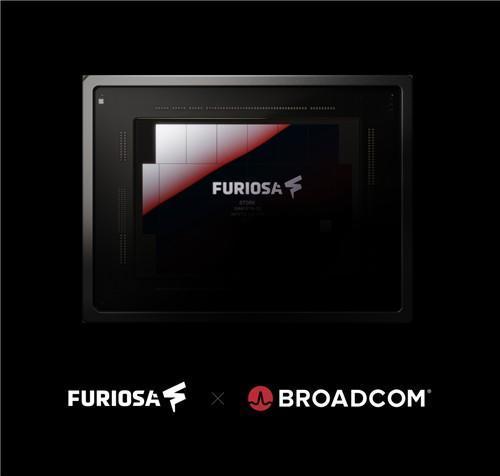 FuriosaAI taps Broadcom to build third-generation AI inference chip SEOUL, May 28 (AJP) - South Korean artificial intelligence chip designer FuriosaAI said it had forged a strategic partnership with U.S. semiconductor giant Broadcom to co-develop a next-generation AI inference platform, deepening a homegrown bid to challenge the dominance of established players in the booming market for AI silicon. According to the neural processing unit maker on Thursday, the two companies will evolve FuriosaAI's proprietary tensor contraction processor architecture into a multi-die chiplet system, building an engine tuned for the high-volume token processing that global hyperscale data centers increasingly demand. The collaboration builds on FuriosaAI's second-generation accelerator, RNGD, a 180-watt PCIe chip now in mass production. Fabricated on TSMC's 5-nanometer process and paired with SK hynix HBM3 memory, the accelerator is optimized for large language models and agentic AI workloads, and has already been validated in production at customers including Samsung SDS and LG AI Research. The third-generation accelerator will carry a 2-nanometer compute die and HBM4/4E memory, drawing on Broadcom's advanced packaging to fuse multiple silicon dies into a single high-performance chip. The two firms plan to begin sampling the chip in the first half of 2028, as surging demand for agentic AI pushes inference workloads to outpace the training tasks that first fueled the generative AI boom. 2026-05-28 15:57:59
 -
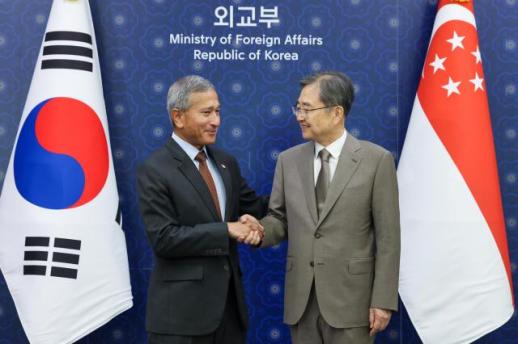 Foreign ministers of South Korea and Singapore agree to deepen cooperation SEOUL, May 28 (AJP) - Foreign Minister Cho Hyun met with his Singaporean counterpart in Seoul on Thursday to discuss bilateral cooperation, regional security issues, and broader international affairs, according to the Ministry of Foreign Affairs. Their meeting came after Singaporean Foreign Minister Vivian Balakrishnan's visit to North Korea earlier this week as part of a regional tour that also included China. During his trip to Pyongyang last Tuesday, Balakrishnan met with his North Korean counterpart Choe Son-hui. Cho was quoted as saying that it is important for Singapore and other ASEAN countries to continue engaging North Korea, as this could help build momentum for talks with Pyongyang. Balakrishnan agreed that the two countries should work closely together to support peace and stability on the Korean Peninsula, according to the ministry. Balakrishnan also said South Korea and Singapore share key values such as free trade and multilateralism, and he expressed hope for closer cooperation in areas including trade, advanced technologies, and emerging industries. The two ministers also discussed the prolonged conflict in the Middle East, stressing that keeping global shipping routes such as the Strait of Hormuz open and safe is vital for both countries' security and economic stability. Later in the day, Balakrishnan also met with Unification Minister Chung Dong-young, though details of their meeting were not disclosed. Speaking to reporters afterward, Chung said he "deeply appreciated" Singapore's constructive role in addressing issues on the Korean Peninsula. 2026-05-28 15:56:23
 -
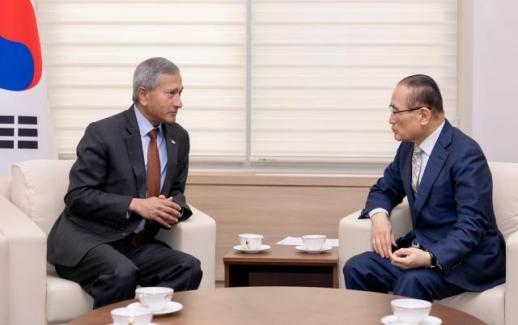 Wi Sung-lak Meets Singapore's Foreign Minister Vivian Balakrishnan to Discuss Trade and Regional Stability Wi Sung-lak, head of the National Security Office, met with Singapore's Foreign Minister Vivian Balakrishnan on May 28 during his official visit to South Korea. The two discussed ways to enhance bilateral relations and exchanged views on the situation on the Korean Peninsula and regional and international issues, including the Middle East.In a press release, the Blue House expressed hope that high-level exchanges would deepen the strategic partnership between South Korea and Singapore, as well as the comprehensive strategic partnership between South Korea and ASEAN.Wi exchanged views with Balakrishnan on the situation on the Korean Peninsula and received updates on the results of Balakrishnan's recent visit to North Korea on May 26-27. During his trip, Balakrishnan met with North Korean Foreign Minister Choe Son-hui in Pyongyang.Wi also outlined the South Korean government's efforts for peaceful coexistence and joint growth on the Korean Peninsula, to which Balakrishnan expressed strong support. He particularly acknowledged Singapore's active role in facilitating diplomatic solutions to the Korean Peninsula issue, having hosted the historic U.S.-North Korea summit in 2018, and expressed hope for Singapore's continued constructive involvement in promoting peace on the peninsula.Regarding the Middle East situation, both sides agreed on the importance of diplomatic efforts to quickly end conflicts and restore regional stability. They also reached a consensus on normalizing the safe and free navigation of vessels in international waterways, including the Strait of Hormuz.Furthermore, in light of the rapidly changing global situation and supply chain crises, the two countries committed to maintaining close communication and cooperation, sharing the values of free trade as energy-importing and open economies.* This article has been translated by AI. 2026-05-28 15:56:00
 -
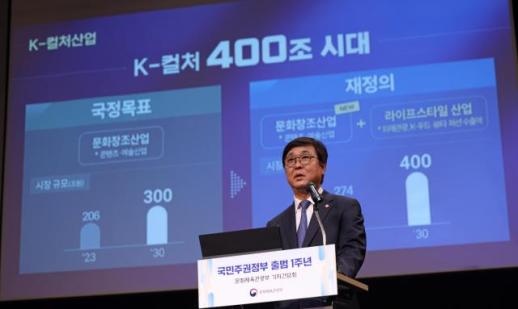 South Korea Raises K-Culture Economic Target to 400 Trillion Won The South Korean government has significantly raised its national goal for the K-Culture sector from 300 trillion won to 400 trillion won within just one year of the current administration. This adjustment includes expanding the definition of K-Culture to encompass foreign tourism, food, beauty, and fashion, aiming to substantially increase the market size. However, some in the cultural sector criticize this move as mere inflation of numbers by grouping together profitable industries under the K-Culture label. During a press conference on May 28 at the National Museum of Modern and Contemporary Art in Seoul, Minister of Culture, Sports and Tourism Choi Hwi-young stated, "We have redefined and refined the concept of K-Culture, aiming to industrialize it and make it a reality." When the government launched last year, it set a target to grow the cultural industry to 300 trillion won by 2030. Now, as it marks its first anniversary, the Ministry has expanded the K-Culture scope to include export figures from foreign tourism, food, beauty, and fashion, while excluding some ambiguous or overlapping items. Minister Choi noted, "The foreign currency spent by tourists visiting Korea should be included in the K-Culture industry, as it has been missing from statistics until now. The same applies to K-Food, K-Beauty, and K-Fashion." He added that these export figures reflect the demand generated by K-Culture's appeal, justifying their inclusion in the K-Culture category. As a result of this redefinition, the K-Culture market size has reportedly increased to an estimated 274 trillion won as of last year, nearing the previously set target of 300 trillion won for 2030. Consequently, the government has raised its target from 300 trillion won to 400 trillion won. The export figures have also surged. Previously reported at approximately $14.9 billion based on content-focused statistics, the inclusion of beauty and food has expanded this figure to $71.8 billion. This makes K-Culture the third-largest export sector in South Korea, following semiconductors ($173.4 billion) and automobiles ($72 billion). In line with this, the export target for 2030 has been dramatically increased from $35 billion to $110 billion. Minister Choi emphasized, "K-Culture is a key growth driver for our economy. With the potential increase in leisure time due to the spread of artificial intelligence, the contribution of K-Culture to foreign currency earnings is expected to grow even more. We need to foster this sector with greater urgency." Additionally, the Ministry plans to hold a large-scale K-Culture festival called 'Phenomenon' twice a year, starting in December 2027, with events in major cities worldwide in May and domestic awards in December. The government also aims to expand K-Culture centers in major cities and promote domestic tourism through initiatives like the '5 Regions 3 Special Mega Tourism Zone' and discounted travel policies to achieve an early target of 30 million tourists. However, some cultural critics argue that the government is overly focused on industrial logic in its approach to becoming a 'cultural powerhouse.' They express concern that the emphasis on quantifiable results overshadows the need to enhance the overall competitiveness of the arts. Kim Jae-sang, head of the Cultural Solidarity, questioned the validity of grouping beauty and fashion under K-Culture, stating, "There is little visible support for foundational arts. It is questionable whether the entire cultural and artistic sector is being revitalized." He added that there is significant concern that the government views culture solely as a means of generating economic profit. An anonymous source from the cultural sector remarked, "Under the declaration of becoming a cultural powerhouse, it seems like a numbers game to incorporate immediately measurable industries into K-Culture. The national goal should be redefined as 'cultural industry powerhouse' rather than just 'cultural powerhouse.' Long-term policies to strengthen foundational arts and the creative ecosystem are not evident." Minister Choi concluded, "When we shift our goals to 400 trillion won for K-Culture and $110 billion for exports, the perspective on the cultural industry itself will change. If we can create a consensus that culture is a new growth driver, bold investments will follow. I will prove this."* This article has been translated by AI. 2026-05-28 15:52:00
 -
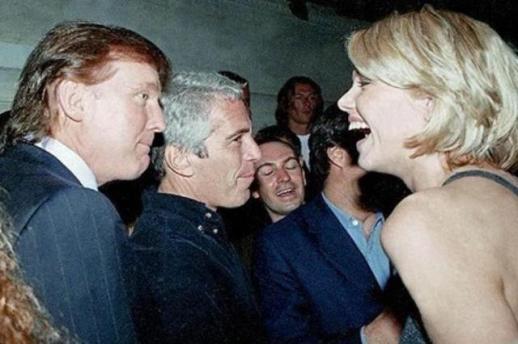 Trump Files $10 Billion Defamation Lawsuit Against WSJ Over Epstein Birthday Letter Donald Trump has filed a new defamation lawsuit against the Wall Street Journal, seeking at least $10 billion over an article related to Jeffrey Epstein. Following the dismissal of a previous case, Trump’s legal team argues that the WSJ published the article despite knowing it could be false. The lawsuit expands the focus beyond whether the letter in question was actually written by Trump to include the WSJ's reporting and publication process. According to Bloomberg, Trump’s team submitted an amended complaint on May 27 in a federal court in Florida. This comes after U.S. District Judge Darren Gales dismissed the original complaint in April, prompting Trump’s team to address the deficiencies identified by the court. In defamation cases involving public figures, “actual malice” refers to a media outlet knowing that the information was false or disregarding its potential falsity. The dispute originated from a July article by the WSJ, which claimed that Trump sent Epstein an obscene birthday letter in 2003. The letter was described as typed and featuring a drawing of a naked woman, with Trump’s signature placed at the bottom. Trump has consistently denied the authenticity of the document. In the amended complaint, Trump’s team targets two WSJ reporters, the publisher Dow Jones, its parent company News Corp, and News Corp Chairman Rupert Murdoch. They allege that these individuals either knew the information was false or published the article without verifying its accuracy. Trump’s attorney, Alejandro Brito, stated, “The defendants recklessly ignored whether the defamatory statements were true at the time of publication or intentionally avoided discovering the truth.” The amended complaint raises significant concerns about the WSJ's reporting process. It questions why the letter was written in the third person, why it was typed, who authored it, and how the publication obtained it. The absence of the letter's image in the article is also cited as evidence of actual malice. Judge Gales previously ruled that Trump’s arguments did not come close to meeting the standard for actual malice. The court noted that the WSJ had sought comment from Trump’s team and relevant officials before publishing the article. However, the court did not determine whether the content constituted defamation or if Trump actually wrote the letter in question. A spokesperson for Trump’s legal team described the amended complaint as a “strong legal response.” He added, “The president will continue to hold accountable those who mislead the American people with fake news and defamation.” The key issue in this case is whether Trump’s team can prove that the WSJ acted with intent or reckless disregard beyond a mere reporting error. If the court finds that the amended complaint still fails to meet the actual malice standard, the legal battle could stall once again at an early stage.* This article has been translated by AI. 2026-05-28 15:52:00
 -
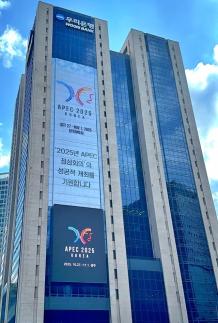 Woori Financial Faces Challenges in Acquiring Dongyang Life Insurance Woori Financial Group's efforts to fully acquire Dongyang Life Insurance have encountered a hurdle due to the Financial Supervisory Service's request for corrections to its securities registration statement. Woori Financial is accelerating its non-banking portfolio enhancement through the acquisition of Dongyang Life and ABL Life, but the process of consolidating the remaining shares of Dongyang Life has raised key issues regarding shareholder protection and conflict of interest management. According to sources in the financial sector, the Financial Supervisory Service recently requested corrections to the comprehensive stock exchange registration statement submitted by Woori Financial regarding Dongyang Life. Woori Financial had planned to complete the acquisition of Dongyang Life as a wholly-owned subsidiary by August and finalize the delisting process. However, the need for supplementary information has introduced uncertainty into this timeline. A representative from the Financial Supervisory Service stated, “The comprehensive stock exchange that involves delisting is crucial for shareholder protection,” adding that the review of the registration statement focused on whether the procedures were adequately followed according to relevant guidelines. This situation is closely tied to Woori Financial's strategy to strengthen its non-banking operations. Woori Financial currently holds a 75.34% stake in Dongyang Life and aims to secure the remaining shares through a comprehensive stock exchange to fully integrate it as a subsidiary. The choice of stock exchange over a public buyout is seen as a way to avoid significant cash outflows and potential impacts on the common equity tier 1 (CET1) capital ratio. However, the stock exchange structure means that Dongyang Life shareholders will receive new shares of Woori Financial instead of cash. Each shareholder will receive 0.2521056 shares of Woori Financial for each share of Dongyang Life they hold, with the exchange prices set at 34,589 won per Woori Financial share and 8,720 won per Dongyang Life share. Some shareholders of Dongyang Life have expressed dissatisfaction, arguing that the value offered to ordinary shareholders is lower compared to the price of 10,562 won per share that Woori Financial paid to acquire shares from the previous major shareholder last year. The Financial Supervisory Service's scrutiny appears to stem from this structural conflict of interest. They have requested additional explanations to ensure that Dongyang Life shareholders can adequately assess the transaction structure and pricing rationale. Although Woori Financial submitted a 1,700-page securities registration statement, the request for corrections means they will likely need to enhance the revised statement with details on shareholder protection procedures and the rationale for choosing the stock exchange method. For Woori Financial, the full acquisition of Dongyang Life is not merely a matter of consolidating shares. They are in a position where they need to bolster their revenue structure, which heavily relies on banking, by developing the insurance sector as a core non-banking pillar. Considering the planned integration of Dongyang Life and ABL Life, restructuring governance is seen as the first step in future reorganization of the insurance division. Meanwhile, analysts suggest that the likelihood of the stock exchange method being converted to a public buyout is low due to the nature of the Financial Supervisory Service's concerns. The focus of their inquiry is not on whether to conduct a public buyout, but rather on whether Dongyang Life shareholders have been sufficiently informed about the transaction structure and pricing rationale during the comprehensive stock exchange process. A financial sector insider remarked, “The request for corrections from the Financial Supervisory Service seems more aimed at ensuring that shareholder protection procedures and conflict of interest management are more clearly articulated rather than changing the stock exchange method itself.”* This article has been translated by AI. 2026-05-28 15:50:00
 -
 U.S.-Iran Negotiations Stalled Amid Renewed Military Clashes The Middle East situation, which seemed to be showing signs of resolution, has once again become uncertain. President Donald Trump stated that the U.S. has not yet reached a satisfactory level in negotiations with Iran regarding a ceasefire, coinciding with renewed military clashes between the two nations. On May 27, during a cabinet meeting at the White House, Trump remarked, "Iran is very eager to make a deal," but added, "so far, they have not reached a level that satisfies us." He expressed optimism that a satisfactory agreement could be achieved, but warned, "Either we reach an agreement, or we will just have to wrap things up ourselves." Trump clarified red lines on key negotiation topics, including the Strait of Hormuz and uranium processing. Regarding the Strait, he stated, "It will be accessible to all nations, and no one can control it under international regulations," adding, "We will monitor it." When asked if he would accept a proposal for Iran's enriched uranium to be processed by China or Russia, he replied, "No, that would make me uncomfortable." Previously, Trump had suggested the possibility of allowing the disposal of Iran's enriched uranium in Iran and three other countries, but he reversed course on this issue. This development comes as reports emerged that Iran is considering transferring 60% enriched uranium to China as part of ongoing ceasefire negotiations. The Jerusalem Post reported that Iran is reviewing this option, and China has not denied related reports, with the Chinese Foreign Ministry stating it will continue to play a constructive role in the political and diplomatic resolution of Iran's nuclear issues. In contrast, Iran has made it clear that it will not back down on key issues. Ebrahim Azizi, a member of Iran's Parliament National Security Committee, stated on social media platform X (formerly Twitter), "Iran will not retreat from its red lines regarding uranium enrichment rights, possession of enriched uranium, control over the Strait of Hormuz, and the lifting of sanctions." Renewed Military Clashes Amid these tensions, military clashes between the two countries, which are currently in a ceasefire, have resumed. On the same day, the U.S. Central Command announced it struck Iranian military facilities near Bandar Abbas that posed a threat to U.S. troops and commercial maritime traffic in the Strait of Hormuz. Additionally, U.S. forces intercepted and shot down several Iranian drones that posed similar threats. In response, the Islamic Revolutionary Guard Corps (IRGC) claimed to have attacked a U.S. airbase. According to the semi-official Tasnim news agency, the IRGC stated in a release, "The U.S. previously conducted airstrikes near Bandar Abbas airport," and added, "We responded at 4:50 a.m. local time." The IRGC characterized this as a retaliatory measure, warning that "if aggression is repeated, there will be a firmer response" and that "the responsibility for escalating tensions lies with the aggressor." However, details regarding the means of attack, launch points, target bases, and damage inflicted were not disclosed. Military tensions are also affecting neighboring countries. According to the Associated Press, the Kuwaiti military reported that its air defense systems intercepted missiles and drones, stating, "Explosions may be heard, which is due to interception operations." However, they did not disclose the targets, extent of damage, or the identity of the attacking forces. Kuwait, which hosts U.S. military bases, is considered a primary target for Iranian regional attacks. The U.S. is expanding its economic sanctions alongside military pressure. On May 27, the U.S. Treasury Department's Office of Foreign Assets Control (OFAC) announced on its website that it has added the Iranian Persian Gulf Shipping Association (PGSA) and all individuals or entities cooperating with it to the Specially Designated Nationals and Blocked Persons (SDN) list. Being placed on this list results in the freezing of assets in the U.S. and a ban on financial transactions. As both nations engage in ceasefire agreement negotiations mediated by Qatar, the outbreak of military clashes has once again plunged the Middle East situation into uncertainty. This is reflected in the nearly 3% rise in Brent and West Texas Intermediate (WTI) crude oil prices during Asian trading on May 28, following a sharp decline the previous day. Reuters noted, "As the U.S. and Iran exchange hostilities, hopes for reopening negotiations regarding the Strait of Hormuz are fading."* This article has been translated by AI. 2026-05-28 15:48:00
 -
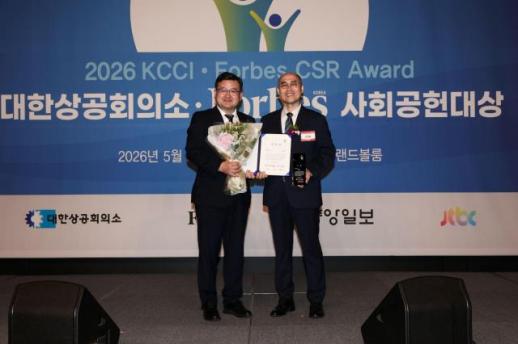 Lock & Lock Wins Social Contribution Award for Community Engagement Lock & Lock has been awarded the Social Contribution Award at the 17th Korea Chamber of Commerce and Industry and Forbes event. According to Lock & Lock on May 28, the awards ceremony recognizes companies and organizations that have demonstrated social responsibility through ongoing and exemplary social contribution activities. Lock & Lock was selected for the award based on its comprehensive efforts in sustainable and systematic social contribution activities, its contributions to community coexistence and social value creation, the integration of ESG and CSR policies into management, and its credibility and social evaluation both internally and externally. Under the motto of being a "company that cares for the environment and people," Lock & Lock has been actively engaged in various social contribution activities aimed at creating a sustainable future. Notably, the company has expanded its "Courage with Lock & Lock" initiative globally, supporting individuals with disabilities, single-parent families, and areas affected by disasters. For single-parent families, Lock & Lock regularly provides household items during the year-end holidays, festive seasons, and Family Month. Last year, the company signed a memorandum of understanding with the Jung-gu Office and the corporate social contribution specialist Giving Plus to expand its support for living expenses for single-parent families. Additionally, Lock & Lock regularly donates items to Goodwill Stores, which support the economic independence of people with disabilities, and is committed to creating job opportunities for them. Last year, the company received recognition for these efforts with an award from the Minister of Health and Welfare at the 19th Proud Korean Disability Awards. Last month, Lock & Lock visited Yeongheung Elementary School in Ongjin County, Incheon, to conduct the eco-friendly campaign "Love for Yeongheung," where they provided tumblers and practical kitchen items to students and the school. Environmental education was also conducted for the students. The company continues its global social contribution efforts, including providing relief supplies to flood-affected areas in Vietnam and donating hand blenders to a culinary high school in Indonesia, thereby spreading the value of sharing. Ahn Seong-il, Chief Human Resources Officer of Lock & Lock, expressed his satisfaction, stating, "We are pleased that our consistent efforts in various social contribution activities that genuinely help the environment and people have led to meaningful results. We will continue to fulfill our corporate social responsibility to create a better future."* This article has been translated by AI. 2026-05-28 15:48:00
 -
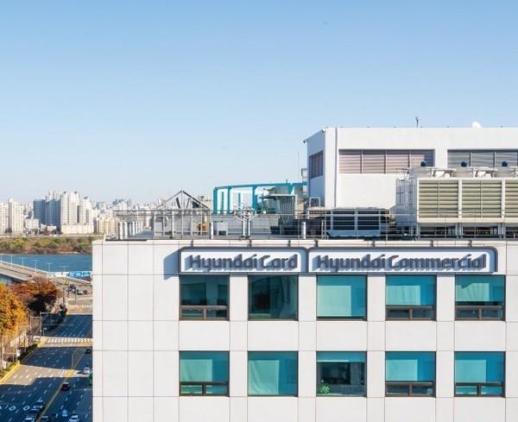 Blue Walnut Continues to Report Losses for 10th Year as Hyundai Card Depletes Investment Blue Walnut, a payment platform developed by Hyundai Card for future mobility, has been reporting losses for several years. Approximately half of the capital invested by Hyundai Card has been depleted. The company has struggled to overcome the low profitability typical of the electronic payment processing industry and has faced challenges in attracting external customers, leading to a rapid increase in losses. According to the Financial Supervisory Service's electronic disclosure system on the 26th, Blue Walnut's total capital at the end of last year was 25.3 billion won, a 10.1% decrease from the previous year’s 28.1 billion won. Blue Walnut is a wholly-owned subsidiary of Hyundai Card in the payment processing sector. Since its establishment in 2016 with an initial investment of 7 billion won, Hyundai Card has injected a total of 50 billion won through three capital increases: 13 billion won in 2018, 10 billion won in 2019, and 20 billion won in 2023. However, ongoing cumulative losses have rapidly weakened its capital base. Despite growth in scale over nine years, profitability has not improved. Last year, Blue Walnut reported sales of 188.5 billion won, but the cost of sales reached 179.3 billion won, resulting in a cost rate exceeding 95%. While transactions with group affiliates like Hyundai Motor and Kia have expanded, the lack of a high-margin structure has limited profit generation. Additionally, rising selling and administrative expenses have solidified the loss structure. The trend of increasing losses has continued into this year. In the first quarter, sales rose 10% to 51 billion won compared to the same period last year (46.4 billion won), but net losses grew from 400 million won to 1.8 billion won during the same timeframe. Blue Walnut has also served as a channel for Hyundai Card to divest its underperforming affiliate stakes. Previously, Hyundai Card and Blue Walnut established the NFT company Modern Lion in collaboration with the design firm Like a Lion in 2022. However, Modern Lion failed to achieve profitability, accumulating a net loss of 3.6 billion won by 2024. Hyundai Card transferred its entire stake (19.99%) in Modern Lion to Blue Walnut for 400 million won, effectively exiting the venture. As a result, Blue Walnut's stake in Modern Lion increased to 41%, leading to a share of 1.5 billion won in equity method losses in 2024, more than double Blue Walnut's operating loss of 700 million won for that year. Ultimately, Blue Walnut sold its entire stake in Modern Lion last year, withdrawing from the NFT business.* This article has been translated by AI. 2026-05-28 15:40:00
 -
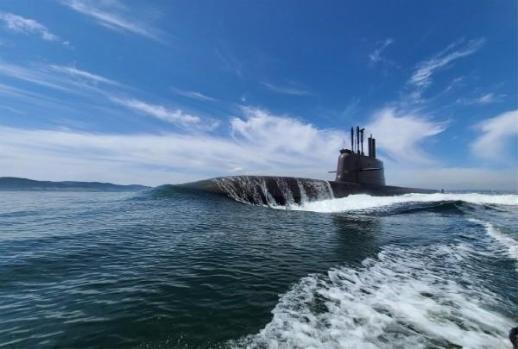 Hanwha Competes for Canadian Submarine Contract with Rocket and Steel Package Hanwha has introduced a "rocket" component in its bid for the Canadian submarine contract. In addition to supplying submarines, the company proposed support for Canadian rocket launches, local production of military vehicles, and steel purchases. This strategy aims to differentiate Hanwha from German competitors by emphasizing job creation and manufacturing benefits in defense contracts. According to Bloomberg on May 28, Hanwha is competing against Germany's ThyssenKrupp Marine Systems for a submarine procurement program that could involve up to 12 vessels. Glen Copeland, CEO of Hanwha Defense Canada, estimated the cost for the 12 submarines at approximately CAD 25 billion (about KRW 26 trillion). He noted that the total project cost, including support and maintenance, could reach between CAD 100 billion and CAD 120 billion (approximately KRW 104 trillion to KRW 125 trillion). Hanwha's differentiation strategy includes a focus on space. Hanwha Aerospace plans to sign a memorandum of understanding (MOU) with Maritime Launch Services, a Canadian spaceport operator. In an interview with Bloomberg, Copeland stated, "We aim to assist Canada in securing its own satellite launch capabilities." Currently, Canada lacks a domestic rocket launch infrastructure, relying on foreign companies like SpaceX for satellite launches. The Canadian government recently decided to develop a commercial spaceport in Nova Scotia, and Hanwha intends to provide the necessary launch technology. Copeland emphasized, "We will invest in rocket technology to expedite Canada's launch capabilities." He added, "This investment will proceed regardless of the outcome of the submarine contract." Hanwha also proposed local contributions, including the production of military vehicles in Canada and purchasing steel products from Algoma Steel in Ontario. This initiative aims to partially offset revenue declines in Canada's steel and manufacturing sectors, which are under pressure from U.S. tariffs. The Canadian government plans to make a decision on the submarine project by the end of June. Prime Minister Mark Carney announced this timeline on May 27. Copeland mentioned, "I have heard that the scoring and evaluation processes are complete, and the proposal is moving to the cabinet stage." He added, "Currently, the likelihood of ordering all 12 submarines appears high." Hanwha is also emphasizing its competitiveness in terms of price and delivery. Copeland stated, "Hanwha's submarines can be delivered faster and at a lower cost than those from ThyssenKrupp Marine Systems." The urgency of the Canadian Navy's need for enhanced capabilities aligns with Hanwha's argument for rapid supply.* This article has been translated by AI. 2026-05-28 15:34:00