
Journalist

Choi Jong-moon
-
 Candidates Appeal for Support Ahead of Early Voting in Seoul Mayoral Election On May 28, one day before early voting for the June 3 local elections, Jung Won-o, the Democratic Party candidate for Seoul mayor, and Oh Se-hoon, the People Power Party candidate, appealed for voter support. During a press conference at his campaign office in Sogong-dong, Jung stated, "This election is a choice between establishing citizen safety and life as the top priority of governance and starting a new Seoul that changes daily life for citizens." He urged voters to participate in early voting starting the next day. Jung emphasized, "Let’s begin the change in leadership that protects the lives of citizens with Jung Won-o. Please choose a capable mayor who will get things done, one by one." Oh also held a press conference at his campaign office in Gwancheol-dong later that afternoon to rally support. He described the election as a critical juncture, stating, "This election will determine whether Seoul returns to a stagnant and regressive era or rises to become one of the top three global cities." Oh stressed the need for a prepared mayor who can return to the field immediately after the election to address pressing issues. He added, "The candidate chosen by the people, not one selected unilaterally by those in power, should be responsible for Seoul. Please show how powerful and significant public sentiment is through your votes."* This article has been translated by AI. 2026-05-28 15:24:00
 -
 K-pop girl band aespa showcase new album SEOUL, May 28 (AJP) - K-pop girl band aespa showcased a new album at a hotel in southern Seoul on Thursday. Their second full-length album, "LEMONADE," which comes about two years after their first full-length album in May 2024, contains 10 songs including pre-released tracks such as "SHAKIN" and "WDA (Whole Different Animal)" featuring G-Dragon. The album's title track of the same name is an electronic dance tune driven by bold, trendy synth-bass sounds. Other tracks span a wide range of genres including "Switchblade" featuring American rapper Ty Dolla $ign. Upon the album's release, their songs are available on major music-streaming sites as of 1 p.m. 2026-05-28 15:21:05
 -
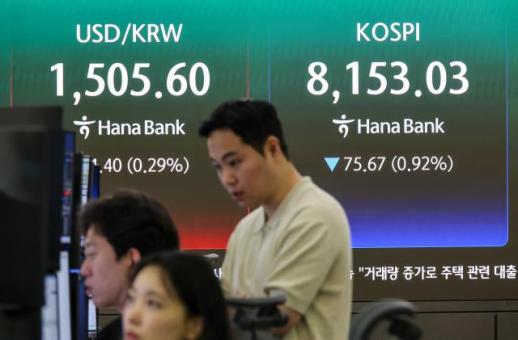 KOSPI 8,000 mark under threat in first week on rate hike warning SEOUL, May 28 (AJP) -Foreign and institutional investors rattled by escalating U.S.-Iran tensions and the Bank of Korea’s strongest-yet signal of aggressive tightening hammered South Korean equities Thursday, threatening to drag the KOSPI back below the 8,000 mark first breached earlier this week. The benchmark index plunged as low as 7,841 before paring losses to close at 8,114.01, as retail investors rushed in late to scoop up semiconductor heavyweights dumped by institutions. Samsung Electronics fell around 3 percent after sliding as much as 5 percent intraday, while SK hynix erased steep early losses to rebound into positive territory. The chipmaker, which tumbled to as low as 2,151,000 won, recovered to 2,260,000 won by late trading, up 0.76 percent on aggressive retail buying. The selloff accelerated after new Bank of Korea Governor Shin Hyun-song, presiding over his first rate-setting meeting, delivered the clearest warning yet that borrowing costs may rise sharply in the months ahead. “All the signs — price pressure, the growth trajectory, the exchange rate and the real estate market — point in one clear direction,” Shin said, describing the rate outlook as “exceptionally clear.” Shin framed the policy debate around three questions — “when,” “how fast” and “how far” rates may rise — while the central bank’s latest dot plot suggested the benchmark rate could climb as high as 3.25 percent within the year. The remarks sent fresh shockwaves through a retail-driven market rally increasingly fueled by leveraged bets, raising fears that higher borrowing costs could quickly unwind the stock frenzy that has propelled the KOSPI to record territory. 2026-05-28 15:18:13
 -
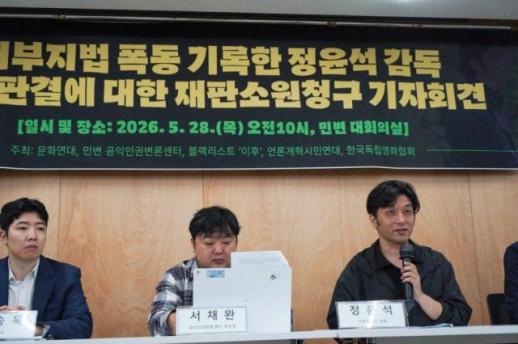 Director Jeong Yoon-seok Appeals to Constitutional Court After Conviction Documentary director Jeong Yoon-seok, who was convicted for filming a disturbance at the Seoul Western District Court, has filed a constitutional appeal against the court's ruling. On May 28, Jeong held a press conference at the Minbyun office in Seocho-gu, Seoul, alongside several organizations including the Cultural Solidarity, Minbyun Public Interest Human Rights Litigation Center, After the Blacklist, Citizens' Coalition for Media Reform, and the Korean Independent Film Association to explain the background of his appeal. Jeong named the presiding judges of the Seoul Western District Court, the Seoul High Court, and the Supreme Court as respondents in his appeal. He stated, "As I observed the actions of the investigative agencies and judges, I experienced significant confusion regarding my identity as an artist. Despite respecting the court's procedures, I felt compelled to file this appeal because the Supreme Court did not uphold the spirit of the rule of law." He added, "Freedom of expression is essential for artists. If this case is dismissed by the Constitutional Court, I will respect that decision, but I will accept it as an objective truth. There is a need for legislative and executive improvements to enhance the treatment of cultural and artistic professionals." Seo Chae-wan, deputy director of the Minbyun Public Interest Human Rights Litigation Center, argued, "The Supreme Court's ruling contradicts previous decisions made by the Constitutional Court. Despite Jeong explicitly asserting the illegality of his arrest during the appeals process, the court did not consider this, and the Supreme Court deemed it acceptable not to review this issue. This indicates a failure to follow the legal procedures mandated by the Constitution and laws." Seo further claimed, "Not separating the arguments is an abuse of litigation authority and violates Article 22 of the Constitution, which protects artistic rights, as well as Article 68, Section 3. It also violates Articles 19 and 21 of the International Covenant on Civil and Political Rights, which have domestic legal effect under Article 6, Section 1 of the Constitution, and infringes on the principles of proportionality and the essence of rights, as well as equality rights." Previously, Jeong was charged with trespassing and other offenses after entering the Seoul Western District Court with supporters of former President Yoon Suk Yeol shortly after a warrant for Yoon's arrest was issued in January of last year. In court, Jeong defended his actions by stating he entered the premises with a camera for public interest purposes. However, both the first and second trial courts found him guilty and imposed a fine of 2 million won. Unlike the first trial, the second trial court acknowledged that Jeong was focused on filming separately from other protesters. However, it concluded that court staff would have difficulty distinguishing between Jeong and those involved in the disturbance, leading to the guilty verdict. The Supreme Court upheld the lower court's ruling last month, finalizing Jeong's conviction.* This article has been translated by AI. 2026-05-28 15:18:00
 -
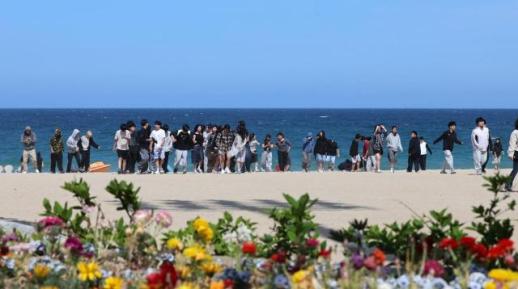 Education Ministry Unveils Support Measures for School Field Trips The Ministry of Education is reforming regulations to reduce the legal burdens on teachers related to safety incidents during field trips, including school excursions and retreats. In the event of an accident, the education office will immediately assign a dedicated lawyer to assist with investigations and legal responses. The ministry is also pursuing legal amendments to ensure that teachers are not held civilly or criminally liable unless intentional or gross negligence is proven. According to Yonhap News, the "Support Measures for Field Trips" announced by the Ministry of Education on May 28 includes provisions that apply not only to school trips but also to physical activities on playgrounds and laboratory practices in educational settings. The key to these measures is the amendment of the "School Safety Accident Prevention and Compensation Act." Legal provisions will be established to exempt school principals, staff, and assistants from civil and criminal liability in cases where they do not violate safety management guidelines intentionally or through gross negligence. Currently, teachers can only be exempted from liability if they can demonstrate that they fulfilled their safety obligations. However, if the law is amended, the burden will shift to investigative agencies to prove whether a teacher acted intentionally or with gross negligence. The Ministry of Education stated, "The intent of exemption will be reflected from the investigation and prosecution stages," and the National Police Agency plans to develop separate investigative guidelines that align with the legal amendments. The ministry cited a recent decline in the operation of field trips as a backdrop for these reforms. Last year, the participation rates for elementary school retreats and trips were notably low, with Daejeon at 4.0%, Seoul at 7.7%, Gyeonggi at 9.7%, and Incheon at 13.6%. The Ministry of Education remarked, "There are insufficient legal safeguards to protect teachers in the event of safety incidents," adding that the burden of responsibility on teachers is limiting the operation of field trips, raising concerns about restricted educational opportunities for students. The discussion gained momentum following President Lee Jae-myung's remarks. During a Cabinet meeting last month, he noted, "These days, students are not going on field trips or school excursions," and called for measures to address the issue. The Ministry of Education also plans to significantly strengthen its legal support system. In the future, an education office response team will assist with accident management immediately after an incident, designating a dedicated lawyer to provide comprehensive support from initial legal consultation to investigation and trial responses. Support through the teacher protection fund will also be expanded. Currently, local education offices provide approximately 6.6 million won for legal costs and up to 250 million won for liability support, with discussions ongoing about increasing these amounts. The management of personnel and safety systems for field trips will also be revised. The criteria for assigning support staff will be strengthened from "one staff member for every 50 students" to "one staff member per class." The ministry plans to collaborate with the Fire Agency to secure personnel with emergency response capabilities and establish a platform for schools to utilize around 5,000 support staff nationwide. Additionally, the ministry will expand dedicated personnel at education support offices to reduce the administrative burden on teachers related to contracts, safety inspections, and staff assignments. The current number of dedicated personnel, around 30, will increase by 200 next year. The ministry also aims to enhance pre-safety inspections for programs, facilities, and vehicles in collaboration with local governments and relevant agencies, and plans to expand the "Safe School Trip Service" currently operating in regions like Jeju and Gyeongju to other areas. The Ministry of Education plans to begin the legislative process for amending the School Safety Act in the second half of this year, following consultations with the National Assembly, with an aim to implement the changes in the first half of next year. 2026-05-28 15:16:00
 -
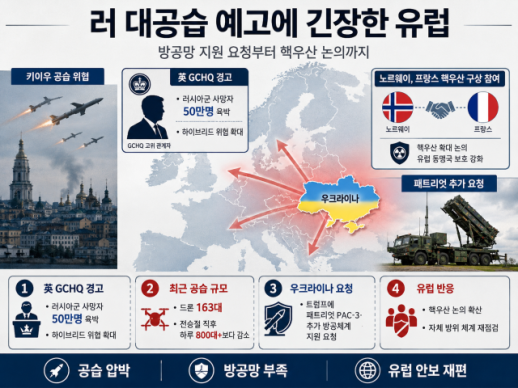 Europe on Edge as Russia Warns of Major Airstrikes Security concerns in Europe are escalating as Russia has warned of a large-scale airstrike targeting Ukraine. Ukraine has requested additional Patriot missile support from the United States, while Norway has agreed to participate in a nuclear umbrella initiative led by France. The military pressure from Russia is prompting discussions about Europe's own defense systems, extending beyond Ukraine's air defense issues. According to Sky News on May 27, Anne Keast-Butler, head of the UK Government Communications Headquarters (GCHQ), stated in a speech at Bletchley Park that "Russian military deaths are nearing 500,000 since the start of the war in Ukraine." She assessed that Russian forces are retreating on the battlefield. However, she emphasized that military losses do not equate to a reduction in risk. Keast-Butler warned that "Russia is expanding its irregular threat activities, including cyberattacks and sabotage, against the UK and Europe," continuously targeting critical infrastructure, democratic processes, supply chains, and public trust. She added, "The risk of miscalculation is higher than I have ever seen." On the battlefield, the possibility of airstrikes targeting Kyiv, Ukraine's capital, has increased. Russia has recently warned foreign diplomats and personnel to "leave Kyiv" in anticipation of large-scale strikes. Ukraine has responded defiantly, urging its allies to stand united. While the scale of attacks has temporarily decreased, tensions remain high. The Ukrainian Air Force reported that as of 6 PM on May 26, Russia launched 163 drones. Although this is a reduction from earlier in the month when over 800 drones and missiles were deployed following a ceasefire on Victory Day, clashes continue in Crimea and along the Russian border. Ukraine is expressing its urgent need for air defense systems. President Volodymyr Zelensky has sent a letter to President Donald Trump requesting additional support, specifically Patriot PAC-3 missiles and other air defense systems. He noted, "We are almost entirely reliant on the United States for ballistic missile defense" and emphasized the need for further assistance to counter Russian missile attacks. Zelensky also called for NATO to expedite its arms supplies. Ukraine believes that the NATO 'Ukraine Priority Support List' (PURL) is not keeping pace with the speed of Russian attacks. PURL is a program through which NATO jointly purchases U.S.-made defense equipment for Ukraine. The security concerns in Europe have also sparked discussions about nuclear deterrence. Norwegian Prime Minister Jonas Gahr Støre announced that Norway would participate in the French-led nuclear umbrella initiative. He cited Russia's large-scale rearmament, including its nuclear capabilities, and its ongoing full-scale war in Europe as the backdrop for this decision. Norway has clarified that it will not deploy nuclear weapons on its territory during peacetime. However, by agreeing to participate in the French nuclear umbrella initiative, Norway, which has long viewed close cooperation with the United States as central to its security, is expanding discussions on European security into the realm of nuclear deterrence.* This article has been translated by AI. 2026-05-28 15:12:00
 -
 Bank of Korea Signals Potential Rate Hike Amid Economic Concerns The Bank of Korea has kept its benchmark interest rate steady at 2.50%, but the market perceives this as a signal of a shift toward tightening. Following a monetary policy committee meeting on May 28, Governor Shin Hyun-sung stated, "There is a need to raise the benchmark interest rate at an appropriate time in the future." The committee's dot plot indicated that most members anticipate further rate increases, with some even suggesting an immediate hike. The market is now largely expecting a rate increase in July.Just a few months ago, market focus was on economic slowdown and the possibility of rate cuts. However, the situation has changed rapidly. Rising international oil prices, currency instability, signs of a rebound in housing prices, and a recovery in the semiconductor industry have made it difficult for the Bank of Korea to maintain an accommodative stance.Governor Shin's remark that "three rabbits are running in the same direction" symbolically reflects the current economic situation. It suggests that the goals of monetary policy—price stability, growth, and financial stability—are all pointing toward the need for tightening. Indeed, the real estate market in the capital region is showing signs of renewed activity, and concerns about overheating in the stock market are growing. There is also a noticeable trend of liquidity moving quickly into riskier assets.The challenge lies in the market sentiment. Despite the increasing likelihood of a rate hike, optimism remains strong across various asset markets. Particularly concerning is the influx of personal funds into leveraged ETFs and derivatives markets. As the bull market extends, investors tend to seek higher returns and stronger incentives. However, a period of rising interest rates presents a very different scenario from a liquidity-driven market. When the cost of money rises, the prices of risk assets are typically the first to be affected.The issue of household debt also warrants reevaluation. South Korea's household debt remains among the highest in the world. An increase in interest rates will first impact households and self-employed individuals, who have a high proportion of variable-rate loans. If excessive borrowing increases amid a resurgent real estate market, future shocks could be more severe.Businesses are not in a secure position either. Companies accustomed to a low-interest-rate environment will face increased borrowing costs. Small and medium-sized enterprises, in particular, may struggle with the simultaneous pressures of rising interest rates, raw material costs, and domestic demand slowdown. The risk of defaults in real estate project financing remains unresolved.The Bank of Korea's dilemma is understandable. While considering growth, premature tightening could pose challenges. However, ignoring signs of inflation and financial instability while allowing market overheating could lead to greater risks. Delayed responses often result in more abrupt rate hikes and larger shocks.The key is speed and trust. The Bank of Korea must communicate effectively with the market and outline a predictable tightening path to minimize shocks. Simultaneously, the government should not rely solely on monetary policy. It must also implement measures to stabilize the real estate market, manage household debt, and support vulnerable groups.What the South Korean economy needs now is neither excessive optimism nor fear, but a calm recognition of the realities that accompany a shift toward tightening. While the inertia of the low-interest-rate era still lingers in the market, the global economic environment has already changed. A rate hike is not just a numerical change; it signals a shift in market dynamics and investment strategies. It is time to carefully manage inflated expectations. 2026-05-28 15:12:00
 -
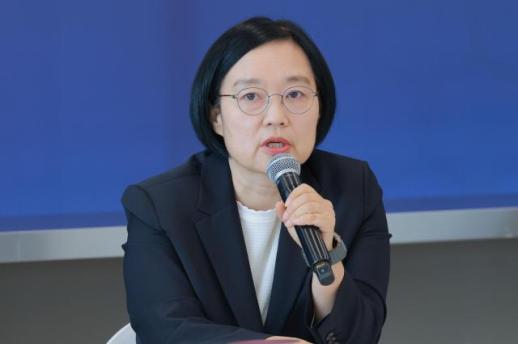 Minister Han Seung-sook: Building an Entrepreneurial Ecosystem to Maximize SME Exports Minister Han Seung-sook of the Ministry of Small and Medium Enterprises and Startups held a press conference to commemorate the first anniversary of the government, reflecting on the achievements in small business and venture policies over the past year and outlining future priorities. She highlighted significant progress in promoting entrepreneurship while identifying the need for policy innovation in response to external crises as a key ongoing challenge. During the press conference on the 28th at SVC Seoul, Minister Han expressed her commitment to continue supporting startup companies. Since taking office, she has visited 152 locations and implemented 23 measures along with 78 improvements to laws and regulations. Minister Han identified four key themes of the ministry's achievements: 'Entrepreneurship' (Everyone's Startup), 'Growth' (TIPS), 'Leap' (Jump Up), and 'Second Chances and Safety Nets.' Notably, the 'Everyone's Startup Project,' aimed at revitalizing the stagnant self-employed and venture ecosystem, attracted over 63,000 applicants, marking the largest participation in a government competition to date. Within just 37 days of its launch, the number of participants surpassed 20,000, indicating a nationwide surge in entrepreneurial interest. The initiative will continue with a second season, set to begin in July, expanding the selection from 5,000 to 10,000 participants. To spread the entrepreneurial enthusiasm across the country, the government will designate regional startup cities. In the first half of this year, four cities—Daejeon, Daegu, Gwangju, and Ulsan—home to major science and technology institutions, will be prioritized for support across the entire startup cycle, from entrepreneurship to technology development, investment, and market access. An additional six cities will be selected by 2027 to expand this initiative nationwide. The foundation for supporting entrepreneurship and stable recovery has also been established. The 'Startup One-Stop Support Center,' which opened in 19 regions last December, has quickly become a key resource, surpassing 10,000 consultations within five months. A 'Re-Challenge Fund' of 1 trillion won is planned to support struggling businesses in their recovery over the next five years. Minister Han referenced the Lee Jae-myung administration's declaration of a 'National Startup Era,' stating, "Now is the time to plan with an eye toward 2045." She added, "We will create an environment conducive to becoming a startup nation over the next 20 years." Small and medium enterprise exports also reached new heights, achieving a record $118.6 billion last year. In the first quarter of this year, exports continued to break records, marking the second consecutive year of peak performance. The K-beauty and online export sectors have also set new records, contributing to the expansion of export opportunities. The venture investment market has also rebounded, thanks to the 'Four Major Venture Nation Measures' announced at the end of last year. In the first quarter of this year, the amount raised by venture funds reached an all-time high of 4.4 trillion won, with investments totaling 3.3 trillion won. Additionally, the ministry is accelerating the establishment of a demand-driven delivery system. By reducing application paperwork by 50%, the administrative burden on businesses has been significantly decreased. The government has also launched initiatives such as 'Crisis Alert Talk' to proactively reach out to struggling small businesses and a 'Whistleblower System for Technology Theft' to enhance policy accessibility. Furthermore, the ministry is set to launch the 'Small and Medium Enterprise Growth Platform,' consolidating 64 previously scattered policy platforms into one, with a pilot operation scheduled for June. This initiative aims to simplify the complex procedures of government support programs, which President Lee Jae-myung likened to a 'tangled mess,' into a user-friendly system that requires 'just one login' and features an 'AI virtual assistant.' Minister Han stated, "The achievements of the past year are thanks to the small and medium enterprises and self-employed individuals who have not stopped challenging themselves on the ground, rather than the government. We will continue to run alongside them unwaveringly to ensure that their challenges lead to even greater results." However, she acknowledged that despite these visible achievements, the ministry has struggled to implement 'substantial structural reforms' due to uncontrollable global crises. "With 1 million small business closures, the impact of U.S. tariffs, and conflicts in the Middle East, various situations beyond the ministry's control are affecting small and medium enterprises overall," she said. "In this critical period requiring a reorganization of supply chains, we have not been able to focus on how to innovate policies effectively." In response to questions from reporters regarding wage disparities and labor shortages between large and small enterprises, she emphasized the need for a social consensus and the creation of a new compensation system, stating, "We must strengthen support to secure quality research talent within small and medium enterprises." 2026-05-28 15:10:00
 -
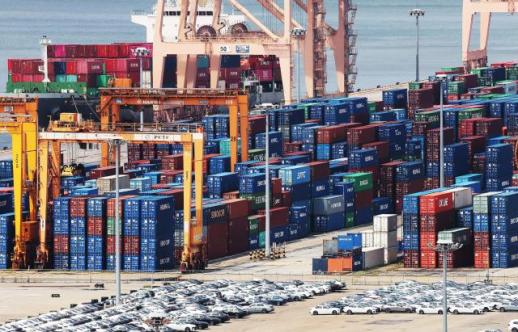 Bank of Korea Raises Economic Growth Forecast to 2.6% Driven by Semiconductor Boom The Bank of Korea has revised its economic growth forecast for this year from 2.0% to 2.6%. This adjustment is attributed to strong export performance driven by a booming semiconductor industry. In a revised economic outlook released on May 28, the Bank projected a real GDP growth rate of 2.6% for the year. This figure significantly exceeds the potential growth rate of approximately 1.8% and marks the highest growth rate since 2022, when it was 2.7%. Compared to the forecast made in February, this represents an increase of 0.6 percentage points, the largest adjustment since May 2021, when the forecast was raised from 3.0% to 4.0%. For the second quarter of this year, the growth rate is estimated to rise by 0.2% compared to the previous quarter. Lee Ji-ho, head of the Bank's Economic Research Department, stated, "The market expects negative growth in the second quarter, but we anticipate positive growth due to the response to the Middle East conflict, with a potential downturn expected in the third quarter. We expect growth to slow down due to base effects from the first quarter and energy shocks from the Middle East conflict." The Bank of Korea believes that the impact of supply shocks from the Middle East will be partially mitigated by government policies, including supplementary budgets, while strong semiconductor exports will contribute to a higher growth rate than previously forecasted in February. Earlier, the Bank had initially projected a growth rate of 1.8% for 2024 in November, lowered it to 1.6% in May, and then adjusted it to 1.8% in November and 2.0% in February. The semiconductor boom is also expected to drive the current account surplus. The Bank has significantly raised its forecast for the current account surplus this year to $250 billion, up from the February estimate of $170 billion. This figure is more than double last year's record surplus of $123.1 billion. Additionally, the Bank has adjusted its growth forecast for next year from 1.8% in February to 2.1%. Previously, the Bank had set the growth forecast for next year at 1.9% in November, lowered it to 1.8% in February, and now raised it again. This adjustment reflects expectations that the semiconductor cycle will continue into next year, boosting growth rates. In its optimistic scenario for the semiconductor market, the Bank predicts that semiconductor export volumes could expand to the mid-20% range this year and maintain a high level in the mid-10% range next year, potentially increasing domestic growth rates by 0.5 percentage points this year and 0.3 percentage points next year. In this case, inflation rates are also expected to rise by 0.1 percentage points this year and next. Conversely, in a pessimistic scenario where concerns about the profitability of AI investments lead major tech companies to slow their investment pace, the growth rate is projected to decrease by 0.3 percentage points this year and 0.2 percentage points next year due to a slowdown in semiconductor export growth to the 10% range. The Bank also presented optimistic and pessimistic scenarios based on developments in the Middle East. If negotiations between the U.S. and Iran are successfully concluded and shipping through the Strait of Hormuz resumes quickly, growth rates for this year and next could each be 0.1 percentage points higher than the baseline forecast. However, if negotiations stall and shipping remains restricted through the end of the year, growth rates could drop by 0.5 percentage points this year and 0.3 percentage points next year. Nonetheless, there are opinions that the semiconductor boom will not lead to a permanent increase in potential growth rates. Lee stated, "If the semiconductor boom represents a permanent change, it would raise potential growth rates, but if the semiconductor industry operates cyclically, the impact on potential growth rates will be limited. At this point, we do not see a significant increase in potential growth rates." The Bank has also raised its consumer price inflation forecast from 2.2% to 2.7%, the highest level since 2023 (3.6%). This increase is attributed to expectations of sustained high prices due to the prolonged conflict in the Middle East. The core inflation rate is also expected to reach 2.4%, higher than the February forecast of 2.1%. The inflation trend is anticipated to peak in August of this year. For next year, the consumer price inflation forecast has been adjusted from 2.0% to 2.3%. While cost pressures from oil prices are expected to ease, demand-side pressures are likely to expand, leading both consumer and core inflation rates to exceed target levels.* This article has been translated by AI. 2026-05-28 15:06:00
 -
 Repeated Safety Disasters Highlight Need for Change in Priorities The recent collapse at the Seosomun Overpass demolition site and the missing rebar issue at the Samsung Station GTX construction site may appear to be separate incidents, but they share a common root: a persistent culture that prioritizes cost and speed over safety. On May 28, President Lee Jae-myung stated, "Money cannot be more valuable than life," calling for thorough investigations and accountability from relevant agencies. He criticized the "distorted practices" that place money and efficiency above safety, underscoring the seriousness of accidents in the public sector. These incidents are particularly alarming because they occurred in public domains responsible for citizen safety and large infrastructure projects. The Seosomun Overpass accident was a major safety incident in the heart of the city, while the missing rebar issue has raised significant public anxiety. The absence of rebar is not merely a construction error; it raises doubts about whether the entire system of design, supervision, construction, and management is functioning properly. Korean society has repeatedly vowed that such large-scale disasters must never happen again. However, over time, vigilance wanes, and the logic of cost-cutting and expedited timelines resurfaces, often at the expense of safety. On-site, resources and personnel are reduced, and within the layers of subcontracting, accountability becomes blurred. In many cases, when accidents occur, only a few workers face consequences. May 28 also marks the 10th anniversary of the Guui Station tragedy, where a 19-year-old worker was killed by a train while repairing a screen door. At that time, society strongly criticized the outsourcing of risk and inadequate safety management. Yet, a decade later, workers continue to lose their lives in industrial settings, and issues of substandard construction and safety violations persist. There is growing concern that the temptation to cut safety costs is increasing amid economic downturns and profitability pressures. This trend is not limited to construction and civil engineering; it is also intensifying across manufacturing, logistics, and platform industries, where competition prioritizes "efficiency" and "speed." However, viewing safety as a cost inevitably leads to predictable disasters. Both corporations and public institutions must fundamentally change their mindset. Safety should be seen as an investment, not an expense. Adhering to safety regulations is not optional; it is a minimum obligation. Relying solely on post-accident measures and punishing responsible parties will not prevent recurrence. Safety standards must be reinforced throughout the entire process, from design to construction, operation, and supervision, with clear accountability for violations, regardless of rank. The political sphere must also move away from using safety issues as fodder for partisan conflict. Each time a major accident occurs, the focus on blaming the opposing side has prevented the resolution of structural problems on the ground. What the public desires is not political bickering but effective measures to prevent recurrence. A nation's status is not determined solely by its skyscrapers or advanced technology. More importantly, it is about whether citizens can live, work, and move about safely. A society where safety is compromised cannot be considered advanced. It is time to reaffirm the fundamental principle that "life takes precedence over money." 2026-05-28 15:06:00